

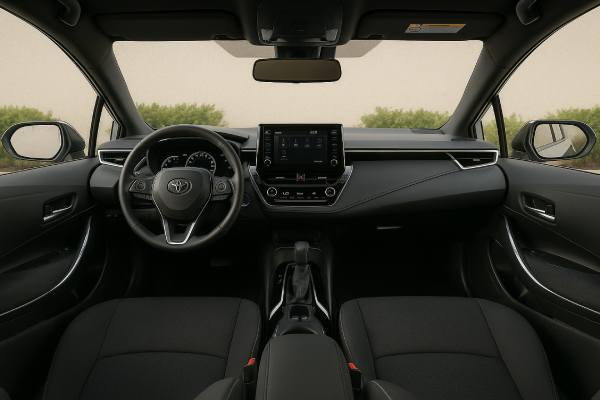
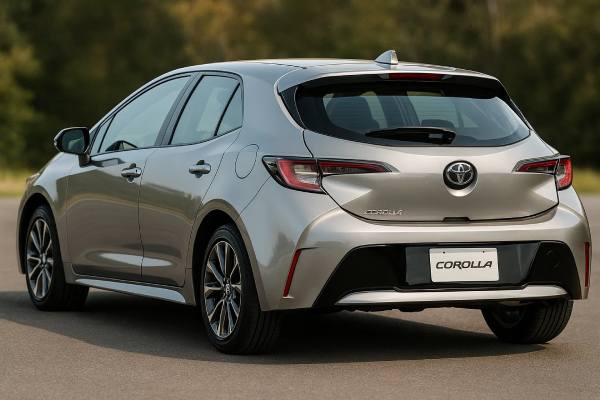
The twelfth-generation Toyota Corolla Hatchback (MZEA12) delivers what many compact-car shoppers want most: a dependable daily driver that still feels engineered with care. Built on Toyota’s TNGA-C platform, it pairs a rev-happy 2.0-liter “Dynamic Force” engine (M20A-FKS) with either a launch-gear CVT or an engaging 6-speed iMT manual. A low seating position, multi-link rear suspension, and well-damped body control give it a planted feel on imperfect pavement. Inside, the cabin is simple, durable, and easy to live with, and Toyota’s Safety Sense 2.0 driver-assist tech was standard from launch. If you’re cross-shopping a Civic, Mazda3, or Golf, the Corolla Hatchback counters with long-term durability, excellent safety scores, and running costs that are straightforward. This guide distills the specs, strengths, known issues, and smart maintenance moves—so you can confidently buy (or keep) the right Corolla Hatchback from the 2018–2022 run.
Fast Facts
- Balanced chassis and steering; TNGA multi-link rear keeps ride controlled yet comfortable.
- Strong safety story (excellent crash results) and standard driver-assist on every trim.
- Simple, durable 2.0-liter with chain drive and dual-injection; low routine costs.
- Watch for specific recalls (2019 CVT torque converter; 2020 backup lights harness).
- Typical oil service: 10,000 miles / 12 months with 0W-16 (rotate tires every 5,000 miles).
Navigate this guide
- Corolla Hatchback 2018–2022 Overview
- Toyota Corolla Hatchback Specs
- Trims, Options and Safety
- Reliability and Known Issues
- Maintenance and Buyer’s Guide
- Driving and Real Performance
- How It Compares to Rivals
Corolla Hatchback 2018–2022 Overview
Toyota re-entered the compact-hatch space for 2019 (U.S. model year) with the MZEA12 Corolla Hatchback, a clean-sheet car on the TNGA-C architecture. The chassis brought a stiffer structure, a lower seating position, and a multi-link rear suspension—all welcome upgrades over the outgoing Corolla iM. Under the hood sits the M20A-FKS, a 2.0-liter “Dynamic Force” four-cylinder that blends high-tumble intake, 13.0:1 compression, and Toyota’s D-4S system (direct + port injection). Output is rated at 169 hp (126 kW) and 151 lb-ft (205 Nm). Rather than chasing peak numbers, this engine focuses on efficiency and responsiveness with low friction, an electric water pump, and variable oil pump.
Two transmissions define the driving feel. Most cars use the K120 “Dynamic-Shift” CVT, notable for adding a real first (launch) gear before handing off to a wide-range belt system. Off-the-line response improves, and the CVT can keep engine speed right where the torque and economy align. Enthusiasts should target the EG60 6-speed iMT manual, which auto-rev-matches on downshifts and is geared for relaxed cruising. Both pair with front-wheel drive.
Inside, the Corolla Hatchback favors clarity and durability: physical controls, a standard 8-inch touchscreen, and straightforward ergonomics. Toyota Safety Sense 2.0 (TSS 2.0) was standard from launch, adding lane tracing assist, adaptive cruise (trim-dependent in stop-and-go), automatic emergency braking with pedestrian detection, and automatic high beams. Trim strategy is simple—SE and XSE—with Nightshade and Special Edition appearance spins arriving mid-cycle.
Practicality lands mid-class. With 17.8 ft³ (SAE) of cargo space behind the second row and a 60/40 split fold, it’s usable for daily duties, though a Mazda3 or Golf can feel roomier in the back seat. Running costs are low, the engine uses a timing chain (no belt interval), and routine maintenance is straightforward. For shoppers in the 2018–2022 window, the checklist is short: confirm recall completion, check hatch wiring (2020), evaluate CVT behavior on a long test drive, and look for regular oil changes on 0W-16.
Toyota Corolla Hatchback Specs
Below are core technical specs for the MZEA12 (2.0-liter M20A-FKS) U.S./Canada models from the 2018–2022 production span (2019–2022 model years in North America).
Engine and Performance (ICE)
| Item | Detail |
|---|---|
| Code | M20A-FKS |
| Layout & valvetrain | Inline-4, DOHC, 16-valve; Dual VVT-i (intake VVT-iE) |
| Bore × stroke | 80.5 × 97.6 mm (3.17 × 3.84 in) |
| Displacement | 2.0 L (1,987 cc) |
| Induction | Naturally aspirated |
| Fuel system | Toyota D-4S (direct + port) |
| Compression ratio | 13.0:1 |
| Max power | 169 hp (126 kW) @ 6,600 rpm |
| Max torque | 205 Nm (151 lb-ft) @ 4,800 rpm |
| Timing drive | Chain |
| Rated efficiency (CVT, typical) | Combined ~6.7 L/100 km (≈35 mpg US / 42 mpg UK) |
| Real-world 75 mph highway | ~7.1 L/100 km (≈33 mpg US / 40 mpg UK), tire/temperature dependent |
Transmission and Driveline
| Item | Detail |
|---|---|
| Transmissions | K120 “Dynamic-Shift” CVT with launch gear; 6-speed iMT (EG60) manual |
| CVT characteristics | Launch gear for start-off, wide ratio span (≈7.5 overall), 10 “steps” in manual mode |
| Drive type | Front-wheel drive (FWD) |
| Differential | Open (front) |
| Final drive | Model-specific; verify by VIN/label if needed for gearing projects |
Note: Detailed per-gear ratios vary by calibration and are not typically published in owner-facing literature for this model. For track or build planning, consult service information by VIN.
Chassis and Dimensions
| Item | Detail |
|---|---|
| Platform | TNGA-C (MacPherson strut front / multi-link rear) |
| Steering | Electric power steering (rack-assist) |
| Brakes | 4-wheel disc (vented front, solid rear); ABS, EBD, BA |
| Wheels/Tires (examples) | 205/55 R16 (SE); 225/40 R18 (XSE) |
| Ground clearance | ~130 mm (5.1 in) |
| Length / Width / Height | ~4,370 mm / 1,790 mm / 1,450 mm (≈172.0 / 70.5 / 57.1 in) |
| Wheelbase | 2,640 mm (103.9 in) |
| Turning circle (curb-to-curb) | ~10.6 m (34.8 ft) |
| Curb weight (typical) | ≈1,360 kg (2,998 lb), equipment-dependent |
| Fuel tank | ~50 L (13.2 US gal / 11.0 UK gal) |
| Cargo volume (SAE, seats up) | 504 L (17.8 ft³) |
Performance and Capability
| Metric | Value |
|---|---|
| 0–100 km/h (0–62 mph) | ≈8.3 s (CVT) / similar with 6MT depending on surface and tires |
| Top speed (governed) | ≈190 km/h (≈118 mph) |
| Towing | Not rated (North America) |
| Roof load | Moderate (crossbars/accessories); check owner’s manual for your VIN |
Fluids and Service Capacities
| System | Specification | Capacity (typical) |
|---|---|---|
| Engine oil | SAE 0W-16, ILSAC-GF/API certification; 0W-20 acceptable if 0W-16 unavailable (return to 0W-16 next service) | ≈4.6 L (≈4.9 qt) with filter |
| Coolant | Toyota Super Long Life Coolant (pink), 50/50 premix | System capacity varies; drain-and-fill by procedure |
| CVT fluid | Toyota CVT FE | Service by condition/procedure (no fixed change interval listed in owner literature) |
| 6MT fluid | High-quality manual transaxle gear oil per service info | Fill to spec by level plug |
| A/C refrigerant | R-1234yf (model-dependent), ND-OIL 12 compressor oil | Charge by weight on label |
| Wheel lug nuts (torque) | — | 103 Nm (76 lb-ft) |
Always confirm capacities and fluid standards on the under-hood labels or service documentation for your VIN.
Electrical
| Item | Detail |
|---|---|
| 12V battery | Conventional lead-acid (form factor varies by supplier/trim); smart charging |
| Spark plugs | Long-life iridium; replace ~120,000 miles (193,000 km) under normal service |
Safety and Driver Assistance
| Item | Detail |
|---|---|
| Crash ratings (IIHS) | Strong results; 2019 hatchback earned Top Safety Pick when equipped with specific headlights; most crashworthiness categories Good |
| Headlights | Rating varies by trim/options (from Good/Adequate/Marginal depending on unit/aim) |
| ADAS suite | Toyota Safety Sense 2.0 standard: Pre-Collision with Pedestrian Detection (AEB), Lane Departure Alert with Steering Assist, Lane Tracing Assist, Road Sign Assist, Automatic High Beams; Adaptive Cruise Control standard (full-speed with CVT; speed-range DRCC on 6MT). Blind Spot Monitor/Rear Cross-Traffic Alert availability varies by trim/year. |
Trims, Options and Safety
Trims (2019–2022):
- SE: 16-inch wheels, cloth seats, single-zone climate, 8-inch touchscreen with Apple CarPlay (Android Auto added for 2020), Toyota Safety Sense 2.0, and an electronic parking brake. CVT or 6MT available.
- XSE: 18-inch wheels, upgraded interior trim with combination-leather seating, heated front seats, power driver seat, dual-zone climate, larger MID display, and typically more standard active-safety content.
- Nightshade Edition (select years): Blacked-out exterior accents and wheels (usually CVT).
- Special Edition (2021): Appearance package (red exterior theme) with unique aero and wheels (CVT).
Key option content:
- Audio: Toyota Audio (SE), Audio Plus (XSE/option) with HD Radio, Connected Services; JBL Premium system (XSE CVT option) with 8 speakers.
- Convenience: Smart Key (3-door), wireless charging on certain packages/years, power driver seat (XSE).
- Wheels/Tires: 16-inch all-season (SE) or 18-inch performance-oriented all-season (XSE). Winter sets recommended in snow regions.
Mechanical/functional differences:
- Transmissions: SE/XSE offered both CVT and 6MT early; check specific year availability if you want a manual.
- Brakes/suspension: Same fundamental TNGA setup across trims; XSE’s 18-inch package adds grip and slightly firmer feel over sharp edges.
- Driver assistance: Full TSS 2.0 is standard. Blind Spot Monitor and Rear Cross-Traffic Alert availability can depend on year/trim.
Safety ratings summary:
- Crash performance: Excellent structure and restraint performance in IIHS tests; Top Safety Pick awarded to 2019 hatchback when equipped with qualifying headlights. Side impact rating evolved with the updated test (Acceptable/varies by body).
- Headlights: Projector/LED units vary in rating; best results often tied to XSE or particular option groups—headlight aim matters.
- Child seats: Lower anchors well-located; LATCH ease-of-use generally Good.
- Airbags and passive safety: Eight airbags standard; robust Star Safety System (VSC, TRAC, ABS, EBD, BA) and backup camera across the range.
Year-to-year notes:
- 2019 launch: Apple CarPlay, TSS 2.0, CVT with launch gear, or 6MT with iMT.
- 2020: Android Auto added; Nightshade Edition appearance package.
- 2021: Special Edition (red theme) limited run; small feature refinements.
- 2022: Minor package and color changes before the mid-cycle refresh that followed.
Reliability and Known Issues
The MZEA12 generally lives up to Toyota’s reputation. Preventive maintenance, correct fluids, and up-to-date software keep ownership drama-free. Below is a practical, severity-aware map of known issues and service actions.
Common / low-to-medium severity
- Noises over sharp bumps: Often wheel-well liners, cargo floor, or loose jack/foam; re-secure clips or add felt tape at contact points.
- Infotainment quirks (early cars): Occasional freezes or Bluetooth pairing glitches; apply the latest head-unit updates and reset.
- Brake squeal at low speeds: OE pads can squeal in damp/cold; a pad/deglaze service or revised shim kit usually resolves it.
Occasional / medium severity
- CVT low-speed “step-off” feel or flare: The K120’s launch gear smooths most starts; if you feel flare or harshness, perform a CVT relearn, verify fluid condition, and check for stored DTCs. Software updates improve shift logic in some cases.
- Wind noise from doors/mirrors: Seal alignment/door glass run channels may need adjustment; check mirror caps and A-pillar trims.
- Battery aging (12V): Many compacts show 3–5 year 12V lifespans in mixed climates; test annually after year three.
Rare / higher-severity but important
- 2019 CVT torque converter recall (J07 / 18V-901): Affected vehicles could lose motive power if the torque converter fails. Remedy involves replacing the CVT assembly on applicable VINs. Verify by VIN and dealer records.
- 2020 backup lamp harness recall (20V-205): Rear hatch wire harness damage can cause inoperative backup lamps; remedy is a revised harness.
- Parking brake calibration after rear service: Electronic parking brake requires proper service mode and calibration; follow procedure to avoid warning lights.
- ADAS camera/radar alignment: After windshield replacement or front-end repairs, calibration is mandatory; improper alignment can cause lane-keeping or AEB false alerts.
What to request before purchase (used):
- Full service history (oil on 0W-16 every 10k/12 mo; tire rotations at 5k).
- VIN recall printout and proof of completion (J07 for 2019 CVT; 20V-205 for 2020 backup lamps).
- A 15–20-minute test drive including highway speeds to evaluate CVT behavior (steady, no flare; normal rpm road-speed correlation).
- Cold-start check for abnormal timing-chain rattle (rare) and cooling-fan cycling.
- Hatch area inspection: grommets, wiring harness strain relief, water-ingress signs.
- Underbody: rust at fasteners and exhaust flanges in salt regions; brake lines and rear subframe condition.
Software and calibration highlights:
- Powertrain and CVT calibration updates address drivability refinement and shift mapping.
- TSS 2.0 camera/radar software periodically updated for improved object detection and lane tracing.
- Infotainment firmware adds stability and compatibility (including Android Auto rollout for 2020).
Maintenance and Buyer’s Guide
Owner-friendly maintenance schedule (typical North American guidance)
(Follow the stricter “severe service” schedule for frequent short trips, extreme temps, dusty roads, or lots of idling.)
- Engine oil and filter: Every 10,000 miles / 12 months on 0W-16 (0W-20 acceptable only if 0W-16 unavailable, then return to 0W-16 next service).
- Tire rotation and inspection: Every 5,000 miles / 6 months; check tread wear patterns and set pressures to the door-jamb label.
- Cabin air filter: Inspect at 15,000 miles / 12 months; replace 15–30k depending on climate.
- Engine air filter: Inspect 15k; replace around 30k (earlier in dusty areas).
- Brake fluid: Replace every 3 years regardless of mileage; test for moisture at annual inspections.
- Coolant (SLLC pink): First long interval up to 100,000 miles / 10 years, then typically 50,000 miles / 5 years thereafter.
- Spark plugs (iridium): Replace around 120,000 miles (193,000 km).
- CVT service: No fixed interval in owner literature; inspect for leaks/condition at each service; consider drain/fill 60–100k miles if operating in severe duty (towing not rated, but mountain heat/stop-and-go accelerates aging). Use Toyota CVT FE only.
- 6-speed manual: Inspect for seep/leaks and shifter feel; change fluid by condition or 60–100k miles if heavily used; fill to spec via level plug.
- Belts/hoses: Visual check every service; replace the auxiliary belt at first signs of cracking/noise.
- Alignment: Check yearly or with any tire wear/impact.
- 12V battery: Load-test annually after year 3; plan a replacement in years 4–6 depending on climate.
Fluid quick picks (decision-making)
- Engine oil: SAE 0W-16, ILSAC GF/API certified.
- Coolant: Toyota Super Long Life Coolant (pink) premix.
- CVT: Toyota CVT FE (do not mix types).
- Brake fluid: DOT 3 or 4 (follow cap/label).
- A/C: R-1234yf refrigerant (charge by label), ND-OIL 12.
DIY torque essentials (verify per VIN/manual):
- Wheel lug nuts: 103 Nm (76 lb-ft).
- Caliper bracket bolts: Commonly ≈95–105 Nm (70–77 lb-ft) front (reference service info for exact VIN).
- Spark plugs: Snug with torque wrench to spec on warm aluminum head; do not anti-seize iridium threads.
Buyer’s short list: Best years/trims and what to avoid
- Best all-rounder: 2020–2022 XSE CVT—expanded infotainment (Android Auto added for 2020), more safety content available, and 18-inch handling balance if you accept firmer impacts.
- Budget pick: 2019 SE 6MT—engaging manual, simple options; confirm J07 recall completion if CVT is fitted (not applicable to 6MT).
- Appearance value: Nightshade (black trim) holds appeal without complicating maintenance.
- Avoid? No specific “bad” years, but be diligent with 2019 CVT recall verification and 2020 hatch harness fix.
Long-term outlook:
Expect an uncomplicated decade if serviced on time. The M20A-FKS’s chain drive eliminates timing-belt costs; the cooling system is robust; and the chassis hardware (bushings, bearings, links) generally lasts. In harsh winters, plan for brake hardware refreshes and underbody rustproofing to protect resale.
Driving and Real Performance
Ride, handling, and NVH:
This generation feels grown-up for its size. The TNGA body is stiff, so the suspension can be tuned for both compliance and control. Around town, it filters sharp edges better than many compacts on 18-inch tires; on the highway it tracks straight and resists crosswinds. Road noise is moderate—quieter on 16-inch tires—and wind noise is well-managed. The steering is light but predictable, with on-center stability that encourages relaxed lane-keeping. In quick transitions, the rear stays planted thanks to the multi-link layout, and stability control tuning is measured rather than intrusive.
Powertrain character:
The M20A-FKS likes to rev and responds crisply off idle, aided by the CVT’s launch gear or the manual’s short low gears. The CVT mimics fixed steps under heavy throttle to reduce “rubber-band” feel; in normal driving it keeps revs low for efficiency. The 6MT’s rev-matching makes downshifts smooth even for learners. Kickdown or a manual-mode pull nets confident passing in the 50–80 mph (80–129 km/h) band, though outright thrust trails turbo rivals.
Real-world economy:
- City: ~7.6–8.7 L/100 km (27–31 mpg US / 32–37 mpg UK), climate and tire-size dependent.
- Highway (100–120 km/h / 60–75 mph): ~5.9–7.1 L/100 km (33–40 mpg US / 39–48 mpg UK).
- Mixed: ~6.5–7.4 L/100 km (32–36 mpg US / 38–43 mpg UK).
Cold weather, winter tires, and short trips can reduce these by 10–20%.
Key metrics (select):
- 0–60 mph (0–97 km/h): ≈7.8–8.3 s depending on transmission/tires.
- 100–0 km/h (62–0 mph) braking: Confident and repeatable; use quality pads/tires for best results.
- Turning circle: ~34.8 ft (10.6 m), easy U-turns in city grids.
Traction and control:
Front-drive only. Snow performance hinges on tires; fit dedicated winters where appropriate. Stability control is well-tuned, and the CVT’s launch gear helps step-off on slick surfaces. Hill-start assist is standard.
Load and long grades:
With passengers and luggage, the hatchback remains stable, but expect a small fuel-economy penalty (5–10%). On long mountain grades, the CVT holds revs efficiently; keep coolant/trans temps in check by avoiding unnecessary manual-mode “downshifting” unless needed for control.
How It Compares to Rivals
Honda Civic Hatchback (1.5T): Quicker and more efficient in many trims, with a roomier rear seat. The Toyota counters with simpler ownership, strong standard safety, and a naturally aspirated engine that avoids low-rpm turbo lag. If you value long-term durability and lower NVH at part-throttle, the Corolla appeals; if you prioritize acceleration and space, the Civic wins.
Mazda3 Hatchback (2.5): Premium interior and sharp steering set the tone. However, rear visibility and cargo practicality are weaker. The Corolla rides a touch softer, has a friendlier infotainment learning curve, and costs less to maintain. Enthusiasts will prefer the Mazda’s steering feel; commuters may prefer the Toyota’s compliance.
Volkswagen Golf / GTI: The standard Golf (where available) offers a larger cargo hold and an efficient turbo; the GTI out-guns the class in pace and dynamics. Toyota’s hatch is simpler and typically more affordable to keep. If you’re not chasing performance, the Corolla’s lower running costs and safety suite are compelling.
Subaru Impreza Hatchback: AWD traction is the hook. It’s quieter than before but slower and less economical. Unless you need AWD, the Corolla’s drivetrain is more responsive and thriftier; in snow climates the Toyota plus winter tires is a competitive combo.
Bottom line: The Corolla Hatchback’s value story—safety, durability, predictable running costs—makes it an easy recommendation if you prioritize reliability over raw speed. The manual adds fun; the CVT maximizes efficiency.
References
- Hatch is Back! All-New 2019 Toyota Corolla Hatchback Wows with Loads of Style, Dynamic Performance, and Technology – Toyota USA Newsroom 2018 (Press Release / Product Info)
- Toyota Corolla Hatchback Enters Sophomore Year with Dynamic New Style Choices, Enhanced Multimedia and Even More Space – Toyota USA Newsroom 2019 (Press Release / Product Info)
- 2019 Toyota Corolla 4-door hatchback 2019–2025 (Safety Rating)
- Fuel Economy of 2020 Toyota Corolla 2020 (EPA Data)
- SAFETY RECALL J07 (Remedy Notice) 2019 (Recall Notice)
Disclaimer
This guide is for informational purposes only and is not a substitute for professional diagnosis, service literature, or hands-on inspection. Specifications, torque values, fluid standards, intervals, features, and ratings vary by VIN, model year, trim, and market. Always confirm details against your vehicle’s official owner’s manual, service information, and recall/VIN records before performing maintenance or making a purchase decision.
If you found this helpful, consider sharing it with other owners and shoppers on Facebook, X/Twitter, or your favorite forum—thanks for supporting xcar.