
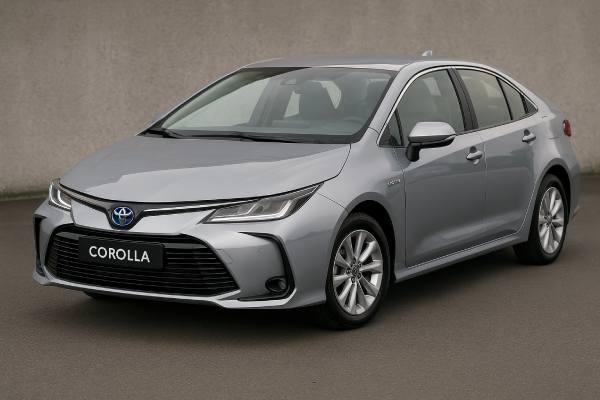
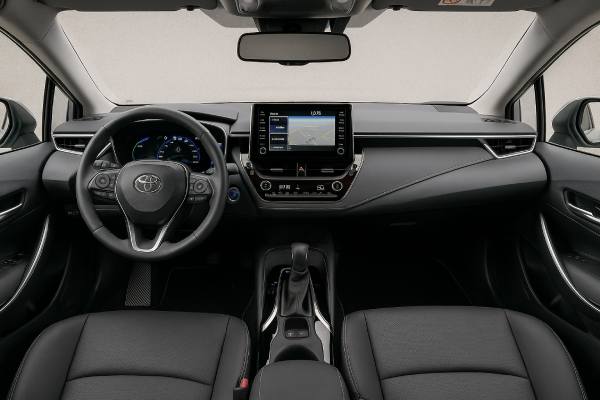
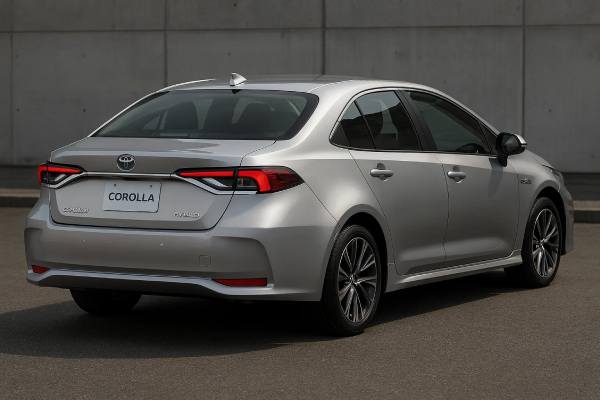
The facelifted Toyota Corolla Hybrid AWD pairs proven Toyota Hybrid System tech with a compact e-axle at the rear, delivering confident all-weather traction without the weight or drag of a full-time mechanical system. The 1.8-litre Atkinson-cycle 2ZR-FXE engine, stronger hybrid drive software, and revised motor-generators raise system output while keeping real-world efficiency high. Electronic On-Demand All-Wheel Drive (often called e-AWD) adds rear-axle torque when pulling away or when front grip falls, then decouples to save fuel. Inside, the update brought a larger display, Toyota Safety Sense updates, and improved cabin tech. For owners, the Corolla Hybrid AWD stands out for low routine running costs, predictable maintenance, and strong safety credentials. This guide focuses on the North American market (where this AWD variant is offered widely), with brief notes where Europe differs, and is designed to help shoppers, owners, and DIYers understand specifications, service needs, reliability patterns, and how it stacks up in the class.
Key Takeaways
- Confident traction from Electronic On-Demand AWD with little efficiency penalty; combined economy around mid-40s mpg (5–5.5 L/100 km) in typical use.
- Simple ownership: robust eCVT, chain-driven engine, and long service intervals keep costs predictable.
- Strong safety story with active driver assistance features standard across trims.
- Watch for 12 V battery aging and brake corrosion on low-mileage, short-trip cars in cold climates.
- Oil changes every 10,000 miles / 12 months (16,000 km / 12 months) with 0W-16 meeting current spec.
What’s inside
- AWD Corolla Hybrid Overview
- Specs and Technical Data
- Grades, Packages, and Safety Tech
- Reliability, Issues, and Actions
- Maintenance Plan and Buyer’s Guide
- Road Manners and Performance
- AWD Corolla vs Rivals
AWD Corolla Hybrid Overview
The facelift introduced for the 2023 model year elevated the Corolla Hybrid’s appeal by adding available Electronic On-Demand All-Wheel Drive (e-AWD) alongside a bump in combined output to roughly the high-130s horsepower. The hardware remains deliberately simple. Up front, Toyota’s 1.8-litre 2ZR-FXE four-cylinder runs the efficient Atkinson cycle and drives through a planetary eCVT that blends power with a front motor-generator. A compact rear electric motor (no driveshaft or rear differential) supplies the rear wheels only when needed. That means AWD traction at launch or on low-grip surfaces, yet front-drive efficiency during steady cruising.
The facelift also brought a refreshed front fascia, wheel designs, updated infotainment with faster processors, improved voice control, and the latest Toyota Safety Sense suite. Cabin packaging is unchanged: adult-friendly front space, adequate rear room, and a practical trunk with split-folding seats. Ride quality skews comfortable, and the steering is light but consistent—exactly what most buyers in this class want for daily commuting and longer trips.
From an ownership lens, two things make the AWD Hybrid compelling: predictable service (no scheduled timing-belt replacements, no traditional automatic transmission to flush) and class-leading active safety. The trade-offs are modest: acceleration is adequate rather than brisk, and the compact trunk opening (sedan) limits bulky cargo. Winter drivers will appreciate the e-AWD’s “always ready” behaviour, especially with proper winter tyres; spirited drivers may prefer a rival with firmer damping or more grunt. For most, the AWD Hybrid strikes a balanced, durable, and efficient middle ground.
Specs and Technical Data
Powertrain and Efficiency (HEV)
| Item | Data |
|---|---|
| Engine code | 2ZR-FXE (Atkinson-cycle) |
| Engine layout & cylinders | Inline-4, DOHC, 4 valves/cyl |
| Bore × stroke | 80.5 × 88.3 mm (3.17 × 3.48 in) |
| Displacement | 1.8 L (1798 cc) |
| Induction | Naturally aspirated |
| Fuel system | EFI with direct-injected-style atomization via port (Toyota hybrid strategy) |
| Compression ratio | ~13.0:1 (Atkinson-cycle effective) |
| Electric motors | Front traction motor-generator; rear axle motor for e-AWD |
| System voltage | ~650 V (hybrid transaxle bus; nominal) |
| HV battery | Lithium-ion, under rear seat |
| Max system power | ~138 hp (103 kW) combined |
| Max engine torque | ~142 Nm (105 lb-ft) (engine), blended with motor torque |
| Timing drive | Chain |
| Emissions & efficiency reference | EPA ratings (North America baseline) |
| Rated economy (AWD) | ~44 mpg combined (US) ≈ 5.3 L/100 km (≈ 53 mpg UK) |
| Real-world highway @ 120 km/h (75 mph) | ~5.5–6.0 L/100 km (≈ 39–43 mpg US / 47–52 mpg UK), temperature and wind dependent |
| Aerodynamics | Cd ~0.28–0.30 depending on wheel/tire |
Transmission and Driveline
| Item | Data |
|---|---|
| Transmission | eCVT (planetary power-split) |
| Drive type | Electronic On-Demand AWD (front-drive default; rear motor engages as needed) |
| Final drive | ~3.4–3.7 (effective; eCVT planetary) |
| Differential | Open (front transaxle), electronic torque apportionment via control software |
| Refuel to full | ~3–4 minutes (gasoline) |
Chassis and Dimensions
| Item | Data |
|---|---|
| Platform | TNGA-C |
| Suspension (front/rear) | MacPherson strut / Multi-link |
| Steering | Electric power assist; compact, direct ratio |
| Brakes | 4-wheel discs with regenerative blending; front ventilated |
| Wheels/Tires | 15–18 in depending on grade; common fitments 205/55R16, 225/40R18 |
| Ground clearance | ~135 mm (5.3 in) |
| Length / Width / Height | ~182–183 in × ~70 in × ~56–57 in (4625–4650 × 1775–1780 × 1430–1450 mm) |
| Wheelbase | 106.3 in (2700 mm) |
| Turning circle (curb-to-curb) | ~35.6 ft (10.8 m) |
| Curb weight (AWD) | ~3200–3300 lb (1450–1500 kg), by trim |
| GVWR | ~3950–4050 lb (1790–1837 kg), by trim |
| Fuel tank | ~11.4 US gal (43 L / 9.5 UK gal) |
| Cargo volume (sedan) | ~13.1 ft³ (370 L) SAE |
Performance and Capability
| Metric | Value |
|---|---|
| 0–60 mph / 0–100 km/h | ~9.5–10.2 s (AWD, typical test range) |
| Top speed | ~112 mph (180 km/h) |
| Braking 100–0 km/h | ~38–40 m (125–131 ft) on all-season tyres |
| Towing capacity | Not rated for towing (North America) |
| Roof load | Up to ~75 kg (165 lb) with proper accessories |
Fluids and Service Capacities
| System | Specification & Capacity |
|---|---|
| Engine oil | 0W-16, ILSAC GF-6B; ~4.2–4.5 L (4.4–4.8 US qt) with filter |
| Coolant | Toyota Super Long Life Coolant (pink); ~6–7 L (6.3–7.4 US qt) across loops |
| Transaxle fluid | Toyota WS ATF (hybrid transaxle); drain & fill ~3–4 L (3.2–4.2 US qt) |
| Rear e-axle | Sealed unit; no routine fluid service specified |
| A/C refrigerant | R-1234yf; typical charge ~420–550 g (14.8–19.4 oz) |
| A/C compressor oil | ND-11; ~100–150 mL (3.4–5.1 fl oz), service-dependent |
| Key torque specs | Wheel nuts ~103 Nm (76 lb-ft); oil drain ~40 Nm (30 lb-ft); spark plugs ~18 Nm (13 lb-ft) |
Electrical
| Item | Data |
|---|---|
| 12 V battery | 45–60 Ah AGM (trunk-mounted on many trims); group size varies by supplier |
| Spark plugs | Long-life iridium; gap ~0.7–0.8 mm (0.028–0.031 in) |
Safety and Driver Assistance
- Crash ratings (sedan): strong overall results in IIHS testing, with high marks in major crashworthiness categories and available Top Safety Pick status depending on year/trim and headlight selection.
- Headlights: LED projector units; rating varies by trim/wheel/tire and headlight package.
- ADAS (Toyota Safety Sense, generation varies by MY): Pre-Collision with pedestrian/cyclist detection, Lane Departure Alert with Steering Assist, Lane Tracing Assist, Full-Speed Dynamic Radar Cruise Control, Road Sign Assist; Blind Spot Monitor and Rear Cross-Traffic Alert commonly available or standard on upper grades.
Notes: Figures vary slightly by trim, wheel/tire package, and market updates. Always verify by VIN and build date.
Grades, Packages, and Safety Tech
Trims and options (North America baseline):
Corolla Hybrid AWD availability varies by year and market mix. Common grades include LE AWD as the entry point, with additional appearance or equipment packages depending on model year (e.g., cold-weather features, larger wheels, or special editions). Look for the e-AWD badging cues in the build sheet and the extra rear motor hardware when inspecting underneath. Alloy wheel designs, seat trim, and infotainment screen size are the easiest identifiers at a glance.
Mechanical differences by trim:
- Wheel and tyre packages (16–18 in) subtly change steering feel, noise, and braking distances.
- Some grades include different rear brake hardware or pads for NVH tuning.
- Cold-weather packages (where offered) add heated front seats, heated mirrors, and sometimes a heated steering wheel, which meaningfully improve winter usability.
Infotainment and audio tiers:
The facelift moved to a faster infotainment architecture with a larger centre display on many grades and wireless smartphone integration. Base audio is adequate; upgraded systems add more speakers and better tuning. Connectivity features (remote lock/start, vehicle health reports) depend on subscription and market policies.
Safety ratings (by year/trim):
The facelifted Corolla sedan maintains strong structural performance and offers active safety across the range. Headlight performance ratings can vary by the exact lamp and trim, which matters for Top Safety Pick criteria—shoppers focused on safety should confirm the specific grade’s headlight rating. Child-seat anchors (LATCH) are accessible; rear-facing seat fit is best behind the passenger with the front seat adjusted moderately.
ADAS evolution and calibration:
- Toyota Safety Sense generation updates improved lane-keeping centering logic, added more robust pedestrian detection, and refined adaptive cruise behaviour.
- After collision repairs or windshield replacement, calibration of forward camera and radar is required. Shops need a level surface and appropriate targets/scan tools.
- Some blind-spot and cross-traffic alerts rely on accurate rear radar alignment; bumper repairs may require re-aiming.
Year-to-year highlights:
- 2023 MY: Added Electronic On-Demand AWD to the Corolla Hybrid line and increased combined power output.
- 2024–present: Continued packaging refinements, software updates, and availability of connected services; minor equipment reshuffles tied to trim strategy.
Reliability, Issues, and Actions
Overall pattern:
The AWD Corolla Hybrid follows Toyota’s established hybrid durability pattern: robust engine, conservative cooling strategies, and eCVT hardware with few internal failures. Most owner-reported issues are minor and revolve around consumables or usage patterns rather than inherent defects.
Common → Occasional → Rare (with cost tier):
- Common / Low:
- 12 V battery aging (3–6 years): symptoms include intermittent “Ready” refusal, cluster resets, or warning lights after cold soaks. Remedy: load-test and replace with correct AGM spec; ensure proper venting.
- Brake corrosion in snowbelt/low-mileage cars: uneven pad deposits and rotor rust cause pulsation. Remedy: regular highway-speed brake applications, seasonal inspection, rotor/pad service as needed.
- Cabin air filter saturation (12–24 months): reduced HVAC performance and blower noise. Remedy: replace with high-quality filter; check cowl drains.
- Occasional / Medium:
- Wheel-speed sensor or reluctor contamination after deep slush/mud usage: ABS/traction lights. Remedy: clean/inspect; replace sensor if signal remains erratic; perform calibration.
- Windshield camera misalignment after glass replacement: lane-keeping faults or disengagement. Remedy: precise camera recalibration; verify steering angle sensor zero-point.
- Rare / Medium–High:
- HV battery module imbalance at high mileage or under severe heat: DTCs for state-of-charge deviations. Remedy: pack diagnosis; module replacement under warranty where applicable; ensure cooling path is clean.
- Transaxle bearing noise (very rare): high-frequency whirring that scales with road speed; confirm tyre/road noise before condemning. Remedy: transaxle service or replacement.
Software and calibrations:
Toyota periodically issues ECU and ADAS calibrations to improve driveability (EV-to-ICE transitions), adaptive-cruise gaps, and false-positive detection in specific weather conditions. Dealers can check by VIN and apply updates using factory tooling.
Corrosion hotspots:
Front subframe edges, rear suspension arms, and exhaust flange hardware in salted regions deserve inspection. Protective coatings and routine washing help.
Pre-purchase checklist:
- Confirm all recalls and service campaigns are complete (VIN check).
- Review maintenance history: oil changes (0W-16), coolant intervals, brake fluid replacement.
- Inspect brakes for rust lip and pad thickness; verify smooth regen-to-friction transitions.
- Test ADAS functions on a short drive; verify no calibration faults.
- Scan for DTCs (including hybrid/ABS) before purchase; check 12 V battery state.
Maintenance Plan and Buyer’s Guide
Baseline schedule (typical North America):
- Engine oil & filter: every 10,000 miles / 12 months (16,000 km / 12 months) with 0W-16 meeting current spec; severe use or frequent short trips: halve the interval.
- Engine air filter: inspect at 15,000 miles (24,000 km); replace at 30,000–45,000 miles (48,000–72,000 km) depending on environment.
- Cabin air filter: 12–24 months.
- Coolant (engine/hybrid loops): first replacement at ~100,000 miles (160,000 km) or 10 years, then every 5 years / 50,000 miles (80,000 km).
- Spark plugs (iridium): 120,000 miles (192,000 km) typical.
- Brake fluid: test strips annually; replace every 3 years regardless of mileage in humid/snowbelt climates.
- Hybrid transaxle fluid (WS): not required by schedule; many owners choose a 60,000–100,000-mile drain-and-fill as preventative maintenance.
- Serpentine/accessory belts & hoses: inspect annually after 60,000 miles; replace if cracking/noise.
- Tyres: rotate every 5,000–7,500 miles (8,000–12,000 km); alignment check annually or after impacts.
- 12 V battery: load-test annually after year 3; expect replacement in the 4–6 year window.
- Brake hardware: inspect at each tyre rotation; clean/grease slide pins in salted regions.
- HV system: visual checks of battery cooling intake and ducting; software health checks at service intervals.
Fluid specifics and capacities (quick reference):
- Oil: 0W-16 GF-6B; ~4.4–4.8 qt (4.2–4.5 L) with filter.
- Coolant: Toyota SLLC (pink); ~6–7 L total.
- Transaxle (WS): ~3–4 L drain & fill.
- A/C: R-1234yf, ND-11 oil; charge mass per label (verify underhood placard).
Essential torques for DIYers:
- Wheel nuts 103 Nm (76 lb-ft).
- Oil drain plug ~40 Nm (30 lb-ft).
- Spark plugs ~18 Nm (13 lb-ft) on clean, lightly oiled threads (or per plug maker).
Buyer’s guide—what to seek/avoid:
- Seek: cars with complete, documented maintenance; winter-market vehicles with regular brake service; trims with the better headlight package if night driving is frequent.
- Avoid/inspect carefully: low-mileage cars used for very short trips (moisture in exhaust/brakes); windshield-repaired vehicles without ADAS calibration paperwork; heavily curbed wheels (possible alignment/suspension check needed).
- Durability outlook: Excellent for daily use when serviced on schedule; expect routine consumables and a 12 V battery within normal windows. The hybrid battery and e-AWD unit are designed for the life of the vehicle under typical conditions.
Road Manners and Performance
Ride, handling, and NVH:
The TNGA-C chassis provides a planted, quiet ride. Multi-link rear suspension manages bumps without harshness, and the body feels solid over expansion joints. Steering effort is light at parking speeds and naturally builds on the highway; feedback is modest but consistent. On 18-inch wheels, impacts are more pronounced and tyre roar rises slightly compared with the 16-inch setup.
Powertrain character:
Throttle response is smooth from a stop thanks to the electric motors. Under hard acceleration, engine revs rise (typical of eCVT hybrids), but cabin noise is well managed compared with earlier generations. Transitions between EV creep and engine assist are generally seamless; in cold weather, expect earlier engine engagement as the system warms components and the cabin. Drive modes (Normal/Eco/Power) adjust pedal mapping and climate strategy more than outright output.
AWD behaviour:
The e-AWD system drives the rear axle primarily at launch and when slip is detected at the front. There’s no centre differential or driveshaft; the rear motor simply adds torque when requested by the control software. Benefits include secure starts on snowy or wet surfaces and better stability on gravel or steep driveways. Because the rear axle is idle most of the time, efficiency barely drops versus the FWD hybrid—an everyday advantage over mechanical AWD compacts.
Real-world efficiency:
Owners regularly see mid-40s mpg (≈5.5 L/100 km) combined, with 47–50 mpg (4.7–5.0 L/100 km) possible in gentle suburban driving and 38–43 mpg (6.1–5.5 L/100 km) on fast highways or cold days. Winter tyres, roof racks, and short trips reduce economy; summer tyres and smooth freeway cruising help.
Key numbers that matter:
- 0–60 mph: high-9s to low-10s depending on load and tyres—adequate for merging and passing.
- 100–0 km/h stop: typically high-30s metres on quality all-seasons; winter tyres lengthen distances but improve take-off traction.
- Turning circle: tight enough for urban parking, helped by light steering.
Load and towing:
No tow rating is provided for North America; light hitch-mount carriers are acceptable within tongue weight limits. With four adults and luggage, the Corolla remains composed; expect a modest economy penalty under full load.
AWD Corolla vs Rivals
Subaru Impreza (AWD, non-hybrid):
Impreza offers full-time mechanical AWD and a lower centre of gravity (flat-four engine), giving it a more planted feel on challenging roads. It is noisier and typically less fuel-efficient than the Corolla Hybrid AWD. If you value efficiency and total cost of ownership, the Toyota leads; if you prioritise dynamic poise on backroads, Subaru has an edge.
Hyundai Elantra Hybrid (FWD only):
The Elantra Hybrid matches Toyota on efficiency and cabin tech but lacks AWD. In snowbelt states and provinces, that alone can swing the decision to Corolla. Hyundai’s longer limited warranties may appeal; Toyota counters with longer hybrid system durability track record.
Honda Civic (FWD, no hybrid in all markets during early facelift years):
Civic drives with more verve and offers excellent cabin packaging. Without a widely offered AWD hybrid combination in North America during these years, it cedes the traction-plus-efficiency niche to Corolla Hybrid AWD.
Mazda3 (optional AWD, non-hybrid):
Mazda3 AWD has strong performance and premium cabin materials but consumes more fuel and may carry higher tyre/brake costs. The Corolla’s hybrid system lowers running costs and wins the efficiency race decisively.
Bottom line:
If you need all-weather traction and hybrid economy in a compact sedan, the Corolla Hybrid AWD sits in a tiny competitive set—and largely defines it. Drivers who value sharper handling or stronger passing power have alternatives; buyers focused on fuel savings, safety tech, and low hassle will be happiest here.
References
- Toyota Boosts 2023 Corolla Hybrid with All-New Infrared Edition, New Grades and Available AWD 2022 (Press Release)
- Fuel Economy of the 2023 Toyota Corolla Hybrid AWD 2023 (EPA Fuel Economy)
- 2023 Toyota Corolla 4-door sedan 2023 (Safety Rating)
Disclaimer
This guide is for informational purposes only and is not a substitute for professional diagnosis or repair. Specifications, torque values, capacities, and service intervals vary by VIN, model year, market, and equipment. Always verify figures and procedures against your official service documentation and the under-hood labels before performing any work.
If you found this useful, please consider sharing it with friends or fellow owners on Facebook or X/Twitter to support xcar’s work.