
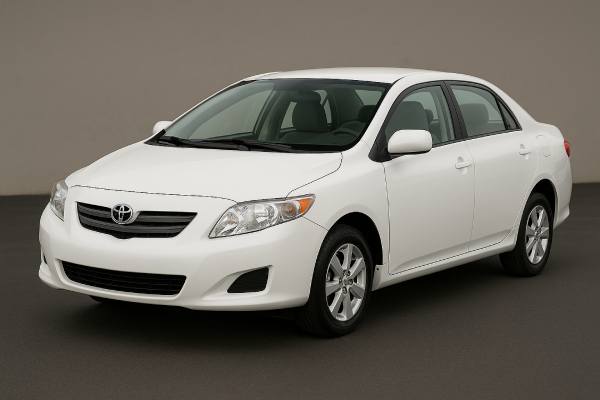
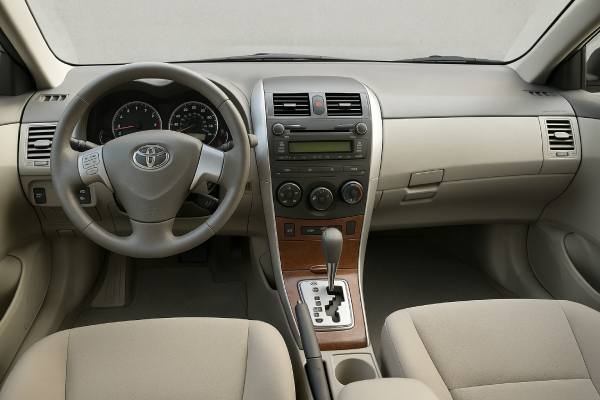
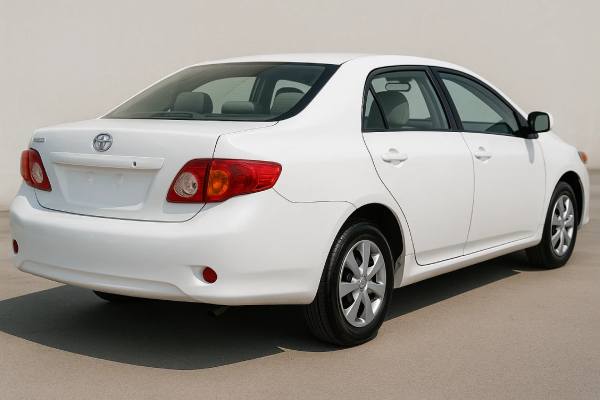
The ZRE151-generation Toyota Corolla with the 1ZR-FAE Valvematic 1.6-litre engine sits at a sweet spot in the nameplate’s long run. It blends traditional Corolla virtues—robustness, easy ownership, and excellent packaging—with a noticeably more eager powertrain than earlier 1.4/1.6 units. The 1ZR-FAE’s fully variable valve lift and timing sharpen throttle response and trim fuel use without complicating normal maintenance. Inside, the E150 platform brings a quieter cabin and better highway stability than the prior E120, while retaining simple controls and long-wearing materials. Safety equipment and body strength took a step forward in this period, with widespread availability of side/curtain airbags and stability control depending on trim and year. If you want a compact sedan that is inexpensive to keep yet not dull to drive, this 2007–2010 Corolla 1.6 Valvematic remains a smart pick—provided you verify service history and pay attention to a handful of age-related items outlined below.
Fast Facts
- Lively yet frugal 1.6 Valvematic (132 hp / 97 kW) with broad mid-range and low real-world fuel use.
- Quiet, stable motorway manners; simple, durable cabin and controls.
- Strong crash performance for its era with widely available side/curtain airbags and stability control (varies by market/trim).
- Watch for age-related suspension bush wear and cooling system service delays; inspect chains for noise at high mileage.
- Oil service every 10,000–15,000 km or 12 months (follow local schedule); brake fluid every 24 months.
What’s inside
- Corolla ZRE151 overview
- ZRE151 engine and performance
- Trims, safety and options
- Reliability and service actions
- Maintenance and buyer’s guide
- Driving impressions and economy
- Rivals and alternatives
Corolla ZRE151 overview
The ZRE151 Corolla sedan arrived on the E150 platform as Toyota refined the formula: a stiffer body, better noise isolation, and a more settled motorway ride than the E120, yet with the same upright seating and excellent outward visibility. The 1ZR-FAE engine introduced Toyota’s Valvematic system—continuous control of valve lift and timing—to boost efficiency and responsiveness. Compared with the older 3ZZ-FE and early 1ZR-FE, the Valvematic 1.6 feels more flexible in everyday driving, pulling cleanly from low revs and staying composed at higher rpm.
Space efficiency is a highlight. Four adults fit comfortably, the boot is large for the class, and the rear seatbacks fold on many trims to extend cargo length. Controls are straightforward, with rotary HVAC knobs and clearly labeled stalks. Materials resist wear well; even high-mileage cars often present cleanly if serviced.
Safety and structure moved forward in this era. Many cars were supplied with six airbags (front, side, curtain) and ABS with EBD and Brake Assist; stability control became more common as years progressed, and ISOFIX/LATCH anchors were widely fitted. Brakes are dependable and easy to service, and the torsion-beam rear suspension—while not sporty—keeps costs and complexity down.
Daily-use costs are modest. The timing chain means no scheduled belt replacement, and the 1.6’s oil capacity and plug service intervals are friendly to owner-maintenance. Real-world fuel consumption for mixed driving typically lands in the high-6s to low-7s L/100 km (33–37 mpg US / 40–44 mpg UK) when driven sensibly on 15–16-inch tyres.
ZRE151 engine and performance
Engine and Performance (1ZR-FAE Valvematic)
| Item | Spec |
|---|---|
| Engine code | 1ZR-FAE (Valvematic) |
| Layout | Inline-4, DOHC, 16 valves, Dual VVT-i with continuously variable valve lift (Valvematic) |
| Displacement | 1.6 L (1,598 cc) |
| Bore × stroke | 80.5 × 78.5 mm (3.17 × 3.09 in) |
| Compression ratio | ~10.7:1 |
| Induction / fuel | Naturally aspirated / MPI (sequential) |
| Max power | 132 hp (97 kW) @ ~6,400 rpm |
| Max torque | 160 Nm (118 lb-ft) @ ~4,400 rpm |
| Timing drive | Chain (no scheduled replacement; inspect by symptoms) |
| Emissions class (EU) | Euro 4 / early Euro 5 depending on year |
| Rated combined economy | ~6.6–7.0 L/100 km (36–34 mpg US / 43–42 mpg UK) |
| Real-world highway @ 120 km/h (75 mph) | ~6.5–7.2 L/100 km (36–33 mpg US / 43–40 mpg UK), tyre and wind dependent |
| Aerodynamics | Cd approx. 0.29–0.30 (typical for E150 sedan; varies with trim and tyres) |
Why the 1ZR-FAE matters: Valvematic adjusts both timing and lift continuously, so the throttle plate stays more open under part load, reducing pumping losses. The result is a broader torque spread and better response with modest gains in efficiency. Unlike direct-injection systems, this MPI engine avoids common DI carbon build-up issues on intake valves.
Transmission and Driveline
| Item | Spec |
|---|---|
| Transmissions | 6-speed manual (C6x family) • Multidrive S CVT (availability varies by market/trim) |
| Final drive | ~4.1–4.3 (varies with gearbox and wheel package) |
| Drive type | Front-wheel drive (open diff) |
| Refuel time | Conventional petrol; typical pump-to-full in 3–5 min |
Notes: The 6-speed manual suits the 1.6’s character and keeps revs low on the motorway; the CVT aims for efficiency and smoothness, with “stepped” programming on some cars to mimic upshifts under heavy throttle. Neither setup is complex to service when fluid intervals are respected.
Chassis and Dimensions (sedan)
| Item | Spec |
|---|---|
| Front / rear suspension | MacPherson strut / torsion-beam |
| Steering | Electric power assist; rack-and-pinion |
| Brakes (front/rear) | Ventilated discs / solid discs (drums on certain lower trims/markets) |
| Tyres / wheels | Typical: 195/65 R15 or 205/55 R16 |
| Ground clearance | ~150 mm (5.9 in) |
| Length × width × height | ~4,540 × 1,760 × 1,460 mm (178.7 × 69.3 × 57.5 in) |
| Wheelbase | ~2,600 mm (102.4 in) |
| Turning circle (kerb-to-kerb) | ~10.4–10.8 m (34–35 ft) |
| Curb weight | ~1,230–1,310 kg (2,712–2,888 lb) depending on trim/gearbox |
| GVWR | ~1,700–1,760 kg (3,748–3,880 lb) |
| Fuel tank | ~55 L (14.5 US gal / 12.1 UK gal) |
| Boot (trunk) volume | ~450 L (15.9 ft³), VDA |
Performance and Capability
| Metric | Value |
|---|---|
| 0–100 km/h (0–62 mph) | ~10.3–11.0 s (manual faster than CVT) |
| Top speed | ~195–200 km/h (121–124 mph) |
| 100–0 km/h braking | ~38–40 m (varies with tyres/pads) |
| Towing (braked / unbraked) | Up to ~1,300 kg (2,866 lb) / ~450–500 kg (992–1,102 lb) where equipped |
Fluids and Service Capacities (typical)
| System | Specification / Capacity |
|---|---|
| Engine oil | API SN/ILSAC GF-5 or better; 0W-20/5W-30 by climate; ~4.2 L (4.4 US qt) with filter |
| Coolant | Toyota Super Long Life (pink); typically ~5.5–6.5 L (5.8–6.9 US qt) total system |
| Manual gearbox | 75W-90 GL-4/GL-5; ~1.7–2.2 L (1.8–2.3 US qt) depending on code |
| CVT (Multidrive S) | Toyota CVT Fluid (TC/FE per year); service fill ~3.5–5.0 L (3.7–5.3 US qt) |
| A/C refrigerant | R-134a; charge ~450–550 g (15.9–19.4 oz) typical |
| Spark plugs | Iridium, nominal gap ~0.8–1.0 mm (0.031–0.039 in) |
| Alternator output | ~100–120 A (varies by equipment) |
| 12V battery | ~45–60 Ah, DIN/H4 or similar footprint |
| Key torque | Wheel nuts ~103 Nm (76 lb-ft); spark plugs ~18–20 Nm (13–15 lb-ft) |
Capacities can vary by VIN, gearbox, and market equipment; verify in the exact owner/service documentation for your car.
Safety and Driver Assistance (period features)
| Item | Details |
|---|---|
| Crash performance | Strong results in period Euro NCAP testing for Corolla E150 with side/curtain airbags fitted |
| Head restraints | Good whiplash geometry for era; adjust to head height |
| Airbags | Dual front standard; side/curtain widely available; driver knee airbag on selected markets |
| Active safety | ABS, EBD, Brake Assist; stability control (VSC) standard or optional by year/trim |
| Child seats | ISOFIX/LATCH lower anchors, top tether points on rear shelf or seatback depending on market |
Trims, safety and options
Typical trim walk (Europe, examples — names vary by country):
- Base/Active/Linea Terra: Steel wheels, manual A/C, cloth seats, 4–6 airbags, ABS/EBD/BA. Some early cars without VSC; rear drums on certain specs.
- Mid/Terra/Linea Luna/Sol: 15–16-inch alloys, front fogs, trip computer, audio upgrades, steering-wheel controls, split-fold rear backrest. VSC and side/curtain airbags more commonly included.
- High/Sol/Executive: 16-inch alloys, climate control, cruise control, leather/alcantara options, auto lights/wipers, mirror pack. Curtain airbags and VSC prevalent; sometimes rear disc brakes and upgraded audio.
Option packs and identifiers
- Safety pack: Side/curtain airbags and VSC bundled in some 2007–2008 cars. Look for VSC switch near steering column and stability-control icon at start-up.
- Comfort pack: Climate control, upgraded audio, parking sensors.
- Winter pack (cold-weather): Heated seats, heated mirrors, washer-jet heaters.
- Visual tells: Alloy style and fog-lamp bezels help distinguish mid/high trims. VIN plate and build sheet codes confirm exact equipment.
Year-to-year notes
- 2007 launch: Early equipment variation; stability control often optional.
- 2008: Wider availability of VSC, incremental NVH improvements, minor trim changes.
- 2009–2010: Valvematic availability broadens; manual commonly 6-speed; detail updates to audio and interior finishes in some markets.
Safety ratings summary
- Euro NCAP: The E150-series Corolla achieved a strong star rating under the period’s protocol when equipped with side and curtain airbags, with solid adult and child protection scores. Pedestrian protection reflected typical heights of the class for the time.
- IIHS/NA ratings: Not applicable for this exact Euro-spec 1.6 Valvematic sedan.
- Headlights: Halogen reflectors are common; aim adjustment and clean polycarbonate lenses maintain best performance. Consider fresh bulbs if output feels weak.
ADAS and calibration
This generation predates widespread camera/radar ADAS. If stability control or ABS/ESP warning lamps appear after suspension or steering work, a steering-angle sensor and yaw-rate calibration may be required. After windscreen replacement, ensure rain-sensor reattachment and mirror base cover are correctly seated to avoid rattles.
Reliability and service actions
Overall verdict: High. The 1ZR-FAE is a durable chain-driven MPI engine with few systemic failures when serviced on time and fed correct oil. Most issues on 2007–2010 cars are age and mileage related rather than design flaws.
Common → occasional → rare issues (with severity/cost guidance)
- Front suspension bushings and drop links (common | low–medium):
Symptoms: Clunks over bumps, vague steering on the motorway.
Cause: Worn anti-roll-bar links and lower-arm rear bushes.
Fix: Replace links/bushes; alignment afterward. Parts are inexpensive; labour moderate. - Rear beam bush wear (occasional | medium):
Symptoms: Thumps over sharp edges, rear-end steer feel.
Cause: Age-hardened bonded bushes in torsion beam.
Fix: Press-in bushes or beam swap; then 4-wheel alignment. - Water pump seep (occasional | low):
Symptoms: Pink crust near pump, mild coolant loss.
Cause: Seal wear with age.
Fix: Replace pump and gasket; renew SLLC coolant. - Coil-on-plug misfire (occasional | low–medium):
Symptoms: Misfire under load, stored P030x codes.
Cause: Ageing ignition coils or plugs past service life.
Fix: Replace affected coil(s); fit correct iridium plugs and verify gap. - Timing chain noise at high mileage (rare | medium):
Symptoms: Rattle on cold start, cam/crank correlation code.
Cause: Chain stretch or tensioner wear on extended oil intervals.
Fix: Measure with scan tool and service data; replace chain/guides/tensioner if out of spec; adhere to 10–15k km oil changes thereafter. - CVT judder or drone (CVT cars; occasional | medium):
Symptoms: Low-speed shudder, droning at steady speeds.
Cause: Aged CVT fluid or software adaptation out of range.
Fix: Perform drain-and-fill with correct Toyota CVT fluid; reset adaptations; update software if available. - A/C blend flap noise or weak cooling (occasional | low):
Symptoms: Clicking behind dash, inconsistent temperature.
Cause: Actuator wear; low refrigerant charge.
Fix: Replace actuator; leak-test and recharge to label spec.
Corrosion watchpoints
- Underbody seams near rear beam mounts; front subframe edges; exhaust hangers. Regular washing in winter climates slows progression. Boot lid inner seams and door lower lips benefit from periodic wax.
Electrical
- Door-loom wires can stiffen with age causing intermittent lock/window operation; repair with quality splices. Battery grounds should be clean; low voltage triggers multiple warning lights.
Recalls / service campaigns (Europe, period-typical highlights)
- Airbag inflator campaigns: Check VIN for completion on any open airbag inflator recalls affecting many models of the era.
- Floor-mat/pedal interference: Verify correct floor-mat fitment; use only fixed, approved mats.
Always confirm via the official VIN recall portal for your country and have a dealer print the campaign history.
Pre-purchase requests
- Full service history (oil intervals, coolant, brake fluid).
- Proof of recall compliance.
- Recent front/rear brake and suspension inspection.
- Cooling system pressure test and water-pump check.
- Scan for stored/pending codes; look at fuel trims and idle stability.
- CVT cars: evidence of fluid service and a smooth, slip-free test drive.
Maintenance and buyer’s guide
Baseline service schedule (typical Europe; confirm by VIN and local conditions)
- Engine oil & filter: Every 10,000–15,000 km or 12 months (shorten with heavy urban or cold-short-trip use).
- Air filter (engine): Inspect annually; replace every 30,000–45,000 km or as needed.
- Cabin filter: 12 months or 15,000–20,000 km.
- Spark plugs (iridium): 90,000–120,000 km or 6–8 years.
- Coolant (SLLC pink): First at 160,000 km/10 years, then every 80,000 km/5 years (follow label/market guidance).
- Brake fluid: Every 24 months regardless of mileage.
- Manual gearbox oil: Inspect at 90,000–120,000 km; replace by 150,000 km or 10 years if unknown.
- CVT fluid: Drain/fill every 60,000–90,000 km (severe use: 45,000–60,000 km).
- Aux drive belt and hoses: Inspect annually; replace at first signs of cracking or noise.
- Throttle body/MAF cleaning: Inspect/clean at 60,000–90,000 km to maintain idle quality.
- Brake pads/rotors: Inspect at every service; typical pad life 30,000–60,000 km front.
- Wheel alignment/tyre rotation: Rotate every 10,000–15,000 km; align annually or after impacts/tyre changes.
- 12V battery test: Annually from year 5 onward; many last 5–7 years in mixed use.
- Timing chain: No interval; monitor for noise, correlation codes, or excessive stretch values.
Fluids quick reference
- Oil viscosity: 0W-20 preferred for economy in moderate climates; 5W-30 acceptable in warmer or high-mileage engines if consumption is noted.
- Coolant: Toyota Super Long Life (pink). Never mix with green/red aftermarket coolants.
- Brake fluid: DOT 4.
- Power steering: Electric assist (no fluid service).
- Fuel: RON 95 (AKI 91) or higher recommended.
DIY friendliness
- Oil, air, and cabin filters are easy access.
- Spark plugs require coil-on-plug removal but are reachable with basic tools.
- Front pads/discs are straightforward; use correct slide-pin grease and torque.
- For CVT or gearbox fluid, follow level-set procedures precisely (fluid temp windows matter).
Buyer’s checklist
- Cold start from overnight: Listen for chain rattle; idle should be steady.
- Clutch take-up (manual): No shudder; bite point consistent.
- CVT: Smooth, slip-free acceleration; no judder on gentle take-off.
- Steering: No dead-zone or pull; EPS warning light off after start.
- Suspension: Quiet over speed humps; no rear-beam thump.
- Brakes: Firm pedal; no vibration at motorway speeds.
- HVAC: Quick A/C pull-down; actuator quiet.
- Body: Even panel gaps; check rear wheel-arch lips and subframe edges for corrosion.
- Paperwork: Service book stamps/invoices; recall printout; two keys; owner’s manual set.
Which years/trims to target
- Look for 2009–2010 cars with the 6-speed manual, VSC, and side/curtain airbags, ideally with documented fluid services. Mid-level trims offer the best value (split-fold rear seat, wheel/tyre that keeps ride quality). Well-maintained earlier cars are still excellent buys if safety pack is present.
Durability outlook
With timely fluids and gentle warm-ups, the 1ZR-FAE commonly exceeds 250,000–300,000 km without internal work. Suspension refreshes, exhaust sections, and ancillaries are predictable wear items. Electronics age gracefully; wiring and grounds deserve periodic attention.
Driving impressions and economy
Ride, handling, NVH
The E150 chassis prioritises composure and low noise over sharpness. On 15-inch tyres, impacts are well muted and straight-line stability is excellent. Steering is light but consistent, making city manoeuvres easy; it gains reassuring weight on the motorway. Body roll is present during quick transitions yet well controlled. Brake feel is progressive and confidence-inspiring with quality pads; repeated hard stops will reveal the limits of modest-sized front discs, but fade is rarely an issue in normal driving.
Powertrain character
The Valvematic 1.6 is flexible and quiet at cruise. It pulls willingly from 1,500 rpm and wakes up past 3,500 rpm, with best urge near the 4,000–6,000 rpm band. The 6-speed manual’s ratios keep the engine in its sweet spot while allowing relaxed cruising; 120 km/h requires modest rpm in top gear. CVT cars favour efficiency, maintaining low revs and simulating steps under heavy throttle on some calibrations. Throttle tip-in is clean; warm restarts are immediate.
Efficiency in the real world
Expect 6.6–7.5 L/100 km in mixed commuting (35–31 mpg US / 42–37 mpg UK), trending lower on steady A-roads/motorways with gentle driving. Short winter trips with heavy heater use can push consumption to 8.0–8.5 L/100 km (29–28 mpg US). Tyre selection and pressure matter: low-rolling-resistance 15-inch tyres provide the best economy and ride comfort; 16-inch packages feel tighter but cost a few tenths of a litre per 100 km.
Load and towing
With a braked rating around 1,300 kg, the Corolla manages small trailers and light track-day or garden loads if equipped. Keep speeds moderate, increase following distance, and expect a 15–25% fuel use penalty. For regular towing, fit fresh pads and ensure cooling and gearbox fluid (especially CVT) are up to date.
Rivals and alternatives
- Volkswagen Golf Mk5 1.6 MPI: Quieter at speed with a more planted feel, but the older MPI 1.6 lacks the Corolla’s Valvematic flexibility and can be thirstier. Interior materials impress; electrical gremlins are more common.
- Honda Civic 1.8 i-VTEC (FN/FK): More engaging chassis and stronger acceleration; ride is firmer and tyre roar higher. Maintenance costs are similar; boot practicality varies by body style.
- Mazda3 (BK/BL) 1.6/2.0: Crisp steering and tidy handling. Rust vigilance is essential on early cars; parts pricing can be higher in some markets.
- Ford Focus Mk2 1.6: Excellent steering and composure; cabin materials and certain ancillaries (e.g., alternators, heater valves) age less gracefully than Toyota’s.
- Toyota Auris 1.6 Valvematic: Mechanically similar hatchback alternative with slightly shorter wheelbase and different packaging—worth cross-shopping for those who prefer a hatch.
Choose the Corolla if you value long-term durability, straightforward maintenance, and a calm daily drive. Choose a rival if you prioritise sharper handling or a more adventurous interior—while accepting potentially higher upkeep.
References
- Toyota Corolla (2007) 2007 (Safety Rating)
- Corolla_TMMT_EE (OM12F04E) 2007 (Owner’s Manual)
- Auris Advances On All Fronts With Toyota Optimal Drive 2009 (Press Kit — Valvematic/1ZR-FAE tech data)
- 2008 Paris Motor Show 2008 (Manufacturer Press Information — Valvematic overview)
Disclaimer
This guide is for informational purposes and does not replace professional diagnosis or repair. Specifications, torque values, fluid capacities, and service intervals vary by VIN, market, model year, and equipment. Always confirm procedures and values with your vehicle’s official owner’s manual and service documentation.
If you found this helpful, please share it with fellow owners on Facebook or X/Twitter to support xcar’s work.