
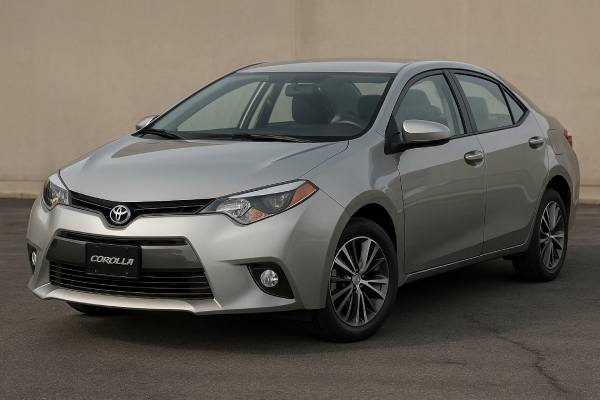

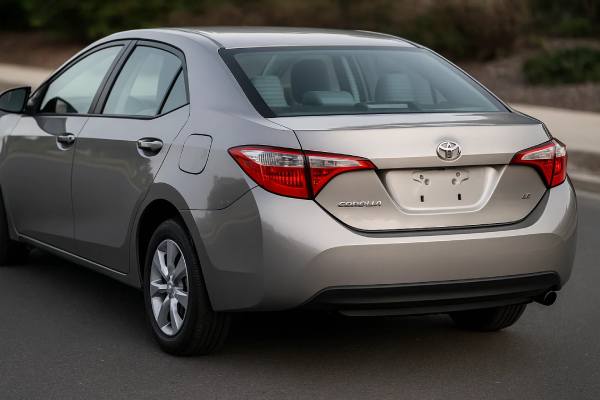
The LE Eco–spec Corolla pairs Toyota’s eleventh-generation sedan with the 2ZR-FAE “Valvematic” engine—an evolution of the 1.8-liter four that adds continuously variable valve lift and timing for a modest power bump (140 hp) and notably better highway economy. It keeps the ownership-friendly formula: aluminum block and head, chain-driven cams, port fuel injection (no direct-injection deposits to chase), and a CVTi-S transmission tuned for low-rpm cruising. Versus the 132-hp 2ZR-FE cars, the 140-hp LE Eco also gains aero tweaks, specific gearing, and low-rolling-resistance tires that push real-world mpg higher. Inside, the long wheelbase unlocks adult-friendly rear legroom and a calm motorway ride; controls are straightforward and durable, with sensible feature steps between trims. This guide focuses on the 2013–2016 (2014–2016 for most North American retail) LE Eco configuration using the 2ZR-FAE. You will find detailed specs and capacities, realistic performance numbers, reliability patterns to watch, a practical maintenance plan, and a buyer’s checklist tuned to this efficient, low-drama Corolla.
Key Takeaways
- Valvematic 1.8 (2ZR-FAE) delivers 140 hp with relaxed cruising and excellent highway economy (up to low-40s mpg US / ≈5.6–6.0 L/100 km).
- Long wheelbase, quiet cabin, and simple controls make daily driving easy; rear seat space is a strong suit.
- Ownership is straightforward: chain-drive cams, long-life plugs and coolant, and widely available parts keep costs down.
- Caveat: CVTi-S feel depends on software and fluid health; keep calibration current and service on condition under severe use.
- Typical service marker: engine oil 0W-20 every 10,000 miles / 12 months (shorten to 5,000 miles / 6 months for severe duty).
Navigate this guide
- Corolla ZRE172 140-hp overview
- Specifications and technical data
- Corolla trims and safety tech
- Reliability issues and actions
- Maintenance and buyer’s guide
- Driving and performance
- Corolla versus rivals
Corolla ZRE172 140-hp overview
Toyota engineered the 2ZR-FAE for incremental gains without complicating ownership. Valvematic varies intake valve lift continuously (paired with Dual VVT-i phasing) to reduce pumping losses, improve part-throttle efficiency, and lift peak output to 140 hp (104 kW). The system keeps the proven pieces—aluminum construction, timing chain, coil-on-plug ignition, and port injection—so maintenance stays close to the simple 132-hp 2ZR-FE playbook. You get the frugality of a leanly geared CVT and the drivability of an engine that doesn’t rely on boost.
Within the eleventh-generation body, the LE Eco adds aero aids (underbody panels, a subtle rear lip, grille treatment), low-rolling-resistance tires, and calibration changes to the CVTi-S and final drive. In normal driving, the car settles into low engine speeds at 65–75 mph, delivering near-hybrid highway economy without hybrid complexity. The long 2,700-mm (106.3-in) wheelbase and a calmer suspension tune improve straight-line stability and rear legroom compared with the prior E150 generation. Steering is light and predictable; the ride is composed on 15- or 16-inch tires and only slightly firmer if optioned with larger wheels (where available).
Cabin design favors durability and ease: clear instruments, uncomplicated infotainment of the era, and real knobs for volume and temperature on most trims. The trunk’s square shape (about 13 ft³ / ~368 L) fits checked-baggage-size suitcases side-by-side; the rear seatbacks fold for longer loads. For families, LATCH anchors are accessible and the roofline allows easier installation of forward-facing seats than many rivals.
Shoppers typically compare LE Eco to rivals’ “high-efficiency” variants (Civic HF, Focus SFE, Elantra Eco of the period). The Corolla’s angle is not flash but consistency: low running costs, widely available parts, and a powertrain that trades theatrics for serenity and endurance. If you want to spend years commuting, not troubleshooting, the 2ZR-FAE Corolla is an easy recommendation.
Specifications and technical data
Engine and Performance — 2ZR-FAE Valvematic (ICE-only)
| Item | Specification |
|---|---|
| Code | 2ZR-FAE (Valvematic + Dual VVT-i) |
| Layout & cylinders | Inline-4, aluminum block/head, DOHC, 16 valves (4/cyl) |
| Displacement | 1.8 L (1,798 cc) |
| Bore × stroke | 80.5 × 88.3 mm (3.17 × 3.48 in) |
| Induction | Naturally aspirated |
| Fuel system | Port fuel injection (PFI) |
| Compression ratio | ~10.6:1 |
| Max power | 140 hp (104 kW) @ ~6,100 rpm |
| Max torque | 171 Nm (126 lb-ft) @ ~4,000 rpm |
| Timing drive | Chain (no scheduled replacement) |
| Emissions/efficiency std. | EPA ratings (North America baseline) |
| Rated efficiency (typical) | Up to 35 mpg US combined; highway up to 42 mpg US (≈6.7 / 5.6 L/100 km) depending on trim/tires |
| Real-world highway @ 120 km/h (75 mph) | ≈38–41 mpg US (6.2–5.7 L/100 km), temperature/tire/aero dependent |
| Aerodynamics | Cd ≈ 0.28–0.29 (LE Eco trim specifics) |
Valvematic’s continuously variable valve lift trims pumping losses at light load; results are most obvious on steady-state motorway runs.
Transmission and Driveline
| Item | Specification |
|---|---|
| Transmission | CVTi-S CVT (most LE Eco); limited 6-speed manual availability depends on market/year |
| Gear ratios | CVT wide ratio spread; stepped-shift logic under brisk throttle |
| Final drive ratio | Trim/year dependent; LE Eco uses a taller overall ratio vs 132-hp models |
| Drive type | Front-wheel drive |
| Differential | Open; stability/traction control standard |
| Refuel time | ~5 minutes (gasoline) |
Chassis and Dimensions
| Item | Specification |
|---|---|
| Front suspension | MacPherson strut, coil springs, stabilizer bar |
| Rear suspension | Torsion beam axle, coil springs, stabilizer bar |
| Steering | Electric power assist |
| Brakes | Front ventilated discs; rear drums on most; market/package variations exist |
| Wheels/tires | 195/65R15 LRR (LE Eco); 205/55R16 available by package |
| Ground clearance | ~140 mm (5.5 in) |
| Length × width × height | ≈ 4,640 × 1,775 × 1,455 mm (182.6 × 69.9 × 57.3 in) |
| Wheelbase | 2,700 mm (106.3 in) |
| Turning circle (curb-to-curb) | ~10.8 m (35.6 ft) |
| Curb weight (approx) | 1,270–1,330 kg (2,800–2,930 lb), by trim/transmission |
| GVWR | ~1,735–1,780 kg (3,825–3,925 lb), equipment dependent |
| Fuel tank | 50 L (13.2 US gal / 11.0 UK gal) |
| Cargo volume (SAE) | ~368 L (13.0 ft³) |
Performance and Capability
| Metric | 2ZR-FAE LE Eco |
|---|---|
| 0–100 km/h (0–62 mph) | ~9.7–10.2 s (CVT); slightly quicker with 6-MT where offered |
| Top speed | ~190 km/h (118 mph), electronically limited |
| 100–0 km/h braking | ~38–40 m, tire/condition dependent |
| Towing | Light utility only; follow manual limits |
| Roof load | Typical 45–68 kg (100–150 lb) with approved crossbars |
Fluids and Service Capacities (decision-useful)
| System | Specification |
|---|---|
| Engine oil | 0W-20, API SN or later; ~4.2–4.4 L (4.4–4.6 US qt) with filter |
| Coolant | Toyota Super Long Life (pink), 50/50 premix; long-life interval |
| CVT fluid | Toyota-specified CVT fluid; service on condition or severe use interval |
| Manual gearbox | Appropriate GL-grade oil per manual; check by VIN |
| Brake fluid | DOT 3 (DOT 4 compatible); replace ≈ every 3 years |
| A/C refrigerant | R-134a; charge quantity varies slightly by year/trim |
| Spark plugs | Iridium, long-life; gap ≈ 1.0–1.1 mm (0.039–0.043 in) |
| Key torque | Wheel lug nuts ≈103 Nm (76 lb-ft) |
Always confirm exact capacities/specs by VIN and build month; running changes and market packaging exist.
Electrical
| Item | Specification |
|---|---|
| Alternator | ~100–130 A (equipment dependent) |
| 12-V battery | Maintenance-free lead-acid; group size varies by cold-weather package |
| Ignition | Coil-on-plug; ECM-controlled dwell; iridium plugs |
Safety and Driver Assistance
| Feature | 2013–2016 LE Eco (North America baseline) |
|---|---|
| Airbags | Front, side, side curtain, and driver knee (coverage varies by year/trim) |
| Crash structure | Strong results in moderate overlap and side; small-overlap varies by test year |
| Headlights | Halogen reflector/projector by trim; performance depends on aim and bulb condition |
| ADAS | AEB/lane-keeping generally not equipped in this span; ESC/traction/ABS/TPMS standard |
| Child-seat | LATCH/ISOFIX outboard, top tether anchors on rear shelf; good anchor access |
Corolla trims and safety tech
Where the 140-hp engine shows up. In North America, the 2ZR-FAE is tied to the LE Eco configuration. The ethos is efficiency first: aerodynamics, tire spec, and calibration all serve low consumption without sacrificing day-to-day usability. Equipment typically includes 15-inch LRR tires, a rear lip spoiler, specific underbody panels, and CVTi-S with stepped-shift logic. Cabin features step sensibly from base content (touchscreen audio, Bluetooth, backup camera in many years) to Plus/Premium packages with 16-inch wheels, Smart Key, moonroof, upgraded audio, and SofTex-trimmed seats depending on the model year.
Year-to-year notes (2013–2016). Early production cars emphasize the efficiency story with aggressive aero/tire combinations; later updates improve infotainment responsiveness, integration, and camera clarity. Some packages shuffle names (e.g., LE Eco Plus/LE Eco Premium), but the mechanical theme—Valvematic, aero aids, and tall gearing—remains constant. If you cross-shop with 132-hp trims (L, LE, S), remember those use the 2ZR-FE; their economy and gearing differ, as do wheels/tires.
Quick identifiers.
- Underhood label indicates Valvematic; look for “Valvematic” casting/cover cues vs “VVT-i” alone.
- Wheels/tires: Many LE Eco cars run 195/65R15 LRR tires; 16s arrive with Plus/Premium.
- Aero bits: Subtle rear lip and underbody panels; grille treatment varies slightly by package.
Safety ratings in context. The Corolla’s fundamentals—airbag coverage, ESC, and a cabin that accommodates a range of occupants—deliver competitive passive safety for the class. Small-overlap results vary by test year and headlamp performance depends on aim and bulb health. If your commute is rural or heavily unlit, consider upgrading bulbs (legal, appropriate spec) and insist on precise headlamp aiming after any front-end repair or windshield replacement.
ADAS and service implications. Since this span predates widespread Toyota Safety Sense in the Corolla line, collision repairs rarely entail camera/radar calibration. That’s a cost advantage. After any glass work, re-aim the lights and verify wiper cowl sealing to keep water away from the cabin filter and evaporator case.
Reliability issues and actions
The LE Eco’s 2ZR-FAE and CVTi-S are generally robust. Most aging presents as predictable wear items rather than systemic flaws. Organize your expectations by prevalence and cost:
Engine / induction (Valvematic specifics).
- Occasional / low–medium: Oil-control valve or Valvematic actuator sensitivity to oil neglect. Symptoms → sporadic idle drift, hesitation, or codes for valve control performance. Root cause → varnish/sludge restricting control flow. Remedy → restore with correct oil changes, clean/replace the affected control valve; perform ECM relearn if required.
- Common / low: Water pump seep/noise at 60–100k miles. Symptoms → pink residue, faint bearing growl. Remedy → pump and belt replacement; bleed, confirm fan cycling.
- Occasional / low: PCV valve aging, mild oil mist in intake. Remedy → replace PCV, inspect hoses; check for air-filter oiling.
Fuel and ignition.
- Rare / low–medium: Coil-on-plug failure (usually moisture-related). Remedy → swap test, replace coil, verify plug gap.
- Occasional / low: Carbon odor/evap small leak codes from fuel-cap seal aging. Remedy → new cap; smoke test if codes persist.
Cooling and HVAC.
- Common / low: Evaporator odor in humid climates. Remedy → HVAC cleaner via intake, frequent fresh-air use before shutdown, cabin filter discipline.
- Occasional / medium: Thermostat/cap fatigue with age. Remedy → replace both components, verify bleed.
CVTi-S driveline.
- Common / low: Rubber-band sensation or flare under light throttle (calibration feel). Remedy → confirm latest software; compare in Sport/manual steps.
- Occasional / medium: Fluid degradation under heat/urban duty. Remedy → condition-based CVT fluid exchange with the correct Toyota fluid; follow temperature-check procedure and adaptation steps.
- Rare / high: Internal belt/bearing damage after contamination or severe neglect. Remedy → professional rebuild or replacement; evaluate cooler and fluid history.
Suspension, brakes, body.
- Common / low: Front strut mount clunk over speed bumps at higher mileage. Remedy → replace mounts/bearings as assemblies when doing struts.
- Common / low: Rear drum shoe hardware chirp/uneven adjustment. Remedy → clean/lube contact points; renew hardware.
- Occasional / medium: Wheel-bearing drone after pothole strikes. Remedy → hub assembly replacement.
- Occasional / low: Surface corrosion in salt states (fasteners, brackets, brake lines). Remedy → clean, protect, and monitor annually.
Electrical and infotainment.
- Occasional / low: Aging 12-V battery voltage dips causing transient warnings. Remedy → load-test, replace, clean grounds.
- Occasional / low: Head unit lag/pairing quirks on early software. Remedy → firmware update or module reset.
Recalls, TSBs, extended coverage (high-level).
- SRS airbag control unit logic update (multi-model campaign over later years) to ensure robust deployment logic in specific interference scenarios. Action → verify via official VIN lookup; ensure remedy appears in dealer records.
- Infotainment/backup-camera firmware updates addressing stability or image behavior.
- CVT calibration updates improving creep/low-speed feel in certain conditions.
Pre-purchase asks.
- Proof of regular oil changes (Valvematic appreciates clean 0W-20), coolant service, and brake fluid changes.
- Any CVT fluid service under severe use (heat, towing a small utility, or stop-and-go urban life).
- VIN recall check printout and a service history summary.
- Tires with even wear (alignment matters), quiet wheel bearings, and calm strut mounts over speed bumps.
- Cooling system pressure test; verify fans engage with A/C on hot idle.
- Interior electronics: steering-wheel controls, USB/12-V ports, camera clarity.
Maintenance and buyer’s guide
Practical maintenance schedule (distance/time)
- Engine oil and filter: 10,000 miles / 12 months with 0W-20; shorten to 5,000 miles / 6 months for short-trip, dusty, or extreme-temp use.
- Engine air filter: Inspect 15,000 miles; replace ~30,000 miles (earlier in dusty regions).
- Cabin filter: 15,000–20,000 miles or annually; more often in pollen/dust seasons.
- Coolant (SLLC): First change around 100,000 miles / 10 years, then 50,000 miles / 5 years.
- Spark plugs (iridium): 120,000 miles typical; sooner on misfire or economy drop.
- Serpentine/aux belt: Inspect from 60,000 miles; replace on cracks/noise.
- CVT fluid: Condition-based; many owners choose 60,000–90,000 miles under severe service using Toyota-specified fluid and temp check.
- Manual trans oil: 60,000–90,000 miles (check level/condition by VIN spec).
- Brake fluid: Replace every 3 years.
- Pads/rotors/drums: Inspect each rotation; service on thickness/runout or hardware squeal.
- Tire rotation/alignment: Rotate 5,000 miles; align annually or after impacts.
- 12-V battery: Load-test annually from year three; 4–6 years typical life.
- PCV valve/hoses: Inspect ~90,000 miles; replace if sticky or oil-fogging present.
- Timing chain: No interval; service only on noise or correlation faults.
Fluids and specs to know.
- Oil: 0W-20, API SN or later; capacity ~4.4–4.6 US qt with filter.
- Coolant: Toyota SLLC pink 50/50; verify capacity by VIN.
- CVT: Toyota-specified CVT fluid; use factory fill procedures (temperature window, level plug).
- Brake fluid: DOT 3/DOT 4 compatible; flush until clear, no air.
- Lug torque: ≈103 Nm (76 lb-ft) on clean, dry studs.
Buyer’s checklist (what to inspect and why)
- Engine and Valvematic behavior: From cold start, listen for chain noise (rare) and idle smoothness; on a warm road test, hold 1,500–2,000 rpm steady and feel for hesitation (oil-control cleanliness).
- CVTi-S manners: In stop-and-go, creep should be smooth; brisk throttle should trigger stepped-shift logic without flare. Confirm the latest software is installed (seller paperwork).
- Cooling system health: Pink residue near water pump = impending replacement; ensure fans cycle with A/C at hot idle.
- Suspension and tires: Quiet strut mounts, no bearing drone on a 45–55 mph sweep; even tire wear at edges (alignment).
- Brakes: No pulsation, quiet drums (if fitted) with clean hardware.
- Body and corrosion: Brake lines, rear subframe seams, wheel-arch lips—especially in salt regions.
- Interior electrics: Steering-wheel controls, USB/12-V sockets, camera clarity; confirm both keys and immobilizer function.
- Paper trail: Oil changes, coolant first service, brake-fluid flushes, any CVT fluid service under severe use, VIN recall printout.
Which years/trims to target.
Pick the newest, best-kept LE Eco you can afford with full records. The Plus/Premium packages add features (16-in wheels, Smart Key, moonroof) without undermining the efficiency brief. A fresh set of quality LRR tires, properly inflated, often delivers the most immediate improvement in highway range and road feel.
Long-term outlook.
With routine service, these cars routinely cross 150,000–200,000 miles (240,000–320,000 km) without major powertrain work. Keep oil fresh, cooling clean, and CVT fluid healthy under severe use and the LE Eco’s core strengths—low noise, low fuel spend, low drama—tend to hold up well.
Driving and performance
Ride/handling/NVH. The LE Eco prioritizes calm. On 15-inch LRR tires, impacts are rounded off and the cabin stays composed over expansion joints. The 2,700-mm wheelbase improves straight-line stability; wind and road noise are well managed for the class. Steering is light but accurate, with predictable on-center behavior on motorways. Brake feel is linear; pedal travel is moderate with a clean buildup that’s confidence-inspiring in traffic.
Powertrain character. Valvematic improves part-throttle efficiency and slightly fattens the midrange vs the 132-hp tune. Around town, the engine feels quiet and cooperative; merging onto the highway, the CVTi-S lets revs rise briefly, then settles into a low, steady state. Sport mode speeds responses and, with simulated steps, reduces the traditional CVT “drone” sensation. If you find a manual, it adds engagement without much penalty in noise.
Real-world economy. Expect 34–36 mpg US (6.9–6.5 L/100 km) mixed if you drive gently and keep tires at placard pressures; highway at 65–75 mph (105–120 km/h) commonly returns 38–41 mpg US (6.2–5.7 L/100 km) in fair weather. Winter fuel blends, short trips, roof racks/boxes, and headwinds meaningfully reduce these numbers; warm weather and smooth driving can beat label ratings.
Select metrics.
- 0–60 mph: ~9.7–10.2 s (CVT), tire and load dependent.
- 50–70 mph passing: mid-7s to low-8s seconds with a decisive kickdown.
- 100–0 km/h braking: high-30s meters on healthy tires/rotors.
- Turning circle: ~35.6 ft curb-to-curb; easy to park.
Traction and control. Stability control intervenes gently; with winter tires, snow takeoffs are drama-free. The torsion-beam rear keeps behavior tidy in quick avoidance maneuvers. Under full load with passengers and luggage, braking distances stretch predictably; the chassis remains composed on highway undulations.
Loads, racks, and penalties. The platform is not configured for meaningful towing; treat it as a roof-rack/bikes/skis commuter. Plan for a 5–10% economy penalty for a roof box and 10–20% in strong winter headwinds.
Corolla versus rivals
Honda Civic HF (2013–2015). Civic’s steering feel and body control are a touch sharper; its HF variant posts strong highway numbers. The Corolla counters with a softer ride, roomier rear seat, and simpler maintenance (PFI, chain drive, no DI deposits). If you want a little more road feel, Civic wins; if you want lower cabin noise and easier long-term upkeep, Corolla has the edge.
Mazda3 2.0 Skyactiv (2014–2016). The enthusiast’s choice: crisp handling, attractive cabin, and thrifty engines. Direct injection can mean intake-valve deposits in severe short-trip use; the Corolla’s port injection avoids that maintenance concern. Ride quality in the Mazda is firmer, especially on bigger wheels; the Toyota is calmer day-to-day.
Hyundai Elantra Eco (where available). Tempting features and warranty value. Turbo small-displacement engines can introduce more plumbing and maintenance variables as the miles stack up. Corolla’s naturally aspirated Valvematic is simpler to live with, and parts pricing is very friendly.
Ford Focus SFE (2014–2016). Excellent chassis and steering; however, the dual-clutch automatic in many Focus models is the ownership wildcard. Corolla’s CVTi-S isn’t exciting but tends to age more gracefully with clean fluid and sane temperatures.
Verdict. If your priority is years of low-effort commuting with adult-sized rear space and wallet-friendly fuel bills, the LE Eco’s 140-hp Valvematic Corolla nails the brief. Other compacts can be sportier or flashier; few are as consistently easy to own.
References
- 2014 Toyota Corolla 2013 (Press Kit)
- 2016 Toyota Corolla Product Information – Toyota USA Newsroom 2015 (Product Information)
- Gas Mileage of 2014 Toyota Corolla 2014 (Fuel Economy Ratings)
- 2014 Toyota Corolla 2014 (Safety Rating)
- Part 573 Safety Recall Report 20V-024 2020 (Recall Database)
Disclaimer
This guide is for informational purposes and does not replace professional diagnosis or repair. Specifications, torque values, intervals, and procedures can vary by VIN, market, and equipment. Always verify against your vehicle’s official service documentation and follow manufacturer instructions.
If this article helped you, please consider sharing it with fellow owners on Facebook or X/Twitter to support xcar’s work.