
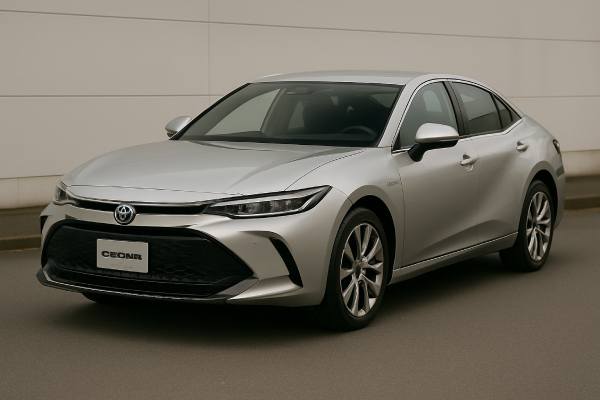
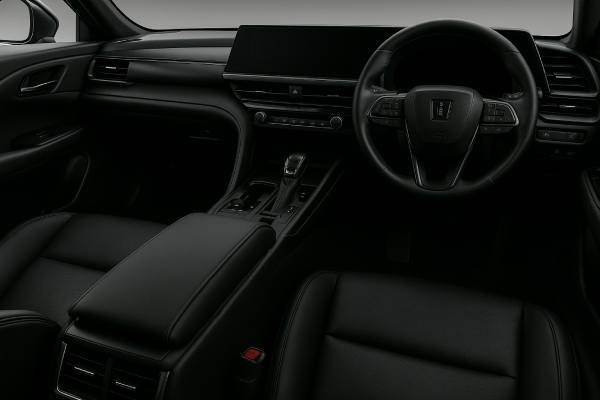
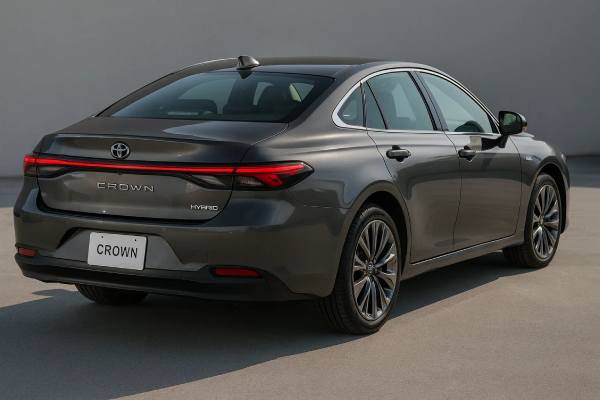
The Toyota Crown (AZSH35) brings a distinct formula to modern sedans: elevated ride height, standard electronic all-wheel drive, and Toyota’s fourth-generation hybrid system built around the A25A-FXS 2.5-liter Atkinson-cycle engine. In everyday driving, it feels composed and quiet, with smooth electric-assist takeoff and confident traction in rain or snow. Owners value its real-world fuel economy, straightforward controls, and an interior that leans premium without becoming flashy. Behind the styling is a GA-K platform and a hybrid eCVT that favors low-rpm efficiency; the result is relaxed highway cruising and stress-free city manners. For the U.S. and Canada, the 2.5-liter hybrid powertrain is fitted to XLE and Limited grades and is rated at 236 hp; Platinum models use a different 2.4-liter Hybrid MAX system. This guide focuses on the A25A-FXS Crown as sold from model year 2023 onward and distills the specs, dimensions, performance, safety, ownership patterns, and maintenance practices most buyers ask about.
Fast Facts
- Elevated hybrid sedan with standard electronic AWD; calm ride and excellent cabin quietness.
- Consistent real-world economy; 41 mpg combined rating (≈ 5.7 L/100 km).
- Strong safety story including modern driver assistance and top lab results.
- Caveat: camera/wiring and infotainment updates were the subject of 2023–2025 service actions—verify completion by VIN.
- Typical service touchpoints: engine oil 0W-16 every 5,000–10,000 miles / 8,000–16,000 km (follow severe/normal schedule).
Explore the sections
- Crown AZSH35 Detailed Overview
- Crown AZSH35 Specs and Technical Data
- Trims, Options and Safety Tech
- Reliability, Issues and Service Actions
- Maintenance and Buyer’s Guide
- Driving and Performance
- Crown vs Key Rivals
Crown AZSH35 Detailed Overview
Toyota revived the Crown nameplate for North America as a premium-leaning, all-hybrid sedan with crossover-like stance. The AZSH35 code denotes the 2.5-liter hybrid AWD version using Toyota’s A25A-FXS “Dynamic Force” engine coupled to dual motor-generators and an eCVT transaxle. A separate rear e-axle (motor-driven rear differential) provides on-demand torque to the back wheels without a driveshaft, allowing precise front-rear distribution and smooth transitions between EV glide, blended hybrid operation, and engine drive.
The Crown’s mission is straightforward: deliver near-luxury ride isolation and confident, all-weather traction while returning class-leading fuel economy for a non-plug-in hybrid. The long wheelbase aids stability, while the elevated hip point eases ingress/egress and improves outward visibility. Noise suppression is a highlight—acoustic glass and careful sealing calm wind rush at freeway speeds, and the hybrid system’s low-rpm engine mapping reduces droning during gentle acceleration. The GA-K platform (also underpinning Camry, Lexus ES, and others) supports a MacPherson-strut front and multi-link rear suspension tuned for compliance first, with secondary motions controlled by progressive bump stops and well-matched damper rates. Braking uses an electronically controlled system that blends regeneration with hydraulic pressure; pedal feel is predictable after a brief acclimation.
For the U.S./Canada, the 2.5-liter hybrid is offered on XLE and Limited grades, both with standard electronic on-demand AWD. Platinum models are equipped with a different drivetrain (2.4-liter turbocharged Hybrid MAX and a geared 6-speed automatic) and are outside this article’s scope except where features overlap. Key ownership advantages of the A25A-FXS Crown include robust fuel savings relative to similarly sized AWD sedans, lower brake wear thanks to regeneration, and a reputation for conservative thermal management of hybrid components. The cabin emphasizes practical luxury: wide, supportive seats; dual 12.3-inch displays; and a control layout that avoids deep submenus for daily tasks. Space utilization favors rear-seat comfort; trunk volume is competitive, though measurement methods differ between EPA and manufacturer figures (see Dimensions).
Shoppers cross-shopping midsize and large sedans will find the Crown sits between segments: larger and taller than mainstream midsize hybrids, not as overtly sporty as some turbocharged rivals, but with a refined, easygoing character that suits commuting, long highway trips, and mixed-weather climates. For buyers prioritizing durability, operating cost, and comfort over outright speed, the AZSH35 specification is the sweet spot in the range.
Crown AZSH35 Specs and Technical Data
Powertrain & Efficiency (Hybrid “Powertrain & Efficiency” label applies)
| Item | Specification |
|---|---|
| Code | A25A-FXS (Dynamic Force) + dual motor-generators |
| Engine layout & cylinders | Inline-4, DOHC, 16 valves; VVT-iE (intake) & VVT-i (exhaust) |
| Bore × stroke | 87.5 × 103.4 mm (3.44 × 4.07 in) |
| Displacement | 2.5 L (2,487 cc) |
| Induction | Naturally aspirated (Atkinson/Miller-cycle) |
| Fuel system | D-4S (direct + port fuel injection) |
| Compression ratio | 14.0:1 |
| Max engine power | ~174 hp (130 kW) @ ~5,700 rpm (engine alone) |
| Max engine torque | ~221 Nm (163 lb-ft) @ 3,600–5,200 rpm (engine alone) |
| System output (net) | 236 hp (176 kW) |
| Electric motors (traction) | Front MG2 + rear e-axle motor; permanent-magnet AC synchronous |
| Hybrid battery | Nickel-metal hydride (nominal pack voltage ~250–260 V) |
| Rated efficiency (combined) | ~5.7 L/100 km (41 mpg US / 49 mpg UK) |
| Real-world highway @ 120 km/h (75 mph) | Commonly high-30s mpg US (≈ 6.5–6.7 L/100 km) depending on temps/tires |
| Emissions standard | U.S. Tier 3 / LEV III SULEV rating |
Transmission & Driveline
| Item | Specification |
|---|---|
| Transmission | eCVT (planetary gear-split hybrid transaxle) |
| Drive type | Electronic on-demand AWD (motorized rear axle) |
| Final drive / ratios | Not applicable (eCVT; continuously variable) |
| Differential | Open front; motor-driven rear axle engages as needed |
| Replenishment time | Refuel to full ≈ 5–10 minutes (gasoline) |
Chassis & Dimensions
| Item | Specification |
|---|---|
| Platform | GA-K (TNGA-K) |
| Suspension (front/rear) | MacPherson strut / multi-link |
| Steering | Electric power steering |
| Brakes | Regenerative + hydraulic discs front/rear |
| Wheels/Tires (typical) | 225/55R19 (XLE); 225/45R21 available (Limited w/ package) |
| Length / Width / Height | ≈ 4,930 mm × 1,839 mm × 1,539 mm (194.0 × 72.4 × 60.6 in) |
| Wheelbase | ≈ 2,850 mm (112.2 in) |
| Ground clearance | ≈ 165–170 mm (6.5–6.7 in) |
| Cargo volume (trunk) | Manufacturer commonly quotes ≈ 15.2 ft³; EPA luggage volume listing ≈ 13 ft³ |
| Fuel tank | ~55 L (≈ 14.5 US gal / 12.1 UK gal) |
Performance & Capability
| Item | Specification |
|---|---|
| Acceleration (0–100 km/h / 0–62 mph) | Mid-7s to low-8s typical for A25A-FXS AWD (varies by tire/conditions) |
| Braking distance (100–0 km/h) | Competitive for class; aided by regen pre-blend |
| Towing / payload / roof | No U.S./Canada factory tow rating published for AZSH35 sedan |
Fluids & Service Capacities
| System | Spec / Capacity |
|---|---|
| Engine oil | 0W-16, ILSAC GF-6B; ~4.5–4.8 L (4.8–5.1 US qt) with filter (confirm by VIN) |
| Engine coolant | Toyota Super Long Life Coolant (pink); premixed; capacity varies by loop—verify in service manual |
| Hybrid transaxle | Toyota Genuine ATF WS; drain/fill quantity varies (service-inspection based) |
| A/C refrigerant | R-1234yf; charge weight varies by option content—label under hood prevails |
| Brake fluid | DOT 3 or DOT 4 equivalent; flush interval time-based |
| Key torque (examples) | Wheel lug nuts typically ~103 Nm (76 lb-ft)—confirm for wheel spec |
Electrical
| Item | Specification |
|---|---|
| 12-V battery | AGM low-profile (group size varies by market; check label); DC-DC converter (no alternator) |
| Spark plugs | Iridium fine-tip; long-life service interval; gap set at factory (do not re-gap) |
Safety & Driver Assistance
| Item | Details |
|---|---|
| Crash ratings | IIHS: 2023 Crown large car Top Safety Pick+ with Good crashworthiness and Superior pedestrian front-crash prevention day & night; headlight ratings vary by trim (Good/Adequate). |
| Headlight rating (IIHS) | Good/Adequate depending on grade/options |
| ADAS suite | Toyota Safety Sense 3.0 standard: Pre-Collision w/ Pedestrian Detection (incl. bicyclist/motorcyclist in certain conditions), Full-Speed Dynamic Radar Cruise Control w/ Curve Speed Management, Lane Departure Alert w/ Steering Assist, Lane Tracing Assist, Road Sign Assist, Automatic High Beams, Proactive Driving Assist. Blind Spot Monitor w/ Safe Exit Assist standard; Rear Cross-Traffic Alert & parking aids available/standard by trim. |
Notes: Dimensions vary slightly with wheels/tires and packaging. Where a range or “typical” is shown, verify by VIN and local documentation before purchasing parts or fluids.
Trims, Options and Safety Tech
Grades (A25A-FXS 2.5-liter hybrid AWD):
XLE: The value-oriented entry with cloth or SofTex-trimmed seating, 19-inch wheels and all-season tires, dual 12.3-inch displays (infotainment and instrument cluster), wireless Apple CarPlay/Android Auto, heated front seats, dual-zone climate control, and Toyota Safety Sense 3.0. Expect the standard electronic on-demand AWD system and the 236-hp hybrid rating. Audio is typically a base 6- or 8-speaker setup; a power moonroof may be available via package depending on model year.
Limited: Adds features most buyers want without changing the powertrain: leather or SofTex/leather-trim, ventilated fronts, heated rears, panoramic fixed glass roof (varies by year/package), JBL audio, surround-view or panoramic camera availability, heated steering wheel, and wheel/tire upgrades including available 21-inch alloys. Suspension calibration remains comfort-biased; brake and steering hardware are shared with XLE, but pad compound and tire spec can alter feel.
Platinum (context): Uses the 2.4-liter Hybrid MAX (not the A25A-FXS). It’s included here only to avoid confusion while shopping—if you want the calmer, more efficient 2.5-liter hybrid discussed in this article, focus on XLE and Limited.
Quick identifiers (A25A-FXS models):
- Underhood emissions label calls out the 2.5-liter hybrid.
- Absence of “HYBRID MAX” badging; wheel and exhaust styling are more understated than Platinum.
- Build sheet (door jamb) and VIN data will reflect the A25A-FXS hybrid configuration when decoded.
Mechanical/functional differences by trim:
- Both XLE and Limited share the same 236-hp hybrid system and eAWD layout. Limited’s larger wheels can slightly affect ride/road noise and winter traction depending on tire choice.
- Parking tech: Limited typically adds front/rear parking assist with auto-braking and a panoramic view monitor; Traffic Jam Assist and Lane Change Assist features appear on higher-content models depending on year package logic.
- Brakes and suspension are tuned for comfort across both trims; Platinum alone has Adaptive Variable Suspension for the Hybrid MAX drivetrain.
Year-to-year highlights (A25A-FXS):
- 2023 (launch year): All grades standard with Toyota Safety Sense 3.0, electronic on-demand AWD.
- 2024: Feature packaging updates; driver-assistance availability expands on upper trims; cosmetic changes (stitching/trim finishes) appear on higher grades.
- 2025: Infotainment refinements and safety-tech packaging updates continue; verify if your desired Limited includes Traffic Jam Assist or Driver Monitor Camera as feature availability varies by build.
Safety ratings summary:
- IIHS: 2023 Crown (large car) earned Top Safety Pick+ with Good crashworthiness, Good/Adequate headlights (trim-dependent), and Superior vehicle-to-pedestrian front crash prevention day and night. 2024–2025 ratings remain strong under the updated criteria; consult the latest IIHS listing for trim-specific headlight notes.
- Airbags & restraints: Typically eight airbags including front, side, curtain, and driver knee; LATCH/ISOFIX anchors with straightforward access; seat-belt reminders rated Good by IIHS.
- Calibration after service: Windshield replacement, radar/camera removal, or significant front body repairs require ADAS calibration; many procedures are static/dynamic using a scan tool and target boards. Plan for dealer or qualified ADAS shop involvement.
Reliability, Issues and Service Actions
Toyota’s A25A-FXS hybrid family has a solid track record for durability when serviced on time. The Crown inherits that reputation, but like any modern hybrid with driver-assist tech, it depends on proper software levels, sealed camera modules, and correct cooling loops. Below is a pragmatic, severity-aware summary for AZSH35-spec vehicles in North America.
Common / low-to-medium cost
- Wind noise or minor trim buzz on large-wheel Limiteds: usually tire-related or caused by door-seal compression set. Remedy: rotate tires more frequently (5–8k miles), check door seal alignment; apply silicone conditioner.
- Brake feel variance at low speed (regen/hydraulic blending): normal characteristics can be mistaken for faults. Remedy: ensure software is current; verify pad thickness and rotor surface; perform brake-stroke sensor initialization if disturbed.
- 12-V battery aging after 3–5 years, especially in low-mileage/short-trip use: hybrid DC-DC keeps it maintained, but infrequent long drives can still lead to sulfation. Remedy: periodic smart-charger maintenance; replace proactively if slow cranking/erratic electronics appear.
Occasional / medium cost
- Parking/Surround camera concerns (intermittent image, fogging, or error message): 2023 models had a documented front/rear camera water-ingress issue addressed by safety recall; verify VIN status. Remedy: inspect camera case, replace affected camera(s), update software as per recall instructions.
- Infotainment software anomalies (blank or lagging display): addressed by dealer software updates; some later campaigns include instrument panel display logic updates across multiple Toyota/Lexus models. Remedy: confirm multimedia ECU version; apply campaign update if applicable.
- Wheel-bearing or bushing noise on rough roads: uncommon but possible with heavier 21-inch packages; listen for growl changing with speed and cornering load. Remedy: replace affected bearing or control-arm bushings; re-align.
Rare / higher cost
- Coolant pump or valve actuator noise in hybrid cooling loops: infrequent; manifests as cycling or squeal. Remedy: inspect for air in system; replace pump/valve if verified faulty; bleed cooling circuits per service manual procedure.
- Rear e-axle (MGR) connector moisture intrusion: rare; more likely after flood/impact damage. Remedy: inspect seals; replace harness/connector as needed; ensure proper splash shields.
ECU/ADAS software & calibrations
- Keep engine/hybrid control ECUs and ADAS modules on the latest calibrations; updates can improve driveability, brake-blending, curve-speed management, and camera/parking logic. Many updates are service campaigns or part of TSBs—ask the dealer to print a calibration report.
Recalls, TSBs, extended coverage (headline items)
- 2023 Crown: Frontview/rearview camera case water ingress — safety recall (U.S.) covering ~13,000 vehicles; remedy includes camera replacement and sealing updates. Verify completion by VIN at the official NHTSA site or Toyota’s owner portal.
- 2025 MY instrument cluster display logic — broader Toyota/Lexus software recall includes Crown among many models; dealers update cluster software (no-charge). Check for campaign letters or run a VIN search.
How to verify completion
- Use the official VIN lookup (U.S. NHTSA) or Toyota’s owner resources; ask the servicing dealer to print the vehicle campaign/recall history and any open Field Service Actions along with calibration IDs after updates.
Pre-purchase checks to request
- Full service history (oil, brake fluid, cabin/engine filters) and proof of recall/campaign completion.
- Recent brake service measurements; verify even pad wear (regen can mask hydraulic wear).
- Hybrid cooling loops inspection (no seepage, no air pockets), and a scan of the hybrid system for stored/temporary DTCs.
- Tire age and even wear (large-diameter wheels are more sensitive to alignment).
- Trunk water-ingress inspection around lamp seams and camera housings; confirm updated parts if recall applied.
Maintenance and Buyer’s Guide
Practical maintenance schedule (distance/time = whichever comes first)
(Always confirm by VIN and local service literature.)
- Engine oil & filter: 0W-16, ILSAC GF-6B. Normal: 10,000 mi / 16,000 km / 12 months. Severe (short trips, extreme cold/heat, dusty, frequent idling): 5,000 mi / 8,000 km / 6 months.
- Engine air filter: Inspect 15,000 mi / 24,000 km, replace 30,000–45,000 mi / 48,000–72,000 km depending on dust/pollen load.
- Cabin air filter: Replace 15,000–20,000 mi / 24,000–32,000 km or annually in dusty/allergy seasons.
- Spark plugs (iridium): Typically 120,000 mi / 192,000 km; replace sooner if misfire counts rise.
- Brake fluid: Replace 3 years / 36 months, then every 2–3 years; moisture content and ABS unit longevity benefit.
- Coolant (engine/hybrid loops): Toyota Super Long Life (pink). First replacement commonly 100,000–120,000 mi / 160,000–192,000 km, then 50,000–60,000 mi / 80,000–96,000 km; hybrid components may share/dedicate loops—bleed per procedure.
- eCVT / transaxle fluid (ATF WS): Often “lifetime” in literature; in real-world mixed driving a 60,000–90,000 mi / 96,000–145,000 km drain-and-fill helps wear metals and bearing health (not a flush).
- AWD rear e-axle reduction gear oil: Service only if opening/repair; otherwise inspect for seepage annually.
- Aux belts & hoses: Inspect annually from 5 years; replace on condition or 100,000 mi / 160,000 km.
- Tires: Rotate 5,000–6,000 mi / 8,000–10,000 km (especially 21-inch fitments); align annually or if drift/edge wear appears.
- 12-V battery: Test annually after year 3; typical replacement window 4–6 years.
- HV battery health check: Not a frequent service item for non-plug-in hybrids; many dealers offer a scan-tool-based SOH snapshot—useful at 60,000–90,000 mi / 96,000–145,000 km and when buying used.
- Brake hardware: Inspect every service; regen stretches pad life, but caliper pins need periodic clean/lube in salted climates.
Fluid callouts (decision-useful)
- Oil: 0W-16, API SP / ILSAC GF-6B. Capacity ~4.8–5.1 qt (4.5–4.8 L) with filter—always verify by dipstick after refill.
- Coolant: Toyota Super Long Life (pink), pre-mixed; do not dilute.
- ATF: Toyota Genuine ATF WS only.
- A/C: R-1234yf; charge mass varies—follow under-hood label.
- Brake fluid: DOT 3 or DOT 4; keep container sealed (hygroscopic).
Buyer’s checklist (used or new-to-you)
- VIN campaigns: Printout showing all recalls/campaigns complete (camera case remedy on 2023s; any instrument cluster or multimedia updates).
- ADAS health: Confirm no dash warnings; test Lane Tracing Assist and Dynamic Radar Cruise Control on a well-marked road; check camera clarity after a car wash.
- Tires & wheels: Inspect for bent rims (common on 21-inch), cupping, or mismatched pairs; verify load/speed rating and date codes.
- Brake condition: Even pad thickness; rotor surface consistent; no dragging caliper feel after a highway run.
- Interior electronics: Verify JBL audio channels, wireless CarPlay/Android Auto stability, and all window/lock functions.
- Underside: Look for coolant staining at hose joints, transaxle seepage, and any impact marks on battery shields or e-axle housings.
- Durability outlook: With oil changes on schedule and cooling/ATF services performed periodically, the A25A-FXS hybrid has an excellent record for surpassing 200,000 mi / 320,000 km with minimal drivetrain repairs. Consumables (tires, 12-V battery, filters, brakes) dominate lifetime cost.
Recommended years/trims
- Seek: 2024–2025 Limited for feature content and available driver-assist upgrades; 2023 Limited is also strong if recall(s) are closed.
- Avoid: None categorically—prioritize condition, service proof, and feature set you need (heated wheel, panoramic camera, etc.).
Driving and Performance
Ride, handling, and NVH
The Crown’s tuning favors calm, predictable responses. Body control is tidy over rolling waves thanks to the long wheelbase, and the multi-link rear keeps mid-corner bumps from upsetting the line. Steering is light at parking speeds and progressively weights on the move, trading road feel for isolation. With 19-inch tires, ride quality is supple and quiet; the 21-inch package looks dramatic but introduces more impact feel and tread noise on coarse asphalt. Wind hush impresses at 70–75 mph (110–120 km/h), and the hybrid system’s EV glide at low speeds chops city noise to near-luxury levels.
Powertrain character
The A25A-FXS hybrid is tuned for smoothness and economy. Step-off torque from the front motor delivers instant response, then the engine joins unobtrusively. The eCVT avoids ratio hunting, and the latest control logic holds lower rpm under moderate load, reducing the “rubber band” sensation associated with older hybrids. In Sport mode, throttle mapping sharpens and engine rpm is allowed to climb earlier; the car still prioritizes composure over theatrics. Transitions between electric and engine power are near-seamless once warm. The rear e-axle engages proactively on launch or when the front tires lose slip margin; torque split can vary widely, helping stability in slick conditions without waiting for wheelspin.
Efficiency and range
Expect to match or come close to the combined rating with mixed suburban driving: roughly 41 mpg US (5.7 L/100 km). Highway consumption at 75 mph (120 km/h) tends to settle in the high-30s mpg US (≈ 6.5–6.7 L/100 km) depending on temperature, wind, and tire choice. Cold weather increases warm-up enrichment and cabin-heat demand, so plan on a 10–20% winter penalty on short trips; remote-start preconditioning increases it further. City use benefits from generous regeneration; gentle modulation on the pedal maximizes recapture and brake longevity.
Key performance metrics (useful, not bragging rights)
- 0–60 mph (0–97 km/h): typically mid-7s to low-8s in street conditions with 19-inch tires.
- 50–80 mph (80–129 km/h) passing: adequate; plan downshifts via throttle if loaded or on grades.
- Braking feel: consistent once acclimated to hybrid blending; longer descents keep the pedal stable as the system transitions from regen to friction when the battery becomes full.
- Traction/snow: AWD engagement is smooth and early; all-season tires limit deep-snow ability—true winter tires transform confidence and stopping performance.
Load and towing
The AZSH35 sedan is not tow-rated in U.S./Canada publications. With five adults and luggage, the hybrid’s thermal management remains steady; you may notice slightly higher engine rpm on long grades and a small economy penalty (3–6%) versus solo cruising.
Crown vs Key Rivals
Toyota Camry Hybrid AWD (new-gen): The Camry Hybrid has become the default midsize hybrid. Compared with Crown, it sits lower, feels a bit lighter on its feet, and returns similar or slightly better economy in some trims. The Crown counters with a roomier rear seat, higher seating position, more premium interior trim, and a quieter highway demeanor. If you prefer a traditional sedan stance and maximum mpg, Camry appeals; if you want a calmer ride and upscale vibe with standard AWD, Crown wins.
Honda Accord Hybrid: Front-drive only, but among the most efficient in real-world highway cruising. The Accord’s chassis is more playful and steering more talkative; road noise and winter traction favor the Crown, especially in snowy climates. Cabin tech and seat comfort are a toss-up based on personal preference.
Subaru Legacy (2.5/GT) & Outback: Standard AWD and excellent winter confidence. The Subaru pair feel more rugged and can be quieter over broken pavement; however, fuel economy trails the Crown by a noticeable margin, and hybrid regeneration reduces brake wear for the Toyota. If you want wagon utility, Outback is compelling; for sedan buyers prioritizing economy and ride isolation, Crown stands out.
Hyundai Sonata Hybrid / Kia K5 (non-hybrid): The Sonata Hybrid is efficient with clever aero tricks but lacks AWD. The K5’s turbo gas powertrains deliver brisker acceleration but higher operating cost. Crown’s AWD and elevated seating make it more relaxing in poor weather.
Lexus ES 300h: Shares the hybrid family DNA and serenity focus, but remains front-drive; the Lexus has a more plush presentation and brand cachet. Crown answers with standard AWD, a higher seating position, and typically lower purchase/insurance costs for similar equipment.
Bottom line: If your use case includes snow, long highway trips, and a desire for near-luxury quiet with mainstream running costs, the Crown AZSH35 carves out a distinctive niche. It trades overt sportiness for stability and efficiency, and that’s exactly its strength.
References
- 2023 Toyota Crown 2023 (Safety Rating)
- 2023 Toyota Crown 2023 (Official EPA Fuel Economy)
- Toyota Crown Returns to the US with Bold Style and New Hybrid MAX Powertrain 2022 (Dimensions/Platform)
- New 2.5-liter Direct-injection, Inline 4-cylinder Gasoline Engine and New 8-speed Automatic Transmission 2016 (A25A-FXS Core Specs)
- Part 573 Safety Recall Report 24V-442 2024 (Recall Summary)
Disclaimer
This guide is for informational purposes only and does not replace professional diagnosis, factory service procedures, or model-year-specific documentation. Specifications, torque values, capacities, and service intervals vary by VIN, production date, trim, and market equipment. Always confirm against the official owner’s manual, service information, and recall/campaign records for your exact vehicle. If you found this helpful, feel free to share it with fellow owners on Facebook or X/Twitter to support xcar’s work.