
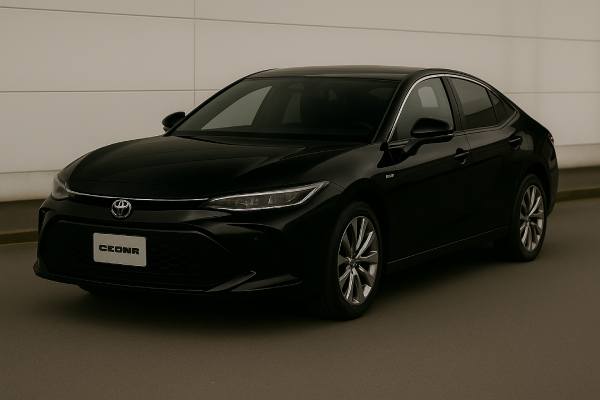
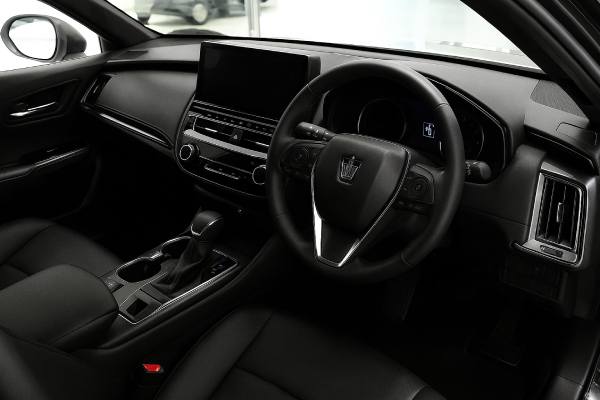
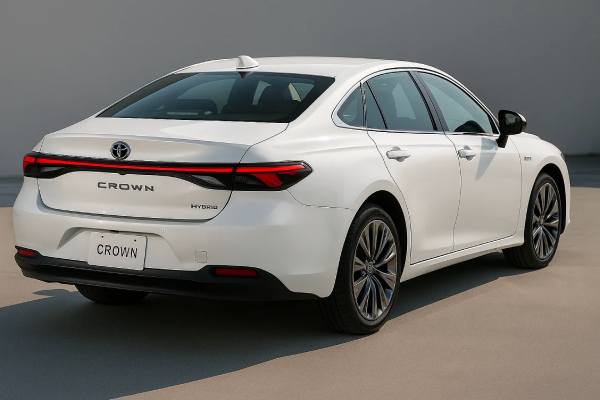
The Toyota Crown (TZSH35) with the Hybrid MAX powertrain pairs a 2.4-liter turbocharged T24A-FTS four-cylinder with a sophisticated dual-motor hybrid system and a 6-speed automatic. In North America it arrived for model year 2023 and sits above Camry as a premium, all-wheel-drive only sedan with a raised ride height. Owners are drawn to its smooth thrust (340 hp combined), confident traction from the rear eAxle, and the calm, upscale cabin. Engineers will appreciate details like the wet multi-plate start clutch and rear water-cooled e-motor that give the car a uniquely “geared-hybrid” feel versus Toyota’s eCVT hybrids. If you’re deciding between trims, know that Hybrid MAX is exclusive to the top grade, bringing Adaptive Variable Suspension and larger wheels, while the standard hybrid emphasizes efficiency. Below you’ll find focused specs, real-world performance notes, maintenance guidance, safety results, and a concise buyer’s guide—all tuned to U.S./Canada models and terminology.
Fast Facts
- Strong, effortless thrust: 340 hp system output with quick, seamless 6-speed shifts and rear eAxle traction.
- Composed, quiet ride: TNGA-K chassis with Adaptive Variable Suspension on Hybrid MAX trims.
- Excellent safety record: top-tier crash scores and a robust standard ADAS suite.
- Caveat: Hybrid MAX fuel economy trails the standard hybrid; 21-inch wheels add cost and ride stiffness.
- Typical service: engine oil and filter every 10,000 miles / 12 months; tire rotation every 5,000 miles / 6 months.
What’s inside
- Detailed overview
- Specifications and technical data
- Trims and options, safety and driver assistance
- Reliability, common issues and service actions
- Maintenance and buyer’s guide
- Driving and performance
- How Toyota Crown compares to rivals
Crown Hybrid MAX overview
The North American-spec Toyota Crown reintroduces the nameplate as an elevated, fastback-sedan with standard all-wheel drive across the line. Two hybrid systems are offered; our focus here is the Hybrid MAX setup available on the top grade. This is Toyota’s “performance hybrid” approach: a turbocharged 2.4-liter T24A-FTS direct-injection engine drives the front through a compact, motor-assisted 6-speed automatic with a wet start clutch, while a separate, water-cooled electric motor powers the rear axle on demand. The system blends the immediacy of a geared transmission with the torque fill of electric assist, so step-off is crisp and midrange passing is strong.
Every Crown rides on the TNGA-K platform with MacPherson struts up front and a multi-link rear. Hybrid MAX adds Adaptive Variable Suspension (AVS) for on-the-fly damping control and six drive modes (NORMAL, ECO, SPORT, SPORT+, COMFORT, CUSTOM). The elevated seating position improves visibility and ease of entry without giving up the sedan’s low aerodynamic profile. Inside, the Crown delivers a quiet cabin with dual 12.3-inch displays, straightforward controls, and high-grade materials; leather seating, heated/ventilated fronts and heated rears come with the Hybrid MAX trim, alongside larger wheels (21-inch) and available bi-tone exterior paint.
Safety is a core theme. Toyota Safety Sense 3.0 (TSS 3.0) is standard on all grades, and the body structure, restraint systems, and headlight performance have tested very well in U.S. crash programs. Buyers cross-shopping premium sedans and near-luxury crossovers will find the Crown’s blend of traction, comfort, and driver assistance unusually comprehensive at this price.
Toyota Crown TZSH35 specs and data
Powertrain & Efficiency (Hybrid MAX)
| Item | Detail |
|---|---|
| Code | T24A-FTS (engine) + dual-motor hybrid system |
| Engine layout & cylinders | Inline-4, DOHC, 4 valves/cyl |
| Bore × stroke | 87.5 × 99.5 mm (3.44 × 3.92 in) |
| Displacement | 2.4 L (2393 cc) |
| Induction | Twin-scroll turbocharger; intercooler |
| Fuel system | D-4ST (combined direct + port injection) |
| Compression ratio (ICE) | 11.0:1 |
| Max system power | 340 hp (254 kW) |
| Max engine output (typical) | ~265 hp (198 kW) @ ~6000 rpm |
| Max engine torque (reference) | ~420 Nm (310 lb-ft) in related applications |
| Hybrid motors | Front traction motor integrated with 6AT; rear eAxle, water-cooled |
| System voltage / battery | High-voltage NiMH or Li-ion (market/trim dependent); nominal ~300 V class |
| Emissions / Efficiency | EPA-rated (Hybrid MAX) ~30 mpg combined ≈ 7.8 L/100 km |
| Real-world highway @ 75 mph | ~32 mpg (7.4 L/100 km) observed by instrumented tests |
Notes: System output is for Hybrid MAX. Engine-only torque/power figures vary by calibration across Toyota/Lexus models sharing the T24A-FTS.
Transmission & Driveline
| Item | Detail |
|---|---|
| Transmission | Direct-Shift 6-speed automatic with wet multi-plate start clutch; motor assist |
| Gear ratios | 1st 4.474 • 2nd 2.517 • 3rd 1.560 • 4th 1.143 • 5th 0.850 • 6th 0.671 • Rev 3.196 |
| Final drive ratio | 3.329 |
| Drive type | Full-time electronic AWD (E-Four Advanced) |
| Differential | Open; rear eAxle torque vectoring via motor control |
| Torque split | Front:Rear variable ~70:30 to 20:80 depending on demand |
Chassis & Dimensions
| Item | Detail |
|---|---|
| Suspension (front/rear) | MacPherson strut / multi-link; AVS on Hybrid MAX |
| Steering | Electric power steering; quick ratio with AVS calibration |
| Brakes | 4-wheel disc with regen integration; ventilated fronts |
| Wheels/Tires | 19–21 in factory packages; Hybrid MAX commonly 21×8J with 225/45R21 |
| Ground clearance | ~147 mm (5.8 in) |
| Length / Width / Height | ~4928 mm × 1839 mm × 1539 mm (194.0 × 72.4 × 60.6 in) |
| Wheelbase | 2850 mm (112.2 in) |
| Turning circle (curb-to-curb) | ~11.0 m (36.1 ft) |
| Curb weight (Hybrid MAX) | ~1895–1970 kg (4178–4343 lb), equipment dependent |
| Fuel tank | ~55 L (14.5 US gal / 12.1 UK gal) |
| Cargo volume (SAE) | ~430 L (15.2 ft³) |
Performance & Capability
| Metric | Hybrid MAX (typical) |
|---|---|
| 0–60 mph (0–97 km/h) | ~5.7–5.8 s |
| 0–100 km/h (0–62 mph) | ~6.0 s (est.) |
| Braking 100–0 km/h (62–0 mph) | Varies by tire; strong, consistent thanks to blended regen/hydraulic |
| Towing capacity | Not rated in NA |
| Payload / roof load | Not emphasized; check door-jamb label for GVWR/GAWR per vehicle |
Fluids & Service Capacities (typical T24A-FTS Hybrid MAX applications)
| System | Spec / Type | Capacity |
|---|---|---|
| Engine oil | ILSAC GF-6A, SAE 0W-20 | ~5.3–5.6 L (5.6 US qt) w/ filter |
| Coolant (engine) | Toyota Super Long Life Coolant (pink) | ~9.2 L (9.7 US qt) |
| Coolant (intercooler/inverter loop) | Toyota SLLC | ~5.2 L (5.5 US qt) |
| 6-speed AT (hybrid front unit) | Toyota ATF WS | ~6.4 L (6.8 US qt) |
| Rear eAxle | Toyota e-Transaxle Fluid TE | ~3.1 L (3.3 US qt) |
| Brake fluid | DOT 3 / DOT 4 | Fill to spec |
| A/C refrigerant | R-1234yf | See under-hood label (varies by build) |
| Key torque specs | Wheel nuts ~103 Nm (76 lb-ft); oil drain plug ~41 Nm (30 lb-ft) |
Always verify by VIN in the owner’s/service manual; capacities can vary with production changes and options.
Electrical
| Item | Detail |
|---|---|
| Alternator | Not equipped (DC-DC converter from HV system) |
| 12V battery | AGM 12V; capacity and group vary by build; monitor state of health annually |
| Spark plugs (ICE) | Long-life iridium; replacement interval typically 60k–120k mi depending on calibration and conditions |
Safety & Driver Assistance
| Topic | Summary |
|---|---|
| Crash ratings | Top-tier results in U.S. testing for 2023–2025 models; strong structure and restraints |
| Headlight rating | Upper trims with adaptive LEDs test well; base lighting also rates favorably |
| ADAS suite (TSS 3.0) | Pre-Collision with Pedestrian/Cyclist Detection, Full-Speed Dynamic Radar Cruise Control, Lane Departure Alert with Steering Assist, Lane Tracing Assist, Road Sign Assist, Automatic High Beams, Proactive Driving Assist; Blind Spot Monitor and Rear Cross-Traffic Alert are standard; Advanced Park available/standard on top grade |
Toyota Crown trims, options and safety
Trims and options (North America, Hybrid MAX focus). The Crown launched with XLE and Limited grades using the 2.5-liter eCVT hybrid and a Platinum grade featuring the 2.4-liter Hybrid MAX system. Hybrid MAX is paired exclusively with the 6-speed “Direct-Shift” automatic, full-time electronic AWD (E-Four Advanced), and AVS. Identifiers include 21-inch machined alloys with black accents, larger front brake hardware, “Bi-Tone” roof/body paint availability, and “Hybrid MAX” badging in materials. Equipment highlights on the Hybrid MAX trim include leather seating (heated/ventilated fronts, heated rears), a fixed panoramic roof, 12.3-inch dual displays (gauge cluster and multimedia), wireless Apple CarPlay/Android Auto, JBL audio, Bird’s Eye View camera with Perimeter Scan, Digital Key capability (subscription), heated steering wheel, and multi-mode drive control (NORMAL, ECO, SPORT, SPORT+, COMFORT, CUSTOM). Year-to-year packages may adjust wheel designs, colors, or connected services trials; the mechanical package and performance character remain constant.
Functional differences by trim. Hybrid MAX brings a rear eAxle with higher output and broader front:rear torque variation, the motor-assisted 6-speed geared transmission in lieu of an eCVT, and Adaptive Variable Suspension with expanded drive modes. Wheel/tire packages step up from 19-inch (standard hybrid) to 21-inch on Hybrid MAX; the bigger wheels sharpen response but can transmit more impact harshness and cost more to replace. An Advanced Park system (hands-free parking) is standard/available on the top grade and requires calibration after collision or sensor replacement.
Safety ratings and test bodies. U.S. safety testing for 2023–2025 Crown sedans shows top overall results, with strong occupant protection and good headlight performance depending on trim and options. Isofix/LATCH anchors in the rear outboard seats are accessible, and the cabin layout supports modern child-seat geometries. Front, side, and curtain airbags are standard; a driver knee and front passenger seat-cushion airbag are typically included.
ADAS evolution and calibration notes. TSS 3.0 adds improved sensor fusion for pedestrian/cyclist detection and expanded capability for lane support and adaptive cruise. Many ADAS components (radar, cameras, ultrasonic sensors) require aiming procedures after windshield replacement, grille work, front-end collisions, or suspension/alignment changes; budget for calibration time when planning repairs. The rear eAxle and parking sensors also have specific diagnostic and alignment requirements after axle, hub, or bumper work.
Child-seat and towing. The Crown’s trunk and second row make it practical for two child seats with room for a stroller. Top-tether anchors are easy to reach. The Crown is not tow-rated in North America; if you plan occasional cargo solutions, consider hitch-mounted carriers within the vehicle’s tongue weight limits and do not exceed GVWR/GAWR on the door-jamb label.
Reliability, common issues and service actions
Overall reliability outlook. The T24A-FTS/Hybrid MAX package is relatively new in sedans but shares core hardware with other Toyota/Lexus products, which helps parts availability and service familiarity. Early-life reliability has been solid; most concerns relate to software updates (calibration refinements) and normal wear items driven by wheel/tire size.
What to watch, by system (prevalence / cost tier / typical mileage):
- Powertrain electronics (occasional / low / any time): Hybrid control ECU or camera/radar ECUs may receive calibration updates to improve driveability, sensor robustness, or false-positive alerts. Symptoms are warning lights, intermittent ADAS messages, or minor drivability quirks. Remedy: dealer reflash per latest campaign/TSB; clear DTCs and perform road test.
- 6-speed hybrid AT feel (rare / low / 10–50k mi): Light low-speed shudder or firmness on cold starts as clutches learn. Remedy: software update/adaptation reset; fluid inspection; most settle with mileage.
- Rear eAxle noise (rare / medium / 30–80k mi): A faint whine under steady light load may be tire-related; confirm with chassis ears. Remedy: check fluid level/condition (TE fluid), road-force balance tires; replace wheel bearings if confirmed.
- Big-wheel ride and tire wear (common on 21-in / low / 5–25k mi): Edge wear or increased impact sensitivity. Remedy: rotate at 5k, maintain pressures, consider alignment with hybrid-specific targets; all-season grand-touring tires can quiet the ride if you don’t need extreme handling response.
- Cooling hoses/clamps (rare / low / 30–60k mi): Hybrid MAX has multiple coolant loops (engine and intercooler/inverter). Remedy: annual visual inspection for staining/seepage; torque clamps after major temperature swings.
- DI intake valve deposits (rare / medium / 60–100k mi+): The engine uses combined port+direct injection which mitigates buildup; still, short-trip operation can promote deposits. Remedy: periodic spirited drives when fully warm; use Top Tier fuel; walnut blast only if misfire/airflow DTCs present.
HV battery and thermal management. The traction battery is actively managed and has not shown systemic issues in this application. Keep the rear seat/trunk vents clear, vacuum battery intake filters during cabin filter changes, and avoid blocking ventilation with cargo.
Recalls, TSBs, and extended coverage (high-level). As with many late-model Toyotas, occasional software-centric recalls/field actions address camera/ADAS or infotainment concerns. Always run the official VIN recall check before purchase and at each service visit. Post-repair, ensure ADAS calibrations are performed and documented on the repair order.
Pre-purchase checklist.
- Full dealer service history and VIN recall/TSB printout.
- Evidence of 5k-mile rotations and 10k-mile oil service (time-based if low miles).
- Tires: even wear on 21-inch fitments; inspect for bent rims and curb rash.
- Brake condition including inner pad wear (regen can mask hydraulic issues).
- Coolant hoses and hybrid coolant reservoir levels (both loops).
- A road-test from 30–70 mph listening for eAxle whine or tire roar on coarse asphalt.
- Check Digital Key/connected services status and any subscription transfers.
Maintenance and buyer’s guide
Practical maintenance schedule (typical Toyota guidance; verify by VIN):
- Every 5,000 mi / 6 months: Rotate tires; inspect brakes, suspension, steering, driveshaft boots; top off washer fluid; visual battery health check; inspect hybrid cooling inlets.
- Every 10,000 mi / 12 months: Replace engine oil and filter (0W-20); comprehensive multi-point; inspect cabin air filter.
- 15,000–20,000 mi / 18–24 months: Replace cabin air filter (earlier if dusty); inspect engine air filter.
- 30,000 mi / 36 months: Replace engine air filter; brake fluid test (replace if contaminated); full alignment check; inspect HV battery intake.
- 60,000 mi / 72 months: Spark plugs (iridium) in turbo engines are commonly serviced between 60–120k depending on usage; inspect accessory belt and coolant hoses; exchange brake fluid if not previously done.
- 100,000 mi / 120 months: Replace engine coolant (SLLC) initial service; inspect intercooler/inverter coolant, then follow shorter intervals thereafter.
- 90,000–120,000 mi (severe use): Consider drain-and-fill of ATF WS (front hybrid transmission) and eAxle fluid TE; not always specified for “lifetime,” but proactive fluid service under towing, mountainous, hot-climate, or ride-share duty is prudent.
- Annually: A/C performance check; HVAC evaporator cleaning in humid climates; calibration checks if any ADAS components were serviced.
Fluid specifications and essentials (decision-making quick list):
- Engine oil: SAE 0W-20, ILSAC GF-6A; capacity ~5.6 qt with filter.
- Coolant: Toyota Super Long Life Coolant (pink), premixed; separate loops for engine and intercooler/inverter.
- ATF: Toyota ATF WS for the hybrid 6-speed front unit; do not substitute.
- Rear eAxle: Toyota e-Transaxle Fluid TE.
- Brake fluid: DOT 3/4; keep moisture content low for consistent pedal feel.
- Refrigerant: R-1234yf; charge amount on under-hood label.
- Wheel torque: ~103 Nm (76 lb-ft).
Buyer’s guide: what to seek.
- Trim: If you want the 340-hp system, shop the Hybrid MAX grade. You get AVS, the geared hybrid transmission, and the richer feature set.
- Packages: 360° camera (Bird’s Eye View) and Advanced Park are worthwhile in tight urban parking.
- Wheels/tires: The 21-inch setup looks great; if you prioritize ride comfort or winter performance, ask for a second set of 19-inch wheels with suitable all-seasons or dedicated winters.
- Connected features: Confirm Digital Key eligibility, active subscriptions, and over-the-air update history.
Long-term durability outlook. The T24A-FTS/Hybrid MAX pairing uses proven Toyota building blocks (Dynamic Force engine family, eAxle technology, robust thermal management). With yearly services, timely fluid care, and sane wheel/tire choices, expect the Crown to deliver the quiet, low-stress ownership Toyota sedans are known for, with fewer compromises in acceleration and traction than traditional hybrids.
Driving and real-world performance
Ride, handling, and NVH. On Hybrid MAX trims, AVS calms body motions and controls secondary ride over broken pavement despite the tall tires. Straight-line stability is excellent, with the rear motor contributing to a planted feel in crosswinds and during lane changes. Steering is light but precise; SPORT and SPORT+ add weight and tighten transient response without becoming darty. Cabin isolation is a strength: laminated glass and careful sealing keep wind noise low, while the engine remains subdued at cruise and speaks up only under full load.
Powertrain character. Unlike Toyota’s eCVT hybrids, the Hybrid MAX’s 6-speed gearbox gives a familiar, step-shifted feel. The motor’s torque fill smooths shifts and masks turbo lag; you get linear thrust from low rpm and a strong midrange. In SPORT+ the start clutch engages assertively for a decisive launch. Passing from 50–80 mph (80–130 km/h) is quick, and the rear eAxle helps the car rotate naturally out of on-ramps without stability-control drama.
Braking. Pedal feel is consistent thanks to well-integrated regenerative and hydraulic braking. Repeated stops do not quickly lead to fade; the car’s weight and tire spec ultimately set distances, so sticky summer tires can meaningfully shorten stopping distance versus comfort-biased all-seasons.
Efficiency in the real world. Expect city mid-to-high 20s mpg (8.7–10.7 L/100 km) and highway around the low 30s mpg (7.4–8.4 L/100 km) in Hybrid MAX, with mixed driving near 30 mpg (7.8 L/100 km) when temperatures are mild and tires are properly inflated. Cold weather, short trips, roof racks, and winter tires each chip away at results; a -10% to -20% winter delta is common in sub-freezing climates. The standard hybrid trims can exceed 40 mpg combined in similar use, but they are slower and use smaller wheels/tires that ride softer.
Traction and control. Electronic AWD responds quickly on slick surfaces. Snow and wet-leaf traction are excellent on appropriate tires; the system can bias significant torque rearward on launch, giving a reassuring shove without front-wheel scrabble. Stability-control tuning is conservative in base modes and appropriately relaxed in SPORT+.
Load and long grades. With five onboard and a full trunk, the Hybrid MAX maintains speed on extended highway grades without overheating, aided by dedicated cooling loops for the turbocharged engine and power electronics. Expect a modest consumption penalty with full loads, and remember the model is not tow-rated; if you need towing, consider a platform sibling SUV with a rating.
How Toyota Crown compares to rivals
Versus Lexus ES 300h / ES 350. The ES is quieter still and more traditional, with softer tuning. The Crown Hybrid MAX accelerates much harder, offers AWD standard, and has a more modern tech interface. The ES counters with a larger dealer/service footprint on the luxury side and a broader trim ladder.
Versus Hyundai Sonata Hybrid / Kia K5 (GT-Line/GT). Sonata Hybrid is far more efficient and less expensive, but lacks the Crown’s AWD and premium feel. K5 GT is quick but front-drive only and can torque-steer; the Crown Hybrid MAX delivers cleaner launches and a more refined ride.
Versus Nissan Altima / Subaru Legacy. Both are value leaders with standard/available AWD. The Crown’s cabin quality, performance, and ADAS polish are a cut above; Hybrid MAX out-accelerates them decisively, while also being more efficient than their non-hybrid turbo trims.
Versus premium compact SUVs. Many buyers will also consider Acura RDX, Lexus NX, or Toyota’s own Venza/Highlander. Those offer hatchback utility and seat height, but the Crown drives lower and calmer, with better aero efficiency and sedan-like quiet. If you need cargo height, choose the SUV; if you want quieter highway miles and superior passing response, the Crown Hybrid MAX shines.
References
- Toyota Crown Returns to the US with Bold Style and New Hybrid Max Powertrain 2022 (Press Release)
- 2023 Toyota Crown 4-door sedan 2023–2025 (Safety Rating)
- Find and Compare Cars 2023–2025 (EPA Database)
- 2023 WARRANTY & MAINTENANCE GUIDE 2022 (Owner’s Maintenance)
- Fluids & capacities – Crown (2023-) us 2024 (Technical Reference)
Disclaimer
This guide is for informational purposes and does not replace professional diagnosis or repair. Specifications, torque values, capacities, and service intervals vary by VIN, model year, market, and equipment. Always confirm procedures and numbers with your vehicle’s official owner’s manuals, service manuals, and technical bulletins. If you found this helpful, feel free to share it with fellow owners on Facebook, X/Twitter, or your favorite forum to support xcar’s work.