
The 2019–2020 Toyota GR Supra 3.0 with the B58B30C engine is the launch version of the reborn Supra, and the one that set the tone for the entire J29 generation. With 335 hp from a turbocharged 3.0 litre inline-six and a tightly packaged chassis shared with the BMW Z4, it blends modern electronics and safety with the simple rear-drive, two-seat layout that enthusiasts still want.
This early 3.0 model is slightly less powerful on paper than later 382 hp cars, but many owners value its character, lighter tune, and often sharper value on the used market. It is also the cleanest snapshot of Toyota Gazoo Racing’s original vision: short wheelbase, strong torque from low revs, and a playful but secure balance on road and track.
If you are looking at a GR Supra 3.0 from these first two model years, this guide walks you through the hard specs, real-world reliability, service demands, and how it compares with its closest rivals.
Top Highlights
- Strong 335 hp turbo inline-six with 500 Nm torque and broad, usable powerband.
- Compact, lightweight chassis with fast steering and an active rear differential for sharp handling.
- High base equipment level with standard adaptive dampers and performance brakes on most markets.
- Early cars have multiple recall campaigns (seat belt mount, camera, lighting) that buyers should confirm are completed.
- Engine oil change every 10,000 km or 12 months (or 8,000 km for hard use) helps keep the B58 in top condition.
Navigate this guide
- Toyota GR Supra 3.0 335 hp overview
- Specifications and technical data
- Trims, options and safety
- Reliability and common issues
- Maintenance and buyer’s guide
- Driving experience and performance
- How this Supra compares to rivals
Toyota GR Supra 3.0 335 hp overview
The 2019–2020 Toyota GR Supra 3.0 is the launch specification of the J29 generation, powered by BMW’s B58B30C 3.0 litre turbocharged inline-six. In European markets it is typically quoted at 340 PS (about 335 hp), while North American figures sit at 335 hp and 365–369 lb-ft of torque. All versions use an eight-speed ZF automatic and rear-wheel drive, with an electronically controlled active rear differential as standard.
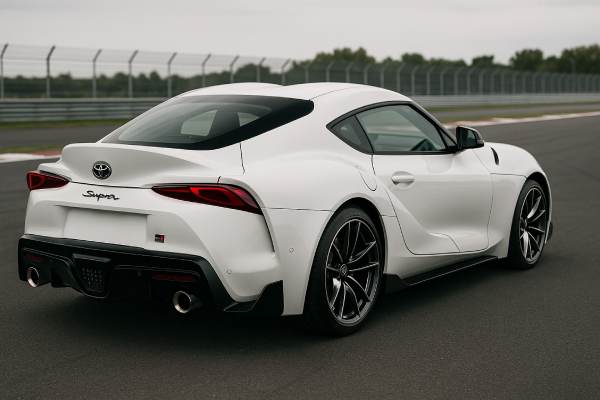
Toyota positioned this model as a compact, focused sports coupé, more intense than a GT but still comfortable enough for daily use. The car’s proportions are unusual by modern standards: very short wheelbase, two seats, a long bonnet and a distinctive double-bubble roof that nods to earlier Supra and endurance-racing shapes. The J29 platform is shared with the BMW Z4, but body, suspension tuning, software and interior design are tailored by Toyota Gazoo Racing.
In these first years, the 3.0-litre engine was tuned to a relatively conservative output. That means you get strong performance but also plenty of headroom in the powertrain for longevity. The B58 family is widely regarded as one of BMW’s more robust recent turbo sixes, using a closed-deck block, integrated exhaust manifold and water-to-air intercooling. Many owners see these features as a good foundation both for reliability and for later power upgrades if desired.
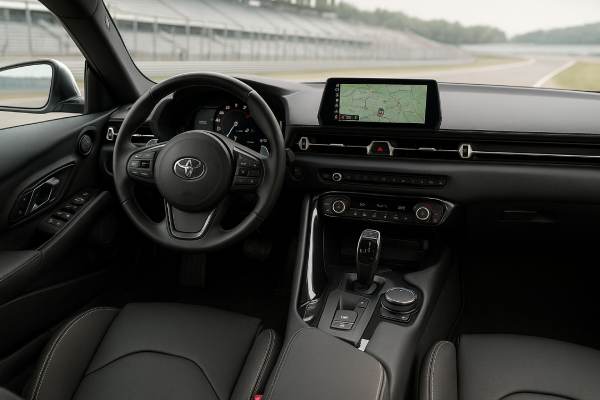
Inside, the 2019–2020 GR Supra mixes BMW switchgear and infotainment with Toyota-specific seats and trim. Practical space is limited but usable, with a 290 litre hatchback cargo area and a pass-through behind the seats. The driving position is low and coupe-like, with good adjustment in the steering and seat. Standard equipment is generous: adaptive dampers, active differential, LED headlights, dual-zone climate control and a strong audio system are typically included, depending on trim and market.
For buyers today, the appeal of this early 3.0 version is threefold: it is the purest expression of the new Supra, it often sells for less than later 382 hp models, and it keeps running costs relatively manageable for a high-performance sports car. Understanding its technical makeup and known issues will help you choose a good example and keep it performing as intended.
Specifications and technical data
Engine and performance
| Item | Value |
|---|---|
| Engine code | B58B30C turbocharged inline-6, DOHC, 24 valves |
| Induction | Single twin-scroll turbocharger, intercooler |
| Displacement | 3.0 l (2,998 cc) |
| Bore × stroke | 82.0 mm × 94.6 mm |
| Valvetrain | DOHC with variable valve timing and lift |
| Compression ratio | ~11.0 : 1 |
| Fuel system | Direct petrol injection |
| Max power | 335 hp (approx. 250 kW / 340 PS) @ ~5,000–6,500 rpm |
| Max torque | 500 Nm (369 lb-ft) @ ~1,600–4,500 rpm |
| Firing order | 1-5-3-6-2-4 (typical BMW inline-6) |
| Timing drive | Chain (no timing belt) |
| Emissions standard | Euro 6d-Temp (EU), LEV/ULEV (US and other) |
| Official combined fuel economy (WLTP, typical EU spec) | ~8.2 l/100 km (≈ 34.4 mpg UK / 28–29 mpg US) |
| EPA fuel economy (US, 3.0 automatic) | 26 mpg US combined (approx. 9.0 l/100 km), 24 city / 31 highway |
| CO₂ emissions (WLTP, EU) | ~185–190 g/km depending on wheels/tyres |
| Aerodynamics | Cd around 0.27 (varies slightly by market and wheel setup) |
Transmission and driveline
| Item | Value |
|---|---|
| Transmission | 8-speed torque-converter automatic (ZF 8HP family) with paddle shifters |
| Gear ratios (1st–8th) | Approx. 5.25 / 3.36 / 2.17 / 1.72 / 1.32 / 1.00 / 0.82 / 0.64 (varies slightly by code) |
| Reverse ratio | ~3.71 |
| Final drive ratio | ~3.15 : 1 (electronically controlled differential) |
| Drive type | Rear-wheel drive (RWD) |
| Differential | Electronically controlled active limited-slip differential, up to 100% locking left–right |
| Launch control | Standard in Sport / Track modes (market dependent) |
Chassis and dimensions
| Item | Value |
|---|---|
| Platform | J29 two-seat coupé, shared architecture with BMW Z4 (G29) |
| Front suspension | MacPherson strut, aluminium components, anti-roll bar |
| Rear suspension | Five-link independent, aluminium links, anti-roll bar |
| Dampers | Adaptive (electronically controlled) dampers, Normal and Sport modes |
| Steering | Electric power-assisted rack and pinion, quick ratio (~2.1 turns lock-to-lock) |
| Front brakes | Ventilated discs, approx. 348 mm diameter, 4-piston fixed calipers |
| Rear brakes | Ventilated discs, approx. 345 mm diameter, single-piston sliding calipers |
| Parking brake | Electric (EPB) |
| Wheels (typical 3.0 spec) | 19 × 9.0J front, 19 × 10.0J rear forged alloys (varies by trim) |
| Tyres (factory fit) | 255/35 ZR19 front, 275/35 ZR19 rear (often Michelin Pilot Super Sport or similar) |
| Length | ~4,379 mm (172.4 in) |
| Width (without mirrors) | ~1,854 mm (73.0 in) |
| Height | ~1,292 mm (50.9 in) |
| Wheelbase | 2,470 mm (97.2 in) |
| Front / rear track | ≈ 1,594 / 1,589 mm (varies with wheel/tyre) |
| Ground clearance | Around 115–120 mm (4.5–4.7 in) |
| Turning circle (kerb-to-kerb) | ≈ 10.4 m (34 ft) |
| Kerb (curb) weight | ~1,570 kg (3,460 lb) EU spec; US cars similar depending on equipment |
| Fuel tank | ~52 l (13.7 US gal / 11.4 UK gal) |
| Cargo volume | ~290 l (10.2 ft³) VDA behind seats, with hatchback access |
Performance and capability
| Item | Value |
|---|---|
| 0–100 km/h (0–62 mph) | ~4.3 s (manufacturer figure; independent tests broadly similar) |
| 0–60 mph | Around 4.1–4.3 s in real-world testing |
| Top speed | 250 km/h (155 mph), electronically limited |
| In-gear acceleration | Strong 80–120 km/h (50–75 mph) thanks to 500 Nm from low rpm |
| Braking 100–0 km/h | Roughly mid-30 m range on warm performance tyres |
| Towing capacity | Not homologated for towing in most markets |
| Roof load | Typically not approved for roof racks; check local regulations |
Fluids and service capacities (typical values)
Always confirm exact specifications and fill quantities against the owner’s manual or service information for your VIN and market.
| System | Spec and capacity (approximate) |
|---|---|
| Engine oil | BMW/Toyota long-life 0W-20 or 0W-30, meeting LL-01/01 FE or equivalent; ~6.5–6.8 l (6.9–7.2 US qt) including filter |
| Engine coolant | Long-life ethylene glycol (pink/red Toyota or BMW equivalent); ~7–8 l (7.4–8.5 US qt) including block and radiator |
| Automatic transmission fluid | ZF Lifeguard 8 or equivalent ATF; total fill ≈ 8–9 l (8.5–9.5 US qt) including torque converter |
| Rear differential | Synthetic gear oil (e.g., 75W-90 GL-5) ~0.8–1.0 l (0.85–1.06 US qt) |
| Brake fluid | DOT 4 low-viscosity, ~0.7–1.0 l (0.7–1.1 US qt) for full flush |
| A/C refrigerant | R-134a or R-1234yf (market dependent), roughly 500–600 g (18–21 oz) |
| Engine oil drain plug torque | Typically around 25–30 Nm (18–22 lb-ft) – verify per service data |
| Wheel bolt torque | Around 130–140 Nm (96–103 lb-ft), check handbook for your market |
Electrical
| Item | Value |
|---|---|
| Alternator output | Approx. 170–180 A (depending on equipment) |
| 12V battery | AGM type, roughly 70–80 Ah, trunk-mounted |
| Spark plugs | Long-life iridium plugs; service interval typically 60,000–80,000 km (40,000–50,000 miles) |
| Plug gap | Around 0.8 mm (0.031 in), verify by part number |
Safety and driver assistance
Formal crash-test coverage for the J29 GR Supra is limited. In many regions it has not been separately rated by Euro NCAP or IIHS; regulatory crash and compliance testing is still performed, but there is no widely publicised star score.
Core safety and ADAS content on 2019–2020 3.0 models typically includes:
- Front, side and curtain airbags plus knee airbag (market dependent).
- ABS, stability control, traction control and brake assist.
- Pre-collision system with pedestrian detection.
- Lane departure alert with steering assist.
- Road sign assist and automatic high beam in many European markets.
- Adaptive cruise control (full-speed in some markets, conventional in others).
- Rear-view camera (subject to early recall software update on 2020 cars).
- Front and rear parking sensors on higher trims.
Exact ADAS spec varies notably by region and trim, so always check equipment lists and build sheets for a specific car.
Trims, options and safety
Because the GR Supra is built in relatively low volumes, Toyota kept the trim structure quite simple for the 2019–2020 3.0. Names differ between markets, but the underlying mechanical package is similar: same B58 engine, same 8-speed automatic, same rear-drive layout and active differential.
In Europe, you will commonly see the GR Supra 3.0 and GR Supra 3.0 Pro. The base 3.0 already includes adaptive dampers, keyless entry and start, dual-zone climate, LED headlights and Toyota Safety Sense features. The Pro trim adds luxury and comfort: leather or leather-and-Alcantara upholstery, upgraded audio, head-up display, power seats with memory, sometimes larger wheels and extra driver-assist functions. Limited-run colours and special interior trims may also be tied to higher grades.
In the US and some other regions, the 2020 3.0 was often offered as “3.0,” “3.0 Premium,” and “Launch Edition.” The 3.0 is closest to the European base car: cloth or Alcantara-trimmed seats, standard navigation-capable infotainment, and the full performance hardware. The Premium adds a larger central display, richer audio, leather trimming, head-up display and more comfort/convenience items. Launch Edition cars layer exclusive colours (for example, Renaissance Red with red mirror caps) and numbered plaques over the Premium feature set, making them more collectible but mechanically identical.
Key mechanical differences by trim are limited. All 3.0-litre cars get:
- B58B30C engine in the same tune.
- 8-speed automatic with paddles.
- Active rear differential and adaptive suspension.
- Big brake package and performance tyres (usually 19-inch wheels).
The main differences you will notice as a buyer are cabin materials, infotainment, audio quality and minor convenience features. Option packages may add driver-assist extras such as blind-spot monitoring, rear cross-traffic alert and parking sensors in markets where these are not standard on the base grade.
From a safety perspective, the early GR Supra had several recall campaigns. The best known is for a small batch of 2020 cars with a driver’s seat belt guide loop mount that may not have been welded to specification. In those rare cases, Toyota’s remedy involved inspecting the mount and, if necessary, replacing the entire vehicle because the component is integral to the body shell. Another campaign covered the rear-view camera display, where brightness and contrast settings could leave the driver without a clear reverse image until a software update was applied.
There have also been wider BMW-led campaigns affecting headlight control units and camera behaviour on multiple models built around the same time; the Supra is included in some of these. For any 2019–2020 GR Supra 3.0 you are considering, a recall/VIN check through an official Toyota channel is essential. Once remedied, these issues do not typically recur.
Overall, trim choice should be guided more by features and condition than by concerns about performance. Mechanically sound base cars drive just as well as fully loaded versions, so it is better to buy a clean, well-maintained example than to stretch for a rare edition that has had a harder life.
Reliability and common issues
The 2019–2020 GR Supra 3.0 benefits from the B58 engine’s generally strong reputation. Compared with older BMW turbo sixes like the N54 and early N55, the B58 is much less prone to major internal failures when maintained correctly. That said, this is still a high-output turbocharged engine in a performance chassis, assembled by BMW and then branded and supported by Toyota, so it has its own pattern of issues and service actions.
For the engine itself, common problems so far tend to be moderate in severity and cost. Owners occasionally report:
- Ignition coil and spark plug wear: Misfires under load, rough idle or a check-engine light around 60,000–80,000 km (40,000–50,000 miles) are usually resolved by replacing coils and plugs as a set. This is a routine wear item rather than a design defect.
- Minor oil sweating or leaks: Seepage from oil filter housings, valve covers or oil pan gaskets can appear with age and heat cycles. Catching these early keeps repair bills moderate; ignoring them can contaminate belts or rubber components.
- Cooling system components: Electric water pumps and thermostats on BMW-based engines have historically had finite lifespans. While the B58 design is improved, proactive coolant service and watching for early signs of overheating or coolant smell remain wise.
The timing chain in the B58 is internal and generally robust. There is no set replacement interval; instead, technicians monitor for chain stretch or tensioner/guide noise. Excessive rattling at cold start, timing correlation faults in diagnostics or metal fragments in the oil are red-flag signs requiring professional attention. Fortunately, such cases are rare so far on correctly serviced B58 engines.
On the driveline and chassis side, reports include:
- ZF 8-speed behaviour: The gearbox is widely regarded as durable, but hard-driven cars can show shift flare, harshness or shudder if fluid has never been changed. Even where the manufacturer calls it “lifetime fill,” changing ATF and filter around 80,000–100,000 km (50,000–60,000 miles) is a sensible preventative step.
- Active differential noise: Some owners notice clunks or low-speed binding, especially after track days or if tyre sizes are mismatched. Fresh differential fluid and correctly matched tyres often resolve this; persistent issues should be inspected by a specialist.
- Suspension and alignment: The Supra’s short wheelbase and wide tyres make it sensitive to alignment settings and bushing health. Premature inner tyre wear, tramlining or instability on braking can often be traced to alignment or softening bushes rather than a deeper fault.
Corrosion is generally well controlled thanks to modern coatings and the fact these cars are still young. However, track-used cars or those in harsh winter climates can show surface rust on underbody hardware and brake components. A quick inspection of subframes, mounting points and brake shields is worthwhile.
Recalls and service actions deserve special attention. As noted earlier, a small batch of cars had seat belt guide loop weld concerns; others were recalled for rear camera software and headlight control units. When looking at a used example, ask for printed proof that all campaigns have been completed, or verify through a dealer or official recall lookup by VIN.
In summary, the 2019–2020 GR Supra 3.0 is not problem-free, but it does not have the catastrophic, widely known weaknesses that have plagued some earlier turbo six sports cars. Most issues are manageable with proactive maintenance and proper fluids. Cars with full, regular service history at Toyota or BMW-trained workshops tend to be very robust even with enthusiastic driving.
Maintenance and buyer’s guide
Owning a 2019–2020 GR Supra 3.0 is far easier when you adopt a preventative maintenance mindset rather than just reacting to warning lights. The factory service schedule aims to balance low running costs with component life, but many enthusiasts choose slightly shorter intervals, which is a sensible approach for a high-output turbo car.
A practical maintenance outline for mixed daily and spirited use might look like this:
- Engine oil and filter: Every 10,000 km or 12 months at most; 7,500–8,000 km (5,000 miles) is recommended if you track the car or do many short trips. Use a high-quality synthetic oil of the correct specification.
- Engine air filter: Inspect annually; replace around 30,000–40,000 km (20,000–25,000 miles), sooner in dusty environments.
- Cabin (pollen) filter: Replace every 20,000–30,000 km or 1–2 years to keep HVAC performance and odour control in good shape.
- Coolant: First change around 100,000 km or 5–6 years, then every 60,000 km or 3–4 years. Use the correct long-life coolant and maintain the specified mix ratio.
- Spark plugs: Replace about every 60,000–80,000 km (40,000–50,000 miles), especially if you run higher-than-stock boost or track the car.
- Fuel filter: Typically integrated with the pump and not a frequent service item, but check the schedule; replace if fuel pressure or flow issues arise.
- Serpentine/auxiliary belt and hoses: Inspect annually from 60,000 km onwards; replace belt and any suspect pulleys or tensioners around 100,000 km or 6–7 years.
- Automatic transmission fluid: Change ATF and pan/filter between 80,000–100,000 km (50,000–60,000 miles); sooner if you track the car or tow (where allowed).
- Differential fluid: Replace every 60,000–80,000 km; this keeps the limited-slip unit quiet and responsive.
- Brake fluid: Flush every 2 years, or annually if you attend track events.
- Brake pads and discs: Inspect at least annually or every 10,000 km; track use or aggressive street driving can shorten pad life significantly.
- Tyre rotation and alignment: You cannot rotate front-to-rear due to staggered sizes, but you should check alignment at least every 20,000 km or after pothole hits, and replace tyres in axle pairs.
- Valve clearances: Hydraulically adjusted; no routine manual inspection needed unless symptoms appear.
- 12V battery: Load-test from 4 years onward; many AGM batteries last 5–7 years in normal use.
For buyers, a careful pre-purchase inspection is crucial. Focus on:
- Service history: Look for regular oil changes with correct spec oil, coolant changes and dated brake fluid flushes. A stamped book plus invoices is ideal.
- Recall completion: Ask for documentation that all seat belt, camera and lighting recalls have been carried out. A quick VIN check through official channels is strongly advised.
- Accident and track use: Uneven panel gaps, overspray, mismatched tyres or heavily heat-crazed brake discs can hint at track abuse or poor repairs. Some track use is not a problem if maintenance has been diligent, but you want honesty from the seller.
- Suspension and steering: On a test drive, listen for knocks over bumps, feel for tramlining and test stability under hard braking. Any wander, vibration or pull needs investigation.
- Driveline and gearbox: Gearshifts should be crisp yet smooth; there should be no clunks when shifting from D to R or heavy thumps from the rear under acceleration.
In terms of years and trims, there are no “bad” 2019–2020 GR Supra 3.0 variants, but it is often wise to prioritise:
- Cars with full main-dealer or specialist history.
- Examples with recall paperwork and a clear, consistent ownership story.
- Cars with stock or lightly modified engines, especially if you value long-term durability.
With proper care, the early GR Supra 3.0 should age as a credible long-term sports car rather than a fragile toy. Parts pricing reflects its BMW-Toyota parentage, but component quality is high, and a scheduled approach to maintenance keeps surprises limited.
Driving experience and performance
On the road, the 2019–2020 GR Supra 3.0 feels compact, quick and eager. The short wheelbase and wide track give it an almost playful stance, but the electronics and chassis tuning reel that playfulness into something very usable on real-world roads.
The B58 engine is the star. It builds torque very low in the rev range and maintains it across a broad plateau, so the car surges forward with just a small throttle opening. Turbo lag is minimal in stock tune; you feel a brief softening at very low rpm, then a clean, smooth wave of torque. The engine’s character is more refined and cultured than the aggressive rasp of older Supras, but there is still a satisfying growl as revs rise, especially in Sport mode when valve timing, exhaust flaps and shift logic sharpen up.
The ZF 8-speed automatic is one of the better torque-converter gearboxes on the market. In Normal mode it shifts early and prioritises fuel economy, making the Supra feel relaxed at highway speeds with low revs and little noise. In Sport, it holds gears longer, downshifts more readily and snaps between ratios quickly when you pull the paddles. For most drivers, this transmission strikes a good balance between smooth daily use and genuinely quick responses in spirited driving.
Ride and handling depend heavily on road quality and drive mode. In Normal, the adaptive dampers keep the car firm but acceptable even on broken surfaces. You are always aware that this is a sports car on low-profile tyres, yet body movements are well controlled and there is enough compliance for long trips. In Sport, the ride tightens noticeably and small bumps are transmitted more directly into the cabin, but body roll is extremely well contained and the car feels eager to turn.
Steering is quick, with a relatively light weight in city and medium-speed driving that builds up as you lean on the front axle. Pure feedback is filtered by the electric assistance, but you still get a clear sense of what the front tyres are doing, especially once you learn the car’s responses. The active rear differential helps the Supra rotate into corners; on a steady throttle it feels neutral, and with a gentle lift or well-timed throttle application you can steer it subtly with the rear even at sensible road speeds.
Braking performance is strong thanks to large discs and multi-piston front calipers. Pedal feel is generally firm and consistent, though repeated heavy stops on track can expose the limits of the stock pads and fluid. Many track-day owners move to higher-temperature pads and more frequent brake fluid changes, after which the system copes well.
Noise, vibration and harshness are generally acceptable for a focused coupé. On smooth tarmac at motorway speeds, the cabin is quieter than many expect, with engine noise subdued and only tyre roar and wind noise around the mirrors intruding. Coarse surfaces and expansion joints remind you of the stiff structure and suspension, but it remains usable as a daily car if you are comfortable with a firm ride and the limitations of a two-seater.
Fuel consumption in the real world tends to sit close to official figures if you drive smoothly: mid-8s l/100 km (high-20s mpg US) on gentle highway runs, rising into the low-teens l/100 km (mid-teens mpg US) with spirited driving or dense city use. Track days or mountain runs can push consumption higher, which is normal for a 335 hp turbocharged six.
Overall, the 2019–2020 GR Supra 3.0 feels like a thoroughly modern interpretation of a classic sportscar recipe. It is quick in a straight line, balanced in corners, and comfortable enough to drive regularly, as long as you accept the firm ride and limited practicality.
How this Supra compares to rivals
In the 2019–2020 window, the GR Supra 3.0 335 hp sits in a competitive niche alongside cars such as the BMW Z4 M40i, Porsche 718 Cayman S, Audi TT RS and, in some markets, the BMW M2 and Nissan 370Z Nismo.
Compared with the BMW Z4 M40i, the Supra feels more focused and coupe-like. Mechanically they share much of the same hardware, but Toyota’s tuning steers the balance toward sharper turn-in and a more intimate cabin. The Z4 counters with an open-top experience and a more relaxed grand-tourer character, especially in its softer modes. If you want a roadster that can also be quick, the BMW makes sense; if you want a coupé that feels set up for track days, the Supra is the more natural fit.
Against a Porsche 718 Cayman S, the Supra offers more power and torque for the money, and usually higher standard equipment, but it cannot quite match the Cayman’s mid-engined precision or steering communication. Porsche’s options list can inflate pricing substantially; the Supra is more straightforward, with most key performance hardware included as standard. For pure track pace and steering feel, the Cayman still holds an edge; for value and straight-line punch, the Supra looks strong.
The Audi TT RS brings a very different flavour: five-cylinder turbo power, quattro all-wheel drive and a premium, tech-heavy cabin. It is extremely rapid in poor weather and off the line, but its character is more clinical, with less adjustability from the rear axle. The Supra, by contrast, rewards classic rear-drive technique and feels more playful at the limit. Buyers in snowy climates might still prefer the Audi’s all-weather security.
Compared with the BMW M2 of the same era, the Supra is less practical (two seats vs four), but arguably more distinctive in styling and slightly lighter. The M2’s chassis is a touch more communicative and it offers manual gearbox options, appealing strongly to purists. The Supra counters with its unique design, hatchback practicality and Toyota’s branding and dealer network, which some buyers trust more for long-term ownership.
Finally, the Supra sits above older or simpler coupes like the Nissan 370Z or Ford Mustang GT in terms of interior quality, refinement and technology. It is more expensive, but feels more modern and cohesive, especially in its driving position, visibility and safety tech. If you value the latest active safety systems and a compact footprint, the Supra offers a more contemporary package.
Taken together, the 2019–2020 GR Supra 3.0 335 hp is not the ultimate champion in every single category, but it delivers a compelling blend: serious performance, strong real-world usability, and a distinctive identity. For buyers who want a modern, reliable turbo six coupé with rear-drive dynamics, it remains a very appealing choice.
References
- 2019 Toyota GR Supra Technical Specifications (UK) 2019 (Technical Specifications)
- Toyota GR Supra | New Cars | Toyota UK 2020 (Model Overview)
- Fuel Economy of the 2020 Toyota GR Supra 2020 (Fuel Economy Data)
- Look up Safety Recalls & Service Campaigns by VIN 2020 (Recall Database)
- Part 573 Safety Recall Report 19V-653 – 2020 Toyota Supra Driver’s Safety Belt Guide Loop Mount 2019 (Safety Recall Report)
Disclaimer
This article is for informational purposes only and is not a substitute for professional diagnosis, repair, or official service information. Specifications, torque values, service intervals and procedures can vary by market, model year, equipment level and individual vehicle history. Always confirm critical data against the official owner’s manual, workshop manual and technical bulletins for your specific VIN.
If you found this guide useful, consider sharing it with other enthusiasts or prospective buyers on your preferred social platforms such as Facebook or X (Twitter). Your support helps make it possible to produce more detailed, owner-focused resources like this one.