
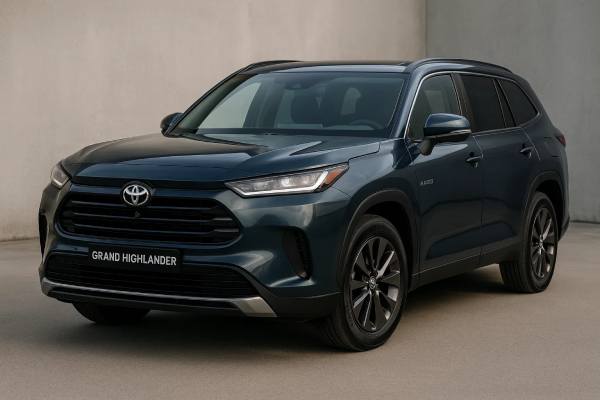
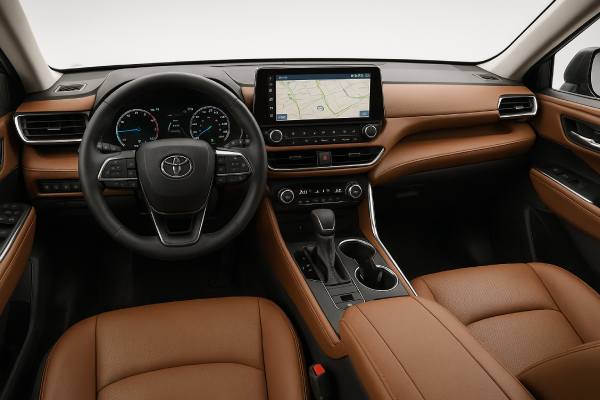
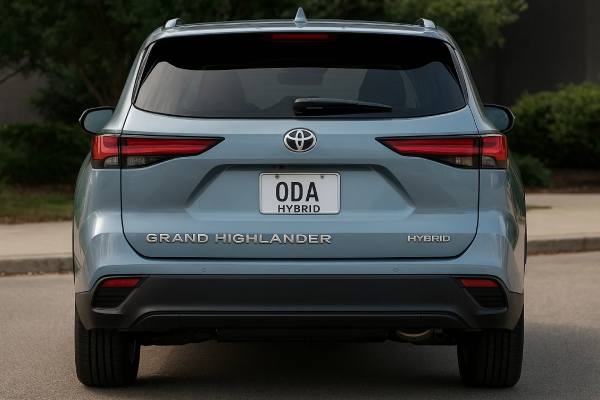
The front-wheel-drive Toyota Grand Highlander Hybrid aims directly at families who want real three-row space without the fuel bills of a V6. Built on Toyota’s TNGA-K architecture, it pairs the efficient A25A-FXS 2.5-liter engine with Toyota’s hybrid power-split transaxle for refined, low-stress driving in town and on the interstate. The long wheelbase helps stability and ride comfort, while the flat cargo floor and wide rear doors make daily life—strollers, sports gear, big-box runs—less of a juggling act. Owners appreciate the calm cabin, long service intervals, and consistent mid-30s combined mpg when driven sensibly. Technicians like the proven hybrid layout and straightforward access for filters, plugs, and fluids. If you need genuine adult-friendly seating in rows two and three, and you value predictable running costs over headline acceleration, the Grand Highlander Hybrid FWD lands right in the sweet spot for space, efficiency, and ease of ownership.
Fast Facts
- Adult-usable third row; up to 97.5 ft³ (2,763 L) of cargo with seats folded.
- EPA ~36 mpg combined (6.5–6.7 L/100 km) for FWD; long highway range with the ~17.8-gal tank.
- Calm ride and low NVH on 18-inch wheels; hybrid system reduces brake wear via strong regen.
- Caveat: verify oil spec (0W-8 vs 0W-16) on the under-hood label; use only Toyota-approved fluids.
- Typical interval anchor: engine oil and filter every 10,000 miles / 12 months (severe use: 5,000 miles / 6 months).
Guide contents
- Grand Highlander FWD Deep Dive
- FWD Hybrid Specs and Data
- Grand Highlander Trims and Safety
- Reliability, Issues and Service Actions
- Maintenance and Buyer’s Guide
- Driving and Performance
- How It Compares to Rivals
Grand Highlander FWD Deep Dive
Toyota designed the Grand Highlander Hybrid FWD for families who need room and range more than raw acceleration. Compared with the regular Highlander, the Grand Highlander stretches to roughly 201 in (≈5,116 mm) with a 116.1-in (2,950-mm) wheelbase, which pays off in the second and third rows. Adults can sit in the way-back without knees in their chins, and the cargo bay behind row three still takes several airline carry-ons. Fold rows two and three and you open a van-like 97.5 ft³ (2,763 L) space; a flat floor simplifies loading furniture or bikes.
Under the hood is Toyota’s A25A-FXS 2.5-liter four-cylinder tuned for efficiency. It runs an Atkinson-cycle profile with high geometric compression, direct-plus-port injection (D-4S), and variable valve timing (VVT-iE intake, VVT-i exhaust). Up front, a motor-generator pair and a planetary gearset form the eCVT power-split transaxle. In the FWD configuration, all propulsion goes through the front axle; there’s no rear motor or driveshaft. That saves weight and drag, which helps the FWD hybrid achieve the best fuel economy of the Grand Highlander line outside of special test circumstances.
Real-world drivability is about smoothness and ease. The hybrid often glides in EV mode at neighborhood speeds; when the engine joins, calibration is unobtrusive. The long wheelbase keeps highway motions calm, and the tuning favors a quiet, settled ride rather than “sporty” responses. On 18-inch tires, impact harshness is low and road roar is muted; 20-inch wheels sharpen steering a touch but add texture on coarse asphalt. Towing is rated up to 3,500 lb (1,588 kg) with the factory tow package—plenty for a small camper, pop-up, pair of ATVs, or utility trailer—though FWD traction in wet grass or steep gravel is naturally more limited than AWD.
A quick note on Toyota internal codes: FWD hybrids are generally cataloged as AASH10, while AASH15 typically denotes AWD. Because shoppers often see mixed references in listings, this guide focuses on FWD equipment and performance regardless of the shorthand used in headlines.
FWD Hybrid Specs and Data
Figures reflect the North American FWD hybrid configuration; some values vary slightly by model year, trim, and equipment.
Powertrain and Efficiency (Power-split HEV)
| Item | Data |
|---|---|
| Code | A25A-FXS engine; FWD hybrid transaxle (Toyota power-split) |
| Engine layout & cylinders | Inline-4, DOHC, 16-valve; VVT-iE (intake) / VVT-i (exhaust) |
| Bore × stroke | 87.5 × 103.4 mm (3.44 × 4.07 in) |
| Displacement | 2.5 L (2,487 cc) |
| Induction | Naturally aspirated (Atkinson/Miller-cycle strategy) |
| Fuel system | D-4S (direct + port injection) |
| Compression ratio (ICE) | ≈14.0:1 |
| Electric motor(s) | Dual MG set in transaxle (front) |
| System output | 245 hp (183 kW) |
| System voltage | High-voltage hybrid system (≈650-V class), DC-DC for 12-V |
| Battery | Hybrid traction battery, actively cooled |
| Rated efficiency (EPA, FWD) | ≈36 mpg combined (≈37 city / 34 hwy) = ≈6.5–6.7 L/100 km |
| Real-world highway @ 120 km/h (75 mph) | ~32–35 mpg US (7.4–6.7 L/100 km), load and weather dependent |
| Aerodynamics | Cd not officially published |
Transmission and Driveline
| Item | Data |
|---|---|
| Transmission | eCVT (planetary power-split) with selectable “B” regen mode |
| Gear ratios | Continuously variable (planetary) |
| Final drive ratio | Integrated with transaxle; geared for low-rpm cruising |
| Drive type | Front-wheel drive |
| Differentials | Open front; brake-based torque control via stability system |
| Replenishment time | Refuel to full ≈5–7 minutes (gasoline) |
Chassis and Dimensions
| Item | Data |
|---|---|
| Platform | TNGA-K |
| Suspension (front/rear) | MacPherson strut / Multi-link |
| Steering | Electric power steering; calm on-center |
| Brakes | 4-wheel discs with strong regenerative blend |
| Wheels/Tires (OE) | 18-in comfort focus; 20-in appearance option on upper trims |
| Ground clearance | ≈203 mm (8.0 in) |
| Length / Width / Height | ≈5,116 / ≈1,989 / ≈1,780 mm (201.4 / 78.3 / 70.1 in) |
| Wheelbase | 2,950 mm (116.1 in) |
| Turning circle (curb-to-curb) | ≈11.6–11.9 m (38–39 ft) |
| Curb weight (typical) | ≈2,000–2,070 kg (≈4,410–4,565 lb) by trim |
| GVWR | ≈2,700–2,740 kg (≈5,950–6,045 lb) |
| Fuel tank | ≈67–68 L (≈17.8 US gal / 14.8 UK gal) |
| Cargo volume (SAE) | 97.5 ft³ (2,763 L) seats folded; generous behind row three |
Performance and Capability
| Item | Data |
|---|---|
| 0–100 km/h (0–62 mph) | ~8.3–8.7 s (environment/tire dependent) |
| Top speed | ≈185 km/h (≈115 mph) (governed) |
| Braking distance | Class-typical; tire choice and pad material dependent |
| Towing capacity | 1,588 kg (3,500 lb) with tow package |
| Payload | ≈635–725 kg (≈1,400–1,600 lb) (trim dependent) |
| Roof load | ≈75 kg (≈165 lb) with factory rails/crossbars |
Fluids and Service Capacities
| System | Specification / Capacity |
|---|---|
| Engine oil | 0W-8 GLV-1 (preferred); 0W-16 allowed in some manuals/labels—follow under-hood spec. Capacity ≈4.3–4.5 L (4.5–4.8 qt) with filter. |
| Coolant (engine & inverter loops) | Toyota Super Long Life Coolant (pink); premix; first change long interval (see Maintenance). |
| Hybrid transaxle | Toyota ATF WS; inspect for leaks/condition; service if severe duty/contamination. |
| A/C refrigerant | R-1234yf; charge amount varies—use under-hood label. |
| A/C compressor oil | ND-11 (hybrid-safe). |
| Key torque specs | Wheel lugs ≈103 Nm (76 lb-ft); oil drain plug ≈40 Nm (30 lb-ft) (confirm by VIN). |
Electrical
| Item | Data |
|---|---|
| Alternator (ICE) | Not used; DC-DC converter supports 12-V system |
| 12-V battery | AGM/flooded (form factor varies by year/trim); test annually after year 3 |
| Spark plugs | Long-life iridium; ≈192,000 km (120,000 miles) typical replacement |
Safety and Driver Assistance
| Area | Notes |
|---|---|
| Crash ratings (IIHS) | Strong overall crashworthiness; driver-side small overlap rating below top tier prevents award in some years; updated side and moderate overlap rate well. |
| Headlight rating (IIHS) | Acceptable–Good depending on specific lamp package/trim. |
| ADAS suite | Toyota Safety Sense 3.0: AEB with pedestrian/cyclist detection, adaptive cruise, lane keeping and lane tracing, road sign assist; Blind Spot Monitor with Rear Cross-Traffic Alert widely standard; rear automatic braking/camera upgrades on higher trims. |
Grand Highlander Trims and Safety
Trim walk (FWD hybrid availability)
- LE (availability by year): cloth seats, 18-inch wheels, 12.3-inch multimedia, wireless CarPlay/Android Auto, power liftgate; eight-seat bench standard. FWD Hybrid appears in the grade walk where configured.
- XLE: SofTex-trimmed heated fronts, captain’s chairs optional (7-seat), roof rails, wireless charger, extra USB-C ports. This is the value sweet spot for FWD Hybrid.
- Nightshade (select years): black exterior accents/wheels based on XLE equipment.
- Limited: leather-trimmed with ventilation, JBL audio, 360° camera, digital rearview mirror, 20-inch wheels.
- Platinum: panoramic roof, head-up display, advanced parking support, expanded camera views; focuses on luxury cues rather than mechanical differences.
Options and functional differences that matter
- Seating: 8-seat bench maximizes passenger count; 7-seat captain’s chairs ease third-row access and can reduce sibling skirmishes.
- Wheels/tires: 18-inch packages ride quieter, tolerate rough roads and winter potholes better, and lower replacement cost; 20-inch wheels look premium but add impact feel.
- Tow package: factory hitch/wiring and cooling strategy unlock the 3,500-lb rating—verify tongue weight on the doorjamb label and hitch placard.
- Infotainment: JBL on upper trims projects better over road noise; base system already supports wireless smartphone mirroring and OTA improvements.
Safety ratings and what to watch
The Grand Highlander performs well in the latest moderate overlap and updated side tests. Headlight ratings vary by the exact lamp package; trims with upgraded LEDs typically score higher. A full airbag suite includes front, side, curtain, knee coverage, plus robust LATCH/ISOFIX for child seats with accessible anchors. After windshield replacement or any work near the front radar/camera, the car requires static/dynamic ADAS calibration. Budget the time and ensure alignment and ride height are within spec before calibrating; out-of-tolerance suspension can cause calibration failures.
Year-to-year highlights
- 2024 (launch year): XLE/Limited/Platinum form the core; Hybrid MAX exists but sits outside this FWD focus.
- 2025: LE grade spreads availability downward; Hybrid Nightshade introduced in some markets.
- 2026: Packaging tweaks and software refinements; the 2.5-liter hybrid FWD remains the efficiency play.
Reliability, Issues and Service Actions
Toyota’s hybrid hardware has a strong reputation for longevity, and the Grand Highlander FWD follows that pattern. The A25A-FXS engine and power-split transaxle are widely deployed across Toyota’s lineup, so diagnostic procedures, parts, and technician familiarity are excellent. Still, informed owners should understand likely issues, how to spot them, and what the fixes look like.
Common (low cost/severity)
- Brake surface rust and mild judder after storage: Hybrids rely on regenerative braking, so rotors can glaze or rust if you only drive short, gentle trips. Symptom → light judder. Remedy → perform a few medium stops from 50–60 mph to clean rotors; consider occasional “B” mode on long descents to exercise friction brakes.
- Cabin buzzes on coarse pavement (20-inch tires): Higher unsprung mass and lower sidewall compliance transmit texture. Remedy → verify tire pressures (often delivered high), consider 18-inch fitment at replacement time.
- Infotainment hiccups (rare, low impact): Occasional reboots or Bluetooth quirks. Remedy → software update at service; verify module firmware is current.
Occasional (medium impact/cost)
- 12-V battery fatigue with short-trip usage: Frequent short cycles and door-open time can undercharge the auxiliary battery. Symptom → slow cranking noises, warning lights on cold starts. Remedy → annual load test after year 3; use a smart maintainer if parked for weeks; replace proactively ~5–6 years.
- HV coolant loop service flags after repairs: Entrained air or improper fill can trigger warnings. Remedy → vacuum-fill with proper bleed sequence; verify pump operation and sensor readings with a scan tool.
Rare (higher impact)
- Curtain shield airbag noncompliance (specific 2024 builds): Affected vehicles required replacement curtain airbags due to deployment behavior with windows down. Action → verify completion via official VIN recall lookup; remedy is dealer-performed part replacement.
- ADAS camera/radar misalignment after glass/body work: Lane tracing not available or warnings. Action → full calibration procedure plus ride-height/alignment check.
Software and calibrations
Toyota periodically releases updates (engine/hybrid ECU, TCU, ADAS) to refine driveability, improve sensor robustness, or address nuisance alerts. Applying updates during scheduled service keeps the vehicle current. After ADAS camera or radar replacement, expect both static target board alignment and dynamic on-road calibration.
Hybrid system health
The traction battery is sized for power buffering rather than long EV cruising, which curbs degradation. Keep cooling inlets clear, avoid blocking cabin vents with bags or blankets, and occasionally drive longer distances so the system can perform cell balancing routines. Many owners never replace an HV battery within the warranty window under typical use.
Pre-purchase (used) checklist
- Records: Full service history; proof of recall/TSB completion; brake fluid and coolant dates.
- Scan: Pre-purchase scan for pending DTCs (hybrid, ABS, ADAS).
- Chassis: Underside corrosion inspection in snowbelt regions (subframe seams, brake/fuel lines).
- Glass/ADAS: Windshield replacement documentation and calibration proof.
- Tires: Matching brand/size/tread depth on all four; uneven wear suggests alignment or bushing issues.
Maintenance and Buyer’s Guide
Practical maintenance schedule (distance/time = whichever comes first)
- Engine oil & filter: 10,000 miles / 12 months normal; 5,000 miles / 6 months severe (short trips, dusty roads, extreme temps). Use Toyota-approved 0W-8 GLV-1 where specified; some labels permit 0W-16—follow your under-hood sticker and owner’s manual.
- Tire rotation & brake inspection: 5,000–7,500 miles; check pad thickness and rotor condition (regen can hide pad wear).
- Cabin air filter: Inspect annually; replace 15,000–20,000 miles or sooner in dusty/pollen seasons.
- Engine air filter: Inspect 20,000 miles; replace 30,000–45,000 miles based on environment.
- Coolant (engine and inverter loops): First replacement around 100,000–120,000 miles / 10 years, then ~50,000 miles / 5 years; always use Toyota SLLC.
- Spark plugs (iridium): 120,000 miles (192,000 km) typical.
- Brake fluid: Test every 2 years; replace every 3–4 years regardless of mileage.
- Hybrid transaxle fluid (ATF WS): Inspect at major services; drain-and-fill at 60,000–100,000 miles is a conservative choice if towing/hot climates, though not always required.
- Belts/hoses: Visual inspection every service; replace on condition.
- 12-V battery: Load-test annually from year 3; typical life 5–6 years in mixed climates.
- Wheel alignment: Annually or after impacts/tire replacement; ensure correct thrust angle before ADAS calibration.
Fluid quick-reference
- Engine oil: 0W-8 GLV-1 (preferred) or 0W-16 per label; ≈4.3–4.5 L (4.5–4.8 qt) with filter.
- Coolant: Toyota SLLC (pink), premixed; do not dilute further.
- Transaxle: Toyota ATF WS; service by condition/severe use.
- Brake fluid: DOT 3/4 fresh from a sealed container.
- A/C refrigerant: R-1234yf; weigh in to label spec.
- Washer fluid: climate-appropriate freeze protection.
Essential torque values (verify by VIN/year)
- Wheel lugs: ≈103 Nm (76 lb-ft).
- Oil drain plug: ≈40 Nm (30 lb-ft) with a new crush washer.
- Caliper slide pins/bracket bolts: tighten to service-manual spec; avoid over-torque that can deform bushings.
Buyer’s Guide: what to choose, what to check
- Best value: XLE FWD Hybrid on 18-inch wheels—quiet ride, the features most families use, and the lowest long-term tire costs.
- If you want more tech/luxe: Limited FWD Hybrid adds ventilation, JBL audio, 360° camera, and more convenience features without sacrificing efficiency.
- What to avoid? Not a specific year, but any example lacking proof of recall completion (curtain airbags on affected 2024 builds) or ADAS calibration after glass service.
- Inspection pointers: Check seat tracks and folding mechanisms, rear hatch alignment, camera clarity (clean lenses can be all it needs), tread depth and date codes on tires, and hitch install quality if equipped.
- Durability outlook: With routine fluids and tires, expect 200k-mile+ service life; consumables dominate costs. The hybrid’s conservative thermal strategy and modest specific output bode well for long-term reliability.
Driving and Performance
Ride, handling, and NVH
The Grand Highlander FWD is tuned for calm progress. The long wheelbase smooths freeway undulations, and the multi-link rear resists hop over mid-corner bumps. Steering effort is light at parking speeds and settles with a gentle on-center on the highway. On 18-inch tires, impacts are rounded off; the cabin stays impressively hushed for a big three-row, particularly over expansion joints and coarse chip seal. 20-inch wheel packages sharpen initial response at the cost of more tire noise and impact texture.
Powertrain character
The hybrid’s electric assist gives clean step-off in the city. The eCVT keeps the engine near its efficiency island under load, which can sound busier during long grades but makes steady progress with minimal drama. Passing from 80–120 km/h (50–75 mph) is predictable with a planned right-pedal squeeze. EV gliding in neighborhoods is frequent in mild temperatures; transitions between EV and engine power are well-masked, with only a muted four-cylinder hum under moderate throttle.
Braking and control
Toyota’s regen-to-friction blend is among the class’s best, with a natural pedal that avoids the “grabbiness” some hybrids exhibit near a stop. On mountain descents, select “B” to increase engine braking and preserve rotor temperatures. Stability control intervenes early but smoothly—appropriate for a family vehicle—and torque management reduces inside-wheel spin when accelerating out of tight corners.
Real-world efficiency
In mixed suburban use, mid-30s mpg US is normal with calm driving and properly inflated tires. At 75 mph (120 km/h) in mild weather, many owners see ~32–35 mpg US (7.4–6.7 L/100 km); winter temperatures, roof boxes, and knobbier snow tires can trim that by 10–20%. Keep door-jamb pressures year-round and consider Eco mode on long highway slogs; it softens climate control transients and smooths throttle mapping.
Load and towing
The FWD hybrid tows 3,500 lb (1,588 kg) when properly equipped. Expect a ~20–30% fuel-economy penalty with a boxy trailer at highway speeds. FWD traction is adequate on dry pavement; on wet grass, mud, or steep gravel, carefully manage throttle and consider weight distribution for tongue load. Long grades pose no cooling drama if you respect speed and use “B” for descents.
How It Compares to Rivals
Kia Telluride / Hyundai Palisade (V6)
Both feel plush and upscale, and they offer strong straight-line punch. Their downside is consumption: real-world mid-20s mpg is common, and city economy can drop into the teens. The Grand Highlander FWD Hybrid counters with mid-30s combined mpg, lower brake wear, and similar long-haul comfort.
Honda Pilot
The latest Pilot is nicely packaged and stable on the highway, but there’s no full hybrid option. If you want the quiet, low-rpm glide and fuel savings of an HEV in a true three-row package, the Toyota stands apart. Pilot’s steering feel is a touch more engaging; Toyota rides softer on 18s.
Chevrolet Traverse
Huge interior and good cargo access, but fuel economy trails and four-cylinder turbo drivability varies by tune and load. The Toyota feels calmer in mixed driving and costs less to run over time.
Volkswagen Atlas
Simple, boxy, and very roomy, yet its efficiency and long-term reliability reputation are mixed. The Toyota’s hybrid keeps running costs predictable and has broader dealer familiarity for hybrid service.
Within Toyota
If you rarely use the third row, a Highlander Hybrid is trimmer and slightly more efficient. If you need premium trimmings, the Lexus TX 350h is the luxury sibling with similar packaging but different tuning and cabin design. For maximum thrust, Hybrid MAX sits above this FWD variant—but with a notable mpg penalty.
References
- Fuel Economy of 2024 Toyota Grand Highlander 2024 (EPA Data)
- 2024 Toyota Grand Highlander 4-door SUV 2024–2025 (Safety Rating)
- 2026 Toyota Grand Highlander 2025 (Model Overview)
- Toyota Recalls Certain 2024 Model Year Toyota Grand Highlander and Lexus TX Vehicles 2024 (Recall)
- Toyota Grand Highlander Adds Hybrid Nightshade Edition and LE Grade for 2025 2024 (Model Update)
Disclaimer
This article is for informational purposes and is not a substitute for professional diagnosis or repair. Specifications, torque values, capacities, and maintenance intervals vary by VIN, model year, market, and equipment. Always confirm details against your vehicle’s official owner’s manual and service information before performing maintenance or repairs.
If this guide helped, please share it on Facebook or X/Twitter to support xcar’s work.