

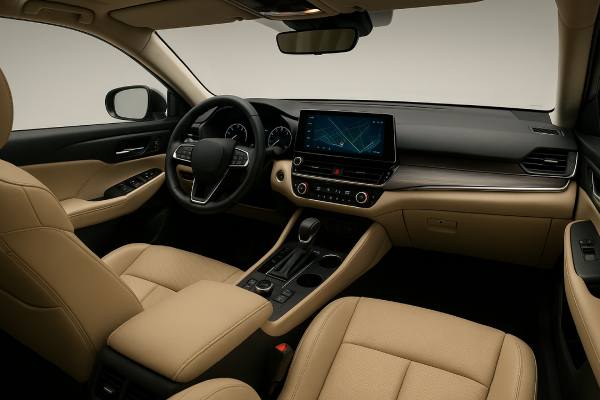
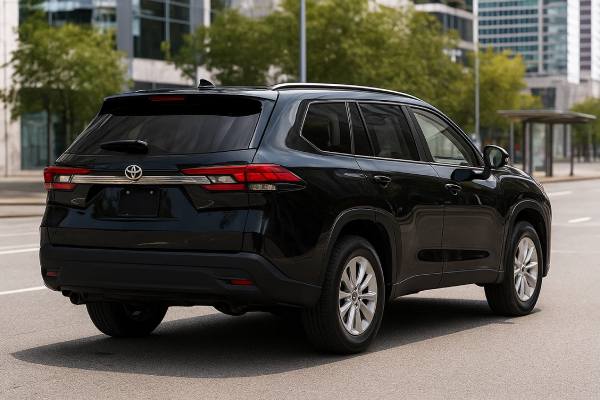
The Toyota Grand Highlander FWD (TASA10) with the 2.4-liter turbo four is the most straightforward path into Toyota’s biggest three-row crossover. It rides on the TNGA-K architecture and blends family-first packaging with a quiet, refined highway demeanor. The T24A-FTS engine delivers usable torque at low rpm, while the eight-speed automatic settles into tall gearing for relaxed cruising. Inside, wide-opening doors, an adult-friendly third row, and generous cargo space (including 97.5 ft³ with seats folded) make the Grand Highlander easy to live with. Driver assistance coverage is broad thanks to Toyota Safety Sense 3.0, and features like a standard 12.3-inch infotainment display and abundant USB-C ports keep daily life friction-free. If you want the largest Toyota crossover without the complexity of a hybrid or the expense of AWD, this FWD 2.4T configuration is the sweet spot. Below, you will find the essential specs, maintenance guidance, and real-world ownership insights.
Fast Facts
- Strong everyday torque: 310 lb-ft (421 Nm) from the 2.4T makes merging and passing easy.
- Cabin and cargo leader: adult-size third row and up to 97.5 ft³ (2,762 L) max cargo.
- Broad standard safety suite (TSS 3.0) with capable pedestrian detection and lane support.
- Watch for: software updates and recall compliance; confirm driver-side small-overlap crash rating status when shopping used.
- Typical service rhythm: oil and filter every 10,000 miles (16,000 km) or 12 months; tire rotation every 5,000 miles (8,000 km).
Explore the sections
- Grand Highlander FWD overview
- Grand Highlander specs and data
- Grand Highlander trims and safety
- Reliability and known issues
- Maintenance and buyer’s guide
- Driving and real-world performance
- Grand Highlander versus rivals
Grand Highlander FWD overview
The Grand Highlander stretches the familiar Highlander formula into true full-size crossover territory. On the outside, it measures roughly 201.4 in (5,115 mm) bumper to bumper with a long 116.1-in (2,950-mm) wheelbase, creating the space many families wanted from the regular Highlander. The design is upright without feeling boxy, so visibility is good in traffic and parking lots. Inside, the three rows sit on stadium-style risers that help rear passengers see out. Adults can actually fit in the third row, and the second row slides to balance legroom and child-seat needs. With the third row folded, there is generous flat-floor cargo volume; with both rear rows down, the load bay rivals large SUVs.
The FWD 2.4-liter turbo model targets buyers who want predictable handling and the lowest running costs in the lineup. The T24A-FTS four-cylinder uses Toyota’s dual-injection (port plus direct) strategy to keep intake valves cleaner over time while maintaining strong low-end torque. It pairs to an eight-speed “Direct-Shift” automatic that favors early upshifts around town and relaxed cruising on the highway. Drive modes subtly adjust throttle mapping and transmission behavior but avoid gimmicks; the calibration emphasizes smoothness, not theatrics. Steering is electrically assisted and light at low speed, which helps in tight parking garages, yet it firms up enough on the open road to track confidently.
Practical touches are everywhere: long rear-door openings, a low cargo load height, rubber-lined shelves for phones, multiple USB-C ports across rows, and a standard 12.3-inch central display. Materials are chosen for durability—soft-touch where knees and elbows land, and wipe-clean finishes in high-traffic zones. Noise isolation is a strength; the big Toyota cruises quietly even at 70–75 mph (113–121 km/h), with wind rustle and tire hum well controlled on most OEM tire packages.
Safety tech is comprehensive. Toyota Safety Sense 3.0 brings automatic emergency braking with pedestrian detection, lane keeping, adaptive cruise control with lane centering, and road sign assist. Blind-spot monitoring with rear cross-traffic alert is commonly fitted. The body structure and airbag coverage are modern and expansive, including third-row provisions, and the LATCH layout is friendly for families installing multiple seats.
For towing, the 2.4T gas model can be configured for up to 5,000 lb (2,268 kg) when properly equipped. While the Grand Highlander is not designed for trail work, its 8.0-in (203-mm) ground clearance and a Snow mode (if equipped) help when weather turns. Owners cross-shopping the hybrid variants should know those emphasize efficiency and have different tow ratings; the FWD gas model is the simplest, torquiest choice for long highway trips and mixed suburban duty.
Grand Highlander specs and data
Powertrain and Efficiency (HEV/PHEV/BEV template adapted for HEV/ICE family; this model is ICE)
| Item | Specification |
|---|---|
| Engine code | T24A-FTS |
| Layout & valvetrain | Inline-4, DOHC, 16-valve, dual VVT-i |
| Bore × stroke | 87.5 × 99.5 mm (3.44 × 3.92 in) |
| Displacement | 2.4 L (2,393 cc) |
| Induction | Single turbocharger, intercooler |
| Fuel system | D-4ST dual injection (direct + port) |
| Compression ratio | ~10.5:1 |
| Max power | 265 hp (198 kW) @ ~6,000 rpm |
| Max torque | 421 Nm (310 lb-ft) @ ~1,700–3,600 rpm |
| Timing drive | Chain |
| Emissions/efficiency standard | ULEV/SULEV class (market dependent) |
| EPA economy (FWD 2.4T) | 9.8 L/100 km combined (24 mpg US / 29 mpg UK); 11.2 L/100 km city (21 mpg US) / 8.4 L/100 km hwy (28 mpg US) |
| Real-world highway @ 120 km/h (75 mph) | ~9.0–9.4 L/100 km (26–25 mpg US / 31–30 mpg UK), weather and load dependent |
Transmission and Driveline
| Item | Specification |
|---|---|
| Transmission | 8-speed automatic (Direct-Shift) |
| Drive type | FWD |
| Final drive | ~3.3:1 (varies by calibration) |
| Differential | Open front |
| Refuel to full | ~5 minutes at a typical station |
Chassis and Dimensions
| Item | Specification |
|---|---|
| Platform | TNGA-K |
| Front/rear suspension | MacPherson strut / multi-link |
| Steering | Electric power steering (rack-mounted) |
| Brakes | 4-wheel discs (vented front/rear), ABS, EBD |
| Wheels/Tires | 18-in (e.g., 245/60R18) standard; 20-in (e.g., 255/55R20) available |
| Ground clearance | ~203 mm (8.0 in) |
| Length × width × height | ~5,115 × 1,989 × 1,781 mm (201.4 × 78.3 × 70.1 in) |
| Wheelbase | 2,950 mm (116.1 in) |
| Turning circle (curb-to-curb) | ~11.7 m (38.4 ft) |
| Fuel tank | ~68 L (18.0 US gal / 15.0 UK gal) |
| Cargo volume (SAE) | ~583 / 1,640 / 2,762 L (20.6 / 57.9 / 97.5 ft³), 3rd / 2nd / 1st rows down |
Performance and Capability
| Item | Specification |
|---|---|
| 0–100 km/h (0–62 mph) | ~8.0 s (0–60 mph ~7.8 s) |
| Top speed (limited) | ~210 km/h (130 mph) |
| Braking 100–0 km/h (62–0 mph) | Typical for class; tire-dependent |
| Towing capacity (braked) | Up to 2,268 kg (5,000 lb) when properly equipped |
| Unbraked towing | ~454 kg (1,000 lb) |
| Payload | Typical three-row crossover range; verify on door-jamb label for your VIN |
| Roof load | Check crossbar rating; commonly 75–100 kg (165–220 lb) with OEM rails/bars |
Fluids and Service Capacities (decision-making essentials)
| System | Specification / Guidance |
|---|---|
| Engine oil | SAE 0W-20 (ILSAC GF-6) full synthetic; follow oil life monitor or 10,000 miles / 12 months |
| Coolant | Toyota Super Long Life Coolant (pink), premixed 50/50; first long interval typically 100,000 miles (160,000 km), then 50,000 miles (80,000 km) |
| ATF | Toyota WS; inspect at major services; change more often for heavy towing/hot climates |
| A/C refrigerant | R-1234yf |
| Critical torque cues | Wheel lug nuts 131 Nm (97 lb-ft) typical for Toyota SUVs; always verify by VIN/service data |
Electrical
| Item | Specification |
|---|---|
| 12-V battery | Modern AGM or flooded lead-acid, ECU-monitored; test annually after year 3 |
| Alternator output | Sized for multiple USB-C ports and accessory loads; duty robust for family travel |
Safety and Driver Assistance
| Area | Highlights |
|---|---|
| Crash ratings | IIHS driver-side small-overlap: Acceptable; other major categories: Good; headlight: Acceptable (varies by test year/model update). |
| Headlights | LED projectors with high-beam assist; Acceptable headlight rating noted in tests. |
| ADAS suite | Toyota Safety Sense 3.0: Pre-Collision with pedestrian detection (day/night), Lane Departure Alert with Steering Assist, Lane Tracing Assist (centering), Full-Speed DRCC, Road Sign Assist; Blind-Spot Monitor and Rear Cross-Traffic Alert widely fitted. |
| Child-seat provisions | Multiple LATCH locations; good usability in middle and outboard seats; confirm tether paths when using the third row. |
Grand Highlander trims and safety
Trims and options. The FWD 2.4T is typically offered in value-oriented and comfort-focused grades such as LE/XLE, Limited, and Platinum (availability varies by model year). The trims ladder affects seating materials (cloth → SofTex → leather), instrument cluster size, audio (base → premium JBL), and wheel packages (18-in vs 20-in). Mechanically, all FWD gas trims share the same 2.4T/8AT powertrain. Tow-prep equipment and a heavy-duty cooling setup may be bundled in packages; if towing is on your list, verify that your target vehicle has the factory tow items and 2-inch receiver. Limited and Platinum commonly add ventilated fronts, heated rears, a panoramic roof, full-range parking sonar, and power fold for the third row. Nightshade-style appearance packs and black wheels have rotated through select years.
Quick identifiers. The 2.4T gas FWD models are usually badged “TURBO” on the engine cover. VIN decoding confirms engine and driveline; the build label in the driver’s door-jamb lists tire sizes and GVWR differences. Wheel designs are the fastest curbside tell: 18-inch multi-spokes on lower trims, 20-inch machined face designs on upper trims.
Year-to-year notes. Early model years emphasized three distinct powertrains (2.4T gas, Hybrid 245-hp, Hybrid MAX). Subsequent updates refined ADAS software, multimedia features, and trim availability (e.g., entry LE grade introduction and aesthetic packages). The FWD 2.4T specification has remained stable in output and EPA economy. Always check the window sticker (Monroney) or Toyota build sheet, as dealer-added packages can add convenience features (roof crossbars, cargo systems) but do not change the mechanical spec.
Safety ratings and what they mean. The Grand Highlander performs well across most IIHS crashworthiness tests, with Good ratings in the updated moderate overlap and side evaluations. Its Acceptable result in the driver-side small overlap test kept it from earning an IIHS Top Safety Pick in some years; Toyota has made ongoing refinements as the vehicle matured. The standard Toyota Safety Sense 3.0 suite is competitive: its pedestrian AEB system earns strong evaluations in day and night scenarios, and its adaptive cruise with lane centering reduces fatigue on long highway trips. Headlight performance has been Acceptable in testing; this reflects beam pattern and glare criteria, not brightness alone. For families, the LATCH hardware is well laid out, and child-seat placement flexibility is above average for the class. After any windshield, bumper, radar, or camera service, follow factory calibration procedures—improperly aligned sensors can degrade ADAS function or trigger warnings.
Calibration and service implications. Replacing a front emblem (radar) or windshield (camera) often requires static and/or dynamic ADAS calibration. Ask body shops or glass installers to document completion to factory specification. If the vehicle has parking sonar or rear cross-traffic braking, bumper cover repairs and bracket alignment matter; insist on OEM fitment and a post-repair system check.
Reliability and known issues
Toyota’s turbo four has a growing track record across multiple models, and the Grand Highlander benefits from that shared parts base. Overall reliability trends are favorable, especially when owners keep to the 10,000-mile/12-month oil interval and rotate tires at 5,000 miles. Still, every modern three-row crossover has watchpoints. Below are issues mapped by prevalence and cost to help prioritize pre-purchase checks and early ownership attention.
Common (low to medium cost):
- Software updates (ECU/TCU/ADAS/infotainment). Symptoms: infotainment lag, intermittent wireless CarPlay dropouts, cruise control behavior that feels “sticky,” or odd lane-centering drift. Cause: firmware bugs resolved in later calibrations. Remedy: dealer flash/update; verify you’re on the latest campaign.
- Tire cupping/feathering on 20-inch packages. Symptoms: drone/hum at 40–65 mph, sawtooth wear on inner tread blocks. Cause: heavy vehicle on aggressive tread plus under-rotation. Remedy: rotate every 5,000 miles and keep alignment within spec; consider quieter touring tires at replacement.
Occasional (medium cost):
- Wastegate/boost control noises. Symptoms: light “whoosh” or whistle on tip-in or lift-off. Cause: normal turbo acoustics amplified by cabin quiet; rarely, a loose clamp or small leak. Remedy: inspect charge-air plumbing; re-clamp or replace gaskets as needed.
- Brake feel variation. Symptoms: soft initial bite or vibration after long downhill grades. Cause: pad glazing or uneven deposits. Remedy: bed-in procedure, pad replacement, or rotor service; use OE-quality pads for consistent pedal feel.
Rare (high-cost or safety related):
- Side curtain airbag/trim concerns. Some early model-year vehicles were covered by a Toyota recall addressing potential side curtain airbag deployment interference. Remedy: verify recall status and repair completion by VIN; keep documentation in your records.
- Cooling system leaks after collision work. Symptoms: odor, slow coolant loss. Cause: minor damage to plastic quick-connects or heat exchanger after a front-end incident. Remedy: pressure test; replace compromised connectors; refill with Toyota SLLC and bleed properly.
High-voltage/hybrid components are not present on this FWD gas model, simplifying ownership versus hybrid variants (no traction battery state-of-health checks, inverter cooling loops, or regen-brake corrosion patterns to manage).
Chain-driven timing components reduce scheduled maintenance versus belts. Listen on cold start for abnormal chain rattle; persistent noise or cam correlation codes warrant inspection of guides/tensioner. Direct-injection engines can build intake valve deposits over very long mileage; Toyota’s dual-injection design mitigates this by washing valves with port fuel at certain loads, so walnut blasting is rarely needed in normal service intervals.
Corrosion hotspots are mild for a crossover-style body, but road-salt regions should inspect rear subframe mounts, fasteners along underbody aero shields, and tailgate seams. After winter, a thorough underbody wash and brake hardware lubrication help prevent binding and noise.
What to ask for when buying used: complete maintenance history; proof of software updates and any recall work; documentation for brake service; alignment records (especially if tires show irregular wear); and, ideally, a pre-purchase inspection focusing on cooling system integrity, boost plumbing, and ADAS sensor alignment.
Maintenance and buyer’s guide
Practical service schedule (distance/time, whichever comes first).
This schedule suits typical commuting and family travel; shorten intervals for frequent towing, hot climates, or heavy city use.
- Engine oil and filter: every 10,000 miles (16,000 km) or 12 months with SAE 0W-20 full synthetic (ILSAC GF-6). Use an OE-equivalent filter and reset the maintenance reminder.
- Tire rotation and inspection: 5,000 miles (8,000 km); include tread-depth recording, pressure set to door-jamb label, and visual check for cupping on 20-inch tires.
- Cabin air filter: inspect at 12 months/15,000 miles (24,000 km); replace if dirty or during pollen season.
- Engine air filter: inspect 15,000 miles (24,000 km); replace 30,000–45,000 miles (48,000–72,000 km) depending on dust exposure.
- Brake fluid: 2–3 years; test for copper content/moisture; bleed with DOT 3/4 to spec.
- Coolant (Toyota SLLC pink): first change around 100,000 miles (160,000 km), then every 50,000 miles (80,000 km).
- Spark plugs (iridium): 60,000 miles (96,000 km) is a prudent target on the turbo 2.4T for consistent cold starts and fuel economy.
- Automatic transmission fluid (Toyota WS): inspect at major services; proactive drain-and-fill around 60,000–100,000 miles (96,000–160,000 km) if towing or in severe heat.
- Serpentine belt and hoses: inspect at 60,000 miles (96,000 km); replace if cracking or glazing is evident.
- Alignment: annually or after pothole impacts; a set-and-forget alignment protects tires.
- 12-V battery: load test annually after year 3; replace 3–5 years in most climates.
- Body and chassis: annual wash/wax, underbody rinse after winters, lube sliders/pins in brake hardware.
Fluid essentials and quick capacities.
- Oil: SAE 0W-20, change quantity will vary slightly by pan/filter design—follow the dipstick/monitor after refill rather than a fixed “book” number.
- Coolant: Toyota SLLC (pink) premix; do not mix with green or universal coolants.
- ATF: Toyota WS only; fill-for-life claims assume light duty—refreshing fluid under severe use is cheap insurance.
- A/C: R-1234yf; service requires proper recovery equipment.
- Wheel lug torque: 131 Nm (97 lb-ft) typical—verify for your VIN.
Buyer’s checklist (walk-around to test-drive).
- Exterior: check even hood/fender gaps (sensor alignment relies on straight panels); inspect windshield for camera-zone chips.
- Tires: uneven inner-edge wear suggests alignment neglect; verify tire date codes on used vehicles.
- Brakes: feel for pulsation; a quick look through spokes can show rotor ridging.
- Cooling/induction: sniff for sweet coolant odor after a hot drive; inspect charge-pipe couplers.
- Interior/tech: verify all USB-C ports charge, wireless charging pad grip, and wireless CarPlay/Android Auto stability.
- ADAS: test adaptive cruise with lane centering; confirm no warning lights after a long, straight highway segment.
- Towing gear: look for a factory receiver, 4/7-pin wiring, and tow-prep label if you plan to tow.
Which trim to target?
- Best value: XLE FWD—heated fronts, power liftgate, big screen, and sensible 18-inch wheels that ride quietly and keep tire costs down.
- Luxury on a budget: Limited FWD—adds ventilated fronts and premium audio without the price of Platinum.
- Towing/long trips: any FWD 2.4T with tow package; prioritize an auxiliary cooler and trailer-brake controller compatibility.
Durability outlook.
With straightforward maintenance and sensible rotation/alignment habits, the 2.4T FWD Grand Highlander should deliver long, drama-free service. The powertrain is under-stressed, and Toyota’s parts support is strong. Software updates and recall compliance are the main administrative tasks for an owner—once handled, day-to-day ownership is pleasantly uneventful.
Driving and real-world performance
Ride and NVH. The long wheelbase yields a calm, level ride. Impacts are heard more than felt, and body motions settle quickly after speed bumps or expansion joints. At 65–75 mph (105–121 km/h), cabin noise is low for the class: wind hush is minor, tire noise depends on brand and tread, and the engine fades into the background in eighth gear. The most noticeable sounds come from coarse-chip surfaces on 20-inch tires; the 18-inch setup is the quiet champion for road trips.
Handling and steering. Expect neutral manners and gentle responses rather than sportiness. The steering ratio and assist target easy daily use, with accurate on-center tracking on the highway. In suburban corners, the Grand Highlander feels planted, aided by its wide track and multi-link rear suspension. Emergency maneuvers are tidy, with stability control stepping in predictably. Brake feel is progressive; repeated downhill stops will warm the system, so a downshift or two on long grades is helpful.
Powertrain character. The 2.4-liter turbo develops its best work at low to mid rpm. From a stop, it moves smartly without excessive throttle. Passing from 50–80 mph (80–129 km/h) is confident, especially with a kickdown to 5th or 6th gear. Turbo lag is modest; the calibration blends boost smoothly. The eight-speed’s priorities are refinement and efficiency: short-shifting in city driving, tall cruising on the highway. Manual control via the lever is available for hills or merging, though most drivers let the computer do the work.
Efficiency in the real world. Owners commonly see 24 mpg US combined (9.8 L/100 km) in mixed use, aligning with official figures. At steady 75 mph (120 km/h), the big Toyota often returns ~25–26 mpg US (9.4–9.0 L/100 km) in mild weather on 18-inch tires. City results vary with trip length and climate; short hops can dip to the high-teens mpg when the engine spends time warming up. Winter blends, snow tires, roof boxes, and heavy accessories all nudge economy downward; conversely, careful driving, proper pressures, and light loads help the Grand Highlander meet or beat its label.
Towing and load behavior. Properly equipped, the FWD 2.4T can pull up to 5,000 lb (2,268 kg). Within that envelope, it tracks straight and maintains temperature on modest highway grades if you use Tow/Haul logic where available (or select a lower gear). Expect a 15–30% fuel-economy penalty with a mid-size camper or dual-axle utility trailer; mind tongue weight to avoid excessive front-axle lift. With a full cabin and a cargo hold stacked to the roof, braking distances will lengthen; swapping to high-friction pads at the first brake job is a smart upgrade for frequent haulers.
Traction and control. As a front-drive model, the Grand Highlander relies on traction control and tire selection in slick conditions. With good all-weather or winter tires, it handles snow days calmly. The Snow mode softens throttle tip-in to reduce wheelspin and keeps gears higher to prevent surges. If your area sees frequent steep, icy climbs, AWD remains a worthwhile step—otherwise, the FWD model is poised and predictable for typical weather.
Daily usability. The driving position is upright with long thigh support, the second row slides and reclines, and third-row access is better than most. The cargo floor is broad and flat when folded; tie-downs and underfloor storage keep trips organized. The standard 12.3-inch display is responsive, voice controls are usable, and wireless smartphone mirroring simplifies setup. Long-haul comfort is a standout.
Grand Highlander versus rivals
Three-row crossovers are a crowded field. The Grand Highlander FWD stakes its claim with space efficiency, smooth road manners, and a simple but torquey powertrain.
- Honda Pilot. The Pilot favors a naturally aspirated V6 and a slightly firmer chassis tune. It’s tidy to drive and carries a strong safety record, but third-row and cargo space feel tighter than the Toyota’s. The Grand Highlander is quieter on the highway; the Pilot counters with a more engaging steering feel.
- Hyundai Palisade / Kia Telluride. These siblings deliver plush cabins and an easygoing V6. They are comfort standouts but use more fuel than the Toyota. Infotainment is slick, and driver aids are polished. The Toyota’s torque-rich turbo four closes the performance gap while returning better highway mpg, especially at 70–75 mph.
- Mazda CX-90. The Mazda brings rear-drive dynamics and an upscale interior. It’s the driver’s choice on a winding road but the firmest-riding in this set. The Toyota counters with easier packaging, a friendlier third row, and a calmer cabin at speed.
- Chevrolet Traverse / GMC Acadia. GM’s latest entries are roomy and power-dense, with robust towing numbers. Their V6 economy trails the Toyota’s in highway use, and long-term ownership costs have more variability.
- Volkswagen Atlas. The refreshed Atlas uses a turbo four with good torque but runs a bit louder on coarse pavement. The Toyota’s interior feels warmer and its ADAS tuning more consistent in lane centering.
- Subaru Ascent. Standard AWD and a protective safety ethos are plusses. The Grand Highlander rides quieter, tows more in gas form, and offers a larger, flatter cargo area.
For families prioritizing space, quietness, and low running costs, the Grand Highlander FWD 2.4T is a balanced pick. Shoppers who need frequent snow traction or off-pavement travel should weigh the AWD version; those laser-focused on fuel spend can look to the hybrid, recognizing its different tow ceiling and power feel.
References
- Comfort and Style Mile After Mile in the 2026 Toyota Grand Highlander – Toyota USA Newsroom 2025 (Vehicle Overview/Dimensions)
- 2024 Toyota Grand Highlander – Toyota USA Newsroom 2023 (Model and Feature Overview)
- Gas Mileage of 2024 Toyota Grand Highlander 2024 (EPA Fuel Economy)
- New Toyota Grand Highlander falls short of IIHS award 2023 (Safety Rating Context)
- Toyota Recalls Certain 2024 Model Year Toyota Grand Highlander and Lexus TX Vehicles – Toyota USA Newsroom 2024 (Recall Notice)
Disclaimer
This article is for informational purposes only and is not a substitute for professional diagnosis, repair, or official service procedures. Specifications, torque values, fluid capacities, and maintenance intervals vary by VIN, model year, market, and equipment. Always verify details against your vehicle’s official owner’s manual, service information, and recall/TSB records before performing work or making purchase decisions.
If this guide helped, please consider sharing it with fellow owners on Facebook or X/Twitter to support xcar’s work. Thank you!