
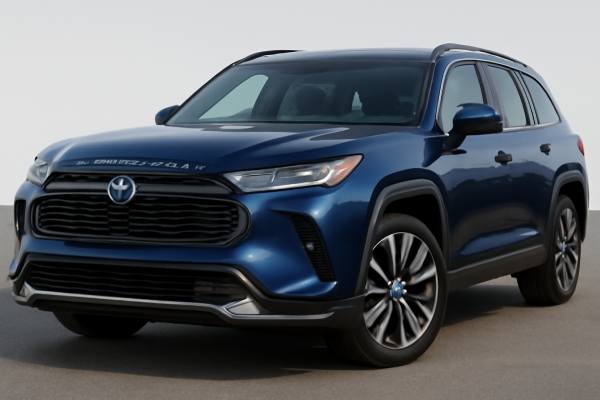
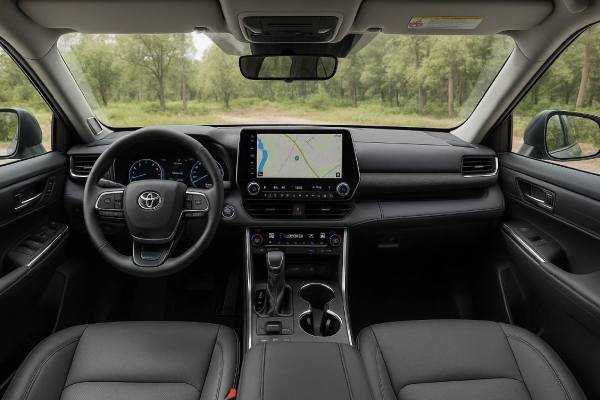
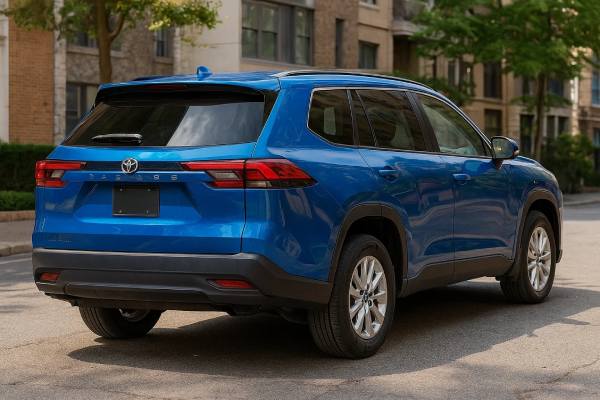
The Toyota Grand Highlander Hybrid MAX is the most powerful and tow-capable member of the Grand Highlander family. Built on Toyota’s TNGA-K architecture, it pairs the turbocharged 2.4-liter T24A-FTS engine with front and rear electric motors and a 6-speed automatic to deliver confident acceleration, stable high-speed cruising, and full-time electronic all-wheel drive. Three-row space, quiet road manners, and thoughtful storage make it an easy fit for family life, while a 5,000-lb (2,268-kg) tow rating and standard Toyota Safety Sense 3.0 extend its capability. Owners value its highway composure and seamless hybrid transitions; technicians appreciate the familiar Toyota service logic and clear diagnostics. This guide distills what shoppers and owners ask most: accurate specifications, maintenance know-how, reliability signals, and how the Hybrid MAX stacks up against rivals.
Top Highlights
- Strong performance: 362 hp (270 kW), confident passing, and stable highway manners.
- Useful capability: 5,000 lb (2,268 kg) max towing with integrated trailer stability assist.
- Family-first packaging: adult-usable third row, 20.6 ft³ (583 L) cargo behind Row 3, abundant small-item storage.
- Note: early airbag recall exists—confirm completion by VIN before purchase or delivery.
- Typical service rhythm: rotate tyres every 5,000 mi (8,000 km); engine oil service ~10,000 mi/12 months (shorten if severe use).
Guide contents
- Grand Highlander Hybrid MAX Overview
- Grand Highlander Hybrid MAX Specs
- Hybrid MAX Trims, Options and Safety
- Reliability and Service Actions
- Maintenance and Buyer’s Guide
- Driving and Performance
- Rivals and Alternatives
Grand Highlander Hybrid MAX Overview
If you want the Grand Highlander with the most thrust and the highest tow rating, Hybrid MAX is the one to circle. The drivetrain combines Toyota’s 2.4-liter turbocharged four-cylinder with two electric motors—one packaged with a 6-speed automatic up front, the other as a rear e-axle—creating full-time electronic AWD without a mechanical driveshaft. Output is a healthy 362 hp (270 kW) and a broad torque plateau that makes freeway merges and two-lane passing feel effortless. Unlike Toyota’s eCVT-based hybrids, Hybrid MAX’s stepped 6-speed lends a familiar, direct driving character with quick kickdowns on grades or during passing.
The chassis tuning emphasizes long-distance calm: a rigid body, isolated road impacts, and stable tracking at speed. What stands out in everyday use is how quietly the system blends engine and motor power. Brake feel—often a weak point in hybrids—is progressive here, thanks to well-blended regen and friction braking. Practicality remains the headline: three adult-sized rows, easy third-row access, and cargo space that beats many class peers even with all seats up. Technology coverage is strong, with Toyota Safety Sense 3.0 and a modern infotainment stack that supports OTA updates, cloud-enhanced navigation, and a straightforward camera suite. For families who tow boats or pop-ups on summer weekends but spend most time commuting or road-tripping, the Hybrid MAX recipe is unusually well-balanced.
Grand Highlander Hybrid MAX Specs
Below are scannable tables focused on the Hybrid MAX Full-Time Electronic AWD (TASH15). Units are shown in U.S. first, with metric in parentheses.
Powertrain and Efficiency
| Item | Specification |
|---|---|
| Engine code | T24A-FTS (turbocharged I-4, DOHC 16-valve) |
| Induction | Single turbocharger, intercooler |
| Fuel system | Toyota D-4ST (direct + port injection) |
| Displacement | 2.4 L (2,393 cc) |
| Compression ratio | — (not published in Toyota consumer materials) |
| Electric motors | Front traction motor (integrated with 6-AT); rear e-axle motor (single-speed) |
| System output | 362 hp (270 kW) |
| System torque | 400 lb-ft (542 Nm) |
| Transmission | 6-speed automatic with torque converter (Hybrid MAX) |
| Drive type | Full-Time Electronic AWD (no rear driveshaft; motorized rear axle) |
| EPA economy | 27 mpg combined; 26 city / 27 highway (8.7 L/100 km combined) |
| Fuel | Regular unleaded (87 AKI) |
| Rated range (tank-to-empty) | Depends on use; ~462 mi combined at EPA (744 km) with ~17 gal tank (approximate) |
| Real-world highway @ 75 mph | High-20s mpg typical in mild temps; expect winter dips due to aero/thermal losses |
Transmission and Driveline
| Item | Specification |
|---|---|
| Transmission | 6-speed automatic (step-gear) |
| Gear ratios | Not publicly listed by Toyota for this application |
| Final drive ratios | Not publicly listed (front/rear e-axle reduction integrated) |
| Center coupling | Electronic torque management (software-controlled, no mechanical transfer case) |
| Rear axle | Electric motor with reduction gear; open diff behavior via software/brake control |
Chassis and Dimensions
| Item | Specification |
|---|---|
| Platform | TNGA-K |
| Suspension (front/rear) | MacPherson strut / multi-link |
| Steering | Electric power steering; quick ratio for highway stability |
| Brakes | 4-wheel disc with blended regen; ABS, EBD, BA |
| Wheelbase | 116.1 in (2,949 mm) |
| Length / Width / Height | 201.4 / 78.3 / ~70.1 in (5,116 / 1,989 / ~1,780 mm) |
| Ground clearance | ~8.0 in (203 mm) |
| Turning circle (curb-to-curb) | ~38.1 ft (11.6 m) |
| Curb weight | ~4,4xx–4,7xx lb (trim/option dependent) |
| GVWR | ~6,0xx lb (trim dependent) |
| Cargo volume (SAE) | 20.6 ft³ behind Row 3 (583 L) / 57.9 ft³ Row 3 folded (1,640 L) / 97.5 ft³ max (2,762 L) |
| Seating | 7 or 8 (captain’s chairs vs. bench) |
Performance and Capability
| Item | Specification |
|---|---|
| 0–60 mph (manufacturer est./independent tests) | Low-to-mid-6-second bracket |
| Top speed | Electronically limited (typical class norm) |
| Braking 60–0 mph | Competitive for class; strong initial bite and stability |
| Towing capacity (braked) | 5,000 lb (2,268 kg) |
| Payload | Trim dependent (consult door placard) |
| Roof load | Follow accessory crossbar ratings; consult manual |
Fluids and Service Capacities (decision-making quick reference)
| System | Spec / Note |
|---|---|
| Engine oil | Toyota-approved SAE 0W-8 (use API/ILSAC rating specified in owner resources) |
| Oil change interval | ~10,000 mi / 12 months under normal service; 5,000 mi if severe duty or short trips |
| Coolant | Toyota Super Long Life Coolant (pink), 50/50 premix |
| A/C refrigerant | R-1234yf (charge amount per under-hood label) |
| Brake fluid | DOT 3 or DOT 4 (follow cap/manual) |
| Tyre pressures | Door placard; adjust for load/towing |
| Lug nut torque (typical Toyota) | ~76 lb-ft (103 Nm); confirm on your door jamb/manual |
Capacities vary slightly by trim/options and production date. Always verify by VIN in the official owner resources before service.
Electrical
| Item | Specification |
|---|---|
| 12 V battery | Conventional 12 V auxiliary (form factor varies; consult parts catalog) |
| Hybrid battery | Toyota hybrid pack; chemistry not disclosed in consumer materials |
| Alternator | Not applicable (hybrid uses motor-generators and DC-DC converter) |
Safety and Driver Assistance
| Item | Specification |
|---|---|
| Airbags | Frontal, side, curtain (all three rows), driver knee (coverage varies by trim) |
| ADAS suite | Toyota Safety Sense 3.0: Pre-Collision with pedestrian/cyclist detection, Lane Departure Alert with Steering Assist, Lane Tracing Assist, Full-Speed DRCC, Road Sign Assist, Proactive Driving Assist; Blind Spot Monitor with RCTA widely available |
| Headlights | Performance varies by trim/lighting package; check test ratings by year |
| Crash tests | See year-specific results; 2024 model did not earn IIHS Top Safety Pick under latest protocols |
Hybrid MAX Trims, Options and Safety
Trim availability and identifiers. Hybrid MAX is positioned as the performance and tow-max powertrain. In North America it’s commonly bundled with Limited and Platinum equipment levels. Visual tells include “Hybrid MAX” badging, dual exhaust finishers, larger wheels/tyres, and available premium interior trims with ventilated fronts and captain’s chairs. VIN decoding will show the TASH15 chassis/powertrain family; build sheets list the 2.4-liter turbo hybrid and full-time electronic AWD.
Functional differences by trim.
- Limited (Hybrid MAX): 20-in wheels, heated/ventilated front seats, JBL audio availability, hands-free liftgate, power outlets, and advanced tow wiring.
- Platinum (Hybrid MAX): Adds panoramic roof availability, head-up display, 360° cameras with perimeter scan, advanced parking assist, and more extensive interior soft-touch upgrades.
Both trims maintain the 5,000-lb tow rating when properly equipped (hitch, wiring, weight-appropriate brake controller where required).
Safety ratings in brief. The Grand Highlander’s structure, restraint systems, and TSS 3.0 perform well overall, but early 2024-MY testing under upgraded IIHS protocols kept it from award status; verify your specific build year because headlights, seatbelt reminders, and small-overlap updates can change outcomes. Families using multiple child seats should note: the third row is adult-tolerable, but the second-row LATCH/ISOFIX points remain the easiest for secure installs; belt paths in Row 3 can be tight with certain bases.
ADAS scope and calibration. TSS 3.0 uses a forward camera, radar, and additional corner radar for cross-traffic support. After windshield replacement, front bumper or grille repairs, or alignment adjustments, radar/camera recalibration and dynamic aiming may be required. Shops with OE-level scan tools should confirm no DTCs, restore steering angle zero-point, and execute target-based calibrations per service documentation.
Year-to-year notes. Toyota periodically refines camera/radar software and multimedia features via updates. Headlight performance and camera encoding can change with supplier tweaks—verify your exact model year when comparing safety test headlines online.
Reliability and Service Actions
Toyota’s modern hybrid systems have an excellent field record for durability, and Hybrid MAX benefits from robust thermal management for both the turbo engine and the e-axle. Still, every model has patterns worth watching:
Common / low-severity
- Software niggles (infotainment, camera switching, connected services): Symptoms include occasional black screen on boot or intermittent CarPlay reconnects. Remedy is module software update and hard reset; ensure your vehicle is on the latest multimedia revision.
- Brake feel at low speeds: Some drivers report a slight handoff sensation between regen and friction under gentle stops. A short adaptation drive after pad replacement and a brake ECU initialization typically normalizes feel.
Occasional / medium-severity
- Windshield sensor calibration drift: Following glass replacement or a hard pothole impact, lane-centering may wander or AEB warnings appear prematurely. Remedy is static/dynamic camera and radar calibration with OE targets, plus alignment check.
- 12-V battery sensitivity: Hybrids can exhibit low-voltage behavior if the auxiliary battery ages or the vehicle sees many short trips. Test annually after year three; replace proactively to avoid module undervoltage codes.
Rare / higher-severity
- Cooling system leaks (turbo ICE side): Look for faint coolant odor after shutdown or minor level drops over months. Pressure test, inspect plastic tees, quick-couplers, and intercooler circuit. Address early to protect the turbo and catalyst.
- E-axle bearing noise (rear): Uncommon, but a faint whine that scales strictly with road speed may point to rear reduction gear bearings. Confirm with chassis ears; fluid inspection for glitter; replace unit if out of spec.
Recalls, TSBs, and extended coverage
- Curtain shield airbag inflators — early campaign: Certain early builds were recalled for potential incorrect assembly of curtain shield airbag inflators. Remedy is inspection and replacement as required. Confirm by VIN using the official recall portal before purchase or delivery.
- Software campaigns: Toyota periodically issues calibration updates for ADAS performance or warning logic. A reflash is the official fix; verify campaign closure on the service portal.
Pre-purchase checklist (used / CPO)
- Proof of oil services on time (prefer shorter intervals if many short trips/towing).
- VIN recall printout, campaign completions, and the latest ADAS calibration records.
- Tire age and even wear; these vehicles are sensitive to mismatched rolling circumference front-to-rear.
- Brake pad thickness and rotor condition; confirm no pulsing from heat spots after towing.
- Full cooling system inspection (reservoir caps, hoses, intercooler plumbing).
- Road test for e-axle whine and smooth 6-AT operation in manual kickdowns.
Maintenance and Buyer’s Guide
Maintenance schedule (practical)
Below is a conservative schedule that aligns with Toyota’s general hybrid guidance while reflecting the Hybrid MAX’s turbocharged ICE. Always verify the official schedule by VIN.
- Engine oil and filter: Every 10,000 mi / 12 months under normal conditions with SAE 0W-8. Shorten to 5,000 mi / 6 months for severe duty (short trips, frequent cold starts, heavy towing, dusty routes).
- Tyre rotation / inspection: 5,000 mi (8,000 km), check tread depth and inside shoulders; align if edge wear appears.
- Cabin air filter: Inspect 12 months/15,000 mi (24,000 km); replace as needed (more often in urban/pollen seasons).
- Engine air filter: Inspect 15,000–20,000 mi (24,000–32,000 km); replace by 30,000–45,000 mi (48,000–72,000 km) or sooner in dusty use.
- Brake fluid: Test annually after year three; replace every 3 years or if moisture ≥ 3%.
- Coolant (engine/inverter loops): Toyota Super Long Life; first drain/fill typically 100,000 mi (160,000 km) then 50,000 mi (80,000 km)—verify by VIN.
- Spark plugs: Iridium; inspect 100,000 mi (160,000 km), replace 120,000 mi (193,000 km) or per official schedule.
- 6-speed automatic (Hybrid MAX): Follow Toyota guidance; many owners choose a 60,000–90,000 mi (96,000–145,000 km) drain/fill if towing or in hot climates.
- E-axle/reduction gear oil: Service only if noisy/contaminated or per TSB; otherwise inspect for leaks.
- 12-V battery: Test annually from year three; plan replacement 4–6 years depending on climate.
- HV battery health: Scan at major services; ensure cooling paths are dust-free.
Fluids quick list (shop counter cheat sheet)
- Engine oil: Toyota-approved 0W-8 (full synthetic).
- Coolant: Toyota Super Long Life (pink) premix 50/50.
- Brake fluid: DOT 3/4 as specified on cap.
- A/C: R-1234yf; charge amount on under-hood label.
- Washer fluid: All-season with anti-freeze protection where needed.
- Essential torque examples: Wheel nuts ~103 Nm (76 lb-ft); oil drain plug and filter housing torque per VIN in service info (varies by housing style—use new O-rings).
Buyer’s tips
- Choose Platinum if you want the full camera suite and HUD; Limited is the value sweet spot.
- If you’ll tow near 5,000 lb, spec a proper brake controller and monitor transmission temp on long grades; downshift proactively (the 6-AT makes this easy).
- For winter markets, invest in proper snow tyres; the rear e-axle gives traction but tyres set the limit.
- Test third-row comfort with your family; the Grand Highlander’s Row 3 is more adult-friendly than many, but cushion height is still minivan-short.
- Cross-shop insurance quotes—advanced ADAS sensors and panoramic glass can affect comprehensive premiums.
Driving and Performance
Powertrain character. Hybrid MAX steps off briskly and feels more “traditional” than eCVT hybrids because of its 6-speed automatic. The turbo 2.4 builds torque early; the front motor fills in at low rpm and during shifts, while the rear e-axle adds traction when you roll into the throttle mid-corner or merge on short ramps. Transitions between engine-off coasting and powered running are smooth; you mainly hear a muted four-cylinder thrum under heavy throttle.
Ride, handling, NVH. The long wheelbase (116.1 in) and body rigidity calm out expansion joints and broken pavement. Steering is light at parking speeds and settles to a reassuring weight on highways. The chassis prefers tidy lines to aggressive cornering; body control is composed, not sporty. Cabin noise is well-managed for the class—wind rustle is low, tyre roar depends on wheel/tire package. On long trips, front seats offer generous support and the second row remains comfortable for adults.
Braking and control. Pedal feel is progressive with predictable regen blending. Panic stops track straight with minimal dive. Stability control intervenes smartly on slick surfaces; snow and trail modes tailor throttle mapping and e-axle engagement to keep the vehicle moving without busy wheelspin.
Efficiency reality. Expect ~27 mpg combined in temperate conditions. At 75 mph (120 km/h) you’ll typically see high-20s mpg; winter temps, headwinds, roof boxes, and all-season performance tyres can knock 2–4 mpg (US) off highway results. Urban efficiency varies widely with trip length and HVAC use; remote pre-conditioning reduces cold-start enrichment loads.
Towing and load behavior. With 5,000 lb matched and tongue weight properly set, the Grand Highlander remains stable, particularly with the transmission proactively downshifted to keep the turbo in its comfort zone. Expect a 25–40% fuel-economy penalty when towing a high-profile trailer at 60–70 mph. Brakes are up to the task, but a trailer with its own brakes is strongly recommended near max tow.
Rivals and Alternatives
- Kia Telluride / Hyundai Palisade (V6, non-hybrid): Plush cabins and strong value; lack of hybrid options means higher fuel and often lower tow ratings than Hybrid MAX.
- Honda Pilot (V6): Roomy, tidy handling, off-road-themed TrailSport available. Efficiency and tow ratings trail Hybrid MAX, though long-term ownership costs are similarly friendly.
- Ford Explorer (2.3T / 3.0T / Hybrid V6 on select years): Explorer’s turbo fours/sixes feel quick, but interior packaging is tighter; Hybrid V6 tow ratings vary by year.
- Chevrolet Traverse (2.5T): Big cabin and updated tech; no hybrid. Real-world highway economy typically lower under load.
- Lexus TX 500h (related Hybrid MAX concept): A luxury-tuned take with similar architecture, more features, and higher pricing.
Bottom line: If you prioritize strong towing, easy long-trip comfort, and hybrid efficiency without living with an eCVT driving feel, the Grand Highlander Hybrid MAX is a standout. Its adult-friendly third row and calm high-speed demeanor seal the deal for many families.
References
- All-New 2024 Toyota Grand Highlander: Quality and Capabilities in a Boldly Designed Package 2023 (Manufacturer Pressroom)
- 2024 Toyota Grand Highlander Hybrid AWD 2.4 L Automatic (S6) Turbo 2024 (EPA Fuel Economy)
- New Toyota Grand Highlander falls short of IIHS award 2024 (Safety Rating)
- PART 573 Report of Safety Recall / 24V-548 2024 (Recall Database)
- 2024 Toyota Grand Highlander Owner’s Manual and Warranty | Toyota Owners 2024 (Owner’s Manual)
Disclaimer
This article is for informational purposes only and is not a substitute for professional diagnosis or repair. Specifications, torque values, fluid capacities, and service intervals vary by VIN, model year, market, and equipment. Always confirm procedures and specs in your official Toyota service documentation and owner resources before performing maintenance or repairs.
If this guide helped, please consider sharing it on Facebook or X/Twitter to support xcar’s work. Thank you!