
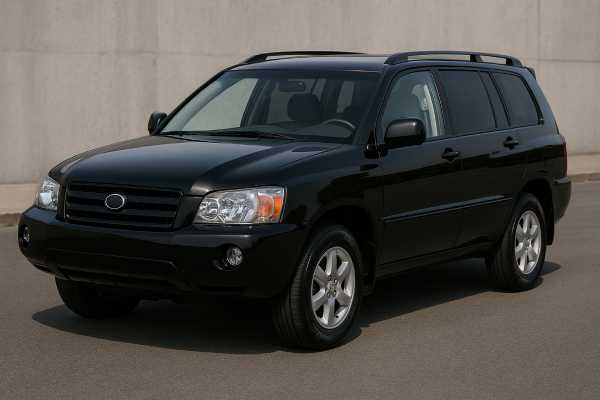
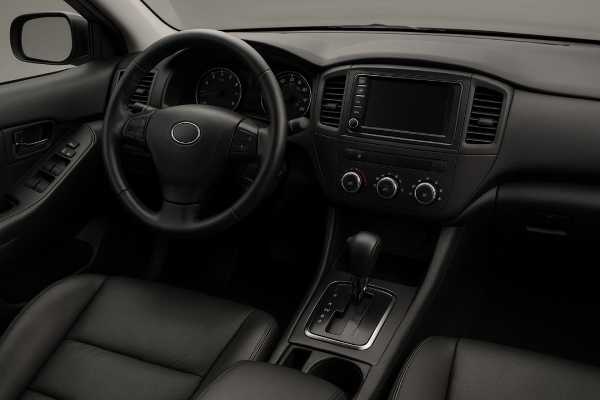
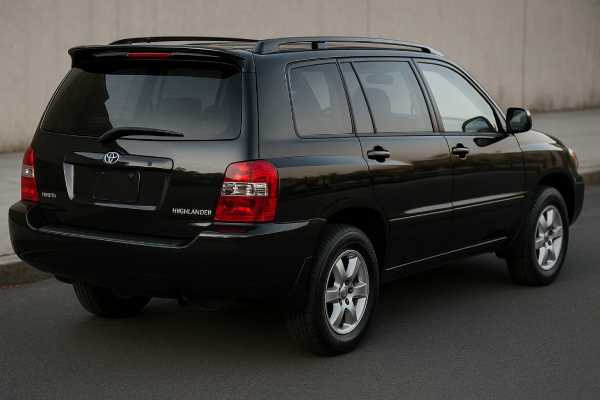
The 2004–2005 facelift Toyota Highlander with the 2.4-liter 2AZ-FE four-cylinder and full-time 4WD (ACU25) sits at a practical crossroads: it pairs car-like ride and thoughtful packaging with snow-day traction and the kind of durability families buy once and keep for a decade. The facelift sharpened the front and rear styling, tidied the cabin, and broadened safety and feature availability while keeping the mechanical formula simple—an aluminum DOHC inline-four, a smooth four-speed automatic, and a viscous-coupled rear drive when the fronts slip. Owners value the easy ingress/egress, low running costs, and a cargo area that swallows strollers, coolers, or flat-packed furniture without drama. If you know you’ll tow more than a small trailer or crave brisk passing, the V6 Highlander is quicker; otherwise this 2.4 AWD variant rewards gentle inputs with predictable responses, long-life components, and straightforward service access. This guide covers specs, ratings, common issues, and smart maintenance so you can choose and care for one with confidence.
Essential Insights
- Calm ride, secure 4WD traction, and a roomy, square cargo bay; low road and wind noise for its era.
- Simple, proven 2AZ-FE engine and four-speed automatic—easy DIY upkeep and parts are widely available.
- Tall seating position, large glass, and light controls make it an excellent daily and winter commuter.
- Watch for early signs of oil consumption and cooling-system leaks with age; address promptly to avoid knock-on wear.
- Oil and filter every 5,000 mi / 6 months is a reliable interval for mixed driving and longevity.
What’s inside
- Highlander 2.4 AWD in detail
- Specifications and key data
- Grades, packages, and driver aids
- Reliability, issues, and fixes
- Maintenance schedule and buying guide
- Driving experience and economy
- Competitors and alternatives
Highlander 2.4 AWD in detail
Toyota’s first-generation Highlander built its reputation on car-like manners and simple, durable engineering—the facelifted 2004–2005 four-cylinder AWD model leans into that formula. Under the hood is the 2AZ-FE: an all-aluminum, chain-driven DOHC inline-four with VVT-i on the intake cam, hydraulic lifters (no routine valve adjustments), and a straightforward timing chain that should last the life of the engine when oil changes are kept regular. Output is a modest 160 hp (119 kW) and roughly mid-160s lb-ft (≈220–230 Nm) of torque, tuned for everyday drivability rather than sprinting. The transmission is an electronically controlled four-speed automatic with smooth, early upshifts; it favors economy and relaxed cruising over aggressive downshifts.
AWD hardware is deliberately simple. In normal driving, the Highlander behaves like a front-driver. When the fronts slip, a viscous coupling in the transfer assembly progressively engages the rear wheels. Traction control can brake a spinning wheel to push torque to the other side; the optional stability control (VSC) subtly trims engine power and brakes a single wheel to keep the chassis on line. There’s no low-range gearing, but for wet, slushy, or snowy streets the system is seamless and low-maintenance.
Inside, the Highlander’s strong suit is packaging. Step-in height is easy, the sill is narrow, and the seat bases are chair-like. The second row slides and reclines; some models have a small, occasional-use third row. The cargo floor is long, wide, and flat with the second row folded, and the liftover is modest—one reason owners hang on to these long after the new-car smell. Ergonomics are simple: large knobs for HVAC, clear analog gauges, and good outward visibility thanks to thin pillars by modern standards.
The facelift brought detail improvements: revised front/rear fascias, available curtain airbags, expanded stability/traction control availability, upgraded audio, and minor interior refinements. The chassis remains strut-type at all four corners with comfort-oriented spring and damper tuning. Brakes are disc/disc with ABS and brake assist. Wheel sizes range from 16 to 17 inches, and the tall-sidewall tires help filter broken pavement without the “thump” found in later crossovers with low-profile fitments.
If you regularly tow beyond a light utility trailer or need brisk high-altitude passing, the period V6 (3.3-liter) Highlander is stronger. But for school runs, winter commuting, and long highway slogs at legal speeds, the 2.4 AWD strikes a sweet reliability/operating-cost balance.
Specifications and key data
Engine and Performance (ICE)
| Item | Detail |
|---|---|
| Code | 2AZ-FE (inline-4, aluminum block/head, DOHC, VVT-i intake) |
| Displacement | 2.4 L (2,362 cc) |
| Valvetrain | DOHC, 16 valves; hydraulic lash adjusters |
| Induction | Naturally aspirated; electronic throttle control |
| Fuel system | Multi-port fuel injection |
| Compression ratio | ~9.6:1 (typical for 2AZ-FE of this era) |
| Max power | 160 hp (119 kW) @ ~5,600 rpm |
| Max torque | ≈220–230 Nm (≈162–170 lb-ft) @ ~4,000 rpm |
| Timing drive | Chain (no scheduled replacement) |
| Emissions/efficiency baseline | EPA gasoline; OBD-II, LEV/Tier 2 compliance period-appropriate |
Transmission and Driveline
| Item | Detail |
|---|---|
| Transmission | 4-speed automatic (ECT); gated shifter with O/D off switch |
| Drive type | Full-time on-demand 4WD; viscous coupling to rear axle |
| Final drive | Front transaxle with integrated transfer; open differentials |
| Traction aids | ABS with EBD and Brake Assist; TRAC; optional VSC stability control |
| Refill/servicing | ATF drain-and-fill recommended intervals under severe use; pan has drain plug |
Chassis and Dimensions
| Item | Detail |
|---|---|
| Platform | Unibody crossover (car-derived) |
| Suspension (front/rear) | MacPherson struts / MacPherson struts; anti-roll bars |
| Steering | Rack-and-pinion, power-assisted |
| Brakes | 4-wheel discs; ventilated fronts |
| Wheels/Tires | 16–17 in rims; typical 225/70R16 or 225/65R17 all-season |
| Ground clearance | ~185 mm (7.3 in) |
| Length / Width / Height | ≈4,690 mm / 1,825 mm / 1,680 mm (184.6 / 71.9 / 66.1 in) |
| Wheelbase | 2,715 mm (106.9 in) |
| Turning circle (curb-to-curb) | ≈11.0 m (36.1 ft) |
| Curb weight | ≈1,675–1,760 kg (3,693–3,880 lb) depending on seating/equipment |
| GVWR | ≈2,270–2,300 kg (5,005–5,071 lb) |
| Fuel tank | ~75 L (19.8 US gal / 16.5 UK gal) |
| Cargo volume* | ~1,125 L (39.7 ft³) behind 2nd row; ~2,280 L (80.6 ft³) seats folded (*SAE) |
Performance and Capability
| Metric | Figure |
|---|---|
| 0–100 km/h (0–62 mph) | ~11–12 s (typical for 2.4 AWD) |
| Top speed | ~180 km/h (≈112 mph) |
| Braking 100–0 km/h | Typical family-SUV distances with quality tires and pads; pedal feel progressive |
| Towing capacity | Up to ~680 kg (1,500 lb) when properly equipped |
| Payload | ~375–450 kg (825–990 lb) depending on seating and options |
| Roof load | Common factory crossbar rating ~68 kg (150 lb); check label for exact figure |
Efficiency
| Cycle | Figure |
|---|---|
| EPA combined (2005 4WD 2.4) | 21 mpg US (11.2 L/100 km) |
| EPA city / highway | 19 / 23 mpg US (12.4 / 10.2 L/100 km) |
| Real-world highway @ 120 km/h (75 mph) | Commonly ~22–24 mpg US (10.7–9.8 L/100 km) with winter tires and cargo load affecting results |
Fluids and Service Capacities (selected)
| System | Specification | Typical Capacity |
|---|---|---|
| Engine oil | API SL/SJ (period) or later superseding spec; 5W-30 widely recommended | ≈3.8–4.2 L (4.0–4.4 qt) with filter |
| Engine coolant | Ethylene-glycol HOAT/Phosphated OAT Toyota long-life; 50/50 mix | ≈6–7 L (6.3–7.4 qt) total fill when fully drained |
| Automatic transmission | Toyota ATF Type T-IV (period); high-quality compatible fluid if specified | Drain/refill often ~3–4 L (3.2–4.2 qt) |
| Transfer/rear differential | GL-5 gear oil per spec (check label) | Small capacities; verify per axle tag before service |
| A/C refrigerant | R-134a; compressor oil PAG-46 (typical) | Charge amount varies by equipment; label under hood |
| Spark plugs | Iridium long-life (e.g., Denso SK20R11 / NGK IFR6A11); gap 1.1 mm (0.043 in) | — |
| Key torque examples | Wheel lugs 103 Nm (76 lb-ft) typical; oil drain plug ~39 Nm (29 lb-ft) | — |
Figures above represent typical values for the 2AZ-FE Highlander of this era; always verify on the under-hood labels and service documentation for your VIN.
Electrical
| Item | Detail |
|---|---|
| Alternator | ~100–110 A output typical |
| 12V battery | Group size commonly 24F; 550–650 CCA typical for cold climates |
| Lighting | Halogen reflector headlamps; fog lamps on certain trims/packages |
Safety and Driver Assistance Snapshot
| Item | Detail |
|---|---|
| Crash ratings (frontal) | Strong performance in moderate-overlap frontal tests for 2001–2007 generation |
| Side impact | Results depend on airbags: models with optional side/curtain airbags rate notably better |
| Head restraints/seats | Good whiplash protection for many configurations after the facelift |
| Airbags | Front dual-stage; side torso and side curtain airbags available/optional (varies by trim/year) |
| Child seats | LATCH anchors on second row; top tethers provided |
| Driver aids | ABS/EBD/BA standard; TRAC; VSC stability control widely available/optional |
Grades, packages, and driver aids
Trims and equipment. The four-cylinder AWD facelift Highlander was offered in straightforward grades with meaningful options:
- Base (4-cyl AWD): Cloth seating, 16-inch wheels, keyless entry, cruise, air conditioning, power windows/locks/mirrors, split-fold/slide second row, and a flat cargo floor. ABS with EBD and Brake Assist standard; TRAC standard.
- Upgraded packages: Power driver seat, sunroof, roof rails, upgraded audio (in-dash CD changer on some), privacy glass, and 17-inch wheels. A third row was optionally available on many; note that 3-row four-cylinder AWD models accept only light loads when fully occupied.
- Safety options: Side curtain airbags (front and rear rows) and front seat-mounted side airbags became more widely available after the facelift. VSC stability control was optional on many four-cylinder AWD models and highly recommended for winter states. Daytime running lights were common in Canada and optional in the U.S.
Quick identifiers.
Facelift models show a cleaner bumper and grille, updated tail lamps, and revised interior trim. A look under the hood reveals the 2AZ-FE with its transverse intake manifold and a single ignition coil per cylinder atop the cam cover. The AWD viscous coupling is packaged at the transaxle/propeller interface; look for a rear differential and prop shaft—obvious visual confirmations that you’re viewing an ACU25 (AWD) rather than the FWD ACU20.
Functional differences by trim.
Wheel/tire packages and the presence of VSC make a tangible difference in poor weather and emergency maneuvers. The taller-sidewall 16-inch setup provides the best ride and winter performance on rough roads; 17-inch packages sharpen steering response slightly at the expense of impact isolation. Third-row-equipped models trade some cargo space and payload for extra seating; if you routinely carry five plus luggage, a two-row model is the more flexible option.
Year-to-year notes (facelift window).
The 2004 refresh expanded availability of VSC and side/curtain airbags. For 2005, feature packaging became more generous, and the published EPA economy figures for the 4-cyl AWD settled around the low-20s combined. Audio and trim combinations vary by region; higher-spec stereos arrive with additional speakers and, in some cases, steering-wheel controls.
Safety ratings, summarized.
The generation performs well in moderate-overlap frontal crash tests. Side-impact results hinge on airbags: models with the optional curtain and torso airbags earn much stronger side ratings than those without. Head restraint geometry and seatback performance are competitive for the era. Headlight performance reflects early-2000s halogen standards—adequate with fresh lenses and quality bulbs, but not modern-LED bright. If you’re shopping, prioritize examples with the side/curtain airbag option and VSC.
ADAS and calibration considerations.
This Highlander predates modern camera/radar suites. Driver assistance is limited to ABS/EBD/BA, TRAC, and the optional VSC that uses yaw sensors and steering-angle input. After any suspension work or alignment that touches the steering angle, a zero-point calibration for the yaw/steering sensor should be performed with a capable scan tool. Wheel-speed sensors are robust; corrosion at connectors can trigger intermittent ABS lights in salted-road regions—clean and protect with dielectric grease during brake service.
Reliability, issues, and fixes
The 2.4 AWD Highlander is generally a low-drama, high-mileage companion. Most age-related issues are predictable and manageable with inspection and timely service.
Common and occasional concerns
- Oil consumption (common with age; medium severity).
Some 2AZ-FE engines gradually consume oil as miles accumulate, especially with extended change intervals. Symptoms: low dipstick between services, oil smell on startup, or fouled plugs after many miles. Root causes vary—stuck oil control rings from varnish, or valve-stem seal wear. Remedies: keep oil changes at 5,000 mi / 6 months; use high-detergent oil for a few short intervals; verify PCV valve function; consider piston-soak cleaning procedures or revised-ring rebuild on high-milers that consume excessively. - Cooling system leaks (occasional; medium).
Radiator end-tanks, thermostat housings, and aged hoses can seep. Catch early: top up with correct coolant and replace weak components. Inspect the water pump during belt service for weep-hole traces. - Ignition coils and plugs (occasional; low).
Iridium plugs typically last 90–120k miles; individual coils can fail with age. Symptom: misfire under load, rough idle, stored P030x code. Remedy: replace plugs as a set; swap coils to confirm the bad unit; avoid cheap plugs with incorrect heat ranges. - Motor mounts (occasional; medium).
The front “dogbone” and side mounts can soften or crack, especially on vehicles with frequent stop-and-go or towing. Symptoms: clunks on engagement, excess engine rock. Remedy: replacement; use OE-quality parts. - Strut mounts/bearings and sway-bar links (common wear; low).
Clunks over small bumps or creaks when turning often trace to these parts. Remedy: replace in pairs; an alignment afterward is smart. - Rear differential/prop-shaft seepage (occasional; low).
Aging seals and venting can leave a film. Monitor fluid level; replace seals and clean breather if leaks progress. - HVAC blend-door actuators (occasional; low).
Clicking behind the dash on mode changes indicates a failing actuator. Replacement is straightforward.
Transmission and AWD behavior
- The four-speed automatic is reliable when fluid is kept fresh. Symptoms of overdue service include shift flare, hesitant engagement, or converter shudder. A simple drain-and-fill (no flush) with the correct ATF T-IV-spec fluid, repeated over a few oil changes, often restores crispness.
- The AWD system is passive and durable. Periodic gear-oil changes (rear diff/transfer) help longevity in cold climates. Mismatched tire sizes can stress the viscous coupling; always replace tires in sets.
Corrosion checkpoints
- Rear subframe, exhaust flanges, brake lines, and suspension hardware in salt states deserve an annual inspection.
- Liftgate bottom seam and the leading edge of the hood can chip and rust; touch-up early.
- Spare-tire hoist can seize—lower and lubricate during tire rotations.
Recalls, service campaigns, and TSB-style fixes (high-level)
- Airbag inflator recalls have covered many early-2000s models across the industry. Confirm completion by VIN before purchase.
- ECM calibration updates exist to address drivability quirks under certain conditions on some Toyota models of the era; ask a dealer to check your VIN for campaign history.
- Accelerator pedal and floor-mat entrapment campaigns touched various Toyota lines in the late 2000s; ensure proper floor-mat fitment and retention clips.
Pre-purchase checklist
- Full service history; evidence of regular oil changes.
- Cold start: listen for chain/tensioner noises (uncommon) and check idle smoothness.
- Cooling system pressure test; verify cabin heat and A/C outlet temps.
- Transmission road test: no flare 1–2/2–3, smooth kickdown, no harsh engagement hot.
- Underside: rear diff/transfer case seep; brake line corrosion; exhaust leaks.
- Tires in matched sets and even wear; AWD dislikes mismatches.
- Electronics: ABS/TRAC/VSC lights out; no stored codes; all power accessories function.
- Airbag/VIN recall verification and, ideally, proof of completion.
Maintenance schedule and buying guide
Practical maintenance cadence (distance/time whichever comes first)
- Engine oil and filter: Every 5,000 mi / 6 months (sooner for severe use, short trips, or cold winters).
- Engine air filter: Inspect at 15,000 mi / yearly; replace 30,000–45,000 mi depending on environment.
- Cabin filter: Replace every 15,000–20,000 mi / yearly; more often in dusty or urban areas.
- Coolant: Toyota long-life coolant, drain/fill at 5 years / 100,000 mi, then 3 years / 50,000 mi thereafter.
- Spark plugs (iridium): 90,000–120,000 mi; replace as a set; check coil boots.
- PCV valve: Inspect at 60,000 mi; replace if gummed or rattling weakly.
- Accessory/serpentine belt and hoses: Inspect each oil change after 90,000 mi; replace at first cracks or noise.
- ATF drain-and-fill: 30,000–60,000 mi depending on cycles, towing, or high heat; avoid pressure flushing.
- Rear differential/transfer oils: 60,000–90,000 mi; sooner with frequent winter use or water crossing.
- Brake fluid: Flush every 2–3 years; inspect pads/rotors each tire rotation; clean/slide pins annually in salted regions.
- Alignment and tire rotation: Rotate every 5,000–7,500 mi; align annually or after suspension work.
- 12V battery test: Annually after year three; replace proactively at first slow-crank.
- Wiper blades and washer nozzles: Yearly; adjust spray pattern seasonally.
- Body drains and sunroof tracks: Clean each spring/fall to prevent water ingress.
Fluid specs recap
- Engine oil: 5W-30 (quality synthetic works well); keep level near the full mark to minimize varnish.
- ATF: Toyota Type T-IV-spec fluid.
- Coolant: Toyota long-life (red/pink), premix 50/50 unless label specifies otherwise.
- Brake fluid: DOT 3 (DOT 4 acceptable if compatible—do not mix blindly; flush completely).
- Power steering: ATF-type as labeled on cap (period-correct).
- A/C refrigerant/oil: R-134a; PAG-46 (verify under-hood decal).
Essential torques
- Wheel lugs ~103 Nm (76 lb-ft).
- Oil drain plug ~39 Nm (29 lb-ft).
- Spark plugs ~18 Nm (13 lb-ft) on clean, dry threads (always confirm in service data).
Buyer’s guide—what to look for
- Best picks: 2005 four-cylinder AWD with VSC and side/curtain airbags; two-row models for maximum cargo and payload. One-owner vehicles with documented 5k-mile oil changes and periodic ATF drain-fills are ideal.
- Avoid if: Evidence of chronic overheating, severe oil consumption without a plan, or ABS/VSC lights paired with corrosion-compromised lines/connectors.
- Test-drive tells: Smooth low-speed automatic shifts; no driveline thumps; straight braking without pull; quiet struts over small bumps.
- Reconditioning reality: Budget for tires, front sway-bar links, rear shocks, and a preventative cooling-system refresh on higher-milers. A full brake service (pads/rotors/slide-pin clean and lube) is often the single best improvement on a newly acquired example.
Long-term durability outlook
With timely fluids and filters, the 2AZ-FE, transmission, and AWD hardware regularly see 200k–300k miles. Rubber parts and cooling system components age out before hard parts fail; proactive replacement keeps the Highlander feeling tight. Use quality tires matched in sets and don’t ignore small leaks—this platform rewards preventive care.
Driving experience and economy
Ride and NVH. The Highlander rides like the midsize sedan it’s based on: well-damped over expansion joints, with a mild float over long undulations that keeps passengers comfortable on highway treks. Road and wind noise are low for the era thanks to the tall sidewalls and careful sealing. Rough-pavement thrum is more about tire choice than chassis design—touring all-seasons keep it quiet; aggressive all-terrains will add hum.
Handling and braking. Steering effort is light with a natural on-center. Cornering balance is conservative and front-biased; stability control (where fitted) steps in early but smoothly. The tall body leans in quick transitions, yet grip is predictable, and emergency avoidance is composed when tires and dampers are fresh. Brakes are trustworthy with a firm middle pedal—use premium pads and keep caliper slide pins clean to maintain feel.
Powertrain character. The 2AZ-FE is tuned for smoothness and low-rpm pull, not big top-end numbers. Throttle response is linear, and intake VVT helps midrange. The four-speed automatic seeks higher gears early; kickdown is prompt but not aggressive. On long grades with a full load, expect frequent 3rd-gear running; using O/D off can hold speed without hunting. Cold starts are quiet; hot restarts are near-instant.
AWD traction. In fresh snow or heavy rain, the viscous-coupled rear axle engages progressively and unobtrusively. Traction control trims spin without killing momentum, and stability control gently reins in yaw if you jab the brake on a snowy corner. With good winter tires, the Highlander feels planted and confidence-inspiring. There’s no low-range, so this isn’t a rock crawler; the system’s mission is safe, drama-free commuting.
Efficiency in the real world. Expect low-20s mpg (US) combined if you respect momentum, keep tires at door-jamb pressures, and avoid long warm-ups. At 75 mph (120 km/h), many owners report roughly 22–24 mpg depending on wind, grade, and roof-rack usage. Winter blends and idling drop economy; a block heater and prompt, gentle driving mitigate the hit.
Towing and load behavior. Rated for light towing (around 1,500 lb / 680 kg), the 2.4 AWD manages small utility or teardrop trailers well with trailer brakes and careful load distribution. Keep speeds down on long grades; the transmission will run warm if pushed hard with a full cabin and cargo. Expect a noticeable economy penalty—often 15–25%—with a medium load or a rooftop box.
Competitors and alternatives
The 2004–2005 Highlander 2.4 AWD’s best rivals mix similar space and comfort with varied drivetrains:
- Honda CR-V (2nd gen AWD): Smaller cabin and cargo hold but peppier four-cylinder, tighter steering, and good reliability. Lacks third-row option and feels more compact-SUV than midsize.
- Subaru Outback/Forester (turbo and non-turbo): Standard AWD and wagon practicality; ride is firmer, and turbo models are quicker but require premium fuel and diligent maintenance.
- Ford Escape/Mazda Tribute (first gen V6): More power with the V6, but cabin materials and long-term reliability vary widely by care.
- Nissan Murano (first gen V6): Larger power reserves and stylish interior; early CVT reliability and higher running costs are considerations.
- Toyota Highlander V6 (same generation): If you like this package but want stronger highway passing and higher tow ratings (up to ~3,500 lb when equipped), the 3.3-liter V6 is the seamless upgrade—at the cost of a few mpg.
Who should choose the 2.4 AWD?
Drivers prioritizing comfort, winter traction, and low operating costs over speed; multi-use families that value a flat cargo floor and low lift-over; commuters in snow-belt states who prefer a calm SUV that simply works.
When to step up or sideways.
If you live at altitude, tow frequently, or travel packed at interstate speeds, the V6 Highlander or a newer six-speed crossover will feel more effortless. If you mostly drive solo in the suburbs, a CR-V/Forester-sized vehicle may be a better fit for tight parking and fuel economy.
References
- 2005 Toyota Highlander 4WD: 4 cyl, 2.4 L, Automatic 4-spd 2005 (Fuel economy)
- 2004 Toyota Highlander 4WD: 4 cyl, 2.4 L, Automatic 4-spd 2004 (Fuel economy)
- Toyota Highlander 2001-07 models 2005 (Safety rating summary)
- Vehicle Detail Search – 2005 TOYOTA HIGHLANDER 2005 (Recall database)
Disclaimer
This guide is for informational purposes only and is not a substitute for professional diagnosis or repair. Specifications, torque values, fluid types/capacities, and procedures can vary by VIN, model year, market, and installed equipment. Always verify details against the official service documentation and the labels on your vehicle. If you found this helpful, please consider sharing it with friends and owner groups on Facebook or X to support xcar’s work.