
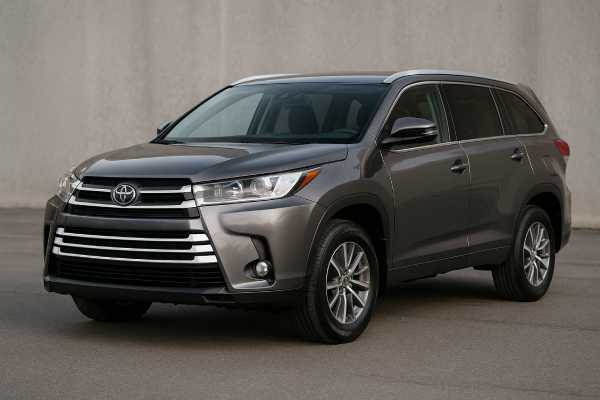
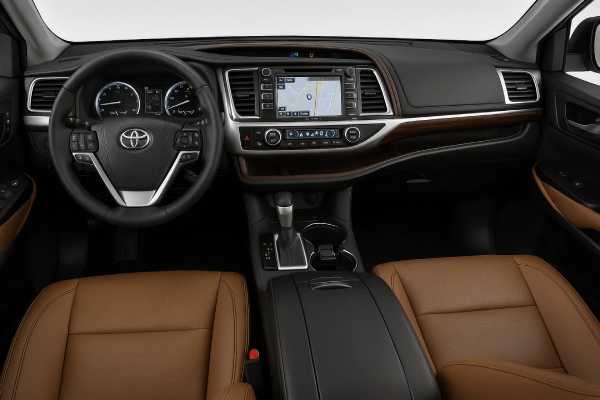
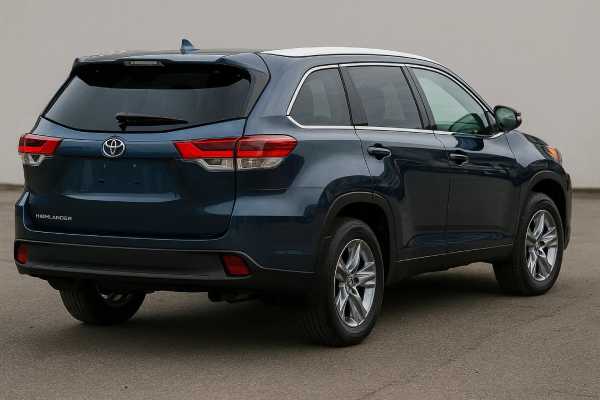
The 2017–2019 Toyota Highlander AWD (GSU55) blends a naturally aspirated 3.5-liter V6 with Toyota’s Dynamic Torque-Control all-wheel drive and an 8-speed automatic to deliver secure year-round traction, quiet long-distance comfort, and low-drama ownership. This facelift cycle adds the 2GR-FKS dual-injection V6 (295 hp) and standard active safety across trims, while the AWD system preemptively routes torque rearward to steady the vehicle before slip develops. Families appreciate the straightforward controls, broad cargo opening, and available eight-passenger seating; drivers value the predictable throttle and braking and the calm highway demeanor. Compared to turbo rivals, the Highlander’s V6 avoids lag and is easier to service over time. Towing up to 5,000 lb (with tow prep) is well within its comfort zone when you respect grades and cooling. If you want a three-row crossover that simply does the job without fuss—and keeps doing it as miles pile on—this AWD Highlander is the sweet spot of the third generation.
At a Glance
- Predictable V6 power with smooth 8-speed; stable, quiet highway ride and low NVH.
- Dynamic Torque-Control AWD adds confidence in rain/snow and stays efficient in cruise.
- Standard active safety features; strong crash results with the right headlight/ADAS combos.
- Watch for early 8-speed calibration updates and routine water-pump seep checks by ~100k mi (160k km).
- Typical oil interval: 10,000 mi / 12 months with 0W-20 (halve in heavy stop-and-go or towing).
Guide contents
- Highlander AWD 2017–2019 Overview
- Highlander GSU55 Specs and Data
- Highlander Trims and Safety
- Reliability and Service Actions
- Maintenance and Buyer’s Guide
- Driving Performance and Economy
- Highlander vs Rivals
Highlander AWD 2017–2019 Overview
Toyota’s 2017 facelift is more than a styling refresh; it is the mechanical update that defines the third-gen Highlander’s best years. The 2GR-FKS V6 brings dual injection (both port and direct) and a higher compression ratio for cleaner combustion, better efficiency under light load, and stronger top-end pull. The companion 8-speed automatic widens the ratio spread versus the old 6-speed, keeping rpm low at highway cruise yet responding briskly with well-timed kickdowns. In this AWD GSU55 configuration, the vehicle adds Dynamic Torque-Control, an electronically controlled coupling that proactively sends torque to the rear axle under acceleration or when wheel-speed and yaw-rate data predict slip. Under steady cruise, the system will decouple to reduce drag; when the weather turns or you point it up a snowy grade, torque flows rearward and brake-based torque vectoring across the axle tidies your line.
Inside, the cabin layout is unapologetically practical: clear climate keys, a shelf for devices with cable pass-through, and a storage console that swallows a small backpack. Second-row room suits adults, and captain’s chairs (on many upper trims) make third-row access easier for kids. Cargo flexibility is a highlight: a flat load floor with the third row folded and a broad liftgate opening simplify bulky runs to the hardware store. Roof rails are standard; crossbars and a hitch add true vacation versatility.
The AWD Highlander is not trying to be a sport wagon—the ride is tuned for calm control, not corner carving—but it is composed when hurried and confidence-inspiring on broken pavement. The SE grade’s slightly firmer suspension is noticeable on big dips and sweeping ramps; otherwise, most trims feel very similar because Toyota targets consistency before flash. Owners moving from older Highlanders will notice more punch and quieter cruise; shoppers coming from turbo rivals will notice the clean, linear response and the absence of lag.
Finally, the facelift standardized an active safety suite and broadened driver-assist availability. Headlight performance varies by trim, and, as ever, child-seat access and tether routing matter in real family use—both are better than class average here. Put simply: the 2017–2019 AWD Highlander is the dependable, low-stress family hauler that ages gracefully when maintained.
Highlander GSU55 Specs and Data
Engine and Performance (ICE)
| Item | Detail |
|---|---|
| Code | 2GR-FKS |
| Layout and cylinders | Transverse V6, DOHC, 24 valves, Dual VVT-i |
| Bore × stroke | ~94.0 × 83.0 mm (3.70 × 3.27 in) |
| Displacement | 3.5 L (3,456 cc) |
| Induction | Naturally aspirated |
| Fuel system | D-4S dual injection (port + direct) |
| Compression ratio | ~11.8:1 (nominal) |
| Max power | 295 hp (220 kW) @ ~6,600 rpm |
| Max torque | 357 Nm (263 lb-ft) @ ~4,700 rpm |
| Timing drive | Chain |
| Emissions / efficiency class | EPA-certified for U.S./Canada |
| EPA economy, AWD V6 | 22 mpg combined (20 city / 26 hwy); some trims (e.g., AWD LE) test at 23 combined (20 / 27) — 10.7–10.2 L/100 km combined |
| Real-world highway @ 75 mph | Typically 23–25 mpg (10.2–9.4 L/100 km), tire/load/weather dependent |
| Aerodynamics | Cd low-to-mid-0.3s; large frontal area typical of class |
Notes: rpm points and exact economy vary slightly by trim, wheels, and equipment.
Transmission and Driveline
| Item | Detail |
|---|---|
| Transmission | 8-speed automatic (“Direct-Shift 8AT”), torque-converter |
| Drive type | Dynamic Torque-Control AWD (electronic coupling to rear axle) |
| Final drive ratio | ~3.00:1 (varies slightly by trim/calibration) |
| Differential | Open; brake-based torque vectoring logic |
| AWD behavior | Predictive rear-torque engagement under throttle/turn; decouples in steady cruise |
| Replenishment time | Refuel to full ~5 minutes at pump |
Chassis and Dimensions
| Item | Detail |
|---|---|
| Front / rear suspension | MacPherson strut / double-wishbone (coil spring) |
| Steering | Electric power assist; relaxed on-center |
| Brakes | 4-wheel discs; ventilated fronts; ABS/EBD/brake assist |
| Wheels / tires (typical) | 245/60R18 or 245/55R19 |
| Ground clearance | ~203 mm (8.0 in) |
| Length / width / height | ~4,890 / 1,925 / 1,730 mm (192.5 / 75.8 / 68.1 in) |
| Wheelbase | 2,790 mm (109.8 in) |
| Turning circle (curb-to-curb) | ~11.8 m (38.7 ft) |
| Curb weight (AWD V6) | ~1,970–2,050 kg (4,345–4,515 lb), by trim |
| GVWR | ~2,700–2,770 kg (5,950–6,110 lb) |
| Fuel tank | ~72 L (19.0 US gal / 15.8 UK gal) |
| Cargo volume (SAE) | ~391 / 1,198 / 2,371 L (13.8 / 42.3 / 83.7 ft³) — 3rd row up / 3rd row down / 2nd & 3rd down |
Performance and Capability
| Metric | Result |
|---|---|
| 0–60 mph / 0–100 km/h | ~7.3–7.8 s (AWD, typical instrumented range) |
| Top speed | ~185 km/h (115 mph), governed |
| 100–0 km/h (62–0 mph) braking | ~37–40 m (121–131 ft), tire-dependent |
| Towing capacity (braked) | 2,268 kg (5,000 lb) with tow prep |
| Payload (typical) | ~295–365 kg (650–800 lb), by trim |
| Roof load | ~75 kg (165 lb) crossbar-rated (verify accessory spec) |
Fluids and Service Capacities (essentials)
| System | Specification | Capacity / Notes |
|---|---|---|
| Engine oil | SAE 0W-20 full synthetic (API/ILSAC) | ~5.7–5.8 qt (5.4–5.5 L) with filter |
| Coolant | Toyota Super Long Life Coolant (pink), premix | Service fill varies with procedure; bleed carefully |
| Automatic transmission | Toyota WS ATF | Drain-and-fill typically ~3–4 qt; follow temp check |
| Rear differential | API GL-5 gear oil (e.g., 75W-85) | Capacity small; verify by VIN/service manual |
| Transfer/angle gear | Gear oil per spec (GL-5) | Verify spec/capacity by VIN/label |
| A/C refrigerant | R-134a or R-1234yf (build-dependent) | Charge/type per under-hood label |
| A/C compressor oil | PAG (type per label) | Charge amount per label |
| Key torque specs | Wheel lugs ≈ 103–108 Nm (76–80 lb-ft); oil drain ≈ 39–41 Nm (29–30 lb-ft) | Confirm by VIN/manual |
Electrical
| Item | Detail |
|---|---|
| Alternator | Denso; output varies with equipment (≈150–180 A typical) |
| 12 V battery | Group 24F common; ~600–650 CCA typical; AGM optional |
| Spark plugs | Long-life iridium; gap ~0.7–0.8 mm (0.028–0.031 in) |
Safety and Driver Assistance
| Item | Detail |
|---|---|
| Crash ratings (IIHS) | Strong overall results for 2017–2019; Top Safety Pick(+) on specific headlight/ADAS configurations |
| Headlights (IIHS) | Rating varies by headlamp/trim (halogen projectors often Adequate) |
| NHTSA overall | Robust star ratings for 2017–2019; confirm by exact year/axle drive |
| ADAS suite | Pre-Collision (with Pedestrian Detection), Lane Departure Alert with Steering Assist, Dynamic Radar Cruise, Automatic High Beams standard; Blind-Spot Monitor/Rear Cross-Traffic Alert widely available from XLE; surround-view on Limited Platinum |
Highlander Trims and Safety
AWD grades (gas V6): LE, LE Plus, XLE, SE, Limited, Limited Platinum. All share the 295-hp V6 and 8-speed automatic; AWD is the GSU55 code.
- LE AWD: 18-inch wheels, fabric seating, 6.1-inch audio, five USBs, tri-zone climate, roof rails. Backup camera standard; bench second row typical; some units include tow prep but hitch/7-pin harness vary—inspect at bumper.
- LE Plus AWD: 8-inch display audio, fog lamps, power liftgate, SofTex trim, leather-wrapped wheel/shift knob. Ride remains comfort-oriented.
- XLE AWD (smart buy): Leather, heated fronts, moonroof, navigation with app suite, Smart Key, Driver Easy Speak, integrated second-row sunshades. Blind-Spot Monitor and Rear Cross-Traffic Alert typically standard.
- SE AWD: Black-out details and 19-inch wheels with slightly firmer tuning. Steering remains light; body control is subtly tauter on undulating highways.
- Limited AWD: 19-inch Chromtec wheels, JBL audio, ventilated fronts, memory driver’s seat/mirrors; seven-seat captain’s chairs common (bench optional).
- Limited Platinum AWD: Panoramic moonroof, rain-sensing wipers, heated second row (outboard), Bird’s Eye View Monitor (surround-view), and extra trim.
Year-to-year highlights (AWD V6):
- 2017: New 2GR-FKS V6 and 8-speed; standard active safety suite; SE grade arrives.
- 2018: Feature reshuffles and software refinements for powertrain/infotainment; ADAS packaging broadens.
- 2019: Packaging changes and small material updates; infotainment remains Toyota’s Entune generation (no factory Apple CarPlay/Android Auto on this body style).
Mechanical/functional differences by trim:
Wheel sizes (18 vs 19 inch) affect steering feel and brake-wear patterns; SE’s firmer damping reduces float on big highway undulations. Tow prep is common on V6 grades but verify cooler routing, 7-pin connector, and hitch rating on the specific vehicle. Surround-view (Limited Platinum) requires camera recalibration after mirror or front fascia work.
Safety ratings (summary):
The 2017–2019 Highlander performs well in IIHS crashworthiness, with a Top Safety Pick or Top Safety Pick+ depending on headlight specification. Passenger-side small-overlap improved relative to early third-gen years, but trim-specific headlamps and ADAS availability determine award level. NHTSA star ratings are strong for both FWD and AWD; again, verify by exact year and axle drive.
Safety systems and ADAS details:
Eight or more airbags (front, side, curtain across three rows, and driver knee) and stable body structure underpin its results. LATCH anchors are accessible, and top tethers are clear once you fold headrests. The standard driver-assist suite covers forward automatic emergency braking with pedestrian detection, lane departure with steering assist, adaptive cruise, and automatic high beams. Blind-spot monitoring and rear cross-traffic alert are widespread above XLE; the surround-view camera on Limited Platinum is excellent for garage maneuvering but must be recalibrated after related repairs. After windshield replacement, ensure forward camera calibration and road-test the lane-keeping and AEB functions.
Reliability and Service Actions
Overall take: The AWD Highlander in this facelift window has a strong reputation for low-drama ownership. Failures serious enough to park the vehicle are uncommon when maintenance is current. Most issues fall into calibration updates, consumables, or predictable wear.
Common → occasional, by system
- 8-speed shift quality (software): Early programming could hunt on rolling suburban terrain or hesitate before downshifts. Updated TCM maps smooth lockup and gear selection. If test-driving, warm it up and run 30–50 mph (50–80 km/h) light-throttle loops; note any repeated hunting or indecisive downshifts and check for calibration updates.
- Water pump seepage (V6 accessory drive): Look for pink crust at the weep hole, coolant odor after shutdown, or slight drop in the reservoir. Replace pump and serpentine belt together; pressure-test to confirm repair. Consider coolant refresh after service.
- Front brake wear/judder: 19-inch packages can accelerate pad wear and make rotors sensitive to uneven lug-nut torque. Use quality rotors/pads and torque wheels evenly.
- 12 V battery fatigue: Short-trip use with power doors and winter accessories ages batteries early. Proactively test annually after year three (or sooner in cold climates).
Less frequent but relevant
- AWD rear-unit service neglect: Rear differential and transfer/angle gear often get ignored. Fresh GL-5 gear oil at sensible intervals helps silence light whine and extends seal life.
- A/C condenser stone damage: The low-mounted condenser is exposed; slow leaks present as gradually weakening cooling. Protective lower-grille mesh (non-restrictive) helps.
- Rattles/creaks: Third-row seatbacks and cargo floor panels can squeak; adjust latches and add felt tape on contact points.
Recalls/TSBs and extended coverage (headline view)
Across this era, Toyota issued campaigns and TSBs addressing items like fuel-pump supplier issues on certain VIN ranges, software updates for various modules (SRS, audio/infotainment, ADAS cameras), and occasional component quality actions. The correct approach is to run the official VIN status and ask a dealer for a printout of completed/remaining actions; keep paperwork with the vehicle file.
Severity and cost lens (typical U.S. independent-shop context)
- Low ($–$$): Battery, wiper linkage/motors, brake pads/rotors, cabin fan resistors, liftgate struts.
- Medium ($$): Water pump/belt, wheel bearings, alignment and common bushings, rear differential fluid service.
- High ($$$, rare): Transmission internal repairs (usually avoidable with fresh fluid and current software), collision-related ADAS sensor replacement and calibration.
Pre-purchase checklist
- VIN recall/TSB printout and full service records.
- Warm test drive that includes suburban grades and highway merges; confirm crisp 8-speed behavior.
- Hitch hardware and 7-pin connector condition (if fitted); no splices.
- Even tire wear, no steering pull, no brake shimmy at 65–75 mph.
- Cooling system dry (no residue), HVAC cold, no musty smells from neglected cabin filters.
- Confirm camera/radar functions and verify any windshield work was followed by calibration.
Maintenance and Buyer’s Guide
Practical maintenance schedule (normal use)
- Engine oil and filter: 10,000 mi / 12 months with 0W-20; shorten to 5,000 mi / 6 months for short-trip city driving, extreme heat, or regular towing.
- Engine air filter: Inspect 10,000 mi (16,000 km); replace 30,000–45,000 mi (48,000–72,000 km) or earlier in dust.
- Cabin air filter: 15,000–20,000 mi (24,000–32,000 km); more often if pets/pollen heavy.
- Coolant (SLLC pink): First service ~100,000 mi (160,000 km) / 10 years, then ~50,000 mi (80,000 km) / 5 years.
- Spark plugs (iridium): Up to 60,000–120,000 mi depending on duty cycle and fuel quality; inspect if misfire counts creep.
- Serpentine/aux belt and hoses: Inspect every 30,000 mi; replace at noise/cracks or 90,000–120,000 mi.
- Automatic transmission (WS ATF): Though labeled “lifetime,” preventive drain-and-fills every 60,000–90,000 mi (96,000–145,000 km) help shift quality and clutch life—especially with towing. Follow temperature-check fill procedure.
- Rear differential and transfer/angle gear: Replace GL-5 gear oil on a conservative 60,000–90,000 mi cadence if you tow or live in hills.
- Brake fluid: Replace every 3 years regardless of mileage.
- Brake pads/rotors: Inspect at each rotation; rust belts in snow belts shorten rotor life.
- Tire rotation and alignment: Rotate 5,000–7,500 mi; align annually or with new tires.
- 12 V battery: Test annually after year three; many last 4–6 years.
- HVAC / A/C: Spring inspection; charge must match label (R-134a vs R-1234yf).
- Timing components: Chain-driven; no scheduled replacement. Investigate only on noise or timing-correlation faults.
Fluids at a glance
- Oil: SAE 0W-20 full synthetic, API/ILSAC; ~5.7–5.8 qt (5.4–5.5 L) with filter.
- Coolant: Toyota Super Long Life (pink), premix.
- ATF: Toyota WS (service temp procedure critical).
- Gear oils (AWD units): API GL-5 (e.g., 75W-85); confirm exact specification by VIN.
- Brake fluid: DOT 3 or DOT 4 (use one type and flush thoroughly when switching).
Essential torque values (decision-ready)
- Wheel lugs: ≈103–108 Nm (76–80 lb-ft).
- Oil drain plug: ≈39–41 Nm (29–30 lb-ft).
(Verify against service manual by VIN and trim.)
Buyer’s guide: what to look for
- Trims to target: XLE AWD balances features (heated leather, BSM/RCTA, moonroof) with sensible wheel size. SE AWD if you prefer firmer highway control. Limited/Platinum for surround-view and top comfort.
- Tow package: Prioritize factory tow prep and 7-pin wiring if you plan to pull.
- Years: 2018–2019 incorporate rolling software and minor refinements; a 2017 updated to current TCM flash performs similarly.
- Avoid: Electrical add-ons spliced into lighting/camera circuits; vehicles with uneven tire wear or brake shimmy that mask alignment/suspension issues.
Durability outlook
With routine care, the 2GR-FKS and the UA80 AWD driveline regularly cross 200,000+ miles (320,000+ km). The dual-injection strategy reduces intake valve deposits relative to early DI-only designs. The 8-speed rewards fresh WS fluid and current calibration; the AWD units appreciate periodic gear-oil service. Body corrosion is modest outside the harshest salt belts; treat chips and exposed seams early if you live where roads are salted.
Driving Performance and Economy
Ride and noise, vibration, harshness (NVH):
The AWD Highlander majors in calm. Spring and damper rates aim for confident primary control without float, allowing it to settle after big dips and shrug off most patched pavement. At 70–75 mph (113–120 km/h) the cabin stays hushed; road roar depends mainly on tire model and tread depth. Wind noise is well suppressed for the class thanks to tight door sealing and careful mirror design.
Steering and braking:
Assist is light but predictable, with a relaxed on-center zone that makes long highway days less tiring. The pedal is easy to modulate around town; repeated mountain descents will benefit from downshifts to use engine braking. On fresh, quality rotors and pads the system is consistent; proper wheel-nut torque prevents vibration returning after a few thousand miles.
Powertrain character:
Throttle response is clean and linear—one of the chief reasons families prefer this V6 over small turbos. There’s no surge to manage, just steady pull to redline, and the gearbox makes decisive kickdowns when you need a pass. Early 8-speed maps could feel busy in undulating suburbs; the current calibration settles the logic while maintaining snappy responses. Stop-and-Start (fitted to many V6 grades) is smooth; if it isn’t, a software update or battery health check usually helps.
AWD traction and control:
Dynamic Torque-Control reacts to steering angle, throttle, wheel-speed, and yaw inputs to send torque rearward before front-axle slip is obvious. In rain, it trims torque steer and keeps the nose settled; in snow, it steps off cleanly and maintains momentum without drama. Brake-based torque vectoring aids corner exit on slick surfaces. For deep snow or slick boat ramps, quality all-weather or snow tires make the biggest difference; the system is competent, but tire compound is king.
Efficiency in the real world:
Expect city in the high-teens to low-20s mpg (13–11 L/100 km) and highway in the mid-20s mpg (≈9–10.5 L/100 km) at 65–75 mph, depending on passengers, temps, wheel size, and whether you run roof crossbars or a cargo box. Mixed driving commonly lands at the EPA combined value for your trim. Winter short-trip use will depress city numbers; long, warm highway runs can beat the sticker.
Towing and load behavior:
With tow prep and a brake controller, a 3,000–4,000 lb (1,360–1,815 kg) camper is right in its comfort zone. Stability is good and temps are well-managed if you keep speeds sensible and downshift early on grades. Plan on a 20–35% fuel-economy penalty when towing or fully loaded. Increase following distances and give the transmission a moment to grab the lower gear before asking for full throttle on climbs.
Highlander vs Rivals
Honda Pilot (3.5 V6 AWD): A roomier third row and sometimes softer secondary ride, with strong resale. Highlander responds with lower cabin noise at freeway speeds, simpler controls, and—anecdotally—fewer interior squeaks as miles add up. Toyota’s 8-speed calibration matured well; early 9-speed Pilots were less consistent.
Mazda CX-9 (2.5T AWD): Feels sportier, with tighter steering and lean control. The CX-9’s turbo-four has strong low-rpm torque but prefers premium for best performance. The Highlander’s V6 is simpler to maintain and less sensitive to fuel quality; packaging and child-seat logistics slightly favor Toyota.
Ford Explorer (2.3T/3.5 AWD): Broad powertrain mix and tech features appeal, but cost of ownership can be higher. Highlander counters with fewer surprises in long-term service and a cabin that stays quiet as it ages.
Subaru Ascent (2.4T AWD): Standard AWD and snow-belt credibility are pluses. Highlander’s V6 offers linear response, and overall highway hush remains a strength; Toyota’s interior materials feel more robust in daily abuse.
Chevrolet Traverse / Buick Enclave: These feel larger inside and ace third-row access, but they occupy more garage space and can carry higher running costs. If you don’t need the extra cubes, the Highlander is easier to park and typically more refined.
Volkswagen Atlas: Excellent space and upright seating. Highlander’s V6 is stronger and generally more reliable long-term; switchgear and trim in the Toyota tend to resist wear better in family duty.
References
- 2017 Highlander with More Power, More Safety and More Model Choices Adds up to More Value Pricing 2017 (Manufacturer Publication)
- 2017 Toyota Highlander Product Information 2017 (Manufacturer Publication)
- 2018 Toyota Highlander – 2018 Press Kit 2017 (Manufacturer Press Kit)
- Fuel Economy of 2019 Toyota Highlander 2019 (EPA Data)
- 2017 Toyota Highlander 2017 (Safety Rating)
Disclaimer
This article is for informational purposes and is not a substitute for professional diagnosis, repair, or official service procedures. Specifications, torque values, fluid types/capacities, safety ratings, and maintenance intervals can vary by VIN, trim, equipment, and running changes. Always verify details against your owner’s manual, under-hood labels, official service manuals, and the latest technical bulletins before performing work. If you found this guide helpful, please consider sharing it on Facebook or X/Twitter to support xcar’s work.