
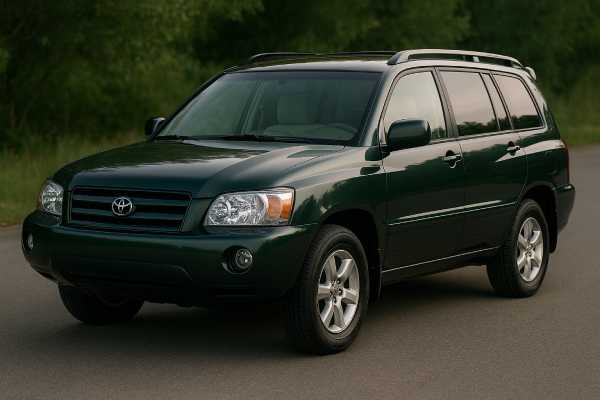
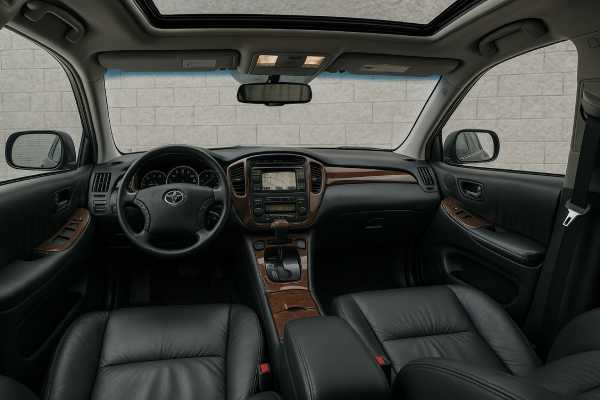
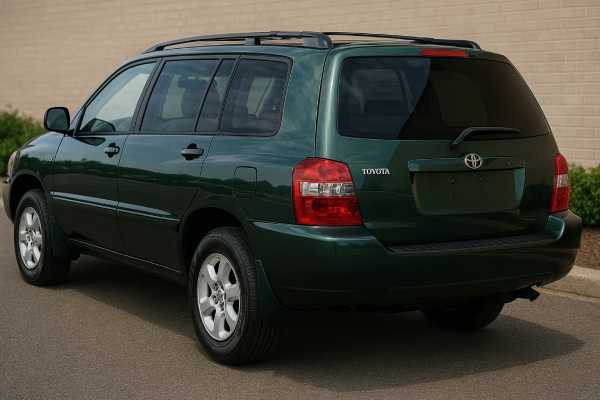
The 2004–2005 Toyota Highlander 2.4 FWD represents the most refined evolution of the first-generation crossover before the second-gen redesign. The facelift brought revised styling, an available third-row seat, side curtain airbags, and small but meaningful interior updates, while the 2AZ-FE 2.4-liter four-cylinder continued to prioritize durability and fuel economy over outright speed. Paired to a smooth four-speed automatic, the FWD layout keeps running costs down and makes the Highlander easy to drive and maneuver in daily use. Owners value the tall seating position, simple controls, and long-lasting components, and many examples still serve as reliable family haulers. This guide focuses on the 2004–2005 “facelift” Highlander FWD with the 160-hp four-cylinder, covering real-world specs, performance, safety results, maintenance choices, and common issues. If you are weighing a clean used example or maintaining one you already own, the details below will help you make confident, informed decisions.
Fast Facts
- Proven 2AZ-FE chain-driven 2.4L: simple, efficient, long support life.
- Flexible cabin: 5-seat standard; 3rd-row and split-folding seats available for up to 7.
- Comfortable ride and light steering; easy city maneuvering and parking.
- Watch for oil seep at timing chain tensioner and worn suspension links after 120,000+ mi (190,000+ km).
- Engine oil and filter: every 5,000 mi / 6 months (8,000 km / 6 months) with 5W-30.
Navigate this guide
- Detailed Overview
- Specifications and Technical Data
- Trims and Options, Safety and Driver Assistance
- Reliability, Common Issues and Service Actions
- Maintenance and Buyer’s Guide
- Driving and Performance
- How the Highlander Compares to Rivals
Detailed Overview
The facelifted 2004–2005 Highlander FWD kept the original formula—Camry-based unibody, independent suspension at all four corners, and a family-friendly cabin—while addressing owner requests for more flexibility and safety. Exterior changes were subtle (revised grille, lamps, bumper shapes), but inside you could spec an optional third-row bench that folded flat, turning the Highlander from a “tall wagon” into a genuine seven-passenger crossover for school runs and weekend trips. The 2AZ-FE four-cylinder remained the thrifty choice. It uses an aluminum block with cast-iron liners, DOHC with VVT-i on the intake cam, and a robust timing chain. Rated at 160 hp (119 kW) and 165 lb-ft (224 Nm), it isn’t quick but delivers steady, quiet thrust around town and acceptable highway merging when the transmission kicks down.
Ride comfort is a highlight. Longish wheelbase, soft spring rates, and relatively tall 70-series tires soak up broken pavement without float. Noise levels are low for the class thanks to good isolation at the firewall and subframes. Steering is light and accurate, and the FWD layout gives predictable, understeer-biased handling. Brakes are confidence-inspiring in daily use, with straightforward pad and rotor service procedures. The cabin emphasizes durability over flash: big HVAC knobs, a high seating position with good visibility, and child-seat-friendly rear doors. With rear seats folded, the flat load floor accepts strollers, bikes, or moving boxes, and the wide tailgate opening simplifies loading.
Safety content improved in the facelift window. Side-impact and curtain airbags became widely available, and stability control (VSC) with traction control (TRAC) could be added on many trims. Those options matter: in instrumented tests of this generation, side airbags materially improved injury metrics in side impacts. If you shop used, verifying presence of curtains and VSC is a smart step. Overall ownership experience centers on low running costs, long parts availability, and straightforward DIY service. The most common aging-vehicle needs—tires, shocks/struts, sway-bar links, engine mounts—are inexpensive and well-documented. That mix of comfort, space, and predictable maintenance is why these late first-gen Highlanders still command attention in the used market.
Specifications and Technical Data
Engine and Performance (2AZ-FE)
| Item | Value |
|---|---|
| Code | 2AZ-FE |
| Layout & valvetrain | Inline-4, DOHC, 16 valves, VVT-i (intake) |
| Bore × stroke | 88.5 × 96.0 mm (3.48 × 3.78 in) |
| Displacement | 2.4 L (2,362 cc) |
| Induction & fuel | Naturally aspirated; sequential multi-port fuel injection |
| Compression ratio | 9.6:1 |
| Max power | 160 hp (119 kW) @ ~5,600 rpm |
| Max torque | 224 Nm (165 lb-ft) @ ~4,000 rpm |
| Timing drive | Chain (no scheduled replacement under normal service) |
| Emissions & efficiency standard | EPA (U.S.) |
| EPA-rated economy (2WD, A4) | 10.7 L/100 km combined (22 mpg US / 26.4 mpg UK); 12.4 L/100 km city (19 mpg US / 22.8 mpg UK); 9.4 L/100 km hwy (25 mpg US / 30.0 mpg UK) |
| Real-world highway @ 120 km/h (75 mph) | Typical 10–11 L/100 km (21–24 mpg US), depending on load/tires/temps |
Notes: The 2005 EPA combined figure above corresponds to the 2WD four-cylinder, 4-speed automatic configuration.
Transmission and Driveline
| Item | Value |
|---|---|
| Transmission | 4-speed automatic with lock-up torque converter (U241E) |
| Drive type | Front-wheel drive (FWD) |
| Differential | Open (front) |
| Refuel to full | ~5 minutes (typical retail pump) |
Chassis and Dimensions
| Item | Value |
|---|---|
| Platform | Unibody (Camry-derived) |
| Suspension (front/rear) | MacPherson strut / MacPherson strut, anti-roll bars |
| Steering | Power-assisted rack-and-pinion |
| Brakes | Ventilated front discs / solid rear discs; ABS w/ EBD, Brake Assist |
| Wheels/Tires (typical) | 225/70 R16 (base); 235/65 R17 (available) |
| Ground clearance | ~185 mm (7.3 in) |
| Length / Width / Height | ~4,690 mm × 1,825 mm × 1,730 mm (184.6 in × 71.9 in × 68.1 in) |
| Wheelbase | 2,720 mm (107.1 in) |
| Turning circle (curb-to-curb) | ~11.2 m (36.7 ft) |
| Curb weight (5-seat) | ~1,600–1,660 kg (3,525–3,660 lb), equipment-dependent |
| GVWR | ~2,210–2,290 kg (4,875–5,050 lb), trim-dependent |
| Fuel tank | ~72 L (19.0 US gal / 15.8 UK gal) |
| Cargo volume (SAE) | ~1,124 L (39.7 ft³) behind 2nd row; ~2,281 L (80.6 ft³) seats folded |
Performance and Capability
| Metric | Value |
|---|---|
| 0–100 km/h (0–62 mph) | ~10.5–11.5 s (typical test range for 2.4 FWD) |
| Top speed (governed) | ~175–185 km/h (108–115 mph) |
| Braking 100–0 km/h | ~39–42 m (128–138 ft) on fresh all-season tires |
| Towing (braked) | Up to ~1,587 kg (3,500 lb) with proper equipment; 680 kg (1,500 lb) without tow package |
| Payload | ~385–475 kg (850–1,050 lb), configuration-dependent |
| Roof load | ~68–75 kg (150–165 lb) with OEM crossbars |
Fluids and Service Capacities (key items)
| System | Spec | Capacity (approx.) |
|---|---|---|
| Engine oil | SAE 5W-30, API SL/SN; OEM filter | ~4.1–4.3 L (4.3–4.5 US qt) with filter |
| Coolant | Toyota Super Long Life Coolant (SLLC, pink) 50/50 | ~6.5–7.0 L (6.9–7.4 US qt) total fill |
| Automatic transmission | Toyota ATF Type T-IV | ~7.2–7.8 L (7.6–8.2 US qt) total; typical drain/fill ~3.0–3.5 L (3.2–3.7 US qt) |
| A/C refrigerant | R-134a | ~0.60–0.70 kg (21–25 oz) |
| A/C compressor oil | ND-Oil 8 | ~120 mL (4.1 fl oz) |
| Key torque values | Wheel lugs 103 Nm (76 lb-ft); spark plugs ~18 Nm (13 lb-ft); oil drain plug ~39 Nm (29 lb-ft) |
Electrical
| Item | Value |
|---|---|
| Alternator | ~100 A |
| 12V battery | Group 35 (typical), ~550–640 CCA |
| Spark plugs | Iridium SK20R11 (or equivalent); gap 1.1 mm (0.043–0.044 in) |
Safety and Driver Assistance
| Item | Detail |
|---|---|
| Crash ratings (this generation) | Strong frontal (moderate overlap) results; side-impact performance substantially improves with side/curtain airbags fitted |
| Headlight rating | Not rated under modern IIHS headlight tests for these years |
| Passive safety | Front airbags standard; side/curtain airbags widely available post-facelift; front seatbelt pretensioners; child-seat anchors (LATCH) |
| Active safety | ABS with EBD and Brake Assist; VSC (stability control) and TRAC (traction control) available on many 2004–2005 trims; tire-pressure warning availability varies by trim |
Trims and Options, Safety and Driver Assistance
Trim structure (typical U.S./Canada): Base and Limited were the central grades for 2004–2005. The 2.4-liter four-cylinder was positioned as the value powertrain and paired to FWD. The V6 added acceleration, different final-drive tuning, and optional AWD, but this article focuses on the 2.4 FWD.
Equipment highlights by trim (facelift window):
- Base (2.4 FWD): Cloth seating, 16-inch wheels with 225/70R16 tires, ABS/EBD/Brake Assist, keyless entry, air conditioning, power windows/locks, tilt steering, AM/FM/CD, 60/40 split-fold second row with tumble-forward feature, roof rails on many builds. Optional: third-row seat (2-place), rear A/C, side and curtain airbags, power driver seat, sunroof, towing prep, and VSC/TRAC bundle depending on package.
- Limited (commonly paired with V6): Leather seating, upgraded audio, auto climate control, power seats, heated front seats on many builds, 17-inch wheels with 235/65R17 tires, additional trim accents. Some Limited equipment could be added to a Base via packages.
Year-to-year changes (facelift focus):
- 2004: Exterior refresh (fascias, grille, lamps); optional third row added; availability of side/curtain airbags broadened; stability control packages more common; minor audio and trim updates.
- 2005: Feature rationalization and wider take-rate of safety options; the 2.4 remained with the four-speed automatic. Many dealer-installed accessories (roof crossbars, cargo management, tow prep) were popular.
Quick identifiers:
- Facelift tell-tales: Updated grille with more horizontal emphasis, revised headlamps and bumper corners; interior trim colors and fabrics updated.
- VIN/Build data: ACU20 indicates 2.4-liter FWD. Door-jamb and under-hood labels show emissions family and build plant.
Safety ratings in context:
- Frontal crashworthiness for this generation earned strong marks in moderate overlap tests.
- Side impact: When equipped with side/curtain airbags, occupant injury measures improved markedly versus models without them.
- Head restraints: Earlier-generation designs were less supportive compared to modern active headrests; set head restraints properly for best protection.
- Child-seat fit: LATCH anchors are present; wide rear door openings and a relatively flat cushion help installation. Using seat-belt paths for some larger rear-facing seats can improve fit.
ADAS availability: Advanced features common today (AEB with pedestrian detection, lane keeping, blind-spot monitoring, rear cross-traffic) were not integrated in 2004–2005. The meaningful driver-assistance upgrade for this period is VSC/TRAC, which improves stability on slick surfaces. If you live in snow-belt regions, prioritize a vehicle with VSC and fit quality all-season or winter tires.
Reliability, Common Issues and Service Actions
The facelift four-cylinder Highlander is broadly reliable when serviced on time. Age-related wear and a few known 2AZ-FE patterns are worth attention. Below, items are grouped by prevalence and cost/effort.
Common (low–medium cost):
- Front sway-bar links and bushings: Clunking over bumps; replace links and consider poly/updated bushings.
- Strut mounts and dampers: Pattering or “float” at highway speeds after 100–150k mi (160–240k km); fresh struts/springs restore control.
- Engine mount wear: Vibration at idle in Drive; replace upper torque mount and hydraulic mount as needed.
- Exhaust heat-shield buzz: Metallic rattle at certain RPM; retighten or replace corroded fasteners/clips.
- Hatch struts: Liftgate won’t hold open in cold weather; replace gas struts.
Occasional (medium cost):
- Timing chain tensioner O-ring seep (2AZ-FE): Oil trace near timing cover; reseal tensioner and torque correctly.
- Water pump seep: Pink residue (SLLC) at pump weep hole; replace pump and gasket, refill coolant, bleed.
- Coil-on-plug misfire: Rough idle and P030X codes; swap test coils, replace failing unit(s), inspect plugs.
- Brake booster vacuum loss (aging units): Firm pedal/long stops at low vacuum; booster and check-valve test before replacement.
Rare (higher cost):
- Head-bolt thread pull / head-gasket seep (some 2AZ-FE engines): External coolant or oil seep along rear of block, or persistent P0128 (coolant temp) with unexplained coolant loss. Repair ranges from thread insert set with head-gasket service to long block replacement. Early detection helps.
- Evaporator core leak: Gradual A/C performance loss with dye detection positive inside the HVAC case; core replacement requires dash work.
- Steering intermediate shaft “clunk”: Felt through wheel on low-speed turns; grease kit or replacement shaft.
Electrical/trim annoyances:
- Window regulator wear: Slow or uneven travel; replace regulator/motor assembly.
- Audio backlight/pixel fade: Head unit illumination dim; refurbish or replace with OEM/compatible unit.
Recalls and field actions to verify by VIN:
- Floor-mat/accelerator pedal interference campaign (unintended acceleration mitigation): Ensured correct floor-mat anchoring; in some cases, pedal revision/shim.
- Airbag or seat-belt anchorage-related campaigns: Limited VIN ranges; verify proper completion.
Always run the official VIN search and confirm dealer records before purchase.
Pre-purchase requests and checks:
- Full maintenance history (oil intervals, coolant type, ATF service).
- Evidence of recall completion and any relevant TSB reflashes.
- Cooling system pressure test and inspection for timing cover/tensioner seep.
- Suspension/steering (links, struts, mounts, intermediate shaft).
- Brake condition (pad thickness, rotor runout, fluid age).
- Rust scan in salt regions (rear subframe, exhaust fasteners, pinch welds).
- Tires (even wear; confirm load/speed rating and date codes).
A clean, stock example with side curtains and VSC is the safe bet; avoid units with neglected fluids or mismatched tires.
Maintenance and Buyer’s Guide
Practical service schedule (time/distance—choose the earlier):
- Engine oil & filter: 5,000 mi / 6 months (8,000 km / 6 months), 5W-30; more frequent under short-trip or towing use.
- Engine air filter: Inspect 15,000 mi / 1 year; replace 30,000 mi / 3 years (24,000–48,000 km / 2–4 years) depending on dust.
- Cabin filter: 12,000–15,000 mi / 1 year (19,000–24,000 km / 1 year).
- Coolant (SLLC, pink): First replacement at 100,000 mi / 10 years (160,000 km / 10 years), then every 50,000 mi / 5 years (80,000 km / 5 years).
- Spark plugs (iridium): 120,000 mi / 10 years (190,000 km / 10 years).
- ATF (Type T-IV): Drain-and-fill every 60,000–90,000 mi (96,000–145,000 km) if you value shift quality; “inspect” only is the minimum.
- Brake fluid: Replace every 2–3 years regardless of mileage.
- Drive/serpentine belt: Inspect 30,000 mi / 3 years; replace 60,000–90,000 mi (96,000–145,000 km) or on cracks/noise.
- PCV valve: Inspect at 60,000 mi; replace by 100,000 mi.
- Valve clearances: Hydraulic lash—no periodic adjustment required; listen for abnormal tick.
- Alignment and tire rotation: Rotate every 5,000–7,500 mi (8,000–12,000 km); align yearly or on pull/uneven wear.
- 12V battery: Load test annually after 4 years; expect 4–6-year life.
Fluids and parts guidance:
- Use Toyota SLLC only (pink) and distilled water when mixing.
- Stick to Type T-IV ATF for best shift feel; avoid mixing.
- Torque wheels to 103 Nm (76 lb-ft); re-check after wheel/tire work.
- Prefer OE or high-quality ignition coils and iridium plugs; cheap parts often cause repeat faults.
DIY difficulty snapshot:
- Easy: Oil/filter, engine/cabin filters, front pads/rotors, sway-bar links, spark plugs (cool engine, use anti-seize sparingly).
- Moderate: Struts (spring compressor caution), transmission drain-and-fill, water pump, drive belt.
- Advanced: Head-gasket service, evaporator core, steering shaft replacement.
Buyer’s checklist (used market):
- Cold start test: Listen for chain-area seep/buzz, coil misfire, or accessory bearing noise.
- Highway run: Check for shudder or hunting shifts at light throttle; evaluate straight-line tracking and wind noise.
- Brake test: Smooth stops without pedal sink or pulsing; ABS activation should be clean.
- Under-car inspection: Look for oil at the timing chain tensioner, coolant crust at water pump, and torn CV boots.
- Electrics: Window speed, HVAC modes, rear defogger, hatch struts, audio backlighting.
- Safety options: Confirm side curtains and VSC—walk away if missing and you value the best safety profile.
- Tires & alignment: Even wear across all four; mismatched sets suggest deferred maintenance.
Durability outlook: With routine fluids and timely wear-item replacement, the facelift Highlander 2.4 FWD routinely exceeds 200,000–300,000 mi (320,000–480,000 km). Most major costs stem from neglected maintenance, not design flaws. Choose a maintained example and it will likely outlast many peers.
Driving and Performance
Ride, handling, and NVH: The Highlander’s mission is comfort, and it succeeds. Over broken urban pavement, the suspension filters bumps without crash, aided by tall-sidewall tires. At highway speeds the body stays composed with only mild heave on long undulations. Wind noise is low; road noise mainly depends on tire choice. Steering is light off-center and builds modestly in effort; feedback is limited but predictable—an advantage for long commutes and errands. Brakes deliver a progressive pedal with strong initial bite; repeated hard stops will warm the modest-size rotors, so upgrading pads and ensuring good cooling (no backing plate blockage) helps consistency.
Powertrain character: The 2AZ-FE’s broad midrange torque and the automatic’s early lock-up make for smooth, efficient cruising. Around town, short gearing in 1st and 2nd helps it feel livelier than the numbers suggest. Passing from 50–80 mph (80–130 km/h) requires a downshift or two; plan merges with space when fully loaded or climbing grades. The transmission favors economy, upshifting early and holding top gear on gentle grades. Kickdown is decisive when you ask. There are no drive modes to cycle—just simple, consistent behavior.
Efficiency in the real world: Expect 22 mpg US combined (≈10.7 L/100 km) in mixed driving if tires are properly inflated and the alignment is true. At 60 mph (100 km/h) you may see mid-20s to high-20s mpg US (8.7–9.8 L/100 km); at 70–75 mph (113–120 km/h), low-to-mid-20s mpg US (9.8–11.2 L/100 km) is typical. Cold weather, roof boxes, and winter tires can trim 2–4 mpg US. Short trips in freezing temperatures may dip into the high teens until the engine and ATF are warm. Using 5W-30 and keeping the air filter fresh helps maintain rated consumption.
Traction and control: FWD traction is fine on rain-soaked roads with healthy all-season tires. In snow, VSC/TRAC is the game-changer; with winter tires, the Highlander accelerates and stops with much more confidence, and stability control gently reins in exuberance on slick corners. If you tow small loads, stay within the rated envelope, ensure a class-appropriate hitch, and consider a transmission cooler if you live in hot, hilly regions.
Load and towing behavior: With the tow prep and a properly adjusted trailer, the Highlander tracks straight at 55–65 mph (90–105 km/h). Braking confidence depends on trailer brakes; without them, stay with lighter loads. Expect a 15–25% fuel-economy penalty when towing a small camper or carrying full family/cargo, especially into headwinds.
How the Highlander Compares to Rivals
Honda Pilot (1st gen, 2003–2005): Bigger footprint and standard V6 power give stronger acceleration and tow ratings, but Pilot’s thirst is higher and its ride is firmer on rough pavement. If you need space for eight regularly and want more passing power, the Pilot wins. For lower operating costs and easier DIY service, the four-cylinder Highlander is friendlier.
Ford Escape/Mazda Tribute (2005): Closer to “compact” than “midsize,” the Escape/Tribute drives sportier and parks easier. Cabin space and ride isolation favor the Highlander, and the Toyota’s long-term reliability record is typically stronger, particularly beyond 150,000 miles.
Subaru Outback (2005): Wagon practicality with standard AWD and car-like dynamics. The Outback is great in snow but offers less vertical cargo space and a lower seating position. The Highlander’s upright ergonomics, optional third row, and simpler service regimen appeal to families.
Nissan Murano (2004–2005): Stylish and quick with a strong V6, but early CVT longevity is the concern. The Highlander trades speed for proven conventional automatic durability and friendlier long-term ownership costs.
Hyundai Santa Fe (2005): Attractive purchase prices, but interior space and refinement trail the Highlander, and long-term parts/support depth is typically better with Toyota. For buyers prioritizing total cost of ownership and resale, the Highlander maintains an edge.
Bottom line: If you want seven-seat flexibility, low running costs, and a smooth, quiet ride, the 2004–2005 Highlander 2.4 FWD remains a smart, low-drama choice. Choose a unit with side curtains and VSC, inspect for the known wear items, and it will likely provide many more years of dependable service.
References
- 2005 Toyota Highlander 2005
- 2004 Toyota Highlander 2004
- 2005 Toyota Highlander 2005 (Safety Rating)
- Vehicle Detail Search – 2005 TOYOTA HIGHLANDER 4 DR FWD | NHTSA 2005 (Recall Database)
- Toyota Highlander Chronology – Toyota USA Newsroom 2016
Disclaimer
This article is for informational purposes and is not a substitute for professional diagnosis or repair. Specifications, torque values, service capacities, and maintenance intervals vary by VIN, market, options, and updates. Always verify procedures and numbers against your vehicle’s official service and owner documentation or a qualified technician.
If this guide helped you, consider sharing it with friends and owners on Facebook or X/Twitter—it’s a simple way to support xcar’s work.