
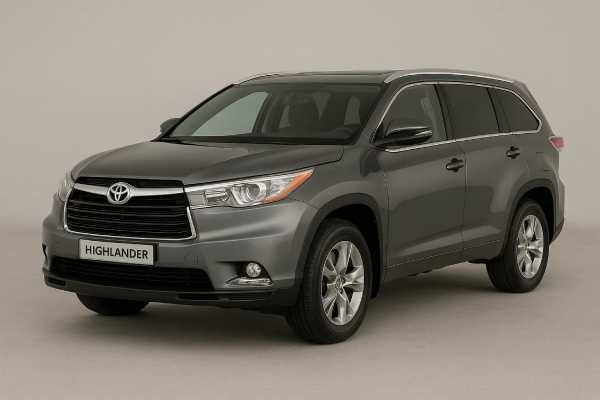
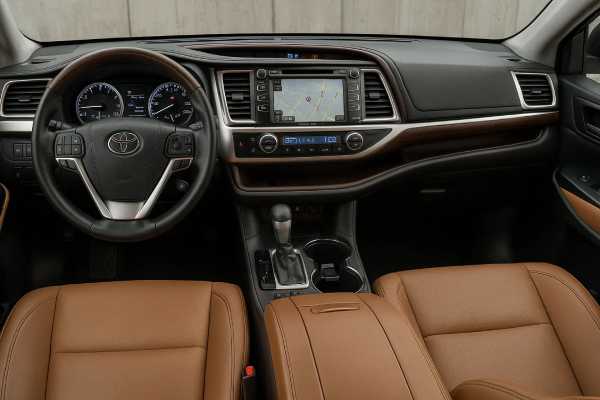
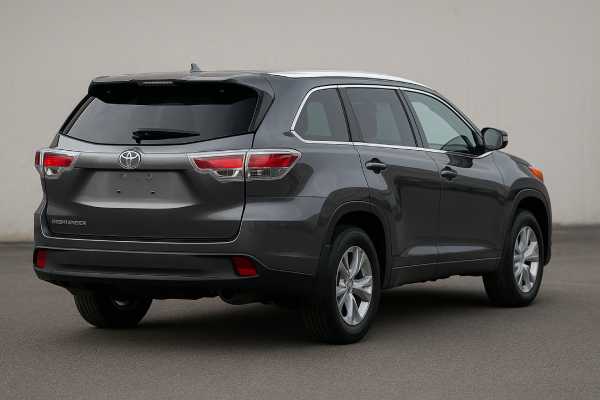
The third-generation Highlander in GSU50 form pairs Toyota’s bulletproof 2GR-FE V6 with a six-speed automatic and front-wheel drive. This combination prioritizes effortless everyday performance, quiet highway cruising, and low ownership friction. Compared with the prior model, the XU50 platform adds a stiffer body, improved sound insulation, and more family-friendly packaging—think a low lift-over cargo floor, a wide second-row slide, and smarter in-cabin storage. The naturally aspirated V6 is smooth and responsive without turbo lag; the transmission’s gearing suits suburban driving and long freeway runs. Safety results are strong for the class, and the V6 with tow prep can handle weekend toys without breaking a sweat. If you want eight-passenger flexibility, predictable handling, and long-term durability without the complexity of forced induction or hybrid systems, the 2014–2016 Highlander GSU50 hits the sweet spot for many households.
Top Highlights
- Smooth, proven V6 with relaxed passing power; quiet at 70–75 mph (113–120 km/h).
- Family-first cabin: simple controls, wide-sliding second row, flat cargo floor when folded.
- Tow up to 5,000 lb (2,268 kg) with the factory tow package; stable and confidence-inspiring.
- Caveat: base brakes and tires can lengthen stops when fully loaded—maintain high-quality pads/tires.
- Typical oil interval: 10,000 miles / 12 months on 0W-20; shorten under severe use.
Navigate this guide
- Highlander GSU50 detailed overview
- GSU50 specs and technical data
- Highlander trims, options and safety
- Reliability issues and actions
- Maintenance and buyer’s guide
- Driving and performance
- How it compares to rivals
Highlander GSU50 detailed overview
Toyota’s GSU50 Highlander is the V6, front-drive member of the XU50 family. It centers on three ideas: easy power, calm road manners, and packaging that serves families first. The 2GR-FE 3.5-litre V6 (timing chain, port injection, Dual VVT-i) makes a factory-rated 270 hp (201 kW). Paired to a six-speed automatic, it delivers a strong mid-range and quick downshifts for on-ramp merges or two-lane passes. With front-wheel drive, you avoid the extra components—and maintenance—of a transfer case and rear differential, while traction and stability control systems manage slip cleanly in wet or light snow.
Ride quality is a clear step forward versus the previous generation. The longer 109.8-in (2,790-mm) wheelbase helps the Highlander glide over broken pavement, and Toyota’s refinement work reduces wind and tire roar. The steering is light at parking speeds, accurate on center, and stable across wide freeway lanes. Brakes are predictable and easy to modulate; pedal feel is consistent even in stop-and-go commuting.
Inside, usability wins. The second row (bench or captain’s chairs depending on trim) slides and reclines; one-pull levers fold the seats nearly flat for a long, level load floor. Small-item storage is excellent, led by a dash-long shelf for phones and a cavernous center bin. The third row suits kids or short trips for adults, but the cargo bay remains workable even with all seats up. With the optional tow package, the Highlander V6 becomes a credible light-duty hauler for small boats, pop-ups, or a pair of dirt bikes, without fuss.
Where the GSU50 really earns loyalty is low-drama ownership. The engine is under-stressed, the transmission has a conservative calibration, and consumables (tires, brakes, filters) are mainstream sizes. The absence of turbo hardware or high-pressure direct injection on these years (the D-4S direct-plus-port system arrived later) keeps long-term complexity modest. For many buyers, this mix of comfort, capability, and simplicity is the point.
GSU50 specs and technical data
Engine and Performance (ICE-only)
| Item | Detail |
|---|---|
| Engine code | 2GR-FE |
| Layout and valvetrain | 60° V6, DOHC, Dual VVT-i, 24 valves |
| Bore × stroke | 94.0 × 83.0 mm (3.70 × 3.27 in) |
| Displacement | 3.5 L (3,456 cc) |
| Induction | Naturally aspirated |
| Fuel system | Port fuel injection (PFI) |
| Compression ratio | ~10.8:1 |
| Max power | 270 hp (201 kW) @ ~6,200 rpm |
| Max torque | 336 Nm (248 lb-ft) @ ~4,700 rpm |
| Timing drive | Chain (no scheduled replacement) |
| Emissions/efficiency basis | EPA methodology (U.S.) |
| Rated economy (FWD V6) | ~19 mpg city / 25 mpg hwy / 21 mpg combined (12.4 / 9.4 / 11.2 L/100 km) |
| Real-world highway @ 120 km/h (75 mph) | ~8.7–9.4 L/100 km (27–25 mpg US), load and weather dependent |
| Aerodynamics | Cd not officially published for this trim |
Transmission and Driveline
| Item | Detail |
|---|---|
| Transmission | 6-speed automatic U660E with manual-select gate |
| Gear ratios | 1st 3.300 • 2nd 1.903 • 3rd 1.310 • 4th 0.971 • 5th 0.730 • 6th 0.608 • Rev 4.148 |
| Final drive ratio | ~3.48:1 |
| Drive type | Front-wheel drive (FWD) |
| Differential | Open; brake-based torque management |
| Refuel to full | ~5 minutes (pump-dependent) |
Chassis and Dimensions
| Item | Detail |
|---|---|
| Platform/chassis | XU50 series (GSU50 FWD) |
| Suspension (front/rear) | MacPherson strut / Double-wishbone (trailing arm) |
| Steering | Electric-assist rack-and-pinion |
| Brakes | 4-wheel disc (ABS, EBD, Brake Assist) |
| Wheels/tires | 245/60 R18 standard; 245/55 R19 on select trims |
| Ground clearance | ~203 mm (8.0 in) |
| Length / Width / Height | ~4,855 / 1,925 / 1,730 mm (191.1 / 75.8 / 68.1 in) |
| Wheelbase | 2,790 mm (109.8 in) |
| Turning circle (kerb-to-kerb) | ~11.4 m (37.4 ft) |
| Curb weight | ~1,915–1,980 kg (4,220–4,365 lb), by trim/options |
| GVWR | ~2,650–2,720 kg (5,840–6,000 lb) |
| Fuel tank | ~73 L (19.2 US gal / 16.0 UK gal) |
| Cargo volume (SAE) | 13.8 ft³ behind 3rd / 42.3 ft³ behind 2nd / 83.7 ft³ max (≈391 / 1,197 / 2,370 L) |
Performance and Capability
| Item | Detail |
|---|---|
| 0–60 mph / 0–100 km/h | ~7.5–7.9 s (typical independent tests) |
| Top speed | ~180 km/h (112 mph), speed-limited |
| Braking 100–0 km/h | ~38–41 m (125–135 ft), tire/condition dependent |
| Towing capacity | Up to 2,268 kg (5,000 lb) with factory tow package; otherwise ~680 kg (1,500 lb) |
| Payload | ~590–750 kg (1,300–1,650 lb) (door-jamb label specific) |
| Roof load | ~68 kg (150 lb) with OEM crossbars |
Fluids and Service Capacities
| System | Specification | Capacity (approx.) |
|---|---|---|
| Engine oil | SAE 0W-20, API SP/SN | ~6.1 L (6.4 US qt) with filter |
| Engine coolant | Toyota Super Long Life Coolant (pink), 50/50 premix | ~9–10 L (9.5–10.5 US qt) total |
| Automatic transmission | Toyota ATF WS | Drain-and-fill ~3.5–4.0 L (3.7–4.2 US qt) |
| Brake fluid | DOT 3 (DOT 4 acceptable if fully flushed) | Fill to MAX; flush on interval |
| A/C refrigerant | R-134a | ~550–650 g (19–23 oz), label-specific |
| A/C compressor oil | ND-OIL 8/ND-OIL 11 (per label) | ≈120 mL (4.1 fl oz) |
| Spark plugs | Iridium, long-life; gap 1.1 mm (0.043–0.044 in) | — |
| Key torque (examples) | Wheel lugs 103 Nm (76 lb-ft); oil drain 39 Nm (29 lb-ft); spark plugs 18–22 Nm (13–16 lb-ft) | — |
Electrical
| Item | Detail |
|---|---|
| Alternator output | ~150 A (trim/year dependent) |
| 12 V battery | Common group size with ~45–60 Ah; verify tray label |
Safety and Driver Assistance
| Item | Detail |
|---|---|
| Crash ratings | Strong IIHS results in core tests; many configurations earned Top Safety Pick through 2016 |
| Headlights | Halogen reflectors on most trims; aim and lens clarity affect performance |
| Restraints | Dual-stage front, seat-mounted side, and full-length curtain airbags |
| Child seats | LATCH anchors (2nd row outboard) plus top tethers; confirm three-across fit by seat model |
| ADAS | Pre-TSS era: no AEB or lane centring 2014–2016; BSM/RCTA available on upper trims |
Notes: Figures vary by build content (tow prep, wheels, HVAC). Confirm by VIN, door-jamb labels, and owner’s documents.
Highlander trims, options and safety
Trim walk (2014–2016, V6 FWD availability in focus):
- LE: Standard features include cloth seating, rearview camera, 18-inch wheels, three-zone HVAC with rear controls, Bluetooth audio, and 8-passenger bench. V6 offered alongside the 2.7-litre four.
- LE Plus: Adds power liftgate, fog lamps, upgraded audio, leather-trimmed wheel, enhanced interior materials. V6 common.
- XLE: Leather seating, heated front seats, sunroof, navigation, proximity entry/start—V6 is typical here.
- Limited / Limited Platinum: 19-inch wheels, JBL audio, ventilated fronts, memory driver’s seat, premium trim; Platinum adds panoramic roof and more driver aids. V6 is standard.
Functional differences that matter:
- Towing: The factory tow package (V6) brings the wiring harness, heavy-duty alternator, supplemental engine oil cooler, and higher rating up to 5,000 lb (2,268 kg). Without it, plan for 1,500 lb (680 kg).
- Wheels/tires: 18-inch setups ride more softly and are cheaper to replace; 19-inch packages sharpen steering feel but pass a bit more impact.
- Seats: LE/LE Plus often carry an 8-passenger bench; upper trims commonly fit 7-passenger captain’s chairs.
Quick identifiers:
- Engine confirmation: Emissions label under the hood and build sheet list 2GR-FE; V6 cars carry dual exhaust finishers on many trims.
- Tow prep cues: Seven-pin connector near the hitch, auxiliary cooler plumbing, and the tow rating on the door-jamb label.
Year-to-year highlights:
- 2014 launch: New body and interior, standard backup camera, improved packaging.
- 2015: Infotainment and feature content shuffles; minor trim updates.
- 2016: Further head-unit software tweaks; broader availability of blind-spot monitoring and rear cross-traffic alert on upper trims.
Safety ratings snapshot and context:
The GSU50 earned strong crash-test results across frontal moderate overlap, side, roof strength, and head restraints. Small-overlap ratings were competitive for the class. Because these predate Toyota Safety Sense with automatic emergency braking, many configurations were Top Safety Pick rather than Top Safety Pick+. Three-row child-seat logistics are solid: LATCH anchors are accessible on the second row, top tethers are easy to find, and the third row works for boosters or occasional adult use.
ADAS and service notes:
Where fitted, blind-spot monitoring (BSM) and rear cross-traffic alert (RCTA) use radar modules behind the rear bumper covers; after repairs or repaints, verify mounting and perform the specified checks. Steering angle and yaw rate zero-point calibrations are recommended after alignment, subframe work, or battery disconnects.
Reliability issues and actions
The V6 FWD Highlander is a low-drama long-term partner when serviced on time. Most issues are wear-and-age related rather than inherent defects. Below, items are grouped by prevalence and cost.
Common to occasional:
- Water pump seepage (occasional • medium): Pink crust at the weep hole or dried coolant along the timing cover.
Symptoms → cause → remedy: Gradual coolant loss → mechanical seal wear → replace pump, refresh SLLC, inspect serpentine belt. - Front lower control arm rear bushings (common • medium): Thump over potholes, vague on-centre feel.
Rubber cracking/delamination → replace bushings or complete arms; align afterwards. - Wheel bearings (occasional • medium): Speed-dependent growl that changes with steering load.
Bearing wear → replace hub assembly. - Brake judder/uneven deposits (common • low): Steering wheel shake in gentle stops after short-trip use.
Pad transfer and rotor corrosion → bed-in properly; resurface/replace rotors and use quality pads. - EVAP purge/vent faults (occasional • low/medium): MIL with EVAP codes after hot-soak or overfilling.
Sticking purge valve or saturated canister → smoke-test, verify valve function, replace component as needed. - Door lock actuators and liftgate struts (occasional • low/medium): Weak operation in cold weather.
Motor/gear wear or gas loss → replace affected actuator/struts.
Less common but notable:
- Torque converter shudder (rare • medium): Light-throttle vibration at 35–50 mph (56–80 km/h).
Converter clutch glazing or ATF aging → ATF WS exchange, adaptation reset; further diagnosis if persistent. - Cam carrier or timing cover seep (rare • medium/high): Oil misting on the front of the engine.
Gasket seal aging → reseal per service procedure if exceeding consumption thresholds.
What’s largely resolved on these years:
- The early-generation VVT-i oil feed line concern (rubber section) was superseded by metal pipe designs before this generation; the 2014–2016 V6 isn’t part of that common failure pattern.
Software/calibrations worth checking:
- TCM updates for shift quality or flare mitigation on certain build ranges.
- Head-unit firmware for Entune stability and Bluetooth reliability.
Corrosion and body notes (salt-belt focus):
- Rear subframe seams and exhaust flange hardware can rust; an annual underbody wash and anti-seize on exhaust fasteners help.
- Tailgate hem and door-edge drain maintenance prevents trapped moisture.
Recalls, TSBs, and extended coverage (typical themes):
- Third-row seat belt anchor / seat-track campaigns: Verify completion on launch-year builds.
- Airbag wiring or inflator supplier actions: VIN-specific; ensure all campaigns are closed.
- EVAP component inspections in hot-climate states on select VINs.
- Infotainment software updates for rebooting or connection issues.
Verification best practice:
Run an official VIN recall search and request a printed dealer campaign history. For pre-purchase checks, ask for service records (oil, coolant, brake fluid, ATF), alignment printouts, and any TSB paperwork tied to the transmission or infotainment.
Maintenance and buyer’s guide
Practical maintenance schedule (distance/time, whichever comes first)
- Engine oil and filter: 10,000 miles / 12 months with 0W-20; 5,000 miles / 6 months if lots of short trips, idling, or dusty use.
- Engine air filter: Inspect 15,000 miles; replace 30,000 (earlier in dust).
- Cabin filter: Every 15,000–20,000 miles or annually.
- Spark plugs (iridium): 120,000 miles (192,000 km).
- Coolant (SLLC): First at 100,000 miles / 10 years; then every 50,000 miles / 5 years.
- ATF WS: Inspect at 60,000; drain-and-fill every 60,000–90,000 miles if keeping long-term.
- Brake fluid: Flush every 3 years.
- Brake hardware: Clean/lube slide pins annually; inspect pads/rotors each tire rotation.
- Serpentine belt and idlers: Inspect from 60,000 miles; replace by condition (often 90k–120k).
- Tyre rotation and alignment: Rotate 5,000–7,500 miles; align yearly or with tire replacement.
- 12 V battery: Test annually after year three; replace at first sign of slow crank or erratic electronics.
- PCV valve: Inspect 60k–90k; replace if sticking.
Fluid specifications and quick references
- Oil: SAE 0W-20 full-synthetic meeting API SP/SN Plus.
- Coolant: Toyota Super Long Life (pink) 50/50 premix.
- ATF: Toyota ATF WS only.
- Brake fluid: DOT 3 (DOT 4 if fully flushed).
- Torque highlights: Wheel nuts 103 Nm (76 lb-ft); oil drain 39 Nm (29 lb-ft); spark plugs 18–22 Nm (13–16 lb-ft).
DIY tips that save time
- Use the under-tray access for oil service; replace the crush washer.
- When swapping the cabin filter, note the airflow arrow orientation; a quick vacuum of the blower intake reduces dust odors.
- During spark-plug service (high mileage), blow out plug wells before removal to avoid debris entering cylinders.
Buyer’s checklist (road test + inspection)
- Powertrain: Smooth idle, no belt squeal, decisive 2–3 upshift when warm, and no shudder at 35–50 mph.
- Cooling: Stable temperature gauge, strong heat at idle, clean pink coolant, no dry crust at the pump.
- Chassis: Tight over speed bumps (no clunk), even tire wear, solid straight-line tracking hands-off.
- Brakes: No pulse at highway speeds; parking brake holds on a steep grade.
- Electronics: Camera image clear, head-unit boots without reboots, Bluetooth pairs and reconnects.
- Body/underbody: Minimal rust on subframes and exhaust; intact splash shields; clean tailgate drains.
Recommended configurations
- Best all-rounder: LE Plus or XLE V6 with 18-inch wheels for ride, tire cost, and feature mix.
- Frequent towing: Any V6 with the factory tow package (cooling/electrical upgrades and 5,000-lb rating).
Durability outlook
With routine fluids and attention to suspension consumables, the GSU50 V6 commonly sees 200,000+ miles (320,000+ km). The timing chain, iridium plugs, and non-turbo design lower long-term risk.
Driving and performance
Ride, handling, and NVH
On 18-inch tires, the Highlander is notably calm over patchwork asphalt, and body motions settle quickly. There’s mild roll if you push, but the balance is predictable and the limit behavior is tidy thanks to progressive stability control. Straight-line stability is excellent, with minimal crosswind sensitivity. Wind and tire noise are low for the class; the cabin remains composed at 65–75 mph (105–120 km/h).
Powertrain character
The 2GR-FE is a sweet V6: eager to rev, quiet at cruise, and responsive without turbo lag. The U660E’s programming favors early upshifts in normal mode but kicks down quickly for passes. With passengers and luggage, the V6 feels relaxed where a four-cylinder would sound strained. On long grades, it will hold 4th or 5th gear confidently without hunting.
Real-world efficiency
Most owners see 21–23 mpg US (11.2–10.2 L/100 km) in mixed use, 25–27 mpg US (9.4–8.7 L/100 km) on steady freeway runs, and 17–19 mpg US (13.8–12.4 L/100 km) in dense urban cycles. Winter blends, remote starts, roof racks, and aggressive tires can trim 1–3 mpg.
Key metrics that matter
- 0–60 mph: typically 7.5–7.9 s depending on load, fuel, and conditions.
- 100–0 km/h braking: around 38–41 m (125–135 ft) with healthy pads/tires.
- Turning circle: ~11.4 m (37.4 ft)—handy for tight lots.
Traction and control
In wet or slushy conditions, quality all-season or dedicated winter tires make the biggest difference. Brake-based torque management trims inside-wheel spin neatly when pulling out of angled junctions. For snow-belt drivers who want the extra margin, the AWD variant (GSU55) exists, but many suburban owners won’t miss it with proper tires.
Load and towing
With the tow package, the V6 FWD confidently handles small boats, light campers, or dual dirt bikes. Expect a 20–35% fuel-economy penalty when towing and on steep grades; transmission temps remain well-managed thanks to the cooler. Keep within the payload on your door-jamb label—passengers, hitch weight, and cargo all count.
How it compares to rivals
- Highlander 2.7 vs this V6: The V6 is meaningfully quicker, tows more (up to 5,000 lb with tow prep), and feels more relaxed when loaded or at altitude. The four-cylinder is thriftier in city slog and cheaper to buy.
- Honda Pilot (2016): Spacious third row and strong V6. The Toyota’s ride isolation and cabin hush on coarse pavement are advantages; Pilot’s nine-speed (on later years) can feel busier, while the Toyota’s six-speed is calmer.
- Hyundai Santa Fe (2014–2016): Lively steering and feature-rich cabins; turbo options add torque but also heat/complexity. Highlander’s resale and long-term parts availability are strengths.
- Kia Sorento (2016): Smaller footprint and often lower price for similar equipment. Highlander rides softer and generally holds value better.
- Ford Explorer (2016): Broad engine lineup including EcoBoost. Toyota counters with simpler, naturally aspirated power and strong reliability history; Explorer can feel heavier in tight maneuvering.
- Nissan Pathfinder (2016): CVT brings smoothness but mixed long-term sentiment; Highlander’s conventional six-speed shifts with more precision and lower perceived risk over high mileage.
References
- 2016 Toyota Highlander 2016 (EPA Ratings)
- 2016 Toyota Highlander 4-door SUV 2016 (Safety Rating)
- 2016 Toyota Highlander Quick Reference Guide 2016 (Owner’s Guide)
- Recalls 2025 (Recall Database)
Disclaimer
This guide is for informational purposes and is not a substitute for professional diagnosis or repair. Specifications, torque values, fluid capacities, towing limits, and service intervals can vary by VIN, equipment, and market. Always confirm against your vehicle’s official service documentation, labels, and owner’s manual.
If this article helped, please consider sharing it with fellow owners on Facebook or X/Twitter to support xcar’s work.