
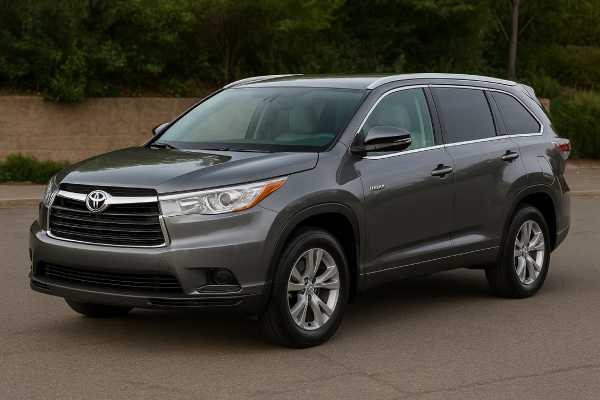
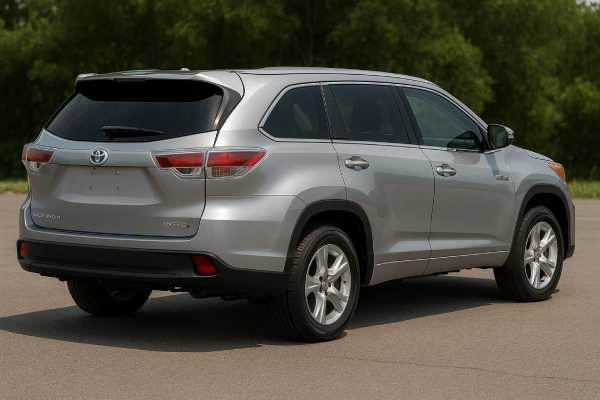
The third-generation Toyota Highlander Hybrid (chassis AVU55) blends seven-seat practicality with Toyota’s proven Hybrid Synergy Drive. For 2014–2016, every Hybrid used the 3.5-liter 2GR-FXE Atkinson-cycle V6 paired with front and rear electric motors for electronic on-demand all-wheel drive (AWD-i). Net system output is 280 hp, and real-world economy is strong for a three-row SUV thanks to electric torque in stop-and-go driving and seamless eCVT calibration. Compared with the V6 gasoline version, the Hybrid prioritizes efficiency and smoothness over maximum tow ratings, yet it remains confident on grades and in foul weather. Inside, you get family-friendly space, sensible controls, and Toyota’s reputation for durability. This guide distills the specs, maintenance details, known issues, and buying tips that owners and shoppers actually need—written to help you choose confidently and care for the vehicle correctly.
Fast Facts
- Strong economy for a 3-row AWD: typically high-20s mpg combined (8–10 L/100 km) in mixed driving.
- Smooth, quiet power: 280-hp hybrid system with electric torque for confident city and mountain use.
- Standard AWD-i traction: rear e-motor engages instantly when slip is detected, no driveshaft needed.
- Hybrid-specific caveat: cooling/inverter service and 12-V battery health matter more as the vehicle ages.
- Typical oil-change interval: 10,000 miles / 12 months with 0W-20 (shorten to 5,000 miles for severe use).
Explore the sections
- Detailed Overview
- Specifications and Technical Data
- Trims and Options, Safety and Driver Assistance
- Reliability, Common Issues and Service Actions
- Maintenance and Buyer’s Guide
- Driving and Performance
- How Toyota Highlander Hybrid Compares to Rivals
Highlander Hybrid AWD-i overview
Toyota’s AVU55-generation Highlander Hybrid takes the practical formula of the standard Highlander and layers in a sophisticated hybrid system. The 2GR-FXE 3.5-liter V6 runs the Atkinson cycle for efficiency, assisted by an electric motor-generator on the front transaxle and a separate motor on the rear axle. Because AWD-i uses an independent rear motor rather than a driveshaft, there’s no center differential; the system varies rear torque instantly when front slip or aggressive throttle is detected. In routine driving, it behaves like a front-drive hybrid to save fuel, then adds rear assistance as needed.
The eCVT (electrically controlled continuously variable transmission) blends engine and motor outputs via a planetary gearset. In town, the Highlander Hybrid often moves off on electric power, with the V6 joining smoothly as speed rises or battery state of charge falls. At higher loads (merging, steep grades), both engine and motors deliver full output for a combined 280 hp. The traction battery is a compact nickel-metal hydride pack mounted low within the body, preserving cabin and cargo space. Regenerative braking recovers energy on deceleration and reduces brake-pad wear.
Family utility remains central. The cabin seats seven with standard second-row captain’s chairs in most hybrid trims of this era, and the flat cargo floor is easy to load. Road and wind noise are impressively subdued. Where the Hybrid differs from the V6 gasoline model is in character: it’s calmer and more relaxed, especially in urban traffic, and it returns notably better fuel economy. The tradeoffs are modest—tow rating is lower than the non-hybrid V6, and the hybrid service schedule adds a few items (inverter/drive-unit fluids, extra cooling loops) that benefit from attention as the vehicle ages.
For shoppers focused on reliability and total cost of ownership, these 2014–2016 models are appealing. The core hardware had already been refined across several Toyota/Lexus hybrids, and early production updates addressed software calibration and minor NVH tweaks. If you want a quiet, efficient three-row with confident all-weather grip, the Highlander Hybrid AWD-i sits near the top of its class for this period.
AVU55 specs and data
Powertrain and Efficiency (Hybrid)
| Item | Detail |
|---|---|
| Code | 2GR-FXE (Atkinson-cycle V6) + Toyota Hybrid Synergy Drive |
| Engine layout & cylinders | 60° V6, DOHC, 24 valves (4 valves/cyl) |
| Bore × stroke | 94.0 × 83.0 mm (3.70 × 3.27 in) |
| Displacement | 3.5 L (3456 cc) |
| Induction | Naturally aspirated |
| Fuel system | Multi-port electronic fuel injection |
| Compression ratio | ~12.5:1 (Atkinson cycle effective) |
| Max system power | 280 hp (209 kW) net |
| Max engine torque | V6 comparable to 2GR range; combined torque blended via eCVT |
| Timing drive | Chain |
| Emissions/efficiency standard | EPA certification (North America) |
| Rated economy (typical) | ~27–28 mpg combined (8.4–8.7 L/100 km) |
| Real-world highway @ 120 km/h (75 mph) | High-20s mpg (≈ 8.5–9.4 L/100 km), depending on load/tires/climate |
| Aerodynamics | Family SUV profile; efficiency aided by under-floor flow management |
| Traction battery | Nickel-Metal Hydride (Ni-MH), ~1.6 kWh nominal, ≈288 V nominal with boost converter |
Note: Net system hp reflects hybrid blending; individual motor/engine peaks do not sum linearly.
Transmission and Driveline
| Item | Detail |
|---|---|
| Transmission | eCVT (planetary gearset with motor-generators) |
| Drive type | Electronic on-demand AWD (AWD-i) |
| Rear drive | Independent electric motor (no driveshaft/center diff) |
| Final drive | Electronically managed; eCVT varies ratios continuously |
| Differential | Open front; rear e-motor torque vectoring via control software |
| Refuel to full (gasoline) | ~5–7 min typical pump time |
Chassis and Dimensions
| Item | Detail |
|---|---|
| Front suspension | MacPherson struts, coil springs, stabilizer bar |
| Rear suspension | Double-wishbone, coil springs, stabilizer bar |
| Steering | Electric power steering (EPS) |
| Brakes | Regenerative with hydraulic discs; ABS, EBD, Brake Assist |
| Wheels/Tires | 18-in standard; 19-in available. Common sizes: 245/60R18 or 245/55R19 |
| Ground clearance | ~203 mm (8.0 in) |
| Length / Width / Height | ≈ 4850 / 1925 / 1730 mm (191.1 / 75.8 / 68.1 in) |
| Wheelbase | ≈ 2790 mm (109.8 in) |
| Turning circle (curb-to-curb) | ≈ 11.8 m (38.7 ft) |
| Curb weight (approx.) | ~2200–2220 kg (4850–4890 lb), by trim/equipment |
| Fuel tank | ≈ 65 L (17.2 US gal / 14.3 UK gal) |
| Cargo volume (SAE) | ≈ 390 / 1197 / 2370 L (13.8 / 42.3 / 83.7 ft³) seats up / 3rd row down / all rows down |
Performance and Capability
| Metric | Value |
|---|---|
| 0–100 km/h (0–62 mph) | ~7.6–7.8 s (weather/tires/load dependent) |
| Top speed | ~180 km/h (≈112 mph), governed |
| Braking 100–0 km/h | Strong, consistent; regen blended; distance varies with tire package |
| Towing capacity | 1588 kg (3500 lb) braked |
| Payload | Varies by trim/equipment; check door-jamb label |
| Roof load | Typical crossbar loads ~75–100 kg (165–220 lb); verify rack rating |
Fluids and Service Capacities (selected)
| System | Specification | Capacity (approx.) |
|---|---|---|
| Engine oil | 0W-20 API SN or later | ≈ 6.1–6.4 US qt (5.8–6.1 L) with filter |
| Engine/inverter coolant | Toyota Super Long Life Coolant (pink) | Factory-filled; service by drain/fill per loop |
| Hybrid transaxle | Toyota ATF WS (where specified) | Drain/fill quantity varies; inspect condition at service |
| A/C refrigerant | R-134a | Charge specified on under-hood label |
| A/C compressor oil | ND-OIL (electric-compressor compatible) | As labeled (do not mix types) |
Always confirm exact capacities by VIN; hybrid systems use dedicated coolant loops for the inverter/drive units in addition to the engine loop.
Electrical
| Item | Detail |
|---|---|
| Alternator | None (DC-DC converter supplies 12-V system) |
| 12-V battery | AGM/lead-acid, trunk-mounted; group and Ah vary by trim |
| Spark plugs (engine) | Iridium; long-life intervals |
| High-voltage safety | Automatic disconnect; service plug; interlock monitoring |
Safety and Driver Assistance (2014–2016)
| Area | Summary |
|---|---|
| Crashworthiness | Strong occupant protection; structure rated well by major test bodies of the period |
| Headlights | Halogen and HID/LED availability varied by trim; performance varies (aim/aging matter) |
| Airbags | Front, side, curtain, driver knee; passenger sensing |
| Active safety | Stability control, traction control, ABS/EBD standard |
| ADAS (availability) | Blind-spot monitor, rear cross-traffic alert, lane departure warning, pre-collision system available on higher trims/packages; adaptive cruise limited/optional in period |
Highlander Hybrid trims, options and safety
Trim structure (2014–2016): In this era the Hybrid was positioned as the upscale Highlander. Availability centered on Limited and Limited Platinum grades (names may vary slightly by year). Both included AWD-i, 7-passenger seating with second-row captain’s chairs, leather upholstery, and larger infotainment screens. The Limited Platinum added panoramic roof, heated steering wheel, ventilated front seats, and additional driver-assistance features.
Mechanical and functional differences by trim:
- Wheels/tires: 18-inch alloys standard on many Limiteds; 19-inch alloys common on Limited Platinum. The 19-inch package sharpens turn-in but can increase impact harshness and tire replacement cost.
- Brakes/suspension: Calibrations remained comfort-oriented across trims. No tow-package hardware differences specific to the Hybrid beyond wiring; tow rating is 3500 lb.
- Seating and cargo: Hybrids typically use a 7-seat layout with captain’s chairs for the second row—an easy quick identifier versus some 8-seat non-hybrids.
Quick identifiers and build details:
- Badging: “Hybrid” fender and tailgate emblems; blue Toyota logos.
- VIN clues: The presence of hybrid code and the AVU55 chassis designation.
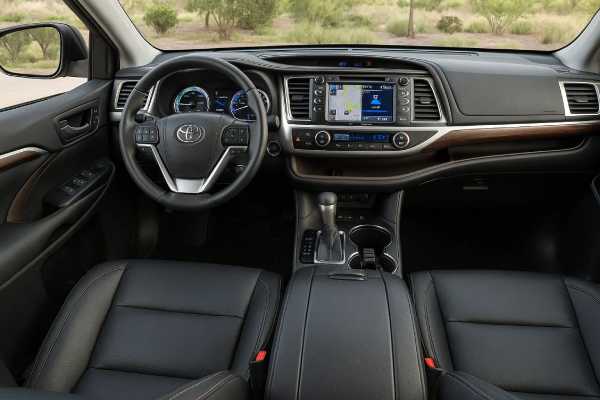
- Interior tells: Hybrid-specific power-meter cluster (with Charge/Eco/Power arc), EV Mode and ECO buttons near the shifter, and energy-flow screens in the head unit.
Year-to-year highlights (2014–2016):
- 2014 launch: New generation with improved ride, quieter cabin, and more standard content versus prior Highlander Hybrid.
- 2015: Feature content and audio/navigation options shuffled; minor software refinements to HVAC and hybrid displays.
- 2016: Additional tech and comfort tweaks depending on package; safety-tech availability broadened on upper trims.
Safety ratings context: This generation earned strong crashworthiness marks in major tests of the period, with optional forward-collision warning/pre-collision system available on higher trims/packages. Headlight performance varied by lamp type and aim; aging halogen projectors often benefit from lens restoration and precise alignment. LATCH anchors are accessible in the second row, and the third row contains tethers only—plan child-seat placement accordingly.
ADAS and calibration notes:
- Pre-collision system (PCS): If equipped and the bumper/grille or windshield glass has been replaced, radar/camera calibration may be required.
- Blind-spot monitor/RCTA: Rear bumper repairs, sensor removal, or ride-height changes can alter performance; a shop with target boards/scans is recommended.
- Lane departure warning: Camera cleanliness and windshield clarity matter; degraded windshield glass can reduce detection reliability.
Reliability, Common Issues and Service Actions
The Highlander Hybrid’s core hardware has a strong track record when serviced on time. Still, any decade-old three-row SUV benefits from a systematic check. Below is a field-oriented map of issues by prevalence and cost, with symptoms and practical remedies.
Common (low–medium cost):
- 12-V battery aging: Intermittent no-ready, warning lamps, or odd electrical behavior. Root cause: aged AGM/lead-acid battery and/or DC-DC converter load after short trips. Remedy: test with a proper load tester; replace battery proactively every ~4–6 years; verify parasitic draw is within spec and clean ground points.
- Brake pad/rotor corrosion (low-mileage cars): Hybrids rely on regen; friction brakes may rust or glaze. Symptoms: vibration, squeal, or weak bite after storage. Remedy: periodic friction-brake bedding; clean/lube caliper slide pins; replace pads/rotors as needed.
- HVAC blower debris/cabin filter neglect: Musty odors or reduced airflow. Remedy: replace cabin filter (typically 15–20k miles/24–36k km), inspect blower wheel, disinfect evaporator.
Occasional (medium cost):
- Front strut mounts/top hats noise: Clunks over sharp bumps. Remedy: inspect mounts/bearings; replace in pairs; align afterward.
- Wheel-bearing wear (high-mileage): Growl changing with steering load. Remedy: replace hub assemblies; verify torque and ABS sensor seating.
- Exhaust shields/rattles: Aging spot welds. Remedy: re-secure or replace shields; confirm clearances around underbody hybrid components.
Rare (medium–high cost):
- Inverter cooling loop issues: Overheat warnings under heavy load or in hot climates. Root cause: air in the inverter loop after service, aged coolant pump, or partial blockage. Remedy: bleed loop per hybrid procedure; verify pump operation and coolant flow; replace pump if noisy/weak.
- Transaxle fluid neglect (lifetime fill claims): Shifts remain smooth, but metal particulate can accumulate over long intervals. Remedy: drain/fill ATF WS at conservative intervals (e.g., 60k–90k miles) to extend longevity, observing strict cleanliness.
- Rear e-motor or speed-sensor faults (AWD-i): AWD warnings or inoperative rear assist. Remedy: scan for codes, check harness/connectors for corrosion or impact damage; repair wiring or replace sensor/motor as needed.
Software/calibration updates: Toyota has periodically issued calibration updates for engine idle quality, HVAC control logic, infotainment stability, and driver-assistance systems on higher trims. If your vehicle shows drivability quirks or warning lamps with no hard failures, ask a dealer to check for ECU/TCU/PCS updates.
Recalls/TSBs and extended coverage: Always run an official VIN search to verify recall completion and campaign eligibility. Keep proof of inverter-loop service, brake-fluid changes, and any hybrid system repairs; these records meaningfully support resale and warranty goodwill.
Pre-purchase checks (ask the seller):
- Full service history including oil changes (0W-20) and coolant services.
- Confirmation of recall/campaign completion via official records.
- Hybrid health snapshot: scan for DTCs, confirm inverter pump operation, check 12-V battery test results.
- Brake inspection with caliper-pin lubrication documented (regen vehicles need this attention).
- Tire age and even wear (19-inch packages can feather or cup if alignment is off).
- Suspension inspection: strut mounts, control-arm bushings, and rear links.
Maintenance and Buyer’s Guide
Practical maintenance schedule (time/distance whichever comes first):
- Engine oil and filter: Every 10,000 miles / 12 months with 0W-20; halve to 5,000 miles for short-trip, dusty, or heavy-tow use.
- Engine air filter: Inspect 15,000 miles; replace ~30,000 miles (shorter in dusty areas).
- Cabin filter: 15,000–20,000 miles (24–36k km) or annually.
- Coolant (engine and inverter loops): Toyota Super Long Life Coolant; inspect at 50,000 miles; service per manual guidance thereafter, ensuring correct bleed procedures for hybrid loops.
- Spark plugs (iridium): ~120,000 miles (190,000 km) typical interval if performance and fuel economy remain normal.
- Hybrid transaxle fluid (ATF WS): Conservative drain/fill at 60,000–90,000 miles to reduce wear metals (cleanliness is critical).
- Brake fluid: Replace every 3 years regardless of mileage; moisture harms ABS valves and hybrid brake actuators.
- Brake hardware: Clean/lube slide pins every 20,000–30,000 miles; check pad thickness annually (regen reduces wear but rust can still bite).
- Serpentine/aux belts and hoses: Inspect each service; replace on condition or at ~100,000 miles.
- 12-V battery: Load test annually after year 4; replace proactively at 4–6 years.
- Tires and alignment: Rotate every 5,000–7,500 miles; align annually (more often if running 19-inch wheels).
- AWD-i rear-motor area: Visual harness/connector check at each service; ensure no debris/damage from road impacts.
Fluid specs and essentials:
- Engine oil: SAE 0W-20 synthetic, API SN or later; ≈6.1–6.4 qt with filter.
- Coolant: Toyota Super Long Life (pink), premixed.
- ATF: Toyota ATF WS where specified for the hybrid transaxle.
- A/C: R-134a and compatible ND-type electric-compressor oil (use pure, non-conductive oil only).
- Critical torques: Lug nuts ~103 Nm (76 lb-ft) typical; always verify by VIN/service manual.
Buyer’s inspection checklist (on-car):
- Underbody: Look for subframe corrosion, exhaust shield looseness, and damage near hybrid cooling lines or rear e-motor.
- Cooling loops: With a scan tool, confirm coolant temps under load and proper inverter-pump operation; watch for trapped air (gurgling).
- Brakes: Smooth transition between regen and friction; no pulling; no ABS/VSC lamps.
- Hybrid readouts: Energy-flow screen should show consistent charge/discharge; erratic behavior may indicate battery or sensor faults.
- HV battery health (basic): Observe SOC stability on a long grade and during city stop-and-go; excessive swings can suggest weak modules (advanced testing requires hybrid tools).
- Electronics: Check all cameras/sensors if the vehicle has PCS/BSM/RCTA; ensure windshield and bumper repairs were followed by calibrations.
Recommended years/trims/options: For 2014–2016, the Limited and Limited Platinum hybrids are attractive for their standard AWD-i, 7-seat layout, and high content. If you prefer a softer ride and lower tire costs, seek 18-inch wheels. Confirm that any accessory towing is limited to 3500 lb and that the vehicle has a recent brake-fluid change and documented coolant service.
Long-term outlook: With routine maintenance and sensible fluid care, the AVU55 Highlander Hybrid commonly delivers long service life. Most owners will see brake and tire costs as primary wear items; hybrid components are robust when cooling and software are kept up to date.
Driving and Performance
Ride, handling, and NVH: The Highlander Hybrid favors comfort. The double-wishbone rear suspension delivers a composed ride on broken pavement, while electric power steering is light at parking speeds and steadier on the highway. Body motions are well-controlled for a family SUV; with 19-inch wheels you’ll feel a bit more impact sharpness but also marginally crisper turn-in. Cabin isolation is a strong point—engine noise is subdued, and the eCVT keeps revs low in cruising.
Powertrain character: From rest, the e-motor’s instant torque makes the Hybrid feel eager without the throttle tip-in surge you might expect from a turbocharged rival. In typical commuting, it glides between EV creep, blended power, and engine-only cruising with little drama. Ask for full power, and the system coordinates V6 and motors for decisive acceleration in the 0–60 mph mid-7-second range. The eCVT’s calibration is mature: it avoids “rubber band” sensations under steady loads and quickly quiets revs once up to speed. On long grades, coolant and inverter temps remain stable if the cooling loops are healthy.
Real-world efficiency: Expect high-20s mpg combined (≈8.5–9.0 L/100 km) for mixed suburban/highway use. Highway consumption at 65–75 mph typically lands in the mid-20s mpg depending on wind, temperature, and roof-rack/box usage. In cold weather, economy can dip until the engine and battery reach operating temperature; block heaters, garage parking, and gentle warm-up driving help. City driving is where the Hybrid shines: short hops with smart anticipation can trigger frequent engine-off coasting and regenerative stops.
Traction and control: AWD-i adds confidence without the complexity of a mechanical center diff. The rear e-motor can engage before the front wheels spin, subtly shuffling torque in snow or rain. Traction and stability control systems are tuned conservatively; on all-season tires, the Hybrid feels predictable on slick surfaces. For mountain trips, use gentle throttle and allow regenerative braking to harvest energy on descents; prolonged steep downhills may still call for lower eCVT ranges to manage speed and friction-brake temperatures.
Load and towing behavior: With a 3500-lb (1588-kg) tow rating, the Hybrid handles small campers and utility trailers. Keep tongue weight within spec, use trailer brakes where required, and budget extra distance for passing—electric torque helps off the line, but sustained high-load climbs will raise coolant temps and fuel use. Plan for a 20–35% consumption penalty when towing or carrying a full cabin with cargo.
How Toyota Highlander Hybrid Compares to Rivals
In 2014–2016, the Highlander Hybrid AWD-i competed with the Ford Explorer (V6, no hybrid), Nissan Pathfinder Hybrid (short-lived), and premium-leaning three-row crossovers from Lexus and Acura.
- Versus Explorer (V6 non-hybrid): The Highlander Hybrid delivers clearly better city economy and a smoother, quieter powertrain. Explorer counters with broader engine/tow options and, in some trims, sportier steering feel. If you tow near 5000 lb often, the non-hybrid V6 class is better suited; if you commute or idle in traffic, the Hybrid wins by a wide margin on fuel costs and serenity.
- Versus Pathfinder Hybrid: Nissan’s hybrid system of the era didn’t match Toyota’s refinement or longevity. The Highlander’s eCVT blending and AWD-i traction are more seamless, and long-term parts support is stronger.
- Versus Acura MDX (gasoline V6): MDX offers sharper handling and available advanced SH-AWD dynamics, but the Toyota returns better stop-and-go economy, typically lower maintenance costs, and simpler ownership.
- Versus Lexus RX 450h (two-row): The RX 450h is quieter and more luxurious but lacks a usable third row in this generation. Families needing seven seats will favor the Highlander Hybrid; those seeking premium finishes and two-row comfort lean Lexus.
Bottom line: If you prioritize quietness, fuel efficiency, and trouble-free family hauling in all weather, the 2014–2016 Highlander Hybrid AWD-i remains one of the most balanced choices in its class.
References
- Gas Mileage of 2016 Toyota Highlander 2016 (Fuel Economy)
- Gas Mileage of 2015 Toyota Highlander Hybrid 2015 (Fuel Economy)
- 2016 Toyota Highlander Adds Technology, Comfort for 2016 2015 (Press Release)
Disclaimer
This article is for informational purposes only and is not a substitute for professional diagnosis or repair. Specifications, torque values, fluid capacities, and service intervals can vary by VIN, model year, market, and equipment. Always verify procedures and numbers against your vehicle’s official owner’s manual, service manual, and parts information.
If you found this guide helpful, please consider sharing it with a fellow owner on Facebook or X/Twitter to support xcar’s work.