
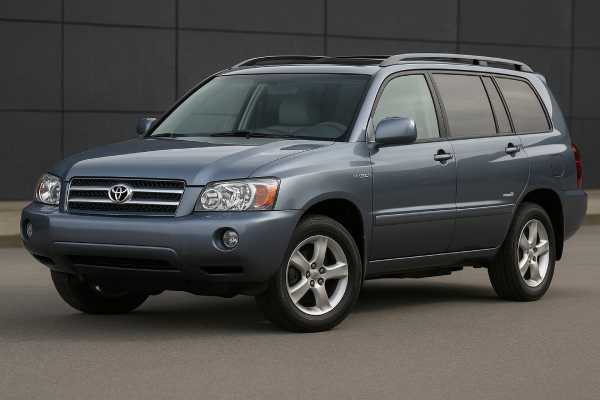

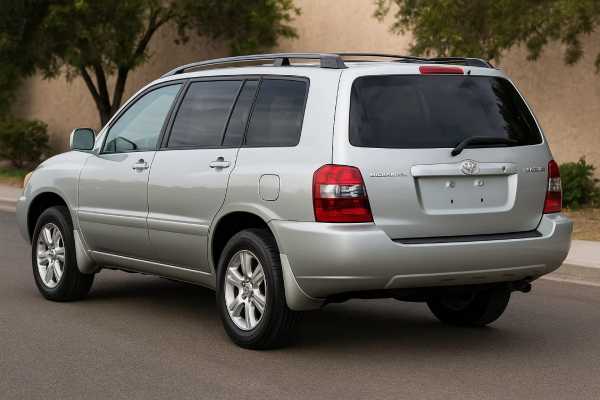
The 2006–2007 Toyota Highlander Hybrid FWD (chassis code MHU28) blends the familiar first-gen Highlander package with Toyota’s second-generation Hybrid Synergy Drive. A 3.3-liter 3MZ-FE V6 works with a powerful traction motor and eCVT to deliver 268 hp (200 kW) combined output, brisk step-off, and significantly better fuel economy than its V6 gasoline sibling—without asking you to change how you drive or service the vehicle. The front-wheel-drive version deletes the rear e-motor found on AWD-i models, trimming weight and complexity while keeping the smooth, quiet character the Highlander is known for. Inside, the flexible two- or three-row cabin remains a model of everyday usability. Ownership is straightforward: fluids and filters on schedule, added attention to the inverter cooling loop, and periodic brake-system care to keep the regenerative/ friction blend consistent. For families who want a calm, efficient midsize crossover that still tows light loads and shrugs off winters on proper tires, this late-run hybrid remains a smart, durable pick.
Fast Facts
- Strong low-speed shove from the traction motor; combined 268 hp feels confident in daily driving.
- Real-world economy commonly beats the V6 gas model by 4–6 mpg US (≈ 0.6–1.0 L/100 km improvement).
- Cabin packaging is simple and robust; seats fold flat for over 80 ft³ (≈2,270 L) of cargo space.
- Watch age-related items: inverter water pump, brake actuator noise, and hybrid battery cooling cleanliness.
- Typical engine oil interval: 5,000 mi / 6 months (severe use: shorter), using API-spec 5W-30.
What’s inside
- Highlander Hybrid detailed overview
- Hybrid specs and technical data
- Trims, options, and safety
- Reliability, issues, and service actions
- Maintenance plan and buyer’s guide
- Driving and performance
- How it compares to rivals
Highlander Hybrid detailed overview
Toyota’s first-generation Highlander established the easygoing, Camry-based CUV formula; the 2006–2007 Hybrid FWD (MHU28) adds an electric traction layer that makes the vehicle quieter, quicker at low speeds, and more efficient in traffic without sacrificing the Highlander’s calm road manners. Under the hood sits the 3MZ-FE aluminum V6 (port-injected, DOHC 24-valve, VVT-i) tuned to run in an Atkinson-leaning strategy for efficiency. It is coupled to a P112-type eCVT transaxle with two motor-generators: MG2 (the front traction unit that drives the wheels) and MG1 (starter/generator and ratio controller). In FWD hybrids there’s no rear e-motor, which simplifies the driveline and can slightly improve highway economy versus AWD-i.
From the driver’s seat, the hybridization is obvious in the best way: quiet pull-away, low-rpm cruising at suburban speeds, and seamless engine restarts when the battery asks for help. The eCVT never shifts in the conventional sense; instead, the planetary gearset blends torque from the engine and MG2. Regenerative braking recovers energy into the 288-V Ni-MH battery under the rear area, while friction brakes finish the stop—when the system is bled properly and the slide pins are clean, pedal feel is consistent and easy to modulate.
Packaging remains a strong suit. The second row slides and reclines; an optional compact third row folds flat into the floor. With both rows down you unlock ~81 ft³ (≈2,290 L) of cargo volume, enough for bikes or flat-packed furniture. Sound insulation is a notch better than many rivals from the same period, and on stock 17-inch tires the ride is supple and quiet. Towing up to 3,500 lb (1,588 kg) is permitted with the tow package; smart owners keep the coolers clean and renew fluids on time.
If you’re cross-shopping, note that the FWD hybrid drops the AWD-i system’s rear-axle traction boost in snow. However, with good winter tires and the hybrid’s fine torque control, the FWD version remains friendly and predictable in poor weather, while being mechanically simpler and slightly lighter than the AWD-i model.
Hybrid specs and technical data
Powertrain & Efficiency (HEV)
| Item | Detail |
|---|---|
| ICE code | 3MZ-FE (hybrid-tuned) |
| Engine layout & cylinders | 60° V6, DOHC, 24 valves, VVT-i (intake) |
| Valves / cyl | 4 |
| Bore × stroke | 92.0 × 83.0 mm (3.62 × 3.27 in) |
| Displacement | 3.3 L (3,311 cc) |
| Induction / fuel | Naturally aspirated / sequential MPFI |
| Compression ratio (ICE) | ≈10.8:1 (hybrid strategy favors late-intake valve timing) |
| Front traction motor (MG2) | Permanent-magnet synchronous, ~120+ kW peak (conditions dependent) |
| Generator (MG1) | Permanent-magnet synchronous (engine start/charging/ratio control) |
| System voltage | ~288 V nominal |
| Battery chemistry / location | Nickel-metal hydride (Ni-MH), rear compartment |
| Combined system output | 268 hp (200 kW) |
| Rated efficiency (FWD) | Typical label range for era: high-20s mpg US combined (≈ 8.7–9.8 L/100 km combined), city advantage strongest |
| Real-world highway @ 120 km/h (75 mph) | Often 9.8–11.2 L/100 km (21–24 mpg US / 25–29 mpg UK), wind/grade and tire choice sensitive |
| Aerodynamics | Cd ≈ 0.34; frontal area similar to non-hybrid Highlander |
Note: Published fuel-economy figures for 2006–2007 hybrids were re-stated under the 2008 EPA revision; use the later values when comparing across years.
Transmission & Driveline
| Item | Detail |
|---|---|
| Transmission | eCVT hybrid transaxle (P112-type planetary) |
| Fixed gear ratios | Not applicable (continuously variable by MG1/MG2 control) |
| Final drive | Integrated in transaxle (front-wheel drive) |
| Drive type | FWD (no rear e-motor in MHU28) |
| Differentials | Open (front), brake-based traction aid |
| Refuel to full (min) | ~5–10 min (conventional gasoline) |
Chassis & Dimensions
| Item | Detail |
|---|---|
| Front / rear suspension | MacPherson struts / MacPherson struts |
| Steering | Hydraulic rack-and-pinion |
| Brakes | Ventilated front discs / solid rear discs; ABS, EBD, Brake Assist; regenerative integration |
| Wheels / tires | 225/65 R17 (typical OE fitment) |
| Ground clearance | ~185 mm (7.3 in) |
| Approach / departure angles | ~29° / 22° |
| Length × width × height | ≈ 4,690 × 1,826 × 1,735 mm (184.6 × 71.9 × 68.3 in) |
| Wheelbase | 2,715 mm (106.9 in) |
| Turning circle (curb-to-curb) | 11.4 m (37.4 ft) |
| Curb weight (FWD hybrid) | ~1,880–1,930 kg (4,145–4,255 lb) depending on equipment |
| GVWR | ~2,470–2,520 kg (5,445–5,560 lb) |
| Fuel tank | ~65 L (17.2 US gal / 14.3 UK gal) |
| Cargo volume (SAE) | ~300 L / ~2,290 L (10.6 / 81 ft³) seats up / down |
Performance & Capability
| Metric | Value |
|---|---|
| 0–100 km/h (0–62 mph) | ~7.3–7.8 s (typical FWD hybrid) |
| Top speed | ~180 km/h (112 mph) (governed) |
| Braking 100–0 km/h (62–0 mph) | ~38–42 m (125–138 ft) on healthy tires/rotors |
| Towing capacity (braked) | 1,588 kg (3,500 lb) with tow prep |
| Payload (typical max) | ~600–650 kg (1,320–1,430 lb) |
| Roof load | Up to 68 kg (150 lb) with OEM rack (verify accessory rating) |
Fluids & Service Capacities
| System | Spec / Capacity (typical) |
|---|---|
| Engine oil | API SL/SN 5W-30; ~4.7 L (5.0 US qt) with filter |
| ICE coolant | Toyota Super Long Life Coolant (SLLC) premixed; ~8–10 L (8.5–10.6 US qt) (rear heater increases volume) |
| Inverter/e-motor coolant | Toyota SLLC; separate loop; ~4–6 L (4.2–6.3 US qt); bleed per hybrid procedure |
| Hybrid transaxle (eCVT) | Toyota ATF WS; service fill typically ~3.5–4.0 L (3.7–4.2 US qt) |
| A/C refrigerant | R-134a; charge varies (rear A/C systems require more) |
| A/C compressor oil | ND-Oil spec per compressor; quantity per service manual |
| Key torque examples | Wheel nuts 103 Nm (76 lb-ft); oil drain ~45 Nm (33 lb-ft); spark plug ~25 Nm (18 lb-ft) |
Electrical
| Item | Detail |
|---|---|
| Alternator | Not fitted (DC-DC converter supplies 12 V bus) |
| 12 V battery | Group 24F or equivalent, ~550–650 CCA (verify fitment) |
| Spark plugs (ICE) | Iridium (e.g., Denso SK20R11 / NGK IFR6A11); gap 1.0–1.1 mm (0.039–0.043 in) |
Safety & Driver Assistance
| Item | Detail |
|---|---|
| Crash ratings (IIHS) | Moderate overlap Good (with available side airbags, side ratings vary by equipment) |
| Headlight (IIHS) | Not rated for this generation |
| ADAS suite | ABS, EBD, Brake Assist, Vehicle Stability Control (stability), Traction Control; front airbags standard; front seat-mounted side and side curtain airbags standard/optional by trim; LATCH anchors |
Trims, options, and safety
Trims (2006–2007 Hybrid FWD): Typically Base and Limited with two- or three-row seating. Equipment varies by package, but the hybrid powertrain and eCVT are common across trims. The Limited focuses on comfort and convenience: leather, power driver seat, often JBL premium audio, heated seats in colder regions, and available navigation or rear entertainment. The Base uses durable cloth, manual seat adjust, and a simpler audio unit while retaining the hybrid hardware and key safety features.
Functional and mechanical differences by trim
- Wheels/tires: 17-inch alloys common; Limited often carries unique wheel designs.
- Suspension/brakes: Spring and damper tuning is comfort-biased across the line; regenerative braking hardware is shared, with pedal feel differences more about rotor/pad condition than trim.
- Seating: Optional third row (50/50) folds into the floor; Limited more often bundles it.
- Towing: Same 3,500-lb (1,588-kg) maximum with tow prep (auxiliary coolers, wiring). Confirm the presence of the tow package if you plan to tow regularly.
Quick identifiers
- Badges: “Hybrid” exterior emblems, blue-tint Toyota emblems, hybrid-specific instrument cluster with energy monitor.
- Build plate/VIN clues: MHU28 denotes FWD hybrid; option codes reveal audio/leather/airbag packages.
- Year-to-year changes: 2006 models launched the hybrid; 2007 generally carried over with package reshuffles and labeling aligned to new EPA testing (labels changed, hardware largely constant).
Safety ratings and equipment
- Structure and airbags: Dual front airbags standard; front seat-mounted side and side curtain airbags were widely available and may be standard by package/trim.
- Child-seat provisions: LATCH anchors in the second row; top tethers provided.
- Electronic stability: Vehicle Stability Control (VSC) standard on hybrids.
- Calibration implications after service: Yaw-rate and steering-angle sensors may require zero-point calibration after alignments or component replacements. Brake bleeding on hybrid systems requires the correct scan-tool sequence to purge the skid control ECU/accumulator circuit safely—avoid conventional manual bleeding procedures.
Reliability, issues, and service actions
Overall, the MHU28 Highlander Hybrid FWD has a strong durability record when fluids are kept fresh and thermal systems remain healthy. The table below maps common problems by prevalence and impact to help you prioritize inspections and budgets.
Hybrid system & electrics
- Inverter water pump wear (common / low–medium): Electric pump can become noisy or weak by 10–15 years. Symptoms: intermittent reduced hybrid assist, inverter temps rising, DTCs. Remedy: replace pump, refresh SLLC in the inverter loop, bleed properly.
- Brake actuator/accumulator noise (occasional / medium–high): Pump cycling frequently or buzzing after key-off. Symptoms: soft pedal, stored ABS/VSC codes. Remedy: verify with scan-tool active tests; replacement or updated assembly when criteria met; fresh brake fluid and correct bleed sequence.
- Hybrid battery aging (occasional / medium): Ni-MH modules can drift with heat/time. Symptoms: state-of-charge swings, reduced assist, triangle-of-death, P0A80 family codes. Remedy: pack replacement (new or professionally remanufactured), ensure cooling path is clean and cabin filters are fresh.
- DC-DC converter / inverter electronic faults (rare / high): Overheat/driver faults may trigger limp mode. Remedy: software updates, component replacement per diagnostic tree; verify recall/extended coverage by VIN.
ICE (3MZ-FE) and cooling
- Timing belt age (common / medium): Replace belt, idlers, tensioner, and water pump at 90k–105k mi (145k–170k km) or 9–10 years. Symptoms: age cracks, coolant seep at pump. Remedy: full kit and coolant.
- Valve cover/cam seals seep (occasional / medium): Oil odor; visible wetness. Remedy: reseal; confirm PCV function.
- Throttle body/MAF fouling (common / low): Rough idle or hesitation. Remedy: careful cleaning, fresh air filter.
Transaxle & driveline
- eCVT fluid neglected (common / medium): Dark ATF WS leads to harshness/noise. Remedy: serial drain-and-fills with ATF WS; avoid high-pressure flushes.
- Front axle seals (occasional / low): Dampness near outputs. Remedy: replace seals, check transaxle venting.
Chassis & body
- Strut mounts and sway links (common / low–medium): Clunks over sharp edges; refresh restores quiet ride.
- Steering intermediate shaft knock (occasional / low): Light click around center; lubricate or replace shaft.
- Exhaust flange hardware corrosion (occasional / low): Audible leaks; install updated fasteners/seals.
Recalls, TSBs, extended coverage (high-level)
- Hybrid inverter module / IPM thermal concerns: Campaigns addressed potential solder/driver failures leading to shutdown; ensure calibration/repair completion by VIN.
- Brake master cylinder seal campaign (selected years): Certain Toyota models of the era had master-cylinder cup seal concerns; verify applicability and completion.
- Floor-mat/pedal interference campaigns: Verify that pedal and floor-mat countermeasures are present.
- Software updates: ECM/Hybrid control updates improve drivability, battery management, and diagnostic robustness—confirm with dealer records.
Pre-purchase checks to request
- Full maintenance records including hybrid coolant loop service.
- Timing-belt kit + water pump documentation within the time/mileage window.
- Proof of correct brake bleed after any hydraulic work; accumulator/actuator repair evidence if symptoms existed.
- Hybrid battery state-of-health report and cooling-duct cleanliness.
- VIN recall/TSB printout from a dealer portal.
- Fresh ATF WS in the transaxle and recent brake fluid exchange.
- Tire age/uniformity (important for smooth regenerative blending), alignment sheet.
Maintenance plan and buyer’s guide
A well-kept MHU28 rewards steady, methodical care. Use the schedule below as a practical baseline (distance/time = whichever comes first), adjusting for climate, towing, and city-heavy duty.
Core maintenance schedule
- Engine oil & filter: API SL/SN 5W-30, 5,000 mi / 6 months (shorter for severe duty or many short trips).
- Engine air filter: Inspect 12 months / 12,000 mi; replace as needed.
- Cabin filter: Replace 12–24 months; essential for battery-cooling airflow health.
- ICE coolant (SLLC): Factory fill ~100,000 mi / 10 years first interval, then 50,000 mi / 5 years thereafter; verify freeze point and pH annually after year 8.
- Inverter/e-motor coolant: 50,000–100,000 mi / 5–8 years, or any time the inverter pump is replaced; bleed with the hybrid procedure.
- Spark plugs (iridium): 120,000 mi (193,000 km) or earlier if misfire counts rise.
- Fuel filter: In-tank, generally lifetime; confirm fuel pressure before condemning.
- Timing belt, tensioner, idlers, water pump: 90,000–105,000 mi / 9–10 years; renew serpentine belt and inspect cam/crank seals.
- Serpentine/aux belts & hoses: Inspect annually; replace at first cracking or glazing.
- Hybrid transaxle fluid (ATF WS): Conservative 30,000–60,000 mi drain-and-fill cadence; avoid power flushes.
- Brake fluid: Every 2–3 years; cycle ABS pump with a scan tool for a thorough exchange.
- Brakes: Inspect pads/rotors 12 months; clean and relube slide pins (salt regions need extra attention).
- Tires: Rotate 5,000–7,500 mi, align annually; even tread supports stable regen/friction blending.
- 12 V battery: Load-test annually after year 4; typical life 5–7 years.
- Hybrid battery care: Keep rear air paths clear; do not block vents with cargo; consider fan cleaning in dusty homes or pet-heavy use.
Fluid specs & helpful numbers
- Engine oil: 5W-30; ~4.7 L (5.0 qt) with filter.
- Coolants: Toyota SLLC for both the engine and inverter loops.
- Transaxle: ATF WS; service fill typically ~3.5–4.0 L.
- Brake fluid: DOT 3 or DOT 4 to spec; use fresh, unopened containers.
- Torque values: Wheel nuts 103 Nm (76 lb-ft); oil drain ~45 Nm (33 lb-ft); spark plug ~25 Nm (18 lb-ft).
DIY and shop tips
- For the hybrid brake bleed, follow the scan-tool sequence; do not free-bleed like a conventional system.
- Use a vacuum fill tool on the inverter loop to prevent air pockets.
- Perform serial drain-fills on the transaxle to refresh fluid gradually (each exchange replaces ~35–45%).
- When doing the timing belt, proactively replace the inverter pump if it’s original and the coolant is drained anyway.
Buyer’s checklist
- Cold start: listen for belt idler noise and ensure smooth engine restarts.
- Road test: quiet low-speed EV glide, no hunting from the eCVT; check for brake-pedal consistency and smooth regenerative transitions.
- Scan for codes and look at freeze-frame data; review hybrid battery block voltages if accessible.
- Inspect radiator and inverter heat exchanger for debris; check coolant color.
- Verify VIN recall completion and ask for dealer service history printouts.
- Prefer examples with documented belt/pump, coolant services, recent brake fluid, and clean ATF WS.
Durability outlook
With routine fluids, a clean battery-cooling path, and timely timing-belt service, these hybrids commonly run 200,000–300,000 miles. The hybrid transaxle and motors are highly robust; the most expensive surprises tend to be inverter electronics or brake actuators, which are rare relative to the fleet size but worth budgeting for on very high-mileage, salt-belt vehicles.
Driving and performance
Ride, handling, NVH: The Highlander Hybrid FWD is tuned for quiet comfort. On stock 17-inch all-seasons, expansion joints and minor potholes are absorbed with a gentle initial stroke and tidy rebound control. Straight-line stability is excellent, and the steering is light with predictable self-centering. Cabin noise is impressively low around 60–70 mph (100–113 km/h); with the engine cycling off at lower loads, suburban driving is calmer than in the non-hybrid V6.
Powertrain character: Around town, the traction motor takes the lead, so the first 50 feet feel eager and smooth. The V6 joins in unobtrusively, with a muted growl under heavier throttle. There’s no shifting in the conventional sense; the eCVT holds the engine near its most efficient point and varies MG2 torque to control road speed. Passing from 50–80 mph (80–129 km/h) is confident due to the hybrid’s strong midrange; the system can summon full combined output for ramps and merges.
Braking feel: Regenerative braking blends with the hydraulic system. When the front rotors and pads are healthy and the skid control unit is bled correctly, the pedal is consistent and easy to modulate. On neglected rotors or with sticky slide pins, initial bite can feel vague—refresh hardware and perform a proper bleed to restore feel.
Efficiency in practice: Mixed driving often returns 24–28 mpg US (9.8–8.4 L/100 km), with city trips benefiting most from regen and engine stop. At 75 mph (120 km/h) on level highway, expect 21–24 mpg US (11.2–9.8 L/100 km) depending on wind, temperature, and tire choice. Winter tires and sub-freezing temps can trim economy by 1–3 mpg (US).
Traction and control: Without the AWD-i rear motor, ultimate snow traction is lower than the AWD version. However, the hybrid’s torque control plus VSC and good winter tires produce predictable starts and stable corner exits on packed snow. There’s no low-range or off-road mode; this is an all-weather road vehicle.
Load and towing: Properly equipped, the FWD hybrid tows up to 3,500 lb (1,588 kg). Keep speeds modest, watch transaxle and inverter coolers for debris, and expect a 15–30% fuel-economy penalty while towing. Stability remains good with a well-balanced trailer and a weight-distributing hitch above ~2,000 lb.
Selective metrics (typical setup: FWD hybrid on 225/65R17 all-seasons)
- 0–60 mph: ~7.3–7.8 s
- 50–80 mph: ~6–7 s
- 100–0 km/h braking: ~38–42 m (125–138 ft)
- Turning circle: 37.4 ft (11.4 m)
How it compares to rivals
Ford Escape Hybrid (2005–2007): The Escape Hybrid is smaller and lighter, often returning 1–3 mpg US better in city driving, with simpler packaging and a tidier footprint for urban use. The Highlander Hybrid counterpunches with more power (268 hp), a notably quieter cabin, and greater cargo space and towing headroom. If your priorities are family room and highway refinement, the Toyota feels a class up; if ultimate city economy and a compact footprint matter most, the Ford is compelling.
Lexus RX 400h (2006–2007): The RX 400h shares core hybrid hardware and offers a richer interior and typically AWD-i as standard. It rides plusher and isolates more road noise, but costs more to buy. If you want luxury trimmings and the rear e-motor’s traction, the RX makes sense; if you value simpler FWD hardware and easier running costs, the Highlander Hybrid FWD is the sweet spot.
Conventional Highlander V6 (2006–2007): The gas-only V6 is simpler and tows similarly, but uses more fuel around town and feels less eager off the line. The hybrid is quieter at low speeds, more efficient in traffic, and just as easy to service if the inverter loop and brakes are handled correctly.
Honda Pilot (2006–2007): The Pilot offers a tougher-feeling chassis and stronger third-row space but is thirstier and lacks hybrid smoothness. For long-term serenity and lower fuel spend, the Highlander Hybrid has the edge; for occasional dirt roads or a stout third row, the Pilot appeals.
Verdict: As a calm, efficient family crossover with meaningful cargo room and long-term parts support, the 2006–2007 Highlander Hybrid FWD remains one of the safest used bets in its age bracket. Seek examples with documented timing-belt service, clean hybrid coolants, a healthy brake actuator, and recent ATF WS service for the least-surprise ownership.
References
- 2007 Toyota Highlander 2025 (Safety Rating)
- 2006 Toyota Highlander Hybrid 2025 (EPA Fuel Economy)
- 2006 TOYOTA HIGHLANDER HYBRID 4 DR FWD 2025 (NHTSA Ratings/Recalls)
- Highlander Hybrid Owner’s Manual 2006 (Owner’s Manual)
Disclaimer
This guide is for informational purposes only and is not a substitute for professional diagnosis, repair, or the official service literature for your vehicle. Specifications, torque values, capacities, and maintenance intervals can vary by VIN, market, options, and production date. Always verify against your owner’s manual, service manual, and official bulletins before servicing, and follow all safety precautions.
If this article helped, please consider sharing it with fellow owners on Facebook or X/Twitter to support xcar’s work.