
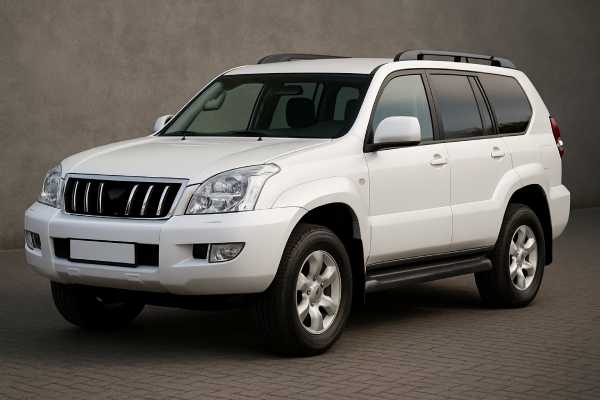
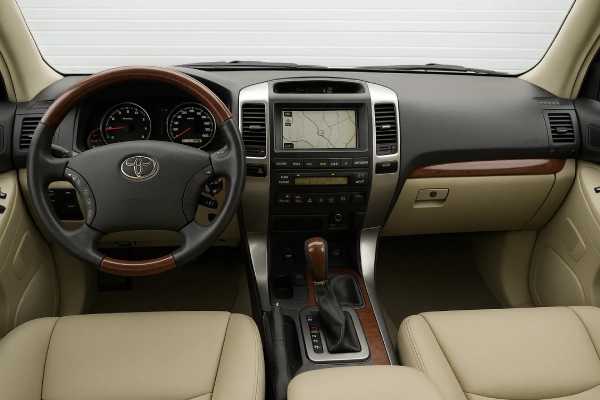
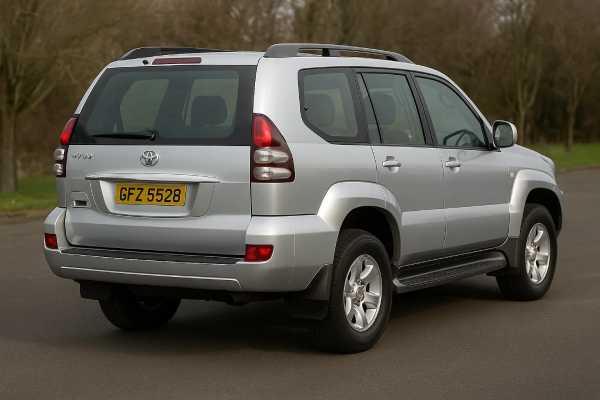
The 2007–2009 Toyota Land Cruiser KDJ125 (three-door “120 Series” short-wheelbase) pairs the proven 1KD-FTV 3.0-litre D-4D diesel with a compact body-on-frame chassis. The facelift brought a power lift to 173 hp (127 kW) and a broader torque plateau, plus trim and equipment updates that made the shorty Prado a useful dual-role machine: nimble in town, surprisingly refined on the motorway, and still a serious tool off-road. A full-time 4×4 system with a lockable centre differential and low range remains the backbone of its capability, while electronic helpers like A-TRC, VSC, HAC and DAC add confidence on loose surfaces and steep grades. Inside, the three-door body gets five seats, straightforward controls and hard-wearing materials. If you want a Land Cruiser that fits into tighter parking bays yet still tows, hauls and climbs like its bigger siblings, the KDJ125 is the sweet spot—provided you understand its diesel-specific maintenance needs and short-wheelbase compromises.
Fast Facts
- Strong ladder frame, low-range transfer case and centre diff lock deliver real off-road ability.
- 1KD-FTV diesel: 410 Nm (302 lb-ft) of torque from low rpm for towing and steep climbs.
- Short wheelbase improves breakover angle and manoeuvrability vs five-door models.
- Watch for diesel injector sealing and EGR/soot build-up; timing belt is a scheduled item.
- Oil and filter every 10,000 miles / 15,000 km or 12 months keeps the D-4D healthy.
Explore the sections
- KDJ125 in detail
- KDJ125 specs and data
- Trims, safety and assistance
- Reliability, issues and actions
- Maintenance and buyer’s guide
- Driving and real-world performance
- KDJ125 vs rivals
KDJ125 in detail
The KDJ125 is the three-door, short-wheelbase member of Toyota’s 120-series Land Cruiser family. Compared with the five-door, it trades some cargo volume and rear-seat access for a tighter turning circle, a shorter breakover span, and a more compact footprint in cities and on narrow trails. Underneath sits Toyota’s familiar ladder frame with independent double-wishbone front suspension and a robust four-link live rear axle. The full-time four-wheel-drive system uses a Torsen-type centre differential for on-road stability, plus a mechanical centre-diff lock and a two-speed transfer case for tough going. Downhill Assist Control (DAC) and Hill-start Assist Control (HAC) were offered with the automatic gearbox; A-TRC (active traction) and VSC (stability control) were available higher up the range.
Power comes from the 1KD-FTV 3.0-litre common-rail turbodiesel four-cylinder, upgraded in the facelift to 173 hp (127 kW) and a solid 410 Nm (302 lb-ft). A variable-nozzle turbo and intercooler provide strong low-rpm response, while the engine’s timing belt (not a chain) keeps mechanical noise in check. Buyers could choose a five-speed manual (R151F) or a five-speed automatic (A750F, “Super ECT”), both paired with a low-range transfer gear. The 3-door’s 2,455 mm (96.7 in) wheelbase keeps it agile; typical overall length is about 4,365–4,405 mm (171.9–173.4 in) depending on rear spare placement, with width and height around 1,875 mm (73.8 in) and 1,845–1,885 mm (72.6–74.2 in).
What sets the KDJ125 apart is its balance. It is genuinely capable—31° approach and 29–30° departure angles, around 24–25° breakover in typical European spec—yet quiet and stable on the motorway. The ladder frame isolates big bumps; the independent front end improves steering accuracy on tarmac; and the full-time 4×4 avoids the driveline wind-up of part-time systems on wet roads. Reliability is strong if serviced on time and with the right fluids. The main caveat is that the D-4D’s injector sealing and timing belt require attention at the specified intervals, and soot management (EGR/intake) benefits from periodic cleaning—especially for drivers who do short, cold trips.
KDJ125 specs and data
Engine and Performance (ICE)
| Item | Detail |
|---|---|
| Code | 1KD-FTV (D-4D) |
| Layout & valvetrain | Inline-4, DOHC, 16 valves |
| Bore × stroke | 96.0 × 103.0 mm (3.78 × 4.06 in) |
| Displacement | 3.0 L (2,982 cc) |
| Induction | Variable-nozzle turbocharger with intercooler |
| Fuel system | Common-rail direct injection (piezo/solenoid by year) |
| Compression ratio | ~17.9:1 |
| Max power | 173 hp (127 kW) @ 3,400 rpm |
| Max torque | 410 Nm (302 lb-ft) @ ~1,600–2,800 rpm |
| Timing drive | Belt (replace at scheduled interval) |
| Emissions / standard | Euro 4 era calibration (DPF uncommon on these years in Europe) |
| Rated consumption (combined) | ~9.0–9.1 L/100 km (26.1–25.9 mpg US / 31.4–32.1 mpg UK) depending on gearbox/body |
| Real-world highway @ 120 km/h | ~8.5–9.5 L/100 km (27.7–24.8 mpg US / 33.2–29.8 mpg UK), tyre and wind load sensitive |
Transmission and Driveline
| Item | Detail |
|---|---|
| Transmission | 5-speed manual (R151F) or 5-speed automatic (A750F “Super ECT”) |
| Gear ratios (5-MT) | 1st 4.313; 2nd 2.330; 3rd 1.436; 4th 1.000; 5th 0.838; Rev 4.220 |
| Transfer case (H/L) | High 1.000; Low ~2.566 |
| Final drive ratio (typical) | M/T ~4.100; A/T ~3.909 (some early diesel A/T listings show 4.300) |
| Drive type | Full-time 4×4 with Torsen centre differential |
| Locking functions | Centre diff lock standard; rear diff lock availability varies by grade/year |
| Refill time (fuel) | Approx. 5–7 min from low warning to full; diesel only |
Chassis and Dimensions (3-door SWB, typical EU facelift)
| Item | Detail |
|---|---|
| Front suspension | Independent double wishbone, coil springs, anti-roll bar |
| Rear suspension | Four-link live axle, coil springs; rear air suspension on select high trims |
| Steering | Rack-and-pinion, power assist; ratio ~15.6:1 |
| Brakes | Ventilated front discs ~338 mm (13.3 in); rear discs ~312 mm (12.3 in) |
| Wheels/tyres | 225/70 R17 (base), 265/65 R17 or 265/60 R18 (select trims/packages) |
| Ground clearance | ~207–222 mm (8.1–8.7 in), spec-dependent |
| Angles | Approach ~31–32°; departure ~29–30°; breakover ~24–25° |
| Length × width × height | ~4,365–4,405 × 1,875 × 1,845–1,885 mm (171.9–173.4 × 73.8 × 72.6–74.2 in) |
| Wheelbase | 2,455 mm (96.7 in) |
| Turning circle (kerb-to-kerb) | ~10.4 m (34.1 ft) |
| Kerb (curb) weight | ~1,840–2,010 kg (4,057–4,432 lb), trim/gearbox dependent |
| GVWR | ~2,600–2,700 kg (5,732–5,952 lb), trim dependent |
| Fuel tank | ~87 L (23.0 US gal / 19.1 UK gal) main tank |
| Cargo volume | ~403 L (14.2 ft³) seats up / ~1,150 L (40.6 ft³) seats folded (VDA) |
Performance and Capability
| Metric | Value |
|---|---|
| 0–100 km/h (0–62 mph) | ~11.5–12.7 s depending on gearbox/tyres |
| Top speed | ~165–170 km/h (102–106 mph) |
| Braking (100–0 km/h) | ~38–42 m (125–138 ft) with quality tyres |
| Towing capacity (braked) | Typically up to 2,800–3,000 kg (6,173–6,614 lb) where permitted |
| Towing (unbraked) | ~750 kg (1,653 lb) |
| Payload | ~550–650 kg (1,213–1,433 lb) build-dependent |
| Roof load | ~80 kg (176 lb) with approved bars |
Fluids and Service Capacities
(Always verify by VIN; values vary slightly by axle, cooler fitment and market.)
| System | Spec / Capacity (typical) |
|---|---|
| Engine oil | ACEA B4 / API CF-4 or better; 5W-30 (cold climates: 0W-30); ~7.5 L (7.9 US qt) with filter |
| Coolant | Toyota Super Long Life Coolant (premix 50/50); ~10–11 L (10.6–11.6 US qt) |
| Manual gearbox (R151F) | API GL-4/5 75W-90; ~3.2–3.7 L (3.4–3.9 US qt) |
| Automatic (A750F) | Toyota ATF WS; ~10–12 L (10.6–12.7 US qt) dry; 3–4 L typical drain |
| Transfer case | API GL-4/5 75W-90; ~1.4–1.6 L (1.5–1.7 US qt) |
| Front differential | API GL-5 75W-90; ~1.2–1.5 L (1.3–1.6 US qt) |
| Rear differential | API GL-5 75W-90; ~3.0 L (3.2 US qt) |
| A/C refrigerant | R134a; ~700–800 g (24.7–28.2 oz); ND-OIL8 ~120 mL (4.1 fl oz) |
| Key torque values | Wheel nuts ~131 Nm (97 lb-ft); engine drain plug ~39 Nm (29 lb-ft) |
Electrical
| Item | Detail |
|---|---|
| Alternator | ~100–130 A, trim and cold-spec dependent |
| 12V battery | ~70–90 Ah (CCA varies); DIN/JIS form factors common for EU diesel |
| Glow plugs | Ceramic/steel type, ECU-controlled after-glow (diesel; no spark plugs) |
Safety and Driver Assistance
| Item | Detail |
|---|---|
| Crash ratings | No Euro NCAP star rating published for the 120 Series in this era; ANCAP tested early 120s (comparable design) at 4 stars under period protocols |
| Headlights | Halogen reflectors standard; projector/leveling by trim; no IIHS rating (EU model) |
| Passive safety | Front, side and curtain airbags (availability by trim/year); three-point belts for all seats; ISOFIX/LATCH points for child seats |
| Active safety | ABS with EBD and Brake Assist standard; VSC stability control and A-TRC traction assistance on mid/high trims; DAC/HAC on A/T; tyre pressure monitoring uncommon |
Trims, safety and assistance
European grades (typical United Kingdom examples; naming and content can vary by market and year)
- LC3 (entry) – Cloth trim; manual A/C; 225/70 R17 tyres; basic audio; full-time 4×4 with centre diff lock and low range; ABS/EBD/BA. Rear diff lock often available/standard on earlier packages; later years moved to electronic A-TRC focus.
- LC4 (mid) – Adds alloy wheels, climate control, multi-function display, power seats (by year), curtain airbags, and VSC/A-TRC. Some cars paired with A750F auto to enable DAC/HAC.
- LC5 (high) – Leather, navigation/EMV touchscreen (period), height-adjustable rear air suspension with TEMS adaptive damping, power folding mirrors, and more sound insulation.
- Invincible (special edition, late run) – Cosmetic and equipment uplift on top trims; often includes larger wheels/tyres, styling tweaks, and comprehensive safety/comfort kit.
Mechanical and functional differences to note
- Suspension: LC5 (and some top-spec specials) use rear air springs with TEMS. Great for load-levelling and ride, but budget for aging air bags/height sensors and ensure the compressor is quiet and dry. LC3/LC4 typically use steel coils all round—simpler and tougher for remote travel.
- Differentials: Early lower trims more commonly had a rear diff lock; higher trims tend to rely on A-TRC. For green-laning, a purely mechanical locker is still valuable; for mixed road use, A-TRC is excellent and integrates with VSC.
- Towing: Factory tow packages may include a cooler, pre-wiring and revised nose-weight rating. Verify towbar type-approval plate and any gearbox cooler fitment on automatics.
- Wheels/Tyres: 225-wide 17-inch tyres reduce unsprung mass and improve ride; 265-wide tyres look tougher and help flotation but can raise consumption and road noise.
- Seats: Three-door is usually five-seat only; check for split-fold function and cargo tie-downs if you carry kit.
Safety ratings snapshot
A direct Euro NCAP result for the 120-series Land Cruiser isn’t published. A comparable 120-series was tested by ANCAP under period protocols with a four-star outcome, reflecting a strong structure for its time, multiple airbags and modern braking aids. Head restraints, belt reminders and pedestrian protection were to 2000s standards, not today’s. If child seats are part of your use case, verify ISOFIX anchor presence and location for your specific build.
ADAS and calibration implications
- A-TRC/VSC: Wheel-speed and yaw sensors require proper tyre sizing and even tread depths. After steering or suspension work, centre the steering angle sensor via alignment.
- DAC/HAC: DAC (downhill control) engages in low range and very low speed; noisy ABS pulsing is normal. After ABS/ESP service, follow bleed procedures that include the pump.
- Headlamp levelling (where fitted): Height-sensor arms can seize; lubricate lightly and protect wiring when off-roading.
Reliability, issues and actions
At a glance
- Engine and fuel system (common): 1KD-FTV is durable, but injector copper washers can leak exhaust gases into the oil (“black death”), causing rough idle and carbon build-up at the injector seats. Symptoms: chuffing sound, diesel smell in cabin, tar around injector base, rising oil level. Remedy: replace injectors or at least seal/washers with the latest spec and clean the seats; change engine oil. Inspect every 60,000 miles / 100,000 km or earlier if symptoms appear.
- Suction Control Valve (SCV) on the Denso pump can stick. Symptoms: hard starting, surging/hunting at light throttle, limp-home codes. Remedy: replace SCV; verify rail pressure and fuel filter condition.
- EGR and intake soot: Short, cold trips lead to intake fouling and sticky EGR valves. Symptoms: hesitation off-idle, poor economy, smoke under load. Remedy: clean EGR/intake, refresh gaskets, use quality low-ash oil and run the truck long enough to get fully hot weekly.
Timing and cooling (age-based)
- Timing belt: The 1KD uses a belt, not a chain. Replace the timing belt, idler/tensioner and water pump at 90,000 miles / 150,000 km or 9 years (whichever comes first). A squeak at idle, belt cracks, or coolant traces near the pump are replacement triggers.
- Radiator and hoses: Age and corrosion can clog cores. If temps creep on climbs or while towing, pressure-test, inspect fins and replace cap/thermostat. Use Toyota SLLC and bleed carefully to avoid airlocks.
Lubrication and driveline (usage-based)
- Automatic (A750F): Sensitive to dirty fluid under towing or urban heat. Symptoms: flare on 2–3 shift, torque-converter shudder at ~60–80 km/h. Remedy: staged drains with Toyota ATF WS, check for cooler flow, update shift adaptives after repairs.
- Manual (R151F): Notchy second-gear cold shifts are common; correct 75W-90 GL-4/5 helps.
- Transfer/centre diff actuator: Water ingress or inactivity can stick actuators. Symptoms: flashing 4×4 lights, no mode change. Remedy: exercise the system monthly; dry and reseal connectors; replace actuator if seized.
- Wheel bearings and lower arms: High unsprung loads off-road or with oversized tyres can accelerate wear. Symptoms: humming that changes with steering, wandering alignment. Remedy: quality bearings, torque with preload spec; inspect lower arm bushings/ball joints.
Chassis and body
- Corrosion hotspots: Rear chassis rails around the fuel tank mounts, inner rear arches, body seam under tailgate, and spare-wheel carrier on tailgate. Action: annual wash-through of box sections; cavity wax inside rails; touch up stone chips promptly.
- Rear air suspension (if fitted): Symptoms: rear-end sag overnight, compressor running frequently, height-control warning. Remedy: soap-test air bags, check height sensors and lines; replace aged bags in pairs.
Software/ECU updates
Period flash updates addressed fuelling calibration and idle smoothness on some trucks, improving hot starts and tip-in response. If you have surging or a rough idle with no mechanical fault found, ask a dealer to check for the latest engine ECU calibration by VIN.
Recalls and field actions
- Airbag inflator campaigns (Takata family): Many 120-series trucks were included by VIN. Always run a VIN recall check before purchase and insist on written proof of completion.
- Other market-specific campaigns may cover fuel leak inspection or seat belt anchors. Use the official recall checker and keep dealer paperwork with the service file.
Pre-purchase checklist
- Cold start from stone cold; listen for injector seal chuffing, watch for smoke.
- Inspect timing belt sticker and invoices; walk away if there’s no proof.
- Check 4×4 system: engage centre diff lock and low range on a loose surface; confirm no warning lights.
- Look underneath: frame rails, rear cross-member, body seams near tailgate.
- Drive it: straight-line stability at 100–120 km/h, brake feel (no pull), and A/T shift quality under light and heavy throttle.
- Rear air suspension: look for height asymmetry, check compressor noise and ride.
- Towing setup: inspect cooler plumbing and towbar approval plate; check for wiring bodges.
Maintenance and buyer’s guide
Practical maintenance schedule (typical EU guidance; adjust for severe use and VIN details)
- Engine oil + filter: Every 10,000 miles / 15,000 km or 12 months. Use quality low-SAPs oil meeting ACEA B4 (or newer C3 where specified).
- Fuel filter: Every 20,000–30,000 miles / 30,000–50,000 km or sooner if water contamination lamp shows; always prime properly after replacement.
- Air filters: Engine air every 30,000 miles / 48,000 km (inspect earlier in dusty use); cabin filter every 12 months.
- Timing belt kit: Every 90,000 miles / 150,000 km or 9 years, including idlers/tensioner and water pump.
- Coolant (Toyota SLLC): Typically 10 years/100,000 miles (160,000 km) initial, then every 5 years/50,000 miles (80,000 km).
- Manual gearbox oil (R151F): 60,000 miles / 100,000 km; sooner if heavy towing or water crossings.
- Automatic ATF (A750F): Not always listed as a routine item, but a 40,000–60,000 mile / 64,000–96,000 km drain-and-fill is sensible in mixed or tow use.
- Transfer case and differentials: 60,000 miles / 100,000 km; inspect breathers and seals.
- Brake fluid: Every 2 years; bleed with ABS pump routine when required.
- Brake inspection: Pads/rotors and caliper slide pins every 10,000 miles / 15,000 km.
- Serpentine/aux belt: Inspect annually; replace on cracks/glazing or at 60,000 miles / 100,000 km.
- Suspension and alignment: Inspect ball joints, bushings and shocks annually; align after any tyre or steering work.
- Tyres: Rotate 6,000–8,000 miles / 10,000–12,000 km; keep OE load/speed ratings for stability.
- 12 V battery: Test annually after year 4; replace proactively at 5–6 years in cold climates.
Fluid quick-reference
- Engine oil: 5W-30 ACEA B4/C3; ~7.5 L.
- Coolant: Toyota SLLC premix; ~10–11 L.
- A/T: Toyota ATF WS; staged drains avoid shock.
- Gear oils: 75W-90 GL-4/5 for manual/transfer/diffs unless otherwise specified by axle code.
- Torque essentials: wheel nuts 131 Nm (97 lb-ft); engine drain ~39 Nm (29 lb-ft); diff drain/fill typically ~49–59 Nm (36–44 lb-ft) (verify per axle).
Buyer’s guide highlights
- Best years/spec: Late facelift (2008–2009) with 173 hp calibration, documented timing-belt service, and tidy chassis are the sweet spot. Coils at the rear (vs air) are simpler for remote travel.
- What to avoid: Missing belt history, injector tar around the rocker cover, flashing 4×4 lights (actuator issue), and heavy frame corrosion near the rear cross-member.
- Reconditioning list (typical at 15 years): tyres, shocks and bushings; radiator; glow plugs; fuel hoses; brake lines and caliper rebuild; prop-shaft greasing; steering rack boots.
- Durability outlook: With belt/injector work done on time, these engines commonly exceed 200,000–300,000 miles (320,000–480,000 km). Frames stay sound if washed and waxed; electronics are simple and repairable.
Driving and real-world performance
Ride, handling and noise
The short-wheelbase KDJ125 feels planted at motorway speeds, with the ladder frame and long-travel suspension muting potholes and sharp edges. Compared with the five-door, there’s a touch more pitch on undulating roads, but body control is tidy if shocks and bushings are healthy. Steering is light at parking speeds and gains reassuring weight on the move; the ratio (around 15.6:1) provides predictable responses without nervousness. Cabin noise is low for a body-on-frame SUV of its era: tyre roar dominates on coarse asphalt; the D-4D hums quietly at 2,000–2,200 rpm in top.
Powertrain character
The 1KD-FTV delivers its best work below 3,000 rpm. A small pause off idle gives way to strong, even pull from ~1,600 rpm to the mid-range, ideal for towing and gravel climbs. The R151F manual has a genuinely short first gear for low-speed control; the A750F automatic suits mixed driving and DAC/HAC operation off-road, with well-spaced ratios and decisive kickdown. In low range the throttle is easy to modulate, and A-TRC brakes a spinning wheel smoothly before it gathers speed—less drama than a traditional locker, though slower in deep cross-axle ruts.
Efficiency in the real world
Expect 8.5–9.5 L/100 km (27.7–24.8 mpg US / 33.2–29.8 mpg UK) at a steady 120 km/h (75 mph) with stock tyres and modest roof load. Mixed use typically lands around 9.5–10.5 L/100 km (24.8–22.4 mpg US / 29.8–26.9 mpg UK). Urban short trips in cold weather can push consumption into the 11–12 L/100 km range until everything warms up. All-terrain tyres and roof racks add 0.5–1.0 L/100 km, and towing a 2,000 kg caravan can increase fuel use by 35–50% depending on speed and wind.
Key performance metrics
In healthy tune, a manual KDJ125 covers 0–100 km/h in ~12 s; autos are similar thanks to torque multiplication. Emergency braking from 100 km/h in ~38–42 m is achievable on quality tyres. The short wheelbase provides excellent breakover clearance (~24–25°) and quick U-turns (~10.4 m kerb-to-kerb)—handy in towns and on forestry spurs.
Load and towing
With the correct tow equipment and cooling, the KDJ125 comfortably tows up to ~2,800–3,000 kg (market permitting). Stability is good at 80–90 km/h if nose weight is set correctly and tyres are at tow pressures. Plan for a 25–50% fuel-use penalty and downshift early on long motorway grades to keep EGTs and ATF temps in check.
KDJ125 vs rivals
Mitsubishi Pajero/Montero three-door (Gen 3/4)
The closest like-for-like rival. The Pajero’s integrated monocoque-with-ladder subframe keeps curb weight competitive and rides a bit flatter on tarmac. Super-Select 4WD II allows 2H on the highway to trim fuel use. Off-road, the Toyota’s low-range gearing, torque delivery and electronic traction feel at least as capable, while long-term parts support and global dealer coverage favour the Land Cruiser. The Pajero’s 3.2 DI-D is strong but can be fussier about injectors/DPFs in later years.
Land Rover Discovery 3 (LR3) three-row (five-door)
Not a direct three-door rival but a frequent cross-shop. The Disco’s air suspension and terrain response make it graceful over broken ground and very comfortable on motorways. However, ownership costs can be higher with age: air/comp system, EGRs, crank and electrical gremlins are well known. If you need seven seats and plush ride quality, a top-condition LR3 is appealing; if you prize reliability and easier DIY service, the KDJ125 wins.
Nissan Pathfinder (R51)
A roomier five-door SUV with part-time 4WD/All-Mode systems. The 2.5 dCi offers decent pull and later trucks gained more refinements, but timing chain and radiator-to-ATF cooler issues hurt the Pathfinder’s reputation. The Toyota’s cabin feels simpler yet more durable, and its full-time 4×4 is reassuring on wet tarmac.
Jeep Wrangler (JK, 2-door)
Another short-wheelbase contender. The Wrangler is more configurable (removable top/doors, aftermarket support) and offers solid axles both ends with big articulation. For rock crawling, a Rubicon spec wins. For daily mixed use and long-haul trips, the Toyota’s road manners, diesel range, and overall refinement make it easier to live with.
Bottom line
If you want a short, tough diesel 4×4 that can commute, tour and tackle technical tracks with minimal drama—and you value long-term parts support—the KDJ125 remains a standout. It is less plush than some rivals and demands timely injector/belt care, but the fundamentals are exceptionally sound.
References
- Land Cruiser (120 Series, 2003–2009) 2023 (Model Archive)
- Superhero Status For New Toyota Land Cruiser Invincible 2006 (Press Release)
- Revised Engines For Toyota Land Cruiser 2006 (Press Release)
- Check if a vehicle, part or accessory has been recalled 2024 (Recall Database)
- LandCruiser Prado 120 Series Service & Repair Manual (May 02 – Aug 09) 2013 (Service Manual)
Disclaimer
This guide is for informational purposes and does not replace professional diagnosis or repair. Specifications, torque values, fluid types, intervals and procedures vary by VIN, model year, market and equipment. Always verify details in your vehicle’s official service documentation and follow manufacturer instructions. If you found this helpful, please share it with fellow owners on Facebook or X/Twitter to support xcar’s work.