
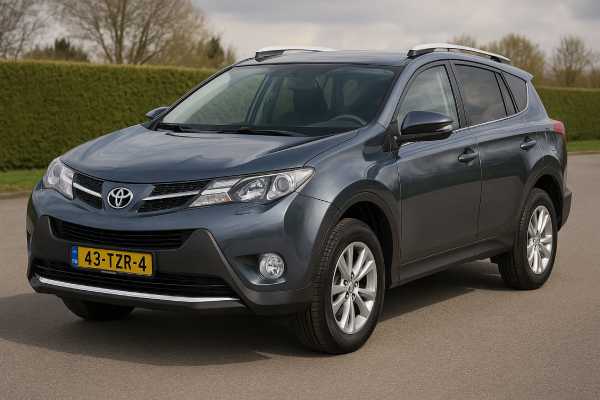
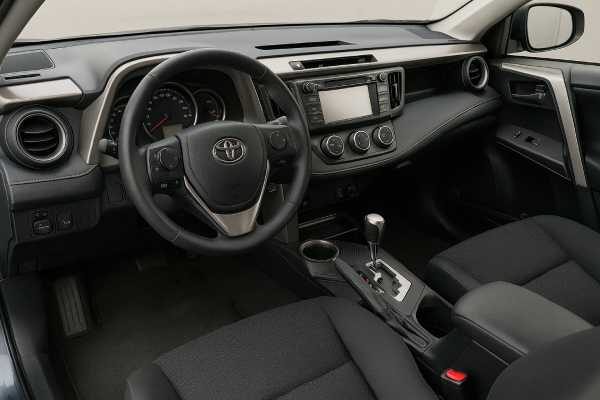

The fourth-generation Toyota RAV4 (XA40, 2013–2015 pre-facelift) is the moment the compact SUV grew up: a longer wheelbase, more practical cargo bay, improved ride comfort, and a calmer cabin than the XA30. Many buyers look for a “2.2 D-CAT 177 hp” AWD; here’s the key market clarification up front. In Western and Central Europe for 2013–2015, the AWD diesel actually sold in the RAV4 was the 2AD-FTV (2.2 D-4D) rated at ~150 hp, paired to a 6-speed manual or a 6-speed automatic. Listings that show 2AD-FHV (177 hp) usually refer to the earlier XA30 (2006–2012) or are mislabelled. Because the rest of the vehicle (chassis, safety, packaging) is identical across engines, this guide focuses on the XA40 AWD diesel configuration owners actually encounter—while flagging where a 177-hp claim can mislead. Expect robust long-term durability if maintained, excellent winter traction from Toyota’s Dynamic Torque Control AWD, and running costs governed mostly by DPF/EGR cleanliness and quality diesel service habits.
Owner Snapshot
- Confident traction: Dynamic Torque Control AWD with predictable, safe handling on wet, snow, and gravel.
- Big-car practicality: flat load floor, wide tailgate opening, and real five-adult space for the class.
- Proven longevity: chain-driven 2.2 D-4D (post-2010 updates) with sturdy 6-MT/6-AT when serviced on time.
- Watch-item: DPF and EGR soot buildup in heavy city use; plan periodic motorway runs and quality oil.
- Typical service rhythm: engine oil and filter every 10,000–15,000 km (6,000–9,000 miles) or 12 months.
Explore the sections
- XA40 RAV4 2.2 Diesel Overview
- RAV4 XA40 Specs and Data
- RAV4 Trims, Options and Safety
- Reliability and Service Actions
- Maintenance and Buyer’s Guide
- Driving and Real-World Performance
- RAV4 Versus Key Rivals
XA40 RAV4 2.2 Diesel Overview
The 2013 model year ushered in a cleaner, more spacious RAV4 with a longer 2,660 mm (104.7 in) wheelbase, a large, square cargo aperture, and—crucially for winter regions—Toyota’s electronically managed Dynamic Torque Control AWD. This on-demand system pre-emptively shifts torque rearward on throttle and proactively stabilizes the car in a corner, then reverts to efficient front-drive when cruising. It’s transparent in daily use and pairs well with the chassis tuning that favors stability and low fatigue.
Engine choice is the part many shoppers misunderstand. The catalogue mix for Europe in 2013–2015 centered on a 2.0 D-4D (1AD-FTV) FWD and a 2.2 D-4D (2AD-FTV) AWD around 148–150 hp, with a 6-speed manual as the volume gearbox and a strong 6-speed automatic also available on the 2.2. Earlier-generation marketing of a “2.2 D-CAT 177 hp” (2AD-FHV) lives on in classifieds and forum chatter, but it belongs to the prior XA30 era. If a dealer claims 177 hp in a 2013–2015 RAV4 XA40, ask for the VIN and build sheet; the VIN engine code and EU Certificate of Conformity will show the true variant.
In cabin use, XA40 stepped up perceived quality with better sound suppression and more supportive seats for long trips. The rear bench folds to a flat load floor and accommodates two ISOFIX child seats without drama. Infotainment evolved over the run—earlier cars often have Toyota Touch with navigation available; later 2015 cars have better camera resolution and expanded connectivity. Safety performance is a strong point, with a five-star Euro NCAP rating and standard stability control and seven airbags across the range, with lane departure alert and blind spot monitoring available on upper trims or option packs in many markets.
For ownership, the diesel AWD RAV4 rewards regular oil quality, DPF-friendly driving patterns, and sticking to the cooling and drivetrain fluid intervals. The chain-driven 2AD family benefited from mid-cycle engineering updates before the XA40 launched; these largely resolved early head-gasket concerns seen in pre-2010 cars. What remains are the expected wear points in high-mileage diesels—EGR/DPF soot management, dual-mass flywheel on manuals, and occasional water pump seepage—addressable with timely service and good fuel.
RAV4 XA40 Specs and Data
Availability note: Figures below reflect the 2013–2015 European-market XA40 RAV4 AWD diesel most owners will find (2AD-FTV ~150 hp). Where you see 177-hp claims for 2013–2015, they typically reference the prior generation; verify via VIN if in doubt.
Engine and Performance (ICE)
| Item | Value |
|---|---|
| Code | 2AD-FTV (D-4D common-rail) |
| Layout & cylinders | Inline-4, DOHC, 16 valves |
| Bore × stroke | 86.0 × 96.0 mm (3.39 × 3.78 in) |
| Displacement | 2.2 L (2,231 cc) |
| Induction | Variable-geometry turbocharger with intercooler |
| Fuel system | High-pressure common-rail direct injection |
| Compression ratio | ~15.8:1 |
| Max power | ~148–150 hp (110 kW) @ ~3,600 rpm |
| Max torque | ~340–360 Nm (251–266 lb-ft) @ ~2,000 rpm (variant/gearbox dependent) |
| Timing drive | Chain |
| Emissions standard | Euro 5 (period spec) |
| Rated economy (combined) | ~5.7–6.0 L/100 km (41–39 mpg US / 49–47 mpg UK) |
| Real-world highway @ 120 km/h | ~6.5–7.2 L/100 km (36–33 mpg US / 43–40 mpg UK) |
| Aerodynamics | Cd ~0.33–0.34 (typical for spec), frontal area ~2.3 m² (24.8 ft²) |
Transmission and Driveline
| Item | Value |
|---|---|
| Transmission | 6-speed manual (EC6x family) or 6-speed automatic (conventional torque-converter 6-AT) |
| Drive type | AWD (Dynamic Torque Control) with electromagnetic rear-coupling |
| Differential | Open front/rear; brake-based torque vectoring (VSC/TRC) |
| Final drive ratio | ~3.9–4.4 (varies by gearbox; confirm by VIN/build plate) |
| Lock function | Driver-selectable AWD LOCK (low-speed torque fix to ~50:50, speed-limited) |
Chassis and Dimensions
| Item | Value |
|---|---|
| Platform | XA40 |
| Suspension (front/rear) | MacPherson strut / double-wishbone |
| Steering | Electric power steering (EPS) |
| Brakes | Ventilated front discs, solid rear discs |
| Wheels/Tires (typical) | 225/65 R17 or 235/55 R18 |
| Ground clearance | ~160–170 mm (6.3–6.7 in), market dependent |
| Length / Width / Height | ~4,570 mm / 1,845 mm / 1,660–1,670 mm (179.9 / 72.6 / 65.4–65.7 in) |
| Wheelbase | 2,660 mm (104.7 in) |
| Turning circle (kerb-to-kerb) | ~10.6–10.8 m (34.8–35.4 ft) |
| Curb weight | ~1,600–1,700 kg (3,527–3,748 lb), trim/gearbox dependent |
| GVWR | ~2,200–2,260 kg (4,850–4,982 lb) |
| Fuel tank | ~60 L (15.9 US gal / 13.2 UK gal) |
| Cargo volume (VDA) | ~547 L seats up / ~1,746 L seats folded (19.3 / 61.7 ft³) |
Performance and Capability
| Item | Value |
|---|---|
| 0–100 km/h (0–62 mph) | ~9.6–10.2 s (typical for 2.2D AWD, MT vs AT) |
| Top speed | ~190–195 km/h (118–121 mph) |
| Braking 100–0 km/h | ~38–40 m (125–131 ft), tire dependent |
| Towing (braked) | ~1,800 kg (3,968 lb) typical; check VIN |
| Towing (unbraked) | ~750 kg (1,653 lb) |
| Payload | ~500–600 kg (1,102–1,323 lb) |
| Roof load | Typically 75 kg (165 lb) with OEM rails/bars |
Fluids and Service Capacities
| System | Specification and Capacity (typical) |
|---|---|
| Engine oil | ACEA C2/C3 low-SAPS, 0W-30/5W-30; ~5.9 L (6.2 US qt) incl. filter |
| Coolant | Toyota Super Long Life Coolant (pink), premix 50/50; ~7–8 L (7.4–8.5 US qt) total system |
| Manual transmission | API GL-4/GL-5 (per gearbox spec); ~2.2–2.5 L (2.3–2.6 US qt) |
| Automatic transmission | Toyota WS ATF; service fill ~3.5–4.5 L (3.7–4.8 US qt), dry fill higher |
| Rear differential | API GL-5 75W-85/90; ~0.8–1.0 L (0.85–1.06 US qt) |
| Center coupling | Sealed unit (no routine service unless specified by TSB) |
| A/C refrigerant | R-134a; ~450–550 g (15.9–19.4 oz) typical |
| A/C compressor oil | ND-Oil 8 equivalent; ~120–150 mL (4.1–5.1 fl oz) |
| Key torque examples | Wheel nuts 103 Nm (76 lb-ft); oil drain plug ~39 Nm (29 lb-ft) |
Capacities vary by VIN, model year, and gearbox; always confirm with the specific vehicle’s service documentation.
Electrical
| Item | Value |
|---|---|
| Alternator | ~120 A |
| 12V battery | 70–80 Ah (DIN H5/H6 form factors common) |
| Glow plugs | Ceramic/metal type per 2AD spec (no spark plugs on diesel) |
Safety and Driver Assistance
| Item | Detail |
|---|---|
| Crash rating (Euro NCAP) | 5 stars; Adult ~89%, Child ~82%, Pedestrian ~66%, Safety Assist ~66% |
| Headlight performance | Halogen projectors adequate; HID/LED where fitted improve cutoff |
| ADAS availability | VSC/TRC and 7 airbags standard; Lane Departure Alert, Blind Spot Monitor, Rear Cross-Traffic Alert, camera and parking sensors available by trim/pack; AEB generally not fitted pre-facelift |
RAV4 Trims, Options and Safety
Trims and options (typical European mix 2013–2015). Naming varies by country, but the equipment logic is consistent:
- Entry (Active/Live/Comfort): 17-inch wheels, manual A/C or simple climate, Toyota Touch audio with USB/Bluetooth, rear bench split/fold, VSC/TRC, seven airbags, ISOFIX, keyless entry. 2.2D AWD often standard with 6-MT.
- Mid (Icon/Active+/Style): Dual-zone climate, camera, privacy glass, 17–18-inch alloys, front fogs, upgraded display. Options include navigation, roof rails, power tailgate (market dependent).
- High (Invincible/Lounge/Platinum): 18-inch wheels, leather/Alcantara mixes, power driver seat, heated seats, keyless start, premium audio, blind spot monitoring and lane departure alert more widely available. 6-AT commonly paired here with the 2.2D AWD.
Quick identifiers.
Look for the VIN engine code (2AD) on the build label, the AWD LOCK button by the shifter, and the load floor leveler tabs in the cargo bay on higher trims. The pre-facelift XA40 has a cleaner, slim-lamp rear and interior with the “swoop” dash; the 2016 facelift adds LED lamp signatures and updated infotainment graphics.
Mechanical/functional differences by trim.
Suspension and brakes are broadly common; wheel/tire packages are the main dynamic change. 18-inch 235/55R18 tires sharpen turn-in but increase impact harshness and braking distance variability on rough tarmac. Towing kit preparation and trailer stability logic were optional in some markets; verify the towbar wiring module and cooling package if heavy towing is planned.
Year-to-year highlights.
2013 launch cars set the baseline. For 2014, infotainment features and camera image quality improve in many countries. By 2015, option bundling shifts (more cars with navigation/camera and winter packs). Autonomous emergency braking (AEB) only becomes commonplace on the facelift (2016-on).
Safety ratings—what they mean in practice.
Euro NCAP’s five-star score reflects a strong passive structure and reliable VSC/TRC behavior. Pedestrian scores were average for the time; later facelifts and rivals improve bonnet energy absorption. In winter, ABS/VSC calibration on the RAV4 is conservative—expect early intervention on ice, which is good for family safety and predictable for new drivers.
Child seats and cargo.
Two ISOFIX positions with top tether anchors are easy to access, and the seat base angle works well with rear-facing shells. The wide tailgate and low liftover (for an SUV) make stroller loading simple. With seats folded, the floor is flat and long enough for DIY store runs; add a rubber liner if you often carry messy cargo.
Reliability and Service Actions
Overall outlook (2013–2015 XA40 2.2D AWD): Solid. By this generation, Toyota had incorporated significant updates to the 2AD diesel line, greatly reducing early-run head-gasket and head-bolt issues associated with some 2006–2009 units. High-mileage maintenance, not inherent defects, dominates owner experience.
Common (plan/budget for these):
- EGR/DPF soot accumulation (city use, short trips):
Symptoms: rough idle, P0400-series EGR flow codes, frequent regenerations, rising oil level.
Cause: soot/ash buildup from short heat cycles and low-speed duty.
Remedy: EGR/throttle body cleaning, DPF backpressure assessment; encourage weekly 15–20 minute motorway runs; keep ACEA C2/C3 oil. - Dual-Mass Flywheel (manuals, towing/urban stop-start):
Symptoms: rattle at idle/clutch bite, vibration on take-off.
Remedy: DMF and clutch kit replacement; check rear main seal and release bearing; reprogram clutch-learn where applicable. - Water pump weep (gradual seep at 100–150k km):
Symptoms: pink residue, slow coolant loss.
Remedy: pump replacement with updated part; renew coolant.
Occasional (watch during inspections):
- Turbo actuator or boost control issues:
Symptoms: limp mode, underboost/overboost codes.
Remedy: wastegate/VNT mechanism free-off and recalibrate; check vacuum lines and MAP soot film. - Rear wheel bearings (high mileage, heavy winters):
Symptoms: humming that rises with speed.
Remedy: hub/bearing replacement; retorque axle nut to spec; recheck ABS tone rings. - AWD coupling fluid aging or control issues:
Symptoms: binding/rumbling in tight turns, delayed rear engagement.
Remedy: inspect coupling; software check; replace unit if seal failure; ensure tire diameters match across an axle (and ideally all four).
Rare (post-2010 engines):
- Head gasket/head bolt stretch:
Symptoms: pressurized cooling system from cold, unexplained coolant loss, misfire on cold start.
Remedy: leak-down test; if confirmed, updated gasket/bolts and head skim by a specialist. Incidence markedly lower on late 2ADs but still possible on very high mileage.
Software and calibrations.
ECU updates exist for driveability (idle stability during DPF regen, fan logic, glow timing) and, for automatics, TCM shift feel. After any sensor replacements (MAF, MAP, EGR valve), perform learned-value resets with a capable scan tool.
Recalls and service campaigns (headline examples, verify by VIN):
- Rear seat belt mount robustness (select markets/years): reinforcement or component update to ensure belt integrity in severe rear impacts.
- Power seat wiring or airbag connectors (model/market dependent): inspection and routing.
Always check the official VIN portal in your country and retain dealer proof of completion.
Pre-purchase checks to request:
- Full service history with oil changes ≤15,000 km / 12 months.
- DPF load %, ash accumulation, and a clean EGR path.
- Evidence of coolant service and a dry water pump.
- Smooth AWD coupling behavior in tight car-park circles (both directions).
- For manuals: quiet DMF and clean clutch engagement; for automatics: crisp 2–3/3–4 shifts hot.
- Tires as a matched set with even wear (important for AWD clutch life).
Maintenance and Buyer’s Guide
Practical service schedule (typical European practice; confirm for your VIN):
- Engine oil + filter: every 10,000–15,000 km (6,000–9,000 miles) or 12 months (ACEA C2/C3 low-SAPS, quality diesel-rated oil).
- Engine air filter: inspect 15,000 km; replace ~30,000 km; sooner in dusty regions.
- Cabin filter: every 15,000–20,000 km or 12 months.
- Fuel filter: ~40,000–60,000 km (sooner if poor fuel quality).
- Coolant (SLLC pink): ~100,000–160,000 km or 5–7 years initial; then every 3–4 years.
- Manual gearbox oil: inspect 60,000–90,000 km; replace by 120,000–150,000 km if shifting feel fades.
- Automatic (6-AT) ATF (Toyota WS): drain/fill or exchange at 60,000–90,000 km if mixed city/towing; sooner with heat use.
- Rear differential oil: 60,000–90,000 km.
- Brake fluid: every 2 years; test for moisture annually.
- Serpentine belt: inspect 60,000 km; replace if cracked/noisy; check idlers.
- Glow plugs: test at 120,000–150,000 km; replace if cold starts degrade.
- 12V battery test: annually after year 4; many last 5–7 years.
- Alignment/rotation: rotate every 10,000–15,000 km; align annually or after pothole strikes.
- DPF health: allow periodic motorway runs (15–20 min at >2,000 rpm) to sustain passive regens; monitor soot/ash with a scan tool on high-mileage cars.
Fluid specifications (decision-grade):
- Engine oil: ACEA C2/C3 0W-30/5W-30 meeting Toyota approval for DPF-equipped diesels.
- Coolant: Toyota Super Long Life Coolant (premixed) pink.
- ATF: Toyota WS (World Standard).
- Gear/Diff oils: API GL-5 75W-85/90 as specified per axle/gearbox.
Essential torques (typical):
- Wheel nuts 103 Nm (76 lb-ft).
- Engine oil drain plug ~39 Nm (29 lb-ft).
- Front caliper slider pins ~25–35 Nm (18–26 lb-ft) (check exact caliper design).
Buyer’s checklist—what to look for:
- Corrosion hotspots: rear subframe mounts and exhaust hangers in salt regions; tailgate lower seam.
- Cooling system: dry water pump, no pink crust; stable coolant level.
- Driveline slack/noise: quiet prop shaft joints; smooth AWD coupling in both lock-to-lock circles.
- Electrics: clean DPF warning history; no recurring glow or swirl-flap codes.
- Interior wear: seat bolsters and steering wheel condition often mirror mileage honesty.
- Service proof: stamped books or digital records; DPF/EGT sensor replacements noted.
Best years/specs to target:
Well-optioned 2014–2015 cars with the 2.2D AWD and 6-AT suit mixed urban/highway use and light towing; manuals are fine for motorway commuters who prefer lower running costs (no ATF service, but monitor the DMF). Seek cars with documented EGR/DPF cleaning and fresh drivetrain fluids.
Durability outlook:
With sensible intervals and occasional long runs to keep the DPF happy, the XA40 diesel AWD is easily a 300,000+ km platform. The suspension is sturdy, the body resists rust well with basic care, and parts availability is excellent.
Driving and Real-World Performance
Ride and handling, NVH.
Toyota tuned the XA40 to feel planted first and playful second. The longer wheelbase improves straight-line calm at 120–130 km/h, and wind noise is modest for a tall vehicle. On 17-inch tires the ride is supple; 18s add precision but transmit more sharp-edge thumps. Body roll is well-checked, and stability control steps in early on slick roads—conservative, but confidence-building for families.
Powertrain character.
The 2.2 D-4D’s best work is between 1,800–3,500 rpm. Off-boost response is adequate; once the VNT turbo is lit, the car moves smartly. Manuals have a slightly notchy 1–2 when cold; by 5–10 minutes it loosens up. The 6-AT is smooth and decisive; light throttle upshifts aim for economy, and kickdown is prompt for overtakes. Engine noise is well-muffled; you’ll hear a mild diesel thrum under load but little drone at cruise.
Real-world economy.
Owners who run mostly motorway at 110–120 km/h see 6.5–7.2 L/100 km (36–33 mpg US / 43–40 mpg UK). Urban commuters trend 7.5–8.5 L/100 km depending on trip length and DPF activity. Winter consumption rises ~10–15% with snow tires and cold starts. Clean EGR paths and fresh air filters keep the regen frequency down and economy steady.
Key metrics worth knowing.
- 0–100 km/h: around 10 s in common AWD specs; the automatic is a touch slower off the line, then evens out.
- 50–80 mph (80–130 km/h) passing: strong midrange; plan one downshift in the auto, or a clean 5th-gear pull in the manual.
- Braking confidence: consistent, especially on the 17-inch package; choose quality tires for shortest stops.
- Towing manners: up to 1,800 kg braked with the correct equipment; stability control’s trailer logic helps if fitted. Expect +15–25% consumption towing a 1,300–1,500 kg caravan at motorway speeds.
Traction and control.
AWD engages seamlessly and can be locked at low speeds on steep or snowy driveways. There’s no low range—this is an all-road, not a rock-crawler—but snow mode and sensible tires go a very long way. ESC is calibrated to keep the tail tidy; lift-off rotation is minimal and quickly caught.
RAV4 Versus Key Rivals
Nissan Qashqai 1.6 dCi AWD (J11).
The Qashqai is lighter and can feel crisper in town, but it’s smaller inside and tows less. RAV4’s cabin is roomier, with a wider cargo bay and a calmer highway gait. Diesel reliability is comparable; both need EGR/DPF care, but Toyota’s parts network and residuals often win.
Honda CR-V 2.2 i-DTEC AWD (RM).
CR-V matches the RAV4 for space and ride comfort and has an especially smooth manual gearbox. Toyota’s 6-AT option is a draw for city drivers. In snowy regions, both feel secure; the RAV4’s torque-preemptive AWD can feel a touch more proactive mid-corner.
Mazda CX-5 2.2D AWD (KE).
The Skyactiv-D is frugal and the chassis is engaging, but early oil dilution (from frequent regens) and injector issues are widely discussed. The RAV4 trades some agility for a quieter cabin and usually simpler ownership, with strong dealer coverage.
Volkswagen Tiguan 2.0 TDI 4Motion (5N).
The Tiguan feels premium inside, and 4Motion traction is excellent. Diesel emissions hardware complexity can raise running costs as the miles pile on. The RAV4’s value proposition—purchase price, parts cost, and reliability track record—often tips the balance for long-term owners.
Bottom line.
If you value space, predictability, winter confidence, and low-drama ownership, the XA40 RAV4 diesel AWD remains one of the segment’s safest bets. Just buy on history (and honest engine labeling), keep the DPF/EGR happy, and it will return the favor for the long haul.
References
- RAV4 achieves top five-star safety rating from Euro NCAP 2013 (Safety Rating)
- A pioneering original 2012 (Background)
- The new Toyota RAV4: Packaging 2012 (Packaging)
- The new Toyota RAV4: Dynamics 2012 (Chassis and Dynamics)
Disclaimer
This article is for informational purposes only and is not a substitute for professional diagnosis or repair. Specifications, torque values, capacities, and service intervals vary by VIN, model year, market, and equipment. Always confirm details in your vehicle’s official service documentation and follow manufacturer procedures.
If you found this helpful, please consider sharing it with fellow owners on Facebook or X/Twitter to support xcar’s work.