
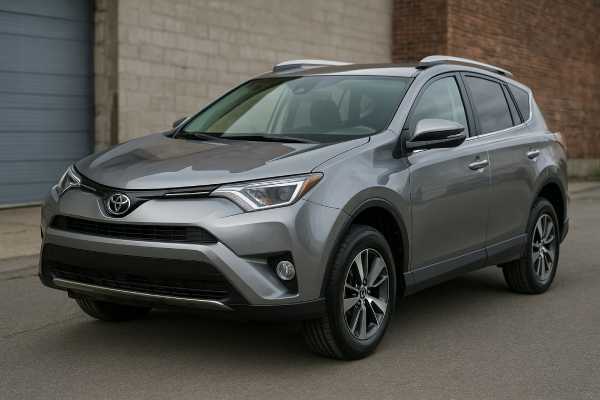
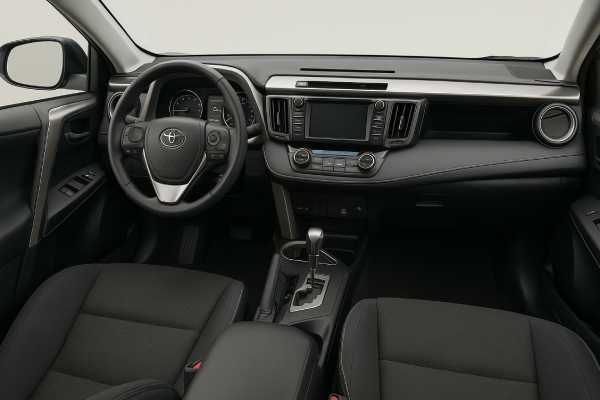
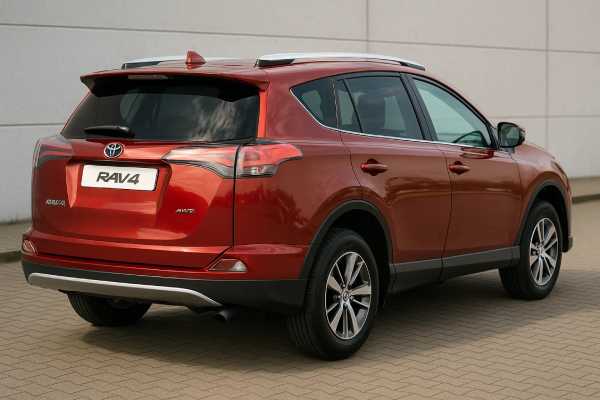
The 2016–2018 facelifted Toyota RAV4 AWD (XA40) pairs a proven 2AR-FE 2.5-liter four-cylinder with a 6-speed automatic and Toyota’s Dynamic Torque Control AWD. It is an everyday-friendly crossover that emphasizes mechanical simplicity, roomy packaging, and consistently high safety scores. Owners value its stable highway manners, low operating costs, and an interior that wears mileage well. This generation also ushered in broad availability of driver-assistance tech, culminating in standard Toyota Safety Sense on later model years. While acceleration is modest and the cabin is tuned more for quiet than sportiness, the RAV4’s reliability record and straightforward service needs make it a confident used buy—especially if you verify recall work and routine fluids. If you need a dependable all-weather compact SUV with realistic cargo space, predictable maintenance, and long-term parts support, this AWD XA40 belongs on the shortlist.
At a Glance
- Calm, confident ride with predictable AWD traction; roomy cargo area (seats up: ~1,087 L / 38.4 ft³).
- Strong safety story for its class; broad driver-assist availability after the refresh.
- Simple, durable 2.5-liter port-injected engine with timing chain and easy parts sourcing.
- Caveat: modest power; confirm battery-clamp recall completion on 2013–2018 vehicles.
- Typical interval: engine oil 10,000 miles / 12 months with SAE 0W-20 (rotate tires at 5,000 miles / 6 months).
What’s inside
- RAV4 AWD XA40 overview
- RAV4 2.5 AWD specs
- RAV4 trims and safety
- Reliability and issues
- Maintenance and buying tips
- Driving and efficiency
- RAV4 vs rivals
RAV4 AWD XA40 overview
Toyota’s facelifted XA40 RAV4 (2016–2018 model years) sharpened styling, updated cabin materials, and expanded active-safety tech while keeping the dependable 2AR-FE 2.5-liter engine and 6-speed automatic. All-wheel drive on gasoline models uses an electronically controlled coupling at the rear differential: the system runs front-biased for efficiency and apportions torque rearward as traction demands. A driver-selectable “LOCK” function can command close to a 50:50 split at low speeds to help in deep snow or on loose surfaces (automatically disengaging as speed rises).
Packaging is the reason many buyers choose this RAV4. With a low cargo floor and a near-square opening, it swallows strollers, skis, or camping gear without drama, and the rear bench folds flat in one motion. Ride quality aims for comfort first; the chassis keeps bumps out of the cabin yet avoids float. Steering is light at parking speeds and settles on the highway. Braking performance is consistent in everyday use, and pedal take-up is easy to modulate.
Power is adequate rather than punchy. The naturally aspirated four-cylinder emphasizes smoothness, low maintenance, and regular-grade fuel. The transmission shifts unobtrusively and keeps revs down at a cruise; “Sport” mode holds gears a bit longer on grades. AWD adds all-weather confidence without demanding special ownership habits beyond the normal fluid checks and tire rotations.
Safety is a major draw. Crashworthiness is strong for the vintage, and later years added a full Toyota Safety Sense suite as standard equipment. Combined with realistic fuel economy, straightforward service, and Toyota’s parts pipeline, the AWD XA40 is an easy vehicle to own for the long haul. For shoppers in snow-belt regions—or anyone who values predictable traction with low fuss—this facelifted AWD RAV4 delivers exactly what it promises.
RAV4 2.5 AWD specs
Engine and Performance (ICE)
| Item | Detail |
|---|---|
| Code | 2AR-FE |
| Layout & cylinders | Inline-4, DOHC, Dual VVT-i; 4 cylinders; 4 valves/cyl |
| Bore × stroke | 90.0 × 98.0 mm (3.54 × 3.86 in) |
| Displacement | 2.5 L (2,494 cc) |
| Induction | Naturally aspirated |
| Fuel system | Multi-point port fuel injection (PFI) |
| Compression ratio | ~10.4:1 |
| Max power | 176 hp (131 kW) @ 6,000 rpm |
| Max torque | 233 Nm (172 lb-ft) @ ~4,100 rpm |
| Timing drive | Chain |
| Rated economy (EPA, AWD) | 10.7/8.4/9.4 L/100 km (22/28/25 mpg US city/hwy/combined) |
| Real-world highway (75 mph / 120 km/h) | Typically ~8.7–9.4 L/100 km (27–30 mpg US), weather/tires dependent |
| Aerodynamics | Cd approx. 0.33–0.34 (trim-dependent) |
Transmission and Driveline
| Item | Detail |
|---|---|
| Transmission | 6-speed automatic (ECT-i) with manual mode |
| Gear ratios | 1st 3.30; 2nd 1.90; 3rd 1.42; 4th 1.00; 5th 0.71; 6th 0.61; Rev 4.15 |
| Final drive | ~4.07:1 (AWD) |
| Drive type | AWD (Dynamic Torque Control) |
| Differential | Open front/rear with brake-based torque vectoring |
| Replenishment time | Refuel to full: ~5 min (typical gas station flow) |
Chassis and Dimensions
| Item | Detail |
|---|---|
| Suspension (front/rear) | MacPherson strut / Double-wishbone |
| Steering | Electric power assist; quick ratio near center for parking ease |
| Brakes | Ventilated front discs; solid rear discs |
| Wheels/Tires | 17-in (225/65R17) or 18-in (235/55R18), trim-dependent |
| Ground clearance | ~160–165 mm (6.3–6.5 in) |
| Length/Width/Height | ~4,600 × 1,845 × 1,685 mm (~181–183.5 × 72.6 × 66.3 in) |
| Wheelbase | 2,660 mm (104.7 in) |
| Turning circle (curb-to-curb) | ~11.0 m (36 ft) |
| Curb weight (AWD) | ~1,610–1,640 kg (3,550–3,615 lb), by trim |
| GVWR | ~2,085–2,130 kg (4,595–4,695 lb) |
| Fuel tank | 60 L (15.9 US gal / 13.2 UK gal) |
| Cargo volume (SAE) | 1,087 / 2,079 L (38.4 / 73.4 ft³) seats up / folded |
Performance and Capability
| Item | Detail |
|---|---|
| 0–100 km/h (0–62 mph) | ~9.5–9.8 s (AWD, season/tires vary) |
| Top speed | ~180 km/h (112 mph) |
| Braking 100–0 km/h | ~38–41 m (125–135 ft), tire-dependent |
| Towing capacity | 680 kg (1,500 lb) braked (receiver/tow kit as specified) |
| Payload | ~410–475 kg (900–1,050 lb), trim-dependent |
| Roof load | Up to ~75 kg (165 lb) with proper crossbars |
Fluids and Service Capacities
| System | Spec / Type | Capacity |
|---|---|---|
| Engine oil | SAE 0W-20, ILSAC GF-5/6; API SN+ or newer | ~4.4 L (4.6 US qt) w/ filter |
| Engine coolant | Toyota Super Long Life Coolant (pink), 50/50 mix | ~6–7 L (~6.3–7.4 US qt) |
| Automatic transmission | Toyota ATF WS | ~6.5–7.0 L total; typical drain/fill ~3–4 L |
| Rear differential | GL-5 75W-85 gear oil | ~0.8–1.0 L |
| Transfer case | Toyota ATF WS | ~0.5–0.7 L |
| A/C refrigerant | HFC-134a (R-134a) | ~500–550 g (17.6–19.4 oz) |
| A/C compressor oil | ND-Oil 8 (PAG) | ~120–150 mL (4.1–5.1 fl oz) |
| Key torque examples | Wheel lugs ~103 Nm (76 lb-ft); drain plug ~40 Nm (30 lb-ft) |
Electrical
| Item | Detail |
|---|---|
| Alternator | ~100–130 A (trim/equipment dependent) |
| 12V battery | Group size common to compact SUVs; verify by VIN (CCA varies with cold-weather package) |
| Spark plugs | Iridium, 1.1 mm (0.043 in) gap; long-life |
Safety and Driver Assistance
| Item | Detail |
|---|---|
| Crash ratings | IIHS “Top Safety Pick+” when equipped with optional front crash prevention; Good in most crashworthiness tests for 2016; headlight ratings vary by trim (Marginal to Acceptable). |
| Headlight rating | Trim-dependent (projector/LED and aim affect score). |
| ADAS suite | AEB (vehicle-to-vehicle), lane departure alert with steering assist, dynamic radar cruise, auto high-beam—standard on later years; optional on select 2016 trims. |
| Child-seat provisions | Lower anchors and tethers (LATCH); check ease-of-use notes by row and trim. |
Notes: Dimensions, masses, and capacities vary by trim, equipment, and market certification. Always verify by VIN for parts/fluids and torque.
RAV4 trims and safety
Trims and key options (North America, 2016–2018):
- LE: 17-inch steel wheels, cloth, Entune audio, manual liftgate. AWD optional.
- XLE: 17-inch alloys, dual-zone climate, power moonroof, fog lights; available power liftgate and navigation; AWD optional.
- SE (introduced with facelift): Sport-tuned suspension calibration, 18-inch wheels, sport seats and styling cues; AWD optional.
- Limited: SofTex-trimmed seats, power liftgate, advanced audio/nav; AWD optional.
- Platinum (2017–2018): Range-topper with heated steering wheel, premium audio, bird’s-eye camera; AWD standard or optional by market.
- Adventure (2018): Higher ride height, unique wheels/trim, tow-prep hardware; AWD availability emphasized.
Functional/Mechanical differences by trim or package
- Wheel/tire packages (17 vs 18 in) alter ride sharpness and winter-tire fitment.
- SE uses a firmer damper/coil calibration and quicker steering feel around center.
- Tow-prep bundles on Adventure/Trail-style variants fit wiring and improve cooling for light towing (still 1,500 lb rating).
- Roof-rail and crossbar availability varies by trim; check payload allowances on the door jamb label.
Year-to-year highlights
- 2016 (facelift begins): Exterior/interior refresh; SE trim added; expanded availability of Toyota Safety Sense P (TSS-P) and additional camera/parking aids.
- 2017: TSS-P becomes standard across most trims (AEB with pedestrian capability varies by calibration); infotainment updates.
- 2018: Adventure grade arrives; minor feature reshuffles; continued emphasis on active safety availability.
Safety ratings (summary)
- IIHS (2016): Top Safety Pick+ when equipped with the optional front crash-prevention system; crashworthiness largely Good, passenger-side small overlap Poor for 2016 test protocol; headlight ratings vary by trim (Marginal to Acceptable).
- NHTSA: Many AWD trims scored 5-star overall with 4-star frontal and 5-star side in U.S. government tests for the period; verify exact sub-ratings by year/trim.
Safety and ADAS content
- Airbags: dual-stage front, front-seat side, side curtain, driver knee (coverage varies by model year).
- Active safety: ABS, stability control, traction control standard; hill-start assist; brake-force distribution.
- Toyota Safety Sense P (TSS-P): forward collision warning with automatic emergency braking, dynamic radar cruise control, lane departure alert with steering assist, automatic high-beam.
- Blind-spot monitor with rear cross-traffic alert offered on higher trims/packages.
- After collision repairs or windshield replacement, expect calibration steps for radar/camera sensors; budget time for dealer-level alignment and aiming.
Reliability and issues
The 2AR-FE and 6-speed automatic are known for durability when serviced on time. Most RAV4 AWDs in this generation age gracefully if fluids, tires, and suspension bushings are maintained. Mapping issues by prevalence and cost helps you triage pre-purchase checks:
Common (low to medium cost):
- 12-volt battery clamp recall (2013–2018): Some replacement batteries can shift and short against the hold-down, risking fire. Remedy is an improved clamp, tray, and terminal cover—free at dealers. Confirm recall 23V-734 completion by VIN.
- Noisy or worn front stabilizer links/bushings: Symptoms include knocks over sharp bumps; simple parts replacement.
- Wheel-bearing hum at highway speeds: Progressive growl that changes with side load; press-fit hub replacement solves it.
Occasional (medium cost):
- Seepage at engine timing-chain cover or valve cover: Common with age; monitor and reseal if leakage worsens.
- Rear differential weep: Address with correct GL-5 gear oil service and new seals if needed.
- HVAC blower or actuator noises: Debris or motor wear; cleaning or actuator replacement typically resolves.
Rare (higher cost):
- AWD coupling shudder or binding: Often fluid age or mismatched tires. Service transfer and differential fluids, then re-evaluate before considering hardware replacement.
- Transmission flare/shudder: Uncommon on well-maintained units; ensure Toyota ATF WS service history. Software updates can improve shift quality.
Electrics and software
- Keep the 12-volt battery healthy; many subtle DTCs trace to low voltage. After windshield or radar cover work, confirm TSS-P calibrations.
- Infotainment updates and map data improve stability; verify the head unit’s software is current.
Corrosion hotspots
- Rear subframe mounts and fasteners in severe-salt areas; the seam at the tailgate lower edge; steel wheels on LE trims. Annual washdowns and anti-corrosion spray help.
Verification checklist
- Run the official VIN recall check and keep the campaign printout.
- Ask for proof of recent fluid services (engine oil, ATF drain/fill, rear diff, transfer case), brake fluid within 2–3 years, and cabin filter changes.
- Inspect for even tire brands and tread (AWD needs a matched set).
- Road-test for clunks over diagonal bumps (links/bushings) and any AWD binding in tight parking-lot turns.
Maintenance and buying tips
Practical maintenance schedule (time/distance, whichever comes first)
- Engine oil (0W-20 full synthetic): Every 10,000 miles / 12 months; severe service or short trips: 5,000 miles / 6 months. Replace filter each service.
- Tire rotation & brake/undercar check: Every 5,000 miles / 6 months.
- Engine air filter / Cabin filter: Inspect at 15,000 miles / 18 months; replace around 30,000 miles / 3 years, sooner in dusty climates.
- Coolant (SLLC pink): First replacement ~100,000 miles / 10 years, then 50,000 miles / 5 years thereafter.
- Spark plugs (iridium): Around 120,000 miles / 10–12 years, inspect at 90k if misfire history or heavy city use.
- Serpentine belt & hoses: Inspect annually after 60,000 miles; replace belt on condition.
- ATF (Toyota WS): Drain/fill ~60,000–90,000 miles depending on towing, hills, or heat; earlier if fluid is dark or has odor.
- Rear differential & transfer case: Replace gear oil/ATF at 60,000–90,000 miles or if contaminated.
- Brake fluid: Replace every 2–3 years regardless of mileage.
- Alignment check: Annually or after pothole impacts/uneven wear.
- 12-volt battery: Test yearly after year four; typical replacement window 5–7 years.
Fluid specs at a glance
- Oil: SAE 0W-20, API SN+/SP, ILSAC GF-5/6.
- ATF: Toyota WS (do not mix types).
- Diff/transfer: GL-5 75W-85 (diff) and Toyota WS (transfer)—verify by VIN.
- Coolant: Toyota Super Long Life Coolant (pink), 50/50 premix.
- A/C: R-134a refrigerant; use ND-Oil 8 (PAG) when servicing the compressor.
Essential torque references
- Wheel lugs ~103 Nm (76 lb-ft); oil drain plug ~40 Nm (30 lb-ft); consult service literature for model-specific fasteners (suspension, axle, and brake hardware).
Buyer’s guide: what to look for
- Service history: Regular oil, coolant, and drivetrain fluid entries; brake fluid within the last 3 years.
- Recall proof: Battery clamp/tray recall completed (2013–2018).
- AWD health: Even tires, no binding on full-lock turns, and quiet wheel bearings.
- Suspension: Front end free of clunks; SE-grade cars should not feel crashy over joints.
- Cargo area: Check tailgate seal and floor for moisture; verify power liftgate function (Limited/Platinum).
- Electronics: Confirm TSS-P features operate cleanly; no warning lights; infotainment boots crisply.
Durability outlook
With routine fluids and matched tires, the XA40 AWD drivetrain is a long-distance companion. The port-injected 2AR-FE avoids DI carbon buildup concerns. Most ownership costs center on wear items—tires, brakes, and occasional suspension bushings—rather than big-ticket driveline work.
Driving and efficiency
Ride, handling, and NVH
The facelifted XA40 rides quietly, with well-damped body motions over expansion joints and gravel. Steering effort is light in town and steady on the motorway. Understeer builds predictably, and stability control intervenes smoothly. The SE’s firmer tune feels tauter in quick transitions but can transmit more texture over broken pavement, especially on 18-inch tires.
Powertrain character
The 2.5-liter is tuned for smoothness and economy. Throttle response is linear, and the 6-speed shifts early in normal mode to keep revs down. Kickdown is quick enough for merging; “Sport” mode holds gears longer and tightens steering assist. Passing performance from 80–120 km/h (50–75 mph) is acceptable; planning is still wise on two-lane roads.
Real-world efficiency (AWD gas)
Owners commonly see 24–28 mpg US mixed (9.8–7.8 L/100 km) depending on season, terrain, and tire selection; sustained 120 km/h (75 mph) highway runs typically return 27–30 mpg US (8.7–9.4 L/100 km). Winter tires, roof boxes, and crosswinds all nudge consumption upward. Around town in cold weather, expect a 2–3 mpg US (0.9–1.3 L/100 km) penalty until warm.
Traction and control
The AWD system reacts quickly to slip and can proportion torque rearward before wheelspin becomes obvious. Brake-based torque vectoring tidies corner exits on slick suburban turns. Use the “LOCK” function in deep snow or rutted trails, remembering it disengages automatically as speed rises.
Load and towing
The 1,500-lb (680-kg) rating is realistic for small utility trailers and lightweight campers. On hilly interstates, plan longer following distances; downshift proactively to manage transmission temperatures. Fuel economy can drop 15–30% while towing or fully loaded, especially with roof gear.
RAV4 vs rivals
Honda CR-V (2015–2016 facelift, 2017 new gen): The CR-V offers a touch more rear-seat legroom and, on later turbo models, livelier midrange. The Toyota replies with simpler port injection, a timing chain with a strong record, and broadly similar cargo volume. If you prefer a conservative maintenance plan and fewer turbo-related variables, the RAV4’s 2.5-liter is reassuring.
Subaru Forester (2014–2018): Standard AWD and excellent outward visibility are Forester hallmarks. The Subaru’s boxer engine and CVT bring different maintenance considerations (CVT fluid intervals, head-gasket history on older boxers). The RAV4’s conventional 6-speed and broad dealer network make life easy. Crash scores are competitive either way; test headlights by trim.
Mazda CX-5 (2016–2018): Sharper steering and handling define the CX-5. The RAV4 counters with cargo practicality and a softer ride. If you prioritize back-road feel, the Mazda edges it; for family flexibility and safety tech coverage by late model years, the Toyota is the steadier pick.
Ford Escape (2017 refresh): Turbo torque and brisker acceleration favor the Ford, but long-term maintenance can be costlier. The RAV4’s naturally aspirated 2.5-liter and wide parts availability tend to lower lifetime spend.
Verdict: In this AWD, 2.5-liter configuration, the XA40 RAV4 wins on predictable ownership, crash performance for the era, and honest cargo space. Shoppers who want a livelier drive can look to CX-5 or later turbo CR-V; those who want minimal surprises and straightforward upkeep will be happiest in the Toyota.
References
- 2016 Toyota RAV4 Product Information – Toyota USA Newsroom 2015 (Product Information)
- 2018 Toyota RAV4 Product Info – Toyota USA Newsroom 2017 (Product Information)
- 2016 Toyota RAV4 AWD 2016 (EPA Fuel Economy)
- 2016 Toyota RAV4 4-door SUV 2016 (Safety Rating)
- RCLRPT-23V734-5615.PDF 2023 (Recall Report)
Disclaimer
This guide is for informational purposes and is not a substitute for professional diagnosis, repair, or official service procedures. Specifications, capacities, torque values, and maintenance intervals can vary by VIN, model year, market, options, and production date. Always verify part numbers, fluid types, capacities, and procedures against your vehicle’s official owner’s literature and service manual. If you found this useful, feel free to share it with fellow owners on Facebook or X/Twitter to support xcar’s work.