
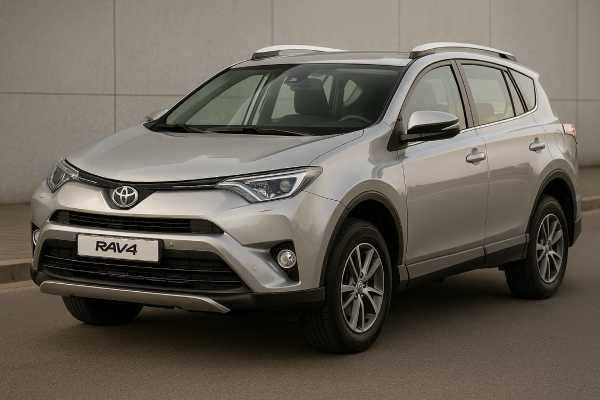
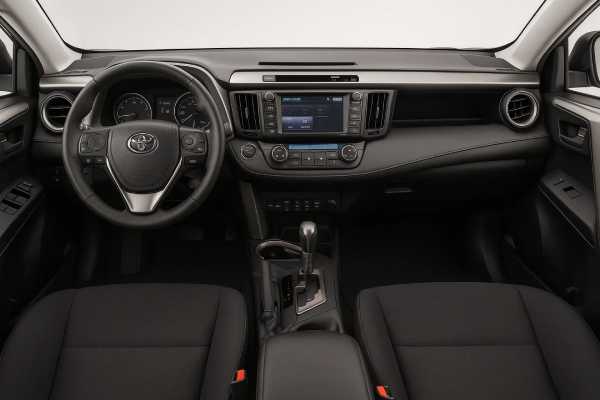
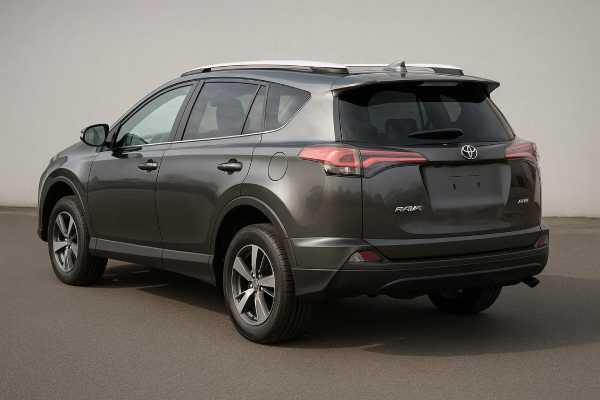
The facelifted fourth-generation Toyota RAV4 (XA40, 2015–2018) with the 2.0-litre 3ZR-FAE petrol and front-wheel drive is the straightforward, low-stress pick in the range. It trades headline power for smooth delivery, predictable handling, and running costs that stay friendly over long ownership. The 2015 refresh brought quieter cabin trim, revised suspension tuning, updated infotainment, and the rollout of Toyota Safety Sense driver assists on many trims. The naturally aspirated Valvematic engine feels linear and durable, and paired with either a six-speed manual (market-dependent) or Multidrive S CVT it suits urban and motorway use equally well. Practicality is classic RAV4: big square cargo bay, easy ingress, and family-proof materials. If you want all-weather traction you will look to hybrid AWD or petrol CVT AWD markets; if you value simplicity, the 2.0 FWD is the one to shortlist. This guide focuses on the 2015–2018 facelift years and what buyers and owners should know.
Fast Facts
- Linear 2.0 Valvematic (3ZR-FAE) with timing chain; typical real-world 6.7–8.0 L/100 km (35–29 mpg US) mixed when driven sensibly.
- Roomy cabin and flat, square load area (547 L VDA seats up; up to 1,735 L seats folded).
- Toyota Safety Sense widely available after facelift: AEB, lane departure alert, and auto high beam on many trims.
- Watch for CVT fluid neglect and front suspension bush wear; confirm completion of the 12-V battery hold-down recall.
- Oil change every 12 months/10,000 miles (15,000 km) is a sensible baseline for long life.
Explore the sections
- RAV4 2.0 FWD overview
- RAV4 2.0 specs and data
- Trims, options and safety
- Reliability and common issues
- Maintenance and buyer guide
- Driving and performance
- RAV4 rivals compared
RAV4 2.0 FWD overview
The facelifted XA40 RAV4 sharpened what the fourth generation already did well. The exterior received slimmer headlamps, tidier bumpers, and extra sound insulation around the bulkhead and floor. Inside, Toyota updated the dash top and door cards for a more cohesive look and better noise suppression on coarse surfaces. The fundamentals remained familiar: unflashy but robust materials, easy-to-clean plastics, and a driving position that suits a wide range of heights thanks to generous seat travel.
Under the bonnet, the 3ZR-FAE 2.0-litre petrol uses Toyota’s Valvematic (continuously variable intake lift) and dual VVT-i timing to prioritise efficiency and throttle response over turbocharged punch. Output in this facelift window is typically quoted as 151 PS (about 149 hp / 111 kW) at 6,200 rpm with 195 Nm (144 lb-ft) at 4,400 rpm, delivered in a predictable, naturally aspirated curve. Everyday drivability is helped by short lower gearing on the manual where offered, and a well-calibrated “Multidrive S” CVT in markets that pair the 2.0 with the stepless transmission. The CVT includes a manual-select mode that simulates stepped ratios and a Sport program that holds revs under load.
Chassis tuning stayed conservative and comfortable, with MacPherson struts up front and a multi-link/double-wishbone rear keeping the body stable over broken tarmac. The steering is light at parking speeds and calm on the motorway, and brake sizing is generous for the class, contributing to consistent stops when fully loaded. The facelift also expanded availability of Toyota Safety Sense (pre-collision with autonomous braking, lane departure alert, auto high beam and, on some trims, radar cruise), raising the active-safety baseline.
Practicality remains a strong card. The RAV4’s square tailgate opening, low load lip, and wide cargo floor make family life easy. Seats fold nearly flat, and the rear bench has ample leg room and a relaxed backrest angle. Noise levels are improved versus the pre-facelift car, especially at a 120 km/h cruise, helped by added insulation and door sealing tweaks. If you need winter-road traction, note that some markets paired the 2.0 petrol with AWD and CVT; this guide focuses on FWD, which many buyers prefer for lower running costs and simpler upkeep.
For shoppers balancing dependability, space, and straightforward ownership, the facelifted XA40 2.0 FWD hits a durable middle ground—less exciting than a turbo rival when overtaking uphill, but easier to keep for ten years with little drama.
RAV4 2.0 specs and data
Below are the key figures specific to the facelifted XA40 with the 3ZR-FAE 2.0 petrol. Where market variations exist (wheel size, emission standard, gearbox), the most representative figures are shown, with notes for range or differences.
Engine and performance (ICE)
| Item | Value |
|---|---|
| Code | 3ZR-FAE (Valvematic) |
| Layout & cylinders | Inline-4, DOHC, 16-valve (Valvematic + Dual VVT-i) |
| Bore × stroke | 80.5 × 97.6 mm (3.17 × 3.84 in) |
| Displacement | 1.987 L (1,987 cc) |
| Induction | Naturally aspirated |
| Fuel system | Electronic multipoint fuel injection |
| Compression ratio | 10.0:1 |
| Max power | 151 PS (149 hp / 111 kW) @ 6,200 rpm |
| Max torque | 195 Nm (144 lb-ft) @ 4,400 rpm |
| Timing drive | Chain (no scheduled replacement) |
| Rated efficiency (combined)** | ≈ 6.7 L/100 km (35.1 mpg US / 42.2 mpg UK) with 18-in wheels |
| Real-world highway @ 120 km/h | 7.5–8.2 L/100 km (31–29 mpg US / 37–35 mpg UK) typical |
| Aerodynamics | Cd 0.34–0.36 |
| Note: Efficiency varies with wheel/tyre and test procedure (NEDC vs early WLTP equivalents). |
Transmission and driveline
| Item | Value |
|---|---|
| Transmission (FWD) | 6-speed manual (market-dependent) or Multidrive S CVT |
| Drive type | Front-wheel drive |
| Final drive (typical CVT FWD/AWD) | Market-specific; CVT uses wide ratio range with “manual” steps |
| Differential | Open front differential |
| Refuel time | Petrol: typical < 5 min from low to full |
Chassis and dimensions
| Item | Value |
|---|---|
| Suspension (front/rear) | MacPherson strut / Double wishbone |
| Steering | Electric rack-and-pinion; ratio 14.5:1; 2.83 turns lock-to-lock |
| Brakes | Front 296 × 28 mm ventilated discs; rear 281 × 12 mm solid discs |
| Wheels and tyres | 225/65 R17 or 235/55 R18 |
| Ground clearance | ~160 mm (6.3 in) |
| Length / Width / Height | 4,605 / 1,845 / 1,675 mm (181.3 / 72.6 / 65.9 in) |
| Wheelbase | 2,660 mm (104.7 in) |
| Turning circle (tyre/body) | 5.3 / 5.7 m (17.4 / 18.7 ft) |
| Kerb (curb) weight | ~1,540–1,570 kg (3,395–3,461 lb) typical FWD spec |
| GVWR (reference) | up to ~2,110 kg depending on configuration |
| Fuel tank | 60 L (15.9 US gal / 13.2 UK gal) |
| Cargo volume (VDA) | 547 L seats up (19.3 ft³); 1,735 L seats folded (61.3 ft³) |
Performance and capability
| Item | Value |
|---|---|
| 0–100 km/h (0–62 mph) | ~10–10.7 s (range reflects wheel/tyre and driveline) |
| Top speed | ~183–185 km/h (113–115 mph) |
| Braking 100–0 km/h | Class-typical; size and ventilation support repeat stops |
| Towing (braked / unbraked) | 1,500 / 750 kg (3,307 / 1,653 lb) with tow pack |
| Roof load | Up to 100 kg (220 lb) with approved bars |
Fluids and service capacities (typical; verify by VIN)
| System | Spec & Capacity |
|---|---|
| Engine oil | 0W-20 (ACEA/API per market); ≈ 4.2 L (4.4 US qt) with filter |
| Coolant | Toyota Super Long Life Coolant (pink, premix); ≈ 6.0–6.5 L (6.3–6.9 US qt) |
| Manual gearbox (if fitted) | Toyota MTF (spec per market); capacity varies by unit |
| CVT (Multidrive S) | Toyota CVT FE fluid; ~3.5–4.0 L (3.7–4.2 US qt) drain-and-fill |
| A/C refrigerant | R134a; ~500–550 g (17.6–19.4 oz); ND-Oil 8 ~120 mL (4.1 fl oz) |
| Key torque | Wheel nuts 103 Nm (76 lb-ft); spark plugs ~18–21 Nm (13–15 lb-ft) |
Electrical
| Item | Value |
|---|---|
| Alternator | ~100 A output (varies by equipment) |
| 12-V battery | ~60–70 Ah (CCA per supplier); European form factor |
| Spark plugs | Iridium, e.g., ILKAR7B11; gap 1.1 mm (0.043 in); do not adjust on iridium types |
Safety and driver assistance
| Item | Value |
|---|---|
| Euro NCAP rating (2013 protocol; applies through facelift) | 5 stars — Adult 89%, Child 82%, VRU 66%, Safety Assist 66% |
| IIHS (context reference) | Strong overall crashworthiness; passenger-side small overlap Poor in 2015–2018 generation; headlight ratings vary by trim |
| ADAS suite (typical)** | Pre-Collision with AEB (vehicles), Lane Departure Alert, Auto High Beam; Blind Spot Monitor and Rear Cross Traffic Alert optional on higher trims; radar cruise available in many markets |
| Airbags and restraints | Dual front, side, curtain airbags; driver knee airbag in many specs; ISOFIX/LATCH rear outboard |
Notes: Availability of manual gearbox and some ADAS items varies by market and trim.
Trims, options and safety
Trim walk (Europe, typical patterns). Naming varies by country, but equipment logic is consistent. Entry trims (often “Active” or similar) bring cloth upholstery, 17-inch alloys, air conditioning, reversing camera, and a basic infotainment screen. Mid-range grades (“Icon/Business/Style”) add dual-zone climate control, integrated navigation on some markets, privacy glass, and more driver assists. Top trims (“Excel/Lounge”) typically include leather or leather-trimmed seats (often heated), power driver’s seat, front and rear parking sensors, 18-inch wheels, power tailgate, and a full Toyota Safety Sense package. A panoramic roof was optional in many markets.
Mechanical differences by trim. Springs and dampers are comfort-biased across the board; there are no sport-chassis variants for the 2.0 petrol FWD. Wheel size changes steering feel slightly (18-inch tyres add precision but can transmit more sharp-edge impacts). Towing equipment, trailer-sway control programming, and space-saver vs full-size spare vary by market and option pack. Where the 2.0 petrol was paired with CVT AWD, final drive and kerb weight differ; for FWD, hardware is broadly uniform.
Infotainment and audio. Toyota’s touchscreen (Touch 2 family) gained clearer graphics with the facelift, with DAB, Bluetooth, and optional navigation. Higher trims often include an upgraded audio package and front/rear parking sensors with a reversing camera as standard.
Safety ratings in brief. Under the 2013 Euro NCAP protocol (in effect through the facelift reviews), this generation of RAV4 achieved a five-star rating with strong adult and child occupant scores. Vulnerable road-user and safety-assist scores reflected the era’s hardware: a compliant bumper and bonnet but limited advanced driver aids pre-2015. With the facelift, Toyota Safety Sense became widely available, adding AEB (vehicle detection), lane departure alert, and auto high beam; radar cruise and blind-spot monitoring appeared on many upper trims, improving real-world crash avoidance. For cross-market shoppers, IIHS testing in the United States showed good structure for the driver-side small overlap test from late-2014 builds onward, but poor results for the passenger-side small overlap test on 2015–2018 vehicles lacking the later structural revisions—context worth noting if you compare test regimes.
Child-seat practicality. ISOFIX anchorages are provided on the rear outboard positions with clear labels. The front passenger airbag can be deactivated in most specifications to allow a rear-facing child seat when required. The rear bench base is broad and flat, making it straightforward to fit two child seats and a booster.
ADAS calibration after service. If the windscreen is replaced or the front grille radar (where fitted) is disturbed, expect a calibration step using the correct targets and a level surface. Wheel alignment after suspension work can trigger steering-angle sensor procedures; competent shops with Toyota-capable scan tools handle this routinely.
Reliability and common issues
Toyota’s 3ZR-FAE is generally robust, especially with annual oil services. The facelifted XA40’s body and cabin wear well, and major mechanical failures are uncommon when maintenance is kept current. Focus your attention on the following items, listed by prevalence and cost impact.
Common / low-to-medium cost
- Front lower control arm rear bushes and anti-roll bar links: clunks over speed humps or slow turns; replace bushes/links in pairs.
- Rear shocks sweating/leaking: more common on higher mileage cars; symptoms are rear-end float over undulations and uneven tyre wear.
- 12-V battery degradation: short-trip cars can be hard on batteries; slow cranking and intermittent warning lights are common early signs. The battery hold-down recall (see below) should also be confirmed.
- Cabin blower resistor and pollen filter loading: weak fan speeds or noisy operation; replacing the cabin filter annually helps longevity.
Occasional / medium cost
- CVT fluid neglect (Multidrive S): shudder on gentle take-off, flare at steady throttle, or a whine at 40–70 km/h under light load point to aged fluid. A drain-and-fill with the correct Toyota CVT fluid, plus adaptation reset where applicable, usually restores smoothness.
- Water pump weep: pink crusting around the pump housing; coolant level slowly drops. Replace the pump and gasket; budget for fresh S-LLC coolant.
- Wheel bearings: a low growl increasing with road speed; rear hubs are more prone than fronts on rough roads.
Rare / higher cost
- Valvematic actuator faults: illuminated MIL and reduced power (limp-home), often with codes related to lift control. Updated parts and careful setup solve it, but diagnosis is key—rule out wiring and connectors first.
- Steering rack EPS motor noise: intermittent assist changes or knocks over rough surfaces; replacement or specialist rebuild may be required, though most cars never experience it.
Recalls, TSBs, and service actions (high-value checks)
- 12-V battery hold-down clamp and tray (2013–2018 RAV4): certain replacement batteries may move under high lateral g if the clamp is not torqued correctly, risking terminal contact and a short circuit. The official remedy replaces the clamp, tray, and terminal cover with improved parts—confirm completion by VIN.
- Airbag/SRS and seatbelt bulletins: market-specific and VIN-specific; ensure the car is clear of any outstanding safety campaigns.
Software updates. Facelift cars received periodic multimedia and ECU calibrations that refine idle control, HVAC logic, and, on ADAS-equipped vehicles, lane-departure alert sensitivity and pre-collision thresholds. A dealer can check the calibration IDs against the latest available for your VIN.
Pre-purchase checklist (prioritised)
- Verify full annual service history (oil and filters), CVT fluid changes at sensible intervals, and coolant age.
- Confirm recall completion by VIN.
- Inspect front suspension bushes, rear shocks, tyres (even wear), and brake condition.
- Listen for CVT whine or shudder on light throttle, and check manual clutch bite point if applicable.
- Test all ADAS features on a quiet road; check for any warning messages after key-on.
- Check the spare-wheel well and tailgate seal area for water ingress (rare but possible after glass or tailgate work).
Maintenance and buyer guide
Service rhythm that works. Toyota’s annual service cadence (every 12 months / 10,000 miles / 15,000 km) keeps the 3ZR-FAE happy. For mixed urban/motorway use, this interval balances oil life and protection; harsh service (short trips, heavy city, frequent towing) justifies shorter oil intervals.
At-a-glance schedule (typical for 2.0 petrol FWD; adjust to local schedule)
- Every 12 months / 10,000 miles (15,000 km): engine oil and filter; cabin filter; full inspection (fluids, brakes, suspension, tyres, lights).
- Every 24 months: brake fluid; alignment check; pollen filter if high-dust; A/C performance check.
- Every 30,000 miles / 48,000 km: engine air filter (earlier in dusty conditions).
- Every 60,000 miles / 96,000 km: spark plugs (iridium).
- Every 60,000–80,000 miles / 100,000–130,000 km: CVT drain-and-fill (sooner for heavy city or trailer duty).
- First coolant replacement at 10 years / 100,000 miles (160,000 km), then every 5 years / 50,000 miles (80,000 km) thereafter (S-LLC pink).
- Aux/serpentine belt: inspect from 60,000 miles; replace if cracked or noisy.
- 12-V battery test: annually after year three; replace proactively if resting voltage and load test trend downward.
- Brakes: inspect at each service; expect front pads 25–45k miles depending on use; rears often last longer.
- Tyres: rotate every 10,000–12,000 miles (16–20k km); set pressures to the door-label value; re-align if you see shoulder wear.
Fluid specs and quick numbers for decisions
- Oil: 0W-20 full-synthetic meeting Toyota/market spec; capacity ≈ 4.2 L.
- Coolant: Toyota Super Long Life Coolant (pink); capacity ≈ 6.0–6.5 L.
- CVT: Toyota CVT FE; plan ~3.5–4.0 L for a drain-and-fill.
- A/C: R134a; ~500–550 g; ND-Oil 8.
- Wheel torque: 103 Nm; spark plug torque ~18–21 Nm.
DIY-friendly tasks. Cabin and engine air filters take minutes and basic tools. Front pads and discs are straightforward for a competent home mechanic with axle stands and a torque wrench. CVT service requires the correct fill/overflow procedure and temperature monitoring—best left to shops familiar with Toyota CVT if you lack the equipment.
Buyer’s guide: what to seek or avoid
- Best bets: mid-to-upper trims with Toyota Safety Sense and 17-inch wheels (ride comfort), full service history, and evidence of recent fluids (oil, brake, CVT where applicable).
- Be cautious of: cars with overdue servicing, aftermarket wheels or oversized tyres (can stress CVT), and windscreen replacements without ADAS calibration paperwork on radar-equipped cars.
- Reconditioning you can budget: front ARB links/bushes, battery replacement on older cars, a set of tyres, and possibly rear shock absorbers—none are bank-breaking if planned.
Durability outlook. With annual servicing and sensible fluid care, the 3ZR-FAE routinely clears 200,000 km (125,000 miles) without internal work. Suspension consumables and occasional water pumps are expected over a decade, but major engine or transmission failures are rare when maintenance stays on time. Body corrosion resistance is good; keep drains clear and touch up stone chips to preserve the shell.
Driving and performance
Ride and NVH. The facelifted XA40 is notably calmer than the early build: tyre roar is lower on motorway-grade asphalt, and wind rustle around the mirrors and A-pillars is better controlled. On 17-inch wheels it smothers broken urban surfaces; on 18s it gains a touch of road texture but still stays composed. Body motions are tidy, with gentle heave and roll that suit family transport rather than spirited back-road runs.
Steering and braking. Steering is light and consistent, making car-park manoeuvres easy and straight-line tracking stable at speed. There is modest self-centering and predictable weighting off-centre. Brake hardware (296 mm vented fronts, 281 mm rears) delivers strong first-stop bite and good repeatability; pedal feel is progressive and easy to modulate in traffic.
Powertrain character. The 3ZR-FAE is at its best when driven smoothly. In town, the engine pulls cleanly from low revs; on slip roads you often need to let it spin past 4,000 rpm to tap the 195 Nm plateau. The manual favours short-shifting and makes the car feel more responsive in the 40–80 km/h band. The CVT is unobtrusive if you keep inputs progressive; use the “S” mode on hills or when merging to hold revs, and the manual-select gates for predictable engine braking on descents.
Real-world efficiency. Mixed driving typically lands between 6.7 and 8.0 L/100 km (35–29 mpg US / 42–35 mpg UK) depending on wheel size, traffic, and climate. Holding a steady 75 mph / 120 km/h on the motorway, expect ~7.5–8.2 L/100 km (31–29 mpg US) in mild weather. Winter starts and short trips can add 1–2 L/100 km until fully warmed.
Key metrics that matter. Overtakes from 80–120 km/h (50–75 mph) are tidy if you plan and let the engine rev; the CVT’s “S” detent shortens response. A healthy FWD 2.0 will run ~10–10.7 s to 100 km/h (62 mph) and settle at ~2,500–2,700 rpm at 120 km/h depending on tyre diameter and gearbox. Braking performance stays consistent when loaded with four passengers and luggage, with no obvious fade on a single motorway off-ramp.
Traction and stability. As a FWD crossover on all-season tyres, the XA40 relies on traction control and a gentle throttle in heavy rain or snow. Stability control tuning is conservative and quick to tidy up wheelspin on wet junctions. Snow chains and proper winter tyres transform its behaviour in alpine conditions; many owners in snowy regions pair the FWD with a dedicated winter set for confidence without the complexity of AWD.
Towing and load. With the correct tow package, the 2.0 FWD is rated up to 1,500 kg braked. Expect a ~15–25% fuel-consumption penalty at motorway speeds with a medium trailer and modest headwinds. Temperature management is sound; watch CVT fluid service intervals if you tow frequently.
RAV4 rivals compared
Honda CR-V 2.0 i-VTEC (2015–2018). The CR-V’s naturally aspirated 2.0 is similarly smooth and understressed, but the Toyota’s Valvematic feels a touch more responsive off idle. Honda’s cabin packaging is brilliant and often a hair roomier in the rear. Running-cost parity is close; parts pricing and reliability are comparably strong.
Mazda CX-5 2.0 Skyactiv-G. The driver’s choice. Steering precision and body control are best in class, and the manual gearbox is excellent. The RAV4 counters with a softer ride and typically lower NVH on coarse motorways. Mazda’s infotainment is cleaner; Toyota’s options list more active-safety kit, depending on market and year.
Nissan Qashqai/X-Trail 1.6 DIG-T. Turbo torque helps mid-range pull, but real-world economy can swing widely with load and speed. The Toyota’s naturally aspirated engine is less punchy but more consistent over time, and the cabin tends to age better.
Volkswagen Tiguan 1.4/2.0 TSI. Strong engines and tidy dynamics, with a more premium cabin feel. The trade-off is complexity—DSG servicing and turbo hardware add cost and decision points as the car ages. The RAV4’s simpler powertrain is the “lower-risk” long-term bet for many buyers.
Bottom line. If you prioritise set-and-forget ownership, cabin space, and a quiet motorway cruise, the RAV4 2.0 FWD is still an easy recommendation. If you crave handling sharpness, the CX-5 wins; if you want turbo punch, the Tiguan feels brisker. But for ten-year peace of mind, Toyota’s recipe remains compelling.
References
- 180511M RAV4 Technical Specifications 2018 (Technical Specifications)
- 180511M – RAV4 full release 2018 (Press Pack)
- Toyota RAV4 2013 2013 (Safety Rating)
- 2018 Toyota RAV4 2018 (Safety Rating)
- RCAK-23V734-4526.pdf 2023 (Recall Acknowledgement)
Disclaimer
This article is for informational purposes and is not a substitute for professional diagnosis or repair. Specifications, torque values, service capacities, and maintenance intervals vary by VIN, market, emission standard, and equipment. Always verify procedures and numbers against your vehicle’s official service documentation and follow all safety instructions.
If you found this guide useful, please consider sharing it with other owners on Facebook or X/Twitter—your support helps us keep producing detailed, independent buyer and maintenance guides.