
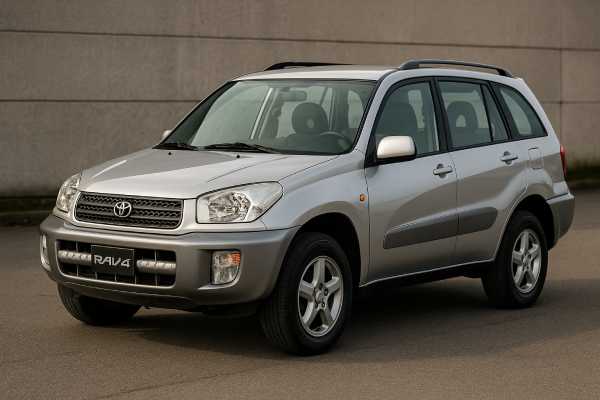
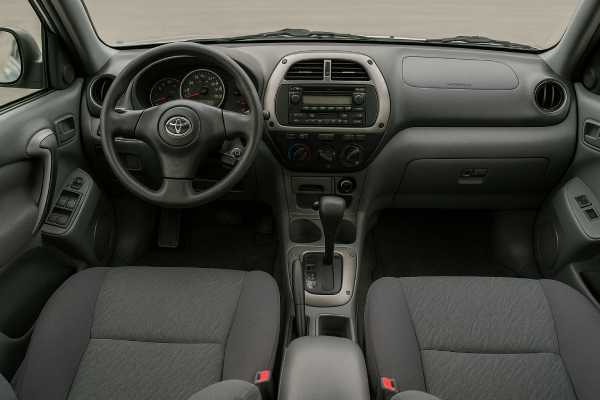
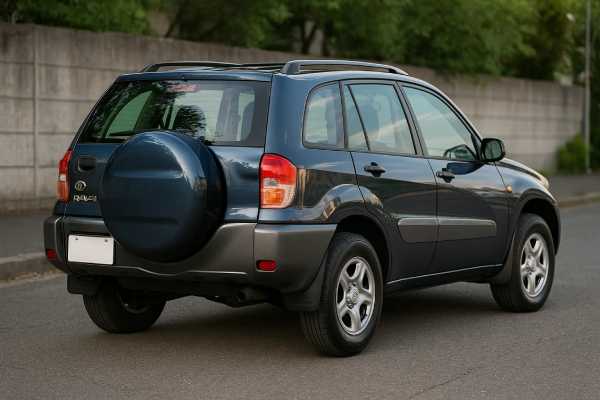
The second-generation Toyota RAV4 with the 2.0-litre 1CD-FTV D-4D engine is remembered for strong mid-range torque, stout real-world economy, and long-haul durability. In the 2001–2003 window, European-market diesels paired Toyota’s common-rail four-cylinder with a five-speed manual and SUV-friendly gearing. One important detail up front: in period, the D-4D was primarily sold with full-time four-wheel drive in Europe; a factory FWD diesel configuration was rare to nonexistent depending on country and model year. Because many buyers and owners still search by “FWD diesel,” this guide focuses on the 2.0 D-4D powertrain and chassis package common to all early XA20 diesels and clearly flags where figures are driveline-dependent. If you are evaluating a claimed FWD diesel, verify its build plate and VIN because many such listings are either petrol FWD models or later conversions. With that context, you can expect honest fuel use, a light yet practical cabin, and straightforward mechanicals that reward regular servicing.
Fast Facts
- Torquey 2.0 D-4D (250 Nm) pulls cleanly from low rpm and cruises efficiently.
- Compact footprint, tidy turning circle (≈5.3 m), and good packaging for five.
- Five-speed manual ratios suit mixed city/highway use; braked towing rated to 1,500 kg.
- Watch for suction control valve (SCV) wear and EGR soot; timing belt is routine service.
- Typical oil and filter interval: 15,000 km or 12 months (use ACEA B4/C3 5W-30 meeting the spec).
Explore the sections
- RAV4 D-4D Detailed Overview
- RAV4 D-4D Specs and Data
- Trims, Options, Safety and ADAS
- Reliability, Issues and Service Actions
- Maintenance and Buyer Guide
- Driving and Performance
- RAV4 vs Rivals (2001–2003)
RAV4 D-4D Detailed Overview
Toyota’s early-2000s 2.0-litre D-4D (engine code 1CD-FTV) gave the second-generation RAV4 a useful dose of low-rpm shove and long-distance frugality. It is a 1,995 cc inline-four with common-rail direct injection, a variable-nozzle turbocharger, and an intercooler. Output is rated at 116 hp (85 kW) at 4,000 rpm and 250 Nm (184 lb-ft) from roughly 1,800–3,000 rpm, which is exactly where owners spend most of their miles. The torque band is broad, the throttle mapping is progressive, and drivability around town is easy even with short gearing.
Chassis fundamentals are simple and proven: MacPherson struts up front and a double-wishbone rear, tuning leaning toward compliance rather than sharpness. Compared with contemporary ladder-frame SUVs, the monocoque RAV4 feels light on its feet; compared with small hatchbacks, you notice a taller seating position, longer travel, and a bit more roll. Noise suppression is decent for the era—diesel clatter softens markedly once warm—and the cabin’s robust plastics wear well.
Driveline note: during 2001–2003 the 2.0 D-4D was typically sold with full-time AWD and a five-speed manual. If you are set on a front-drive diesel configuration, confirm market-specific availability for your VIN, as many FWD references online relate to petrol models. That said, the critical engineering bits—engine, gearbox family, brakes, suspension geometry, and interior packaging—are shared widely across early XA20 variants, so most specifications and maintenance guidance here will apply regardless of driven wheels. In day-to-day use the diesel’s tall fifth gear makes 100–120 km/h (60–75 mph) cruising relaxed, while first and second handle steep ramps and light towing without fuss. The car is at its best carrying people and luggage across mixed routes, returning real-world consumption in the mid-6s to low-7s L/100 km on steady motorways when maintained and driven sensibly.
RAV4 D-4D Specs and Data
Engine and Performance (1CD-FTV)
| Item | Detail |
|---|---|
| Code | 1CD-FTV (D-4D) |
| Layout & cylinders | Inline-4, DOHC, 16-valve; variable-nozzle turbo, intercooler |
| Bore × stroke | 82.2 × 94.0 mm (3.24 × 3.70 in) |
| Displacement | 2.0 L (1,995 cc) |
| Induction | Turbocharged (VNT), intercooled |
| Fuel system | Common-rail direct injection |
| Compression ratio | 18.6:1 |
| Max power | 116 hp (85 kW) @ 4,000 rpm |
| Max torque | 250 Nm (184 lb-ft) @ 1,800–3,000 rpm |
| Timing drive | Belt with auto-tensioner (inspect/replace per schedule) |
| Emissions standard (period EU) | Euro 3 (“Step III”) |
| Rated efficiency (combined) | ≈7.1 L/100 km (33 mpg US / 39.8 mpg UK) |
| Real-world highway @ 120 km/h | ~6.7–7.5 L/100 km (31–35 mpg US / 37–42 mpg UK) |
| Aerodynamics (typical) | Cd ~0.35–0.36; frontal area ~2.2 m² (23.7 ft²) |
Transmission and Driveline
| Item | Detail |
|---|---|
| Transmission | 5-speed manual |
| Gear ratios (1st→5th, R) | 3.833 / 2.045 / 1.333 / 0.972 / 0.731 ; Reverse 3.583 |
| Final drive | Market/axle dependent (typical ~4.2–4.6:1) |
| Drive type | Full-time AWD was common; verify FWD diesel availability by VIN |
Chassis and Dimensions (5-door where noted)
| Item | Detail |
|---|---|
| Suspension (front/rear) | MacPherson strut / Double-wishbone |
| Steering | Rack-and-pinion; ~3.1 turns lock-to-lock |
| Brakes | Front ventilated discs; rear drums (market spec may vary) |
| Wheels/Tyres (tires) | 215/70 R16; optional 235/60 R16 “wide pack” |
| Ground clearance | ~190 mm (7.5 in) |
| Length × width × height | 4,250–4,260 × 1,735–1,785 × 1,705–1,710 mm (167.3–167.7 × 68.3–70.3 × 67.1–67.3 in) |
| Wheelbase | 2,490 mm (98.0 in) — 5-door; 2,280 mm (89.8 in) — 3-door |
| Turning circle (kerb-to-kerb) | ~5.3 m (17.4 ft) — 5-door; ~5.0 m (16.4 ft) — 3-door |
| Kerb (curb) weight | ~1,370–1,485 kg (3,020–3,274 lb) — 5-door |
| GVWR | ~1,925 kg (4,243 lb) — 5-door |
| Fuel tank | 57 L (15.0 US gal / 12.5 UK gal) |
| Cargo volume (seats up/down) | Approx. 410–1,530 L (14.5–54.0 ft³), VDA, depending on seat position and market trim |
Performance and Capability
| Metric | Figure |
|---|---|
| 0–100 km/h (0–62 mph) | ~12.4 s |
| Top speed | ~170 km/h (106 mph) |
| Braking 100–0 km/h | Typical class result ~38–40 m with quality tyres and healthy brakes |
| Towing capacity (braked/unbraked) | 1,500 kg / 640 kg (3,307 lb / 1,411 lb) |
| Payload | ~400–450 kg (880–990 lb), trim-dependent |
| Roof load | ~75 kg (165 lb) with approved bars |
Fluids and Service Capacities
Capacities vary by VIN/year and climate package; always verify against the label/manual.
| System | Specification | Capacity (approx.) |
|---|---|---|
| Engine oil | ACEA B4 or C3, 5W-30 (low-SAPs if DPF-equipped; early models typically non-DPF) | ~5.8–6.0 L (6.1–6.3 US qt) with filter |
| Coolant | Toyota LLC/SLLC (ethylene glycol, HOAT); red or pink per label | ~6–7 L (6.3–7.4 US qt) |
| Manual gearbox | API GL-4 75W-90 | ~2.0–2.3 L (2.1–2.4 US qt) |
| Power steering | Dexron III ATF (if hydraulic pump fitted) | ~0.9–1.0 L (0.95–1.06 US qt) |
| A/C refrigerant | R-134a | ~500 g (17.6 oz) |
| A/C compressor oil | ND-OIL 8 (PAG) | ~120 mL (4.1 fl oz) |
| Key torque specs | Wheel nuts ~103 Nm (76 lb-ft); oil drain plug ~39 Nm (29 lb-ft) |
Electrical
| Item | Detail |
|---|---|
| Alternator output | ~80–90 A (model-year and equipment dependent) |
| 12 V battery | ~60–70 Ah, DIN H5/L2 form factor (verify posts/layout) |
| Glow plugs | 11 V metal-rod type; no spark plugs (diesel) |
Safety and Driver Assistance
| Area | Detail |
|---|---|
| Structure | Monocoque with front and rear crumple zones |
| Airbags | Dual front airbags standard; some trims with front side airbags |
| Restraints/seats | Front WIL (Whiplash Injury Lessening) seats where fitted |
| Brakes/controls | ABS with EBD standard; Brake Assist on higher trims (market-dependent) |
| Stability/traction | Traction control/stability control availability varied by market/trim later in the cycle |
| Child-seat points | ISOFIX/LATCH lower anchors on rear bench (check specific trim/year) |
| Headlights | Halogen reflector; beam pattern and leveling by market |
| Crash testing (period) | Euro programs for early 2000s were evolving; results vary by year/equipment. Verify star/percent scores against the exact VIN and test year for apples-to-apples comparisons. |
Trims, Options, Safety and ADAS
Trim and equipment landscape (Europe, 2001–2003). The diesel-powered RAV4 closely mirrored the petrol line-up with entry “NV,” sport-styled “NRG,” comfort-oriented “GX,” and range-topping “VX” names in several markets. Three- and five-door bodies were offered. Signature features to look for:
- NV (entry): air conditioning, roof rails, remote alarm/immobiliser, ABS with EBD, driver and passenger airbags, steel wheels. Interior is simple and robust, with cloth trim and sliding rear seats.
- NRG: adds styling packs (painted bumpers/cladding), wide-arch/tire package (often 235/60 R16), fog lamps, and alloy wheels.
- GX: popular five-door spec with alloys, better audio, power mirrors, and convenience touches; often the sweet spot for used buyers.
- VX: top trim with more body-color detailing, optional leather inserts, sunroof on some markets, and the richest equipment bundle.
Mechanical differences by trim. Engine and gearbox were consistent across diesel models (2.0 D-4D + 5-speed manual). The wide-pack tyres slightly change stance and turning circle, and braking hardware specifications can vary (some markets used rear drums; others specified rear discs on higher trims). Tow ratings were uniform at 1,500 kg braked when factory-equipped.
Year-to-year notes. During this span, equipment tweaks focused on convenience and pricing; verify if your car has factory fog lamps, roof rail styles, and wheel packages, as these can signal trim upgrades or dealer accessories. Country-specific “special editions” were common and often combined styling items with mid-grade mechanicals.
Safety rating context. Early-2000s European testing evolved quickly (methods, dummies, and scoring). Airbag count and seatbelt pretensioners made the largest difference between base and higher-spec cars. When cross-shopping, compare identical body styles and equipment. Head restraints on WIL seats improved rear-impact comfort. For child seats, check ISOFIX anchor presence and spacing—five-doors are more family-friendly.
ADAS availability. Advanced driver assistance as understood today (AEB, ACC, lane keep) did not apply to the 2001–2003 RAV4. The technology set is conventional: ABS with EBD, sometimes Brake Assist; basic traction/stability control availability in later updates varies by market and trim. After collision repairs that involve airbags or ABS sensors, budget for calibration checks during reassembly.
Identifiers and quick checks.
- VIN/Build plate: confirms body (three/five-door), engine (1CD), and drive layout.
- Interior tells: cloth pattern and steering-wheel trim often match trim grade; larger 235/60 R16 tyres correlate to “wide-pack” styling.
- FWD vs AWD reality: for diesel cars in this period, factory spec is generally AWD. If a car is listed as FWD diesel, confirm the transaxle, driveshaft presence, and VIN data—you may be looking at a petrol-FWD, a later-year exception, or a conversion.
Reliability, Issues and Service Actions
The 1CD-FTV diesel is widely regarded as durable when maintained with quality oil and fuel. Below is a risk-ordered map of typical issues for age-and-mileage examples.
Common (age/miles 120–250k km)
- Suction Control Valve (SCV) wear (low/medium cost):
Symptoms: intermittent limp mode, poor hot restarts, uneven idle.
Cause: wear of the DENSO supply pump’s SCV causing rail pressure deviation.
Remedy: replace SCV(s) with the latest revision; clear DTCs; confirm fuel pressure learned values; refresh fuel filter. - EGR and intake soot (low):
Symptoms: hesitation, smoke on acceleration, elevated fuel use.
Cause: typical soot/oil mist accumulation.
Remedy: remove/clean EGR valve and intake runners; ensure coolant-cooled EGR passages are clear; update software if available. - Dual-mass flywheel (DMF) wear (medium):
Symptoms: rattle at idle with clutch engaged, shudder on take-up.
Cause: fatigue in the DMF springs at high mileage/urban duty cycles.
Remedy: replace DMF and clutch as a set; inspect rear main seal and release bearing.
Occasional
- Turbo VNT vane sticking (medium): sticky geometry from soot leads to over/under-boost codes. Clean mechanism, verify vacuum lines and boost control solenoid, and check for exhaust leaks before condemning the turbo.
- Injector leak-back (medium): hard starts, white smoke, diesel knock. Perform a leak-back test; renew copper washers and, if necessary, the offending injector(s).
- Cooling system aged hoses/radiator (low/medium): typical 20-year consumables; monitor for pink crust (Toyota coolant) at joints.
Rare
- Head gasket issues (high): uncommon on 1CD compared with later 2.2-litre AD engines; watch for pressure in the expansion tank, unexplained coolant loss, or mixing—diagnose carefully.
Electrical and sensors
- MAF contamination (low): clean with MAF-safe spray; check airbox sealing and filter element fit.
- Glow plug/control module faults (low): poor cold starts; test resistance, supply voltage, and module triggers.
Driveline/chassis
- Wheel bearings and rear suspension bushings (medium): age-related; listen for hums and clunks over 50–80 km/h; inspect trailing-arm and control-arm bushes.
- Steering racks (medium): inner tie-rod play and rack seep common on high-milers.
Recalls/TSBs and verification
- Always run an official VIN recall check and review dealer service records. For European vehicles, national distributor databases (or the manufacturer’s service portal) show recall status and completed field actions. Keep paperwork for SCV updates, clutch/DMF replacements, and any ABS/airbag module work.
Pre-purchase checklist (diesel)
- Full service history (oil, fuel filter, timing belt) with dates/mileage.
- Cold-start test and 3rd-gear full-throttle pull (watch for limp/overboost).
- Evidence of EGR/intake cleaning; smoke test for boost leaks.
- Clutch bite point, DMF chatter, and gearbox synchros (2nd/3rd).
- Underbody corrosion at rear subframe mounts and sills; condition of brake lines.
- Suspension play, tyre wear pattern, and alignment report.
- VIN-verified spec (body, engine, driveline).
Maintenance and Buyer Guide
Practical maintenance schedule (distance/time, whichever comes first). Use high-quality parts/fluids that meet Toyota specs, and reset service indicators after each visit.
- Engine oil and filter: every 15,000 km or 12 months. Severe use (short trips, heavy city, dusty) → 10,000 km.
- Fuel filter: every 30,000 km or 2 years (sooner if contaminated fuel suspected). Bleed air carefully after replacement.
- Engine air filter: inspect 15,000 km; replace 30,000–45,000 km (more often in dust).
- Cabin filter: 15,000–20,000 km or annually.
- Coolant: Toyota LLC/SLLC per label—older red LLC typically 3 years/60,000 km; pink SLLC up to 5 years/100,000 km initial, then 3–5 years/50,000–100,000 km. Replace hoses at first signs of softening or cracking.
- Timing belt (1CD-FTV): inspect from 60,000 km; replace ~90,000–105,000 km or 6–8 years. Replace tensioner/idlers and consider water pump proactively.
- Aux/serpentine belt: inspect annually; replace 90,000–120,000 km or if noisy/cracked.
- Manual gearbox oil: renew 80,000–100,000 km (API GL-4 75W-90).
- Brake fluid: flush every 2 years (DOT 3/4 as specified).
- Brake pads/rotors: inspect every 15,000 km; typical pad life 30,000–60,000 km depending on driving.
- Alignment/tyre rotation: rotate 10,000–15,000 km; check alignment annually or after impacts.
- Battery: test yearly from year 3; typical life 5–7 years.
- Glow plugs: test at 100,000–150,000 km or with starting issues; renew in sets if two or more are weak.
- A/C service: performance check every 2–3 years; recover/charge if needed (R-134a).
Fluid call-outs (quick reference).
- Oil: ACEA B4 or C3 5W-30 meeting manufacturer spec; capacity ≈6.0 L with filter.
- Coolant: Toyota LLC/SLLC premix; avoid mixing red and pink types.
- Gearbox: API GL-4 75W-90 (do not substitute GL-5 unless explicitly allowed).
- Power steering: Dexron III ATF (hydraulic systems).
Essential torque values for decision-making.
- Wheel nuts: ~103 Nm (76 lb-ft).
- Oil drain plug: ~39 Nm (29 lb-ft).
- Front caliper guide pins: ~25–35 Nm (18–26 lb-ft) typical; verify by VIN.
Buyer’s guide—what to seek and what to avoid.
- Best bets: well-maintained five-door diesels with intact service records, recent timing belt/water pump, fresh clutch/DMF, and documented SCV replacement.
- Be cautious of: cars with hard hot starts, low power above 2,500 rpm (boost, MAF, or SCV issues), smoky cold starts (injector leak-back), and heavy clutch vibration. Multiple “FWD diesel” adverts in this era can be mis-listed—verify the driveline under the car.
- Reconditioning budget (typical): tyres and alignment; front drop links and rear bushes; brake overhaul; EGR/intake clean; fluids and filters; battery.
- Long-term durability outlook: with clean fuel, timely oil changes, and attention to the belt/DMF/SCV items, 300,000 km+ is realistic. Corrosion prevention on underbody seams and line clips is smart preventative ownership.
Driving and Performance
Ride, handling, and NVH. The XA20 rides with a supple, almost wagon-like motion over broken tarmac. Body roll is present but predictable; damping is tuned for comfort, not lap times. The steering is light at parking speeds and stabilizes nicely at motorway pace, with a modest on-centre deadband typical of early-2000s hydraulically assisted racks. Noise levels are period-correct: a bit of diesel chatter at idle, subdued in cruise; wind rustle becomes noticeable past 120 km/h, and tyre noise varies strongly with brand and size (235-section “wide-pack” tyres add grip and some roar).
Powertrain character. The 1CD-FTV’s strength is accessible torque. From about 1,500 rpm, it builds smoothly and carries through 3,000 rpm, meaning you short-shift and surf mid-range. The five-speed’s ratios are well spaced: first is short for ramps, second/third handle town traffic, and fifth drops revs for economy. Throttle response is linear with minor turbo lag below 1,500 rpm; learning to feed in throttle a moment earlier when rolling from junctions makes it feel lively. On hills, the car holds motorway speed in fifth with light loads; downshift to fourth for brisk overtakes.
Efficiency—real world. In mixed driving, expect 6.5–7.5 L/100 km (31–36 mpg US / 37–43 mpg UK) when healthy and properly inflated. Pure urban routes push into the 8–9 L/100 km range; steady 100–110 km/h cruising can dip into the high-5s L/100 km with gentle right-foot and warm ambient temps. Cold weather, short trips, winter tyres, and roof racks increase consumption—plan for a 10–20% penalty.
Key metrics that matter.
- 0–60 mph (0–100 km/h): about 11.8–12.4 s depending on load, tyres, and gradient.
- 50–80 mph (80–120 km/h) in 4th: mid-7s seconds when on boost; 5th requires a downshift for best response.
- Braking 100–0 km/h: high-30s metres with quality tyres and fresh fluid; budget for fresh pads/rotors on older cars.
- Turning circle: ~5.3 m (5-door), making U-turns easy for the class.
Traction and control. With appropriate all-season or winter tyres, the platform is competent on slick roads. Stability systems on early cars are basic or absent depending on trim/year, so tyre choice and driver smoothness are key. Snow chains must match the tyre and wheelwell clearances; consult the manual before fitting.
Load and towing. The diesel’s torque and short first gear make it comfortable pulling small trailers up to the 1,500 kg braked limit, provided the cooling system and clutch are in good condition. On long grades, watch coolant temps and ease back if EGT-related smoke appears. Expect 15–30% fuel-use penalty when towing or fully loaded.
RAV4 vs Rivals (2001–2003)
Against Land Rover Freelander TD4 (BMW diesel). The Freelander offers plush ride and strong off-road features, but ownership costs and electrical niggles can be higher. The RAV4’s D-4D is simpler to live with, and parts pricing is generally friendlier. On the road, the Toyota feels lighter and more consistent.
Against Suzuki Grand Vitara 2.0TD. The Suzuki’s ladder-frame roots deliver good ruggedness, yet the cabin and refinement feel older. Toyota’s diesel is quieter and more economical at motorway speeds; the RAV4 also packages better rear seating (slide/tumble/remove) in five-door form.
Against Nissan X-Trail 2.2 dCi (early years). The X-Trail entered with more power later in the period, plus decent space and kit. However, early dCi injector/turbo issues are more common than the RAV4’s. Toyota’s residual values and long-term reliability reputation tip the scales for many buyers.
Why the RAV4 D-4D still makes sense. It blends compact exterior size with a flexible interior, returns honest economy, and has a mechanical layout that independent shops know well. If you find a car with SCV, belt, and clutch/DMF all up to date—and minimal corrosion—it’s a sensible, low-drama small SUV for daily use.
References
- TOYOTA LAUNCHES D-4D DIESEL ENGINE FOR RAV4 2001 (Press Pack)
- RAV4 D-4D Diesel – Toyota Media Site 2001 (Press Page)
- 2001 Toyota RAV4 2001 (Safety Rating)
- Owner Manuals 2001–2003 (Owner’s Manual Portal)
Disclaimer
This article is for informational purposes and is not a substitute for professional diagnosis or repair. Specifications, torque values, capacities, and service intervals can vary by VIN, market, model year, and equipment. Always confirm procedures and numbers against your vehicle’s official service information and labels.
If this guide helped, please consider sharing it with fellow owners on Facebook, X/Twitter, or your forum of choice to support xcar’s work.