
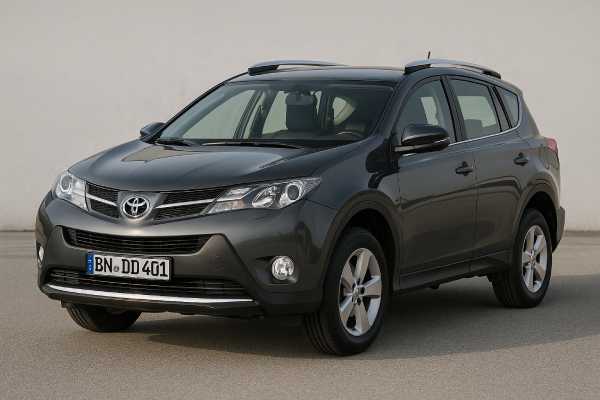
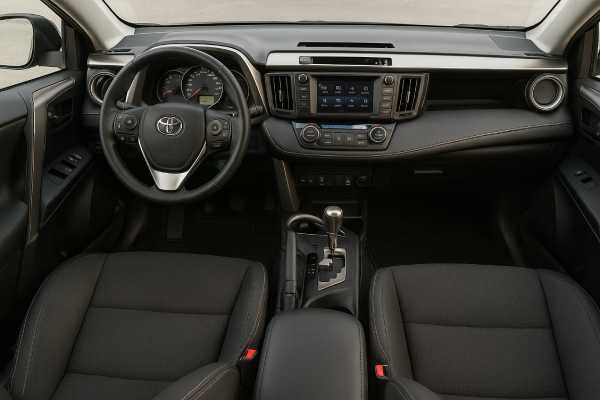
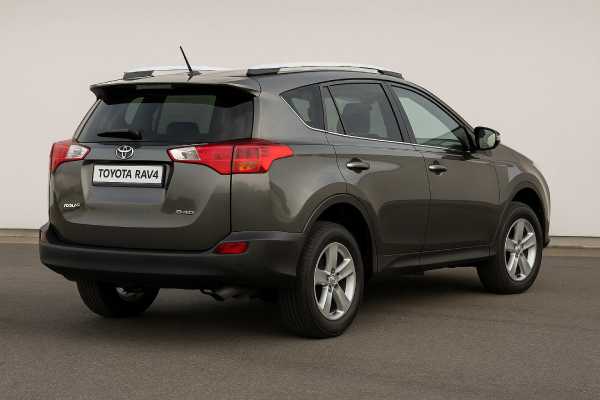
The fourth-generation Toyota RAV4 (XA40) with the 1AD-FTV 2.0-litre D-4D diesel targets buyers who value dependable long-distance economy, practical space, and the straightforward feel of a six-speed manual with front-wheel drive. Across 2013–2015 this variant delivered class-competitive CO₂ and an honest driving character: modest on-paper outputs, yet strong mid-range torque for everyday flexibility. Owners appreciate the spacious 547-litre luggage bay, comfortable ride tune, and Toyota’s reputation for durability. Compared with rival small SUVs of its era, this RAV4 majors on low running costs and cabin practicality rather than outright acceleration or off-road bravado. If you mostly drive on roads and want a diesel RAV4 without the complexity or weight of all-wheel drive, the 2.0 D-4D FWD is the sweet spot—especially for commuters and families who clock big motorway miles and still need a versatile cargo area for weekends.
At a Glance
- Torquey 2.0 D-4D pulls cleanly from low rpm; relaxed motorway cruising in 6th.
- Big, useful boot (547 L VDA) and easy-fold rear seats; cabin wear-resistant.
- Real-world economy typically mid-50s mpg (UK) highway when driven sensibly.
- Watch for EGR/DPF soot build-up on short-trip cars; prefer examples with regular motorway use.
- Engine oil and filter every 10,000 miles / 12 months keeps the D-4D happy.
Guide contents
- RAV4 2.0 D-4D essentials
- RAV4 2.0 D-4D specs
- RAV4 trims, options and safety
- Reliability and service actions
- Maintenance and buyer’s guide
- Driving experience and economy
- RAV4 rivals compared
RAV4 2.0 D-4D essentials
Toyota repositioned the fourth-generation RAV4 to be roomier and more efficient while keeping the straightforward usability that built its name. The FWD diesel model covered here pairs the 1AD-FTV 2.0-litre D-4D (124 hp / 93 kW) with a six-speed manual and tall gearing. It is engineered for economy and low CO₂ rather than headline speed, and that shapes the ownership experience in positive ways: low cruise rpm, solid fuel figures, and fewer expensive wear items than heavier AWD versions.
Packaging is a strong point. The XA40 moved the spare wheel off the tailgate and adopted a top-hinged rear door, immediately improving access. The rear bench folds flat in a single motion and the boot floor is wide and squared-off, so pushchairs, bicycles (wheels off), or DIY store runs are painless. Ride quality is tuned for long-trip comfort; the car is compliant over broken urban tarmac and stable at motorway pace. Steering is light at parking speeds and gathers reassuring weight on the move.
This 2.0 D-4D is the right choice for drivers who live in suburbs or commute inter-city: it’s happiest when warmed through and given a decent run. The turbo’s torque arrives early, so you can short-shift and ride the wave between 1,800–3,000 rpm; that keeps economy high and noise low. Compared with 2.2-litre AWD RAV4s, the FWD diesel costs less to buy and run, and you avoid additional AWD driveline fluids and tyre matching concerns. Against petrol 2.0 Valvematic models, the diesel is calmer at 70–80 mph and will go notably further per tank—especially if you regularly carry people and luggage.
As with any modern diesel, use pattern matters. Cars that did only school-run duty can accumulate soot in the EGR and DPF; seek cars with documented motorway mileage and correct oil grade use. Serviced on time with the right low-SAPS oil, these engines rack up star-high mileages with minimal drama.
RAV4 2.0 D-4D specs
Engine and Performance
| Item | Detail |
|---|---|
| Code | 1AD-FTV (D-4D) |
| Layout & valvetrain | Inline-4, DOHC, 16 valves |
| Bore × stroke | 86.0 × 86.0 mm (3.39 × 3.39 in) |
| Displacement | 2.0 L (1,998–1,998 cc, nominal 1,998–1,999 cc) |
| Induction | Variable-geometry turbo with intercooler |
| Fuel system | Denso common-rail direct injection |
| Compression ratio | ~15.8:1 |
| Max power | 124 hp (93 kW) @ ~3,600 rpm |
| Max torque | 310 Nm (229 lb-ft) @ ~1,600–2,400 rpm |
| Timing drive | Chain |
| Emissions standard | Euro 5 |
| Rated economy (combined) | ~4.9–5.3 L/100 km (48–42 mpg US / 58–51 mpg UK) |
| Real-world highway @ 120 km/h | ~5.5–6.3 L/100 km (43–37 mpg US / 52–45 mpg UK) |
| Aerodynamics | Cd ≈ 0.33 |
Transmission and Driveline
| Item | Detail |
|---|---|
| Transmission | 6-speed manual (EC6x series) |
| Typical gear ratios | 1st 3.54, 2nd 1.91, 3rd 1.31, 4th 0.97, 5th 0.82, 6th 0.70 (typical market fitment) |
| Final drive | ~3.72 (varies by market) |
| Drive type | FWD |
| Differential | Open |
| Refuel to full | ~5 minutes (typical forecourt) |
Chassis and Dimensions
| Item | Detail |
|---|---|
| Front / rear suspension | MacPherson strut / double-wishbone multi-link |
| Steering | Electric power steering (EPS); rack-and-pinion |
| Brakes (front/rear) | Ventilated discs ~296 mm (11.7 in) / solid discs ~281 mm (11.1 in) |
| Wheels / tyres | 225/65 R17 or 235/55 R18 |
| Ground clearance | ~190 mm (7.5 in) |
| Length / width / height | ~4,570 / 1,845 / 1,660 mm (179.9 / 72.6 / 65.4 in) |
| Wheelbase | 2,660 mm (104.7 in) |
| Turning circle (kerb-to-kerb) | ~10.6–11.0 m (34.8–36.1 ft) |
| Curb weight | ~1,500–1,570 kg (3,307–3,461 lb) |
| GVWR | ~2,080–2,140 kg (4,586–4,718 lb) |
| Fuel tank | 60 L (15.9 US gal / 13.2 UK gal) |
| Cargo volume (VDA) | 547 L seats up / ~1,746 L seats folded (19.3 / 61.7 ft³) |
Performance and Capability
| Item | Detail |
|---|---|
| 0–100 km/h (0–62 mph) | ~10.5–11.0 s (typical EU test) |
| Top speed | ~180 km/h (112 mph) |
| Braking 100–0 km/h | ~38–40 m (125–131 ft), tyre-dependent |
| Towing capacity (braked / unbraked) | up to ~1,800 kg / 750 kg (3,968 / 1,653 lb), check VIN/market |
| Payload | ~500 kg (1,100 lb), spec-dependent |
| Roof load | 75 kg (165 lb) |
Fluids and Service Capacities
| System | Specification | Capacity |
|---|---|---|
| Engine oil | Low-SAPS ACEA C2 (e.g., 0W-30) | ~5.9 L (6.2 US qt) incl. filter |
| Coolant | Toyota Super Long Life Coolant (SLLC), 50/50 mix | ~7.0–7.5 L (7.4–7.9 US qt) |
| Manual transmission | Toyota MT gear oil LV (75W range) | ~2.3 L (2.4 US qt) |
| A/C refrigerant | R134a | ~450–550 g (16–19 oz) |
| A/C compressor oil | ND-OIL 8 (or per label) | ~120 mL (4.1 fl oz) |
| Key torque values | Wheel nuts 103 Nm (76 lb-ft); oil drain 39 Nm (29 lb-ft) |
Electrical
| Item | Detail |
|---|---|
| Alternator | ~120–130 A |
| 12 V battery | ~70 Ah (EFB/AGM on Stop & Start models) |
| Glow plugs | 5 V type; control via ECU (no spark plugs on diesel) |
Safety and Driver Assistance
| Item | Detail |
|---|---|
| Euro NCAP (2013) | 5-star rating; strong adult/child protection scores |
| Structure / airbags | High-strength steel body; front, side, curtain, and driver knee airbags |
| Stability systems | ABS, EBD, Brake Assist, VSC stability control, TRC traction control |
| ADAS availability (pre-facelift) | Lane Departure Alert limited by market/grade; Blind Spot and RCTA rare; AEB generally not equipped pre-2016 |
Figures vary by market, equipment and test method; confirm exact values against the vehicle’s documentation and VIN plate.
RAV4 trims, options and safety
Across Europe, grade names varied slightly by country, but the structure was similar: Active (entry), Icon/Icon Plus (mid), and Invincible (range-topper). The diesel FWD typically appeared from mid grade upwards. Key differences owners will notice:
- Wheels and tyres: 17-inch alloys standard on most FWD diesels; 18-inch with lower-profile tyres on high-spec models. The 17-inch package rides more gently and is cheaper to replace; the 18-inch package adds steering response but passes more bump noise.
- Seats and cabin: Cloth on lower grades, leather on top grade; heated front seats often bundled with leather or cold-weather packs. Rear seats split 60:40 and fold nearly flat with a one-touch lever in the boot.
- Infotainment: Toyota Touch (colour screen, Bluetooth, USB) evolves to Touch & Go with navigation and connected services. Higher grades get upgraded audio and camera integration for reversing.
- Lighting and exterior: Projector halogen headlamps were common pre-facelift, with LED DRLs. Front/rear parking sensors and a reversing camera were widely available.
Mechanical differences by trim are minimal on FWD diesels. Suspension tune and steering are shared; there’s no low-range or locking diff on this variant. Towing equipment, roof rails, and protective packs were optional. Country packs might add headlamp washers, heated windscreen, or winter tyres and mats.
Year-to-year changes (2013–2015):
- Launch-year cars set the template: manual FWD diesel positioned as the CO₂ and economy leader.
- Minor running updates improve infotainment speed and mapping coverage; camera guidelines and park assist availability broaden in some markets.
- Safety spec gradually adds more standard fit (e.g., knee airbag) depending on country regulations and grade policy.
Safety ratings and equipment: The XA40 RAV4 achieved a five-star Euro NCAP rating under 2013 protocols, with strong adult and child occupant scores and solid safety-assist performance for the class. Structural integrity is good, with a rigid passenger cell and programmed crumple zones. ISOFIX/LATCH points are fitted outboard rear with easy access; mid-grade and above often include tyre pressure monitoring systems (direct or indirect). Because advanced driver assistance like autonomous emergency braking (AEB) wasn’t yet widespread in this pre-facelift period, shopping by trim has less impact on active safety than on convenience—so choose the spec that fits your daily use (parking camera and sensors are genuinely helpful in tight cities).
Quick identifiers: RAV4 XA40s have the horizontal tailgate lamp signature and top-hinged rear door (no spare on tailgate). VIN and engine code labels in the engine bay confirm 1AD-FTV, and most FWD diesels pair exclusively with the six-speed manual.
Reliability and service actions
The AD-series diesel is generally durable when run on long trips and serviced with the correct low-SAPS oil. Below is a practical map of issues by prevalence and cost impact, with symptoms, likely causes, and remedies.
Common / low-to-medium cost
- EGR valve and cooler soot build-up: rough idle, hesitation, P0400-P0403 codes, increased regeneration frequency. Cause: short journeys and low exhaust temps. Fix: clean EGR and intake tract; update ECU calibration if available; change oil and ensure proper spec (ACEA C2). Encourage weekly 20–30 minute motorway runs.
- DPF saturation (ash and soot): dash warning, limp mode after repeated failed regens. Cause: city-only use, interruptions of passive regen. Fix: forced regeneration with diagnostic tool; check pressure sensor pipes; if ash-loaded at high mileage, consider professional DPF cleaning or replacement.
- Water pump seepage: pink crust at pump weep hole, occasional coolant top-ups. Fix: replace pump and gasket; refill with SLLC and bleed properly. Budget as a wear item around 60–90k miles.
- Dual-mass flywheel/clutch wear: chatter at idle, judder on take-up, slipping under load. Fix: replace clutch kit and DMF. Longer life with smooth torque delivery and no lugging below 1,500 rpm in high gears.
- Battery fatigue (Stop & Start cars): slow cranking in winter. Fix: test and replace with correct EFB/AGM type; re-initialise Stop & Start.
Occasional / medium cost
- Turbo actuator stickiness or VNT soot-binding: intermittent over/underboost. Fix: check vacuum lines and actuator sweep with scan tool; clean VNT and verify boost control; software update where applicable.
- Intake manifold carbon accumulation: uneven idle, reduced top-end pull. Fix: remove and clean manifold; pair with EGR service.
- Front wheel bearings and rear suspension bushings: hum that varies with speed; rear end thump over sharp bumps. Fix: press-in bearing replacement; bush renewals restore ride precision.
Rare / higher cost
- Cylinder head gasket concerns: well-documented mainly on 2AD 2.2-litre; uncommon on 1AD 2.0-litre but not impossible at very high mileage with poor maintenance. Signs: pressurising coolant, unexplained loss, oily residue in expansion tank. Fix: pressure test; if positive, plan head gasket and any head refurbishment. A thorough service history mitigates risk.
- ECU/DPF pressure sensor faults: implausible differential pressure readings trigger limp mode. Fix: inspect sensor and hoses; replace sensor; flash ECU if updated logic available.
Recalls and campaigns (EU examples)
- Power window master switch (PWMS): risk of stickiness/overheating on certain Toyota models, RAV4 included in some markets and build ranges. Remedy is switch inspection and application of protective grease or replacement.
- Airbag supplier-related campaigns: limited applicability by VIN in this generation/market; always verify.
How to verify work done: Use the official VIN recall checker for your market and keep dealer printouts. Ask for invoices proving EGR/DPF servicing and coolant pump replacement, plus any ECU reflash notes (DPF logic, idle stability).
Pre-purchase requests:
- Full service history with annual oil changes using ACEA C2 low-SAPS oil.
- Evidence of regular long trips (regeneration-friendly use).
- Battery test (Stop & Start), and DPF soot/ash status printout if available.
- Recent brake and clutch work, tyre age/brand matching, and alignment sheet.
Maintenance and buyer’s guide
Practical maintenance schedule (typical EU practice; check your handbook):
- Engine oil & filter: every 10,000 miles / 12 months. Use ACEA C2 low-SAPS (e.g., 0W-30) to protect the DPF.
- Engine air filter: inspect each year; replace every 20,000–30,000 miles (2–3 years) depending on environment.
- Cabin filter: every 12 months (sooner in urban/pollen-heavy regions).
- Fuel filter (diesel): replace ~30,000 miles / 3 years or sooner if poor-quality fuel suspected.
- Coolant (SLLC): first change at 10 years / 100,000 miles (160,000 km), then every 5 years / 50,000 miles.
- Manual transmission oil: inspect at 60,000 miles; replace ~60,000–90,000 miles if shifting feel deteriorates (use MT LV spec).
- Aux/serpentine belt & hoses: inspect annually; belt typically 60,000–90,000 miles.
- Brake fluid: replace every 2 years regardless of mileage.
- Brake pads/rotors: inspect at each service; motorway cars often run long intervals; city cars wear faster.
- Tyres: rotate every 10,000–12,000 miles; maintain even wear, especially with 18-inch options.
- Timing chain: no fixed interval; listen for rattle on cold start, check for correlation codes; replace components only if out of spec.
- EGR/Intake clean: preventative clean ~60,000–90,000 miles (sooner for city cycles).
- 12 V battery: test annually after year 4 (earlier on Stop & Start cars).
Fluid notes and capacities: See the Specs tables above for quick-decision numbers. Always match the exact spec on the oil cap/handbook label and the A/C under-bonnet placard. Under- or over-filling the A/C system affects cooling and compressor life.
DIY torque essentials: Wheel nuts 103 Nm (76 lb-ft); engine drain plug 39 Nm (29 lb-ft). Tighten fasteners on clean threads, torque with a calibrated wrench, and recheck after wheel or brake work.
Buyer’s walk-around checklist:
- Start cold: smoke test (there shouldn’t be visible blue/white), listen for rattle (chain/tensioner), confirm glow plug light cycle.
- EGR/DPF behaviour: smooth idle, no soot smell, no limp mode. Ask when the last regeneration-friendly run occurred.
- Clutch/DMF: hill start in 2nd; feel for slip or shudder; listen for rattle with clutch in/out.
- Cooling system: steady temps, no coolant loss, radiator/hoses dry, no sweet smell.
- Suspension/steering: track straight, no knocks over speed bumps; check rear bushes and front bearings on test drive.
- Tyres: quality brand, four matched or properly paired; even wear; 18-inch wheels are more pothole-sensitive.
- Electrics: window switches, mirrors, locks, camera, audio, HVAC; verify any recall for the power window master switch.
Recommended picks: Mid-grade cars (Icon/Icon Plus) with 17-inch wheels, camera/sensors, and a tidy service file of annual oil changes and periodic EGR cleaning. Avoid poorly-maintained city-only cars with frequent DPF warnings or obvious clutch judder unless priced to recondition.
Durability outlook: With proper oil, clean intake/DPF hardware, and long-run usage, the 1AD-FTV RAV4 is capable of very high mileages while keeping repair costs predictable.
Driving experience and economy
Ride and refinement: This FWD diesel aims for calm progress rather than sportiness. The suspension filters out broken city surfaces cleanly, and body control is tidy at motorway speed. At 70–80 mph in sixth, revs are low and the cabin settles to a quiet hum; wind and road noise are modest for the class (tyre choice makes a difference—touring compounds are quieter than aggressive “SUV” patterns).
Steering and handling: EPS assistance is light in car parks and gains reassuring weight on the move. Cornering balance is mild understeer if you over-commit on cold tyres, but the chassis responds neatly to smooth inputs. Stability control cuts in unobtrusively if you lift mid-bend on wet roads. The FWD layout saves mass over the nose versus AWD models, which helps ride compliance over patched surfaces.
Powertrain character: The 1AD-FTV’s best work happens from about 1,800 to 3,000 rpm. Short-shift there and it feels willing; push beyond 3,500 rpm and returns diminish, so there’s no point chasing the redline. The six-speed manual is geared tall for economy; use fifth on rolling A-roads and only slot sixth once you’re settled above ~60 mph (100 km/h). Clutch take-up is progressive; any judder or slip suggests wear.
Braking performance: Pedal feel is consistent, with a firm top-of-travel response and linear bite. Repeated motorway stops are handled without drama; look for quality aftermarket pads/discs or genuine Toyota parts to preserve feel.
Real-world efficiency:
- Urban: ~6.5–7.5 L/100 km (36–31 mpg US / 43–38 mpg UK), sensitive to trip length and traffic.
- Mixed: ~5.8–6.3 L/100 km (40–37 mpg US / 48–45 mpg UK).
- Highway (100–120 km/h / 60–75 mph): ~5.3–6.0 L/100 km (44–39 mpg US / 53–47 mpg UK).
Cold weather, short hops, roof boxes, or wide/tall tyres can add 0.5–1.0 L/100 km. Conversely, steady 90–100 km/h runs on warm days often beat the trip computer.
Load and towing: With passengers and luggage, the diesel’s torque keeps pace without frequent downshifts; on long climbs drop to fifth to keep EGTs and coolant temps happy. Braked tow ratings up to ~1,800 kg are available depending on country and equipment—fit a quality towbar wiring kit, stay on top of rear pad wear, and budget +2–3 L/100 km on fuel when towing a medium caravan.
RAV4 rivals compared
- Honda CR-V 1.6 i-DTEC (120/160 hp): The 120 hp FWD CR-V edges the RAV4 on official economy and cabin polish; the Toyota fights back with a bigger boot and simpler spec logic. Honda’s 160 hp/9-speed auto AWD is faster but sits in a different price/weight class than this FWD RAV4 diesel.
- Mazda CX-5 2.2 Skyactiv-D (150 hp): The CX-5 steers more sweetly and feels lighter on its feet. The RAV4 counters with a more upright driving position and, in many markets, better dealer coverage. Maintenance discipline (oil quality, DPF run conditions) is equally crucial on both.
- Nissan Qashqai 1.6 dCi (130 hp): Smaller footprint and easier to park, with fine motorway economy. The RAV4 offers more interior width, a larger boot, and a tougher suspension tune for bad roads.
- Volkswagen Tiguan 2.0 TDI (140/150 hp): Feels premium inside and can be very quiet on the move. Running costs and parts pricing generally higher. RAV4’s ownership simplicity and long-term reliability reputation are its ace.
- Ford Kuga 2.0 TDCi (140/150 hp): The dynamic pick of the bunch if you enjoy back roads. The Toyota is calmer and typically cheaper to maintain over high mileages, with easier parts availability outside major cities.
Bottom line: If you value predictable costs, space, and honest long-haul economy, the RAV4 2.0 D-4D FWD remains a smart used buy. It’s not the last word in driver engagement, but it quietly excels at the jobs most families ask of their SUV.
References
- Five-Star Safety Ratings For New Toyota Auris And RAV4 2013 (Safety Rating)
- All-New Toyota RAV4 Delivers More Choice, Greater Appeal, More Green Cred 2013 (Press Information)
- Euro NCAP | Latest Safety Ratings 2013 (Safety Rating)
Disclaimer
This guide is for informational purposes only and is not a substitute for professional diagnosis or repair. Specifications, torque values, service intervals, and procedures vary by VIN, market, year, and equipment level. Always verify details against your vehicle’s official owner’s manual and service documentation before performing maintenance or repairs.
If this article helped, please consider sharing it with fellow owners on Facebook or X/Twitter to support xcar’s work. Thank you!