
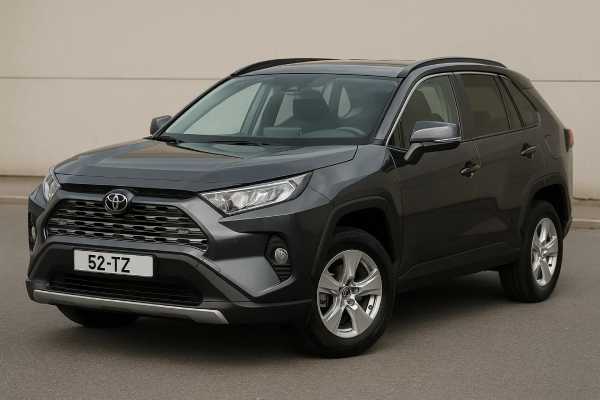
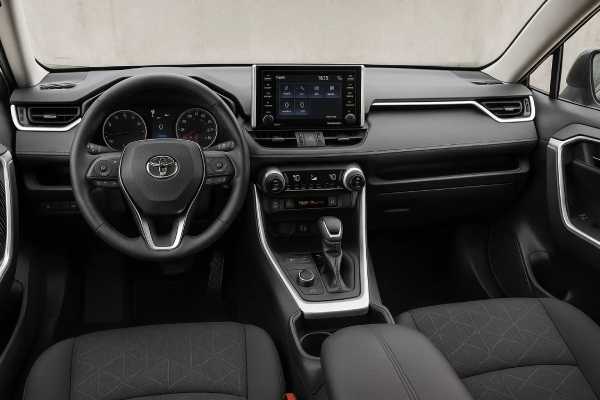
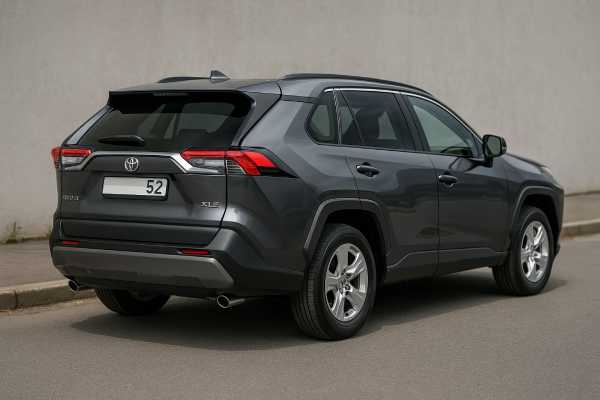
The front-wheel-drive Toyota RAV4 Hybrid (XA50) pairs Toyota’s A25A-FXS 2.5-liter Atkinson-cycle four with a compact electric drive for a combined 218 hp and quietly confident everyday performance. Built on the TNGA-K platform, it brings a stiffer body, better crash performance, and a calmer ride than the prior generation. The hybrid system’s party trick is simple ownership: timing chain, long-life coolant, no conventional alternator or starter, and an eCVT without clutches or shift shocks. In city use it routinely glides on electric power at low speeds, then leans on strong midrange torque for on-ramps while keeping revs modest. Safety tech is generous and standard, cabin space is box-friendly, and real-world economy remains impressive even on 18-inch wheels. If you need the practicality of a midsize SUV with small-car fuel bills—and prefer the lighter feel of front-drive—the RAV4 Hybrid FWD (2019–2021) is one of the most balanced choices of its era.
Key Takeaways
- Real-world efficiency leader: smooth Atkinson-cycle 2.5 plus strong electric assist keeps revs low and mpg high.
- Big-car usefulness: adult-friendly rear bench, square cargo bay, and generous ground clearance.
- Calm ownership: chain-driven cams, long-life fluids, and eCVT with very few wear parts.
- Caveat: ADAS camera/radar must be calibrated after windshield or bumper work to avoid false alerts.
- Typical service: engine oil and filter every 10,000 miles / 12 months (or 15,000 km / 12 months).
Guide contents
- Hybrid RAV4 FWD Overview
- RAV4 Hybrid FWD Specs
- RAV4 Hybrid FWD Trims and Safety
- Reliability and Service Actions
- Maintenance and Buyer’s Guide
- Driving and Performance
- RAV4 Hybrid vs Rivals
Hybrid RAV4 FWD Overview
The fifth-generation RAV4 launched on the TNGA-K architecture with a focus on structural rigidity, suspension geometry, and refinement. In Hybrid FWD form, the drivetrain is built around the A25A-FXS 2.5-liter Atkinson-cycle inline-four (long stroke, high-tumble ports, cooled EGR, and a high 14.0:1 compression ratio) working with a permanent-magnet traction motor through the P610 e-CVT transaxle. A compact lithium-ion traction battery (chemistry may vary by market/trim) lives under the rear bench, preserving cargo space. Total system output is 218 hp (160 kW)—distinct from the AWD-i version (which adds a small rear motor and rates 219 hp in many markets).
Unlike a conventional automatic, the hybrid’s e-CVT uses a planetary gearset with two motor-generators: MG2 drives the wheels and regenerates; MG1 starts the engine and varies ratio. The result is near-seamless city progress and low, steady rpm at cruise. There’s no alternator or belt-driven starter to service; brake pads last long thanks to strong regenerative deceleration, and the engine’s thermal management reaches operating temperature quickly for reduced wear. In day-to-day use the Hybrid FWD feels lighter on its nose and a touch more eager to rotate than its AWD-i sibling, while still delivering the composure, quietness, and simple ergonomics that made XA50 a best-seller.
Inside, the RAV4’s upright seating and big glass area give easy visibility. Physical knobs remain for climate and volume, the rear doors open wide for child seats, and the cargo bay is square with a low liftover. Toyota Safety Sense 2.0 is standard, adding pre-collision braking (with pedestrian and cyclist detection), adaptive cruise, lane support functions, and traffic sign assist. The overall package favors owners who want low running risk, strong safety performance, and family-proof practicality with fuel costs that undercut most diesel and turbo-petrol rivals.
RAV4 Hybrid FWD Specs
Powertrain and Efficiency
| Item | Data |
|---|---|
| Engine code | A25A-FXS (Dynamic Force, Atkinson cycle) |
| Layout & valvetrain | Inline-4, DOHC, Dual VVT-i (VVT-iE intake), 4 valves/cyl |
| Bore × stroke | 87.5 × 103.4 mm (3.44 × 4.07 in) |
| Displacement | 2,487 cc (2.5 L) |
| Induction & fuel | Naturally aspirated, D-4S dual injection (port + direct) |
| Compression ratio | 14.0:1 (typical hybrid calibration) |
| Front traction motor (MG2) | Permanent-magnet synchronous (PMSM), single front axle |
| System voltage | ~650 V nominal |
| Traction battery | Li-ion (market/grade-dependent NiMH on some builds), ~1.6 kWh class |
| Max system output | 218 hp (160 kW) combined (FWD) |
| Engine peak | ~176–178 hp (131–132 kW) @ ~5,700 rpm; 221–227 Nm (163–167 lb-ft) |
| Rated efficiency (combined, WLTP) | ~4.5–5.6 L/100 km (52–42 mpg US; 62–50 mpg UK)** |
| Real-world highway @ 120 km/h (75 mph) | ~5.5–6.3 L/100 km (43–37 mpg US; 52–45 mpg UK) |
| Aerodynamics | Cd ~0.32–0.33 (equipment-dependent) |
Why the ranges? Wheels/tyres, equipment mass, climate, and test-cycle revisions vary by market and trim.
Transmission and Driveline (Hybrid)
| Item | Data |
|---|---|
| Transaxle | P610 e-CVT (planetary split; no stepped gears) |
| Drive type | FWD (front-wheel drive) |
| Final drive | ~3.6–3.9 equivalent (calibration-dependent) |
| Differential | Open front; brake-based torque control via VSC |
| Drive modes | Eco, Normal, Sport; EV mode for low-speed short distances |
Chassis and Dimensions
| Item | Data |
|---|---|
| Platform | TNGA-K unibody |
| Suspension (F/R) | MacPherson strut / multi-link |
| Steering | Rack-mounted electric power assist |
| Brakes | 4-wheel discs with regenerative braking integration; front ~305 mm (12.0 in) |
| Wheels/Tyres | 17–19 in; common FWD sizes 225/65R17, 225/60R18 |
| Ground clearance | ~190–200 mm (7.5–7.9 in), by grade |
| Length / width / height | ~4,600 / 1,855 / 1,685–1,705 mm (181.1 / 73.0 / 66.3–67.1 in) |
| Wheelbase | 2,690 mm (105.9 in) |
| Turning circle | ~11.0–11.4 m (36–37 ft) |
| Curb weight | ~1,630–1,690 kg (3,594–3,726 lb), equipment-dependent |
| GVWR | ~2,180–2,240 kg (4,806–4,938 lb) |
| Fuel tank | 55 L (14.5 US gal / 12.1 UK gal) |
| Cargo volume (VDA/SAE) | ~580 L seats up / ~1,690 L seats down (~37.5 / ~69.8 ft³) |
Performance and Capability
| Metric | Value |
|---|---|
| 0–100 km/h (0–62 mph) | ~8.1–8.5 s (tyres/grade/weather dependent) |
| Top speed | ~180 km/h (112 mph) |
| 100–0 km/h braking | ~37–40 m (62–0 mph ~121–131 ft) |
| Towing (braked) | ~800–1,650 kg (1,764–3,638 lb) by market/equipment—check VIN label |
| Towing (unbraked) | ~750 kg (1,653 lb) |
| Payload | ~450–550 kg (992–1,212 lb) |
| Roof load (dynamic) | ~75 kg (165 lb) incl. crossbars/accessories |
Fluids and Service Capacities
| System | Specification / Capacity |
|---|---|
| Engine oil | SAE 0W-16 (ILSAC GF-6B or superseding); approx. ~4.5–4.8 L (4.8–5.1 qt) with filter |
| Engine coolant | Toyota Super Long Life (pink) premix; change by hybrid interval |
| Inverter/EV coolant | Toyota SLLC (pink)—separate loop from engine |
| Transaxle fluid | Toyota WS family ATF for hybrid transaxles; level via fill/overflow plug |
| A/C refrigerant | R-1234yf; charge mass per under-bonnet label |
| A/C compressor oil | ND-OIL (type per compressor label) |
| Key torque values | Wheel lugs 103 Nm (76 lb-ft); oil drain plug ~39–41 Nm (29–30 lb-ft) |
Electrical
| Item | Data |
|---|---|
| 12-V battery | 45–60 Ah typical (form factor varies; often in cargo area) |
| Spark plugs | Long-life iridium; gap ~0.8–1.1 mm (0.031–0.044 in) |
| DC-DC converter | Integrated with inverter; supplies 12-V system from HV battery |
Safety and Driver Assistance
| Area | Details |
|---|---|
| Crash ratings | Euro NCAP 2019: five stars with strong adult/child/VRU scores |
| Headlights | LED projectors common; adaptive/auto-leveling on upper grades (market-dependent) |
| ADAS suite | Toyota Safety Sense 2.0: AEB with pedestrian/cyclist detection, adaptive cruise, lane departure alert with steering assist, lane tracing (where fitted), road sign assist, automatic high beams; BSM/RCTA widely available; 360° camera and parking sonar/brake on upper trims |
RAV4 Hybrid FWD Trims and Safety
Grade structure (Europe baseline; names vary by country):
- Entry (Active/Comfort-type): 17-inch wheels, cloth seats, manual tailgate, core Safety Sense 2.0, smartphone mirroring. Best efficiency and lowest tyre replacement cost.
- Mid (Icon/Style-type): Dual-zone climate, keyless entry/start (often optional), larger audio screen, extra USBs, privacy glass.
- Upper (Design/Excel-type): 18-inch wheels, upgraded upholstery (SofTex-style or high-grade cloth), power driver seat, power tailgate, parking aids.
- Flagship (Executive/Lounge-type): Largest available displays, premium audio, adaptive/auto-leveling LED headlights, 360° camera, parking sonar with automatic braking.
Functional options worth seeking:
- Winter Pack: heated seats/wheel, washer/wiper de-icer—keeps the lane camera clear in sleet and slush.
- Lighting Upgrade: adaptive/projector LED packages improve beam reach; helps on unlit rural roads.
- Tow Prep: OE wiring and cooling tweaks; verify harness under cargo floor and cut-out behind the bumper.
- Parking Aids: front/rear sonar with auto-brake plus Rear Cross-Traffic Braking; very helpful in urban garages.
Safety essentials, simplified:
The RAV4’s body-in-white routes loads efficiently around the cabin, and TNGA-K adds more ultra-high-strength steel than the previous platform. Isofix/LATCH anchors sit in the outboard rear seats with clearly marked tethers across the rear shelf/seatbacks. Headlight performance depends on package and aim—an alignment check after tyre or suspension work is smart. After any windshield or front-end repair, plan for camera/radar calibration; improper aim can compromise lane-keep smoothness and forward-collision warnings.
Year-to-year changes that matter (2019–2021):
- 2019: XA50 launch. Safety Sense 2.0 standard. Apple CarPlay widely available (Android Auto arrived in many markets for 2020).
- 2020: Broader Android Auto, infotainment stability updates, minor option reshuffles.
- 2021: Detail tweaks to lighting availability, connected services, and head-unit firmware maturity.
Reliability and Service Actions
Overall picture:
The A25A-FXS hybrid system, P610 transaxle, and TNGA-K chassis combine into a very low-drama ownership proposition when maintained on schedule. Most issues recorded in this period are software or setup-related rather than hard-part failures.
Common (low–medium severity):
- Infotainment quirks: slow boot, Bluetooth drops, or CarPlay/Android Auto disconnects on early software.
Fix: multimedia firmware update; use certified data cables; perform a factory reset after major updates. - Tyre/road roar: noise rises with aggressive winter or off-road-look tread patterns.
Fix: rotate every 8–10k km; maintain door-label pressures; consider quieter touring tyres for motorway miles. - Cargo-area creaks: tailgate stops and side cubbies can squeak on cobbles.
Fix: felt tape at contact points, latch preload check, striker grease.
Occasional (medium):
- ADAS warnings after glass/body work: lane camera or radar misalignment leads to beeps, oscillations, or early braking warnings.
Fix: static/dynamic calibration on a level floor with approved targets, followed by a road test on well-marked lanes. - Brake feel inconsistency in stop-go: transition between regen and friction can feel “steppy” with old software or glazed pads.
Fix: ECM/ABS firmware update; verify front pad/rotor condition; perform the manufacturer’s pad bed-in routine.
Less common but important checks:
- Low-pressure fuel pump recall: some vehicles in this era were covered by a pump campaign.
Action: always run an official VIN recall check and keep documentation. - Inverter or DC-DC thermal events: rare; usually associated with connector corrosion or collision damage rather than design flaw.
Action: visual inspection for coolant seepage and connector condition at major services. - 12-V battery drift: short-trip, high-accessory use can drain the small auxiliary battery.
Fix: annual load test after year 3; consider a maintenance charger if the car sits.
**What’s typically *not* a problem here:**
- Hybrid traction battery degradation is modest thanks to conservative state-of-charge windows and liquid cooling.
- e-CVT “failures” are extremely rare; the unit has no clutch packs or band servos, and fluid stays clean when not overheated by towing beyond limits.
Pre-purchase checklist (used RAV4 Hybrid FWD):
- Service history: oil changes at or before 15,000 km / 12 months.
- VIN recall report and ADAS calibration proof if the windshield/bumper were replaced.
- Tyres: four matched with similar tread depth (ESC/ABS logic works best with even rolling radius).
- Brake inspection: look for inner pad wear patterns and corrosion lip from winter use.
- Undercarriage: check subframe seams and rear links in salt regions; inspect HV battery case area for impact damage.
- Coolant loops: confirm pink SLLC in both engine and inverter reservoirs; no contamination or crusting.
Maintenance and Buyer’s Guide
Practical maintenance schedule (Europe baseline; adapt for severe use):
- Engine oil & filter: 15,000 km / 12 months (or 10,000 miles / 12 months). Severe short-trip use: 8–12k km. Use 0W-16 meeting current Toyota/ILSAC spec.
- Tyre rotation & inspection: 8–10k km / 6 months. Check pressures monthly; align annually or after impacts.
- Cabin air filter: Inspect 15k km; replace 15–30k km or 12–24 months depending on air quality.
- Engine air filter: Inspect 15k km; replace 30–45k km earlier in dusty regions.
- Brake fluid: Replace every 3 years.
- Coolant (engine & inverter): First change at 10 years / 160k km, then 5 years / 80k km.
- Spark plugs (iridium): ~190k km (120k miles); inspect sooner if misfire counters rise.
- Hybrid transaxle fluid (WS): Not routine under normal use; for heavy towing/mountain duty, consider drain-and-fill at 90–120k km.
- Accessory belt & hoses: Inspect each service; typical belt life ~150k km on condition.
- 12-V battery: Test yearly after year 3; typical replacement window 4–6 years.
Fluid specifications and essentials:
- Oil capacity: ~4.5–4.8 L (4.8–5.1 qt) with filter. Replace crush washer; torque drain plug ~39–41 Nm (29–30 lb-ft).
- Coolant: Toyota Super Long Life Coolant (pink) in both engine and inverter loops; vacuum-fill when opened.
- Brake fluid: DOT 3/4, change on time rather than mileage.
- Transaxle (WS): fill/level by temperature with vehicle on level ground.
DIY and ownership tips:
- Use EV mode sparingly for parking/queuing; the hybrid will choose EV operation when it’s efficient anyway.
- After any windshield replacement, request printed ADAS calibration results and test lane-trace on a well-marked road.
- For best refinement and economy, prefer 17-inch touring tyres; 18–19 in look sharp but add impact thump and a small mpg penalty.
- If the car sits for weeks, use Ready mode regularly or a smart charger to maintain the 12-V system.
Buyer’s Guide—what to seek/avoid:
- Best value daily: Mid-grade FWD with 17-inch wheels, Winter Pack, and parking sonar.
- Highway family use: Upper grade with adaptive LED headlights and 360° camera; quieter tyres transform long trips.
- Towing/light adventure: Confirm tow rating on the VIN label, proper hitch wiring, and plan a slightly earlier transaxle fluid change if you tow often.
- Avoid: Mismatched tyres, missing recall or calibration paperwork, and cars with questionable accessory wiring near HV components.
Long-term durability outlook:
With routine fluids and alignment care, expect 200,000+ km of low-drama service. The hybrid’s conservative battery management and the e-CVT’s simplicity underpin strong longevity and resale value.
Driving and Performance
Ride, handling, NVH
The TNGA-K chassis gives the RAV4 a planted, quietly confident feel. Straight-ahead stability is strong, mid-corner bumps are shrugged off without extra heave, and the cabin stays composed over patchwork tarmac. Steering is light in town, with a natural build-up around center at motorway speeds. Brake feel—often a hybrid weak point—is tidy here: the handoff from regenerative to friction braking is smooth once pads are bedded and software is current. On 17-inch tyres the ride is notably compliant; 18–19-inch wheels add a trace of impact harshness and more road roar on coarse surfaces.
Powertrain character
In traffic, the hybrid shuffles silently on EV power, wake-starting the engine only when you lean in or request heat. The Atkinson-cycle 2.5 prefers moderate rpm with the e-motor filling low-speed torque, so it rarely sounds strained. The e-CVT holds ratio to keep the engine in its efficient window; push harder in Sport, and it allows brisk passing with fewer rev flares than older hybrids. Down long grades, regen absorbs a surprising amount of energy; the system will blend in friction braking as the battery nears its buffer, keeping pedal travel familiar.
Real-world efficiency
- City: 4.5–5.5 L/100 km (52–43 mpg US; 62–52 mpg UK) with warm temps and balanced driving.
- Motorway (100–120 km/h / 60–75 mph): 5.5–6.3 L/100 km (43–37 mpg US; 52–45 mpg UK) depending on tyres, wind, and load.
- Mixed: 5.0–5.8 L/100 km (47–40 mpg US; 56–48 mpg UK).
Cold weather, winter tyres, roof boxes, and short trips can add 10–25%. Keeping cruise set to 110 km/h instead of 130 km/h is a clear economy win.
Traction and control
This variant is front-drive. Stability control and brake-based torque management are well-tuned; on wet cobbles or light snow, gentle throttle and the system’s quick interventions keep wheelspin tidy. If you live in a snow belt, quality winter tyres remain the decisive upgrade. Hill-start assist is standard.
Load and towing
With the proper equipment, the Hybrid FWD can tow between ~800 and 1,650 kg depending on market and build. Expect a 25–40% economy penalty at motorway speeds when towing boxy trailers. For frequent towing in hilly regions, a conservative transaxle fluid drain-and-fill interval pays back in peace of mind. Roof load is ~75 kg dynamic, including crossbars and accessories—remember to count everything in your payload math.
RAV4 Hybrid vs Rivals
- Honda CR-V Hybrid (e:HEV) FWD: Honda’s two-motor system is exceptionally smooth in town and sips fuel, but the RAV4 answers with stronger motorway efficiency, a larger cargo bay, and broader dealer support.
- Hyundai Tucson Hybrid FWD: Feature-rich cabins and quiet cruising impress. Toyota’s hybrid has a longer track record for long-term reliability and generally better real-world consumption at 120 km/h.
- Kia Sportage Hybrid FWD: Punchy and tech-forward, though some trims ride firmer. The RAV4 counters with resale strength and simpler long-term maintenance.
- Mazda CX-5 2.5 (non-hybrid): Lovely steering and cabin feel, but uses more fuel in mixed driving. The RAV4 Hybrid delivers diesel-like economy without diesel complexities.
- Nissan Qashqai e-Power: EV-like response in town; on motorways, the RAV4’s larger displacement and settled gearing sound more relaxed at load, and its cargo space is greater.
Bottom line: If you value family-car space, five-star safety, and city-friendly fuel bills with motorway calm, the RAV4 Hybrid FWD (2019–2021) is still one of the segment’s most complete everyday tools.
References
- Toyota RAV4 2019 2019 (Safety Rating)
- Owner’s Manual 2019–2021 (Owner’s Manual)
- 2019 Toyota RAV4 Press Kit 2019 (Manufacturer Publication)
- Toyota New Global Architecture (TNGA) 2017 (Manufacturer Publication)
Disclaimer
This article is for informational purposes and is not a substitute for professional diagnosis or official service procedures. Specifications, torque values, capacities, ratings, and maintenance intervals vary by VIN, production date, market, and equipment. Always verify details against your vehicle’s owner’s manual, service manual, and official regulator/manufacturer databases.
If this guide helped, please consider sharing it on Facebook or X/Twitter to support xcar’s work.