
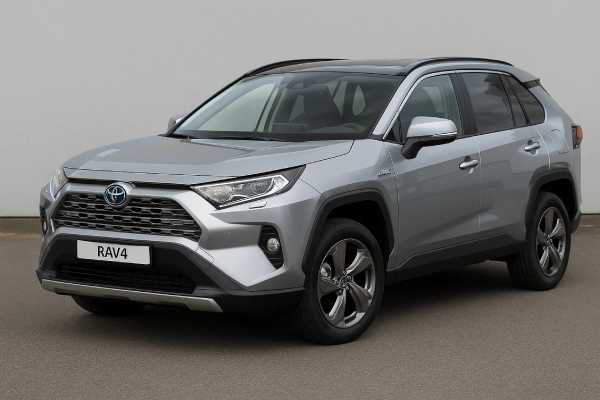
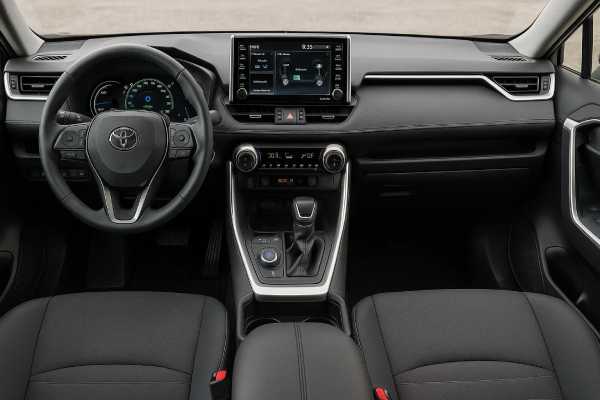
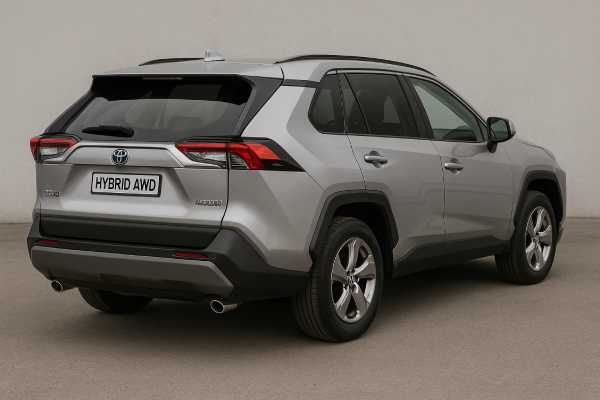
The Toyota RAV4 Prime (plug-in hybrid) took the already efficient RAV4 Hybrid and added a larger lithium-ion battery, a stronger front traction motor, and a dedicated rear e-axle for standard AWD-i. The result is a compact SUV that delivers EV-like daily driving—up to an EPA-rated 42 miles of electric range—while retaining long-trip convenience and 2,500-lb towing. With 302 hp combined, it is the quickest factory RAV4 of its generation yet remains genuinely practical: generous cargo space, a comfortable ride, Toyota’s broad active-safety suite, and straightforward ownership costs. In North America, the 2020–2021 run launched with two trims (SE, XSE); most hardware is shared, while charging speed and feature content vary by package. Owners value seamless hybrid-to-EV transitions, robust winter traction from the rear motor, and real-world efficiency that stays strong even when the pack is depleted. If you want a do-everything family crossover that prioritizes efficiency without feeling slow, this is it.
At a Glance
- Strong daily EV usability: rated 42 mi electric range; 302 hp makes it genuinely quick.
- Standard AWD-i with rear e-motor adds confident all-weather traction without a heavy mechanical driveshaft.
- Cabin and cargo practicality match the regular RAV4; towing rated up to 2,500 lb (braked).
- Caveat: base onboard charger is 3.3 kW; the 6.6 kW Level-2 charger requires specific packages.
- Typical interval: engine oil 0W-16 every 10,000 mi or 12 months (severe duty: 5,000 mi).
Explore the sections
- RAV4 Prime 2020–2021 Overview
- RAV4 Prime Specs and Data
- RAV4 Prime Trims and Safety
- Reliability and Service Actions
- Maintenance and Buyer’s Guide
- Driving, Range and Charging
- How It Compares to Rivals
RAV4 Prime 2020–2021 Overview
The RAV4 Prime arrived for model year 2021 (with late-2020 deliveries) as the plug-in version of the fifth-generation RAV4 (XA50). Under the hood is Toyota’s A25A-FXS 2.5-liter Atkinson-cycle inline-four paired with a stronger front traction motor and a rear e-motor that engages on demand. The battery is an 18.1 kWh lithium-ion pack positioned under the floor to preserve luggage volume and maintain a low center of gravity. System output is a head-turning 302 hp (combined), giving it quick step-off and strong highway passing, yet it remains frugal when driven charge-sustaining.
The AWD-i layout is a hallmark of Toyota’s hybrids and PHEVs. Instead of a mechanical prop shaft, it uses a dedicated rear motor for traction when needed—during launches, corner exits, rain, snow, or on gravel. The logic transparently blends torque between axles, so it behaves predictably to drivers used to mechanical AWD. There’s no low-range transfer case, but Snow and Trail settings sharpen control on slippery or loose surfaces.
Packaging is a strength. Compared with the regular RAV4 Hybrid, cargo and seating space are essentially unchanged, and the rear seat remains adult-friendly. The ride skews comfortable over harsh and the cabin provides the familiar RAV4 ergonomics and storage. Infotainment features vary by trim, but smartphone integration and Toyota Safety Sense 2.0 are standard. For families, ISOFIX/LATCH anchors are easy to reach, and the flat floor helps with installing rear-facing seats.
Charging flexibility is good for a PHEV: Level-1 (120 V) overnight from a wall outlet, or Level-2 (240 V) at home or on the go. Note that fast DC charging is not supported on 2020–2021 North American models. The standard onboard charger is 3.3 kW; select packages add a 6.6 kW onboard charger that roughly halves Level-2 time. Owners who can plug in at home most nights will see the biggest fuel-savings benefit and may drive primarily on electricity for local use.
The RAV4 Prime also retains useful capability: up to 2,500 lb of towing (with proper equipment), roof-rack friendliness, decent ground clearance, and a space-efficient spare-tire well on most configurations. For shoppers who like the RAV4’s “right-sized” footprint but want EV miles without the range anxiety, the Prime lands in a sweet spot.
RAV4 Prime Specs and Data
Powertrain and Efficiency
| Item | Specification |
|---|---|
| Code | A25A-FXS (ICE) + front/rear permanent-magnet synchronous motors |
| Engine layout & cylinders | Inline-4, DOHC, 16 valves (4 per cyl), VVT-i (intake/exhaust) |
| Bore × stroke | 87.5 × 103.5 mm (3.44 × 4.07 in) |
| Displacement | 2.5 L (2,487 cc) |
| Induction | Naturally aspirated (Atkinson cycle) |
| Fuel system | D-4S (combined direct + port injection) |
| Compression ratio | ~14.0:1 (ICE) |
| Max system power | 302 hp (225 kW) total |
| ICE max power/torque | ~176 hp (131 kW) @ ~5,700 rpm / ~221 Nm (163 lb-ft) |
| Front motor | ~134 kW (179 hp), ~270 Nm (199 lb-ft) |
| Rear motor | ~40 kW (53 hp), ~120 Nm (89 lb-ft) |
| System voltage | ~355 V |
| Battery | 18.1 kWh lithium-ion |
| Rated electric range | 42 mi (68 km), EPA |
| Gas-only economy (charge-sustaining) | 38 mpg combined (US) ≈ 6.2 L/100 km (45.6 mpg UK) |
| MPGe (combined) | 94 MPGe |
| Aerodynamics (Cd) | ~0.33 (typical for XA50; varies with wheels/trim) |
Real-world highway at 75 mph (120 km/h): expect ~30–36 miles of EV range depending on temperature, elevation, and HVAC use; charge-sustaining highway economy typically in the low-to-mid-30s mpg US (≈ 7.0–8.0 L/100 km) once the pack is depleted.
Transmission and Driveline / Charging
| Item | Specification |
|---|---|
| Transmission | eCVT (planetary power-split) |
| Drive type | Electronic On-Demand AWD-i (motor-driven rear axle) |
| Differential | Open front; electronically controlled rear motor engagement |
| Onboard AC charger | 3.3 kW standard; 6.6 kW available with specific packages |
| DC fast charge | Not supported (2020–2021 NA models) |
| Replenishment times | 120 V ~12 h (0–100%); 240 V 3.3 kW ~4.5 h; 240 V 6.6 kW ~2.5 h |
Chassis and Dimensions
| Item | Specification |
|---|---|
| Suspension | Front: MacPherson strut; Rear: multi-link |
| Steering | Electric power rack-and-pinion |
| Brakes | 4-wheel discs with regenerative braking; rear solid discs |
| Wheels/Tires | Typical: 18–19 in alloys; common sizes 235/55R19 (XSE) |
| Ground clearance | ~8.0 in (203 mm) |
| Length × Width × Height | ~180.9 × 73.0 × 67.0 in (4,595 × 1,854 × 1,702 mm), minor variance by trim |
| Wheelbase | 105.9 in (2,690 mm) |
| Turning circle (curb-to-curb) | ~37.4 ft (11.4 m) |
| Curb weight | ~4,235–4,300 lb (1,920–1,950 kg) depending on equipment |
| GVWR | ~5,665 lb (2,570 kg) |
| Fuel tank | 14.5 gal (55 L) |
| Cargo volume | Comparable to RAV4 Hybrid; practical, largely flat floor |
| Roof load | Typical RAV4 bar system ~165 lb (75 kg) dynamic (check rack rating) |
Performance and Capability
| Metric | Value |
|---|---|
| 0–60 mph | ~5.7 s (manufacturer estimate) |
| Top speed | ~112 mph (180 km/h), electronically limited |
| Braking 62–0 mph | Typical compact-SUV distances; regen integrates smoothly |
| Towing capacity | 2,500 lb (1,134 kg) braked (properly equipped) |
| Payload | ~1,000–1,100 lb depending on trim |
Fluids and Service Capacities (selected)
| System | Specification / Capacity |
|---|---|
| Engine oil | API SN/ILSAC; 0W-16; approx. 4.8 qt (4.5 L) with filter |
| Coolant (ICE/inverter loops) | Toyota Super Long Life Coolant (pink, HOAT); premixed 50/50; capacity varies by loop—verify by VIN/service manual |
| eCVT/Transaxle | Toyota WS ATF (factory fill; service only if contaminated or per inspection) |
| A/C refrigerant | R-1234yf; charge mass varies by option content—confirm under-hood label |
| Key torque examples | Drain plug ~30 lb-ft (40 Nm); wheel lugs ~76 lb-ft (103 Nm) |
Electrical
| Item | Specification |
|---|---|
| 12-V battery | AGM/lead-acid, trunk-mounted; typical ~45–60 Ah (verify by VIN) |
| DC-DC converter | Converts HV to 12 V for vehicle systems |
| Spark plugs (ICE) | Long-life iridium; typical gap ~0.8 mm (0.031 in) |
Safety and Driver Assistance
All models include Toyota Safety Sense 2.0 (PCS with pedestrian/cyclist detection, full-speed DRCC, LDA with steering assist, LTA, AHB, RSA) plus the Star Safety System (VSC, TRAC, ABS, EBD, BA, Smart Stop). Blind-spot monitor and rear cross-traffic alert are commonly equipped; parking sensors/auto braking and a 360° view camera appear on higher packages.
Crash-test outcomes for the RAV4/RAV4 Prime during this period are strong, with Top Safety Pick awards when equipped with specific headlights; note that some headlight variants score better than others. Head restraint and roof-strength ratings are typically “Good,” while certain updated side and moderate-overlap tests vary by build and headlights—check the exact trim’s headlamp type when shopping.
RAV4 Prime Trims and Safety
Trims (2020–2021): SE and XSE. Both share the same powertrain, battery, and standard AWD-i. The key differences are equipment, wheels/tires, and available packages.
- SE (AWD): 18-inch wheels, cloth seats, 8-inch touchscreen, TSS 2.0, LED headlights/DRLs, power liftgate (often optional), single-zone climate, and the standard 3.3 kW onboard charger. Typical options include a Weather Package (heated front seats/steering wheel), Convenience features, and a power liftgate.
- XSE (AWD): 19-inch wheels, SofTex-trimmed seats with red accents, 9-speaker JBL audio (package-dependent), wireless charging, two-tone paint availability, and access to a Premium Package. The Premium package commonly adds a panoramic glass roof, adaptive front lighting, a color head-up display, Bird’s Eye-View camera, parking assist with automatic braking, a 120V/1500W cargo outlet, and—critically—the 6.6 kW onboard charger that cuts Level-2 time roughly in half.
Quick identifiers:
- Exterior tells: SE on 18-inch wheels with simpler grille accents; XSE two-tone roof option and 19-inch wheels with a more aggressive stance.
- Interior tells: SE cloth/black headliner; XSE red stitching and SofTex. HUD and panoramic roof signal XSE with Premium.
- VIN/build codes: Look for grade code alignment in window stickers; onboard-charger rating appears in spec sheets and charge-time claims.
Year-to-year changes affecting equipment (early run):
- Early availability was constrained; many 2021 XSE units with Premium Package became the only way to get the 6.6 kW charger. Feature content otherwise remained consistent, with minor multimedia and connected-services updates.
Safety Ratings overview (by trim/headlights):
- IIHS: 2021 RAV4 Prime and RAV4 earn Top Safety Pick when equipped with the right headlamp package (some trims score lower on headlight glare/coverage). Small overlap and original side tests generally rate “Good”; certain updated evaluations vary by build.
- NHTSA: Check the specific VIN for star ratings and any campaign actions; towing equipment, wheel/tire packages, and headlamp variants can influence details.
ADAS calibration and service notes:
- Windshield replacement, front-radar or camera bracket disturbance, and bumper cover work can require camera/radar recalibration.
- After rear collision or hatch replacement, Blind-Spot Monitor/RCTA radar alignment may be necessary.
- For plug-in models, high-voltage safety procedures apply to any work near orange-sheathed cables, the battery enclosure, or the inverter; technicians need PHEV training and appropriate PPE.
Child-seat provisions: Two ISOFIX/LATCH positions in the outboard rear seats with clearly marked anchors; top tethers for all rear positions. The relatively flat cushion and door opening aid installation of bulky rear-facing seats.
Reliability and Service Actions
Overall reliability outlook: The RAV4 Prime benefits from Toyota’s mature TNGA power-split hybrid system. Most issues reported on early units are software/charging-logic related or typical RAV4 chassis wear items rather than serious mechanical faults. The high-voltage pack is liquid-cooled and has exhibited low degradation under normal use; Toyota’s hybrid-system warranties provide long-term coverage in North America.
Common / occasional issues (2020–2021):
- Charging speed confusion (common, low severity): Many owners expect 6.6 kW Level-2 charging but have the base 3.3 kW charger. Symptom is 4.5–5 h 240 V charge when ~2.5 h is expected. Remedy: confirm onboard-charger rating via build sheet; upgrade the EVSE won’t increase speed if the vehicle OBC is 3.3 kW.
- Brake feel variations in cold/wet conditions (common, low): Regenerative-to-friction blending can feel different when pads/rotors are cool or damp. Remedy: normal; ensure pad/rotor condition is good, and keep software at latest level.
- 12-V battery sensitivity (occasional, low-medium): Short-trip or storage use can drain the auxiliary battery. Remedy: periodic health checks, smart maintainer if stored; replace with correct spec.
- Windshield/light ADAS calibration after glass/body work (occasional, medium): Warning lights or lane-assist faults after repair. Remedy: perform static/dynamic recalibration per service manual.
Hybrid/PHEV-specific:
- Onboard charger thermal management (occasional, low-medium): High ambient temperatures can slow charge rate to protect components. Remedy: charge during cooler hours; verify inlet/charger cooling paths are unobstructed.
- DC–DC converter / HV component checks (rare but high impact): Follow any recall/TSB addressing potential short circuits or component durability; confirm completion by VIN with a dealer.
Driveline/chassis:
- Wheel-bearing or tire noise (occasional, low-medium): Heavier PHEV curb weight and 19-inch tires can heighten road roar. Remedy: rotate frequently, keep pressures correct, replace bearings as needed.
- Suspension bushings (occasional, medium): High-mileage urban use can age control-arm bushings. Remedy: inspect at every service; replace with OE-quality parts.
Software/ECU updates worth having:
- Hybrid control ECU and battery-management refinements: Improve EV/HV transitions, charging behavior, and diagnostic robustness.
- ADAS module updates: May improve AEB false-positive handling or camera detection performance. Dealers can verify calibration levels during service.
Recalls, TSBs, and extended coverage (highlights for MY2021):
- High-voltage power-conversion component short-circuit risk (2021–2022): Dealer performs inspection/repair per campaign; verify by VIN.
- Headlamp aiming-cap compliance check (selected 2021 builds): Ensures caps are correctly closed to meet beam-aim regulations.
- Routine safety notices: Check for any campaign touching rear-view camera displays or sensor software; completion is quick and free.
Pre-purchase checks to request:
- Full Toyota dealer service history printout including any hybrid software updates.
- Recall/TSB completion screenshot with VIN.
- Hybrid battery health check (pack temperature deltas, state-of-health estimate where available).
- Brake service (pad thickness, rotor condition, evidence of corrosion from low-friction use).
- Tire set age and evenness (19-inch XSE tires are costlier).
- Charging gear included (OEM portable EVSE, evidence of 240 V circuit if home-charged).
Maintenance and Buyer’s Guide
Practical maintenance schedule (distance/time = whichever comes first):
- Engine oil & filter: 0W-16 full-synthetic; 10,000 mi / 12 months under normal service. Severe duty (short trips, dusty use, frequent hills): 5,000 mi / 6 months.
- Engine air filter: Inspect 15,000 mi; replace 30,000–45,000 mi depending on conditions.
- Cabin filter: Inspect 12 months; replace 15,000–20,000 mi (more often in dusty/pollen seasons).
- Coolant (ICE & inverter loops): Toyota Super Long Life Coolant; first replacement typically 100,000 mi / 10 years, then every 50,000 mi / 5 years (confirm by VIN).
- Spark plugs (iridium): 120,000 mi typical.
- Fuel filter: In-tank; service only if contaminated or per fault diagnosis.
- Timing drive: Chain—no scheduled replacement; inspect for noise/timing-correlation faults.
- Serpentine/aux belt: Inspect 60,000 mi; replace if cracking/noise or at 90,000–120,000 mi as preventive.
- eCVT/Transaxle fluid (WS): No routine change specified; check level/condition at major services; replace if contaminated or heavy use.
- Brake fluid: Replace every 3 years regardless of mileage.
- Pads/rotors: Inspect every 10,000–15,000 mi; corrosion can occur with high regen use—perform periodic firm stops to refresh rotors.
- AWD-i drive unit fluids: Rear reduction gear fluid is lifetime unless leaks/contamination; inspect for seepage at major services.
- Tires: Rotate 5,000–7,500 mi; align annually or if edge wear appears.
- 12-V battery: Test annually after year 3; typical replacement window 4–6 years.
- HV battery & cooling: Keep rear-cabin vents clear; dealer can inspect blower and clean as needed, especially with pets/dusty use.
- Regen-brake corrosion check: At spring/fall tire rotations, visually verify rotor condition and sliding-pin lubrication.
Fluid references and capacities (quick decisions):
- Oil: 0W-16, ~4.8 qt with filter; drain-plug ~30 lb-ft—always use a new washer.
- Coolant: SLLC pink premix; do not dilute with green/blue coolants.
- A/C: R-1234yf with specified PAG oil; always charge by weight per under-hood label.
- Tire pressures: Door-jamb label—commonly 35–36 psi cold on OEM sizes.
Buyer’s inspection checklist:
- Exterior/body: Headlamp type and condition (TSP eligibility), windshield camera mount intact, even panel gaps, hitch wiring quality if fitted.
- Underbody: Look for subframe/suspension corrosion, exhaust hangers, and signs of off-road impacts under the front sub-tray.
- Brakes: Rotor surface rust ridges (common on PHEVs), sliding-pin movement.
- HV system: Charge door alignment, onboard-charger function (note reported charge time), verify included EVSE, check history of Level-2 use.
- Driveline: No clunks on throttle tip-in or parking-lot turns; silent rear-motor engagement.
- Tires/wheels: Even wear; avoid heavily staggered replacements that upset AWD-i logic.
- Electronics: Test all ADAS toggles, 360° camera (if equipped), HUD, and trailer lighting (if hitch equipped).
Recommended trims/options to target:
- XSE with Premium Package if you value the 6.6 kW charger, panoramic roof, HUD, and surround view—best daily-charging experience.
- SE with Weather/Convenience if you’re cost-conscious and overnight charging time (3.3 kW) fits your routine.
Long-term durability outlook: Excellent fundamentals. Hybrid components are robust, pack cooling is conservative, and the naturally aspirated A25A-FXS avoids turbo complexity. Expect routine wear items (tires, pads, 12-V battery) and occasional software updates to dominate ownership costs.
Driving, Range and Charging
Ride, handling, NVH: The Prime feels planted thanks to the battery’s floor-mount location. The suspension tune favors comfort; body control remains tidy for a family SUV. Steering is light at parking speeds and naturally weighted on the highway, with good straight-line stability. Braking is consistent once you learn the regen-to-friction blend; pedal travel is slightly longer than in non-hybrid RAV4s but modulation is predictable.
Powertrain character: In EV mode the Prime steps off briskly and cruises serenely around town with instant torque from the front motor; the rear motor adds traction during launches or when the front slips. Transition to the ICE is smooth; under heavy throttle the engine spins up decisively but settles quickly. Drive modes (ECO/Normal/Sport) adjust throttle mapping and steering weight more than suspension behavior. Trail and Snow modes refine traction control and motor torque bias for low-grip surfaces.
Real-world efficiency and range (owner-style mixed use):
- EV-only: 30–46 mi typical depending on speed, temperature, and HVAC. City/suburban loops yield the longest range; steady 70–75 mph shortens it.
- Charge-sustaining (battery depleted): 34–40 mpg US (6.9–5.9 L/100 km) is a common window; winter, roof boxes, and aggressive tires can lower results.
- Cold-weather delta: Expect ~15–30% EV-range reduction below freezing; preconditioning on shore power helps. Heat-pump behavior is efficient in moderate cold; deep-winter conditions rely more on the engine for cabin heat.
Charging performance and tips (2020–2021 hardware):
- Level-1 (120 V): ~12 hours from empty to full; perfect for overnight at a standard outlet on a dedicated 15-A circuit.
- Level-2 (240 V, 3.3 kW OBC): ~4.5 hours.
- Level-2 (240 V, 6.6 kW OBC on XSE Premium): ~2.5 hours.
- No DC fast charging on these model years; plan trips around hybrid operation once EV range is used.
- Best practices: Charge after drives while the pack is warm; schedule charging to finish near departure; in cold/heat, precondition cabin on shore power; keep the charge-port area clean; periodically run in HV mode to circulate engine fluids.
Towing and load behavior: With 2,500 lb rated towing and typical tongue-weight limits, the Prime handles small campers or utility trailers confidently when equipped with proper cooling and hitch hardware. Expect a meaningful efficiency penalty: EV range may cut in half with a boxy trailer, and charge-sustaining economy can dip by 20–35% depending on speed and grade. Stability is solid with correctly distributed loads; trailer-sway control helps on gusty highways.
How It Compares to Rivals
Mitsubishi Outlander PHEV (2021): Offers DC fast charging and all-electric AWD capability, but earlier model-year Outlanders trail the RAV4 Prime in power, EV range, and interior space. Ride comfort is comparable; Toyota’s hybrid smoothness and overall refinement are superior. Toyota’s safety-suite execution and resale are also stronger.
Ford Escape Plug-In Hybrid (FWD only for early years): Efficient and lighter, with an EV range in the same ballpark, but most early Escapes lack AWD in PHEV form—an important differentiator in snowy climates. The RAV4 Prime’s acceleration and traction advantage are decisive for many shoppers. Cargo space is similar; Toyota’s interior feels more robust.
Hyundai Tucson Plug-In Hybrid / Kia Sportage PHEV: These arrived slightly later with competitive EV ranges and modern infotainment. They typically charge at 7.2 kW AC, which narrows the gap with Toyota’s 6.6 kW option. The Toyota counters with stronger combined output, proven long-term hybrid components, and excellent resale value.
Regular RAV4 Hybrid (non-plug-in): If you cannot plug in, the standard Hybrid is simpler and still very efficient. But for commuters with home charging, the Prime dramatically reduces fuel stops and daily operating cost while feeling notably quicker.
Bottom line: In 2020–2021, no compact PHEV SUV matched the RAV4 Prime’s combination of performance (302 hp), EV range (42 miles), standard AWD-i traction, and Toyota’s reliability/ownership profile. If your routine allows regular plugging-in and you choose the 6.6 kW charger, it remains a standout daily-driver formula.
References
- 2021 RAV4 Prime 2021 (Manufacturer Source Book)
- 2021 Toyota RAV4 Prime 2021 (Safety Rating)
- 2021 Toyota RAV4 2021 (Safety Rating)
- Compare Side-by-Side 2021 (EPA Ratings)
- SAFETY RECALL 23TA07 2023 (Recall Bulletin)
Disclaimer
This guide is for informational purposes and is not a substitute for professional diagnosis or repair. Specifications, torque values, capacities, and maintenance intervals can vary by VIN, production date, market, and equipment. Always verify against your vehicle’s Owner’s Manual, Warranty and Maintenance Guide, and the official service information for your specific model. If you plan repairs or calibrations—especially involving high-voltage components or ADAS—use qualified technicians and proper safety procedures.
If this article helped you, please consider sharing it on Facebook or X/Twitter to support xcar’s work. Thanks!