
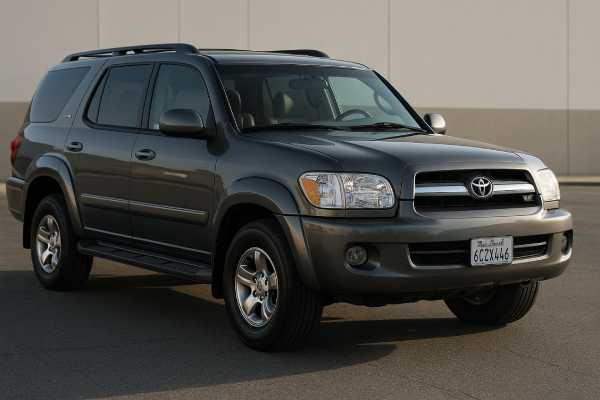

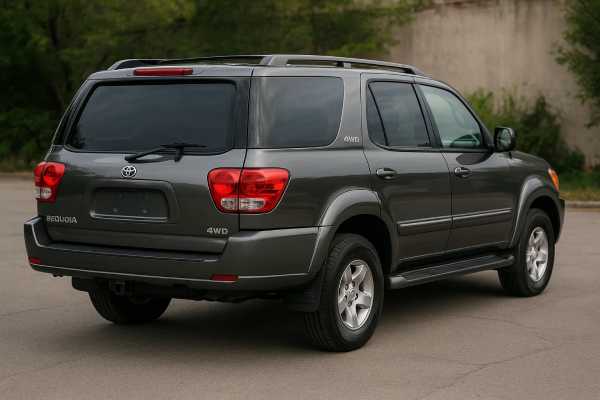
The 2006–2007 Toyota Sequoia 4WD (UCK45) is one of those full-size SUVs that quietly does almost everything well. It combines a proven 2UZ-FE 4.7-liter V8 with a robust four-wheel-drive system, a comfortable eight-seat interior, and body-on-frame construction derived from the Tundra pickup. For many owners, it has enough ground clearance and low-range gearing to handle snow, muddy tracks, and rough forest roads, while still feeling relaxed and civilised on the highway.
These final facelift years brought the more powerful VVT-i engine tune, a 5-speed automatic, refinements to stability control, and small comfort upgrades. At the same time, the Sequoia remained relatively simple by modern standards, with limited electronics and a focus on mechanical durability. This guide walks through the details that matter if you are buying, maintaining, or simply trying to understand a 2006–2007 Sequoia 4WD: technical specs, reliability patterns, maintenance priorities, driving impressions, and how it stacks up against rival full-size SUVs.
Owner Snapshot
- Full-time 4WD with low range, sturdy 2UZ-FE V8, and body-on-frame construction make the Sequoia 4WD a dependable choice for snow, towing, and light off-roading.
- The 5-speed automatic and transfer case are durable when serviced, but benefit from regular fluid changes if the vehicle tows or sees off-road use.
- Common age-related issues include frame and underbody corrosion, worn suspension bushings and ball joints, and rear hatch handle or latch failures.
- Real-world mixed fuel economy typically falls in the 13–16 mpg range, with 4WD and larger tyres pushing consumption upward.
- Key long-term service items include a timing belt and water pump roughly every 90,000–100,000 miles or about 9–10 years, plus coolant and transmission fluid on a consistent schedule.
Quick navigation
- Toyota Sequoia 4WD in Depth
- Toyota Sequoia 4WD Specs
- Sequoia 4WD Grades and Safety
- Reliability and Service Actions
- Maintenance Plan and Buyer’s Guide
- Driving Experience and Real Economy
- Sequoia 4WD Versus Rivals
Toyota Sequoia 4WD in Depth
The 2006–2007 Toyota Sequoia 4WD sits at the end of the first-generation Sequoia run and captures the design at its most mature. Underneath, it shares its basic ladder-frame chassis with the first-generation Tundra. The UCK45 designation identifies a 4WD model with the 2UZ-FE V8, and this facelift era adds VVT-i variable valve timing for improved power and drivability compared with earlier years.
The four-wheel-drive system uses a two-speed transfer case with a center differential, allowing both high-range and low-range operation. Many trucks feature a multi-mode setup that can run in rear-drive, full-time 4WD, or 4WD low. For everyday use, owners typically drive in 2WD or full-time 4WD high; low range is reserved for slow, technical conditions such as steep climbs, deep snow, or sand.
Inside, the Sequoia offers three rows of seating, with a second-row bench or optional captain’s chairs and a third row that folds (but does not fully disappear into the floor). Interior design is straightforward and durable rather than flashy. Materials are typical mid-2000s Toyota: hard-wearing plastics, simple switchgear, and analog gauges.
Key ownership traits include:
- Space and comfort: Enough room for adults in the first two rows and usable space in the third row for shorter trips.
- Mechanical simplicity: No air suspension, no turbochargers, and limited electronics relative to newer SUVs.
- Capability: Towing around 6,500 lb when properly equipped, plus real 4WD hardware and good ground clearance.
- Aging gracefully: Many examples now pass 200,000 miles with original engines and transmissions, provided they have seen reasonable maintenance.
Of course, age has downsides. Rubber components, suspension bushings, and seals are well into their second decade. Rust can be a major concern in regions with road salt. Fuel consumption is high by modern standards, and safety tech is limited to basic stability control and airbags. Still, for buyers who prioritise durability and mechanical honesty, the 2006–2007 Sequoia 4WD remains a very attractive proposition.
Toyota Sequoia 4WD Specs
This section focuses on the technical details of the 2006–2007 Toyota Sequoia 4WD (UCK45) with the 2UZ-FE 4.7-liter V8 and 5-speed automatic.
Engine and Performance
| Item | Specification |
|---|---|
| Engine code | 2UZ-FE (VVT-i) |
| Layout and cylinders | 90° V8, 32-valve DOHC, 4 valves per cylinder |
| Displacement | 4.7 L (4,664 cc) |
| Bore × stroke | approx. 94.0 mm × 84.0 mm (3.70 in × 3.31 in) |
| Induction | Naturally aspirated |
| Fuel system | Multi-point port fuel injection |
| Compression ratio | around 10.0:1 |
| Max power | 273 hp (about 204 kW) around 5,400 rpm |
| Max torque | roughly 320–330 lb-ft (about 435–447 Nm) around 3,400 rpm |
| Timing drive | Belt-driven camshafts (timing belt) |
| Recommended fuel | Regular unleaded (check owner’s manual) |
Efficiency and Emissions
| Item | Specification (typical U.S. 4WD) |
|---|---|
| Rated city economy | about 14 mpg US |
| Rated highway economy | about 17 mpg US |
| Combined estimate | around 15 mpg US |
| Typical real-world mixed | roughly 13–16 mpg depending on load and driving style |
| Emissions standard | ULEV-II (varies by market and calibration) |
Transmission and Driveline
| Item | Specification |
|---|---|
| Transmission | 5-speed automatic (electronically controlled, Aisin family) |
| Drive type | 4WD with 2-speed transfer case |
| Transfer case | High and low range, center differential with lock function on many models |
| Typical final drive ratio | around 3.91–4.10:1 (varies by axle and tow package) |
| Front differential | Hypoid gear, open diff |
| Rear differential | Hypoid gear, open diff (LSD available only via aftermarket) |
Chassis and Dimensions
| Item | Specification |
|---|---|
| Construction | Body-on-frame ladder chassis |
| Front suspension | Independent double-wishbone with coil springs and anti-roll bar |
| Rear suspension | Solid live axle with coils, four-link, and anti-roll bar |
| Steering | Rack-and-pinion, hydraulic power assist |
| Front brakes | Ventilated discs with ABS |
| Rear brakes | Solid or ventilated discs with ABS (depending on market) |
| Wheelbase | about 118.1 in (3,000 mm) |
| Overall length | roughly 203–205 in (approx. 5,160–5,200 mm) |
| Overall width | about 77–78 in (approx. 1,950–1,980 mm) |
| Overall height | around 73–75 in (approx. 1,850–1,900 mm) with roof rack |
| Ground clearance | roughly 9–10 in (230–250 mm) |
| Curb weight | about 5,300–5,500 lb (approx. 2,400–2,500 kg) depending on trim and equipment |
| Fuel tank | around 26–27 US gal (98–102 L) |
Performance and Capability
| Item | Approximate value |
|---|---|
| 0–60 mph | high-8 to low-9 seconds (unladen, stock tyres) |
| Top speed | electronically limited, typically around 110–115 mph |
| Towing capacity | around 6,500 lb (2,950 kg) with tow package |
| Payload | typically 1,300–1,500 lb (590–680 kg) depending on trim |
| Roof load | commonly around 165 lb (75 kg) with factory rails (check manual) |
Fluids and Service Capacities (typical values)
Always confirm exact capacities and specifications in the official owner’s or service manual for your VIN and market.
| System | Specification and capacity (approx.) |
|---|---|
| Engine oil | 5W-30, around 6.5 qt (6.1 L) with filter |
| Engine coolant | Toyota Super Long Life coolant, roughly 11–13 qt (10–12 L) total system |
| Automatic transmission | Toyota WS ATF, about 12 qt (11 L) total; 3–4 qt (3–4 L) per drain-and-fill |
| Transfer case | Gear or ATF-type oil per manual, typically around 1–2 qt (1–2 L) |
| Front differential | 75W-90 GL-5, around 1.5–2 qt (1.4–1.9 L) |
| Rear differential | 75W-90 GL-5, around 3 qt (2.8 L) |
| Power steering | ATF-type fluid (see cap/manual) |
| A/C refrigerant | R-134a; charge amount on under-hood label |
Electrical
| Item | Specification (typical) |
|---|---|
| Alternator | around 130 A output, higher with tow or premium audio packages |
| 12-V battery | Commonly group size 24F or 27F, capacity varies by brand |
| Spark plugs | Long-life platinum or iridium, service interval around 120,000 miles |
Sequoia 4WD Grades and Safety
For 2006–2007, the Sequoia 4WD was generally offered in two main grades in North America: SR5 and Limited. Both share the same basic chassis, engine, and transmission, but equipment levels and interior trim differ.
SR5 and Limited Grades
SR5 4WD
The SR5 is the more utilitarian grade but still well equipped for family use. Typical features include:
- Cloth upholstery with a power driver’s seat in many trucks.
- Second-row bench for eight-passenger capacity (captain’s chairs in some configurations).
- Manual or single-zone automatic climate control; rear HVAC on many vehicles.
- 16-inch or 17-inch alloy wheels depending on packages.
- Roof rack, running boards, and a Class III/IV tow hitch on tow-equipped trucks.
- Basic audio system, sometimes with optional upgraded speakers.
SR5 interior finishes are simpler, with less chrome and wood-tone trim, but the underlying hardware is essentially the same as higher grades.
Limited 4WD
The Limited grade adds comfort and convenience features rather than major mechanical changes. Typical equipment includes:
- Leather upholstery with heated front seats and power adjustments on both sides in many builds.
- Premium JBL audio and sometimes factory navigation.
- Automatic dual- or tri-zone climate control.
- 17-inch wheels with more upscale designs.
- Additional chrome trim, color-keyed fender flares, and often a power moonroof.
- Extra convenience features such as memory driver’s seat and steering-wheel audio controls.
Mechanically, both SR5 and Limited share the 2UZ-FE V8, 5-speed automatic, 4WD transfer case, and the same basic brake and suspension layouts. Tow ratings and axle ratios are more dependent on tow package and axle build than on grade name.
Options and Visual Identifiers
Important options that affect how the vehicle drives or tows include:
- Tow package: Factory hitch integrated into the frame, 7-pin trailer connector, and often an auxiliary transmission cooler.
- Second-row configuration: Bench (8 seats) or captain’s chairs (7 seats).
- Audio and navigation: Premium JBL systems and in-dash navigation units in Limited models and well-spec’d SR5s.
VIN decode tools, the door-jamb build label, and original window stickers are very helpful for confirming factory options. Some used-market listings overstate equipment, so it is worth verifying.
Safety Systems and Crash Performance
Safety equipment on 2006–2007 Sequoia 4WD models generally includes:
- Dual-stage front airbags.
- Front seat-mounted side airbags.
- Side curtain airbags for at least the first two rows on most late-run trucks.
- Three-point belts in all seating positions and child-seat anchor points in the second row.
- Anti-lock braking system (ABS) with electronic brake-force distribution.
- Vehicle Stability Control (VSC) with traction control (TRAC).
The Sequoia predates modern suites of driver-assistance systems. You will not find factory automatic emergency braking, lane-keeping systems, blind-spot monitoring, or adaptive cruise control. For reversing, many owners retrofit a camera via an aftermarket head unit or stand-alone display.
Crash-test ratings from the mid-2000s generally show strong performance in frontal impact tests, with acceptable to good side-impact results when side airbags are fitted. Rollover ratings are more modest, reflecting the high center of gravity typical of large body-on-frame SUVs. When comparing to newer vehicles, remember that testing standards have become stricter over time.
Service and Calibration Considerations
Unlike modern vehicles with cameras and radar sensors, the Sequoia’s stability and brake systems require only basic calibrations after major work:
- Zero-point calibration for the yaw-rate and steering-angle sensors after suspension or alignment work.
- Careful adherence to tyre sizes and pressures to keep ABS and stability algorithms within their expected range.
After any collision or airbag deployment, repairs must follow the factory service manual, including SRS diagnostics and component replacement. Rust or impact damage around seat-belt anchor points and airbag modules deserves special attention in pre-purchase inspections.
Reliability and Service Actions
The 2UZ-FE V8 and associated driveline hardware have a strong reputation for durability, but by 2006–2007 these vehicles are now old enough that patterns of age-related wear are clear. Thinking in terms of prevalence (common, occasional, rare) and cost (low, medium, high) is useful.
Engine and Cooling
Common, usually low to medium cost
- Timing belt and water pump aging: The belt is time-sensitive. If the replacement interval is exceeded, the risk of failure rises. A thorough timing-belt service includes the belt, tensioner, idler pulleys, water pump, and front oil seals. This is a predictable but not trivial expense.
- Valve cover gasket leaks: Seeping gaskets can leave oil traces on the cylinder heads and exhaust manifolds, sometimes causing a light burning smell. Replacement is straightforward but labor-intensive enough that it makes sense to combine with spark plug work.
- Accessory belt and idler wear: Cracking serpentine belts and noisy idler pulleys are common on high-mileage trucks. These are inexpensive parts that, if ignored, can lead to breakdowns.
Occasional, medium cost
- Radiator and coolant-hose deterioration: Plastic-tank radiators and old hoses can crack or seep with age. Replacing the radiator, upper and lower hoses, and thermostat as a preventive package is common on older Sequoias.
- Starter motor fatigue: The starter is located in the engine valley, which can raise labor costs. Symptoms include slow cranking or intermittent no-crank events.
Oil consumption is normally modest; significant consumption often points to neglected oil changes, PCV system issues, or extremely high mileage.
Fuel, Exhaust, and Emissions
- Oxygen sensor aging: Upstream O2 sensors tend to fail with age and mileage, triggering check-engine lights and impacting fuel trims. Replacement is a routine maintenance-type repair.
- Catalytic converter theft or failure: Large catalytic converters on tall SUVs are an easy target in some regions. Genuine replacements are expensive, and cheaper alternatives may not always satisfy emissions testing.
- Evap leaks: Cracked evap hoses or faulty valves can cause evap-system codes. While the parts are usually affordable, diagnosis can take time.
Transmission, Transfer Case, and Axles
The Aisin 5-speed automatic is generally robust, especially if the vehicle has seen regular fluid changes and has not been abused while towing.
- Shift quality issues: Harsh or delayed shifts often improve after a fluid service and, if available, updated control software.
- Transfer-case noise or stiff engagement: Old fluid, infrequent use of 4WD low, or lack of lubrication at linkages can make range shifts stiff. Regular fluid changes and periodic cycling of the 4WD system help.
- Differential leaks and whine: Pinion seals and axle seals can seep over time. Whine under load can indicate worn gears or bearings, more likely on trucks that have towed heavily with low or dirty oil.
Suspension, Steering, and Brakes
These components bear the brunt of vehicle weight, rough roads, and towing.
Common wear items include:
- Lower ball joints and control-arm bushings: Wear leads to clunks, wandering, and uneven tyre wear. Quality replacement components and a proper alignment restore stability.
- Rear suspension bushings: Trailing arms and panhard-rod bushings can soften or crack, causing a loose feel at the rear.
- Shock absorbers: Original shocks are often well past their useful life on older trucks; replacement dramatically improves body control and comfort.
The braking system is straightforward. Typical issues include rusty backing plates, sticking slider pins, and warped front rotors. Regular cleaning and using decent-quality pads and rotors keep braking performance predictable.
Body, Frame, and Electrical
- Frame and underbody corrosion: In snowy or coastal regions, frame rust is often the number-one threat to the Sequoia’s lifespan. Pay special attention to frame rails near suspension mounts, fuel and brake lines, and the areas around the rear axle and spare tyre.
- Rear hatch handle and latch: The plastic outer handle is prone to breaking. Many owners fit metal replacements.
- Window regulators and lock actuators: High-use doors, especially the driver’s side and rear hatch glass, can suffer from slow or non-functional regulators and locks.
Electrically, the Sequoia is simpler than many modern SUVs. Most issues relate to wear and age: failing alternators, tired batteries, corroded ground connections, and aging audio or HVAC controls. Complex network and module problems are less common than in later, more electronics-heavy generations.
Recalls and Service Actions
There are recalls affecting airbags, steering, and other components on some 2006–2007 Sequoia 4WDs. The safest approach as an owner or buyer is to:
- Run the VIN through official recall lookup tools.
- Ask for service records or dealer printouts showing completed campaigns.
- Confirm that airbag-related and safety-critical recalls have been addressed before purchase.
Technical service bulletins (TSBs) also exist for issues such as drivability under certain conditions, noise and vibration, and updated fluid or service recommendations. A dealer or independent shop with access to factory information systems can check whether relevant TSBs have been applied.
Maintenance Plan and Buyer’s Guide
A well-maintained Sequoia 4WD can easily outlast many newer vehicles. The flip side is that neglect is costly. For vehicles now approaching or exceeding 200,000 miles, maintenance history and present condition matter more than odometer numbers alone.
Practical Maintenance Schedule
Use these as general guidelines; always confirm with official documentation for your market.
- Engine oil and filter: Every 5,000 miles or 6 months with quality 5W-30 oil. Severe use (short trips, heavy towing, extreme temperatures) justifies shorter intervals.
- Engine air filter: Inspect every 15,000 miles; replace about every 30,000 miles or more often in dusty conditions.
- Cabin air filter: Every 20,000–30,000 miles or 2–3 years.
- Tyre rotation and alignment check: Rotate every 5,000 miles; check alignment when tyres show uneven wear or after suspension work.
- Spark plugs: Replace long-life plugs around 120,000 miles or 10–12 years.
- Cooling system: Replace Toyota Super Long Life coolant at about 100,000 miles/10 years the first time, then every 50,000 miles/5 years. Many owners reset the clock when they buy a used truck.
- Automatic transmission fluid: Drain-and-fill every 30,000–60,000 miles, especially for trucks that tow or see heavy use.
- Transfer case and differentials: Replace oils every 30,000–60,000 miles, using correct grades.
- Brake fluid: Flush every 3 years regardless of mileage.
- Brake pads and rotors: Inspect at least annually; replace pads when thin or if rotors are scored or warped.
- Serpentine belt and coolant hoses: Inspect annually; expect replacement around 90,000–120,000 miles or when cracking, fraying, or swelling is evident.
- Timing belt and water pump: Replace about every 90,000–100,000 miles or 9–10 years.
- 12-V battery: Test yearly after the third year; many last about 4–6 years.
Fluid Specs and Key Torque Notes
Again, always double-check with official manuals, but as a rough guide:
- Engine oil: 5W-30 meeting Toyota requirements; capacity about 6.5 qt with filter.
- Differential oils: 75W-90 GL-5.
- Transfer case: Correct oil as specified; some use ATF, some gear oil depending on build.
- Oil drain plug torque: often around 29 lb-ft (about 39 Nm).
- Wheel lug nuts: commonly around 80–90 lb-ft.
- Spark plugs: usually around 13–15 lb-ft or as specified; follow the plug manufacturer’s instructions.
Buyer’s Inspection Checklist
When evaluating a used 2006–2007 Sequoia 4WD:
- Frame and rust
- Inspect frame rails, crossmembers, suspension mounts, and the area around the spare tyre.
- Look for heavy flaking rust, perforation, or crusted brake and fuel lines.
- Timing-belt history
- Ask for invoices showing belt, tensioner, and water pump replacement.
- Treat “timing belt done” with no paperwork as unverified.
- Fluids and leaks
- Check engine oil, ATF, coolant, and differential oils for cleanliness and correct levels.
- Look for oil around valve covers, timing cover, and axle seals.
- Suspension, steering, and tyres
- Test drive for clunks over bumps, wandering, vibration, and steering play.
- Check tyre tread depth and wear pattern; uneven wear hints at alignment or suspension issues.
- Brakes
- Feel for pulsation, pulling, or soft pedal.
- Inspect pads and rotors if possible.
- 4WD system
- Engage 4WD high and low on a loose surface to check for proper operation.
- Listen for unusual noises from transfer case or axles.
- Interior and electrical
- Test all windows, locks, seat adjustments, HVAC modes, rear hatch glass, and wipers.
- Look for water leaks at sunroof (if fitted) and rear quarter windows.
- Recalls and TSBs
- Use official recall lookup tools with the VIN.
- Ask for dealer printouts or service receipts showing completed recall work.
Long-Term Durability Outlook
A Sequoia 4WD that has received regular oil changes, periodic fluid services, and at least one full cooling and timing-belt refresh can realistically deliver 250,000–350,000 miles of service. Engines and transmissions often outlast the body and frame, especially in harsh climates where rust becomes the limiting factor. From a budgeting standpoint, assume ongoing costs for fuel, tyres, brakes, and suspension refreshes, but expect relatively few catastrophic failures if maintenance is kept up.
Driving Experience and Real Economy
Behind the wheel, the 2006–2007 Sequoia 4WD feels like a traditional full-size SUV: solid, slightly soft, and unhurried. It is not about sharp cornering or rapid response; instead, it delivers a calm, predictable experience that many owners find reassuring on long trips.
Ride, Handling, and NVH
Ride quality is one of the Sequoia’s strong points. The independent front suspension and coil-sprung rear axle strike a balance between comfort and control. On poor surfaces, the suspension takes the edge off potholes and expansion joints, though there is the expected degree of body movement from a tall, heavy vehicle.
In corners, there is noticeable body roll and understeer if you push hard, but behaviour is consistent and easy to read. Steering is relatively light and somewhat numb by modern standards, yet accurate enough once you adapt to the size. Stability control intervenes gently if grip is exceeded, helping to keep the vehicle in line during abrupt manoeuvres.
Noise levels are respectable for a big, box-shaped SUV. Wind noise remains moderate at highway speeds, while road noise depends heavily on tyre choice. All-terrain tyres introduce more droning, especially on coarse asphalt. The V8 remains subdued during gentle cruising, rising to a smooth growl when the throttle is opened.
Powertrain Character
The 2UZ-FE V8 is smooth, torquey, and tuned for longevity more than outright performance. Throttle response is linear and predictable, with useful torque available from relatively low rpm. In normal driving, the 5-speed automatic shifts early and unobtrusively, keeping engine speed low to save fuel and reduce noise.
Kickdown for passing is not instant by modern standards, but once the transmission drops a gear or two, the Sequoia accelerates with authority. On long grades, the transmission will hold lower gears as needed, especially when towing or fully loaded. There are no complex drive modes to manage—just straightforward automatic behaviour, with the option of manually selecting lower gears for engine braking.
Real-World Fuel Economy
Fuel economy is the main sacrifice that comes with this kind of powertrain and weight. For a typical 4WD Sequoia:
- City driving: Often 12–14 mpg, depending on traffic, trip length, and how often the engine warms fully.
- Highway driving (about 65–70 mph): Commonly 15–17 mpg on stock tyres; higher speeds, headwinds, and roof racks all push the number downward.
- Mixed use: Many owners see 13–16 mpg overall.
4WD hardware, aggressive tyres, roof boxes, and heavy loads can all add friction or drag, further reducing economy. Fluids in good condition, properly inflated tyres, and conservative highway speeds help claw back a little efficiency.
Off-Road Traction and Control
The Sequoia 4WD is not a hardcore rock crawler, but it is more capable than many crossovers:
- Ground clearance is sufficient for rutted tracks and mild trails.
- Low-range gearing makes slow manoeuvres on steep or slippery surfaces easier.
- Weight distribution and wheelbase offer good stability on rough tracks, though the long rear overhang can limit departure angle.
In snow and mud, the combination of full-time or selectable 4WD, stability control, and decent tyres gives confident traction. For frequent off-road use, owners often upgrade to slightly larger all-terrain tyres and, in some cases, modest suspension lifts and underbody protection. These changes do, however, increase fuel consumption and can slightly alter on-road manners.
Towing and Load Behaviour
When properly equipped, the Sequoia 4WD tows up to around 6,500 lb. With a weight-distributing hitch, correctly adjusted trailer brakes, and sensible loading, it feels stable and predictable:
- Acceleration: Adequate torque for highway merging and moderate grades, though the engine will spend more time in the mid-range under load.
- Braking: Good with functioning trailer brakes; stopping distances naturally increase with mass, so planning ahead is important.
- Temperature management: A healthy cooling system and clean transmission fluid are essential. On long climbs, downshifting and moderate speeds keep temperatures in check.
Under heavy tow or full cabin load, expect fuel consumption to drop into the 8–11 mpg range, depending on speed, terrain, and trailer aerodynamics.
Sequoia 4WD Versus Rivals
When cross-shopping the 2006–2007 Sequoia 4WD, the most direct competitors are the Ford Expedition, Chevrolet Tahoe/Suburban and GMC Yukon, and Nissan Armada of similar years. Each has its own strengths and compromises.
Versus Chevrolet Tahoe and GMC Yukon
General Motors’ full-size SUVs of this era offer:
- A wide range of V8 engine options, some with higher peak power.
- Very broad aftermarket support, from lift kits to performance parts.
- Interiors that, in higher trims, can feel slightly more upscale.
However, the Sequoia often pulls ahead in:
- Powertrain longevity: The 2UZ-FE and Aisin automatic have reputations for running very high mileages with limited internal work when maintained.
- Interior durability: Toyota switchgear and plastics typically hold up well to family use over decades.
- Perceived reliability: Many owners view the Sequoia as a “buy it and just maintain it” truck, with fewer unexpected failures.
For buyers prioritising pure parts availability and modification potential, the GM trucks are attractive. For those prioritising a “keep it for a decade” ownership plan, the Sequoia has a strong argument.
Versus Ford Expedition
The Ford Expedition of the same period offers:
- Independent rear suspension, improving third-row comfort and ride quality.
- Competitive towing capacities and competent modular V8 powertrains.
The downsides compared with the Sequoia can include more complex rear suspension hardware to maintain and, depending on specific model and history, more variability in long-term reliability.
Buyers who value a slightly smoother ride and a lower load floor may prefer the Expedition. Those who want simpler, heavy-duty underpinnings and the Toyota reliability reputation often lean toward the Sequoia.
Versus Nissan Armada
The first-generation Nissan Armada offers:
- Strong performance and competitive tow ratings.
- Distinct styling and a more overtly “muscular” character.
But owners and shops often note concerns about:
- Frame and suspension corrosion in harsh climates.
- Electrical and drivetrain issues that can be more frequent or complex than on the Sequoia.
For shoppers prioritising sheer power, the Armada is appealing. For those emphasising predictability and long-term durability, the Sequoia is usually the safer bet.
Who the 2006–2007 Sequoia 4WD Suits Best
This generation of Sequoia 4WD makes the most sense if you:
- Need a full-size, body-on-frame SUV for family hauling, snow, and occasional off-road use.
- Value a robust, naturally aspirated V8 with a strong reliability record.
- Prefer proven mechanical systems over the latest tech and driver-assist features.
- Are willing to accept higher fuel costs and the parking footprint of a large SUV.
It is less ideal if:
- You want cutting-edge infotainment and comprehensive ADAS.
- You live in a tight urban environment where a smaller crossover is easier to live with.
- You place maximum importance on fuel efficiency.
For many owners, though, a solid 2006–2007 Sequoia 4WD hits a sweet spot: modern enough to be comfortable and safe, but old-school enough to be durable and straightforward to keep running.
References
- 2006 Toyota Sequoia Owner’s Manual and Scheduled Maintenance Guide 2006 (Owner’s Manual)
- 2006 TOYOTA SEQUOIA 4 DR 4WD 2006 (Recall Database)
- Fuel Economy of the 2006 Toyota Sequoia 2006 (Fuel Economy Data)
- Toyota Sequoia Crashworthiness and Safety Ratings 2006 (Safety Rating)
- 2006 Toyota Sequoia Owner’s Manual PDF 2016 (Owner’s Manual)
Disclaimer
This article is for informational purposes only and is not a substitute for professional diagnosis, repair, or safety inspection. Specifications, torque values, and service intervals can vary by VIN, market, trim, and equipment package. Always verify critical data and procedures using the official Toyota service documentation and follow all applicable safety guidelines and regulations when inspecting, maintaining, or modifying your vehicle.
If you found this guide helpful, consider sharing it with other owners and enthusiasts on platforms such as Facebook or X/Twitter to support xcar’s work and help more people maintain their vehicles with confidence.