
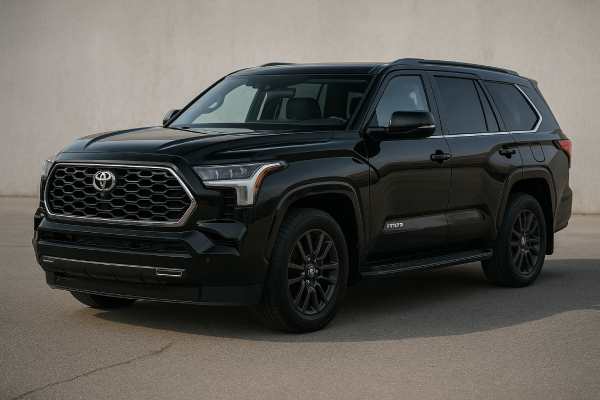
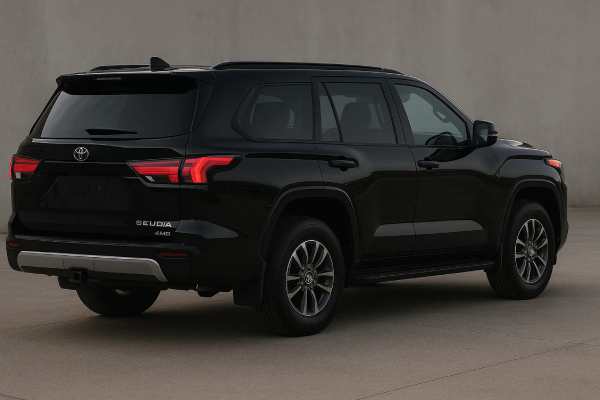
The third generation Toyota Sequoia 4WD (VXKH85) blends a full-size body-on-frame SUV with a modern hybrid driveline. Instead of the old 5.7-liter V8, it uses the twin-turbo V35A-FTS V6 paired with an electric motor and battery pack under the “i-FORCE MAX” label. Power is strong, torque comes in early, and real-world towing performance is a major focus. Underneath, the Sequoia now shares the TNGA-F platform with the latest Tundra and Land Cruiser, bringing stiffer architecture, improved ride and more advanced driver assistance.
For owners, the change to a turbo-hybrid V6 means different maintenance priorities compared with the old 3UR-FE V8: high-quality oil, careful warm-up, and respect for cooling and lubrication when towing. At the same time, Toyota’s conservative engineering and long truck experience are still evident in frame design, drivetrain layout, and safety systems. This guide walks through specs, dimensions, reliability patterns, service guidance and how the Sequoia 4WD compares to rivals so you can decide if it fits your use case and budget.
Core Points
- Strong hybrid V6 torque and 10-speed automatic give confident towing and merging even with a full load.
- TNGA-F frame, available load-levelling rear suspension and 4WD system support heavy family, trailer and off-road use.
- Fuel economy is notably better than the previous V8 Sequoia but still in “large SUV” territory, especially with larger tyres and racks.
- Turbo-hybrid layout increases dependence on correct oil, coolant and software updates; neglected service can become expensive.
- Plan for engine oil and filter changes roughly every 10,000 km or 6,000–7,500 miles (or 12 months) under mixed real-world use.
Explore the sections
- VXKH85 Sequoia 4WD essentials
- Hybrid Sequoia specs and data
- Trims, equipment and safety tech
- Reliability, issues and service actions
- Maintenance and buyer’s checklist
- Driving, efficiency and towing
- How Sequoia 4WD compares to rivals
VXKH85 Sequoia 4WD essentials
The VXKH85 Sequoia is the 4WD, hybrid-powered version of Toyota’s full-size SUV line introduced for the 2023 model year in North America. It replaces the long-running 5.7-liter V8 Sequoia with a downsized 3.4-liter (3,445 cc) twin-turbo V6 and an integrated electric motor in the bellhousing of a 10-speed automatic. Combined output is around 437 hp and 790 Nm (about 583 lb-ft) of system torque, tuned for low-rpm response and sustained pulling on grades.
The SUV rides on Toyota’s TNGA-F ladder-frame architecture with an independent front suspension and multi-link rear axle. Compared with the previous generation, you get a stiffer frame, better crash-energy management and more refined road manners. The 4WD system is a part-time, truck-style layout with a 2-speed transfer case, selectable 2H/4H/4L, and locking center coupling. Depending on trim, you can also have drive modes, specific tow/haul calibrations and terrain assist systems.
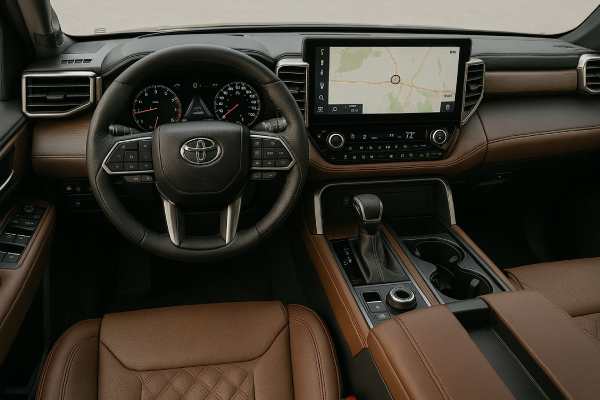
Inside, the Sequoia has moved firmly into modern pickup-based SUV territory. Typical features include a large central touchscreen with Toyota’s latest infotainment software, available digital instruments, more advanced camera views and greater emphasis on sound insulation. Three-row seating is standard; higher trims bring upgraded upholstery, captain’s chairs and panoramic roof options.
Ownership-wise, the VXKH85 is aimed at families who tow regularly (boats, travel trailers, enclosed car trailers) and need real off-pavement traction, but prefer a Toyota reliability reputation over the more plush image of luxury-brand competitors. Its key trade-offs are overall size, parking ease, and a maintenance pattern that looks a bit more like a turbo truck than an old-school naturally aspirated V8.
Hybrid Sequoia specs and data
Below are core specifications for the Sequoia 4WD hybrid in its typical North American configuration. Exact numbers can vary slightly by trim, wheel and equipment; always verify against the build sheet and official documentation for the specific vehicle.
Engine and performance
| Item | Specification |
|---|---|
| Engine code | V35A-FTS |
| Engine type | 3.4 l twin-turbo V6 petrol, DOHC, 24 valves |
| Displacement | ~3,445 cc |
| Induction | Twin turbochargers with intercooling |
| Fuel system | Direct injection with port-injection support (D-4ST type system) |
| Compression ratio | Around 10.5:1 (varies slightly by calibration) |
| Max combined power | ~437 hp (approx. 326 kW) |
| Max combined torque | ~790 Nm (approx. 583 lb-ft) |
| Hybrid system | i-FORCE MAX parallel hybrid, motor in transmission bellhousing |
| Battery type | Nickel-metal hydride pack (truck-oriented durability focus) |
| Engine timing drive | Chain-driven camshafts |
| Emissions standard | US EPA / CARB LEV-III equivalent for covered model years |
| Recommended fuel | Premium unleaded for full performance (regular usable with derate) |
Transmission and driveline
| Item | Specification |
|---|---|
| Transmission | 10-speed electronically controlled automatic |
| Drive type | Part-time 4WD (2H/4H/4L, mechanical transfer case) |
| Transfer case | 2-speed, low range selectable |
| Center differential | Locking via 4H/4L selection (no full-time AWD mode) |
| Rear differential | Open; electronically controlled limited-slip/brake-based aids |
| Typical final drive ratio | Roughly mid-3s to low-4s depending on trim and tow package |
| Tow/Haul mode | Standard on most trims, alters shift schedule and cooling control |
Chassis, dimensions and weights
| Item | Specification (approximate, typical trim) |
|---|---|
| Platform | TNGA-F body-on-frame |
| Front suspension | Independent double-wishbone with coil springs |
| Rear suspension | Multi-link solid rear axle with coils; optional load-levelling |
| Steering | Rack-and-pinion, electric power assist |
| Front brakes | Ventilated discs with multi-piston calipers |
| Rear brakes | Ventilated discs |
| Wheelbase | ~3,099 mm (122.0 in) |
| Overall length | ~5,286 mm (208+ in, varies by bumper and trim) |
| Overall width | ~2,026 mm (about 79.8 in, mirrors folded) |
| Overall height | ~1,890–1,925 mm (approx. 74–76 in) |
| Ground clearance | Roughly 220–230 mm (about 8.7–9.1 in), trim-dependent |
| Curb weight (4WD hybrid) | Typically 2,700–2,800 kg (about 5,950–6,150 lb) |
| GVWR | Around 3,300–3,450 kg (about 7,300–7,600 lb) |
| Fuel tank capacity | About 79–88 L (roughly 21–23 US gal) |
| Cargo volume (behind 3rd row) | Roughly 365–400 L (around 13–14 ft³, seat sliding affects figure) |
| Cargo volume (max) | Around 2,400 L (mid-80 ft³ range) with rear rows folded |
| Seating capacity | 7 or 8 depending on bench vs captain’s chairs |
Performance and capability
| Item | Specification / comment |
|---|---|
| 0–100 km/h (0–62 mph) | Roughly high-5s to low-6s seconds when unladen |
| Top speed | Governed, typically around 180 km/h (approx. 112 mph) |
| Braked towing capacity | Up to about 4,080 kg (9,000 lb) when properly equipped |
| Unbraked towing capacity | Often limited to ~750 kg (1,650 lb), check local rules |
| Payload | Typically 600–700 kg (1,300–1,550 lb) depending on trim |
| Roof load | Commonly around 75–100 kg (165–220 lb), verify for your rack |
| Real-world economy | Often mid-teens mpg US combined; high single-digit L/100 km figures are rare in daily use for this size of SUV |
Fluids and service capacities (approximate, vary by market)
| System | Specification (typical) |
|---|---|
| Engine oil | 0W-20 synthetic meeting Toyota spec; capacity ~6–7 L (6.3–7.4 qt) |
| Engine coolant | Long-life pink Toyota Super Long Life Coolant; capacity ~10–12 L |
| Transmission fluid | Toyota-specified ATF for 10-speed; capacity commonly 8–11 L total |
| Transfer case | Toyota gear or ATF spec; roughly 1–2 L |
| Front / rear differential | Hypoid gear oil 75W-85 or similar, about 1.5–2.5 L each |
| A/C refrigerant | R-1234yf (typical), charge mass varies by HVAC configuration |
Treat these as planning numbers only; always confirm for your exact VIN.
Electrical and safety systems
| Item | Specification / notes |
|---|---|
| 12 V battery | Maintenance-free, capacity and CCA vary by trim and climate pack |
| Alternator / DC-DC output | High-output system sized for hybrid plus accessory loads |
| Airbags | Front, side, curtain and often driver’s knee; count varies by row |
| ABS / stability | Four-channel ABS, traction and stability control with trailer sway |
| ADAS platform | Toyota Safety Sense generation appropriate to model year |
Later sections cover safety ratings and assist features in more detail.
Trims, equipment and safety tech
Toyota typically offers the Sequoia 4WD hybrid in several trims, such as SR5, Limited, Platinum, TRD-focused variants and range-topping luxury or off-road packages (names vary slightly year-to-year). While the engine and basic hybrid hardware remain common, each grade changes suspension tuning, tyre packages, and comfort or tech features.
On lower trims (often SR5), you will usually see:
- Cloth or basic synthetic upholstery with bench seats for maximum eight-passenger capacity.
- Simpler suspension tuning with steel springs and conventional dampers.
- Smaller wheel and tyre combinations, which can ride better and keep tyre costs down.
- Essential towing equipment often packaged as options: integrated trailer brake controller, upgraded hitch, extra cooling.
Moving up to Limited and Platinum-type trims, expect:
- Softer-touch cabin materials, larger touchscreens and more speakers.
- LED lighting upgrades, including adaptive headlights on some variants.
- Multi-link rear suspension options with load-levelling or air springs to maintain level ride when towing.
- More advanced cameras (surround view, trailer guidance), larger wheels and sometimes dedicated “tow technology” packages.
TRD and off-road oriented trims usually add:
- All-terrain tyres, unique 18- or 20-inch wheels, skid plates and red-painted suspension components.
- Different damping curves, sometimes remote-reservoir shocks.
- Calibrated off-road drive modes, downhill assist and additional terrain monitoring views.
From a safety standpoint, most Sequoia 4WD hybrids include a broad suite of driver-assistance systems as standard:
- Forward collision warning with automatic emergency braking, typically including pedestrian and sometimes cyclist detection.
- Adaptive cruise control that can manage highway speeds and traffic.
- Lane departure warning and lane-keeping or lane-tracing assistance.
- Blind-spot monitoring and rear cross-traffic alert, especially on mid and upper trims.
- Road sign assist and driver attention reminders on newer software revisions.
Optional or trim-limited systems can include advanced parking assist, larger digital instrument clusters and enhanced trailer-angle or backup aids. On many trims, if you change windscreens, bumpers or front radar sensors, recalibration is required for ACC, lane and collision systems to work correctly. That means body and glass work should be done by shops familiar with Toyota calibration procedures.
In terms of crash-test performance, the frame-sharing TNGA-F models aim at strong frontal and side impact protection, with energy-absorbing structure and multiple airbag zones. Exact star ratings and test outcomes vary by year and testing body, but the Sequoia is designed to meet modern standards for a large truck-based SUV.
Reliability, issues and service actions
Because the VXKH85 Sequoia hybrid is relatively new, it does not have the multi-decade data set of the previous V8, but early patterns and related-platform experience allow some reasonable expectations.
Powertrain and hybrid system
Common concerns discussed among early owners usually relate to:
- Turbo V6 behaviour: Hard use on cold oil, extended idling and neglected oil changes can accelerate turbo wear or lead to deposits in the oil feed system. Symptoms include whine, smoke, loss of boost or engine warning lights. Remedy is strict oil-change discipline with the correct spec oil, allowing gentle warm-up, and addressing any leaks promptly.
- Hybrid battery and electronics: The i-FORCE MAX battery is engineered for truck duty and rarely fails outright at low mileage. More typical issues are cooling-fan faults, sensor errors or software glitches leading to reduced power or hybrid warnings. Dealer-level diagnostics and software updates are the first steps before any hardware replacement is considered.
- 10-speed automatic: When serviced on schedule and kept cool, it behaves well. Potential trouble signs include harsh shifts, flare on upshifts, or shudder at light throttle. These can result from fluid degradation, valve-body wear or software calibration. Early intervention (ATF change, software reflash) often prevents expensive repairs.
Driveline and chassis
On a heavy, powerful 4WD like the Sequoia, some wear points are predictable:
- Front suspension ball joints and bushings can wear more quickly on rough roads, heavy towing or with off-road tyres.
- Rear suspension components on load-levelling systems need regular inspection for leaks, damaged bags or sensors.
- 4WD system components (transfer case, front differential) depend on clean, correct-grade lubricants; neglect can lead to bearing or gear noise and eventually failure.
- Wheel bearings and brake components see high loads when towing; early noise, vibration or uneven pad wear should not be ignored.
Corrosion and body
The TNGA-F platform uses improved corrosion protection, but any body-on-frame SUV used in snowy or coastal climates should be checked for:
- Rust on frame welds, suspension mounts and around tow-hitch attachment points.
- Drain holes in tailgate and doors becoming blocked, trapping moisture.
- Fasteners for skid plates and running boards seizing if never lubricated.
Recalls, TSBs and field actions
Large-scale recalls and service actions for early Sequoia hybrids have included topics such as:
- Tow-hitch cover or trim pieces that can detach at speed, requiring revised parts and inspection.
- Rear view camera images that may intermittently fail to display, leading to camera or software updates.
In addition, Toyota periodically issues technical service bulletins (TSBs) and software updates addressing:
- Transmission shift quality.
- Infotainment or navigation system bugs.
- Calibration refinements for driver-assistance features when new test procedures or real-world issues are identified.
For any prospective or current owner, it is wise to:
- Run the VIN through official recall databases before purchase or at each service.
- Ask for a printout of completed campaigns and TSBs from a franchised dealer.
- Confirm that the latest powertrain and ADAS software updates have been applied.
Maintenance and buyer’s checklist
The hybrid Sequoia’s maintenance blend is part traditional truck, part modern turbo-hybrid. The basics remain familiar, but intervals matter more as specific systems carry high replacement costs.
Practical maintenance schedule (typical guidance)
Always verify against your local maintenance schedule, but as a working baseline:
- Engine oil and filter: Every 10,000–12,000 km or 6,000–7,500 miles, or 12 months, whichever comes first. Shorten intervals for heavy towing, hot climates or frequent short trips. Use the recommended synthetic grade and keep receipts.
- Engine air filter: Inspect annually; replace roughly every 30,000–40,000 km, sooner in dusty conditions.
- Cabin air filter: Replace every 20,000–30,000 km or 1–2 years to maintain HVAC performance.
- Spark plugs: Long-life plugs often go 160,000 km (100,000 miles) under ideal conditions, but turbo engines benefit from slightly earlier replacement, especially under heavy use.
- Coolant: Factory fill is usually long-life; first change around 160,000 km or 10 years, then shorter intervals. Consider earlier change if towing frequently in hot climates.
- Automatic transmission fluid: Many schedules call this “lifetime” or only inspect. For longevity, a drain-and-fill around 80,000–100,000 km (50,000–60,000 miles) is a good preventive measure, repeated as needed.
- Transfer case and differentials: Replace fluid every 60,000–80,000 km (37,000–50,000 miles), or sooner if you tow, off-road or ford water.
- Brake fluid: Replace every 2–3 years regardless of mileage.
- Brake pads and rotors: Inspect at each service; towing and city driving wear fronts quickly.
- Serpentine/aux belts and hoses: Inspect from 60,000 km onward; replace cracking or noisy belts or hardened hoses.
- 12 V battery: Test annually from year three onwards; plan for replacement somewhere in the 4–6-year range depending on climate.
- Hybrid system cooling: Ensure intakes and ducts are clear; follow official guidance for coolant loops and hybrid component checks.
- Wheel alignment and tyre rotation: Rotate tyres every 8,000–12,000 km (5,000–7,500 miles) and align after suspension work, big pothole hits or uneven wear.
Torque-critical fasteners like wheel nuts, tow-hitch hardware and suspension arms should be tightened to specification. When using aftermarket wheels or hitches, obtain torque specs from the manufacturer.
Buyer’s checklist
When inspecting a used Sequoia 4WD hybrid:
- Service history: Look for consistent oil changes with the correct grade, at sensible intervals. Gaps of 20,000+ km between changes on a turbo V6 are a red flag.
- Recalls and campaigns: Ask for documentation that outstanding recalls and software updates have been completed.
- Hybrid health: Check for warning lights, stored codes and any history of hybrid system repairs. If possible, have a specialist scan data for battery and inverter performance.
- 4WD operation: Verify that 2H/4H/4L selections engage smoothly on appropriate surfaces; listen for grinding or delayed engagement.
- Suspension and tyres: Uneven tyre wear, clunks or wandering can point to worn bushings, shocks or alignment issues.
- Frame and underbody: Inspect visually for rust, especially near welds, hitch mounts, brake lines and fuel tank straps.
- Interior electronics: Test all cameras, parking sensors, infotainment, climate controls and driver-assistance functions. Glitches may require software or calibration work.
Overall, if serviced properly and not abused beyond its design envelope, the Sequoia 4WD hybrid should provide a long service life similar in spirit to older Toyota trucks, with the caveat that some components (turbos, hybrid electronics) are more complex and costly than those on simpler V8 predecessors.
Real world driving performance
On the road, the Sequoia 4WD hybrid feels more muscular and responsive than the older V8 model, despite the smaller displacement. The combination of twin turbos and an electric motor gives strong low-rpm torque, making launches and highway merges easy even when loaded with passengers and luggage. The 10-speed automatic keeps the engine in its torque band; when properly calibrated, shifts are smooth and unobtrusive, though occasional hunting can appear on rolling terrain if tow/haul mode is not engaged.
In city driving, the hybrid system can assist with low-speed movement and smoothing stop-start operation. Unlike a full EV, you will not glide silently over long distances in electric mode, but the hybrid assistance reduces the load on the engine during transients and in light throttle conditions. This helps both fuel economy and noise levels.
Ride quality depends heavily on wheel and tyre choice. Trims with moderate-size wheels and more sidewall tend to ride more comfortably over broken pavement than those with large diameter rims and lower-profile tyres. Load-levelling or air-assisted rear suspensions maintain composure when towing or carrying heavy cargo, reducing rear-end sag and improving headlight aim. Steering is light but accurate enough for a full-size SUV; the main constraint is physical size when manoeuvring in tight parking structures.
On the highway, the Sequoia tracks confidently, with good straight-line stability. Cabin noise is generally well controlled for a body-on-frame vehicle, although wind noise around mirrors and tyre roar can become noticeable on coarse surfaces, especially with aggressive all-terrain tyres. Braking performance is respectable, but you should remember the vehicle’s mass: leave generous following distances and keep brakes maintained, particularly when towing.
Towing is one of the Sequoia 4WD’s strong suits. The hybrid system’s torque helps pull away smoothly, and the cooling systems are designed for sustained load. Expect a noticeable fuel-consumption penalty when towing near maximum capacity; seeing consumption roughly double compared to solo cruising is not unusual for large trailers. Choosing a well-matched trailer, using weight-distribution hitches where appropriate, and observing tongue-weight limits all improve stability and component life.
Off-pavement, the 4WD system, low range and available off-road modes allow slow, controlled progress over rough tracks and moderate obstacles. Ground clearance and approach/departure angles are adequate for trail and campsite use, though not at the extreme level of dedicated rock-crawling vehicles. Tyre choice, driver technique and attention to underbody protection matter more than electronics alone. For most owners, the limiting factors will be vehicle size and the risk of cosmetic damage rather than pure traction.
How Sequoia 4WD compares to rivals
In the North American market, the Sequoia 4WD hybrid competes mainly with other full-size body-on-frame SUVs such as:
- Chevrolet Tahoe and Suburban, including their diesel and gasoline variants.
- GMC Yukon and Yukon XL.
- Ford Expedition and Expedition Max.
- Nissan Armada (less hybridisation, more conventional V8 approach).
- Higher-priced luxury derivatives like Cadillac Escalade and Lincoln Navigator.
Compared with these, the Sequoia’s main differentiators are:
- Standard hybrid powertrain: Rather than offering hybrid as an option, Toyota packages strong hybrid torque across the line. This gives a clear efficiency edge over non-electrified V8 rivals in many use patterns, though direct-injection turbo petrol or diesel competitors can still be efficient on long highway slogs.
- Toyota truck lineage: Many buyers value Toyota’s long record with the Land Cruiser, 4Runner and Tacoma families. This influences perceptions of durability, resale value and long-term parts support.
- Interior design and packaging: Some rivals offer a more overtly luxurious cabin with more space in the third row or behind it, especially in extended-length versions. The Sequoia’s sliding third-row arrangement offers flexibility but can constrain cargo height in some positions.
- Towing dynamics: Thanks to the hybrid torque and robust frame, properly equipped Sequoias tow confidently. Diesel-equipped rivals can still appeal for their long-range towing efficiency, but their availability is shrinking.
- Dealer network and ownership experience: Toyota’s dealer footprint and scheduling practices vary by region, but in many areas they offer predictable service processes and familiarity with truck-based hybrids.
On the downside, some shoppers find that:
- The Sequoia offers fewer body lengths and seating/cargo configurations than Tahoe/Suburban or Yukon/Yukon XL families.
- Certain luxury technologies or interior finishes are reserved for upper trims and may still trail high-end Escalade or Navigator models.
- The hybrid system adds complexity, which may worry buyers who prefer a simple naturally aspirated V8, particularly outside of strong dealer support areas.
For buyers who prioritise robust 4WD capability, strong towing, a hybrid-assisted petrol powertrain and a Toyota badge, the Sequoia VXKH85 4WD occupies a compelling niche. Those needing maximum cargo space, ultra-plush cabins or specific fleet-oriented powertrains may find better matches elsewhere.
References
- Certain 2023–2024 Model Year Sequoia Tow Hitch Cover May Detach, NHTSA Recall No. 24V640 2024 (Recall Notice) ([NHTSA Static][1])
- Toyota recalls nearly 400,000 Tundras and Sequoias due to malfunctioning rearview camera 2024 (News Article) ([AP News][2])
- 2023–2024 Toyota Sequoia | Full-Size Hybrid SUV 2024 (Manufacturer Model Page)
Disclaimer
This article is for informational purposes only and does not replace professional diagnosis, repair advice, or official service documentation. Specifications, torque values, maintenance intervals and procedures can vary by VIN, model year, market, trim level and installed equipment. Always confirm details against your vehicle’s owner’s manual, official workshop manual and current service bulletins before performing any work or making purchase decisions.
If you found this guide useful, please consider sharing it with other owners and enthusiasts on social platforms such as Facebook or X/Twitter. Your support helps xcar continue producing detailed, independent technical content.