
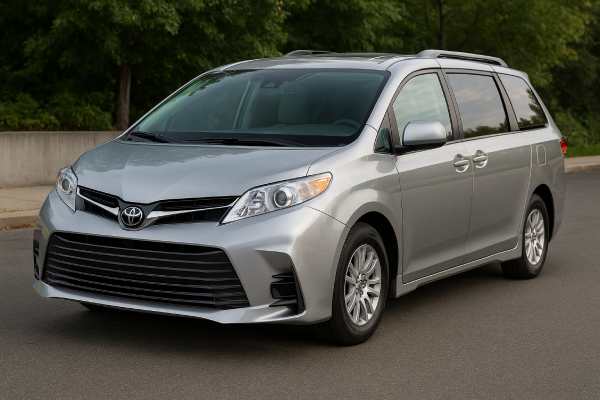
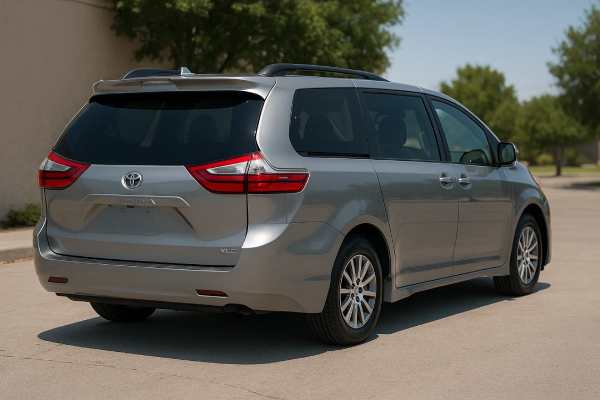
When Toyota updated the Sienna’s XL30 generation with the 2GR-FKS 3.5-litre V6 and 8-speed automatic, it quietly created one of the strongest powertrains in the minivan segment. From the 2017 model year onward, front-wheel-drive Siennas gained 296 hp, a more efficient gearbox, and small but important tweaks to refinement and safety.
This FWD version targets families who want maximum interior space, long-distance comfort, and solid fuel economy without the extra weight and complexity of all-wheel drive. The 2GR-FKS uses Toyota’s D-4S combined port and direct injection, giving more power than the earlier 2GR-FE while keeping the same basic durability and easy serviceability.
By 2018, the Sienna also adopted Toyota Safety Sense P as standard, bringing automatic emergency braking and lane departure warning to every trim. The result is a practical, comfortable family van with unusually strong performance, competitive efficiency, and a reputation for long-term reliability—if you pay attention to a few known transmission and maintenance details.
Top Highlights
- Strong 296 hp 2GR-FKS V6 and 8-speed automatic give the FWD Sienna brisk performance with relaxed highway cruising.
- Huge, flexible cabin with 7- or 8-seat layouts, sliding doors, and a deep rear well makes family and cargo use easy.
- From 2018, all trims include Toyota Safety Sense P with automatic emergency braking and adaptive cruise control as standard.
- Early 8-speed transmissions can show rough or hesitant shifts; confirm software updates and fluid condition on any used van.
- Engine oil and filter: plan changes every 5,000–10,000 miles (8,000–16,000 km) or 6–12 months depending on driving severity.
Section overview
- Toyota Sienna 2GR-FKS overview
- Sienna 296 hp specs and data
- Trims safety and tech for Sienna
- Reliability of 2GR-FKS Sienna
- Maintenance planning and buyer guide
- Driving performance and efficiency
- Sienna 2GR-FKS versus rivals
Toyota Sienna 2GR-FKS overview
Within the XL30 generation, the biggest mechanical change arrived for the 2017 model year: the move from the 2GR-FE V6 and 6-speed automatic to the 2GR-FKS V6 and Aisin UA80E 8-speed automatic. Power rose to 296 hp and 263 lb-ft, while official fuel economy for front-wheel-drive models improved to around 19 mpg city and 27 mpg highway in U.S. testing.
The 2GR-FKS is a development of the same 3.5-litre V6 used across Toyota and Lexus. It adds D-4S fuel injection, which combines port and direct injection to improve combustion and efficiency. Under light loads it often uses the port injectors to keep intake valves cleaner, switching to direct injection when more power or efficiency is needed. The basic architecture remains a 60-degree DOHC V6 with timing chains rather than belts, which helps long-term durability when oil changes are done on time.
The 8-speed automatic brought shorter low gears for stronger take-off and tall top gears for relaxed cruising. On early 2017–2018 vans, however, some owners reported hesitation, abrupt shifts, or flare during gentle acceleration. Toyota issued software updates and a Customer Support Program for certain VIN ranges, so it is important to check that any used Sienna has received all updates and that the transmission behaves smoothly on a test drive.
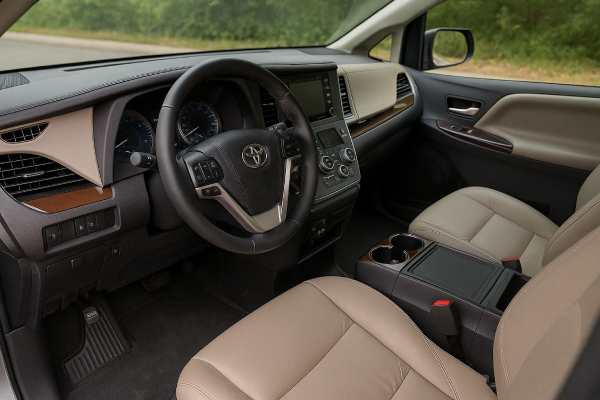
Visually, 2017 models look similar to the earlier facelift, while 2018–2020 Siennas wear a revised front fascia and updated side skirts. Inside, the cabin is familiar: a broad dashboard with a central touchscreen, large physical climate controls, and a low floor that makes access easy. An eight-seat bench was available on many FWD trims, while some higher variants offered second-row captain’s chairs and extra comfort features.
The other major change from 2018 is standard Toyota Safety Sense P on all trims. That means even a base Sienna has a pre-collision system with pedestrian detection, lane departure alert with steering assist, automatic high beams, and radar cruise control. Combined with strong crash-test scores, that makes late XL30 Siennas appealing to safety-conscious families.
Overall, the front-wheel-drive 2GR-FKS Sienna sits in an interesting sweet spot: more efficient and more powerful than the earlier 2GR-FE vans, with modern safety tech, yet it still rides on a mature platform with well-understood mechanicals and parts availability.
Sienna 296 hp specs and data
This section concentrates on the 2017–2020 Toyota Sienna XL30 with the 3.5-litre 2GR-FKS V6 and front-wheel drive. Values vary slightly by trim and market, so treat them as a realistic guide and confirm exact figures with the owner’s manual or local documentation.
Engine and performance
| Item | Detail |
|---|---|
| Engine code | 2GR-FKS |
| Layout | 60° V6, transverse, DOHC, 24 valves |
| Displacement | 3.5 l (3,456 cc) |
| Bore × stroke | 94.0 × 83.0 mm (3.70 × 3.27 in) |
| Valvetrain | Dual VVT-i, timing chains, 4 valves per cylinder |
| Induction | Naturally aspirated |
| Fuel system | D-4S combined port and direct injection |
| Compression ratio | ~11.8 : 1 (varies slightly by market) |
| Max power | 296 hp (≈221 kW) @ 6,600 rpm |
| Max torque | 263 lb-ft (≈357 Nm) @ 4,700 rpm |
| Recommended fuel | Unleaded gasoline, regular grade accepted |
| Emissions standard | U.S. LEV3 / Tier 3 equivalent in many markets |
Efficiency and aerodynamics (FWD gasoline)
| Item | Value (typical FWD) |
|---|---|
| EPA rating (city / hwy / comb.) | 19 / 27 / 22 mpg US |
| Approx. L/100 km (city / hwy / comb.) | ~12.4 / 8.7 / 10.7 L/100 km |
| Fuel tank | ~75–76 l (≈20 US gal) |
| Approx. drag coefficient | ~0.30–0.31 Cd |
Real-world consumption for a FWD 2GR-FKS Sienna often lands around 21–23 mpg US (≈10–11 L/100 km) on steady highway runs and 17–20 mpg (≈11.5–14 L/100 km) in mixed use, depending on load, speed, and climate.
Transmission and driveline
| Item | Detail |
|---|---|
| Transmission | Aisin UA80E 8-speed automatic (Direct Shift – 8AT) |
| Type | Conventional torque-converter, electronically controlled |
| Drive type | Front-wheel drive |
| Gear ratios (approx.) | 1st 5.52, 2nd 3.18, 3rd 2.05, 4th 1.49, 5th 1.23, 6th 1.00, 7th 0.80, 8th 0.67, Reverse 4.22 |
| Final drive | ~3.00–3.00+ (varies slightly by trim) |
| Differential | Open front differential |
| Traction aids | ABS, traction control, stability control, brake assist |
Chassis and dimensions
| Item | Value (typical FWD) |
|---|---|
| Body style | 5-door minivan |
| Seats | 7 or 8, depending on trim and second-row layout |
| Suspension front | MacPherson strut, coil springs, anti-roll bar |
| Suspension rear | Torsion beam with coil springs and anti-roll bar |
| Steering | Electric power-assisted rack and pinion |
| Front brakes | Ventilated disc |
| Rear brakes | Solid disc |
| Common wheel/tyre sizes | 235/60R17 (L/LE/XLE), 235/50R19 (SE and some Nightshade) |
| Length | ≈5,085 mm (200.2 in) |
| Width (without mirrors) | ≈1,984 mm (78.1 in) |
| Height | ≈1,750–1,780 mm (69–70 in) depending on roof rails |
| Wheelbase | 3,030 mm (119.3 in) |
| Ground clearance | ≈165–170 mm (≈6.5–6.7 in) |
| Turning circle (kerb-to-kerb) | ≈11.4 m (≈37.5 ft) |
| Curb weight (FWD) | ≈1,950–2,050 kg (4,300–4,520 lb) depending on trim |
| GVWR | ≈2,700–2,740 kg (≈5,950–6,050 lb) |
| Cargo volume | Around 1,100 l (≈39 ft³) behind 3rd row; significantly more with seats folded or removed |
Performance and capability
| Item | Value (approx.) |
|---|---|
| 0–60 mph (0–97 km/h) | Around 7.0–7.5 s in FWD form |
| 0–100 km/h (0–62 mph) | ~7.5–8.0 s |
| Top speed | Electronically limited; typically ~180 km/h (≈112 mph) |
| Towing capacity | Up to 1,585 kg (3,500 lb) with proper tow package |
| Max tongue weight | Often 350 lb (≈160 kg); confirm on label |
| Roof load | Commonly ~75–100 kg (165–220 lb) including rack, varying by market |
Fluids and service capacities (approximate)
These figures vary slightly across years and markets; always confirm for your VIN.
| System | Spec / Type | Capacity (approx.) |
|---|---|---|
| Engine oil | 0W-20 synthetic, API SN or later | ≈5.8 US qt with filter (~5.5 l) |
| Engine coolant | Toyota Super Long Life pink | ≈9–10 l system total |
| Automatic transmission | Toyota WS ATF | ≈7–8 l total; drain/refill less |
| Brake fluid | DOT 3 or DOT 4 | As needed (≈1 l for full flush) |
| Power steering | Electric (no fluid service) | — |
| A/C refrigerant | R-134a | Charge listed on under-hood label |
Electrical basics
| Item | Detail |
|---|---|
| Alternator | Typically ~150 A depending on equipment |
| 12 V battery | Group 24F or similar, ~55–65 Ah, 500–600 CCA |
| Spark plugs | Long-life iridium |
| Spark plug interval | Often around 120,000 km / 75,000–120,000 miles, depending on market guidance |
Safety and driver assistance summary
- Strong crash-test performance overall, with top scores in many IIHS and NHTSA categories.
- 2018+ models include Toyota Safety Sense P as standard; some 2017s had fewer advanced features.
- Available or standard features include: pre-collision system with pedestrian detection, lane departure alert with steering assist, dynamic radar cruise control, automatic high beams, blind-spot monitoring with rear cross-traffic alert, backup camera, parking sensors, and a comprehensive airbag suite.
Trims safety and tech for Sienna
Depending on the market, the front-wheel-drive 2GR-FKS Sienna was offered in several trims from 2017 to 2020. In North America, these typically included L, LE, SE, XLE, Limited, and special Nightshade editions later in the run.
Trim and equipment overview (FWD focus)
- L (base)
- 7- or 8-passenger seating (bench second row common).
- Cloth upholstery, manual sliding doors, basic audio system.
- Backup camera and standard Star Safety System (stability control, ABS, etc.).
- From 2018, Toyota Safety Sense P added as standard even here.
- LE
- Often the best value trim for families.
- Power sliding doors, upgraded audio, three-zone automatic climate control on many builds.
- Available 8-passenger layout with removable centre second-row seat.
- SE
- “Sport” appearance with unique front fascia, side skirts, and rear styling.
- Firmer suspension tuning and 19-inch wheels give sharper responses but a busier ride.
- Sports seats and darker interior trim; still family friendly but aimed at buyers who like a more dynamic feel.
- XLE
- Leather-trimmed seats (often heated front seats), power tailgate, more comfort equipment.
- Available navigation, blind spot monitor with rear cross-traffic alert, sunroof on many examples.
- Commonly 7-passenger with captain’s chairs in the second row.
- Limited / Limited Premium
- Top-spec with premium audio, advanced navigation, additional chrome and luxury touches.
- Available rear-seat entertainment system, upgraded interior materials, and more driver aids.
Nightshade packages late in the run added blacked-out exterior trim and wheels but kept the fundamental mechanicals unchanged.
Safety ratings by year
The XL30 Sienna, including the later 2GR-FKS FWD versions, generally scored Good in most IIHS tests such as moderate overlap front, side impact, roof strength, and head restraints. For the small-overlap driver-side test, ratings improved after Toyota revised the front structure for 2015; these changes carried forward into the 2017–2020 vans.
The NHTSA typically rated the Sienna with a 5-star overall safety score in this period, though individual sub-scores can vary slightly by year and drivetrain. When comparing vehicles, always cross-check the exact model year and trim.
Toyota Safety Sense P and other systems
From the 2018 model year, TSS-P became standard on all Sienna grades. This suite includes:
- Pre-Collision System with Pedestrian Detection (PCS w/PD) – warns of potential frontal collisions and can apply automatic braking to reduce impact speed.
- Lane Departure Alert with Steering Assist (LDA w/SA) – alerts if you drift without signalling and can gently guide the van back toward the lane centre.
- Automatic High Beams (AHB) – toggles high beams based on traffic ahead.
- Dynamic Radar Cruise Control (DRCC) – maintains a set gap to the vehicle in front, easing long highway drives.
These systems rely on a camera near the rear-view mirror and a radar sensor in the grille. After windshield replacement, front-end collision repair, or major alignment changes, recalibration is often required. Buyers should check repair invoices for ADAS calibration when relevant.
Other important safety and convenience features available or standard on many trims include:
- Blind Spot Monitor with Rear Cross-Traffic Alert.
- Front and rear parking sonar.
- Four LATCH/ISOFIX positions for child seats (varies with seating configuration).
- Eight or more airbags, including side curtain airbags covering all three rows.
When shopping used, it is worth building a shortlist of must-have features—such as blind-spot monitoring or radar cruise—and then checking trim and option codes carefully, because not all 2017 models have the same tech as the 2018+ vans with standard TSS-P.
Reliability of 2GR-FKS Sienna
The 2GR-FKS Sienna builds on a strong base. The XL30 platform had already been in production for several years, and the 2GR engine family is well known for durability. However, the move to a higher compression engine with D-4S injection and the adoption of the UA80E 8-speed automatic added new elements that owners should understand.
Engine and fuel system
The 2GR-FKS uses both direct and port injection, which helps reduce the heavy intake valve carbon buildup sometimes seen on direct-injection-only engines. In normal use, valve deposits are rarely a major issue. More relevant concerns include:
- High-pressure fuel pump and injector noise
- A light ticking sound from the engine bay can be normal for the direct injection hardware.
- Sudden changes in noise level, misfires, or fuel smell should be investigated.
- Oil consumption and leaks
- Most engines use very little oil when serviced correctly, but hard use or extended oil change intervals can increase consumption.
- Watch for seepage around the valve covers or timing cover as mileage climbs; minor sweating is common but heavy leaks should be addressed.
- Cooling system
- The water pump is a typical wear item around high mileage. Signs include coolant residue, sweet smells, or bearing noise.
- Overheating is rare but serious; any temperature irregularities warrant prompt diagnosis.
Timing chain system
There is no timing belt on the 2GR-FKS. The timing chains are designed for engine life, provided oil quality is maintained. Problems are rare but can be serious:
- Early symptoms include persistent rattling on cold start that does not quickly fade, or diagnostic codes for camshaft timing correlation.
- If such issues appear, they should not be ignored; chain, guide, and tensioner repairs are labour intensive but protect the engine.
UA80E 8-speed automatic
The UA80E is generally strong, yet it has more reported complaints than the old 6-speed in earlier Siennas. Typical issues on some 2017–2018 builds:
- Harsh or delayed upshifts and downshifts in light throttle driving.
- Hesitation or “dead pedal” feeling when reapplying throttle after coasting.
- Occasional jerks or lurches as the gearbox changes gear.
Toyota responded with updated software and, for certain VIN ranges, a Customer Support Program and technical service bulletins addressing internal transmission concerns. When evaluating a used Sienna:
- Confirm software updates have been applied (a dealer can check via VIN).
- Test drive from cold and fully warm, including city traffic and highway ramps.
- The gearbox should shift smoothly and predictably; any persistent hesitation or harshness should be taken seriously.
Regular fluid changes using correct Toyota WS ATF, even if not listed as mandatory, are a sensible preventive measure.
Chassis, brakes, and body
Common age-related items include:
- Front suspension – strut mounts, control arm bushings, and sway bar links can wear by 100,000–150,000 miles (160,000–240,000 km), causing clunks or vague steering.
- Wheel bearings – especially front bearings on high-mileage vans, presenting as a growling noise that changes with steering load.
- Brakes – discs and pads wear in the usual way; seized slide pins or rusted backing plates can appear in heavy-salt regions.
- Corrosion – XL30 Siennas are generally rust-resistant, but check rear subframes, exhaust hangers, and door bottoms in harsh climates.
Sliding doors and electronics
Earlier XL30 vans had widely publicised issues with power sliding door cables and mechanisms. Much of this was addressed via recalls and customer support programmes, and later 2GR-FKS vans benefitted from those lessons. Still, on any Sienna:
- Verify both sliding doors (manual or power) open and close smoothly.
- Listen for grinding or straining noises, and check that the doors latch securely.
- Confirm any recall or extended-coverage work on door systems has been completed for the VIN.
Electronics like the infotainment unit, rear entertainment system, and sensors for TSS-P are generally reliable but can be costly to repair if damaged. Water intrusion from blocked sunroof drains or tailgate seals can occasionally affect rear electronics, so inspect carpets and side panels for dampness.
Recalls, service bulletins, and coverage
Before purchase, use an official VIN lookup or contact a Toyota dealer to check for:
- Outstanding safety recalls.
- Customer Support Programs covering the transmission, sliding doors, or other systems.
- Completed or recommended TSB-related updates for shifting behaviour, infotainment, or safety-system calibration.
Well-maintained 2GR-FKS Siennas often run beyond 200,000 miles (320,000 km) with relatively predictable wear items. The main reliability risk comes from neglected maintenance or unresolved early 8-speed transmission issues.
Maintenance planning and buyer guide
A clear maintenance plan is the best way to keep a 2GR-FKS Sienna FWD reliable and pleasant to drive. Below is a practical schedule that aligns roughly with Toyota guidance, adjusted for the age and use of most 2017–2020 vans.
Practical maintenance schedule (typical)
Adjust for severe conditions (extreme heat/cold, heavy towing, very short trips).
- Engine oil and filter
- Normal use: every 10,000 miles (16,000 km) or 12 months.
- Severe use: every 5,000–7,500 miles (8,000–12,000 km) or 6 months.
- Use 0W-20 synthetic that meets Toyota’s specifications.
- Engine air filter
- Inspect annually; replace around 30,000 miles (50,000 km), or sooner in dusty environments.
- Cabin air filter
- Replace every 15,000–25,000 miles (24,000–40,000 km) or about every two years.
- Spark plugs
- Iridium plugs are long-life; replace near 120,000 miles (≈190,000 km) or when misfires appear.
- Engine coolant
- Toyota Super Long Life coolant often has a long initial interval followed by shorter ones. For a used van, a complete coolant exchange around 100,000 miles or 10 years, then every 50,000 miles / 5 years, is a sensible pattern unless local manuals differ.
- Automatic transmission fluid (ATF)
- Often labelled “lifetime,” but many owners and independent technicians recommend drain-and-fill service every 60,000–90,000 miles (100,000–150,000 km), especially on early UA80E units.
- Brake fluid
- Replace every 3 years regardless of mileage.
- Brake pads and rotors
- Inspect at least yearly; replace as needed. City use and towing accelerate wear.
- Serpentine belt and hoses
- Inspect at each service; many belts last 100,000 miles or more but should be replaced if cracked or glazed. Coolant hoses should be checked for swelling, softness, or leaks.
- Tyres and alignment
- Rotate every 5,000–7,500 miles (8,000–12,000 km), ideally at each oil change.
- Get an alignment if you notice uneven wear, pulling, or after suspension work.
- 12 V battery
- Test yearly after 4–5 years; replace if weak to avoid unexpected no-starts or erratic electronic behaviour.
- Parking brake, sliding doors, and latches
- Inspect and lubricate as part of regular service to keep mechanisms moving freely.
Because this Sienna is not hybrid or AWD in the configuration covered here, there is no high-voltage battery or rear differential fluid to maintain, which simplifies long-term care.
Key fluid specs and torque values (approximate)
Always confirm in the official manual:
- Engine oil: 0W-20 synthetic; drain plug torque around 30 ft-lb (≈40 Nm).
- Wheel lug nuts: typically around 76 ft-lb (≈103 Nm).
- Spark plugs: often around 15–20 ft-lb (≈20–27 Nm) on clean threads with proper anti-seize guidance from manual.
Buyer’s guide: what to check
When shopping for a 2017–2020 Sienna FWD with the 2GR-FKS:
- Ownership and service history
- Prefer vans with documented oil changes at reasonable intervals.
- Look for records of transmission fluid changes and software updates.
- Transmission behaviour
- From a cold start, drive through mixed conditions. The 8-speed should shift early and smoothly.
- Test moderate acceleration from 30–50 mph (50–80 km/h) where harshness or hesitation often shows up.
- Safety and ADAS equipment
- Confirm TSS-P functions: radar cruise, pre-collision alerts, lane departure warnings, and automatic high beams.
- After any windshield replacement or front-end repair, ask for documentation of ADAS recalibration.
- Interior and electronics
- Check all sliding doors, power tailgate, windows, seat adjustments, infotainment, and rear entertainment.
- Ensure all USB ports, 12 V sockets, and climate controls work in all zones.
- Underbody and rust
- Inspect subframes, sills, and brake lines, especially in salt-treated regions.
- Look for signs of fluid leaks around the engine and transmission.
- Tyres and suspension
- Uneven tyre wear can indicate alignment or suspension bushing issues.
- Listen for clunks over small bumps or a wandering feel at highway speeds.
Recommended years and trims
- 2018–2020 models combine the updated powertrain with standard TSS-P and the later styling; they are often the sweet spot for safety and equipment.
- LE and XLE FWD trims typically offer the best mix of cost, comfort, and features.
- SE FWD is ideal if you prefer firmer suspension and sharper steering feel, but be aware of the harsher ride and 19-inch tyre costs.
Avoid poorly maintained vans with unknown fluid history or obvious gearbox issues, even if priced attractively; a healthy example will be far cheaper to own in the long run.
Driving performance and efficiency
The Sienna 2GR-FKS FWD is one of the quicker minivans of its generation, yet it still focuses on comfort and calmness over outright sportiness.
Ride, handling, and refinement
On 17-inch wheels (most L/LE/XLE FWD trims), the ride is compliant and well-damped. Road joints and expansion gaps are felt, but not harsh. The long wheelbase helps the van stay composed over undulating surfaces, and body roll in corners is moderate and predictable.
The SE FWD with 19-inch wheels and sport-tuned suspension feels noticeably firmer. Turn-in is a bit sharper, and body roll is slightly reduced, but the ride can become busy on rough surfaces. For families that value comfort above all, a LE or XLE on 17-inch tyres is usually more pleasant.
Steering effort is light at parking speeds and weights up gently as speed increases. Feedback is limited but adequate, and the Sienna tracks straight on the highway with minimal corrections once aligned properly.
Noise levels are competitive for the class. Engine sound is muted at steady cruise; it becomes more audible under heavy throttle but not intrusive. Road noise depends on tyre selection and pavement type, while wind noise is generally well controlled for a large boxy vehicle.
Powertrain character
The 2GR-FKS V6 is a highlight. It pulls strongly from low revs and builds power smoothly up to its 6,600 rpm peak. In everyday driving:
- Light throttle upshifts come early, keeping revs low and fuel use modest.
- Kickdown for passing is quick, especially once you learn how much pedal travel is needed.
- The engine has enough reserve power that the Sienna rarely feels strained, even with passengers and luggage.
The 8-speed automatic is more active than the old 6-speed because it has tighter ratio spacing. On well-calibrated examples, shifts are smooth and barely noticeable. On some early vans, you may feel:
- Slight hesitation when reapplying throttle from a glide.
- Abrupt shifts in gentle acceleration.
If you sense this in a test drive, ask about software updates and previous transmission work.
Real-world efficiency and range
For most owners, realistic figures with the FWD 2GR-FKS look like:
- City (stop-and-go): 17–19 mpg US (13.8–12.4 L/100 km).
- Highway (100–120 km/h / 60–75 mph): 23–27 mpg US (10.2–8.7 L/100 km) depending on load, terrain, and wind.
- Mixed driving: around 21–23 mpg US (11–10 L/100 km).
Cold climates, short trips, roof boxes, heavy loads, and aggressive driving all increase fuel use. Compared with the older 2GR-FE 6-speed Sienna, the 2GR-FKS 8-speed usually delivers slightly better real-world economy while feeling noticeably stronger.
Traction, control, and towing
As a front-wheel-drive van, this Sienna relies on traction control, stability control, and good tyres rather than mechanical all-wheel drive:
- In dry and wet conditions, the FWD layout is stable and predictable.
- On snow and ice, the choice of tyres plays a bigger role than drivetrain; quality winter tyres make a major difference.
- The stability system steps in early but smoothly to keep the van pointed where you aim it.
When towing within the 3,500 lb (1,585 kg) rating and using a proper hitch and wiring:
- Acceleration remains adequate; the V6 is strong enough for highway merging with a medium-size trailer.
- On long grades, dropping to a lower gear to maintain revs around the mid-range helps keep temperatures in check.
- Fuel consumption can increase by 30–50% depending on trailer shape and speed, so plan fuel stops accordingly.
Under full passenger load, the suspension maintains composure, though the rear can sit lower on soft springs. If you tow frequently or carry heavy cargo, rear helper springs or air-assist kits (installed properly) can help maintain ride height and stability.
Overall, the 2GR-FKS Sienna FWD offers one of the best blends of acceleration, refinement, and efficiency in its class, with the caveat that transmission behaviour should be checked carefully on early builds.
Sienna 2GR-FKS versus rivals
When considering a 2017–2020 Sienna FWD with the 2GR-FKS, it helps to see where it stands among other minivans and three-row family vehicles of the same era.
Versus other minivans
Honda Odyssey (2017–2020)
- Strengths: very polished driving manners, strong V6, and leading crash-test performance in many years. Interior packaging is clever, and later models offer advanced infotainment.
- Weaknesses: transmission concerns on certain years, and no AWD option. Some owners report more squeaks and rattles than in Siennas as mileage climbs.
- Verdict: If you prioritise handling and crash performance and live in a mild climate, the Odyssey is a top rival. For drivers in snow-belt areas who do not need AWD, the Sienna’s simpler powertrain and robust reputation can be appealing.
Chrysler Pacifica (gasoline, not plug-in)
- Strengths: fresh interior design, Stow ’n Go seating for excellent cargo flexibility, and competitive fuel economy.
- Weaknesses: more complex electronics and sliding mechanisms, with a more mixed reliability record over time.
- Verdict: Outstanding for seat-folding and storage flexibility. The Sienna trades some of that for a more conservative but proven mechanical package and, on average, lower long-term trouble reports.
Kia Sedona (later Carnival)
- Strengths: value pricing, decent feature content, and a comfortable ride.
- Weaknesses: resale values and perceived long-term durability are not as strong as Toyota’s in many markets; dealer coverage varies.
- Verdict: Good for budget-conscious buyers, but for long-term ownership the Sienna often wins on durability and parts support.
Versus three-row crossovers
Many families consider a crossover instead of a minivan. Compared with popular three-row SUVs (Toyota Highlander, Honda Pilot, Kia Sorento, etc.):
- Space and practicality: the Sienna’s sliding doors, low floor, and deep rear cargo well make it far easier to load children and bulky items. Third-row space is usually better than in crossovers.
- Driving experience: crossovers feel more “SUV-like” with higher seating and sometimes more ground clearance, but they rarely match the Sienna’s combination of ride comfort and interior room.
- Image and preference: some buyers simply prefer the look and perceived status of an SUV. For others, the day-to-day usability of a minivan outweighs image concerns.
Cost of ownership and resale
The Sienna, particularly with the 2GR-FKS, is widely regarded as a safe bet for long-term ownership:
- Depreciation: slower than many rivals, so used values are higher but so is residual value if you sell later.
- Fuel and tyre costs: similar to other V6 minivans; FWD Sienna on 17-inch wheels is generally cheaper to run than SE models on 19-inch tyres or AWD vans with run-flats.
- Repairs: parts availability is good, and independent shops are familiar with the platform. The main potential big-ticket item is the 8-speed automatic on neglected or unlucky examples.
Who should choose the FWD 2GR-FKS Sienna?
This Sienna suits:
- Families who want a dependable, powerful minivan and do not need AWD.
- Drivers planning to keep the vehicle beyond 150,000 miles and who value a mature platform with established parts supply.
- Buyers who care about safety and appreciate the standardisation of TSS-P from 2018 onwards.
If you need maximum snow traction or off-pavement ability, an AWD Sienna or three-row SUV might be better. But if you want a refined, efficient, and long-lived family workhorse, the 2017–2020 Toyota Sienna FWD with the 2GR-FKS V6 remains one of the most balanced choices in its class.
References
- Swagger On! 2017 Sienna Revs up with More Power and Efficiency 2016 (Product Information)
- Gas Mileage of 2017 Toyota Sienna 2024 (Fuel Economy Data)
- 2017 Toyota Sienna Minivan 2017 (Safety Rating)
- 2017 Sienna – Owners’s Manual 2017 (Owner’s Manual)
- Safety First: 2018 Toyota Sienna Gains Standard Toyota Safety Sense P (TSS-P) 2017 (Safety Feature Overview)
Disclaimer
This article is provided for informational purposes only and is not a substitute for professional diagnosis, repair, or official manufacturer instructions. Specifications, torque values, service intervals, and procedures can vary by VIN, model year, market, trim level, and optional equipment. Always confirm critical data and repair steps using the official owner’s manual, factory service information, and current technical bulletins for your specific vehicle, and consult a qualified technician before performing maintenance or modifications.
If you found this guide helpful, you are welcome to share it with other drivers or prospective buyers on platforms such as Facebook or X/Twitter to support xcar’s work and help more owners find accurate information.