
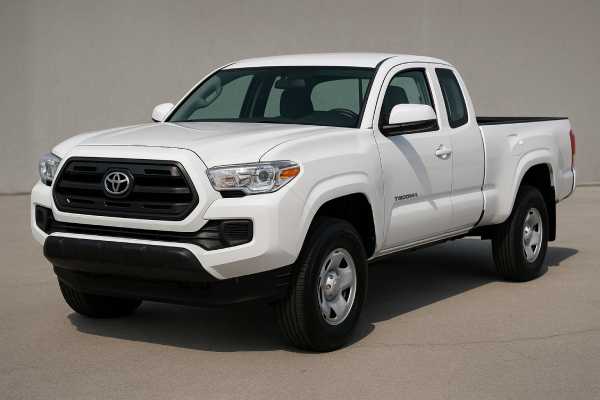
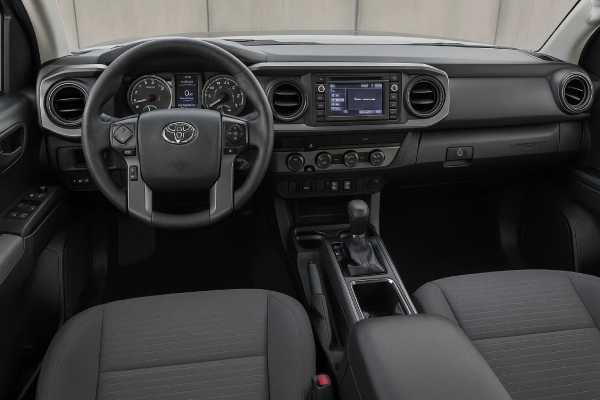
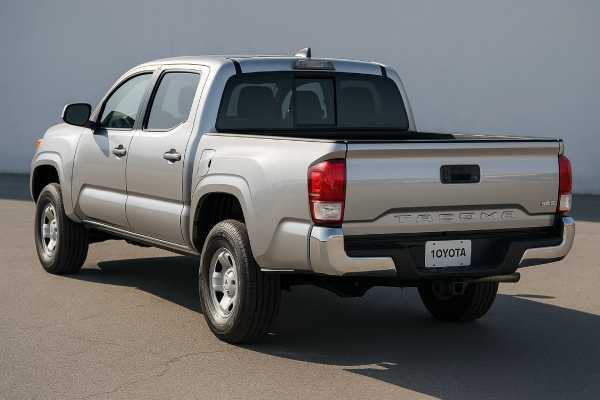
The 2016–2019 Toyota Tacoma 4×4 with the 2GR-FKS 3.5-litre V6 is one of the key trucks in the modern midsize segment. It combines a high-strength boxed frame, a relatively sophisticated V6 with both direct and port fuel injection, and proven part-time four-wheel drive hardware. For many owners, it has to do everything: commute during the week, handle trails and snow on weekends, and tow a medium trailer without drama.
This guide focuses on the four-wheel drive V6 Tacoma in the N300 generation, covering the 2016–2019 model years. You will find hard data (specs, dimensions, capacities), along with real-world insights on reliability, maintenance planning, and how it compares with rivals like the Colorado, Ranger, Frontier, and Ridgeline. The goal is to give you enough detail to choose the right trim, look after it properly, and know what to check before buying a used one—without drowning you in workshop-manual language.
Key Takeaways
- Strong 3.5-litre V6 with modern D-4S injection and decent towing headroom for a midsize truck.
- Part-time 4×4 with low range, electronic aids, and available rear locker gives real off-road capability.
- Cabin and chassis hold up well long-term, but some V6/automatic shift quality and sensor issues need attention.
- Expect engine oil changes roughly every 8,000–10,000 km (5,000–6,000 miles) on a conservative schedule.
- 4×4 models benefit from transfer case and differential fluid services every 50,000–60,000 km under mixed use.
What’s inside
- Tacoma 3.5 4×4 Profile
- Engine, 4×4 and Specs
- Off-Road Trims and Safety
- 4×4 Tacoma Reliability Notes
- Service Plan and Buying Tips
- On-Road and Off-Road Driving
- Tacoma 4×4 versus Competitors
Tacoma 3.5 4×4 Profile
The N300 Tacoma launched for 2016 as a major rework of Toyota’s long-running midsize pickup, and the 4×4 3.5-litre V6 quickly became the core configuration in many markets. Underneath, it remains body-on-frame with a solid rear axle and leaf springs, but Toyota strengthened the frame, added more high-strength steel in the structure, and revised suspension geometry for better on-road stability.
The 2GR-FKS V6 is an aluminium, 24-valve DOHC engine using Toyota’s D-4S system, which combines direct and port injection. It can switch between Otto and Atkinson-like valve timing strategies to balance torque and efficiency. In Tacoma trim, it is rated at 278 hp and 265 lb-ft of torque—adequate rather than brutal, but reliable and smooth when maintained.
On the 4×4 side, these trucks use a part-time system with an electronically shifted transfer case. In most trims you get 2H, 4H, and 4L modes, with 4H and 4L locking the front and rear axles together via the transfer case for true mechanical traction. Higher off-road trims add a selectable rear locking differential, crawl control, and multi-terrain modes.
Cab choices (Access Cab and Double Cab), bed lengths (short and long), and trim packages mean curb weight, payload, and tow ratings vary. Broadly, a V6 4×4 Double Cab automatic sits around 1,980–2,050 kg (4,350–4,520 lb) curb weight, with payload commonly in the 500–650 kg (1,100–1,430 lb) range and maximum tow ratings up to about 2,900 kg (6,400 lb) when properly equipped.
From an ownership point of view, the Tacoma 4×4 shines in:
- Long-term chassis durability, especially in mild climates.
- A strong aftermarket for suspension, armour, and recovery gear.
- Good parts availability and a huge knowledge base among DIY owners and independent shops.
Weaknesses are more about refinement and fuel economy. The 6-speed automatic can hunt for gears on grades, and real-world fuel consumption is closer to older V6 trucks than modern turbo fours. If you value “set and forget” reliability and mechanical simplicity over cutting-edge performance, however, the 3.5 4×4 Tacoma still hits a sweet spot.
Engine, 4×4 and Specs
This section focuses on hard numbers for the 2GR-FKS V6 and 4×4 driveline in typical North American-market Tacomas from 2016–2019. Exact figures depend on cab, bed, and trim, so always confirm for your VIN, but these tables give realistic reference values.
Engine and Performance (2GR-FKS V6)
| Item | Specification |
|---|---|
| Engine code | 2GR-FKS |
| Layout and cylinders | 60° V6, aluminium block and heads |
| Valvetrain | DOHC, 4 valves per cylinder, dual VVT-iW |
| Displacement | 3.5 l (3,456 cc) |
| Bore × stroke | ~94.0 mm × 83.0 mm |
| Induction | Naturally aspirated |
| Fuel system | D-4S (direct plus port fuel injection) |
| Compression ratio | Approx. 11.8:1 |
| Max power | 278 hp @ 6,000 rpm |
| Max torque | 265 lb-ft (≈359 Nm) @ 4,600 rpm |
| Timing drive | Chain (no scheduled replacement interval) |
| Recommended fuel | Regular unleaded (87 AKI), higher octane optional |
| Rated economy (4×4 V6) | Roughly 17–18 mpg city / 21–23 mpg highway (US) |
Real-world consumption for a stock 4×4 V6 Double Cab automatic usually falls around:
- 13–15 l/100 km (19–18 mpg US) mixed driving.
- Higher consumption with lift kits, heavy tyres, or roof racks.
Transmission and 4×4 System
| Item | Specification |
|---|---|
| Transmission (auto) | 6-speed torque-converter automatic |
| Transmission (manual) | 6-speed manual (limited trims and markets) |
| Drive type | Part-time 4×4 (2H, 4H, 4L) |
| Transfer case | 2-speed, electrically actuated |
| Low-range ratio | ~2.57:1 (typical) |
| Rear differential | Open; locking diff on off-road trims |
| Front differential | Open, independent front suspension |
| Typical final drive ratios | Around 3.91–4.30:1 (varies by gearbox and tow package) |
For off-road trims, the combination of low-range gearing, crawl control, and a locking rear differential makes the truck far more capable than its stock tyres suggest.
Chassis, Dimensions, and Capacities (typical Double Cab 4×4)
| Item | Approximate value |
|---|---|
| Suspension (front) | Double wishbone with coil springs |
| Suspension (rear) | Solid axle, leaf springs |
| Steering | Rack-and-pinion, hydraulic assist |
| Brakes | Front vented discs, rear drums |
| Wheelbase | ~3,236 mm (127.4 in) |
| Overall length | ~5,392 mm (212.3 in) depending on bed |
| Overall width | ~1,890 mm (74.4 in) |
| Overall height | ~1,780–1,800 mm (≈70–71 in) |
| Ground clearance (4×4) | ~239 mm (≈9.4 in), trim-dependent |
| Approach / departure angles | ~29° / 23° (varies by bumper and suspension) |
| Turning circle | Around 12.4 m (≈40.7 ft) |
| Curb weight | ≈1,980–2,050 kg (4,350–4,520 lb) |
| GVWR | ≈2,540–2,590 kg (5,600–5,710 lb) |
| Fuel tank capacity | ~80 l (21.1 US gal) |
Performance and Tow Ratings (typical)
| Item | Approximate value |
|---|---|
| 0–100 km/h (0–62 mph) | Low 8-second range (unladen, auto) |
| Top speed | ~180 km/h (≈112 mph), electronically limited |
| Braked towing capacity | Up to ≈2,900 kg (6,400 lb) with V6 tow package |
| Unbraked towing | Typically ≈680 kg (1,500 lb) — check local rules |
| Typical payload range | ≈500–650 kg (1,100–1,430 lb), depending on spec |
| Roof load (dynamic) | Commonly 75–100 kg (165–220 lb) — verify per rack |
Fluids and Electrical (headline data)
Use this table as guidance only; always confirm type and exact capacity from the service manual or owner’s manual.
| System | Specification (typical) |
|---|---|
| Engine oil | 0W-20 synthetic; ≈5.8–6.1 l (6.1–6.4 US qt) with filter |
| Engine coolant | Toyota Super Long Life (pink); ≈9–11 l total |
| Automatic transmission | Toyota WS ATF; ~8–10 l for full drain/refill |
| Transfer case | 75W-90 gear oil; ≈1.5–1.7 l |
| Front differential | 75W-90; ≈1.1–1.3 l |
| Rear differential | 75W-85 or 75W-90; ≈2.5–3.0 l |
| A/C refrigerant | R-134a; charge and PAG oil per label |
| Alternator | Typically around 130 A |
| Spark plugs | Long-life iridium, gap ≈1.0–1.1 mm |
| 12V battery | ~60–70 Ah, group size aligned with market spec |
Off-Road Trims and Safety
For the 3.5-litre 4×4 Tacoma, trims are more than cosmetic. They shape the driveline hardware, off-road aids, and safety kit you actually get.
Typical North American trims for V6 4×4 models include SR, SR5, TRD Sport, TRD Off-Road, Limited, and later TRD Pro. Other regions may use different grade names but follow similar logic.
Key mechanical and functional differences by trim (4×4 V6):
- SR / SR5 4×4
- Steel wheels or simple alloys, smaller tyre packages.
- Part-time 4×4 with low range.
- Rear differential generally open; some SR5 configurations add off-road aids via packages.
- Basic suspension tuning aimed at ride comfort and payload, not hardcore off-road use.
- TRD Sport 4×4
- Focus on on-road handling: firmer suspension, lower-profile tyres, sport tuning.
- Hood scoop (cosmetic), larger alloy wheels.
- Often lacks the locking rear diff but may have limited off-road traction aids.
- Better road composure, but the wheel/tyre spec is less ideal for deep mud and rocks.
- TRD Off-Road 4×4
- The sweet spot for many buyers.
- Rear locking differential, multi-terrain select, and crawl control on automatic models.
- Off-road oriented shock tuning and more sidewall in the tyres.
- Underside protection (skid plates) and more robust wheel packages.
- Limited 4×4
- Luxury-oriented: leather, premium audio, chrome trim.
- Shares the basic 4×4 hardware but usually without the full off-road aid suite.
- Better for highway and light trail use than severe off-roading.
- TRD Pro (where available)
- Lifted suspension, high-quality shocks, skid plates, aggressive tyres.
- Rear locker, full off-road electronics, and visual changes.
- Best base for serious off-road use if you want factory engineering and a warranty.
Safety ratings and structure
The N300 Tacoma 4×4 Double Cab generally scores well in moderate-overlap frontal and side impacts, with robust cabin integrity. Passenger-side small-overlap tests have produced “acceptable” rather than “good” in some configurations, often due to structural or intrusion factors, especially in Access Cab variants.
Head restraint and roof strength performance is typically strong. Headlights have been a weak point; many Tacoma trims are rated only “marginal” or “poor” in formal testing, which is relevant if you drive a lot on dark rural roads. Aftermarket LED upgrades can improve visibility but must be chosen carefully to remain road-legal.
Standard safety systems typically include:
- Front, side, curtain, and driver’s knee airbags.
- ABS with electronic brake-force distribution and brake assist.
- Vehicle Stability Control (VSC) and traction control.
- Tire pressure monitoring.
Depending on market and model year, Toyota Safety Sense (TSS-P) becomes standard or widely available. Features may include:
- Pre-collision system with pedestrian detection.
- Lane departure alert (with or without steering assist).
- Automatic high beams.
- Adaptive cruise control (usually low-speed capable in later years).
Calibration matters: after windscreen replacement, bumper repairs, or alignment changes, radar and camera systems may need recalibration using specialist procedures. When buying used, ask for documentation if major front-end bodywork has been done.
For child seats, the Double Cab’s rear bench provides ISOFIX/LATCH anchors and adequate space for most infant and toddler seats. The Access Cab’s jump seats are less suitable for regular child-seat duty.
4×4 Tacoma Reliability Notes
The 3.5-litre 4×4 N300 Tacoma has a good reputation overall, but like any complex truck it has known patterns of wear and a few specific trouble spots. Thinking in terms of prevalence and severity helps prioritise what to watch.
Engine and powertrain
- Crankshaft position sensor recall (V6, 2016–2017)
Some early trucks were subject to a recall for crankshaft timing rotor and sensor issues that could cause misfires, rough running, or stalling. Remedy is replacement of the sensor/related parts with updated components. - Prevalence: limited to certain VIN ranges.
- Severity: high (stall risk), but resolved once recall is done.
- Shift quality and gear hunting (6-speed auto)
Many owners report busy shifting, reluctance to downshift, or odd part-throttle behaviour. Toyota has released updated transmission software in some markets. - Prevalence: common.
- Severity: low to medium; mostly a drivability annoyance, but can mask real issues if ignored.
- Remedy: ensure latest TCU calibration; reset adaptive learning after significant changes in tyre size.
- “Tapping” or “sewing machine” valvetrain noise on cold start
The 2GR-FKS can be mechanically noisy on startup due to its injector and valve-train design. - Prevalence: common but usually normal.
- Severity: low if oil is correct and there are no fault codes.
- Remedy: use correct 0W-20 oil, follow change intervals, and investigate any change in sound pattern, misfire, or codes.
- Water pump seepage and coolant leaks
Some V6 units develop coolant seep around the pump or associated gaskets as mileage builds. - Prevalence: occasional on higher mileage trucks.
- Severity: medium; neglected leaks can lead to overheating.
- Remedy: inspect for pink crust or dampness, replace pump and gaskets as needed.
4×4 driveline and chassis
- Transfer case and differential leaks
Seals at the transfer case output or pinion seals can weep fluid, particularly on trucks that tow frequently or see heavy off-road use. - Prevalence: occasional.
- Severity: medium; long-term fluid loss can damage gears and bearings.
- Remedy: check for wet housings, monitor fluid levels, replace seals and refill with correct oil.
- Front CV boots and joints
Lifted trucks or those used hard off-road may tear CV boots, leading quickly to joint wear. - Prevalence: common in modified trucks.
- Severity: medium; neglected boots mean expensive CV replacement.
- Remedy: inspect boots at every service, especially on lifted trucks; replace boots early.
- Leaf spring and frame corrosion
Toyota has a history of frame corrosion campaigns on older generations; the N300 is generally better, but road-salt markets still see rust on frame rails, cross-members, and leaf-spring hangers. - Prevalence: varies strongly by climate.
- Severity: medium to high in heavy-salt regions.
- Remedy: regular underbody washing, rust protection, and inspection for flaking or deep pitting.
- Suspension bushings and ball joints
With heavy loads or rough roads, lower control arm bushings, sway bar links, and ball joints wear. - Prevalence: expected wear around 150,000+ km (90,000+ miles).
- Severity: medium; affects alignment and steering feel.
- Remedy: replace with OEM or high-quality aftermarket parts; align after any front-end work.
Electronics and safety systems
- Sensor and camera issues (TSS-equipped trucks)
Misaligned radar sensors or dirty windshields can trigger warning lights or disable adaptive cruise and pre-collision functions. - Prevalence: occasional.
- Severity: low to medium; safety feature availability is reduced.
- Remedy: proper body repair procedures, calibrations with appropriate equipment, and regular cleaning.
- Infotainment glitches
Freezing screens, Bluetooth problems, or slow boot times are not unusual. - Prevalence: common but minor.
- Remedy: software updates, head-unit resets, or replacement under warranty.
Recalls, TSBs, and what to check
When assessing a specific truck:
- Run a VIN recall check through official Toyota or government websites.
- Ask for dealer printouts of completed recall and service campaign work.
- Look for evidence of regular fluid changes on the engine, transmission, transfer case, and both differentials.
- For modified trucks, confirm that gearing, tyre size, and alignment have been adjusted properly; poorly executed lifts are a more serious risk than the underlying platform.
Overall, the 3.5 4×4 Tacoma tends to age gracefully if serviced on time, with most problems being solvable by standard mechanical work rather than catastrophic design flaws.
Service Plan and Buying Tips
A clear maintenance plan is the best way to keep a 3.5-litre 4×4 Tacoma reliable for the long term. The following intervals are conservative and assume mixed use with some towing or off-road driving.
Core maintenance schedule (approximate)
- Engine oil and filter
- Every 8,000–10,000 km (5,000–6,000 miles) or 6–12 months, whichever comes first.
- Use API-approved 0W-20 synthetic and a quality filter.
- Engine air filter
- Inspect every 15,000 km (10,000 miles).
- Replace around 30,000 km (20,000 miles), sooner in dusty conditions.
- Cabin air filter
- Replace every 20,000–25,000 km (12,000–15,000 miles) or annually if you drive in polluted or dusty areas.
- Coolant
- Initial interval often around 160,000 km (100,000 miles) or 10 years, then shorter thereafter.
- For a used truck, replace coolant if age is unknown.
- Spark plugs (iridium)
- Around 96,000–160,000 km (60,000–100,000 miles) depending on conditions.
- If misfires appear, inspect earlier.
- Serpentine/auxiliary belt and hoses
- Inspect at every major service, typically around 60,000 km (40,000 miles).
- Replace at visible wear, cracking, or every 100,000–120,000 km as preventive.
- Automatic transmission fluid (ATF)
- Many manuals call it “lifetime,” but a 50,000–80,000 km (30,000–50,000 mile) drain and fill is wise, especially for towing or city use.
- Use Toyota WS fluid or a fully compatible equivalent.
- Manual transmission and transfer case
- Replace fluids every 50,000–60,000 km (30,000–40,000 miles) in 4×4 trucks.
- Front and rear differentials
- 50,000–60,000 km (30,000–40,000 miles) under mixed duty; more often for heavy towing or deep-water crossings.
- Brake fluid
- Every 3 years regardless of mileage.
- Brake inspection (pads, shoes, rotors, drums)
- At least annually; more often if towing or driving in mountains.
- Wheel alignment and tyre rotation
- Rotate tyres every 10,000–12,000 km (6,000–7,500 miles).
- Align whenever tyres are replaced or when steering pull/uneven wear appears.
- 4×4 system exercise
- Engage 4H for a few kilometres monthly and 4L occasionally to keep actuators and gears lubricated.
- 12V battery
- Load-test after 4–5 years; plan replacement at the first sign of weakness.
Buyer’s checklist for a used Tacoma 3.5 4×4
When shopping used:
- Service history
- Look for documented oil changes and at least one transmission/diff/transfer case service by 150,000 km.
- Confirm coolant and brake fluid have been renewed at least once.
- Recalls and TSBs
- Ask for written confirmation that all V6-related recalls (especially crank sensor) are closed.
- If the truck has odd shifting, ask whether any transmission software updates have been performed.
- Frame and underbody
- Inspect frame rails, cross-members, leaf-spring mounts, and the rear of the cab for rust.
- Surface rust is normal; heavy flaking or perforation is a red flag.
- 4×4 operation
- Verify smooth engagement of 2H→4H and 4H→4L on a test drive.
- Listen for grinding or clunks, and ensure the dash indicators correspond to lever/knob positions.
- Off-road modifications
- Lift kits, large tyres, and armour are fine if done properly, but check for:
- Correct alignment and no rubbing at full lock.
- No driveline vibration.
- Evidence that gearing and brakes are still adequate for the tyre size.
- Interior and electronics
- Test all power features, infotainment, camera systems, and safety-sense functions.
- A neglected interior can be a proxy for poor mechanical care.
If you want the best balance of equipment and value, late-cycle TRD Off-Road or TRD Sport Double Cabs with full service histories tend to be strong picks. Heavily abused fleet or work trucks with vague histories are best approached cautiously, even if the price is attractive.
On-Road and Off-Road Driving
The Tacoma 3.5 4×4 is not the quickest or most refined truck in its class, but it offers a consistent, predictable driving experience that many owners appreciate.
Ride, handling, and NVH
On pavement, the ride is firm but generally controlled. The solid rear axle and leaf springs mean the truck can feel choppy on broken surfaces when unladen, especially at low speeds. Adding modest weight in the bed (tools, camping gear) often improves composure.
Steering is on the heavier side with reasonable straight-line stability. Body roll is noticeable in quick lane changes, but not excessive for a body-on-frame truck. Wind and road noise are acceptable at highway speeds, though some rivals feel quieter.
TRD Off-Road and TRD Pro models with specialised shocks manage rough surfaces better, but their off-road tyres can add hum and slightly dull steering response.
Powertrain character
The 2GR-FKS V6 likes revs. Below 2,000 rpm it can feel a bit lazy, but once past 3,000 rpm it pulls cleanly. The torque peak around 4,600 rpm means passing performance is best when the transmission downshifts a gear or two.
The 6-speed automatic is tuned for fuel economy, often upshifting early and holding higher gears. This is why some drivers experience gear hunting on hills. Sport mode and manual shift gates help manage this, and recalibrated software on some trucks improves behaviour.
Manual-transmission 4×4 trucks are rarer but give more direct control in technical off-road situations, at the cost of more effort in traffic.
Real-world efficiency
For a typical Double Cab 4×4 V6 automatic on stock tyres:
- City driving: 14–16 l/100 km (17–20 mpg US) depending on traffic and driving style.
- Highway (100–120 km/h / 60–75 mph): 11–13 l/100 km (18–21 mpg US).
- Mixed driving: Around 13–14 l/100 km (17–19 mpg US).
Lifts, heavier tyres, roof racks, and added armour all push these numbers upward. Expect an extra 1–3 l/100 km (1–3 mpg US drop) for a typical overlanding build.
4×4 traction and off-road performance
In low-traction conditions, the Tacoma 4×4’s part-time system shines:
- 4H is useful for snow, gravel, and dirt roads at moderate speeds.
- 4L with the rear diff locked lets the truck crawl over obstacles with surprising ease.
- Crawl control and multi-terrain select (where fitted) help less experienced drivers maintain traction on steep descents or loose climbs.
Ground clearance and approach angles are good from the factory, but the standard front air dam on some trims can snag—many owners remove or trim it. The limiting factors off-road are often tyres and driver skill, not the fundamental platform.
Towing and load behaviour
Within its rating, the Tacoma 4×4 tows small campers, utility trailers, and boats competently:
- Stability is generally solid with a correctly set up weight-distributing hitch.
- Braking with a properly adjusted trailer brake controller is adequate.
- Expect a noticeable fuel consumption penalty—25–40% higher fuel use is typical when towing near the limit.
On steep grades in hot weather, downshift early to keep transmission temperatures under control, and follow the severe-duty service schedule for fluids.
Tacoma 4×4 versus Competitors
The 2016–2019 Tacoma 4×4 V6 competes directly with midsize pickups like the Chevrolet Colorado/GMC Canyon, Nissan Frontier, Ford Ranger (from 2019 in North America), and Honda Ridgeline. Each has its own strengths.
Versus Chevrolet Colorado / GMC Canyon (V6 and diesel)
- The GM twins offer stronger on-paper performance from their V6 and especially the diesel, with better highway fuel economy.
- Interiors and ride quality can feel more car-like.
- However, some owners report more complex long-term issues, particularly with emissions systems on diesel trucks and electronics.
- The Tacoma counters with simpler emissions hardware (no diesel after-treatment) and a stronger resale-value track record.
Versus Nissan Frontier (previous generation)
- The older Frontier platform is rugged and often cheaper on the used market.
- Its V6 is torquey but less efficient and paired with an older-feeling interior and safety tech.
- Tacoma offers more modern driver-assistance systems, a fresher cabin, and a larger aftermarket, but typically commands higher prices.
Versus Ford Ranger (2.3 EcoBoost)
- The Ranger’s turbo four delivers strong low-rpm torque and often better fuel economy, especially at highway speeds.
- It can tow competitively and has advanced driver-assist options.
- The Tacoma’s counterarguments are simpler naturally aspirated power (no turbo and related complexity) and a long-proven 4×4 hardware layout that many off-roaders favour.
Versus Honda Ridgeline (AWD unibody)
- The Ridgeline rides and handles more like an SUV, with excellent comfort and clever packaging (in-bed trunk, dual-action tailgate).
- It is ideal if you prioritise daily driving and light-duty use.
- The Tacoma offers a stronger aftermarket, more traditional body-on-frame durability, and better suitability for lifted/off-road setups and heavy accessories.
Where the Tacoma 3.5 4×4 stands out
- Outstanding resale value and strong demand on the used market.
- Huge parts and accessory ecosystem for camping, overlanding, and work use.
- A reputation for durability that, while not flawless, is backed by many high-mileage examples.
Where it trails rivals
- Fuel economy is mid-pack or worse, especially once modified.
- Interior tech and refinement are serviceable but not class-leading.
- Headlight performance and some crash-test nuances mean it may not hit top safety awards in all configurations.
If you prioritise long-term ownership, off-road capability, and a robust support network, the 2016–2019 Tacoma 3.5 4×4 remains a very compelling choice. Buyers who care more about on-road comfort, fuel economy, or cutting-edge driver aids may find better fit in some competitors—but often at the cost of the Tacoma’s legendary resale strength.
References
- 2017 Toyota Tacoma Owner’s Manual (OM04013U) 2017 (Owner’s Manual)
- 2017 Toyota Tacoma 4WD Fuel Economy 2017 (Fuel Economy Data)
- 2019 Toyota Tacoma Crew Cab Pickup Crashworthiness 2019 (Safety Rating)
- Part 573 Safety Recall Report 17V-356 – 2016–2017 Toyota Tacoma 2017 (Recall Database)
- Technical Instructions for Safety Recall H0H – Crankshaft Position Sensor – 2016–2017 Tacoma 2017 (Service/Recall Instructions)
Disclaimer
This article is for informational purposes only and is not a substitute for professional diagnosis, repair, or official service information. Specifications, torque values, capacities, intervals, and procedures can vary by VIN, market, production date, and installed equipment. Always verify critical data against your vehicle’s owner’s manual, factory service manual, and official technical bulletins before performing any work.
If you found this guide useful, consider sharing it with other owners or enthusiasts via social platforms such as Facebook or X/Twitter. It helps support xcar’s effort to create detailed, independent technical content for drivers and DIYers.