
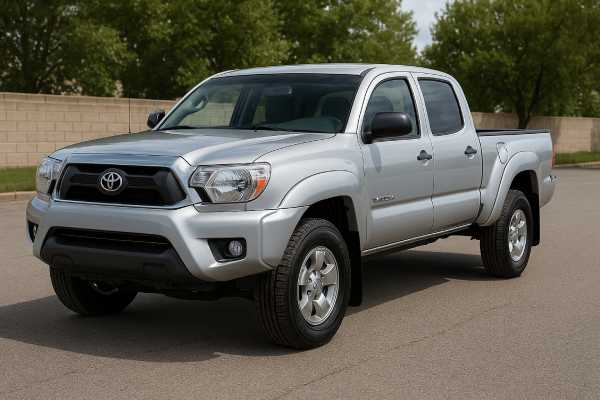
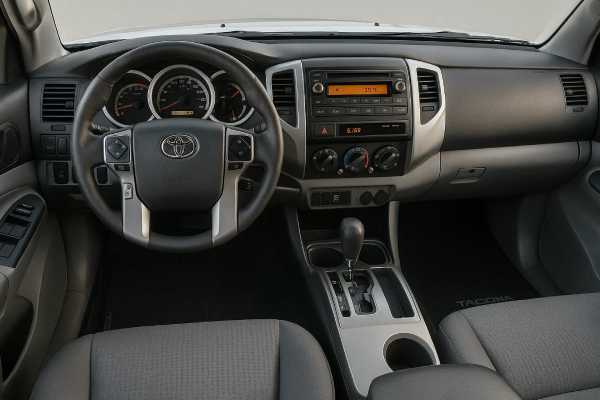
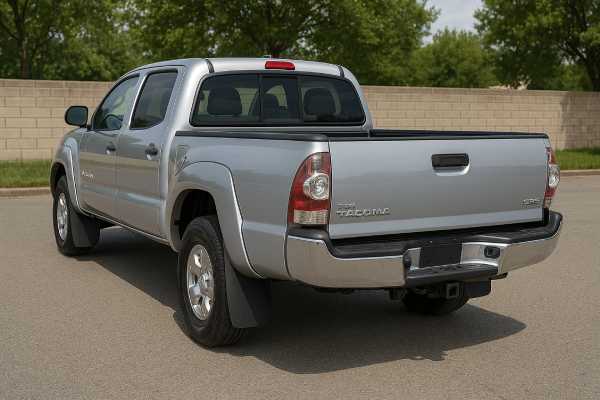
The 2012–2015 Toyota Tacoma 4×4 with the 1GR-FE 4.0 litre V6 is one of those trucks that feels immediately honest about what it is built to do. It is not the quickest or the most refined mid-size pickup, but it is designed to be driven hard, loaded up, and kept for a long time with relatively simple care. The facelift brought a sharper front end, improved interior tech, and small calibration tweaks, while the basic body-on-frame formula stayed familiar: a stout chassis, part-time 4WD, and a naturally aspirated V6 that favours durability over drama.
For buyers, the key questions are straightforward: how does this Tacoma 4×4 tow and wheel, what are the running costs, and which issues should you watch for as the truck ages? This guide walks through specs, real-world performance, reliability patterns, and maintenance priorities so you can decide whether this generation still fits your use case today.
Owner Snapshot
- Strong 4.0 V6 and low-range 4×4 give confident towing up to roughly 2,900 kg (about 6,400 lb) when properly equipped.
- High ground clearance, good approach angle and TRD Off-Road hardware make it very capable on rough trails.
- Known frame corrosion and rear leaf spring concerns on some trucks mean underbody inspections are essential.
- Typical oil change interval is 8,000 km / 5,000 miles or 6 months, whichever comes first, with 5W-30 meeting the factory spec.
- 4WD actuator and transfer case servicing are worth budgeting for after 10+ years, especially in wet or salty climates.
Guide contents
- Toyota Tacoma 4×4 4.0 Profile
- Tacoma 4×4 4.0 Technical Specs
- Tacoma 4×4 Grades and Safety
- Reliability, Fault Patterns and Fixes
- Maintenance Schedule and Buyer Tips
- Driving Dynamics and Efficiency
- Tacoma 4×4 Versus Competitors
Toyota Tacoma 4×4 4.0 Profile
The 2012–2015 Tacoma 4×4 4.0 sits at the top of the second-generation Tacoma range and is often the configuration enthusiasts and working owners look for: Double Cab or Access Cab, proper low-range transfer case, and the 1GR-FE V6 with 236 hp and 266 lb-ft of torque. It is a classic part-time four-wheel drive truck, not an all-wheel drive crossover. You select 2H, 4H, or 4L as needed, and the truck responds with a solid, mechanical feel.
Toyota’s facelift for the 2012 model year focused on appearance and comfort more than hardware. You got a revised grille and front fascia, updated headlamps and tail lamps, a refreshed dashboard, and improved audio/navigation options. Underneath, the proven ladder frame, double wishbone front suspension, and leaf-spring rear axle carried over. In 4×4 form, most trucks ride higher than their 4×2 counterparts and offer around 239 mm (9.4 in) of ground clearance, with approach and departure angles in the mid-30 and mid-20 degree range respectively on off-road-oriented trims.
Where this Tacoma shines is its blend of manageability and capability. It is compact enough for daily commuting and tight trails, yet stout enough to haul a full crew and gear. The V6 is tuned for reliability and mid-range pull, not peak power, and pairs with either a 6-speed manual (in some markets/years) or 5-speed automatic. With the tow package, you can realistically tow a mid-size camper, ski boat, or dual-axle utility trailer without overwhelming the truck when driven sensibly.
For used buyers, the key appeal is long-term durability and a deep aftermarket. Suspension upgrades, armour, recovery gear, and gearing options are all widely supported. At the same time, the platform is old-school enough that many maintenance tasks remain accessible for competent DIY owners.
Tacoma 4×4 4.0 Technical Specs
Engine and Performance (1GR-FE 4.0 V6)
Typical data for a 2012–2015 Tacoma 4×4 V6:
| Item | Value | Notes |
|---|---|---|
| Engine code | 1GR-FE | Aluminium 60° V6 |
| Displacement | 4.0 L (3,956 cc) | |
| Layout and valvetrain | V6, DOHC, 4 valves per cylinder | VVT-i on intake (single VVT-i variant) |
| Bore × stroke | 94.0 mm × 95.0 mm (3.70 × 3.74 in) | |
| Compression ratio | ~10.0:1 | Typical Tacoma calibration |
| Induction | Naturally aspirated | No turbo or supercharger from factory |
| Fuel system | Multi-point fuel injection (MPFI) | Regular unleaded recommended |
| Max power | 236 hp (176 kW) @ 5,200 rpm | On 87 AKI fuel |
| Max torque | 266 lb-ft (360 Nm) @ 4,000 rpm | Broad, usable mid-range |
| Firing order (if needed) | 1–2–3–4–5–6 | Helpful for ignition diagnostics |
Fuel consumption will vary by cab, bed length, and gearing, but typical EPA-style ratings for a 4×4 automatic are about 16 mpg city / 21 mpg highway / 18 mpg combined, roughly 14.7 / 11.2 / 13.1 L/100 km. At 120 km/h (75 mph) with all-terrain tyres and a mild lift, many owners see 13–14 L/100 km (17–18 mpg US).
Aerodynamics are truck-like rather than slippery; expect a drag coefficient around the mid-0.3 range with a relatively large frontal area. Highway efficiency is therefore very sensitive to roof racks, light bars, and larger tyres.
Transmission and Driveline
| Item | Value / Description |
|---|---|
| Transmission options | 5-speed automatic (A750F), 6-speed manual (RA60F, market-dependent) |
| Drive type | Part-time 4×4, rear-drive default |
| Transfer case | 2-speed, electric shift-on-the-fly |
| Low-range ratio | ~2.57:1 (typical for this generation) |
| Front differential | Open differential, some trims with A-TRAC brake-based traction |
| Rear differential | Open on many trims; mechanical locking diff on TRD Off-Road / TRD Pro |
| Final drive ratios | Commonly 3.73 or 3.91 (varies by cab/bed/transmission) |
The part-time system is not intended for use in 4H on dry pavement. On loose surfaces, A-TRAC uses ABS-based wheel braking to simulate locking behaviour when a wheel lifts or slips.
Chassis and Dimensions (typical Double Cab Short Bed 4×4)
| Parameter | Metric | Imperial |
|---|---|---|
| Overall length | ~5,390 mm | ~212.3 in |
| Width | ~1,910 mm | ~75.2 in |
| Height | ~1,790 mm | ~70.5 in |
| Wheelbase | 3,236 mm | 127.4 in |
| Ground clearance | ~239 mm | 9.4 in |
| Approach angle | ~35° | |
| Departure angle | ~26° | |
| Curb weight (typical) | 1,900–1,920 kg | 4,180–4,230 lb |
| GVWR | ~2,540 kg | ~5,600 lb |
| Fuel tank capacity | ~79 L | ~21 US gal / 17.4 UK gal |
Wheel and tyre fitment from factory commonly includes 245/75 R16 or 265/70 R16 tyres on 16-inch rims, with optional 17-inch wheels on some packages.
Performance and Capability
| Metric | Typical Value |
|---|---|
| 0–100 km/h (0–62 mph) | ~7.8–8.5 s (unladen, automatic) |
| Top speed | ~175 km/h (≈109 mph, electronically limited) |
| Braking 100–0 km/h | ~40–43 m depending on tyres/load |
| Max towing capacity | Up to ~2,900 kg (6,400 lb) with tow package |
| Max payload | ~580–640 kg (1,280–1,400 lb) by configuration |
| Roof load | Commonly ~75–100 kg (165–220 lb), check door sticker |
Fluids and Service Capacities (typical guidance)
Always confirm by VIN and market, but for a 4×4 4.0 V6:
| System | Spec / Type | Approx. Capacity |
|---|---|---|
| Engine oil | API SN, 5W-30 (0W-20 sometimes approved later) | ~5.2–5.5 L (5.5–5.8 qt) with filter |
| Engine coolant | Toyota Super Long Life (pink), ~50/50 mix | ~9.6–10.0 L (≈10–10.5 qt) |
| Automatic transmission | Toyota ATF WS | ~3 L (partial) / ~10.9 L (dry) |
| Manual transmission | GL-4/GL-5 75W-90 | ~1.8–2.0 L |
| Transfer case | GL-4/GL-5 75W-90 | ~1.0 L |
| Front differential | GL-5 75W-85 | ~1.5–1.6 L |
| Rear differential | GL-5 75W-85 | ~3.3–3.5 L |
| A/C refrigerant | R-134a, ~550–600 g | Check label |
Key torque values often used in service:
| Fastener | Torque (approximate) |
|---|---|
| Wheel lug nuts | 113 Nm (83 lb-ft) |
| Engine oil drain plug | ~40 Nm (30 lb-ft) |
| Front brake caliper bracket | ~120 Nm (≈88–90 lb-ft, check manual) |
Electrical
| Item | Typical Value / Type |
|---|---|
| Alternator output | ~130 A |
| 12 V battery | ~65–70 Ah, group size 24F or similar |
| Spark plugs | Iridium (Denso/NGK), gap ≈1.0–1.1 mm (0.039–0.043 in) |
Safety and Driver Assistance
This generation Tacoma predates modern ADAS suites. You do not get standard autonomous emergency braking or lane keep assist.
| Feature / Rating | Details |
|---|---|
| Airbags | Dual front, front side, and full-length side curtain on most 4×4 trims |
| Stability / traction control | VSC, TRAC, A-TRAC (on many 4×4 trims) |
| ABS | 4-channel ABS with EBD and Brake Assist |
| IIHS crash tests | Good in moderate overlap front, side, and head restraints; Marginal roof strength |
| NHTSA rating (typical) | 4-star overall; rollover risk higher for 4×4 pickups |
| Child-seat anchors | LATCH anchors in rear outboard seats (Double Cab) |
Advanced features like blind-spot monitoring, adaptive cruise control, and lane departure alert are not factory fitted on these years.
Tacoma 4×4 Grades and Safety
Trims, Packages, and Mechanical Differences
Across 2012–2015, the Tacoma 4×4 V6 was offered in several trims depending on market, commonly including:
- Base / SR-style work trims – simpler interior, steel wheels, cloth seats, and fewer comfort features, but with the same fundamental 4×4 hardware.
- TRD Sport – road- and towing-focused setup with sport-tuned suspension, larger wheels/tyres, hood scoop, and often body-colour trim. Typically prioritises on-road handling over maximum articulation.
- TRD Off-Road – off-road tuned suspension, often with Bilstein dampers, locking rear differential, off-road computer functions (where fitted), and all-terrain tyres. This is the sweet spot for trail use.
- Limited / higher luxury trims – leather, premium audio, navigation, and cosmetic upgrades, usually based on Double Cab 4×4 configurations.
Mechanical distinctions that matter to a buyer:
- Rear differential: TRD Off-Road/Pro trims usually have the factory electronic locking rear diff; base and many Sport trims use an open diff with electronic traction aids only.
- Tyre and wheel packages: 16-inch wheels with higher-profile tyres flex better off-road and ride more softly; 17-inch packages favour sharper road response but slightly compromise trail compliance.
- Towing package: adds transmission cooler (on automatic models), upgraded alternator, revised rear springs, and trailer wiring hardware. This is important if you plan to tow near the truck’s rated limit.
Quick visual identifiers:
- TRD Off-Road: “TRD OFF ROAD” bedside decals, often grey alloy wheels, and interior trim accents geared to off-road use.
- TRD Sport: colour-keyed hood scoop, body-colour grille surround and mirrors, and low-profile tyres on larger wheels.
- Limited: chrome accents, leather, and integrated audio/navigation.
VIN decoding and build sheets (via a Toyota dealer or national Toyota owner portal) are the best way to confirm axle ratios, tow package presence, and locker availability.
Safety Ratings by Trim and Year
Safety performance is broadly similar across 4×4 trims because the underlying structure and restraint system remain the same. The key variables are cab style (Access vs Double Cab) and weight distribution.
Typical patterns:
- IIHS tested Double Cab versions and rated them Good in moderate overlap frontal, side, and head restraint tests, but only Marginal for roof strength.
- NHTSA generally gave the 4×4 Double Cab a 4-star overall rating, with 4 stars for frontal impact and rollover, and strong results for side impact.
The high centre of gravity and body-on-frame construction inherent in mid-size pickups translate into higher rollover risk in extreme manoeuvres than a low car-based crossover. Good tyres, proper loading, and conservative speeds on loose surfaces go a long way to mitigating this.
Safety Systems and Child-Friendliness
Core safety equipment for 2012–2015 4×4 Tacomas typically includes:
- Dual-stage front airbags, front-seat side airbags, and curtain airbags that cover both rows.
- Anti-lock brakes with electronic brake-force distribution and brake assist.
- Vehicle Stability Control (VSC) with traction control; A-TRAC on many 4×4 trims for improved low-speed traction.
- Three-point belts at all seating positions and LATCH anchors on the rear outer seats in Double Cabs.
If you plan to use child seats regularly, the Double Cab cabin and upright rear seat make for easier installation than many smaller SUVs, but legroom can be tight for taller front occupants when a large rear-facing seat is installed. It is good practice to test-fit your specific child seat model.
ADAS such as autonomous emergency braking, adaptive cruise control, and lane keeping were not offered, so used buyers should not expect modern driver-assistance suites on these trucks.
Reliability, Fault Patterns and Fixes
The 1GR-FE Tacoma 4×4 has an excellent reputation for core engine and transmission durability, but like any older body-on-frame truck, it has a list of recurring issues worth understanding. Thinking in terms of prevalence and cost helps prioritise inspections.
Common and Occasional Issues
1. Frame corrosion (common in salt regions, high severity)
- Symptoms: Heavy scaling and flaking on frame rails, soft spots near leaf spring mounts or crossmembers, rust holes.
- Cause: Long-term road salt exposure combined with factory anti-corrosion strategies that were later upgraded.
- Remedy: Inspection on a lift and, depending on condition, anything from rust treatment and cavity wax to full frame replacement under extended corrosion campaigns in some regions. Buying in a dry climate is a major advantage.
2. Rear leaf spring recall and ride quality (common on earlier trucks, occasional on facelift years)
- Symptoms: Broken leafs, harsh ride, clunks, or the leaf contacting the fuel tank in extreme cases.
- Cause: Original leaf spring design prone to cracking on certain VIN ranges; later springs and campaigns address this.
- Remedy: Verify recall status and whether updated leaf packs were installed. Aftermarket leaf springs can both improve ride and address longevity if OEM parts are tired.
3. 4WD actuator and ADD (automatic disconnecting differential) issues (occasional, medium/high cost)
- Symptoms: Flashing 4WD indicator, stuck in 4H or unable to engage 4H/4L, warning messages.
- Cause: Moisture ingression or internal wear in the transfer case actuator or front differential ADD unit. Lack of use accelerates problems.
- Remedy: Diagnostic scan for 4WD control codes; sometimes cycling the system and cleaning connectors helps, but many cases require actuator replacement, which can be labour-intensive because the unit is bolted to the transfer case.
4. Driveline “clunk” on stopping/starting (occasional, low/medium severity)
- Symptoms: Bump-from-behind sensation when coming to a stop or pulling away.
- Cause: Slip yoke and prop shaft movement, or bushing wear in the rear driveline.
- Remedy: Lubricating the driveshaft slip yoke and U-joints often reduces the clunk; in persistent cases, updated components prescribed by technical bulletins may be required.
5. Cooling system age-related wear (occasional, medium severity)
- Symptoms: Slow coolant loss, staining at radiator seams or water pump, temperature swings under load.
- Cause: Ageing hoses, radiator, or water pump seals; old coolant.
- Remedy: Proactive replacement of radiator, hoses, thermostat, and pump around the 10–15 year mark is sensible insurance, especially on trucks used for towing.
6. Minor oil seepage (occasional, low severity early, higher if ignored)
- Areas: Valve cover gaskets, front crank seal, oil cooler or filter housing area.
- Remedy: Monitor for drips, burning smells, and oil on the underside. Address leaks before they contaminate rubber components or reach the clutch/drive belts.
Engine and Fuel-System Reliability
The 1GR-FE uses a timing chain rather than a belt and is not known for widespread chain stretch when oil is changed on time with the correct viscosity. Carbon buildup is less of a concern than on direct-injected engines because this variant uses port injection.
Potential issues:
- Ignition coils and plugs: Misfires under load can indicate coil ageing or worn plugs. Fresh OEM-spec plugs at the correct gap and replacement of tired coils solve most.
- Throttle body and MAF contamination: Rough idle or hesitant throttle can often be improved by controlled cleaning of the throttle body and mass airflow sensor.
Fuel pump and injector failures are not a major pattern, though any older truck may develop individual component faults with age.
Transfer Case, Axles, and Suspension
- Transfer case and differentials are generally robust if fluids are changed on schedule and the truck is not regularly overloaded or abused. Noise, whine, or metal on magnetic plugs are warning signs.
- Front suspension wear tends to show up in lower ball joints, bushings, and shocks; many trucks are by now on their second or third set of dampers.
- Rear leaf spring bushings and shackles can rust and squeak, especially where road salt is used.
Recalls, TSBs, and Extended Coverage
Over the 2012–2015 period, Tacoma 4x4s were covered by several recalls and campaigns, including:
- Rear leaf spring inspections and replacements on specific VIN ranges.
- Extended frame corrosion inspection and treatment programmes in select cold-climate regions.
- Various airbag and tyre placard-related recalls in specific years and configurations.
For any candidate truck:
- Use an official recall/VIN lookup tool in your region.
- Ask for dealer printouts showing completed campaigns.
- Confirm frame inspections and any frame coating or replacement that may have been done.
Maintenance Schedule and Buyer Tips
Practical Maintenance Schedule (typical guidance)
Intervals vary by region and usage, but the following is a solid baseline for a 4×4 4.0 V6:
- Engine oil and filter – Every 8,000 km / 5,000 miles or 6 months with quality 5W-30 or 0W-20 where officially approved. Severe duty (dust, towing, short trips) justifies staying closer to the shorter interval.
- Engine air filter – Inspect every 15,000 km / 10,000 miles; replace every 30,000–40,000 km or sooner in dusty use.
- Cabin air filter – Replace every 20,000–25,000 km or annually.
- Coolant – First change typically around 160,000 km (100,000 miles) or 7–10 years for Super Long Life coolant, then every 80,000 km / 5 years. On an older truck, treat coolant as a priority if history is unknown.
- Spark plugs – Iridium plugs often run 160,000 km (100,000 miles) in light duty, but many owners replace them at 100,000–120,000 km to keep performance crisp.
- Fuel filter – Often integrated in-tank and not listed as routine service; if accessible and serviceable in your market, replacement around 160,000 km is prudent.
- Timing chain and guides – No scheduled replacement; monitor for noise, cam/crank correlation codes, or metal in oil. Replace components only when symptoms or measurements indicate wear.
- Serpentine / accessory belt – Inspect at every service and usually replace around 100,000–150,000 km or when cracking/glazing appears.
- Automatic transmission fluid (ATF) – Even if labelled “lifetime”, a 50,000–80,000 km (30,000–50,000 mile) drain-and-fill interval is sensible on older 4×4 trucks, especially those that tow.
- Manual transmission oil – Replace around every 60,000–80,000 km or 4–5 years.
- Transfer case, front and rear differentials – Replace oil every 50,000–80,000 km; more often if towing, wheeling in water, or using the truck hard off-road.
- Brake fluid – Flush every 2–3 years regardless of mileage.
- Brake pads and rotors – Inspect at least annually; replace pads when thickness approaches the minimum and consider new rotors if warped or deeply grooved.
- Steering and suspension – Annual inspection of ball joints, bushings, shocks, and tie rods; sooner if you notice looseness or uneven tyre wear.
- Tyre rotation and alignment – Rotate every 8,000–10,000 km / 5,000–6,000 miles; check alignment whenever tyres are replaced or the truck feels off-centre.
- 12 V battery – Load test yearly after 5–6 years; replace proactively when cranking slows or testing indicates weakness.
Fluid Specs and Key Torques (summary)
- Engine oil – 5W-30 (or 0W-20 where updated guidance applies), API SN or better.
- Gear oils – GL-5 75W-85 or 75W-90 for diffs and transfer case as specified.
- Coolant – Toyota Super Long Life (pink), premixed or concentrated as per label.
- Wheel lug nuts – 113 Nm (83 lb-ft).
- Oil drain plug – Around 40 Nm (30 lb-ft), always with a good crush washer.
Always confirm values from the factory service manual for your specific VIN.
Buyer’s Guide: What to Inspect
When evaluating a used Tacoma 4×4 4.0:
- Frame and underbody
- Look closely at frame rails, crossmembers, rear leaf spring mounts, and steering rack mounts. Probe suspicious areas with a pick or screwdriver. Heavy flaking or holes are red flags.
- Leaf springs and rear axle
- Check for cracked leaves, bent shackles, and dampers leaking oil. Inspect brake lines routed near the springs.
- 4WD system operation
- On a test drive, shift 2H → 4H at low speed on a loose surface, then into 4L while stopped and in neutral as per the manual. Engagement should be prompt and error-free.
- Engine and cooling system
- Listen for ticking, rattles on cold start, and watch coolant temperature under load. Look for coolant stains near the radiator and water pump.
- Interior electronics
- Test the cluster, HVAC, audio/nav, steering-wheel controls, and all windows/locks. Age-related switch and display issues can add up.
- Service history and recalls
- Seek evidence of regular oil changes, differential/transfer case services, and completed recall or corrosion campaigns.
Recommended Years and Trims
- Best all-rounder – 2013–2015 Double Cab 4×4 V6 with TRD Off-Road package and tow package offers the best mix of daily comfort, serious off-road capability, and towing hardware.
- Avoid / inspect carefully – High-mileage trucks from heavy-salt regions without documented frame inspections or treatments; heavily modified examples with questionable lifts or oversized tyres without gearing changes.
Long-term, a well-maintained Tacoma 4×4 4.0 can realistically exceed 300,000 km (186,000 miles) with its original engine and transmission, provided fluids are changed on time and rust is kept in check.
Driving Dynamics and Efficiency
Ride, Handling, and NVH
On the road, the 2012–2015 Tacoma 4×4 feels distinctly like a traditional truck. The ladder frame and leaf-spring rear axle are tuned more for toughness than plushness:
- Ride quality: Unladen, the rear can be choppy over potholes and expansion joints, especially with factory off-road or heavy-duty springs. With 200–300 kg of load in the bed, the ride settles and becomes more composed.
- Steering: Hydraulic power steering provides good on-centre feel and predictable weighting, though it is slower and heavier than many modern electric systems.
- Cornering: Body roll is noticeable but well controlled when shocks are in good condition. TRD Sport trucks feel a bit more tied down on tarmac; TRD Off-Road prioritises wheel travel over flat cornering.
- Noise: Wind and tyre noise are higher than in a contemporary crossover, but acceptable for a pickup. Additional sound deadening (door seals, floor mats) can make long highway trips more comfortable.
On gravel or graded dirt, the Tacoma 4×4 is stable and confidence-inspiring, especially with quality all-terrain tyres. The wheelbase and track give it a good balance between nimbleness and straight-line stability.
Powertrain Character
The 1GR-FE V6 delivers:
- Strong low–mid rpm torque – Plenty of pull from ~2,000 rpm upwards; ideal for towing and hill climbs.
- Linear throttle response – No turbo lag; response is smooth and predictable, especially in 4L where fine throttle control matters.
- High-rpm behaviour – The engine will rev beyond 5,000 rpm when asked, but it feels more like a workhorse than a sports engine; the sweet spot is the mid-range.
Transmission behaviour:
- 5-speed automatic – Prioritises reliability and smoothness over aggressive shifting. It can hold gears a bit long on grades and may hunt if the truck is heavily loaded on rolling highways. Using the manual/3–4 range and tow/haul mode helps keep it in the right gear.
- 6-speed manual – Rarer but engaging, with a reasonably light clutch. Works well for drivers who tow or off-road regularly and prefer direct control, though the gearing can feel slightly tall in first for technical crawling without aftermarket modifications.
Real-World Fuel Economy
Expect realistic numbers rather than brochure figures:
- City driving – 14–16 L/100 km (15–17 mpg US) is typical for a Double Cab 4×4 on stock-height tyres. Stop–go traffic, short trips, or heavy accessories can push this higher.
- Highway (100–120 km/h / 60–75 mph) – 11–13 L/100 km (18–21 mpg US) in favourable conditions on stock tyres and stock suspension.
- Mixed use – Many owners report 12–13 L/100 km (18–20 mpg US) with mixed commuting and light highway driving.
Factors that significantly impact consumption:
- Larger, heavier all-terrain or mud-terrain tyres.
- Roof racks, rooftop tents, and light bars.
- Payload and trailers, particularly boxy campers or enclosed trailers.
- Long climbs and headwinds, where the V6 may sit in lower gears.
Off-Road Traction and Control
The Tacoma 4×4 is highly capable off-road, especially in TRD Off-Road trim:
- Low-range transfer case – Provides the gearing needed for controlled descents, rock crawling, and technical obstacles.
- Rear locker (where fitted) – Transforms capability in loose, cross-axle conditions; engaging it when at a stop or low speed on loose surfaces makes a significant difference.
- A-TRAC – Uses the ABS system to brake spinning wheels, helping open differentials behave more like limited-slip diffs. It is particularly valuable on trucks without a rear locker.
- Stability control – Can be intrusive in deep sand or mud; most trucks allow partial or full disablement for off-road use when appropriate.
On steep descents, 4L with engine braking and careful brake modulation offers secure control, but this truck does not have the advanced multi-terrain selectable modes of later generations.
Towing and Load Behaviour
With the factory tow package, the Tacoma 4×4 4.0 is comfortable towing medium loads:
- Up to ~2,000 kg (≈4,500 lb) – The truck feels relaxed when properly set up with trailer brakes, and braking performance remains acceptable.
- Near maximum (~2,900 kg / 6,400 lb) – The engine is capable, but you will spend more time in lower gears on grades, and stability depends heavily on hitch setup, tongue weight, and tyre condition.
Under tow, expect fuel consumption to worsen by 25–50% depending on weight and aerodynamics. Monitoring transmission temperatures (where displayed or via an auxiliary gauge) is wise in hot climates or mountainous terrain.
Tacoma 4×4 Versus Competitors
In the 2012–2015 mid-size 4×4 pickup segment, the Tacoma 4×4 4.0 sat alongside rivals such as the Nissan Frontier, Chevrolet Colorado/GMC Canyon (first generation in early years, transitioning to second generation later), and some regional offerings like the Ford Ranger and various diesel pickups outside North America.
Strengths Compared to Rivals
- Long-term durability and resale value
- The Tacoma line has a strong track record for surviving high mileage and tough use. Used-prices reflect this, but so does peace of mind for long-term ownership.
- Aftermarket support
- Suspension kits, armour, bumpers, snorkels, lockers, gearing, and interior accessories are widely available and well-documented. This simplifies building a tailored overland or work truck.
- Off-road capability out of the box
- A TRD Off-Road or TRD Pro Tacoma with locker, A-TRAC, and decent ground clearance is highly capable without requiring extensive modification.
- Simple, proven powertrain
- Naturally aspirated V6, timing chain, and port injection keep complexity moderate compared to small turbocharged engines or early high-pressure direct injection systems.
Trade-Offs and Weak Points
- Cabin packaging and refinement
- The interior of a 2012–2015 Tacoma feels older than some competitors from the same period. Noise levels, seat ergonomics, and tech features lag later-generation trucks and refined SUVs.
- Fuel economy
- The 4.0 V6 is sturdy, but not especially efficient. Later diesel or smaller turbocharged rivals can deliver noticeably better fuel consumption, especially when lightly loaded.
- Frame corrosion exposure
- While frame and rust issues are not unique to Toyota, the Tacoma’s high profile and long production run mean that many trucks in harsh climates have been heavily exposed to salt. Buyers in such regions should be extra cautious.
- Safety and ADAS content
- Rivals that were redesigned in the mid-2010s often gained modern driver-assistance tech (auto braking, lane assist, etc.) ahead of the Tacoma. If these systems are a priority, you may want to cross-shop newer platforms.
Who the Tacoma 4×4 4.0 Suits Best
This generation of Tacoma 4×4 is a great fit if you:
- Value reliability, mechanical robustness, and a well-understood platform over latest-gen features.
- Need a truck that can credibly handle trails, snow, and rough worksites without major modifications.
- Plan to keep the vehicle for many years, possibly beyond 300,000 km, and are prepared to maintain it carefully.
- Appreciate an active owner community, abundant DIY guidance, and easy access to parts.
On the other hand, if your priorities are maximum fuel efficiency, luxury-truck refinement, or the latest crash-avoidance technology, a newer generation Tacoma or another modern mid-size pickup may serve you better.
References
<a href="https://www.fueleconomy.gov/feg/bymodel/2015_Toyota_Tacoma.shtml">Gas Mileage of 2015 Toyota Tacoma</a> 2015 (Fuel Economy Data)<a href="https://www.iihs.org/ratings/vehicle/toyota/tacoma-crew-cab-pickup/2015">2015 Toyota Tacoma Crew cab pickup</a> 2015 (Safety Rating)<a href="https://www.nhtsa.gov/vehicle/2015/TOYOTA/TACOMA">Vehicle Detail Search - 2015 TOYOTA TACOMA.</a> 2015 (Recall Database)<a href="https://media.toyota.ca/en/releases/2014/the-2015-toyota-tacoma-the-pick-up-truck-that-does-more.html">The 2015 Toyota Tacoma: The Pick-Up Truck That Does More</a> 2014
Disclaimer
This article is intended for informational purposes only and does not replace professional diagnosis, repair advice, or official service documentation. Specifications, torque values, fluid types, and maintenance intervals can vary by VIN, model year, market, and equipment level. Always verify critical data against your vehicle’s owner’s manual and the official service manual for your exact configuration, and follow local regulations and safety practices when working on any vehicle.
If you found this guide helpful, please consider sharing it with other enthusiasts and owners via Facebook, X/Twitter, or your favourite forums to support xcar’s work and help more people make informed decisions about their Tacoma 4×4.