
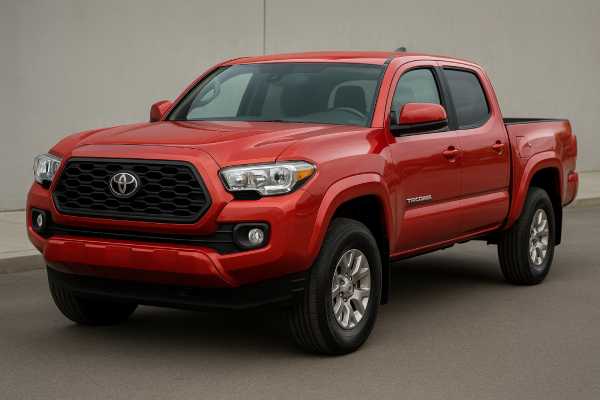
The facelifted 2020–2023 Toyota Tacoma 4×4 with the 2TR-FE 2.7-liter engine sits at the practical end of the Tacoma range. It is not the fastest or most luxurious version, but it combines a proven naturally aspirated four-cylinder with a robust part-time four-wheel-drive system and a strong ladder frame. For many owners, this mix of simplicity, off-pavement traction, and manageable running costs is the whole point of a mid-size pickup.
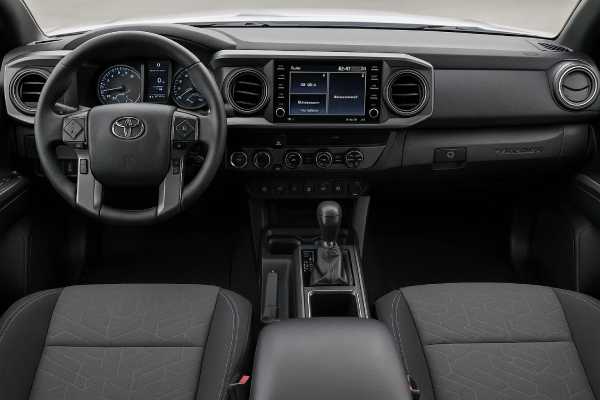
The 2020 facelift brought a more modern cabin feel: a bigger touchscreen with Apple CarPlay and Android Auto, improved driver’s seat on many trims, and updated exterior details. Under the skin, though, the Tacoma 4×4 still emphasizes durability over novelty. Leaf springs, a mechanical transfer case, and the long-running 2TR-FE engine all aim at long service life if maintained correctly. This guide walks through the key specs, reliability patterns, maintenance requirements, and how this Tacoma compares with rivals so you can judge whether the 2.7-liter 4×4 facelift suits your use case.
Top Highlights
- Proven 2TR-FE 2.7-liter four-cylinder with conservative tuning and chain-driven cams for long service life.
- Part-time 4×4 with low range, good ground clearance, and sturdy frame for light to moderate off-road use.
- Standard Toyota Safety Sense on facelift models adds modern driver assistance to a traditional pickup.
- Watch for frame and underbody corrosion in salted regions and keep up with regular fluid changes.
- Plan engine oil and filter changes about every 8,000–10,000 km (5,000–6,000 miles) or 6–12 months, depending on usage.
What’s inside
- Facelift Tacoma 2.7 4×4 profile
- Tacoma 2.7 4×4 key specifications
- Grades, equipment and safety tech
- Reliability patterns and typical faults
- Ownership costs and maintenance guide
- On-road performance and efficiency
- How Tacoma 4×4 stacks up to rivals
Facelift Tacoma 2.7 4×4 profile
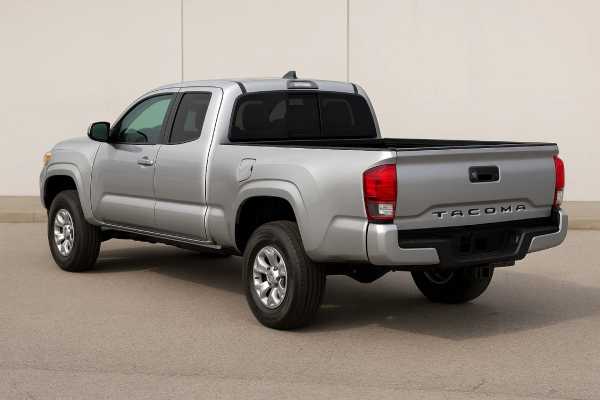
For the 2020–2023 model years, the Tacoma 4×4 with the 2TR-FE 2.7-liter four-cylinder targets buyers who need a real truck but do not necessarily tow at the upper limit every weekend. It is most commonly found as an Access Cab or Double Cab with a six-speed automatic and part-time four-wheel drive. Compared with V6 versions, the 2.7 is simpler, slightly lighter at the front axle, and often cheaper to buy and insure.
The facelift mainly refined the cabin and tech. Depending on trim, you get a larger touchscreen (typically 7–8 inches), Apple CarPlay and Android Auto, updated instrument cluster graphics, and improved seat adjustability on higher grades. Outside, the grille, headlamp internals, and wheel designs were refreshed, but the basic N300 platform, frame, and running gear remained the same as the 2016–2019 trucks.
From an engineering perspective, the 2TR-FE is an old-school, naturally aspirated inline-four with dual overhead cams, four valves per cylinder, and variable valve timing. It uses port fuel injection rather than direct injection, which reduces the risk of carbon buildup on intake valves and simplifies long-term maintenance. The timing system is chain-driven, avoiding scheduled belt replacements, and the power output of 159 hp and around 180 lb-ft of torque is conservative for its size, favoring durability over peak numbers.
In everyday use, the facelift Tacoma 2.7 4×4 is best seen as a steady work partner. It can carry a respectable payload, tow moderate loads up to about 1,600 kg (3,500 lb), and handle gravel roads, snow, and light trails without drama. At the same time, the interior is more refined than many older mid-size pickups, with usable connectivity and decent noise isolation. Its limitations—modest acceleration, relatively high fuel consumption for the power, and a bouncy unladen ride—are shared with many body-on-frame trucks of this size.
If you value reliability, off-pavement capability, and a straightforward powertrain over outright speed or luxury, the 2.7-liter facelift Tacoma 4×4 fits that brief very well.
Tacoma 2.7 4×4 key specifications
Below are representative specifications for a 2020–2023 Toyota Tacoma 4×4 with the 2TR-FE 2.7-liter engine (typical Access Cab or Double Cab short-bed in the North American market). Exact figures vary slightly by year, cab, and equipment.
Engine and performance (2TR-FE 2.7-liter)
| Item | Specification |
|---|---|
| Engine code | 2TR-FE |
| Layout and cylinders | Inline-4, DOHC, 16 valves |
| Valvetrain | Chain-driven DOHC with VVT-i |
| Displacement | 2.7 L (2,694 cc) |
| Bore × stroke | ~95.0 mm × 95.0 mm (3.74 in × 3.74 in) |
| Induction | Naturally aspirated |
| Fuel system | Multi-port fuel injection (MPI) |
| Compression ratio | ~10.0:1 |
| Max power | 159 hp (118 kW) @ 5,200 rpm |
| Max torque | ~244 Nm (180 lb-ft) @ 3,800 rpm |
| Emissions standard | U.S. LEV III / Tier 3 equivalent (market dependent) |
| Rated consumption (4×4 auto) | ~11.8 L/100 km (20 mpg US combined) |
| Real-world highway at 120 km/h | Typically 10–11 L/100 km (21–24 mpg US), depending on load and tires |
| Aerodynamics | Cd roughly in the mid-0.3 range; bluff pickup profile |
Transmission and driveline
| Item | Specification |
|---|---|
| Transmission | 6-speed automatic (electronically controlled) |
| Drive type | Part-time 4×4 (2H / 4H / 4L) with manual transfer case |
| Typical gear ratios | 1st 3.60, 2nd 2.09, 3rd 1.49, 4th 1.00, 5th 0.69, 6th 0.58, Rev 3.73 (approximate) |
| Final drive ratio | Around 4.30:1 on 4-cyl 4×4 models (varies by axle code) |
| Transfer case low range | ~2.57:1 reduction |
| Differential type | Open differentials with brake-based “auto LSD”; mechanical rear locker on some off-road trims (market and grade dependent) |
Chassis, suspension, and dimensions
| Item | Specification |
|---|---|
| Platform | N300 body-on-frame mid-size pickup |
| Front suspension | Independent double wishbone with coil springs and gas shocks |
| Rear suspension | Solid rear axle with leaf springs and gas shocks |
| Steering | Rack-and-pinion with power assist |
| Front brakes | Ventilated discs, ~275 mm (10.8 in) diameter |
| Rear brakes | Drums, ~254 mm (10.0 in) diameter |
| Typical wheel/tyre | 16-inch steel or alloy; e.g. 245/75R16 all-season or all-terrain |
| Ground clearance | Around 239 mm (9.4 in), trim dependent |
| Approach / departure / breakover | Roughly 29° / 23° / 23° (varies with bumper and tire) |
| Length | About 5,392 mm (212.3 in) for Access/Double Cab short-bed |
| Width | About 1,894 mm (74.6 in) excluding mirrors |
| Height | Around 1,793 mm (70.6 in), depending on trim and tires |
| Wheelbase | 3,237 mm (127.4 in) typical |
| Turning circle | Approximately 12.4 m (40.7 ft) curb-to-curb |
Weights and capacities
| Item | Specification |
|---|---|
| Curb weight | Roughly 1,840–1,905 kg (4,050–4,200 lb) depending on cab/trim |
| GVWR | Around 2,540–2,676 kg (5,600–5,900 lb) |
| Payload | Typically 500–650 kg (1,100–1,450 lb) by configuration |
| Max towing (2.7 4×4) | Around 1,600 kg (3,500 lb) with proper equipment |
| Fuel tank | ~80 L (21.1 US gal / 17.6 UK gal) |
| Bed length | ~1,524 mm (60 in) short bed; ~1,872 mm (73.7 in) long bed |
| Bed volume | Roughly 473–589 L (16.7–20.8 ft³) depending on bed |
Fluids and service-related data (typical)
| System | Specification / Capacity (approximate; verify per VIN) |
|---|---|
| Engine oil | 0W-20 synthetic; ~5.7 L (6.0 US qt) with filter |
| Engine coolant | Toyota Super Long Life (pink HOAT) premix; ~8–9 L (8.5–9.5 US qt) for engine and radiator |
| Automatic transmission | Toyota WS ATF; typically 8–10 L (8.5–10.5 US qt) total, less for drain-and-fill |
| Transfer case | 75W-90 GL-4/GL-5 gear oil; ~1.1–1.5 L (1.2–1.6 US qt) |
| Front differential | 75W-90 GL-5; ~1.0–1.3 L (1.1–1.4 US qt) |
| Rear differential | 75W-85 GL-5 (or 75W-90 depending on market); ~2.5–3.0 L (2.6–3.2 US qt) |
| A/C refrigerant | R-134a on earlier builds; charge roughly 500–600 g (17–21 oz) |
| Spark plugs | Long-life iridium; typical gap ~1.0 mm (0.039 in) |
Electrical and safety systems
| Item | Specification |
|---|---|
| Alternator | Typically 130–150 A output, depending on trim |
| 12V battery | ~65 Ah, cold-cranking rating around 550–650 A (group size varies) |
| Airbags | Front, side, curtain, and driver knee airbags (market dependent) |
| Stability systems | ABS, EBD, Brake Assist, Vehicle Stability Control (VSC), Traction Control |
| ADAS (Toyota Safety Sense) | Pre-collision with pedestrian detection, lane departure alert, automatic high beams, adaptive (dynamic radar) cruise control; details vary slightly by year and trim |
Always confirm exact specifications for a particular truck using the build sheet or official documentation for its VIN and market.
Grades, equipment and safety tech
On the facelifted 2020–2023 Tacoma 2.7 4×4, the four-cylinder engine is usually paired with lower and mid-level trims rather than the fully loaded off-road flagships. In North America, you most often see it in SR and SR5 grades, sometimes in fleet-oriented or regional packages. Double Cab models with the 2.7 exist, but many 4×4 four-cylinders are Access Cabs.
Trim and equipment overview
- SR (work-oriented)
Steel wheels, basic cloth seats, manual seat adjustment, simpler interior trim. Infotainment is functional but not fancy: a touchscreen with Bluetooth plus Apple CarPlay and Android Auto on facelift trucks. Air conditioning, power windows and locks, and a backup camera are standard. Many SR 2.7 4x4s are used as work trucks or light commercial vehicles. - SR5 (more comfort and appearance)
Alloy wheels, more exterior chrome or color-keyed trim, upgraded cloth upholstery, and often a larger touchscreen with more connectivity features. Additional storage, nicer instrument cluster, and more available convenience options (fog lights, smart key on some markets). SR5 still shares the basic chassis and 4×4 hardware with SR.
In some regions, there are local or special-edition packages that add off-road-themed wheels and tires, side steps, or graphics while retaining the 2.7 engine. Mechanical differences between trims with the same engine are usually small: same basic 4×4 system, similar suspension hardware, and the same tow ratings when equally equipped.
Quick identifiers for a 2.7 4×4 facelift
- “2.7L” badges may appear on some markets, but not all.
- The VIN engine code and under-hood emissions label will show 2TR-FE.
- On a dealer build sheet, look for 4-cyl engine code and part-time 4WD with 4-speed or 6-speed auto; for these years, the 6-speed automatic is the usual pairing.
- Many 2.7 4x4s are SR or SR5 with simpler interior trim versus the TRD Off-Road or TRD Pro V6 models.
Year-to-year facelift changes
- 2020: Main facelift year. Updated grille and headlamp internals, revised wheel designs, and a major infotainment update with Apple CarPlay, Android Auto, and Amazon Alexa compatibility on most trims. Available power-adjustable driver’s seat on higher grades.
- 2021–2023: Incremental updates such as minor package reshuffles, new colors, and small feature additions. Core drivetrain and safety systems remain essentially the same.
Safety ratings and driver aids
For crash protection, the Tacoma 4×4 in this generation typically performs well in several tests, with strong results in moderate overlap and side impacts, but it shows weaknesses in some small-overlap passenger-side tests and headlight performance on certain trims. Extended-cab versions often fare slightly differently from double cabs.
Toyota Safety Sense (TSS) becomes a major plus on facelift trucks. Depending on model year and market, you can expect:
- Pre-collision system with pedestrian detection.
- Lane departure alert (usually without active steering, but with audible/visual warnings).
- Automatic high beams.
- Adaptive (dynamic radar) cruise control, often operating mainly at highway speeds.
Basic electronic safety like ABS, Stability Control, Traction Control, and Brake Assist is standard. Side-curtain airbags cover both rows in double cabs, and child-seat anchors (LATCH/ISOFIX) are provided in rear seating positions. Some trims include rear parking sensors and blind-spot monitoring with rear cross-traffic alert, particularly toward the later years of the facelift.
For owners, the key takeaway is that even the simpler 2.7 SR 4×4 benefits from a modern active-safety suite, but you should verify exactly which features are fitted to the specific truck, as equipment can vary by trim, year, and region.
Reliability patterns and typical faults
The Tacoma’s 2TR-FE engine and basic 4×4 hardware have a long reputation for durability when serviced properly. Still, there are recurring patterns and age- or mileage-related issues to be aware of, especially if you are buying used.
Engine and fuel system
- Oil leaks and sweating (occasionally common, low to medium cost)
Over high mileage, minor seepage can appear at the valve cover gasket or timing cover. Symptoms are oil smell or dampness on the engine block. Usually addressed with gasket resealing rather than major component replacement. - Rough idle or hesitation (occasional, low cost)
Often linked to dirty throttle bodies, aging ignition coils, or clogged injectors. Symptoms are uneven idle or sluggish throttle response. Typical remedies: throttle body cleaning, new spark plugs and possibly coils, and injector cleaning. - Cooling system issues (occasional, medium cost)
Radiators, hoses, or water pumps can eventually leak. Symptoms include gradual coolant loss, overheating, or crusty deposits near fittings. Proactive coolant changes and inspection reduce the risk of sudden failure.
The port-injected 2TR-FE is less prone to intake valve carbon buildup than direct-injection engines, which is an advantage for long-term reliability.
Transmission and driveline
- Automatic transmission behaviour (occasional complaints, low to medium cost)
Some owners report gear hunting, firm downshifts, or hesitation, especially with larger tires or heavy loads. Often this is more a calibration and gearing issue than a hardware fault. A fluid service using the correct WS ATF and clearing adaptive memory can improve shift quality. - 4×4 engagement problems (occasional, medium cost)
If the truck is rarely taken out of 2H, the transfer case and front-axle engagement mechanisms can become sticky. Symptoms include delayed engagement, warning lights, or grinding sounds. Regular 4×4 exercise and periodic fluid changes help prevent this. Repair may involve actuator service or replacement. - Driveline vibrations (occasional, low to medium cost)
Often due to worn universal joints, imbalanced propshafts, or incorrect driveline angles after lift kits. Symptoms are shudder or hum at certain speeds. Correct diagnosis is important: sometimes a simple U-joint replacement fixes the issue, but lifted trucks may need angle correction or carrier bearing spacers.
Suspension, steering, and brakes
- Leaf springs and rear suspension (common in harsh use, medium cost)
Repeated heavy loading or off-road use can lead to sagging leaf packs, noisy bushings, or broken leaves over time. Noise, uneven rear ride height, or axle steering on bumps are common signs. Replacement leaf packs or bushing rebuilds are the cures. - Front suspension and steering components (occasional, medium cost)
Ball joints, tie-rod ends, and control arm bushings eventually wear, especially on rough roads or lifted trucks. Symptoms include clunking, wandering steering, or uneven tire wear. Regular inspection and alignment checks are important. - Brake wear and pulsation (common wear item, low cost)
Front discs and pads handle most of the braking, and towing or mountain driving can accelerate wear or cause warping. Pulsation through the pedal points to rotor issues; quality replacement parts and proper torque on wheel nuts help.
Body, frame, and corrosion
- Frame and underbody rust (region dependent, potentially high cost)
In areas with heavy road salt, the frame, leaf-spring mounts, and crossmembers need careful inspection. Look for rust flakes, swelling, or perforation. While the facelift years are newer, preventive undercoating and thorough washing of the underbody in winter are wise. - Bed and tailgate hardware (low cost)
Tailgate hinges, latches, and dampers may become stiff or noisy. Regular lubrication and occasional replacement of worn hardware keep things smooth.
Electronics and infotainment
- Camera and sensor issues (occasional, low cost)
Backup cameras may fog, and parking sensors or radar units can be affected by dirt, minor impacts, or accessories (like steel bumpers). Symptoms are warning messages or inoperative driver aids. Cleaning, recalibration, or sensor replacement may be needed. - Infotainment glitches (occasional, low cost)
Touchscreen freezes, Bluetooth pairing issues, or CarPlay/Android Auto dropouts can occur. Software updates and hard resets usually improve behaviour.
Recalls and service campaigns
Depending on model year, there can be recalls or technical service bulletins for items such as airbag systems, leaf springs, or fuel-system components. When inspecting a used truck, it is essential to:
- Run the VIN through the official recall site for your region.
- Ask the seller for dealer service printouts showing completed recall and campaign work.
Overall, the facelift Tacoma 2.7 4×4 is generally robust, with most issues being age- and usage-related rather than design flaws, but a careful inspection remains important, especially in harsh climates or on modified trucks.
Ownership costs and maintenance guide
A well-maintained Tacoma 4×4 with the 2TR-FE engine can easily exceed 300,000 km (around 200,000 miles) without major drivetrain work. The key is consistent service using correct fluids and parts. The schedule below is a practical guideline; always verify against the official maintenance schedule for your market and driving conditions.
Core service intervals (typical, mixed use)
- Engine oil and filter: Every 8,000–10,000 km (5,000–6,000 miles) or 6–12 months, whichever comes first. Short trips, heavy towing, or dusty conditions justify the shorter intervals.
- Engine air filter: Inspect every 15,000 km (10,000 miles); replace about every 30,000–40,000 km (20,000–25,000 miles) or sooner in dusty areas.
- Cabin air filter: Replace every 20,000–25,000 km (12,000–15,000 miles) or once per year for good HVAC performance.
- Coolant: Toyota Super Long Life coolant typically has an initial long-life interval, then changes around every 80,000–160,000 km (50,000–100,000 miles) or 5–10 years, depending on official guidance. For peace of mind, many owners choose around 100,000 km (60,000 miles) or 5–6 years.
- Spark plugs: Long-life iridium plugs often have replacement intervals around 160,000 km (100,000 miles). Inspect earlier if you experience misfires, poor economy, or high-mileage use with heavy loads.
- Automatic transmission fluid: Many schedules call the ATF “lifetime” under normal conditions, but changing the fluid every 60,000–80,000 km (40,000–50,000 miles) is a good preventive measure, especially with towing, off-road use, or hot climates.
- Transfer case and differentials: Renew gear oil roughly every 60,000–80,000 km (40,000–50,000 miles) or after deep-water crossings. This is crucial for 4×4 longevity.
- Brake fluid: Replace every 2–3 years regardless of mileage to control moisture and corrosion in the system.
- Brake pads and rotors: Inspect at every tire rotation. Replacement intervals vary heavily with driving style and load.
- Serpentine belt: Inspect at each major service; replace around 90,000–120,000 km (55,000–75,000 miles) or when cracks and glazing appear.
- Hoses and rubber components: Inspect annually for swelling, cracking, or leaks.
- Wheel alignment and tire rotation: Rotate tires every 8,000–10,000 km (5,000–6,000 miles). Check alignment yearly or after off-road trips or pothole impacts to prevent uneven wear and wandering.
- 12V battery: Test annually after year three; replacement is common in the 4–6-year window depending on climate.
Because the 2TR-FE uses a timing chain rather than a belt, there is no scheduled timing belt replacement. Instead, listen for chain rattle on cold starts and monitor for timing-related fault codes on high-mileage engines. If symptoms appear, chain, guides, and tensioner inspection is warranted.
Fluid specifications (summary for decision-making)
- Engine oil: SAE 0W-20 API SN or later, ILSAC GF-5 or later; Toyota-branded 0W-20 is common.
- ATF: Toyota WS. Avoid mixing with other types unless a proven equivalent is specified.
- Gear oils: 75W-85 or 75W-90 GL-5 in differentials, 75W-90 GL-4/GL-5 in transfer case (check local spec).
- Coolant: Toyota Super Long Life (pink) premix; do not mix with generic green coolant without a full flush.
Buyer’s checklist for a used 2020–2023 Tacoma 2.7 4×4
- Service history: Look for consistent oil changes and evidence of differential, transfer case, and ATF services.
- Frame and underbody: Inspect frame rails, crossmembers, and spring mounts for corrosion or repairs.
- 4×4 operation: Test 2H, 4H, and 4L engagement on a loose surface; listen for grinding or clunks and confirm indicator lights operate normally.
- Suspension and steering: Drive over bumps and at highway speeds; watch for vibrations, wandering, or clunks. Inspect ball joints, tie-rod ends, and leaf packs.
- Tires and wheels: Uneven wear suggests alignment or suspension issues. Oversized tires may affect gearing, fuel economy, and driveline stress.
- Brakes: Check for pulsation, pulling, or noise. Inspect rotor condition and pad thickness.
- Electronics and safety: Verify all warning lights, the backup camera, and Toyota Safety Sense functions (where fitted). Ensure there are no persistent error messages.
- Modifications: Lift kits, heavy bumpers, and winches can be positive if professionally installed, but they add stress and may affect warranty coverage. Inspect workmanship carefully.
With a clean inspection, completed recall work, and a solid service record, the facelift Tacoma 2.7 4×4 is one of the lower-risk used trucks in its class.
On-road performance and efficiency
The facelift Tacoma 2.7 4×4 is tuned for reliability and controllable behaviour rather than outright speed. Understanding its strengths and limits helps set realistic expectations.
Ride, handling, and NVH
Unladen, the rear leaf springs are firm enough to support payload, so the ride on sharp bumps and expansion joints can feel choppy, especially on short-wheelbase versions. With some weight in the bed—tools, gear, or a light canopy—the suspension settles and ride quality improves noticeably.
Steering weight is moderate, with a solid on-center feel. The truck tracks straight on the highway if alignment is correct, but large off-road tires or lifts can introduce tramlining and wandering. Body roll in corners is present but well-controlled for a body-on-frame pickup. At higher speeds, wind and tire noise are noticeable compared with crossovers, but acceptable for a mid-size 4×4.
Braking performance is adequate for the weight and intended tow rating. The front discs do most of the work, so repeated hard stops with a heavy load can lead to fade if components are marginal. Using engine braking in low gears and respecting the 2.7’s lower tow rating keeps braking in a safe zone.
Powertrain character
With 159 hp and around 180 lb-ft of torque, the 2TR-FE feels adequate rather than quick. Around town, it pulls cleanly if you keep revs in the mid-range. On steep highway grades or when towing, you will see frequent downshifts, and the engine can sound busy as it climbs towards its power band.
The six-speed automatic balances fuel economy and drivability, but some owners notice gear hunting around light throttle inputs and small hills. Sport or manual mode helps hold gears longer when needed. There is no turbo lag to worry about; response is linear, but low-rpm torque is modest for a truck engine, so using the revs is part of the experience.
For off-road or snow, the combination of low-range gearing, the naturally aspirated power delivery, and the relatively light nose of the four-cylinder can be an advantage. The truck’s traction systems, including brake-based “auto LSD” and, on some trims, a mechanical rear locker, provide stable control on loose surfaces.
Real-world fuel economy
Official combined ratings for a 2.7-liter 4×4 automatic Tacoma sit around 11.8 L/100 km (20 mpg US, 24 mpg UK), with city and highway figures fluctuating a few tenths either way.
In practice, owners often see:
- City driving: 12–14 L/100 km (17–20 mpg US), depending on traffic, climate, and payload.
- Highway at 100–110 km/h (60–70 mph): 9.5–11 L/100 km (21–25 mpg US) in stock form with factory tires and gentle driving.
- Mixed use: Around 11–12.5 L/100 km (19–21 mpg US) is typical.
Factors that worsen consumption include larger off-road tires, roof racks, heavy accessories, aggressive driving, and headwinds or mountain grades. Compared to the V6, the 2.7 does not always save much fuel when pushed hard because it has to work harder, but in gentle driving it tends to be slightly more economical.
Load and towing behaviour
Within its rated tow limit (around 1,600 kg / 3,500 lb) and with a properly set up trailer brake controller and weight distribution (where needed), the 2.7 Tacoma 4×4 tows predictably. Expect:
- Frequent downshifts on hills, with the engine operating at higher rpm.
- Noticeable increases in fuel consumption—often 30–50% higher when towing near the limit.
- The need to plan overtakes and merges earlier than you would in a more powerful truck.
Under full payload, the rear suspension naturally squats somewhat; ensuring correct tire pressures and avoiding exceeding the axle ratings is important for safe handling and braking. For frequent heavy towing, many buyers step up to the V6, but for occasional loads, the 2.7 is sufficient if used within its limits.
Overall, the facelift Tacoma 2.7 4×4 is not about performance bragging rights. Its appeal lies in predictable, honest behaviour on and off the road, plus the reassurance that the powertrain is not pushed to the edge of its design envelope.
How Tacoma 4×4 stacks up to rivals
In the 2020–2023 mid-size pickup segment, the Tacoma 2.7 4×4 competes with four-cylinder versions of the Chevrolet Colorado/GMC Canyon, Ford Ranger, Nissan Frontier, and, in some markets, models like the Honda Ridgeline or various diesel double-cabs.
Strengths versus competitors
- Long-term durability track record
The Tacoma platform and 2TR-FE engine are known for running very high mileages with relatively few catastrophic failures when serviced. Some rivals offer more performance, but their turbocharged engines and newer transmissions can introduce additional complexity. - Resale value
Tacomas traditionally hold their value strongly, especially 4×4 models. Even with higher purchase prices, the total cost of ownership is often competitive because of slower depreciation. - Off-road hardware
Proper low-range gearing, good ground clearance, and widespread aftermarket support make the Tacoma a solid base for trail work. While the 2.7 4×4 is not as off-road focused as TRD Off-Road or TRD Pro V6 versions, it shares much of the core architecture. - Simplicity of the powertrain
A naturally aspirated, port-injected four-cylinder with a conventional automatic appeals to buyers who prefer proven hardware over the complexity of turbocharging or multi-clutch transmissions.
Areas where rivals may be stronger
- Power and torque
Many rivals use turbocharged four-cylinders or larger V6 engines with substantially higher torque output. They feel livelier in everyday driving and especially when towing. If you regularly haul near the limit, those options may be more relaxing to drive. - Fuel economy efficiency
Modern turbo fours or diesel engines in some competing trucks often achieve similar or better real-world fuel consumption while delivering more torque. The Tacoma’s older-tech engine is robust, but not especially efficient by current standards. - Cabin refinement and ergonomics
The facelift improved the Tacoma’s technology, but some rivals offer quieter cabins, more spacious rear seats, and more modern dashboard designs. For daily commuting or family duty, this can matter. - Towing and payload ratings
V6 and turbo-four competitors often list higher tow ratings and payloads. The 2.7 Tacoma is acceptable for light towing and moderate loads but is not the strongest hauler in the class.
Who the facelift 2.7 4×4 suits best
- Drivers who want a mid-size truck mainly for light commercial work, outdoor hobbies, or farm use, where reliability and off-road capability matter more than peak power.
- Owners in remote or harsh environments who value simple, durable hardware and easy access to parts and service.
- Buyers who will keep the truck for many years and accept modest performance in exchange for a lower risk of complex mechanical failures.
If you need quicker acceleration, frequent heavy towing, or a more refined ride, a Tacoma V6 or a rival with a modern turbo engine may fit better. But if your priority is a faithful, capable truck that does not surprise you with complicated problems, the facelifted Tacoma 2.7 4×4 remains a very strong choice.
References
<a href="https://www.iihs.org/ratings/vehicle/toyota/tacoma-extended-cab-pickup/2019">2019 Toyota Tacoma</a> 2019 (Safety Rating)<a href="https://www.iihs.org/news/detail/2022-toyota-tacoma-falters-in-key-crash-test">2022 Toyota Tacoma falters in key crash test</a> 2022 (Safety Rating)<a href="https://www.nhtsa.gov/vehicle/2019/TOYOTA/TACOMA%2525204WD/PU%25252FEC">Vehicle Detail Search - 2019 TOYOTA TACOMA PU EC</a> 2019 (Crash Test Ratings)
Disclaimer
This article is for informational purposes only and is not a substitute for professional diagnosis, factory service information, or hands-on inspection by a qualified technician. Specifications, torque values, maintenance intervals, and repair procedures can vary by VIN, model year, market, trim level, and installed equipment. Always confirm critical data and procedures using the official owner’s manual, service manual, and technical documentation for your specific vehicle, and follow all safety instructions.
If you found this guide useful, consider sharing it with other owners or shoppers via Facebook, X/Twitter, forums, or your favorite social platforms. It helps support the work that goes into detailed, independent coverage like this.