
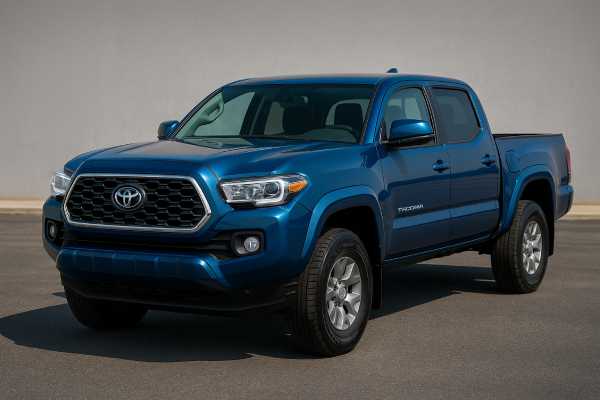
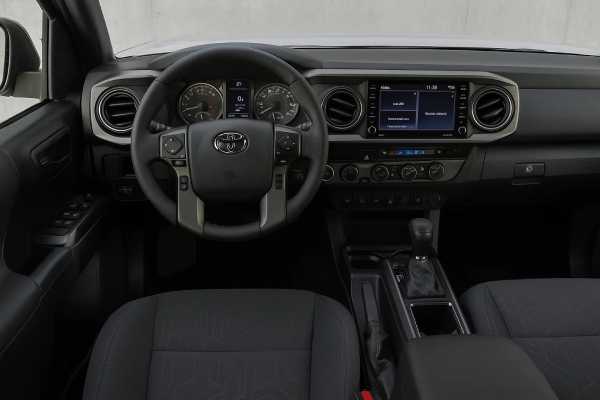
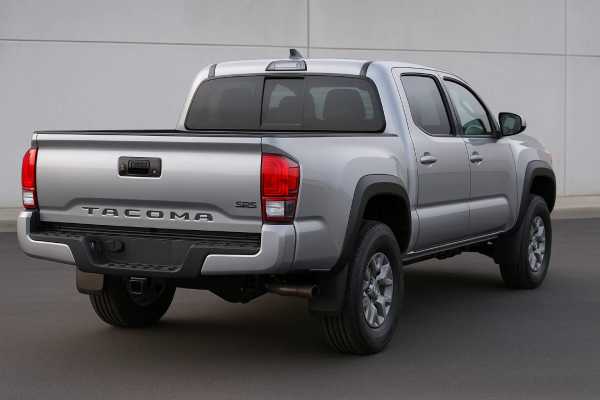
The 2020–2023 facelift Toyota Tacoma RWD with the 2GR-FKS 3.5 litre V6 sits in an interesting place in the midsize truck world. It keeps the rugged ladder frame, simple rear wheel drive layout, and proven V6, but adds more driver assistance tech, an updated interior, and a more refined front fascia. For many owners, this is the “do-it-all” spec: easier on fuel and tyres than a 4×4, yet still capable of real towing and light off-road use on graded tracks and farm roads.
This guide focuses on the North American N300 Tacoma with the 3.5 litre V6, six-speed automatic, and rear wheel drive. We will walk through hard specs, safety equipment, common reliability patterns, real-world driving impressions, and a practical maintenance and buying checklist. The goal is to help you decide whether this facelift RWD V6 Tacoma fits your needs, and, if you already own one, how to look after it for a long, trouble-free life.
Owner Snapshot
- Strong 2GR-FKS 3.5 litre V6 (278 hp) with good mid-range torque and long service life when maintained.
- Rear wheel drive layout is lighter, simpler, and more economical than 4×4, with higher tow ratings in some trims.
- Factory Toyota Safety Sense brings standard adaptive cruise, pre-collision braking, and lane alerts on 2020+ models.
- Watch for automatic transmission shift “hunting” and stay current on ECM/TCM software updates and fuel-pump recalls.
- Plan engine oil and filter changes every 8,000–10,000 km (5,000–6,000 miles) or 6 months under mixed or heavy use.
Explore the sections
- Tacoma V6 RWD facelift summary
- Tacoma 3.5 V6 RWD specs
- Trim structure and safety equipment
- Reliability notes and known problems
- Servicing schedule and purchase advice
- Driving experience and real-world economy
- Tacoma V6 RWD versus competitors
Tacoma V6 RWD facelift summary
The facelifted 2020–2023 Tacoma RWD V6 sits in the second half of the third-generation Tacoma’s life. Mechanically it is very similar to the 2016–2019 trucks: the same N300 ladder frame, the same 2GR-FKS 3.5 litre V6, and the same six-speed automatic. The facelift focuses on comfort, usability, and technology rather than wholesale mechanical changes.
On the outside, you get revised grilles and lighting signatures, along with wheel and trim updates, which make these trucks easier to recognise against the earlier pre-facelift models. Inside, the biggest upgrades are the standard touch-screen with Apple CarPlay and Android Auto, improved materials in higher trims, and a slightly more modern instrument cluster. For long-term owners, the availability of smartphone mirroring alone is a major quality-of-life improvement.
From an engineering viewpoint, the headline feature remains the 2GR-FKS engine. This all-alloy 3.5 litre V6 uses Toyota’s D-4S dual-injection (combining direct and port injection) plus dual VVT-i to balance efficiency and power. It can switch cam timing strategies to mimic an Atkinson-style cycle at light load, then revert to a more conventional Otto cycle when you need torque. There is no turbocharger to worry about, and the engine uses a timing chain rather than a belt.
The rear wheel drive configuration keeps things simple. Compared with a 4×4 Tacoma, the RWD truck is lighter, marginally more efficient, and has fewer driveline parts to wear (no front differential, transfer case, or front CV shafts). In several trims, the RWD V6 also carries the highest published tow rating in the Tacoma range, thanks to the lower weight and tow-package cooling.
The trade-offs are straightforward: traction on loose or slippery surfaces is more limited, especially with light rear load and highway-biased tyres, and the rear axle lacks a low-range transfer case. For buyers who mostly drive on paved roads, with occasional dirt or gravel, the RWD V6 facelift Tacoma offers most of the capability and durability of the 4×4, at a lower running cost and with a simpler driveline to maintain.
Tacoma 3.5 V6 RWD specs
This section focuses on a typical 2020–2023 Tacoma RWD V6 with six-speed automatic transmission, Double Cab, and 5 ft bed. Figures vary slightly by cab and bed length, but this gives a realistic reference.
Engine and performance
| Item | Specification |
|---|---|
| Engine code | 2GR-FKS |
| Configuration | 60° V6, DOHC, 24 valves |
| Valvetrain | Dual VVT-i (intake and exhaust) |
| Displacement | 3.5 L (3,456 cc) |
| Bore × stroke | 94.0 × 83.0 mm (3.70 × 3.27 in) |
| Induction | Naturally aspirated |
| Fuel system | D-4S dual injection (direct + port) |
| Compression ratio | Approx. 11.8 : 1 |
| Maximum power | 278 hp (≈ 207 kW) @ 6,000 rpm |
| Maximum torque | 265 lb-ft (≈ 359 Nm) @ 4,600 rpm |
| Emissions / fuel standard | US LEV/Tier 3 gasoline |
| Recommended fuel | Regular unleaded (87 AKI) |
Real-world owners report that the engine is happiest above about 2,500 rpm when towing or climbing, but cruises at low rpm in top gear on the highway.
Transmission and driveline
| Item | Specification |
|---|---|
| Transmission | 6-speed automatic (electronically controlled) |
| Typical transmission code | AC60E (4×2 application) |
| Gear ratios (1st–6th / R) | 3.600 / 2.090 / 1.488 / 1.000 / 0.687 / 0.580 / 3.732 |
| Final drive ratio | ~3.91 : 1 (some tow-package trucks ~4.30 : 1) |
| Drive type | Rear wheel drive (4×2) |
| Rear differential | Open; electronic traction and stability control |
The gearing is relatively tall in top gear, which helps highway economy but can cause downshift “hunting” on grades or in headwinds.
Chassis and dimensions
| Item | Approximate value (Double Cab 5 ft bed, 4×2) |
|---|---|
| Frame | Ladder frame with boxed front section |
| Front suspension | Independent double wishbone, coil spring |
| Rear suspension | Leaf-spring solid axle |
| Steering | Rack-and-pinion, power-assisted |
| Front brakes | Ventilated discs |
| Rear brakes | Drums |
| Wheelbase | 3,237 mm (127.4 in) |
| Overall length | ~5,392 mm (212.3 in) |
| Overall width | ~1,910 mm (75.2 in) |
| Overall height | ~1,790–1,810 mm (≈ 70.5–71.3 in) |
| Ground clearance | ≈ 239 mm (9.4 in) |
| Turning circle (kerb-to-kerb) | ≈ 12.4 m (40.6 ft) |
| Curb weight | ≈ 1,930–1,960 kg (4,255–4,325 lb) |
| GVWR | ≈ 2,540–2,585 kg (5,600–5,700 lb) |
| Fuel tank | ≈ 80 L (21.1 US gal) |
Bed volume depends on length: roughly 1,340 L (47 ft³) for the 5 ft bed and around 1,710 L (60 ft³) for the 6 ft bed, measured to the top of the bed walls.
Performance and capability
| Item | Typical figure (V6 4×2, unloaded) |
|---|---|
| 0–100 km/h (0–62 mph) | ≈ 7.9–8.3 s |
| Top speed (electronically limited) | ≈ 182 km/h (≈ 113 mph) |
| 100–0 km/h braking distance | ≈ 39–42 m (≈ 128–138 ft), depending on tyres |
| Max towing capacity (properly equipped) | Up to ~3,084 kg (6,800 lb) for certain Access Cab 4×2 V6 tow-package trucks |
| Typical Double Cab 4×2 V6 towing | ≈ 2,900–3,000 kg (6,400–6,600 lb) |
| Payload range | ≈ 630–730 kg (≈ 1,400–1,600 lb) |
| Roof load (with suitable rack) | Typically 50–75 kg (110–165 lb) dynamic |
Always check the specific door-jamb sticker and owner’s manual for exact tow and payload figures for your VIN.
Fuel economy and efficiency
EPA ratings for a 2020 Tacoma 4×2 V6 automatic are around 21 mpg US combined (about 11.2 L/100 km), with roughly 19 mpg US city and 24 mpg US highway. Later facelift years are very similar, with minor shifts depending on trim and tyre package. In real use:
- Light suburban use: about 12–13 L/100 km (18–20 mpg US).
- Mixed commuting and highway: around 11–12 L/100 km (19–21 mpg US).
- Highway at 120 km/h (75 mph): typically 10–11 L/100 km (21–24 mpg US) in calm conditions.
Towing a medium trailer (1,800–2,300 kg / 4,000–5,000 lb) can push consumption into the 17–22 L/100 km range (10–14 mpg US), depending on speed and terrain.
Fluids, service capacities, and electrical
These are indicative figures; always confirm in the official service documentation for your specific model year.
| System | Specification / capacity (approximate) |
|---|---|
| Engine oil | SAE 0W-20, API SN or later; ≈ 5.5 L (≈ 5.8 US qt) with filter |
| Cooling system | Toyota Super Long Life Coolant; roughly 9–11 L total |
| Automatic transmission | Toyota WS ATF; full fill around 9–10 L, drain-and-fill less |
| Rear differential | Hypoid gear oil SAE 75W-85 GL-5; ≈ 2.5–2.7 L |
| Power steering | Electric power steering (no hydraulic fluid) |
| A/C refrigerant | R-134a; typical charge around 550–650 g |
| A/C compressor oil | ND-Oil 8 type; small quantity added with new components |
| Spark plugs | Long-life iridium type; gap approx. 0.7–0.8 mm (0.028–0.031 in) |
| Alternator output | Typically around 130 A (varies by trim and equipment) |
| 12 V battery | Group 27F (or equivalent), around 60–70 Ah, >550 CCA |
Safety and driver assistance summary
All facelift 2020–2023 Tacoma models receive Toyota Safety Sense as standard, including:
- Pre-collision system with pedestrian detection.
- Lane departure alert with steering assist.
- Dynamic radar cruise control (mainly at highway speeds).
- Automatic high beams.
Higher trims and option packages add blind spot monitoring with rear cross-traffic alert and rear parking sonar. Crash tests show generally strong occupant protection, though small-overlap and headlight performance can vary by year and trim. Many trucks achieve four out of five stars overall in US federal testing, with strong side-impact results but more average rollover ratings typical of body-on-frame pickups.
Trim structure and safety equipment
For the facelift years, the rear wheel drive Tacoma V6 follows the familiar Tacoma trim ladder. Availability varies slightly by model year and market, but in North America you will typically see SR, SR5, TRD Sport, and Limited offered as 4×2 V6 models, with special editions (Nightshade, Trail, etc.) based on those trims.
SR (entry work and fleet trim)
The SR is the base truck, but with the facelift it no longer feels completely stripped. Key traits for RWD V6 examples include:
- Hard-wearing cloth interior, manual seat adjustment, and simple trim.
- Basic audio head unit upgraded during the facelift to a touch-screen with Apple CarPlay and Android Auto.
- Steel wheels, minimal chrome, and limited exterior styling add-ons.
- Mechanically, SR V6 trucks can be ordered with a tow package including upgraded cooling, helping them achieve the top published tow ratings in the range when combined with an Access Cab and 6 ft bed.
SR5 (popular all-rounder)
The SR5 adds comfort and cosmetic upgrades rather than big mechanical changes:
- Alloy wheels, more chrome and colour-keyed exterior trim.
- Enhanced instrumentation and more steering-wheel controls.
- Additional convenience features (fog lights, upgraded audio, more storage solutions).
Mechanically, SR5 V6 RWD trucks remain similar to the SR: same engine, same automatic gearbox, and similar suspension tuning. Tow-package SR5 trucks often share the same tow ratings as SR V6 trucks.
TRD Sport (on-road oriented)
In 4×2 form, the TRD Sport is tuned more for asphalt than rock-crawling:
- 17 in or 18 in alloy wheels with sportier tyres.
- Body-colour or gloss trims, hood scoop on some model years.
- Sport-tuned suspension with different shock valving for sharper on-road response.
- Optional premium audio with larger screen and better speaker system.
The TRD Sport 4×2 still retains good payload and tow ratings, but its wheel and tyre package is more about handling than deep mud or heavy gravel.
Limited and special editions
The Limited focuses on comfort and equipment:
- Leather-trimmed seats, heated front seats, and more power adjustments.
- Larger infotainment screen and premium audio.
- Additional chrome, side steps, and convenience features such as dual-zone climate control on later years.
From a safety perspective, the core structure and airbags are the same across trims. Differences arise in headlight design, where higher trims may receive projector or LED units with better beam patterns, improving performance in lab tests and night driving.
Safety ratings and systems by year
Across 2020–2023, the Tacoma receives broadly consistent crash-test results:
- Strong ratings in moderate overlap frontal and side-impact tests.
- Mixed results in small-overlap tests and headlight performance, with some trims scoring only Marginal in headlight assessments.
- Rollover ratings in line with other midsize pickups due to the higher centre of gravity.
All facelift RWD V6 trucks include:
- Front, side, curtain, and driver’s knee airbags.
- Vehicle stability control, traction control, and ABS with electronic brake-force distribution.
- Brake assist and a tyre pressure monitoring system.
Option packages can add:
- Blind Spot Monitor with Rear Cross-Traffic Alert.
- Parking sonar and a rear-view camera (standard on many trims).
- Upgraded LED headlights and fog lights in higher trims and later years, which can materially improve night-time visibility.
After collision repairs or windscreen replacement, radar and camera-based driver assistance systems may require calibration. Owners should budget for this when using aftermarket glass or non-dealer body shops, and ensure calibration proof is supplied.
Reliability notes and known problems
The 2GR-FKS Tacoma enjoys a reputation for overall durability, but there are still patterns worth understanding, especially as these facelift trucks age into higher mileages and multiple owners.
Engine and fuel system
Generally strong fundamentals:
The 2GR-FKS is an evolution of a widely used Toyota V6 family. With regular oil changes and proper cooling system care, high six-figure kilometre lifespans are realistic. The timing chain drive is robust, and there is no scheduled belt replacement interval.
Common or notable issues:
- Fuel pump recall: Certain 2020 Tacomas were included in a large Toyota recall for low-pressure fuel pump failures that could cause stalling or no-start conditions. Many trucks have already had the pump replaced under recall; a pre-purchase check should confirm completion through the official VIN lookup and dealer service history.
- Perceived injector “tick”: Owners sometimes report a ticking noise from the engine valley. On this engine, injection and valvetrain noise at idle is often normal, but it should not be accompanied by misfires, warning lights, or performance loss.
- Oil leaks (less common): At higher mileages, some 2GR engines develop minor seepage around timing covers or cam carriers. These are usually medium-cost repairs because of the labour required to reseal the front of the engine.
Transmission and driveline
The six-speed automatic is mechanically robust but can feel indecisive:
- Shift “hunting” and hesitation: Some owners complain of frequent up- and downshifts, or a reluctance to downshift when climbing or merging. Toyota has issued calibration updates over the life of the third-gen Tacoma to refine shift logic. In many cases, a simple ECU/TCU reflash and adaptation reset improves behaviour.
- Driveline vibration: A subset of trucks shows mild vibration at specific speeds, often around 80–100 km/h (50–65 mph). Causes range from tyre/wheel balance and driveshaft phasing to rear leaf-spring geometry. Dealers sometimes address this with revised shims, re-balanced shafts, or updated parts. It is more of a refinement issue than a durability risk, but still worth checking on a test drive.
The RWD layout removes front differential and transfer case issues seen in some 4×4 trucks, simplifying long-term maintenance.
Chassis, suspension, and body
- Leaf-spring behaviour: Rear leaf springs may squeak or feel harsh when unloaded. Over time, bushing wear or minor corrosion can add knocks or clunks over sharp bumps. Replacement bushes or upgraded aftermarket spring packs are common fixes.
- Frame and corrosion: Compared with older Tacomas, the N300 frame benefits from improved corrosion protection, but regular inspection is still important in road-salt regions. Pay attention to inside faces of the frame rails, leaf-spring mounts, and body seams.
- Front suspension wear: Ball joints and control-arm bushes typically wear gradually around the 150,000–200,000 km (90,000–120,000 mile) mark, depending on use. Listen for clunks and check for play during pre-purchase inspections.
Electronics and driver assistance
- Camera and radar-related warnings: Misaligned front sensors (after bumper or grille repairs) or badly positioned accessories can trigger driver assistance warning lights. Proper recalibration and removal of blocking accessories usually resolves these issues.
- Infotainment glitches: Occasionally, owners report frozen screens or lost Bluetooth connections. Software updates and factory resets address most cases.
Recalls, TSBs, and extended coverage
Across 2020–2023, several service bulletins and recalls apply to the Tacoma line, including:
- Fuel pump replacement in affected VIN ranges.
- Campaigns for minor software or component issues affecting braking feel, warning lamps, or other subsystems.
For any potential purchase, request:
- A printout of dealer-performed recall and campaign completion.
- Confirmation from the official VIN recall checker for your market.
If you already own a Tacoma, it is worth asking your dealer to check for open campaigns during regular service visits, as some programmes have time or mileage limits.
Servicing schedule and purchase advice
This section presents a practical maintenance plan for the facelift Tacoma RWD 3.5 V6. Always adapt it to your local conditions and the official schedule for your region and model year.
Core maintenance intervals (typical guidance)
- Engine oil and filter:
- Normal use: every 10,000 km / 12 months (≈ 6,000 miles / 1 year).
- Heavy towing, short trips, dusty conditions: every 8,000 km / 6 months (≈ 5,000 miles / 6 months).
- Engine air filter:
- Inspect every 20,000 km (12,000 miles), replace every 40,000–50,000 km (25,000–30,000 miles) or sooner in dusty use.
- Cabin air filter:
- Replace every 20,000–25,000 km (12,000–15,000 miles) or annually in pollen-heavy climates.
- Spark plugs (iridium):
- Typically every 190,000–200,000 km or 10–12 years, whichever comes first, unless misfire or wear is detected earlier.
- Coolant:
- First replacement around 160,000 km (100,000 miles) or 10 years, then roughly every 80,000 km (50,000 miles) / 5 years.
- Automatic transmission fluid (Toyota WS):
- “Lifetime” in some official schedules, but many owners and independent specialists favour drain-and-fill every 60,000–90,000 km (40,000–55,000 miles), especially for towing or hot climates.
- Rear differential oil:
- Every 60,000–80,000 km (37,000–50,000 miles), more often with frequent towing or heavy loads.
- Brake fluid:
- Every 3 years regardless of mileage.
- Brake pads and rotors:
- Inspect every 15,000–20,000 km (9,000–12,000 miles); replace when thickness or condition is outside spec.
- Serpentine/auxiliary belt:
- Inspect from 80,000 km (50,000 miles), typically replace around 120,000–150,000 km (75,000–95,000 miles) or sooner if cracked or noisy.
- Wheel alignment and tyre rotation:
- Rotate tyres every 10,000–12,000 km (6,000–7,500 miles).
- Check alignment annually or after any significant pothole impact or suspension work.
- Valve clearances:
- On the 2GR-FKS, these are generally stable but should be checked if you notice unusual top-end noise or misfires, especially at very high mileage.
- 12 V battery:
- Test annually after year 4, replace proactively around year 5–6 in harsh climates.
There is no timing belt to schedule; the 2GR-FKS uses a chain. Chains should be inspected (by noise, timing correlation, and metal-debris checks) at high mileage, but they are not a normal wear item if oil changes are respected.
Fluid specs to know
- Engine oil: 0W-20 full synthetic meeting Toyota’s specifications.
- Coolant: Toyota Super Long Life (pink) or equivalent meeting the same standard.
- ATF: Toyota WS; avoid mixing with non-approved fluids.
- Differential oil: 75W-85 GL-5 gear oil.
Owners doing their own maintenance should also be aware of key torque values for wheel nuts, drain plugs, and critical fasteners; these vary between model years and should be taken from an official service manual or torque chart.
Buyer’s checklist for used Tacoma RWD V6 (2020–2023)
When inspecting a used facelift Tacoma:
- Service history:
- Look for regular oil changes, ideally at or ahead of the recommended intervals.
- Confirm coolant, brake fluid, and differential services for higher-mileage trucks.
- Recalls and campaigns:
- Verify fuel pump recall and any other open campaigns are completed via official VIN tools.
- Frame and corrosion:
- Inspect the frame rails, crossmembers, and leaf-spring mounting points, especially in salt-belt regions. Surface rust is common; heavy flaking or soft spots are red flags.
- Suspension and steering:
- Listen for clunks over bumps and check for uneven tyre wear.
- Examine front ball joints, tie-rod ends, and rear leaf-spring bushes.
- Driveline behaviour:
- On a test drive, check for vibrations at steady speeds, harsh shifts, or delayed engagement when selecting Drive or Reverse.
- Electronics and safety systems:
- Confirm that warning lights for ABS, stability control, and driver assistance are off with the engine running.
- Test adaptive cruise, lane departure alert, and pre-collision warnings on a safe road.
- Interior and water leaks:
- Check carpet and headliner for signs of water ingress (e.g., from roof or rear window seals).
Durability outlook:
With sensible usage and regular upkeep, the facelift Tacoma RWD 3.5 V6 is capable of long service life. Compared with more complex turbocharged or multi-clutch rivals, it trades ultimate refinement and efficiency for a simpler, well-understood powertrain and chassis that many workshops can service.
Driving experience and real-world economy
On the road, the facelift Tacoma RWD 3.5 V6 feels familiar to anyone who has driven a third-generation Tacoma, but with a slightly more polished cabin and more up-to-date tech.
Ride, handling, and NVH
Unladen ride quality is typical midsize pickup: firm at the rear, especially over small sharp bumps, because the leaf springs are tuned to handle meaningful payload. Once you add a few hundred kilograms in the bed or hook up a trailer, the rear settles and the ride smooths out noticeably. Compared with the 4×4 version, the RWD truck is a little lighter and can feel marginally more agile in quick lane changes.
Steering is light and accurate at parking speeds, weighting up acceptably on the highway. Straight-line stability is good up to typical motorway speeds; crosswind sensitivity is present but manageable, given the tall, relatively narrow body. Cabin noise is dominated by tyre hum on rough surfaces and some wind noise around the mirrors at higher speeds. Engine noise at low rpm is well contained, becoming more audible only when the V6 is working hard.
Brake feel is generally confident, with a firm pedal. Drum rear brakes do not match the ultimate fade resistance of four-wheel discs in repeated high-speed stops, but they are simple and robust for daily use and moderate towing.
Powertrain character
The 3.5 litre V6 likes to rev more than older big-displacement truck engines. Around town, it operates quietly at low rpm; under full throttle, it pulls strongly toward its 6,000 rpm power peak. The combination of an Atkinson-like strategy at light load and a relatively tall final drive is what helps the Tacoma meet modern economy standards, but this tuning can make the truck feel a touch reluctant at low rpm when heavily loaded.
The six-speed automatic often draws mixed reviews:
- Upshifts are generally smooth, but the transmission can hesitate to downshift when you demand quick acceleration.
- On gentle grades, particularly at highway speeds, it may hunt between fifth and sixth if cruise control is set aggressively.
Using the manual shift mode or the “ECT Power” button (where fitted) can improve responsiveness when towing or driving in hilly terrain.
Traction and control (RWD context)
In dry conditions with decent tyres, the RWD Tacoma accelerates cleanly and tracks well. On wet or loose surfaces, unladen trucks can spin the rear wheels easily, triggering traction control. Many owners find that modest rear ballast (for example, sandbags secured near the tailgate) and good all-terrain tyres greatly improve traction without needing a 4×4 system.
Stability control tuning is conservative but effective, stepping in early to correct large yaw movements. With a trailer attached, the relatively long wheelbase and robust chassis give stable behaviour, provided you respect tongue-weight limits and use proper hitch hardware.
Real-world fuel consumption
In mixed owner reporting for facelift RWD V6 trucks:
- Urban-heavy use: 13–15 L/100 km (16–18 mpg US) is common if most driving is short trips, especially in cold climates.
- Balanced city/highway commuting: Many owners see around 11–13 L/100 km (18–21 mpg US).
- Highway cruising at 100–110 km/h (62–68 mph): 9–10.5 L/100 km (22–26 mpg US) is achievable with stock tyres, a gentle right foot, and no roof load.
Fitting larger all-terrain tyres, lifting the suspension, or carrying a constant heavy load will quickly push the numbers higher. Among naturally aspirated midsize trucks with gasoline engines, the Tacoma V6 RWD sits in the middle of the pack for economy: more efficient than some older big V6s, but not as frugal as smaller turbocharged four-cylinder competitors at light load.
Tacoma V6 RWD versus competitors
When cross-shopping the facelift Tacoma RWD V6, the natural benchmarks are the Chevrolet Colorado/GMC Canyon V6 (and later turbo four), Ford Ranger 2.3 EcoBoost, Nissan Frontier 3.8 V6, and, depending on region, the Honda Ridgeline and various diesel one-tonne utes.
Strengths of the Tacoma RWD V6
- Proven powertrain and chassis: The 2GR-FKS and six-speed automatic are widely used across Toyota’s range, with a long track record and broad parts availability.
- Resale value and demand: Tacomas traditionally hold their value extremely well, particularly in markets where used trucks are in short supply.
- Simple, robust RWD layout: Fewer driveline components than 4×4 variants reduce maintenance complexity and cost.
- Strong aftermarket support: Suspension, armour, storage, and tuning options are abundant, which makes it easy to tailor the truck to your needs.
- Good all-round capability: Towing in the 6,000–6,800 lb range and useful payload capacity mean a RWD V6 Tacoma can handle most recreational trailers and work duties short of heavy commercial use.
Where rivals may be stronger
- On-road refinement and ride: The Honda Ridgeline and some latest-generation rivals (especially new unibody or coil-sprung trucks) offer smoother ride quality and quieter cabins on long highway drives.
- Fuel economy and torque: Turbocharged four-cylinder engines in the Ford Ranger and newer Colorado/Canyon can deliver stronger low-end torque and better fuel economy when unladen, especially at altitude.
- Cabin ergonomics and space: The Tacoma’s seating position and headroom are a frequent complaint for taller drivers. Some competitors provide more adjustability and interior space.
How the facelift RWD V6 fits in the market
If your priorities are maximum towing or extreme off-road capability, a 4×4 or even a larger half-ton truck might be a better fit. But if you want:
- A midsize truck that can tow a mid-weight camper or boat.
- A durable daily driver with relatively simple mechanicals.
- Strong resale value and deep aftermarket support.
…the facelift Tacoma RWD 3.5 V6 remains a compelling option. It excels as a reliable, do-everything truck for owners who spend most of their time on pavement or light-duty unsealed roads, and who value long-term durability over the very latest powertrain technology.
References
<a href="https://www.fueleconomy.gov/feg/bymodel/2020_Toyota_Tacoma.shtml">2020 Toyota Tacoma</a> 2020 (Fuel Economy Data)<a href="https://www.toyota.com/tacoma/">2020–2023 Toyota Tacoma</a> 2020 (Manufacturer Specifications)<a href="https://pictures.dealer.com/m/maplewoodtoyota/0739/4650f58e4e3b5e0af82d77da09dfe275.pdf">2020 Tacoma Quick Reference Guide</a> 2019 (Owner’s Quick Reference)<a href="https://my.motomundi.com/en/toyota/2gr-fks/3-5-351-hp-engine/3315">Toyota 2GR-FKS 3.5 278 HP engine</a> 2024 (Engine Technical Data)<a href="https://www.nhtsa.gov/vehicle/2020/TOYOTA/TACOMA%2525202WD">2020 TOYOTA TACOMA 2WD</a> 2020 (NHTSA Safety Ratings)
Disclaimer
This article is intended for informational purposes only and does not replace professional diagnosis, repair advice, or official service procedures. Specifications, torque values, fluid capacities, service intervals, and equipment can vary by VIN, production date, market, trim level, and installed options. Always confirm critical information against the official owner’s manual, workshop manual, and technical bulletins for your specific vehicle, and consult a qualified technician when in doubt.
If you found this guide useful, please consider sharing it on your preferred social platforms (such as Facebook or X/Twitter) to help support xcar’s work and make this information easier for other Tacoma owners and buyers to find.