
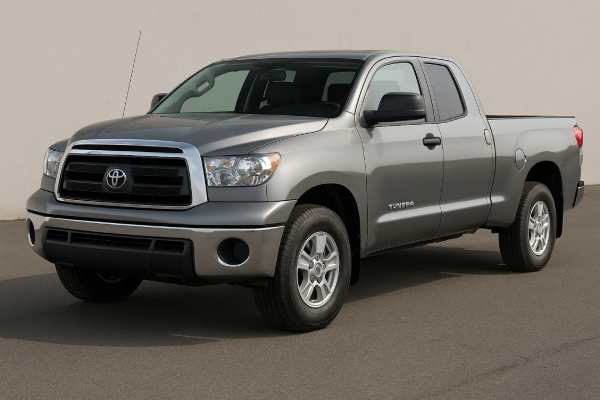
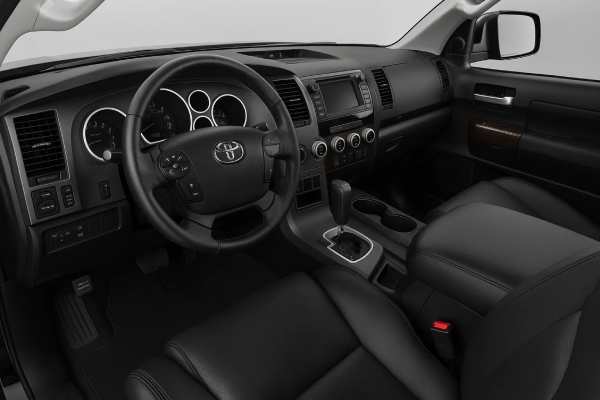
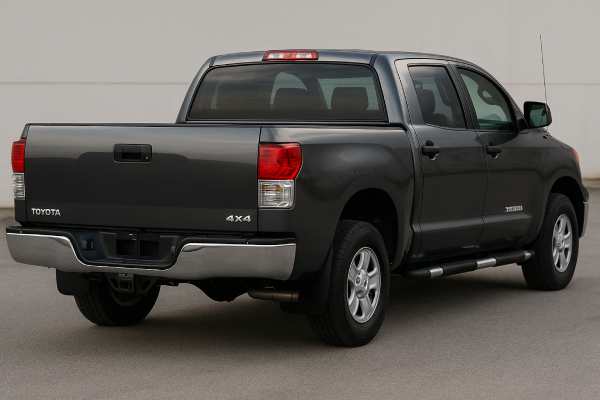
The 2011–2013 Toyota Tundra 4×4 with the 1GR-FE 4.0-litre V6 sits in an unusual spot in the full-size pickup world. It shares the heavy-duty XK50 chassis, robust driveline hardware, and work-focused cabin with the V8 trucks, but uses a smaller, chain-driven V6 known for durability rather than brute force. Power is a measured 270 hp, backed by a proven five-speed automatic, a two-speed transfer case, and a ladder frame built with towing and payload in mind.
For many owners this Tundra is about long-term ownership at reasonable running costs. The V6 can be cheaper to buy, simpler to maintain, and a bit lighter on fuel than the big V8s, yet still capable of hauling tools, towing a modest trailer, or heading down a fire road in four-wheel drive. At the same time, buyers need to understand its real-world performance limits, common age-related issues, and how it compares to rival half-ton pickups of the same era.
Fast Facts
- 1GR-FE 4.0 V6 is chain-driven, widely regarded as durable, and often runs well past 200,000 miles with maintenance.
- Heavy XK50 frame and 4×4 hardware give good tow stability and off-pavement robustness compared with many rival half-tons.
- Performance is adequate unloaded but feels modest when towing or climbing grades compared with the 4.6 and 5.7 V8s.
- Watch for frame corrosion and cooling/steering leaks on high-mileage trucks, especially in road-salt regions.
- Plan engine oil and filter changes about every 5,000 miles / 8,000 km on conventional use, or sooner for frequent towing.
Guide contents
- Toyota Tundra 4.0 4×4 summary
- Technical specs for 4.0 4×4
- 4×4 trims equipment and safety
- Reliability issues on 4.0 4×4
- Ownership maintenance and buying guide
- On-road performance and 4×4 feel
- Toyota 4.0 4×4 versus rivals
Toyota Tundra 4.0 4×4 summary
The 2011–2013 Toyota Tundra 4×4 with the 1GR-FE 4.0-litre V6 is built on the second-generation XK50 platform, sharing structure, body, and most running gear with the better-known V8 models. What sets it apart is the smaller V6, originally designed for SUVs and pickups that see hard use and high mileage. It uses an aluminium block and heads, dual overhead cams, and chain-driven valve timing with Toyota’s variable valve timing system. Power is 270 hp with about 278 lb-ft of torque, routed through a five-speed automatic and a part-time 4×4 system with low range.
In many markets the V6 was more common in rear-wheel-drive work trucks, while 4×4 duty was typically left to the V8s. Where the 4.0 4×4 exists, you effectively get a lighter-duty engine bolted into a heavy-duty chassis. That means the truck feels solid and secure, with a strong frame, large brakes, and serious tow hardware, but it does not leap off the line like a big V8.
From an ownership point of view, the main appeal is longevity and simpler running costs. The 1GR-FE is known for conservative tuning, strong bottom-end design, and very good reliability when oil changes and cooling system care are taken seriously. The trade-off is that fuel economy is still “full-size truck” rather than “mid-size,” and performance under load is best described as adequate. Buyers who understand that balance tend to be the most satisfied with this configuration.
Technical specs for 4.0 4×4
Engine and performance (1GR-FE V6)
| Parameter | Value | Notes |
|---|---|---|
| Code | 1GR-FE | Toyota GR-family V6 |
| Layout and cylinders | 60° V6, DOHC, 4 valves/cyl | Aluminium block and heads |
| Displacement | 4.0 L (3,956 cc) | Oversquare design |
| Bore × stroke | 94.0 × 95.0 mm (3.70 × 3.74 in) | Near-square geometry |
| Induction | Naturally aspirated | No turbo or supercharger |
| Fuel system | Sequential multi-port fuel injection | Premium not required |
| Compression ratio | ~10.4 : 1 | Regular unleaded fuel |
| Max power | 270 hp @ ~5,600 rpm | 2011–2013 tune |
| Max torque | 278 lb-ft (≈377 Nm) @ ~4,400 rpm | Broad mid-range torque |
| Timing drive | Chain | No scheduled belt replacement |
| Emissions standard | US LEV II / similar regional | Varies by market |
Factory fuel economy figures for the 4.0 V6 are typically around 16 mpg city / 20 mpg highway (about 14.7 / 11.8 L/100 km) in 2WD form; 4×4 use and larger tyres usually reduce that by roughly 1–2 mpg overall.
Transmission and 4×4 driveline
| Parameter | Value | Notes |
|---|---|---|
| Transmission | 5-speed automatic (A750F) | Electronically controlled |
| Gear ratios (1st–5th) | 3.52 / 2.04 / 1.40 / 1.00 / 0.72 (approx.) | Wide-ratio for towing and highway |
| Reverse | ≈3.22 | |
| Final drive ratio | ~3.9 : 1 typical | Options vary by axle |
| Drive type | Part-time 4×4 | 2H / 4H / 4L |
| Transfer case | 2-speed, chain-driven | Low range ~2.6 : 1 |
| Differential type | Open front and rear, brake-based traction aid | Factory locker rare in V6 trucks |
Chassis and dimensions (typical Double Cab/Regular Cab 4×4)
Values vary with cab, bed length, and regional equipment; the figures below are representative for 2011–2013 trucks.
| Parameter | Value | Notes |
|---|---|---|
| Front suspension | Double wishbone with coil-over shocks | With anti-roll bar |
| Rear suspension | Live axle, leaf springs | Traditional truck layout |
| Steering | Rack-and-pinion, hydraulic assist | Fairly slow ratio for stability |
| Front brakes | Ventilated discs ~13.9 in | 4-wheel ABS |
| Rear brakes | Ventilated discs ~13.6 in | Electronic brake-force distribution |
| Wheels/tyres | Commonly 245–255/70 R18 | SR/SR5 may use 17-inch |
| Length | ≈5,800 mm (≈228 in) | Depending on cab/bed |
| Width | ≈2,030 mm (≈80 in) | Mirrors folded |
| Height | ≈1,930 mm (≈76 in) | Without roof accessories |
| Wheelbase | ≈3,700 mm (≈146 in) | Long bed slightly longer |
| Ground clearance | Around 260 mm (≈10.2 in) | At rear differential |
| Turning circle | ~13.4 m (≈44 ft) | Kerb-to-kerb |
| Weight and capacity | Value | Notes |
|---|---|---|
| Curb weight | ~2,250–2,450 kg (≈4,960–5,400 lb) | Spec depends on cab/bed |
| GVWR | ~3,080–3,175 kg (≈6,800–7,000 lb) | Varies by configuration |
| Fuel tank | ≈100 L (26.4 US gal) | Single tank |
| Max payload | Roughly 600–800 kg (1,300–1,700 lb) | Configuration dependent |
| Max towing | Typically 2,000–2,750 kg (4,400–6,000 lb) | Lower than V8 Tundra |
Fluids and service capacities (typical values)
Always confirm by VIN and service documentation:
- Engine oil: 5W-30 or 0W-20 meeting Toyota spec; around 5.5–6.0 L with filter.
- Engine coolant: Toyota Super Long Life (pink), premixed; roughly 11–12 L total system capacity.
- Automatic transmission: Toyota WS ATF; ~10 L total, 3–4 L on a simple drain and fill.
- Front differential / transfer case: Hypoid gear oil 75W-85 or 75W-90 to Toyota spec; capacities around 1–1.5 L per housing.
- A/C refrigerant: R-134a with charge typically near 600–700 g.
Electrical and safety highlights
- Alternator output typically in the 130–150 A range, adequate for winches and accessories with planning.
- 12 V battery is a standard group-size truck battery, commonly around 70–80 Ah.
- Standard safety equipment includes multiple airbags, ABS, stability control, and brake assist.
- Crash-test performance for 2011–2013 Tundra is generally solid in frontal tests but less competitive in some side and roof evaluations for certain cab styles of this generation.
4×4 trims equipment and safety
In the 2011–2013 window, V6-powered Tundras tended to appear in work-oriented trims, with 4×4 versions usually rarer and often restricted to specific markets or fleet orders. In North America, most 4×4 Tundras used V8 engines; the 4.0 V6 was typically paired with rear-wheel drive. If you do find a 4.0 4×4, it will usually mirror the equipment of an SR or SR5 trim of the same era, but with fewer luxury add-ons than the higher V8 trims.
Base-level trucks focus on utility: vinyl or cloth seats, manual or simple power accessories, steel wheels, and basic audio. SR5-equipped trucks add nicer cloth, upgraded audio, more sound insulation, alloy wheels, and convenience touches like better storage and extra power outlets. Appearance and off-road packages may add larger wheels, all-terrain tyres, skid plates, and fog lamps, but most of the serious off-road hardware (lockers, specific shocks) sat with V8 configurations.
For quick identification:
- Badging: Look for “4×4” decals or tailgate badges plus V6 markings or the absence of “i-Force” V8 branding.
- Interior tells: A simpler gauge cluster and audio unit, manual seats, and basic trim usually indicate V6-based trucks.
- Build/VIN codes: The 1GR-FE engine code and axle ratio information on the door-jamb label help confirm the configuration.
Safety equipment is more consistent across the range. All trucks of this era include front airbags and head-protecting curtain airbags for most cab styles, plus front seat-mounted side airbags. Electronic stability control, traction control, and four-wheel ABS were widely fitted. Some trims include a trailer-sway assist function that lightly applies brakes to help steady a swaying trailer.
Advanced driver-assistance systems as we know them today were limited. Adaptive cruise, lane-keeping, and automatic emergency braking were not yet common on half-ton pickups. Most Tundras of this period rely on fundamentals: big brakes, a stable chassis, and good outward visibility. Where fitted, parking sensors and a reversing camera are helpful because the tall tailgate and long bed can make close-quarters manoeuvring tricky.
Child-seat installation is straightforward in the main rear seating positions of Double Cab and CrewMax-style bodies, with ISOFIX/LATCH anchors available. However, space can be tight in some rear bench arrangements, and tall child seats may interfere with head restraints, so it is worth doing a trial fit.
Reliability issues on 4.0 4×4
The 1GR-FE 4.0 V6 has a strong reputation for longevity when oil and cooling maintenance is kept up. Many examples run beyond 200,000 miles (320,000 km) with only routine service. Still, by 2011–2013 these trucks are now more than a decade old, and age- and use-related faults are common enough that a structured reliability view is helpful.
Common or notable issues:
- Cooling system ageing (common, medium cost): Radiators, hoses, water pumps, and heater tees can seep or leak with age. Symptoms include slow coolant loss, staining on the radiator tanks, or slight overheating on long grades. The remedy is typically replacement of the leaking component and a full system flush.
- Accessory drive noises (common, low cost): Idler pulleys, belt tensioners, and serpentine belts can chirp or squeal, especially on cold starts. Replacing the belt and any noisy pulleys usually resolves the issue.
- Oil seepage (occasional, medium cost): Cam cover gaskets and front crank seals can develop minor leaks after high mileage. Provided oil levels are monitored, this is more of a housekeeping item than an emergency, but proper repair involves removing covers and resealing.
Chassis and driveline:
On 4×4 trucks, the front differential, CV joints, and transfer case see more stress:
- Front CV boot splits (occasional, medium cost): Torn boots allow grease loss and contamination, leading to clicking joints in tight turns. Rebuilt or new CV shafts are the standard fix.
- 4×4 engagement issues (occasional, low–medium): Lack of use can leave the actuator or shift sleeve sticky. Regularly exercising 4H and 4L on loose surfaces helps; in stubborn cases, the actuator or internal parts may need service.
Frame and underbody corrosion is the single biggest long-term risk, especially in regions where roads are heavily salted in winter. The XK50 Tundra frame has been the subject of corrosion-related concern and, in some cases, inspection and treatment campaigns in certain markets. On older trucks, you may find scaling rust on the frame rails, cross-members, and leaf-spring mounts. Severe rust can be expensive to address and may affect safety and tow ratings.
Electrically, the platform is relatively simple by modern standards. Typical age-related problems include:
- Failing window switches or lock actuators.
- Corroded trailer-wiring connectors causing lighting faults.
- Ageing batteries and ground connections leading to slow cranking or intermittent electrical gremlins.
Software updates are less prominent on this generation than on later trucks, but transmission and engine control modules can receive updated calibrations to refine shift behaviour or address specific fault codes. When buying, it is reasonable to ask whether any outstanding campaigns or calibration updates have been completed.
For any prospective truck, a pre-purchase inspection by a technician familiar with Toyota trucks is strongly recommended. They should check for stored fault codes, evidence of cooling or oil leaks, driveline vibration under load, and any unusual noises from the front hubs or rear differential.
Ownership maintenance and buying guide
A conservative, repeatable maintenance routine is key to getting the best from a 4.0-litre Tundra 4×4. The basics are straightforward, and many owners handle light service themselves while leaving heavier work to a trusted shop.
Suggested maintenance intervals (typical, always confirm for your market):
- Engine oil and filter: Every 5,000 miles / 8,000 km or 6 months on mixed use; consider 3,000–4,000 miles if you tow often, idle for long periods, or drive mostly short trips.
- Engine air filter: Inspect annually and replace around 30,000 miles / 50,000 km, sooner in dusty conditions.
- Cabin air filter: Replace every 15,000–20,000 miles (24,000–32,000 km) to keep HVAC performance up.
- Spark plugs: Iridium plugs often last 90,000–100,000 miles (145,000–160,000 km); replace as a set with correct torque and anti-seize guidance from the service manual.
- Coolant: Toyota Super Long Life coolant is long-life, but by this age, a full flush every 5 years or 60,000 miles (100,000 km) is a sensible baseline.
- Automatic transmission fluid: Drain and fill every 50,000–60,000 miles (80,000–100,000 km) if the truck tows or works hard; otherwise at least once in the truck’s mid-life.
- Differentials and transfer case: Refresh gear oils roughly every 50,000–60,000 miles, especially if you tow or frequently use 4×4 low range.
- Brake fluid: Replace every 2–3 years regardless of mileage.
- Belts and hoses: Inspect annually; replace serpentine belt by 90,000 miles or earlier if cracked.
- 12 V battery: Test yearly after year 4–5 and replace proactively when cranking slows or tests marginal.
Because the 1GR-FE uses timing chains, there is no fixed belt interval, but chain-related concerns (rattles on cold start, timing errors) should be investigated promptly. Using the correct viscosity oil and timely changes helps preserve chain and tensioner life.
Buyer’s checklist for a used Tundra 4.0 4×4:
- Frame and underbody: Look closely along the inside and outside of frame rails, cross-members, and suspension mounts. Surface rust is normal; deep flaking, holes, or bulging welds are red flags.
- Cooling and leaks: Check for dried coolant streaks, dampness around the water pump, and oil around cam covers and the front crank seal.
- Driveline behaviour: On a test drive, accelerate gently and firmly from low speed, check for shudder or clunks, and confirm that 4H and 4L engage smoothly.
- Brakes and steering: The pedal should feel firm and linear, without vibration. Steering should be free from dead zones or groaning from the pump.
- Electrical: Test all windows, locks, lights, HVAC modes, and any accessories such as the trailer connector.
Among year-to-year differences, these late-run pre-facelift trucks benefit from the updated 270 hp tune and incremental refinements in corrosion protection and interior trim versus early XK50 models. Most buyers are best off targeting trucks with complete service records, minimal rust, and conservative tyre and suspension modifications.
On-road performance and 4×4 feel
On the road, the 4.0-litre Tundra 4×4 feels very much like a full-size truck tuned for stability rather than sharpness. The steering is on the heavier side at parking speeds, lightening up slightly as speed builds. There is some body roll when turning, but it is predictable and well controlled, thanks to the wide track and relatively firm springs intended to support payload.
Ride quality depends heavily on the cab and bed combination, as well as tyre choice. Unloaded regular-cab or lightly optioned double-cab trucks, especially on higher tyre pressures, can feel choppy on broken pavement. Adding moderate load in the bed or towing a small trailer often calms the rear suspension. Cabin noise at highway speed is acceptable for the era: wind and tyre noise are present but not intrusive, and the V6 is quiet at cruise.
The engine’s character is smooth and willing but not especially muscular. Around town, with no load, it accelerates briskly enough. The five-speed automatic generally keeps the engine in its torque band, using lower gears for hills and kick-downs. When you tow a heavier trailer or climb long grades, the Tundra will downshift and hold revs in the mid-range; this is normal behaviour for a smaller engine in a large truck. Drivers who expect strong passing performance or high-speed towing may find the V8 models better suited.
Real-world fuel economy for 4×4 V6 trucks typically falls in the mid-teens mpg in mixed driving, depending on driving style, tyre size, gearing, and load. City-heavy use with short trips can dip into the low-teens; steady highway cruising at legal speeds, with light load, can approach or slightly exceed the high-teens mpg. Larger all-terrain tyres, lift kits, and roof racks all add to drag and rolling resistance and can easily cost a couple of mpg.
Off-road, the part-time 4×4 system with low range gives the Tundra a secure feel on loose gravel, dirt roads, and moderate trails. The long wheelbase and size limit tight-trail agility, but ground clearance is reasonable and the underbody is robust. The V6 has enough low-speed torque for most recreational off-road situations, although deep sand or mud with a heavy load will expose its limits faster than a big V8.
Under moderate towing (for example, a 2,000–2,500 kg / 4,400–5,500 lb trailer), the truck remains stable, and the brakes are up to the task when combined with a properly set electric brake controller. Expect fuel consumption to worsen by 30–50 percent under steady towing, which is typical for full-size petrol pickups.
Toyota 4.0 4×4 versus rivals
When comparing the 2011–2013 Tundra 4.0 4×4 to other half-ton trucks of the same era, it helps to think in terms of priorities rather than raw numbers. In headline figures like maximum towing or payload, the V6 Tundra typically trails V8-powered F-150, Silverado/Sierra, and Ram 1500 rivals. Those competitors often offer stronger engine options and, in some trims, more advanced cabins and later-adopted safety tech.
Where the Tundra scores is in its mechanical simplicity and reputation for long-term durability. The 1GR-FE V6 is generally viewed as a “slow but steady” engine: not the most powerful, but robust under sustained use with basic care. Many rivals of the time leaned on more complex multi-cam or turbocharged engines, which can bring their own long-term maintenance considerations as mileage stacks up.
In chassis feel, the Tundra is sturdy and predictable, but not as polished as some later-generation F-150 or Ram products in terms of ride comfort and interior quiet. Cabins are functional, with big controls and clear instruments, but the plastics and design language feel more work-truck than luxury, especially when compared to high-trim domestic competitors of the same period.
Safety performance is an area where you should compare cab style and test results carefully across brands. The Tundra’s frontal crash performance is generally good, but some cab configurations of this generation score less impressively in side and roof tests than newer rivals. At the same time, its straightforward construction and relatively low level of driver-assist electronics can mean fewer sensors and modules to fail as the truck ages.
If you value:
- A durable engine with a track record in trucks and SUVs,
- A strong ladder frame and conventional 4×4 hardware,
- Reasonable running costs and straightforward maintenance,
the Tundra 4.0 4×4 can be very appealing. If, instead, you need maximum towing ratings, strong passing power at highway speeds, or luxury-grade refinement, you may be better served by a V8 Tundra or an equivalent high-output half-ton from Ford, GM, or Ram.
Overall, the 2011–2013 Tundra 4×4 V6 is best suited to owners who prioritise robustness, simple engineering, and steady long-term service over outright performance numbers.
References
- 2011 Toyota Tundra: More Powerful Base Engine 2010 (Press Release)
- Gas Mileage of 2013 Toyota Tundra 2013 (Fuel Economy Data)
- 2012 Toyota Tundra extended cab pickup 2012 (Safety Rating)
- Vehicle Detail Search – 2012 TOYOTA TUNDRA PU/RC 4WD 2012 (Recall and Crash Database)
Disclaimer
This article is for informational purposes only and is not a substitute for professional diagnosis, inspection, or repair. Specifications, torque values, service intervals, and repair procedures can vary by VIN, model year, market, and installed equipment. Always confirm critical data and follow procedures from your vehicle’s official service manual, owner’s manual, and manufacturer communications.
If you found this guide useful, please consider sharing it with other owners or enthusiasts on your preferred social platforms (such as Facebook or X/Twitter). It helps support xcar’s ability to produce more detailed, independent technical content.