
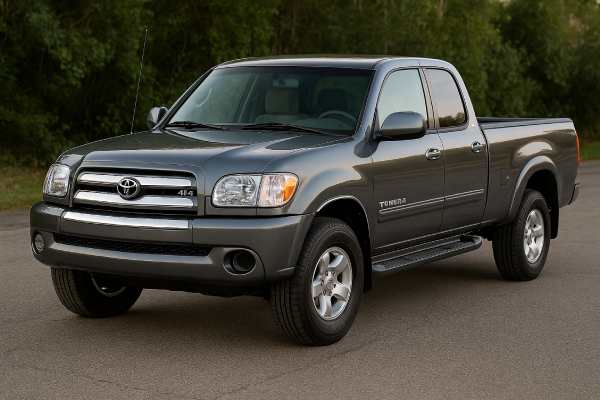
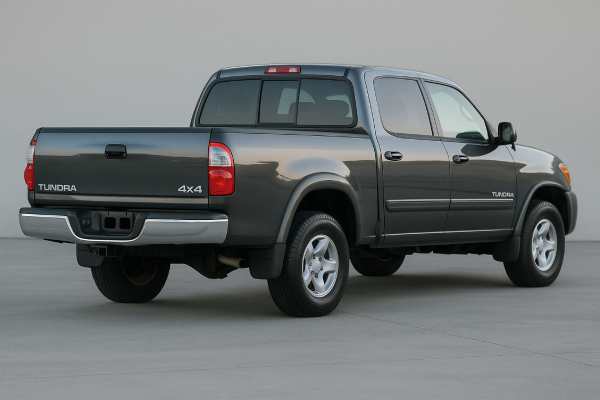
The facelift Toyota Tundra 4×4 (XK40) with the 1GR-FE 4.0 litre V6 sits in an interesting middle ground. It is lighter and slightly more efficient than the 4.7 litre V8 versions, yet still has a proper ladder frame, low-range transfer case and useful towing capacity. For many owners it is the “do-everything” truck: daily driver, weekend trail rig and occasional tow vehicle.
In this guide we focus specifically on the 2004–2006 facelift 4×4 models powered by the 236 hp 1GR-FE. You will find technical specifications, chassis and fluid data, reliability patterns, common issues and a realistic maintenance plan. We also look at how this V6 4×4 Tundra drives in the real world and how it stacks up against rival half-ton pickups of the same era. The goal is to give you enough detail to make confident decisions—whether you are planning to buy, own long-term, or simply keep your current truck running at its best.
Owner Snapshot
- Strong 1GR-FE 4.0 V6 with timing chain and proven long-term durability when serviced on time.
- Part-time 4×4 with low range and good ground clearance, ideal for snow, light off-road and work sites.
- Cabin and controls are simple and robust, with fewer electronics than newer trucks and relatively low running costs.
- Frame and underbody corrosion plus front suspension wear need regular inspection on older trucks.
- Plan engine oil and filter changes every 5,000–8,000 km (3,000–5,000 miles) or 6 months, whichever comes first.
What’s inside
- Toyota Tundra XK40 4×4 basics
- Toyota Tundra 4×4 1GR-FE data
- Toyota Tundra 4×4 grades and safety
- XK40 reliability and known issues
- Ownership maintenance and buyer guide
- Real-world driving and off-road ability
- Tundra 4×4 versus rival trucks
Toyota Tundra XK40 4×4 basics
The XK30/XK40 generation Tundra is Toyota’s first full-size pickup designed mainly for the North American market. XK40 refers to the 4×4 chassis variants. The 2004–2006 facelift brought updated styling, refinements in the cabin and expanded Double Cab options, but the basic recipe remained conservative and robust.
The 1GR-FE 4.0 litre V6 became available on the facelift trucks as a modern alternative to the older 3.4 V6 and 4.7 V8. It uses an aluminium block with cast-iron liners, DOHC with variable valve timing on the intake side and a timing chain instead of a belt. In this application it is rated at about 236 hp and 266 lb-ft, enough to move the Tundra briskly when unladen and still cope with sensible towing and payload.
For this 4×4 configuration, the Tundra uses a traditional body-on-frame layout with an independent double-wishbone front suspension and a solid rear axle on leaf springs. A part-time transfer case gives 2H, 4H and 4L modes, with manual or electric shift depending on trim. There is no full-time all-wheel-drive option on these trucks: on dry pavement you stay in 2H and only engage 4H on loose or slippery surfaces.
Cab and bed combinations for the 1GR-FE 4×4 typically include Regular Cab and Access Cab (extended cab) with a 6.5-foot bed, plus some Double Cab configurations depending on market and year. Compared with later, much larger Tundras, the XK40 is modest in overall size, which many owners actually prefer for maneuvering in town and on tight trails.
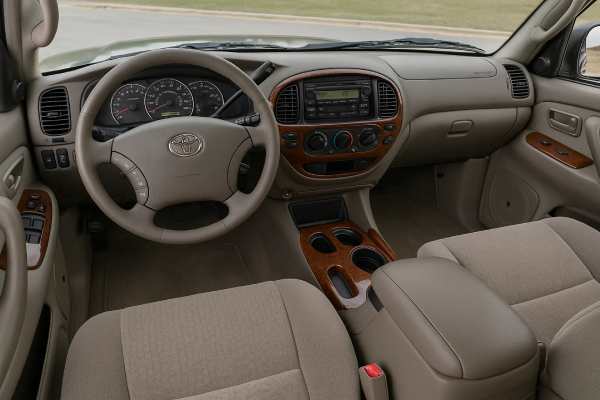
From an ownership perspective, the 1GR-FE 4×4 Tundra balances simplicity and comfort. It lacks the complex electronics and heavy emissions hardware of newer trucks, yet still offers modern conveniences like available power seats, decent audio and basic driver aids. That combination is a major part of its long-term appeal on the used market.
Toyota Tundra 4×4 1GR-FE data
In this section we focus on a typical 2005–2006 Tundra XK40 4×4 with the 1GR-FE V6 and 5-speed automatic, Access Cab, 6.5-foot bed. Exact figures vary slightly by year, cab, bed and market, but these tables give a realistic technical picture.
Engine and performance
| Parameter | Value |
|---|---|
| Engine code | 1GR-FE |
| Layout and cylinders | V6, 60°, aluminium block, DOHC |
| Valvetrain | 24 valves, 4 per cylinder, VVT-i on intake |
| Displacement | 4.0 L (3,956 cc) |
| Bore × stroke | 94.0 mm × 95.0 mm (3.70 in × 3.74 in) |
| Compression ratio | ~9.6 : 1 |
| Induction | Naturally aspirated |
| Fuel system | Sequential multi-port electronic injection |
| Max power | 236 hp (176 kW) @ ~5,200 rpm |
| Max torque | 266 lb-ft (361 Nm) @ ~4,000 rpm |
| Timing drive | Duplex chain with hydraulic tensioners |
| Emissions standard (US) | Tier 2 / LEV-II equivalent depending on state |
| Rated consumption (typical) | ~16 mpg city / 20 mpg highway (US); ~14.7 L/100 km combined |
| Real-world highway (120 km/h) | Often 12–13 L/100 km (18–20 mpg US) with light load |
Transmission and driveline
| Parameter | Value |
|---|---|
| Transmission | 5-speed automatic (A750F) on most 4×4 V6; some markets offered a 6-speed manual |
| Drive type | Part-time 4×4, rear-biased with selectable front axle engagement |
| Transfer case | 2H / 4H / 4L, manual lever or electronic shift (by trim) |
| Final drive ratio | Commonly around 3.91 or 4.10 : 1 (check axle code on door jamb) |
| Front differential | Open differential |
| Rear differential | Open; limited-slip or locking differential available in some markets/packages |
| Typical gear spread | Short first gear for towing and off-road, tall fifth for highway cruising |
Chassis and dimensions
Figures below are representative for an Access Cab 4×4 with the V6; other body styles differ slightly.
| Parameter | Value |
|---|---|
| Frame | Fully boxed front sections, open-C rear sections ladder frame |
| Front suspension | Double-wishbone, coil-over shock |
| Rear suspension | Solid axle with leaf springs |
| Steering | Rack-and-pinion power steering |
| Brakes (front) | Vented discs, ~12 in diameter |
| Brakes (rear) | Drums, leading-trailing design |
| Wheels / tyres | 16 in rims, typical tyre 245/70 R16 all-season or A/T |
| Length | ~5,540–5,550 mm (around 218 in) |
| Width (body) | ~1,910–1,915 mm (about 75 in) |
| Height | ~1,790–1,820 mm (around 70–72 in) |
| Wheelbase (Access Cab) | ~3,260 mm (128.3 in) |
| Ground clearance (4×4) | Around 260 mm (10.2 in) under rear diff |
| Turning circle | Roughly 13 m (42–43 ft) kerb-to-kerb |
| Curb weight | Around 2,000–2,100 kg (4,400–4,650 lb) depending on trim |
| GVWR | Typically ~2,700–2,860 kg (6,000–6,300 lb) |
| Fuel tank | ~100 L (26.4 US gal; ~22.0 UK gal) |
| Bed length | ~1,980 mm (6.5 ft) for standard Access Cab bed |
Performance and capability
| Parameter | Value |
|---|---|
| 0–100 km/h (0–62 mph) | Roughly 9–10 s unladen with automatic |
| Top speed | Around 170 km/h (105 mph), speed-limited |
| Braking 100–0 km/h | Typically in the 40–45 m range when new, on good tyres |
| Max towing capacity (V6 4×4) | Commonly 5,000–5,200 lb (≈ 2,270–2,360 kg) when properly equipped |
| Typical payload | Around 1,200–1,500 lb (≈ 540–680 kg), depending on cab/bed and options |
| Roof load | Around 75–100 kg (165–220 lb) with appropriate rack system |
Always confirm exact towing and payload figures against the VIN sticker, owner’s manual and local regulations; options like tow packages, axle ratio and cab/bed configuration make a real difference.
Fluids and service capacities (typical)
Values can vary slightly by year and transmission; always verify with the correct manual for your VIN.
| System | Specification | Approximate capacity |
|---|---|---|
| Engine oil | API SL/SM or later, usually 5W-30 (or 5W-20 where specified) | ~5.5–6.0 L (5.8–6.3 US qt) including filter |
| Engine coolant | Long-life ethylene glycol, silicate-free, Toyota Super Long Life Coolant | Around 9–10 L (9.5–10.5 US qt) |
| Automatic transmission | Toyota WS (World Standard) ATF | ~9 L total fill; typical drain and refill ~3–4 L |
| Transfer case | Gear oil, often SAE 75W-90 GL-4/GL-5 as specified | ~1–1.5 L |
| Front differential | SAE 75W-90 GL-5 | ~1.2–1.3 L |
| Rear differential | SAE 75W-90 GL-5 | ~2.5–3.0 L |
| Power steering | ATF (Dexron-type, per manual) | ~1 L total |
| Brake fluid | DOT 3 or DOT 4 | Fill to reservoir mark; flush ~1 L for full system |
Electrical and basic safety data
| Item | Value |
|---|---|
| Alternator | Typically 100–130 A, higher with tow package |
| 12 V battery | Around 65–70 Ah, group size 24F or similar, ~550–700 CCA |
| Spark plugs | Long-life platinum or iridium, approx. 1.1 mm (0.043 in) gap (check label) |
| Airbags | Dual front airbags; some trims with optional side/side-curtain bags in later years |
| ABS | Standard on most 4×4 trims |
| Stability control | Introduced or widened late in the run; may not be fitted to early facelift trucks |
Toyota Tundra 4×4 grades and safety
For the facelift 2004–2006 XK40 4×4, the 1GR-FE V6 was mainly offered in work-oriented and mid-level trims. Exact naming depends on market, but in North America you will commonly see:
- Base/STD: cloth bench seats, manual windows/locks in some cases, steel wheels, simple audio, but still with air conditioning on many trucks.
- SR5: the typical V6 4×4 trim, adding alloy wheels, better upholstery, more sound insulation, upgraded audio and often keyless entry.
- Limited: usually paired with the V8, but some markets mix equipment; for V6 4×4 you will mostly encounter SR5-type specifications.
Mechanically, key differences between trims are:
- Tow package availability: transmission cooler, larger radiator, upgraded alternator and specific axle ratio. V6 trucks with the tow package are the ones rated toward the upper end of the towing range.
- Wheel and tyre packages: SR5 trucks tend to have alloys and slightly wider tyres, which help grip but can add a little noise and fuel consumption.
- 4×4 hardware: the core transfer case and front axle layout are shared; some special-edition or regional models may have a limited-slip differential or different axle ratio code.
Inside, higher trims add more adjustment to the driver’s seat, nicer trim materials, steering-wheel audio controls, and sometimes an upgraded gauge cluster or display. The basic architecture remains simple and analogue, which long-term owners appreciate when things age.
On the safety side, first-generation Tundras are structurally decent for their era but not at modern levels. Moderate overlap frontal crash tests show a strong safety cage with generally good injury metrics, though some leg/foot measures are only marginal. Head-restraint and seat ratings range from Good to Acceptable depending on seat type and year.
Side-impact and rollover protection follow early-2000s expectations: there may be no side-curtain airbags on many trucks, and electronic stability control was not universal. That means tyre choice, suspension condition and driving style have a larger effect on real-world safety than in newer pickups that rely heavily on electronic aids.
Child-seat provisions typically include LATCH/ISOFIX anchors in the rear outboard positions of Double Cab models, while Access Cab rear seating is more limited and best suited to older children or occasional adult use. Always check how your specific child seats fit, as the shorter cabin can make rear-facing installations tight.
From a service perspective, advanced driver-assistance systems (ADAS) are minimal or absent. You generally avoid the radar and camera calibration issues that newer trucks have after windscreen replacement or front-end repairs. Standard ABS and, where fitted, stability control still require correct wheel-speed sensor routing and wheel bearing condition, but overall the system complexity is modest.
XK40 reliability and known issues
The 1GR-FE 4.0 V6 in the XK40 Tundra has a strong reputation for longevity. With regular maintenance it is entirely realistic to see 300,000 km (186,000 miles) or more without internal engine work. However, the trucks are now 20-plus years old, so age-related issues deserve as much attention as mileage.
A practical way to think about reliability is to group problems by frequency and cost.
Common, generally low-to-medium cost:
- Fluid leaks:
- Symptoms: oil smell, drops on driveway, wet areas around valve covers or the back of the engine.
- Likely causes: valve cover gasket seepage, timing chain tensioner cover leaks or, less often, rear main seal.
- Remedy: replace gaskets/seals and clean the area; on chain tensioner leaks, updated parts and correct torque usually solve it.
- Accessory wear items:
- Symptoms: belt squeal, weak alternator output, noisy idler pulleys.
- Causes: old serpentine belt, tired tensioner, bearings wearing out with age.
- Remedy: fresh belt and tensioner, and replacing noisy pulleys before they seize.
- Cooling system components:
- Symptoms: coolant smell, minor leaks at water pump, or crusted residue around hose joints.
- Causes: old water pump seals, aged hoses and clamps.
- Remedy: proactive replacement of pump, hoses and thermostat after 150,000–200,000 km (90,000–125,000 miles).
Occasional, medium-cost issues:
- Ignition coil and plug problems:
- Symptoms: misfires under load, rough idle, check-engine light with cylinder-specific misfire codes.
- Causes: ageing coil-on-plug units or worn spark plugs running beyond their service interval.
- Remedy: replace spark plugs with correct long-life plugs and, where needed, coils on affected cylinders.
- Exhaust manifold and gasket leaks (more common on V8s but can appear on high-mileage V6 trucks):
- Symptoms: ticking noise when cold, exhaust smell near the front of the truck.
- Causes: thermal cycling causing cracks or gasket failure.
- Remedy: replacement of affected manifold and gaskets, with new fasteners.
- Front suspension wear:
- Symptoms: clunks over bumps, vague steering, uneven tyre wear.
- Causes: worn lower ball joints, control-arm bushings and sway-bar links.
- Remedy: quality replacement parts and proper alignment; ignoring this can become a safety issue.
Less common but important:
- Frame and underbody corrosion:
- Symptoms: heavy rust scaling on frame rails, particularly near the rear spring hangers, spare-tyre cross-member and fuel-tank area.
- Causes: road salt, poor washing, and trapped moisture in boxed sections.
- Remedy: inspection with a hammer and pick, professional rust treatment or frame repair; in severe cases, the truck may not be economical to save.
- Driveline vibration:
- Symptoms: shudder under acceleration or at specific speeds.
- Causes: worn universal joints, out-of-balance propshaft, or incorrect ride height after lift kits without correcting driveline angles.
- Remedy: replace U-joints, re-balance the shaft and correct lift geometry.
On the software side, these trucks are comparatively simple. Engine and transmission control units may have had calibration updates over the years to improve driveability or reduce false diagnostic codes, but reflash campaigns are nowhere near as common as on newer vehicles. When chasing intermittent issues, it is still worth checking with a dealer or specialist whether the latest calibrations are loaded.
As with most older trucks, past care matters more than factory design at this point. A Tundra with complete service records, regular fluid changes and underbody rust proofing can be a very low-drama vehicle. One that has towed at maximum weight without maintenance or has lived its life in heavy road salt with no washing can be expensive to stabilise.
Ownership maintenance and buyer guide
A clear, realistic maintenance plan is key to getting the best from an XK40 Tundra 4×4 with the 1GR-FE. The intervals below are general guidance; adjust for severe use (towing, off-road, lots of short trips, very dusty conditions) and always confirm against the correct manual.
Practical maintenance schedule (typical)
- Engine oil and filter: every 5,000–8,000 km (3,000–5,000 miles) or 6 months. Use quality 5W-30 or manufacturer-approved viscosity.
- Engine air filter: inspect every 15,000 km (10,000 miles); replace every 30,000–40,000 km or more often off-road.
- Cabin air filter (where fitted): replace every 20,000–25,000 km (12,000–15,000 miles) or once a year.
- Spark plugs: long-life plugs are often rated for 150,000–160,000 km (100,000 miles). On a used truck with unknown history, replacing them immediately provides a known baseline.
- Fuel filter: many North-American models have a “lifetime” in-tank filter. If a serviceable filter is fitted in your market, replace around 80,000–100,000 km (50,000–60,000 miles).
- Coolant: Toyota’s long-life coolant can often run 5 years / 160,000 km for the first interval and then 2–3 years / 40,000–50,000 km thereafter. Age and local conditions matter; test if in doubt.
- Automatic transmission fluid: short-trip or towing use benefits from a drain-and-fill every 50,000–60,000 km (30,000–40,000 miles). For mostly highway trucks, 80,000–100,000 km is a reasonable window.
- Transfer case and differentials: change gear oil every 60,000–80,000 km (35,000–50,000 miles), sooner if the truck does heavy off-road or water crossings.
- Brake fluid: flush every 2–3 years regardless of mileage.
- Brake pads and rotors: inspect at least annually, more often if towing or descending long grades.
- Serpentine belt and tensioner: inspect yearly; replace belt around 100,000–120,000 km (60,000–75,000 miles) or at first signs of cracking.
- Steering and suspension: inspect ball joints, tie-rod ends, control-arm bushings and shocks at every service on high-mileage trucks.
- Alignment and tyre rotation: rotate tyres every 10,000–12,000 km (6,000–7,500 miles) and check alignment annually or after any suspension work or off-road impact.
- 12 V battery: load-test yearly after 4–5 years of age; replace as soon as test results weaken.
The 1GR-FE uses a timing chain, so there is no scheduled belt replacement. However, chain noise, timing-related fault codes or metal debris in the oil are all reasons to investigate chain, guides and tensioners.
Fluid picks and key torque values (decision level)
Always verify numbers for your VIN, but useful torque references include:
- Wheel lug nuts: typically around 110–120 Nm (81–89 lb-ft).
- Engine oil drain plug: roughly 40 Nm (30 lb-ft).
- Spark plugs: usually 18–25 Nm (13–18 lb-ft) depending on plug design and lubrication—follow plug maker’s spec.
- Differential and transfer case drain/fill plugs: commonly 40–50 Nm (30–37 lb-ft).
Use genuine or high-quality equivalent fluids and gaskets for drain plugs and valve covers; cutting corners here often leads to leaks and repeat work.
Buyer’s checklist for a used XK40 4×4 V6
When viewing a truck, organise your inspection around a few major risk areas:
Frame and underbody
- Look along the frame rails, especially near the rear spring hangers, spare-tyre mount and fuel-tank supports.
- Tap suspect areas with a hammer; heavy scaling, perforation or flaking can indicate structural weakness.
Engine and driveline
- Cold start: listen for rattles from the front of the engine (chain or tensioner) and exhaust leaks.
- Check for oil leaks at the rear of the engine and around valve covers.
- Drive at various speeds: feel for vibration under load (propshaft/U-joints) or at steady cruise (tyres/wheels).
Suspension and steering
- With wheels off the ground, rock tyres at 12 and 6 o’clock (ball joints) and 3 and 9 o’clock (tie-rods).
- Look for leaking shocks and split bushings.
Cooling and HVAC
- Observe warm-up time and temperature gauge stability.
- Confirm heater and A/C performance; weak heater can suggest air in the system or blockages.
Electrical and interior
- Test all windows, locks, 4×4 selector, instrument-cluster warning lights and backlighting.
- Confirm that ABS and airbag warning lights come on at key-on and then go out after start.
Ask for:
- Full service history and any documentation of timing chain or major engine work.
- Proof of recall work (especially suspension and frame-related campaigns where applicable).
- Recent invoices for fluids, brakes and tyres.
In terms of value, well-maintained 1GR-FE 4×4 Tundras usually make excellent long-term trucks. Prioritise examples with clean frames, no accident damage and evidence of regular maintenance over lower-mileage but poorly maintained trucks.
Real-world driving and off-road ability
On the road, the Tundra XK40 4×4 with the 1GR-FE feels more responsive than its age suggests. The V6 is smooth, revs willingly and makes useful torque from low-to-mid rpm. Around town it pulls away cleanly and does not need to scream to keep up with traffic. The 5-speed automatic generally shifts unobtrusively, though early trucks may occasionally hunt between gears on gentle grades; a firm throttle input usually resolves that.
Ride quality is one of this generation’s strong points. The front independent suspension and relatively modest spring rates give a compliant, almost SUV-like ride when unladen, especially compared with some contemporary domestic pickups that were tuned more stiffly for heavy loads. On rough surfaces the suspension still feels controlled, but worn shocks or cheap replacement dampers can quickly spoil this balance.
Steering is light and predictable, with enough feedback to place the truck confidently. At highway speeds the Tundra tracks straight if the suspension is in good order and tyres are properly matched. Crosswinds and rutted surfaces can move it around more than a newer, heavier half-ton, but it is rarely nervous. Brake feel is adequate by modern standards; the front discs and rear drums combination is perfectly capable if maintained and fitted with quality pads and shoes.
In real-world fuel consumption, owners typically see:
- City driving: roughly 15–18 L/100 km (13–16 mpg US) depending on traffic, load and driving style.
- Highway at 100–110 km/h (60–70 mph): around 11–13 L/100 km (18–21 mpg US) with a lightly loaded truck on stock tyres.
- Mixed usage: commonly 13–14.5 L/100 km (16–18 mpg US).
Cold climates, short trips and aggressive driving can push numbers higher. Taller, heavier all-terrain tyres and roof racks also hurt economy, especially on the motorway.
Off-road, the XK40 4×4 is more capable than its conservative looks suggest. Key advantages include:
- Part-time 4WD with low range for steep climbs and descents.
- Decent ground clearance and relatively short front overhang.
- Predictable throttle response from the naturally aspirated V6.
Its main limitations are open differentials and modest articulation compared with purpose-built off-roaders. For light trails, forest roads and snowy tracks, the stock truck on good all-terrain tyres performs very well. In deeper mud, rock gardens or heavily rutted routes, a rear limited-slip or locker and mild suspension lift dramatically improve traction.
Under load—towing a mid-size camper or car trailer within the rated range—the V6 needs more revs than the V8, but it holds speed acceptably if you are willing to downshift. Transmission temperatures stay within reason when the tow package is fitted and fluids are fresh. Expect a substantial fuel-economy penalty when towing at or near maximum weight; 25–40% worse consumption than solo driving is normal.
Noise levels in the cabin are reasonable for an early-2000s truck. Wind and tyre noise increase with larger off-road tyres or aftermarket roof accessories, but in stock form the Tundra is quite livable on long highway runs. With age, squeaks and rattles can appear from interior trim and leaf springs; careful bushing replacement and lubrication usually restores refinement.
Tundra 4×4 versus rival trucks
When comparing the 2004–2006 Toyota Tundra XK40 4×4 1GR-FE to its period rivals—Ford F-150, Chevrolet Silverado 1500, Dodge Ram 1500 and Nissan Titan—it helps to recognise the Tundra’s different priorities.
Size and packaging
The first-generation Tundra is slightly smaller than many domestic half-tons of the same era. This is a disadvantage if you need maximum bed length and interior volume, but an advantage in town and on narrow trails. Parking, manoeuvring in tight spaces and threading through forest tracks are all easier than in later full-size trucks.
Power and towing
Against V8-powered rivals, the 4.0 V6 Tundra is down on peak power and towing on paper. Ford’s and GM’s larger V8s of the time can tow more and may feel stronger with heavy trailers. However, the Tundra’s V6 has enough muscle for moderate tow weights and typical recreational trailers, especially if you stay within the 5,000–5,200 lb envelope and drive with mechanical sympathy.
For owners who rarely tow at the limit, the V6 strikes a good balance between capability and fuel cost. Those needing maximum towing or payload would still be better served by a V8 version of the Tundra or a domestic half-ton with a heavy-duty towing package.
Ride and comfort
The XK40’s ride quality and cabin refinement often surprise people used to older domestic pickups. It feels more like a mid-size SUV inside, with supportive seats and relatively low noise levels. Interior design is simple and robust rather than flashy, but controls are logically arranged and tend to age gracefully.
Reliability and long-term ownership
This is where the Tundra 4×4 1GR-FE tends to stand out. While every truck can have issues—especially with rust in harsh climates—many owners report lower unscheduled repair frequency and fewer major powertrain problems than with some contemporary domestic rivals. The naturally aspirated V6, conservative transmission tuning and relatively simple electronics all help.
On the downside, genuine Toyota parts can be more expensive in some regions, and used-truck prices are often higher for clean examples because of that reputation. Buyers must still watch for frame corrosion and neglected maintenance, but the underlying engineering is solid.
Off-road and winter use
Compared with rivals, the Tundra’s part-time 4WD system is conventional but very dependable. Some domestic trucks of the era offer more advanced traction aids or automatic 4×4 modes; others are similarly basic. In practice, tyre choice, driver skill and ground clearance make a bigger difference than badge. The Tundra’s relatively compact size is a real advantage on narrow winter roads and wooded trails.
Overall, the 2004–2006 Toyota Tundra XK40 4×4 with the 1GR-FE engine is best viewed as a durable, right-sized work and adventure truck. It does not top the charts for towing or horsepower, but it offers a blend of reliability, comfort and capability that remains attractive many years after production ended.
References
- Gas Mileage of 2005 Toyota Tundra 2024 (Fuel Economy Data)
- 2005 Toyota Tundra 2024 (Safety Rating)
- 2006 Toyota Tundra Specifications 2024 (Specifications)
- Owner Manuals 2024 (Owner’s Manual Portal)
Disclaimer
This article is for informational purposes only and is not a substitute for professional diagnosis, repair or safety advice. Specifications, torque values, fluid types, service intervals and available equipment can vary by VIN, market, model year and individual vehicle configuration. Always verify critical data against the official owner’s manual, workshop manual and parts information for your specific truck, and follow the guidance of qualified technicians when planning repairs or modifications.
If you found this guide useful, consider sharing it with other owners and enthusiasts on platforms such as Facebook or X/Twitter. It helps support the work that goes into producing detailed, model-specific content like this.