
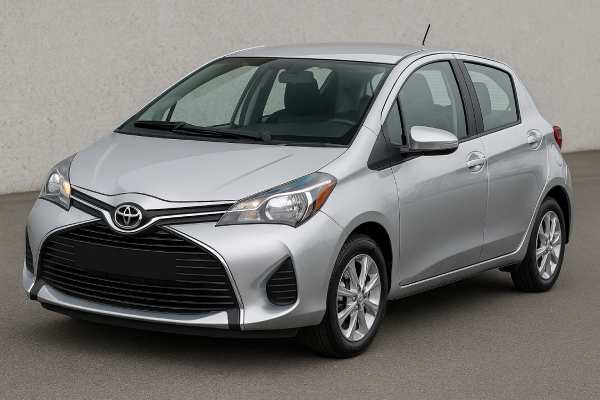
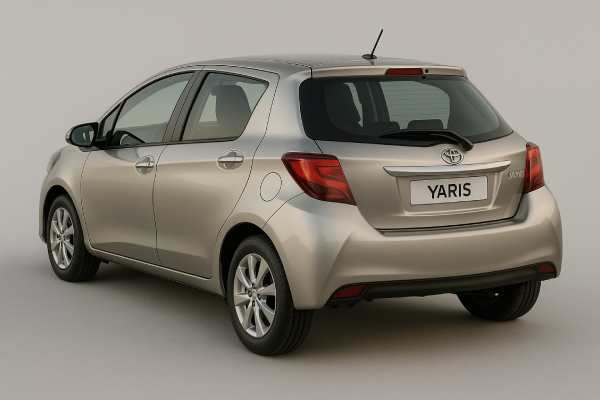
The Toyota Yaris (DJ) with the Skyactiv-G 1.5 engine is an interesting car because it blends Toyota branding and aftersales support with Mazda’s lightweight Skyactiv engineering. Sold in various markets between 2016 and 2018 (often as the Yaris iA or Mazda2 sedan), it targets drivers who want low running costs, tidy handling, and modern safety equipment without paying premium money. Under the bonnet you get a 1.5-litre high-compression petrol engine that favours efficiency and response over outright power, paired with a six-speed manual or automatic. The chassis is light but stiff, the steering is precise, and safety tech is generous for a small sedan of this era. At the same time, rear space, boot opening size, and motorway noise remind you that this is still a subcompact platform. This guide walks through specs, real-world performance, reliability, maintenance, and how it compares to rivals.
Top Highlights
- Strong fuel economy from the Skyactiv-G 1.5, especially on mixed city–motorway use.
- Lively steering and chassis tuning make the Yaris (DJ) feel more “Mazda” than typical economy sedans.
- Generally robust powertrain with timing chain and long-life coolant intervals when serviced on time.
- Watch for infotainment glitches, A/C issues, and corrosion on underbody components in salted climates.
- Aim for engine oil and filter changes every 10,000–15,000 km or 12 months, whichever comes first.
Navigate this guide
- Toyota Yaris DJ 1.5 overview
- Specifications for Yaris DJ 1.5
- Yaris DJ trims and safety
- Reliability and issues Yaris DJ
- Maintenance and buying guide
- Driving impressions and performance
- How Yaris DJ compares to rivals
Toyota Yaris DJ 1.5 overview
The Toyota Yaris (DJ) with the Skyactiv-G 1.5 is essentially a rebadged Mazda2 (DJ) sedan wearing Toyota badges and supported by Toyota’s dealer network. Underneath the styling, platform, powertrain and cabin layout are Mazda-engineered, which is good news if you care about steering feel, efficiency, and long-term durability. The car was produced roughly from 2016 to 2018, depending on market, and positioned as a value-packed subcompact with big-car safety tech.
The 1.5-litre Skyactiv-G engine uses a relatively high compression ratio, lightweight internals, and direct injection to deliver around 106 hp and roughly 139 Nm of torque while keeping fuel consumption low for its class. In everyday driving, it feels keener than the numbers suggest because the car is light and the gearing is short in the lower ratios. Six-speed manual and six-speed automatic transmissions are both common, with the automatic tuned for smooth, early upshifts rather than aggressive performance.
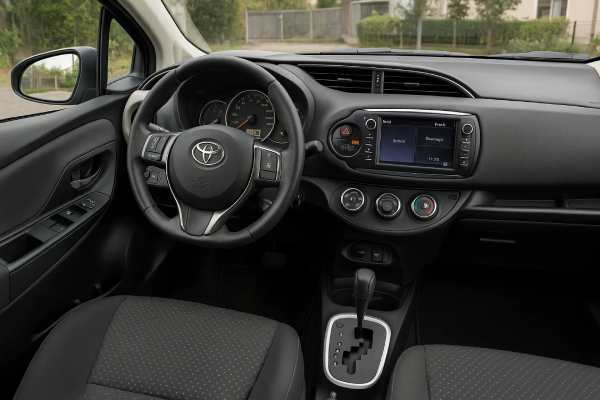
Inside, the Yaris (DJ) follows Mazda’s simpler, driver-focused layout rather than Toyota’s more upright designs. You typically get a central screen on top of the dash, rotary controller on the console in many trims, and a straightforward three-dial instrument cluster. Materials are mostly hard plastics but well assembled, with a mature design that has aged better than some more stylised rivals.
In terms of use case, the Yaris DJ suits:
- Urban commuters who want a small footprint, easy parking, and light controls.
- High-mileage drivers who prioritise economy and reliability over power.
- First-time buyers who value strong safety ratings and modern active safety aids.
Its main compromises are modest rear legroom and headroom for tall adults, a sedan boot that is long but not very tall, and some road and tyre noise on coarse surfaces at motorway speeds. Overall, though, it feels like a genuinely engineered car rather than a bare-bones budget special.
Specifications for Yaris DJ 1.5
This section focuses on the Skyactiv-G 1.5 petrol Yaris (DJ) sedan with approximately 106 hp, as commonly sold between 2016 and 2018. Figures can vary slightly by market, transmission, and emissions standard, so always cross-check against your VIN and local documentation.
Engine and performance
| Item | Value | Notes |
|---|---|---|
| Engine code | P5-VPS Skyactiv-G 1.5 | Mazda-designed inline-four |
| Layout and valvetrain | Inline-4, DOHC, 16 valves | Chain-driven cams |
| Displacement | 1.5 l (1,496 cc) | Oversquare design |
| Induction | Naturally aspirated | No turbocharger |
| Fuel system | Direct injection | High-pressure pump and injectors |
| Compression ratio | Approx. 12.0–13.0 : 1 | Varies by market and fuel standard |
| Max power | ~106 hp (79 kW) @ 6,000 rpm | Typical Skyactiv-G 1.5 tune |
| Max torque | ~139 Nm (103 lb-ft) @ 4,000 rpm | Manual and auto similar |
| Emissions standard (typical) | Euro 5/6 or ULEV II/III | Market dependent |
| Timing drive | Chain | No scheduled replacement |
| Recommended fuel | Unleaded petrol, usually 87–91 RON | Check local manual |
Fuel economy and efficiency
| Item | Value (typical) |
|---|---|
| Combined consumption (auto) | ~6.7 l/100 km (35 mpg US / 42 mpg UK) |
| Combined consumption (manual) | ~6.9 l/100 km (34 mpg US / 41 mpg UK) |
| Real-world mixed (owner reports) | ~6.0–7.0 l/100 km (34–39 mpg US) |
| Real-world highway @ 120 km/h | Typically 6.5–7.2 l/100 km |
| Aerodynamic drag coefficient (approx.) | Around 0.29–0.30 |
Transmission and driveline
| Item | Value |
|---|---|
| Transmission types | 6-speed manual (6MT), 6-speed automatic (6AT) |
| Drive type | Front-wheel drive (FWD) |
| Final drive ratio | ~3.7–3.8 |
| Differential | Open |
| Manual shift feel | Light, short throw, slightly notchy when cold |
| Automatic character | Smooth, economy-biased, downshifts on moderate throttle |
Chassis and dimensions
| Item | Value |
|---|---|
| Platform | Mazda DJ global small platform |
| Front suspension | MacPherson strut, coil springs |
| Rear suspension | Torsion beam with coil springs |
| Steering | Electric power steering, rack-and-pinion |
| Front brakes | Ventilated discs |
| Rear brakes | Solid discs (in many markets) |
| Wheels and tyres (common) | 185/60 R16 on 16″ alloys |
| Length | ~4,361 mm (171.7 in) |
| Width | ~1,694 mm (66.7 in) |
| Height | ~1,486 mm (58.5 in) |
| Wheelbase | 2,570 mm (101.2 in) |
| Ground clearance | ~150 mm (5.9 in) |
| Turning circle (kerb-to-kerb) | ~9.4 m (30.8 ft) |
| Kerb weight | ~1,120–1,150 kg (2,469–2,535 lb) |
| Fuel tank capacity | ~44 l (11.6 US gal / 9.7 UK gal) |
| Boot volume | ~380–382 l (VDA, seats up) |
Performance and capability
| Item | Value (approximate) |
|---|---|
| 0–100 km/h (0–62 mph), 6MT | ~9.4–9.8 s |
| 0–100 km/h, 6AT | ~10.5–11.0 s |
| Top speed | ~185 km/h (115 mph) |
| 100–0 km/h braking distance | ~36–38 m (dep. on tyres/surface) |
| Towing (braked) | Often not rated / modest only |
| Roof load | Check local handbook; typically ~50 kg |
Fluids and service capacities (typical)
Always verify these figures for your specific car and market.
| System | Specification (typical) | Capacity (approx.) |
|---|---|---|
| Engine oil | 0W-20, API SN/ILSAC GF-5 or later | ~4.0–4.3 l (4.2–4.5 qt) |
| Coolant | Long-life FL-22 type | ~5.0–5.5 l |
| Manual gearbox | 75W-80 GL-4 | ~2.5 l |
| Automatic gearbox | ATF approved for 6AT (Mazda ATF FZ type) | ~6–7 l (total fill) |
| Brake fluid | DOT 3 or DOT 4 | Fill to “MAX” only |
| A/C refrigerant | R-134a (most markets) | ~400–500 g |
Electrical and ignition
| Item | Value (typical) |
|---|---|
| Alternator output | ~100–110 A |
| 12 V battery | ~45–55 Ah, JIS-size battery |
| Spark plugs | Long-life iridium |
| Plug change interval | ~120,000 km (75,000 mi) |
Yaris DJ trims and safety
Because this car is Mazda-based but Toyota-badged in many markets, trim naming and equipment can be confusing. Mechanically, however, almost all Yaris (DJ) Skyactiv-G 1.5 models share the same engine, suspension layout, and brake hardware. What changes between trims is mainly equipment, wheels, and interior finish.
In North America, the car appeared first as the Scion iA, then as the Toyota Yaris iA and later the Yaris sedan. Trims were usually simple: one main grade with optional automatic transmission and a few cosmetic or convenience extras. Even the base cars tended to include alloy wheels, a 7-inch infotainment screen, keyless entry, air conditioning, cruise control, and a rear-view camera. Higher-spec versions added touches such as leatherette upholstery, proximity key, and extra audio speakers.
In other markets where Mazda sold the same DJ sedan or hatch directly, trim structures used familiar Mazda names (Sport, Touring, GT, etc.) but again shared core mechanicals. Toyota-badged versions typically kept Mazda’s cabin design and switchgear, so you will notice Mazda fonts in the gauges and Mazda-style controls around the infotainment controller.
Mechanically relevant trim differences to watch for:
- Wheel and tyre packages: 15″ steel vs 16″ alloys can slightly alter ride and steering feel.
- Headlights: halogen reflectors are common; some markets got LED units with better output.
- Interior heaters and seat warmers: present on higher trims in colder markets.
- Audio and infotainment: base 4-speaker vs 6-speaker systems; some trims add navigation.
On the safety side, the Yaris (DJ) benefits from the Mazda2’s strong crash structure. Independent crash testing of the Mazda2 on which this car is based shows robust performance for a small vehicle, with good adult and child protection scores. For Toyota-badged versions you effectively inherit that crash engineering.
For active safety, most Toyota Yaris (DJ) cars include:
- ABS with EBD and brake assist
- Electronic stability control and traction control
- Hill-start assist
- Tyre pressure monitoring (market-dependent)
- Front, side, and curtain airbags (six in many markets)
Many cars also feature low-speed automatic emergency braking and lane departure warning, often marketed under Mazda’s i-Activsense suite or Toyota-branded safety systems depending on badge. This is advanced equipment for an affordable small sedan of this era and contributes to strong real-world crash performance.
Child-seat provision is good, with ISOFIX/LATCH anchor points on the rear outboard seats and clearly marked top tether anchors. The rear bench is narrow, so two child seats fit better than three, but access is acceptable thanks to a reasonably large rear door opening for a compact sedan.
Overall, you can treat any Yaris (DJ) Skyactiv-G 1.5 with full airbag count and active safety pack as a safe choice for city and commuter use, especially when compared with older or more basic subcompacts still on the road.
Reliability and issues Yaris DJ
The Yaris (DJ) with the Skyactiv-G 1.5 enjoys a strong reputation for reliability, largely inherited from the Mazda2. Most owners experience only routine wear items if the car is serviced on schedule. Still, a few patterns are worth understanding when assessing a used example.
Common and low-to-medium-cost issues
- Infotainment glitches (common, low cost): Touchscreen freezing, random reboots, or slow response can appear on some cars. Root causes are usually ageing software or corrupted data on the internal storage. A dealer software update or reset often repairs this, sometimes combined with replacing the connectivity master unit if faults persist.
- Suspension knocks (common, low to medium cost): Clunks over sharp bumps, especially from the front, often trace to worn anti-roll bar links or bushings. On high-mileage cars, front lower control arm bushes and rear torsion beam bushes can also age. Replacement parts are not expensive and restoring the suspension tightens the car dramatically.
- Interior rattles (common, low cost): Because the cabin is relatively lightly trimmed, squeaks from door cards, dashboards, or rear shelf panels may appear. These are mostly nuisance issues addressed with felt tape, clips, or padding.
Occasional and medium-cost issues
- Air conditioning performance (occasional, medium cost): Some owners report weak A/C output at higher mileages. Causes include low refrigerant from small leaks, blocked cabin filters, or occasionally evaporator or compressor issues. A proper leak test and dye inspection are recommended before recharging.
- Direct injection carbon build-up (occasional, medium cost): Like many direct-injected petrol engines, the Skyactiv-G can accumulate carbon on intake valves over long, short-trip-heavy use. Symptoms include rough idle and sluggish response. Walnut shell blasting or chemical intake cleaning at high mileage can restore performance.
Rare but higher-impact issues
- Water leaks and corrosion (rare, seriousness varies): In regions with heavy road salt, underbody corrosion on suspension arms, subframes, and exhausts can appear earlier than expected. Treat early surface rust, and inspect rear wheel arches, inner sills, and front subframe. Severe corrosion can be a reason to walk away from a poorly maintained car.
- Clutch wear on manuals (use-dependent): City-driven cars with inexperienced drivers can wear clutches faster than expected (under 100,000 km). Check for high biting point, slip under load, or judder. Replacement is straightforward but not cheap, so factor it into price negotiations.
Recalls, TSBs, and service campaigns
Depending on market, the Yaris (DJ) and its Mazda2 twin have seen recalls for items such as:
- Airbag inflators or control modules on certain VIN ranges.
- Pre-collision system calibration issues, where the system may brake unexpectedly or fail to brake when required.
- Fuel system components, including fuel pump impellers in some broader Toyota campaigns.
The safest approach is always to:
- Use the official Toyota or Mazda VIN recall checker for your region.
- Ask the seller for dealer printouts or digital records confirming recall completion.
- Verify that any applicable software updates for engine, transmission, and safety systems have been applied.
Pre-purchase checks
When inspecting a Yaris (DJ) 1.5:
- Look for full service history with regular oil changes (preferably 0W-20) and documented brake fluid and coolant changes.
- Scan for warning lights, especially ABS, stability control, and airbag indicators.
- Test the infotainment system thoroughly and confirm Bluetooth, audio, and camera operation.
- Listen for suspension noise over speed bumps and rough roads.
- Check under the car for corrosion on suspension arms, exhaust, and subframes.
- Confirm any recall work has been completed.
With these checks, most buyers will find the Yaris DJ to be a low-drama, predictable car with few serious weaknesses.
Maintenance and buying guide
A well-maintained Yaris (DJ) Skyactiv-G 1.5 should deliver a long, low-cost life. Below is a practical service framework that aligns with typical manufacturer guidance while adding some preventative steps many specialists recommend.
Core maintenance schedule (typical use)
Always adapt to your region’s official schedule and your driving profile.
- Engine oil and filter: Every 10,000–15,000 km or 12 months, whichever comes first. Use quality 0W-20 meeting the required API/ILSAC standards. Shorter intervals (10,000 km) are wise for heavy city use.
- Engine air filter: Inspect every 20,000 km; replace around 30,000–40,000 km or sooner in dusty areas.
- Cabin (pollen) filter: Replace every 15,000–20,000 km or annually to protect A/C performance.
- Coolant: Long-life coolant is often first replaced around 10 years or 160,000–200,000 km, then every 5 years or 100,000 km. Check condition at each service.
- Spark plugs: Iridium plugs typically last 100,000–120,000 km. Replace earlier if misfire or rough running appears.
- Fuel filter: Usually integrated with the in-tank pump and not a routine service item. Have it inspected or replaced if fuel pressure or delivery problems arise.
- Timing chain and guides: No fixed replacement interval; listen for rattles at cold start and check for timing correlation faults if engine codes appear. Replace chain, guides, and tensioner only when symptoms or diagnostic evidence justify it.
- Serpentine/auxiliary belt: Inspect annually after 60,000 km; replace around 90,000–120,000 km or at the first signs of cracking or noise.
- Manual gearbox oil: Refresh every 60,000–100,000 km to maintain shift quality.
- Automatic transmission fluid: Some documentation calls it “lifetime”, but changing ATF around 60,000–90,000 km under severe use can prolong valve body and torque converter life.
- Brake fluid: Replace every 2 years regardless of mileage.
- Brake pads and discs: Inspect every 15,000–20,000 km; city use wears fronts faster.
- Wheel alignment and tyre rotation: Rotate tyres every 10,000–15,000 km and check alignment yearly or after impacts.
- 12 V battery: Test annually after year 3; many last 4–6 years.
- Steering and suspension: Inspect bushes, joints, and dampers at each major service; replace worn items to preserve ride and tyre life.
Fluid specifications snapshot
- Engine oil: 0W-20 synthetic, API SN/GF-5 or later.
- Coolant: FL-22 long-life, premix or concentrate as specified.
- Manual gearbox oil: 75W-80 GL-4.
- Automatic transmission fluid: ATF approved for the 6-speed automatic used in the DJ platform.
- Brake fluid: DOT 3 or DOT 4.
Always verify torque values and exact capacities in an official manual, but as a guide, wheel nuts typically sit around 100–120 Nm, and oil drain plugs in the 30–40 Nm range.
Buyer’s checklist
When shopping for a used Yaris (DJ) 1.5:
- Service book and invoices: Look for consistent oil changes, brake fluid changes every 2–3 years, and timely coolant replacement.
- Test drive: Ensure smooth idle, clean acceleration, no hesitation, and no unusual noises from engine, gearbox, or suspension.
- Gearbox behaviour: For manual, check clutch take-up and for slip. For automatic, check for smooth, quick shifts with no flare or harsh engagement.
- Electrics: Verify all windows, locks, mirrors, lighting functions, and infotainment features, including steering wheel buttons and reversing camera.
- Body and corrosion: Inspect under seals, lower door edges, wheel arches, and rear subframe for rust or accident repairs.
- Tyres: Uneven wear suggests alignment or suspension issues; budget for replacement if tyres are mismatched or near the wear bars.
- Recalls and campaigns: Ask for proof of completion or check VIN with Toyota/Mazda.
Long-term durability outlook
With regular maintenance and prompt resolution of minor issues, the Yaris (DJ) Skyactiv-G 1.5 is capable of very high mileages. The chain-driven engine, robust 6-speed transmissions, and simple torsion-beam rear suspension all contribute to low long-term risk. Consumables are affordable, and both Toyota and Mazda dealer networks can service the car. For a used buyer, this model hits a strong balance of efficiency, safety, and longevity.
Driving impressions and performance
The driving experience is where the Yaris (DJ) most clearly reflects its Mazda heritage. It feels more like a small driver’s car than a simple commuter appliance.
Ride and handling
The suspension tuning leans toward controlled and slightly firm rather than soft. At city speeds, the car deals well with average roads, though sharp potholes can be felt more than in softer rivals. On twisting roads, body roll is well managed and the car changes direction eagerly, helped by the relatively low weight and a quick steering rack.
Steering effort is light at low speeds and firms up on the motorway. While feedback is filtered compared with older hydraulic systems, there is enough information through the wheel to place the car accurately in bends. The rear torsion beam axle contributes to predictable behaviour and low running costs; the car feels secure and neutral unless badly provoked, at which point the stability control steps in smoothly.
Powertrain character
The Skyactiv-G 1.5 is a rev-happy engine that rewards drivers who are willing to use the upper half of the rev range. Below 2,000 rpm it is modest but adequate; from 3,000–6,000 rpm it pulls with more enthusiasm than the output figures suggest. Because the engine is naturally aspirated, there is no turbo lag and throttle response is clean.
The six-speed manual gearbox has a short, positive throw and pairs well with the engine, giving you good control over gear selection and making the car genuinely enjoyable on a winding road. The automatic transmission is tuned mainly for economy, favouring early upshifts and low revs. It responds acceptably to kickdown but is not a performance gearbox; manual mode can help on hills or during overtaking.
Noise, vibration, and harshness (NVH)
At idle and low load, the 1.5-litre engine is smooth and subdued. At higher revs you can clearly hear it, but the sound is generally pleasant rather than harsh. Road and tyre noise are more noticeable, especially on coarse motorway surfaces; this is typical of small, light cars with modest sound insulation. Wind noise is reasonably well controlled up to typical motorway speeds.
Real-world efficiency
Owners commonly see:
- Around 6.0–7.0 l/100 km (34–39 mpg US) in mixed driving.
- Slightly better figures on steady 90 km/h routes and slightly worse in dense city traffic.
- A modest increase in consumption during cold winters or with heavy A/C use.
Driving style has a significant impact: gentle acceleration and anticipating traffic make a big difference because the engine is efficient when lightly loaded.
Braking and stability
The disc brake setup provides consistent stopping power for a car of this weight. Pedal feel is progressive, and the ABS calibration is sensible, avoiding the “grabbiness” found in some budget cars. Stability and traction control are tuned to intervene early but not abruptly, which is reassuring in low-grip conditions.
Load and occasional towing
The Yaris (DJ) is primarily a people-and-luggage car rather than a tow vehicle. In markets where light towing is permitted, modest braked trailer ratings can be available, but performance with a trailer will be relaxed rather than strong. With four adults and luggage, acceleration is clearly reduced yet still adequate, and the chassis remains composed as long as tyres and brakes are in good condition.
Overall, the Toyota Yaris (DJ) Skyactiv-G 1.5 strikes an appealing balance: it is economical and easy to live with, but also more enjoyable to drive than many direct rivals.
How Yaris DJ compares to rivals
In the 2016–2018 subcompact sedan and hatchback space, the Yaris (DJ) competes with cars such as the Honda Fit/Jazz, Hyundai Accent, Kia Rio, Ford Fiesta, Nissan Versa, and other budget-oriented models. Its distinctiveness comes from the Mazda underpinnings combined with Toyota branding in some markets.
Against Honda Fit/Jazz
- The Fit/Jazz offers a more versatile interior, especially with its flexible rear seating and more upright cabin, making it a better choice if you frequently carry bulky cargo.
- The Yaris (DJ) counters with sharper steering and arguably more cohesive driving dynamics, feeling more refined on a winding road.
- Reliability is strong for both; the decision often comes down to interior space versus driver engagement.
Against Hyundai Accent and Kia Rio
- Accent and Rio models of the same era often undercut the Yaris (DJ) on purchase price and can be more generously equipped at base level.
- The Yaris tends to feel more solidly damped and has a more sophisticated engine and gearbox combination, especially in how the 1.5 and 6-speed transmissions work together.
- Korean rivals have improved greatly in reliability, but Toyota/Mazda residual values typically remain stronger in many markets.
Against Ford Fiesta
- The Fiesta is another driver-focused small car with very good steering and chassis tuning.
- However, automatic variants in some markets have had transmission issues, which hurt the car’s reputation. By contrast, the Yaris (DJ) uses a conventional torque converter automatic and simple torsion-beam rear axle, which are generally more robust.
- Cabin quality and design preferences are subjective; some will prefer Ford’s style, others Mazda/Toyota’s cleaner layout.
Against Nissan Versa and similar budget sedans
- Budget rivals like the Versa often prioritise interior space and purchase price over driving finesse.
- The Yaris (DJ) usually offers better materials, more standard safety tech, and a far more engaging drive, at the cost of slightly less rear legroom and a higher transaction price.
Where the Yaris (DJ) stands out
- Strong active safety offering for the class and period, including available automatic emergency braking and lane departure warning.
- High efficiency without resorting to very small turbocharged engines, reducing complexity.
- A chassis that remains enjoyable to drive even after the novelty wears off, making long-term ownership more satisfying.
Where it compromises
- Rear space and boot access are adequate but not outstanding.
- Road noise can be higher than some rivals on rough surfaces.
- Equipment levels can feel sparse on the very base trims in certain markets.
For buyers who value driving feel, efficiency, and safety more than maximum interior room, the Toyota Yaris (DJ) Skyactiv-G 1.5 is one of the most well-rounded choices in its segment, especially as a used purchase where its reliability advantages come to the fore.
References
- Toyota Yaris iA | Technical Specs, Fuel consumption, Dimensions 2025 (Specifications Database)
- 2017 Yaris iA Product Information – Toyota USA Newsroom 2016 (Product Information)
- Mazda 2 – Euro NCAP Results 2015 2015 (Safety Rating)
- Mazda2 Owner’s Manual 2018 (Owner’s Manual)
Disclaimer
This article is for informational purposes only and is not a substitute for professional diagnosis, repair, or official service documentation. Specifications, torque values, service intervals, and procedures can vary by VIN, market, model year, trim level, and equipment. Always confirm critical data against the official owner’s manual, workshop manual, or technical information provided by Toyota, Mazda, or an authorised dealer before carrying out any work on your vehicle.
If you found this guide useful, please consider sharing it with other owners and enthusiasts on platforms such as Facebook or X/Twitter to help support our work and keep more drivers informed.