
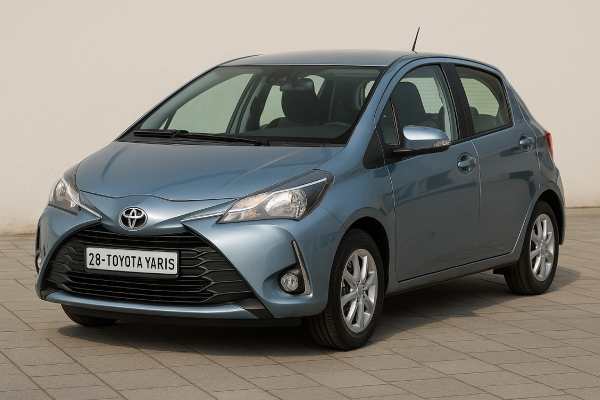
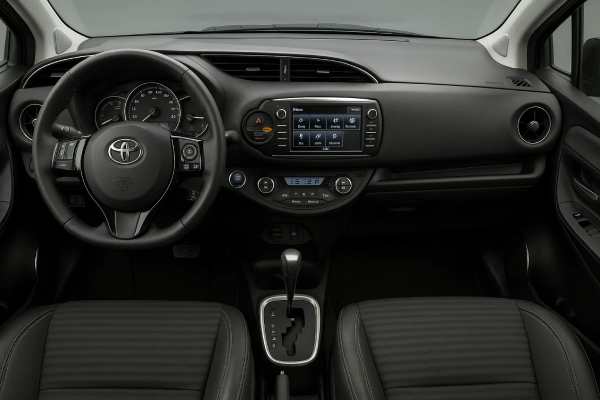
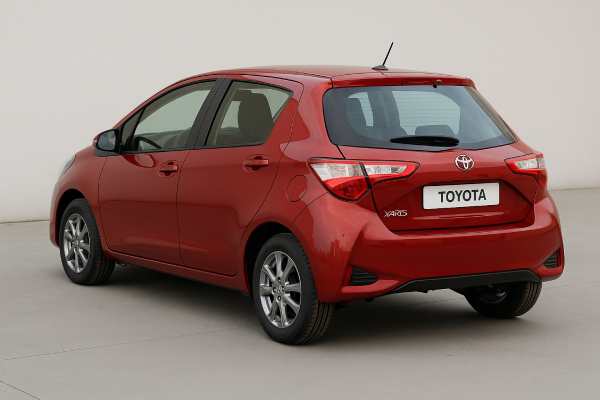
The facelifted Toyota Yaris (KSP130) 1.0 with the 1KR-FE three-cylinder engine sits at the base of the Yaris range, but it is far from a stripped-out compromise. Between 2014 and 2020 this version served as a dependable city tool for private owners, fleets, and driving schools that valued low running costs and easy ownership over outright performance. Light weight, simple engineering, and careful calibration for urban use make it an honest, predictable small car.
In this guide we focus on the facelift 1.0-litre petrol hatch, looking at the details that matter day to day: real specifications, how it drives, what usually goes wrong, and how to maintain it sensibly. If you are considering a used Yaris 1.0 or already own one, the aim is to give you a realistic view of strengths, limitations, and what to check before and after purchase. Look after it properly and the KSP130 tends to deliver exactly what you expect: quiet, economical work in the background.
At a Glance
- Very low fuel consumption for a non-hybrid when driven smoothly, especially in city and suburban use.
- Simple, chain-driven 1KR-FE petrol engine with a strong reputation for durability on regular maintenance.
- Compact exterior with a surprisingly usable cabin and boot for daily errands and short trips.
- Main risk areas are neglected oil changes, worn clutches on city cars, and age-related suspension wear.
- A 10,000–15,000 km or 12-month oil and filter interval is a good target for long engine life.
Section overview
- Toyota Yaris KSP130 in detail
- Technical data Yaris 1.0
- Yaris 1.0 trims and safety tech
- Reliability of 1KR-FE Yaris
- Maintenance and buying tips Yaris
- On-road performance and comfort
- KSP130 Yaris versus rivals
Toyota Yaris KSP130 in detail
The KSP130 designation applies to third-generation Yaris models powered by the 1.0-litre 1KR-FE petrol engine and built on the facelifted platform from 2014 onward. It is the entry-level petrol option in many European markets, sitting below the 1.33 and hybrid versions. The formula is simple: a small non-turbo three-cylinder, light body, front-wheel drive, and a manual gearbox.
The 2014 facelift brought more than just new bumpers and lights. Toyota stiffened the bodyshell with extra spot welds, revised suspension tuning, and added sound insulation in key areas. Inside, the dashboard moved to a more conventional layout with instruments directly ahead of the driver, updated materials, and improved infotainment on mid and high trims. The 1.0-litre variant shares this improved structure and cabin with more powerful models, so its entry-level status is more about performance than quality.
On paper, the 1KR-FE delivers around 68 hp (51 kW) at 6,000 rpm and about 95 Nm of torque at 4,300 rpm. That is modest, but the Yaris is a light car, typically under 1,050 kg depending on trim and equipment. In city and suburban use there is enough power to keep up with traffic, and the engine is happiest when it is allowed to rev. On motorways and steep hills, however, you will need to downshift and plan overtakes.
A key attraction of this engine is its simplicity. It uses port fuel injection, variable valve timing on the intake side, and a timing chain instead of a belt. There is no turbocharger, no direct-injection particulate filter, and no hybrid system to maintain. For many owners that means fewer expensive surprises over the car’s life, especially if service schedules are respected.
From a safety perspective, the facelift Yaris’s strengthened body and multiple airbags provide a solid passive base. Later model years with Toyota Safety Sense add modern driver-assistance features such as autonomous emergency braking and lane departure warning, bringing small-car safety closer to that of larger, newer vehicles. Altogether, the KSP130 1.0 is best understood as a rational, low-stress choice: not fast, but easy to park, inexpensive to own, and hard to upset.
Technical data Yaris 1.0
This section gathers the core specifications for the facelift Yaris 1.0 KSP130 with the 1KR-FE engine and 5-speed manual transmission. Values can vary slightly by market and trim, so always confirm against documentation for your exact VIN.
Engine and performance (1KR-FE 1.0 VVT-i)
| Item | Specification |
|---|---|
| Engine code | 1KR-FE |
| Type | Inline 3-cylinder, petrol, transverse |
| Valvetrain | DOHC, 4 valves per cylinder, VVT-i |
| Displacement | 998 cc (1.0 l) |
| Bore × stroke | ~71.0 × 84.0 mm |
| Compression ratio | Around 11.5 : 1 |
| Induction | Naturally aspirated |
| Fuel system | Port fuel injection |
| Maximum power | ~68 hp (≈51 kW) @ 6,000 rpm |
| Maximum torque | ~95 Nm @ 4,300 rpm |
| Emissions standard | Euro 6 (most facelift European models) |
| Timing drive | Chain (no fixed replacement interval) |
Figures are typical for European-spec facelift cars; exact numbers can differ slightly by market.
Transmission and driveline
| Item | Specification |
|---|---|
| Drive type | Front-wheel drive (FWD) |
| Gearbox | 5-speed manual |
| 1st gear | Approx. 3.5 : 1 |
| 2nd gear | Approx. 1.9 : 1 |
| 3rd gear | Approx. 1.3 : 1 |
| 4th gear | Approx. 1.0 : 1 |
| 5th gear | Approx. 0.85 : 1 |
| Final drive | Around 4.3 : 1 |
| Differential | Open |
Some markets also offered an automated manual or CVT-type option paired with the 1.0-litre engine, but the mainstream configuration in Europe is the 5-speed manual.
Chassis, dimensions and weights
| Item | Value (typical) |
|---|---|
| Overall length | ~3,950 mm |
| Overall width | ~1,695 mm |
| Overall height | ~1,510 mm |
| Wheelbase | ~2,510 mm |
| Front / rear track | ~1,470 / 1,460 mm (15″ wheels) |
| Kerb weight range | ~980–1,040 kg |
| Gross vehicle weight (GVW) | ~1,450 kg |
| Fuel tank capacity | ~42 litres |
| Luggage capacity (rear up, VDA) | Around 286 litres |
| Turning circle (kerb-to-kerb) | Roughly 9.6–10.2 m |
Suspension, steering and brakes
| System | Specification |
|---|---|
| Front suspension | MacPherson struts with coil springs and anti-roll bar |
| Rear suspension | Torsion beam with coil springs |
| Steering | Electric power-assisted rack and pinion |
| Front brakes | Ventilated discs (approx. 258 mm) |
| Rear brakes | Drums (discs on some higher or sporty trims) |
| Wheel and tyre | 14″ steel (175/70 R14) common; 15″/16″ on higher trims |
Performance and efficiency
| Metric | Value (approximate) |
|---|---|
| 0–100 km/h (0–62 mph) | Around 15–16 seconds |
| Top speed | Around 155 km/h (≈96 mph) |
| Combined fuel economy (NEDC) | Around 4.3–4.5 L/100 km (mid-60s mpg UK) |
| City / extra-urban | Roughly 5.0–5.5 / 3.8–4.1 L/100 km |
| CO₂ emissions | Just under 100 g/km on many variants |
Real-world mixed consumption for most drivers tends to sit near 5.0–6.0 L/100 km depending on traffic and driving style.
Safety and driver assistance – key facts
Equipment varies by model year and trim, but many facelift Yaris 1.0 cars offer:
- Multiple airbags: front, side, curtain, often a driver’s knee airbag
- ABS with electronic brake-force distribution and Brake Assist
- Stability control and traction control
- Isofix child-seat anchor points on rear seats
Later cars with Toyota Safety Sense can also include:
- Pre-Collision System (autonomous emergency braking)
- Lane Departure Alert
- Automatic High Beam
- Road Sign Assist (on better-equipped trims)
Yaris 1.0 trims and safety tech
Trim names for the facelift Yaris 1.0 differ between countries, but the underlying structure is similar: a basic equipment grade, one or two mid-level trims, and a better equipped top version. The mechanical package stays largely the same regardless of trim, which simplifies choosing a used car.
Typical base trim features
Entry-level Yaris 1.0 models usually include:
- Manual air conditioning
- Front electric windows
- Central locking (often remote)
- Basic audio with USB or AUX input
- 14″ steel wheels with hubcaps
- Height-adjustable driver’s seat and tilt-adjustable steering wheel
These cars provide everything needed for simple daily driving but few luxuries. For driving schools and budget-focused buyers, the low equipment level is often a benefit: fewer features to break and lower replacement costs.
Mid and high trims
Moving up the range typically adds:
- 15″ alloy wheels (and sometimes 16″ on sportier packs)
- Body-coloured mirrors and handles
- Front fog lamps or LED daytime running lights
- Touchscreen infotainment with Bluetooth and reversing camera
- Leather-wrapped steering wheel and gear knob
- Split-folding rear seat with additional adjustments
- Cruise control and steering-wheel audio controls on some versions
Range-topping trims can bring automatic climate control, more advanced infotainment, interior colour packs, and additional sound-insulation measures, making the cabin feel more premium without altering the fundamental driving character.
Identifying trims and equipment
Quick external clues:
- Steel wheels and simpler headlights usually indicate lower trims.
- Alloys, fog lights, and privacy glass often signal a mid or higher trim.
- “Chrome eyebrow” or unique bumper details can indicate a cosmetic pack.
Inside, the presence of a touchscreen, automatic climate panel, and multi-function steering wheel are good signs you are looking at a higher-spec car. Some markets also include distinctive seat fabrics or contrasting stitching on more expensive versions.
Safety equipment by trim
Basic facelift Yaris models already offer multiple airbags and stability control. The big step forward comes with Toyota Safety Sense, which became standard or widely available on many 2017-onwards cars. On these vehicles, even modest trims often gain:
- Autonomous emergency braking that works at city speeds and, in some versions, at higher speeds
- Lane departure warning to help prevent unintentional lane changes
- Automatic high beam using a camera at the top of the windscreen
Higher trims may add road sign recognition and more complex instrument-cluster displays. When shopping used, it is worth confirming Safety Sense presence by looking for the camera housing on the windscreen and checking the menu system for settings.
For families, also check for Isofix anchor points, top-tether locations, and whether rear head restraints and seatbelt arrangements suit your child seats. For older relatives or less confident drivers, a trim with rear parking sensors or a reversing camera can make the car significantly easier to manoeuvre.
Reliability of 1KR-FE Yaris
In general, the facelift Yaris 1.0 with the 1KR-FE engine is considered a very dependable small car. Most serious issues can be traced back to poor maintenance, high-stress city usage, or age-related wear rather than inherent design flaws.
Engine and ancillaries
The 1KR-FE is a compact three-cylinder designed for efficiency and low emissions. Key points:
- Timing chain, not belt: There is no scheduled replacement interval. Chains can stretch if oil changes are ignored or the engine is repeatedly run low on oil. Symptoms include rattling on start-up, loss of performance, or engine management faults relating to cam–crank correlation.
- Oil quality and level matter: The sump is small, and the engine works hard at motorway speeds. Long intervals, cheap oil, or infrequent level checks can lead to increased wear and consumption. Once oil use becomes significant, damage is often already done, so preventive maintenance is critical.
- Coils and plugs: After years of heat cycles, ignition coils and spark plugs can cause misfires and rough running. These are relatively easy, mid-cost repairs and usually do not indicate deeper problems if addressed promptly.
Cooling system
The cooling system itself is uncomplicated but, as cars age, radiators, water pumps, and plastic fittings can develop minor leaks. Watch for:
- Dropping coolant level in the expansion tank
- Dried pink residue around hose joints or radiator seams
- A cooling fan that runs excessively often
Any evidence of overheating should be taken seriously. Aluminium cylinder heads dislike heat, and repeated overheating can warp the head or damage the head gasket.
Fuel and intake
Deposits in the throttle body or EGR system, if fitted, can cause unstable idle or hesitation. Cleaning is usually straightforward for a workshop. Fuel pumps and injectors are not common failure points on well-maintained cars, but contaminated fuel or long-term storage can cause issues.
Transmission and driveline
The 5-speed manual gearbox is generally robust. More commonly, the clutch is the wear item:
- City-only cars and learner-driver vehicles can need a clutch earlier than average.
- Symptoms include slipping under load, a high biting point, or judder when pulling away.
Driveshafts and CV joints are not particularly problematic but should be checked for split boots and grease leaks on older or high-mileage examples.
Suspension, steering and brakes
Over time, especially with potholed roads and speed bumps, these components can wear:
- Front anti-roll-bar drop links and bushes can knock over bumps.
- Rear torsion-beam bushes can degrade, leading to vague handling or uneven tyre wear.
- Front dampers may seep or lose effectiveness as the car ages.
Steering systems are usually reliable, but any grinding or stiff spots when turning the wheel warrant investigation.
Body and corrosion
The Yaris generally resists rust well, but no small car is immune:
- Inspect the rear axle beam, sills, and floorpan seams for corrosion.
- Check under door seals and around the tailgate aperture for trapped moisture.
- Ensure drain holes in doors and tailgate are not blocked.
Recalls and service campaigns
Over its life, the Yaris range has been subject to various recall campaigns – for example, on airbag systems or electronics. Before purchasing, it is wise to:
- Run the VIN through the official Toyota recall checker for your region.
- Ask a dealer to print out a record of completed campaigns and any outstanding work.
Doing so ensures that safety-critical updates have been applied and can be a useful indicator of how carefully previous owners maintained the car.
Maintenance and buying tips Yaris
A Yaris 1.0 can deliver very low total ownership costs if maintained thoughtfully. This section gives a practical outline; always compare with the official schedule for your specific market and model year.
Practical maintenance schedule (typical)
- Engine oil and filter
- Every 10,000–15,000 km or 12 months, whichever comes first.
- Use the specified low-viscosity oil (often 0W-20 or 5W-30) that meets Toyota’s standards.
- Engine air filter
- Inspect every service; replace about every 30,000 km or sooner in dusty conditions.
- Cabin (pollen) filter
- Replace every 15,000–20,000 km or every 1–2 years to keep HVAC performance and interior air quality good.
- Spark plugs
- Iridium plugs typically last 90,000–100,000 km; inspect earlier if misfires or hard starting appear.
- Coolant
- Toyota Super Long Life Coolant is usually long-life filled from the factory. After the initial long interval, many owners choose 5-year changes. For older cars with unknown history, an earlier refresh is sensible.
- Brake fluid
- Change every 2 years regardless of mileage. Brake fluid absorbs moisture and can corrode components from the inside.
- Manual transmission oil
- Often “filled for life” officially, but changing around 80,000–100,000 km can make shifts smoother and prolong gearbox life.
- Auxiliary belt and hoses
- Inspect annually from around 60,000 km; replace if cracked, noisy, or frayed.
- Timing chain
- No fixed interval. Listen for rattles at start-up and diagnose promptly if present.
- 12 V battery
- Test yearly after about 5 years of age; replace proactively rather than waiting for complete failure, especially in cold climates.
For DIY work, always use the official torque values from service documentation for wheel bolts, spark plugs, sump plugs, and other critical fasteners.
Buyer’s guide checklist
When evaluating a used facelift Yaris 1.0:
- Paperwork and history
- Look for yearly service stamps or invoices; long gaps or missing records are a warning.
- Check that the mileage is consistent across service and inspection documents.
- Engine condition
- Start the car cold if possible. It should start quickly and settle to a smooth idle without extended rattling.
- Check for warning lights on the dash and scan for stored codes if you can.
- Inspect for oil leaks and check the oil level and condition.
- Cooling system
- Coolant should be clean and at the correct level. Oil contamination or repeated top-ups suggest deeper issues.
- Look for damp patches or staining near the radiator, water pump, and heater hoses.
- Transmission and clutch
- Gear selection should feel light and precise. No gear should graunch or resist engagement.
- On a test drive, accelerate hard in a higher gear; if the revs rise without a matching increase in speed, the clutch is slipping.
- Steering, suspension and brakes
- Listen for knocks over bumps; test the car at low and moderate speeds.
- The car should track straight with a centred steering wheel on a flat road.
- During hard braking, the car should stop straight and confidently without vibration.
- Body and interior
- Check for colour mismatches or uneven panel gaps indicating poor accident repairs.
- Inspect the boot floor, spare wheel well, and under carpets for signs of water ingress.
- Safety and electronics
- Confirm operation of all lights, wipers, and the horn.
- Verify that any advertised features (touchscreen, cruise control, Safety Sense) are present and working.
- Ask a dealer to confirm recall completion using the VIN.
A Yaris that passes these checks and feels tight and consistent on the road is likely to provide many years of straightforward service.
On-road performance and comfort
The Yaris 1.0 KSP130 is tuned more for ease of use and efficiency than for excitement. Understanding that helps you get the best from it.
City and suburban driving
In town the Yaris feels very much in its element. Light steering and a short overall length make parking and tight manoeuvres easy. The clutch is forgiving, and the gearbox has a light, direct shift. The 1.0-litre engine pulls cleanly from low revs if you are gentle, but really comes alive when you let it spin past 3,000 rpm, where it sounds keener and responds more quickly.
Ride quality over speed bumps and patched surfaces is generally comfortable for a small car. The suspension soaks up typical city imperfections without crashing, though very sharp edges will still make themselves heard in the cabin.
Motorway and country roads
At highway speeds, the Yaris can cruise at typical limits without drama, but the engine will be turning at relatively high revs due to the short gearing. Wind and tyre noise are noticeable, though still acceptable for a supermini. For occasional long trips this is fine; for daily long-distance commuting, some buyers might prefer a larger-engined Yaris or a higher-class car.
On country roads, the car’s low weight and tidy suspension tuning make it feel agile and predictable. It leans a little in corners but remains composed and easy to place. The steering is accurate, if not especially rich in feedback.
Performance expectations
Objectively, the Yaris 1.0 is slow by modern standards. Expect 0–100 km/h in the mid-teens and modest in-gear acceleration. The key is to use the revs and gears intelligently:
- Drop to 3rd or 4th early for overtakes or motorway slip roads.
- Accept that with a full load of passengers and luggage, hills will require patience.
Once you adapt your driving style, the engine’s willingness to rev can be enjoyable in its own way.
Comfort and noise
Seat comfort is good for a city car, with decent adjustment and support in most trims. Taller drivers may want to test the driving position carefully, but many find it more comfortable than some rivals thanks to the relatively upright seating.
Noise levels are acceptable: the engine is quiet at low speeds and only becomes prominent when worked hard. Tyre and wind noise are more dependent on road surface and wheel size; higher-spec cars with larger wheels can be marginally noisier over rough asphalt.
Overall, the Yaris 1.0 offers a calm, predictable driving experience that suits learners, urban commuters, and anyone who prioritises ease of use over performance.
KSP130 Yaris versus rivals
When cross-shopping the facelift Yaris 1.0, you are likely to look at other small petrol hatchbacks such as the Volkswagen Polo 1.0, Ford Fiesta 1.0 non-turbo, Opel/Vauxhall Corsa 1.2, Hyundai i20 1.2, or Kia Rio 1.2. Each has its strengths, but the Yaris occupies a clear niche.
Where the Yaris stands out
- Reliability and longevity
Toyota’s reputation for durability is a major selling point, and the 1KR-FE engine is a proven design. The lack of turbocharging, complex injection, or hybrid hardware on this specific version simplifies long-term ownership. - Running costs
Fuel economy is strong for a non-hybrid, tyres and brakes are modest in size and cost, and service items are easy to source. Insurance groups are typically low, especially for post-facelift cars with modern safety equipment. - Safety for its age and class
With a rigid body and the availability of Toyota Safety Sense, later facelift cars offer a safety package that compares well with many rivals of the same era.
Where rivals may be stronger
- Performance and refinement
Turbocharged three-cylinder engines in some competitors provide stronger mid-range torque and more relaxed motorway performance. Larger-capacity four-cylinders can also feel smoother at constant speed. - Cabin polish and features
Some rivals deliver a more “upmarket” interior feel or more advanced infotainment options in higher trims. If you value soft-touch materials or the latest smartphone integration above all, they may appeal more. - Boot and cabin flexibility
Although the Yaris’s boot is competitive, certain competitors offer slightly more capacity or extra tricks like sliding rear benches.
Who should choose the Yaris 1.0
The facelift Yaris 1.0 is particularly well suited to:
- Drivers who spend most of their time in city and suburban environments.
- Owners who intend to keep the car for many years and prioritise dependability.
- New drivers who need light controls, good visibility, and a predictable chassis.
- Households looking for a second car that is cheap to run but still feels solid and safe.
If outright performance, premium interior feel, or high-tech options rank higher on your list than reliability and low running costs, you might prefer a turbocharged rival or a larger-engined Yaris variant. If you want something you can simply service, fill with fuel, and forget about most of the time, the KSP130 1.0 remains a very sensible choice.
References
- 170110M Tech Spec 2017 (Technical Specifications)
- Toyota Yaris 2017 (Safety Rating)
- 2017 Toyota Yaris achieves 5-star Euro NCAP safety rating 2017 (Safety Rating News)
- Owner’s Manual | Toyota Europe 2024 (Owner’s Manuals Portal)
Disclaimer
This article is intended for general informational purposes and does not replace professional diagnosis, repair, or the use of official service literature. Specifications, torque values, service intervals, and procedures can vary by VIN, model year, market, and equipment level. Always confirm any critical data against the official workshop manual, owner’s manual, and current technical information for your specific vehicle.
If you found this guide helpful, please consider sharing it with other owners or prospective buyers on platforms such as Facebook or X/Twitter. Your support helps make it possible to produce and maintain independent technical content like this.