
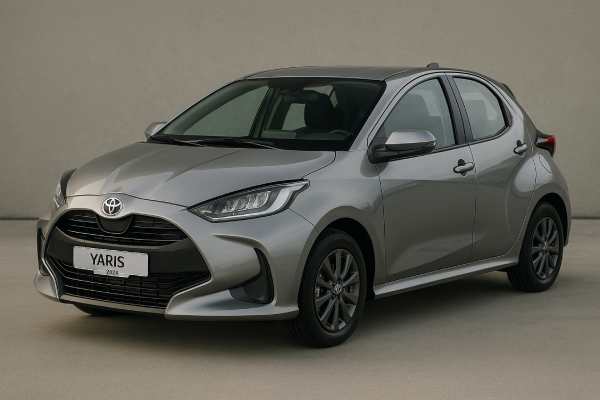
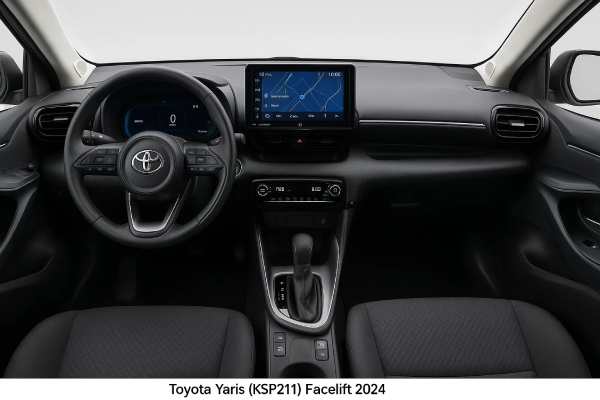

The 2024 facelift of the Toyota Yaris (MXPA11) with the 1.5 litre M15A-FKS petrol engine is a careful evolution of a car that was already one of the most rounded city hatchbacks in Europe. Built on Toyota’s GA-B platform, it keeps the same compact footprint and agile dynamics, but adds a more digital cabin, an expanded Toyota Safety Sense suite and detail refinements to comfort and refinement.
For buyers who want the simplicity of a conventional petrol engine instead of a hybrid, this 125 hp three-cylinder is the “driver’s” Yaris: light, rev-happy and economical when driven smoothly. At the same time, the facelift brings bigger infotainment screens, a configurable digital cluster on many trims, and over-the-air update capability for multimedia and driver-assistance systems in most markets.
This guide walks through the key specs, real-world performance, reliability expectations and maintenance needs so you can judge whether the facelifted MXPA11 1.5 fits your use case and budget.
Owner Snapshot
- Lively 1.5 three-cylinder with around 125 hp and a light GA-B chassis makes the facelifted Yaris feel eager in city and suburban driving.
- Compact length (about 3.94 m) and tight turning circle make it genuinely easy to park and thread through narrow streets.
- Updated Toyota Safety Sense adds more capable adaptive cruise, intersection AEB and extra lane-support logic on most trims.
- Early data suggests very low major-fault rates, but pay attention to software updates and ADAS sensor calibrations after glass or bumper work.
- Typical service interval is 15,000 km or 1 year (whichever comes first) for oil, checks and software, with larger inspections at 30,000 km / 2 years in many European markets.
Section overview
- 2024 MXPA11 Yaris in detail
- MXPA11 1.5 technical data
- Facelift trims and safety tech
- MXPA11 dependability and issues
- Servicing and buyer guidance
- On-road performance impressions
- MXPA11 rivals and positioning
2024 MXPA11 Yaris in detail
The facelifted MXPA11 Yaris continues with the same GA-B platform as the 2020–2023 car, but it feels more up-to-date to sit in and use. The 1.5 M15A-FKS engine remains a naturally aspirated three-cylinder petrol unit, usually quoted at around 125 hp in many European specifications, driving the front wheels through either a six-speed manual gearbox or Direct Shift CVT, depending on market and trim.
The visual changes are subtle: revised grille textures, new wheel designs and updated colour options rather than a full redesign. The big changes are inside and in the electronics. The facelift introduces a more advanced digital user experience with a configurable instrument display (7 or 12.3 inch depending on grade) and larger multimedia screens (9 or 10.5 inch), plus improved connectivity and, in some markets, a digital key.
This 1.5 non-hybrid variant targets drivers who want the benefits of the new interior and safety technology but prefer the slightly lower weight, simpler drivetrain and typically lower purchase price compared with the hybrid. For mixed motorway and rural use, or for drivers who clock fewer annual kilometres, the real-world fuel consumption gap to the hybrid may not justify the price difference.
In everyday use, the car remains a proper five-door supermini. Space in the front is generous for the class; rear legroom is adequate for adults on short journeys but still more comfortable for children or teenagers. The boot sits around the mid-200-litre range with the rear seats up, depending on measurement standard, which is competitive but not class-leading. Rear seatbacks fold to expand cargo space for bulky loads.
Overall, the facelifted MXPA11 1.5 Yaris is best viewed as a refined evolution of an already strong package: same basic character, with a more modern cabin and more active safety built in.
MXPA11 1.5 technical data
Engine and performance
For this generation, Toyota’s 1.5 M15A-FKS belongs to its Dynamic Force engine family, sharing design principles with the 2.0 and 2.5 engines in larger models. It uses high compression, a long stroke and efficient cooling to improve thermal efficiency while keeping emissions low.
Engine and efficiency (typical European 125 hp spec)
| Item | Value |
|---|---|
| Engine code | M15A-FKS |
| Layout and valves | Inline-3, DOHC, 4 valves per cylinder (12 valves total) |
| Displacement | 1.5 l (approx. 1490–1496 cc) |
| Bore × stroke | About 80.5 × 97.6 mm |
| Induction | Naturally aspirated |
| Fuel system | Direct plus port injection in many markets |
| Compression ratio | Around 14.0 : 1 |
| Max power | ≈125 hp (≈92 kW) around 6,600 rpm (market-dependent) |
| Max torque | ≈150–155 Nm in most 125 hp specs, typically around 4,700–5,000 rpm |
| Timing drive | Chain |
| Emissions standard | Euro 6d (or later updates, depending on registration year) |
| Official combined fuel use (WLTP) | Approx. 5.0–5.5 l/100 km, depending on wheels and gearbox |
| Aerodynamics | Drag coefficient around 0.31 with standard body and wheel package |
In real-world mixed driving, owners of the 1.5 manual often report averages in the low-to-mid 5 l/100 km range if driven gently, rising to 6–7 l/100 km with heavy city use or sustained high-speed motorway running.
Transmission and driveline
| Item | Value |
|---|---|
| Drive type | Front-wheel drive (FWD) |
| Manual gearbox | 6-speed, cable-shift, with relatively short first/second and long 6th for cruising |
| Automatic | Direct Shift CVT with launch gear (not offered in all markets with the 1.5 NA) |
| Final drive ratio | Around mid-3s (varies by gearbox and market) |
| Differential | Open front differential with brake-based traction control |
Chassis, dimensions and weights
The MXPA11 sits on Toyota’s GA-B platform, shared with the Yaris Hybrid and several related models.
| Item | Value (typical 1.5 hatch) |
|---|---|
| Platform | GA-B |
| Suspension front | MacPherson strut |
| Suspension rear | Torsion beam |
| Steering | Electric power steering, rack-and-pinion |
| Front brakes | Ventilated discs |
| Rear brakes | Solid discs or drums, depending on trim/market |
| Wheels and tyres | 15–17 inch wheels; typical tyres 185/65 R15 to 205/45 R17 |
| Length | ≈ 3,940 mm |
| Width | ≈ 1,745 mm (excluding mirrors) |
| Height | ≈ 1,470–1,500 mm (suspension/wheel dependent) |
| Wheelbase | ≈ 2,560 mm |
| Ground clearance | Around 140–150 mm |
| Turning circle (kerb to kerb) | ~5.1–5.3 m |
| Kerb weight | Typically 1,050–1,130 kg, depending on gearbox and equipment |
| Fuel tank | Around 36–40 l |
| Luggage volume (rear seats up) | Mid-200-litre range (VDA), depending on market spec |
Performance and capacities
| Item | Value (approximate range) |
|---|---|
| 0–100 km/h | Roughly 10–11 s (manual generally quicker than CVT) |
| Top speed | Around 175–180 km/h |
| Braking 100–0 km/h | Typically in the mid-30 m range on quality tyres in tests |
| Roof load limit | Around 50–75 kg, depending on local type approval |
| Towing (if permitted) | Light unbraked and modest braked trailer ratings only; verify locally |
Fluids, service and electrical basics
Values below are typical for the M15A-FKS and GA-B platform; always confirm for your VIN.
- Engine oil:
- Viscosity: usually 0W-8 or 0W-20 low-ash synthetic depending on market approval.
- Capacity: roughly 3.4–4.0 l including filter.
- Coolant:
- Long-life ethylene glycol hybrid OAT coolant, premixed or 50:50 depending on brand.
- Total capacity around 4–5 l.
- Transmission:
- Manual: low-viscosity gear oil; capacity around 1.5–2.0 l.
- CVT: Toyota CVT-specific fluid; capacity several litres, with partial drains requiring less.
- A/C system:
- R-1234yf refrigerant is typical; charge around 350–450 g with matching compressor oil specification.
Electrical highlights:
- 12 V battery around 45–55 Ah in most specs.
- Alternator output typically around 100–120 A on non-hybrid versions.
Safety and driver-assistance systems, including Toyota Safety Sense and Toyota T-Mate, are covered in more detail in the next section.
Facelift trims and safety tech
Trim names and exact equipment vary by country, but the 2024-on Yaris line-up generally follows a structure of entry, mid and high trims, plus sportier variants and market-specific editions.
On the combustion side, the 1.5 MXPA11 usually appears in lower-to-mid trims and sometimes in “value” special editions where the hybrid is optional. Higher trims in many markets emphasise the two hybrid power levels, but the cabin and safety changes described here apply broadly across the range, including the 1.5 non-hybrid.
Typical trim progression (will vary by country)
- Base / entry trim
- Steel or small alloy wheels.
- Analogue cluster with smaller colour multifunction display.
- Smaller multimedia screen but still with smartphone integration (often wired).
- Core Toyota Safety Sense suite including autonomous emergency braking, lane keeping assistance and traffic sign recognition.
- Mid trims
- Alloy wheels with wider tyres.
- Larger central touchscreen with Toyota Smart Connect, navigation options and improved voice control.
- Upgraded interior materials, leather-trimmed steering wheel, more storage touches.
- 7-inch or larger digital/part-digital instrument cluster.
- Additional safety features such as blind-spot monitoring and rear cross-traffic alert, depending on package.
- High / premium and GR-themed trims
- Larger 10.5-inch multimedia display and 12.3-inch fully digital cluster on selected grades.
- Keyless entry, climate control, ambient lighting and higher-grade upholstery.
- Adaptive cruise control with lane centring on motorways.
- Sportier suspension tune and cosmetic add-ons on GR SPORT or similar grades (often combined with hybrid powertrains rather than the 1.5 NA).
Updated Toyota Safety Sense / T-Mate
The facelift brings the latest generation of Toyota Safety Sense and T-Mate features to the Yaris, with expanded capability compared to early 2020 cars. Key elements include:
- Pre-Collision System (PCS) with:
- Vehicle, pedestrian and cyclist detection, including night-time operation.
- Intersection collision-avoidance support in many markets.
- Emergency Steering Assist on some trims.
- Adaptive Cruise Control (ACC)
- Full-range operation with smoother response to traffic cut-ins.
- Intelligent ACC that can use speed-limit information from Road Sign Assist to suggest or adapt set speeds.
- Lane support
- Lane Departure Alert, Lane Trace Assist and steering assistance to keep the car centred on marked lanes.
- More natural steering corrections and better curve tracking versus early GA-B Yaris models.
- Proactive Driving Assist (PDA)
- Assists gentle deceleration when approaching slower traffic or bends, and helps maintain distance at lower speeds.
- Additional convenience and safety aids (market dependent)
- Automatic High Beam or adaptive lighting.
- Rear cross-traffic alert, parking sonar and automatic braking.
- Rear seat reminder and, in some markets, Safe Exit Assist.
Crash safety
The current Yaris generation achieved a five-star rating in the Euro NCAP programme for small family cars, thanks to its strong GA-B platform, comprehensive airbag package (including a centre airbag in many trims) and robust active safety systems. That core structure continues into the facelift, with detail updates to equipment and software.
When assessing a specific car, always confirm which safety and driver-assistance features are fitted by checking the original equipment list, build sheet or trim guide for the relevant market year.
MXPA11 dependability and issues
Because the facelifted MXPA11 1.5 is still very new, there is limited long-term data for the exact 2024–present configuration. However, it inherits most of its hardware from the 2020-on GA-B Yaris, which has built a solid reliability record so far, with relatively few serious engine or gearbox failures reported in normal use.
Engine and drivetrain
The M15A-FKS is timing-chain-driven and designed for long-life service with correct oil quality and change intervals. So far, chain stretch or tensioner failures appear rare. Observed issues tend to involve:
- Rough running or misfires on neglected cars where oil changes are delayed or low-quality fuel is used. These are usually resolved with fresh spark plugs, injector cleaning and, where applicable, updated engine management software.
- Light oil consumption at higher mileage or after sustained high-speed use. This is not widely reported, but routine level checks between services are still important.
The six-speed manual gearbox is generally robust. Problems tend to centre on:
- Clutch wear from heavy city use, stop–start traffic or frequent hill starts.
- Occasional notchiness or weak synchromesh at high mileage where the gear oil has never been replaced.
CVT variants benefit from gentle driving and regular, correct-spec fluid changes. Shudder or flare under load typically points to old fluid, contamination or, more rarely, internal wear or outdated calibration.
Electronics, infotainment and ADAS
With the facelift’s more complex digital cluster and larger multimedia screens, software and calibration are important for long-term satisfaction:
- Infotainment glitches (freezes, slow responses, Bluetooth problems or wireless CarPlay/Android Auto issues) are often solved by software updates or system resets.
- Camera and radar alignment errors can arise after windscreen replacement or front-end bodywork. These usually require a proper calibration procedure using Toyota equipment; it is not a DIY job.
Many updates can be delivered over the air in markets where that functionality is enabled, but critical recalls and any ADAS calibration still need a workshop visit.
Corrosion and body
The GA-B Yaris has, so far, performed well with respect to corrosion. Galvanised panels and good cavity treatment limit rust, but in areas with heavy road salt, it is still wise to inspect:
- Rear subframe mounting points and suspension arms.
- Seam areas around rear wheel arches and the lower edges of doors and sills.
- The floorpan near jacking points for stone-chip damage that could become corrosion starting points.
Recalls and service campaigns
As with any modern model, a small number of recalls and service campaigns can be expected over the life of the car, often relating to specific control units, sensors or restraint systems. Owners should:
- Check for open recalls using the official Toyota recall checker or relevant national databases.
- Ask for dealer records or invoices confirming completion of any outstanding campaigns.
Pre-purchase checks to focus on
For a used 2024+ MXPA11 1.5:
- Confirm full service history, ideally following annual oil-change guidance.
- Ask whether software updates have been performed for multimedia and Toyota Safety Sense.
- Verify there are no outstanding recalls using the VIN.
- Test drive to check for driveline noises, clutch slip, CVT shudder (if fitted) and smooth operation of all ADAS features without warning messages.
Current evidence points to the facelift Yaris 1.5 following the typical Toyota pattern: low major-failure rates provided that regular maintenance and software updates are not skipped.
Servicing and buyer guidance
The facelifted Yaris 1.5 keeps the straightforward maintenance approach of its predecessor. In many European markets, service intervals are every 15,000 km or 12 months (whichever comes first), with alternating minor and major services. Some countries still use 10,000 km intervals, so always check the maintenance booklet for your region.
Indicative maintenance schedule (typical European pattern)
- Engine oil and filter
- Every 15,000 km / 12 months.
- Use Toyota-approved low-viscosity synthetic oil (0W-8 or 0W-20, depending on local spec) and a quality filter.
- Engine air filter
- Inspect every 30,000 km; replace around 60,000 km or sooner if driving in dusty environments.
- Cabin (pollen) filter
- Replace every 15,000–30,000 km or every 1–2 years to keep HVAC performance and air quality good.
- Spark plugs
- Iridium plugs typically last 90,000–120,000 km; check your schedule and consider earlier replacement on cars used mainly for short trips.
- Fuel filter
- Usually integrated into the in-tank fuel pump and not a regular service item. Replaced only when there are fuel-system issues or pump replacement.
- Coolant
- Long-life coolant may have a first change at around 10 years or 160,000 km, then shorter intervals (e.g., every 5 years). Many owners prefer a conservative 5–7-year change cycle.
- Manual gearbox oil
- Often described as “lifetime” in documentation, but a practical approach is to change it around 100,000 km to maintain shift quality.
- CVT fluid (if fitted)
- Follow Toyota guidance; inspection at 60,000 km and change around 90,000–120,000 km is a common conservative practice.
- Brake fluid
- Replace every 2 years regardless of mileage.
- Brakes and tyres
- Inspect pads, discs and tyre tread at every service. Rotate tyres every 10,000–15,000 km to even out wear and improve stability.
- Auxiliary / serpentine belt
- Inspect at each service from around 90,000 km onwards; replace at first signs of cracking, glazing or noise.
- 12 V battery
- Test annually from year 3 and plan replacement between years 5 and 7 depending on climate and usage.
Because the engine uses a timing chain rather than a timing belt, there is no fixed replacement interval, but any rattling at cold start, cam/crank correlation fault codes or abnormal metal contamination in oil should be investigated quickly.
Buyer’s checklist for a used facelift Yaris 1.5
When inspecting a car:
- Look for panel colour mismatches, overspray or uneven gaps that may indicate accident repairs.
- Check the infotainment and digital cluster for dead pixels, flickering, lag or random restarts.
- Confirm all Toyota Safety Sense functions operate properly: ACC engages and disengages cleanly, lane assist tracks properly, and no persistent ADAS warnings display.
- Listen for suspension clunks over speed bumps (worn drop links or bushes) and whine or vibration from the gearbox at steady speeds.
- Inspect for water leaks, especially damp carpets, condensate trails in the boot or water marks near the tailgate seals.
Which years and trims to target?
For most buyers, a well-equipped mid-trim 2024 or later car with the 1.5 NA engine, manual gearbox, larger multimedia screen and at least the mid-level Toyota Safety Sense package offers the best balance of cost, comfort and safety.
If you value maximum driver assistance, look for trims that include the larger 10.5-inch screen, 12.3-inch digital cluster and the full T-Mate suite. If you mainly drive in town at low speeds and want to avoid complexity, an entry trim with fewer gadgets can still be an excellent long-term prospect.
On-road performance impressions
The facelift does not radically alter how the MXPA11 Yaris drives, but a few detail changes and the general evolution of software make it feel more mature than the 2020 launch cars.
Ride, handling and refinement
The GA-B chassis gives the Yaris one of the more agile and composed dynamics packages in the B-segment:
- Stability: It tracks straight at motorway speeds and is not easily unsettled by crosswinds.
- Cornering: Turn-in is eager, and the car feels balanced and predictable through bends. Body roll is present but well controlled.
- Ride comfort: On 15- or 16-inch wheels, the ride is compliant enough for poor city roads while still controlling vertical motions on the motorway.
Larger 17-inch wheels add grip and sharpen responses but bring more noise and harshness over sharp edges. On coarse asphalt, road noise is noticeable but still reasonable for a small hatchback; the facelift’s improvements to sealing and insulation help on long trips.
Powertrain character
The 1.5 three-cylinder has a distinct but generally pleasant sound. It pulls acceptably from low rpm, but the best performance lives above about 3,500 rpm:
- With the six-speed manual, you can keep the engine in its sweet spot using light, precise shifts. First and second gears are short for brisk city response, while sixth is long enough to keep revs down at a cruise.
- With the Direct Shift CVT, low-speed response is helped by the physical launch gear. Under strong acceleration, the engine will flare to higher rpm, but the programming includes simulated steps and more linear behaviour than older CVTs.
The combination of modest weight and a responsive engine means the Yaris 1.5 feels more lively than its headline power figure suggests, especially in urban and rural driving where you can use the rev range freely.
Real-world efficiency
In practice, owners can typically expect:
- City driving: Around 6–7 l/100 km depending on traffic, gradient and climate.
- Highway (100–120 km/h): Around 5.5–6.5 l/100 km, depending on load and conditions.
- Mixed use: Many drivers will see averages in the 5–6 l/100 km range with balanced use.
Cold weather, short trips and heavy use of heating or air conditioning will push numbers higher, while steady driving on secondary roads can deliver very efficient results.
Braking, traction and load behaviour
Braking performance is secure, with a firm pedal feel once the system is bedded in. ABS and stability control intervene predictably, prioritising safety and stability.
With four adults and luggage, performance drops but remains adequate; you will simply need more revs and forethought for overtakes and long climbs. Official towing capacities, where towing is approved, are modest; the Yaris 1.5 should be considered suitable for occasional light trailers rather than frequent heavy towing.
MXPA11 rivals and positioning
The facelifted Yaris 1.5 competes in a crowded B-segment class that includes the Renault Clio, Peugeot 208, Opel Corsa, Hyundai i20, Kia Rio successor models, VW Polo and its siblings, plus the Mazda2.
Where the Yaris 1.5 stands out
- Safety and ADAS depth: The latest Toyota Safety Sense and T-Mate suite give the Yaris one of the most complete active safety packages in the class, often with features standard that rivals offer only as options.
- Chassis sophistication: The GA-B platform provides a blend of agility and comfort that works well on both city streets and motorways.
- Brand reliability image: Toyota’s reputation for durability supports strong residual values and reduces perceived ownership risk, especially for long-term keepers.
Where rivals may have an edge
- Interior and boot space: Some rivals, such as the Renault Clio or Skoda Fabia, offer more rear legroom or larger boots. If interior space is your priority, it is worth comparing directly.
- Turbo torque: Turbocharged three-cylinder engines in competitors like the Polo or Corsa often deliver more low-rpm torque, making them feel stronger in everyday driving, even if fuel economy is similar.
- Interior flair and options: Some competitors offer more flamboyant cabin designs, more ambient lighting options or slightly larger screens in more trims.
Who the facelift Yaris 1.5 suits best
The MXPA11 1.5 facelift is a good match for:
- Drivers who want a small car that still feels secure on the motorway, with modern active safety and a naturally aspirated engine.
- Owners who prioritise low long-term risk, straightforward servicing and strong reliability over maximum performance.
- Households that already run a larger car and use the Yaris mainly for commuting, school runs and light trips but still expect it to manage occasional long-distance journeys.
If you drive mostly in dense city traffic and want minimum fuel consumption, the Yaris Hybrid is still worth close consideration. If you enjoy a traditional petrol engine and slick manual gearbox, and prefer mechanical simplicity, the MXPA11 1.5 facelift is a very rational and enjoyable choice.
References
- New Yaris Brings Expanded Hybrid Line-Up, Enhanced Safety and Digital User Experience 2023 (Press Release)
- Toyota Yaris (XP210) 2025 (Technical Overview)
- Safety Rebooted: New Toyota Yaris Sets the Benchmark for Small Family Car Safety 2020 (Safety Rating)
- Recalls 2025 (Recall Database)
Disclaimer
This article is for informational purposes only and is not a substitute for professional diagnosis, repair advice or official service guidance. Specifications, torque values, service intervals and procedures can vary by VIN, market, model year, trim level and equipment. Always confirm data and repair procedures against the official owner’s manual, workshop documentation and parts information for your specific vehicle, and follow local regulations and safety rules when working on any car.
If you found this guide useful, you are welcome to share it on social platforms such as Facebook or X/Twitter to help other owners and support our work.