
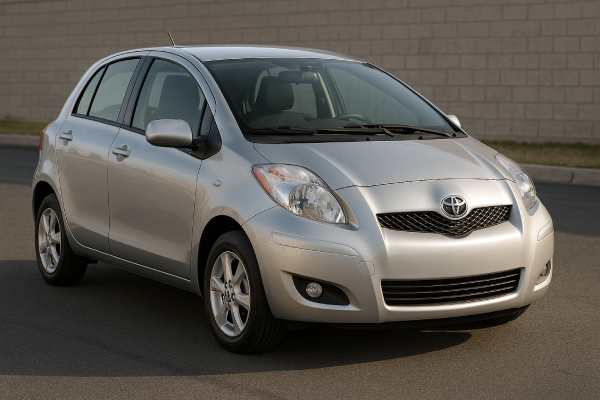
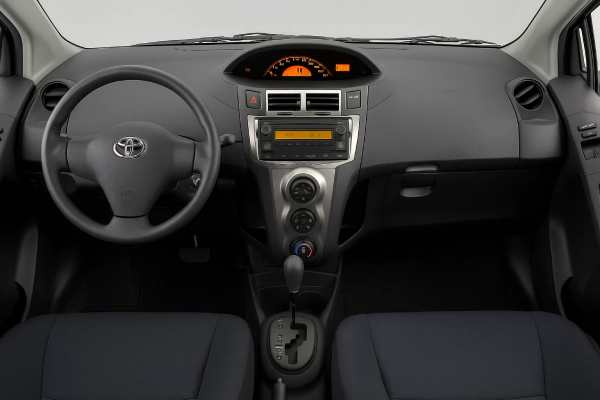
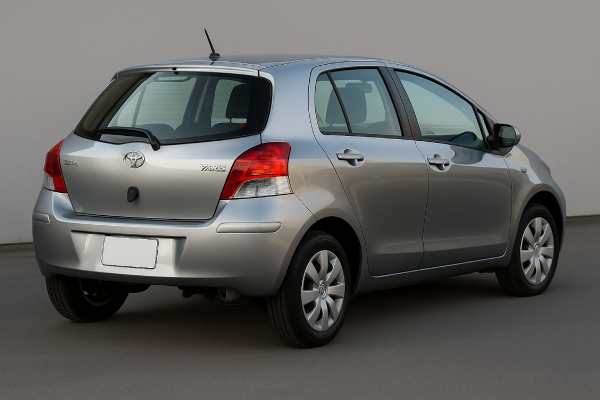
The facelifted Toyota Yaris NCP91 with the 1NZ-FE 1.5-litre engine is the “warm” version of the XP90 Yaris range. Compared with the 1.3-litre cars, it adds more power, slightly stronger brakes and, in many markets, better standard equipment, while keeping the same compact footprint and low running costs. Owners value it for simple mechanicals, chain-driven camshafts, and a cabin that wears hard daily use surprisingly well.
The 2009–2011 facelift brought updated bumpers, lights and trim, and in some regions extra safety equipment, but the core recipe stayed the same: light weight, modest performance, excellent fuel economy and strong reliability if serviced on time. This guide focuses on NCP91 hatchbacks and sedans built roughly from late 2008 through 2011 with the 1.5 1NZ-FE engine and 5-speed manual or 4-speed automatic gearboxes. If you are considering one as a city commuter, student car or simple second car, this article will help you understand the specs, strengths, weak points and what to check before buying.
Owner Snapshot
- 1.5 1NZ-FE gives noticeably stronger acceleration than 1.3 models with similar fuel use.
- Compact size, light steering and 9.4 m turning circle make it very easy to park and manoeuvre.
- Age-related issues: oil seepage, tired suspension and rust around rear arches/tailgate on neglected cars.
- Engine oil and filter changes are safest at 8,000–10,000 km or 5,000–6,000 miles, or every 6–12 months.
What’s inside
- Toyota Yaris NCP91 1.5 profile
- Yaris NCP91 1NZ FE data
- Yaris NCP91 grades and safety
- Long term reliability and issues
- Maintenance planning and buyer guidance
- Driving character and fuel use
- How this Yaris compares with rivals
Toyota Yaris NCP91 1.5 profile
The NCP91 Yaris is the 1.5-litre branch of the second-generation Yaris/Vitz family (XP90 platform). In many markets it sat above the 1.0 and 1.3 models, often badged “S”, “YRS”, “YRX” or similar, and was sold as both a hatchback and, in North America and some Asian markets, a small sedan. For the 2009–2011 facelift, the body shape stayed familiar, but the bumpers, headlamps and rear lights were revised, and some trims gained extra airbags or stability control.
The heart of this version is the 1NZ-FE engine, a 1.5-litre aluminium inline-four with DOHC, 16 valves and VVT-i on the intake cam. It uses a timing chain, not a belt, so there is no scheduled belt change; instead, chain wear is monitored over time. Output is about 106 hp (79 kW) and 140 Nm, enough to make the NCP91 feel noticeably livelier than 1.3-litre Yaris variants while still returning around 6–7 L/100 km in typical use.
The car’s appeal comes from its packaging. A short overall length (around 3.8 m for hatchbacks) and upright seating give it a surprising amount of interior room for four adults. The rear bench folds to create a flat load floor in many versions, and some markets offered split-fold and sliding rear seats. Although cabin plastics are simple and hard-wearing rather than plush, the interior generally ages well if cleaned occasionally and kept out of harsh sunlight.
For buyers today, the facelift NCP91 sits in a sweet spot. It is modern enough to offer decent crash protection and convenience features, but old-school enough to avoid complex turbos, dual-clutch gearboxes or fragile infotainment systems. Running costs are low, most consumables are cheap, and a huge global parts supply exists thanks to shared components with other Toyota models using the 1NZ-FE engine. If you want a dependable, low-drama small car with a bit more punch than the base Yaris, this is the variant to look at.
Yaris NCP91 1NZ FE data
This section summarises the key technical data for the 2009–2011 Toyota Yaris NCP91 1.5 with the 1NZ-FE engine. Figures vary slightly by market, body style and gearbox, so think of them as typical values; always double-check for your VIN.
Engine and performance
| Item | Value |
|---|---|
| Engine code | 1NZ-FE |
| Layout | Inline-4, transverse, DOHC, 16-valve, VVT-i (intake) |
| Displacement | 1.5 L (1496 cc) |
| Bore × stroke | 75.0 × 84.7 mm |
| Compression ratio | ~10.5:1 |
| Induction | Naturally aspirated |
| Fuel system | Sequential multi-point EFI (SFI) |
| Max power | ~106 hp (79 kW) @ 6000 rpm |
| Max torque | ~140 Nm (103 lb-ft) @ 4200 rpm |
| Timing drive | Single-row chain with hydraulic tensioner |
| Recommended fuel | Unleaded, typically RON 91–95 depending on market |
| Rated combined economy | Approx. 6.0–6.7 L/100 km (35–39 mpg US) |
| Real-world highway (120 km/h) | Around 6.0–6.5 L/100 km (36–39 mpg US) |
| Emissions classification | Usually Euro 4 (EU), Tier 2 Bin 5 / ULEV II (NA) |
Transmission and driveline
| Item | 5-speed manual | 4-speed automatic |
|---|---|---|
| Type / code | 5MT (C5x family) | 4AT (U34x family with lock-up) |
| 1st gear | ~3.55:1 | 2.85:1 |
| 2nd gear | ~1.90:1 | 1.55:1 |
| 3rd gear | ~1.31:1 | 1.00:1 |
| 4th gear | ~0.97:1 | 0.70:1 |
| 5th gear | ~0.82:1 | – |
| Reverse | ~3.25:1 | 2.34:1 |
| Final drive | ~3.7:1 | ~4.24:1 |
| Drive type | Front-wheel drive | |
| Differential | Open (no factory LSD) |
Chassis, dimensions and weights (typical 5-door hatch)
| Item | Value |
|---|---|
| Front suspension | MacPherson strut, coil spring, anti-roll bar |
| Rear suspension | Torsion beam axle, coil spring |
| Steering | Electric power-assisted rack-and-pinion |
| Turning circle (kerb-to-kerb) | ~9.4 m |
| Front brakes | Ventilated discs, approx. 255 mm |
| Rear brakes | Leading-trailing drums, approx. 200 mm |
| Common tyre/wheel sizes | 175/65 R14 or 185/60 R15 on 14–15″ rims |
| Length (5-door hatch) | ~3825 mm (150.6 in) |
| Length (sedan) | ~4300 mm |
| Width | ~1695 mm (66.7 in) |
| Height | ~1525–1530 mm (60.0 in) |
| Wheelbase | 2460 mm (96.9 in) |
| Ground clearance | ~135 mm (varies slightly by market) |
| Kerb (curb) weight | ~1050–1070 kg (2315–2360 lb) |
| GVWR | ~1450 kg (around 3200 lb) |
| Fuel tank | 42 L (11.1 US gal, ~9.2 UK gal) |
| Cargo volume (5-door hatch) | ~228 L seats up / ~728 L seats down (VDA) |
Performance and capability (typical 1.5 hatch)
| Item | Value (approximate) |
|---|---|
| 0–100 km/h | 10.5–11.5 s (manual), 11.5–12.5 s (auto) |
| Top speed | ~175 km/h (109 mph) |
| 100–0 km/h braking | Roughly high-30 m range on good tyres |
| Towing (where rated) | Around 900 kg braked / 450 kg unbraked; many markets do not approve towing – check local data |
| Roof load | Typically ~50 kg with correct bars |
Fluids, capacities and key torques (typical values)
| System | Spec and capacity |
|---|---|
| Engine oil | 5W-30 or 0W-20 meeting API SL/SM or ILSAC; ~3.7 L with filter |
| Coolant | Toyota Super Long Life Coolant or equivalent HOAT; ~4.7–5.0 L total |
| Manual gearbox | API GL-4/GL-5 75W-90; ~1.9 L |
| Automatic gearbox | Toyota ATF WS; ~3–4 L for drain-and-fill (more if fully empty) |
| Brake fluid | DOT 3 or DOT 4 |
| Spark plugs | Long-life iridium, heat range per 1NZ-FE spec, gap ~1.1 mm |
| Wheel nut torque | ~103 Nm (76 lb-ft) |
| Engine drain plug | ~35–40 Nm |
| Spark plugs | ~18–20 Nm into aluminium head (with anti-seize used sparingly if at all) |
Basic safety equipment (facelift, varies by market)
- Dual front airbags standard; side and curtain airbags optional or standard on higher trims.
- ABS with EBD and brake assist standard in most regions by 2009.
- Stability control (VSC) and traction control (TRC) added or made standard in later years/upper trims in some markets.
- ISOFIX/LATCH child-seat anchorages on rear seats in many versions.
Yaris NCP91 grades and safety
Trim naming varies strongly by market, but the NCP91 1.5 generally sits in the mid-to-upper half of the Yaris line. In Australia, for example, 1.5-litre versions were typically badged YRS or YRX, over the 1.3-litre YR and Edge. In North America, the 1.5 was the default engine across most trims, with “S” packages adding cosmetic and equipment upgrades. In Japan and some other regions you will see Vitz RS and similar sporty designations, also built on the NCP91 platform.
Key trim differences to look for:
- Entry 1.5 trims often combine the 1NZ-FE with simpler cloth interiors, 14″ wheels, basic audio and manual air conditioning. These tend to have the lowest running costs because replacement tyres and brakes are cheapest.
- Mid-level 1.5 trims add features like 15″ alloys, body-colour door handles, leather steering wheel and nicer seat fabrics.
- Upper or “sport” trims (YRS/YRX/S/RS) may bring fog lights, rear spoilers, side skirts, upgraded audio, multi-function steering wheels and occasionally minor suspension tuning (slightly firmer springs/anti-roll bars).
Recognising trims quickly:
- Check the wheel size and design, presence of fog lights, and rear spoiler.
- Look at the instrument cluster: some better-equipped cars have a tachometer where base cars do not.
- Verify VIN/build plates and option codes if you need exact specification; export-market stickers often list trim packages.
Safety and driver assistance equipment also varies:
- Early XP90 Yaris models scored well in crash tests thanks to a strong passenger cell and multiple airbags. Euro NCAP and ANCAP testing for 2005–2011 Yaris hatchbacks shows a 5-star rating when equipped with the full airbag pack and standard ABS.
- However, not every car has the full safety pack. Some early or low-spec cars may have only dual front airbags and ABS, with side/curtain airbags optional. In some markets, stability control became mandatory later in the lifecycle, so late-build facelift cars are more likely to have VSC/TRC across the range.
- Seat-mounted side airbags and curtain airbags are particularly valuable if you regularly carry passengers. When buying used, confirm they are present (airbag labels on seat sides and B-pillars) and that the airbag warning light behaves normally on start-up.
Child-seat friendliness is generally good for a small car. Most NCP91s have lower ISOFIX/LATCH anchors on the outer rear seats and three-point belts for all seating positions. The rear bench is fairly upright, which helps child seats sit correctly, though legroom is limited for tall front passengers with rearward-facing seats installed.
Advanced driver-assistance systems (ADAS) such as autonomous emergency braking, lane-keeping or radar cruise control were not available on this generation. You get fundamentals: ABS, EBD, brake assist, and, where fitted, stability control. That simplicity has a benefit for long-term ownership: fewer sensors and cameras to go wrong after bumper repairs or windscreen replacement.
When evaluating a specific car, look for:
- Airbag count and type (front, side, curtain, driver knee where fitted).
- Presence of stability control (VSC/TRC button or icon, or check VIN against local data).
- Condition of seatbelts (retract smoothly, no fraying) and proper operation of belt pretensioners and warning buzzers.
- Confirm any prior accident repairs have not affected crash structures or airbag sensor mounting points.
Long term reliability and issues
The NCP91 Yaris with the 1NZ-FE is widely regarded as one of Toyota’s more durable small-car combinations. With basic maintenance, many engines exceed 250,000–300,000 km without major internal work. That said, these cars are now well over a decade old, so age-related wear matters more than mileage alone. It is helpful to think in terms of typical issues by system and severity.
Engine (1NZ-FE)
- Oil consumption and leaks (common, low–medium cost):
Modest oil use often appears after 150,000 km or simply with age. It is usually manageable with regular level checks. Oil “sweating” from the timing chain cover, crank seals or cam cover gasket is also common. Severe leaks can contaminate engine mounts or alternators if ignored. Remedy is gasket/seal replacement and, in extreme cases, piston ring and valve-stem seal work. - Idle instability and hesitation (occasional, low cost):
Rough or low idle, especially when cold, often comes from a dirty throttle body, idle air control components (early engines), a tired MAF sensor or sticking VVT-i oil control valve. Cleaning the intake, checking PCV operation and, if needed, replacing the MAF or VVT solenoid usually restores smoothness. - Timing chain noise (occasional on neglected engines, medium cost):
The chain is designed for engine life, but high mileage plus infrequent oil changes can stretch it and wear guides and tensioner. Symptoms include rattling at start-up or timing correlation fault codes. The proper fix is a timing set (chain, guides, tensioner, often sprockets).
Cooling and fuel systems
- Water pump seepage (common, low cost):
Weeping from the pump is frequent on older Yaris; coolant marks or pink staining around the pump housing are clues. Replacement is straightforward and often combined with auxiliary belt renewal. - Radiator and hoses (age-related):
Original radiators can eventually develop plastic-tank cracks, and hoses harden. It is prudent to replace them preventively around 15 years old, especially in hot climates.
Ignition and electronics
- Coil packs and plugs (occasional, low cost):
Misfires under load or at idle often trace to a failing coil on an individual cylinder or worn plugs. The fix is replacing the faulty coil (often wise to do them as a set at high mileage) and fitting correct iridium plugs. - Combination switch and stalk issues (rare):
Indicators or headlamps that work intermittently can point to worn internal contacts; usually remedied by replacing the stalk assembly.
Driveline and chassis
- Manual gearbox and clutch:
The 5-speed is robust. Issues are usually clutch wear (slip or judder) and, rarely, input-shaft bearing noise at very high mileage. A quality clutch kit and, while in there, fresh gear oil give a long reset. - Automatic gearbox:
The 4-speed auto is simple and durable if the fluid is not neglected. Shudder, harsh shifts or slow engagement often respond well to one or two drain-and-fills with genuine ATF WS. Persistent issues may indicate valve-body wear but are relatively uncommon. - Suspension bushes and shocks (common wear):
Front control arm bushes, drop links and rear axle bushes soften with age, causing clunks and vague steering. Shocks also lose damping. Renewing these makes a big difference in feel and safety.
Body and corrosion
- Rust hotspots (region-dependent):
In salted-road climates, look closely at rear wheel arches, the lower edges of doors, the tailgate around the latch area, and front subframe mounting points. Surface rust is manageable; perforation or severe scaling needs more serious bodywork.
Recalls and service campaigns
This generation Yaris participated in broader Toyota campaigns related to floor mats and accelerator pedal mechanisms, as well as some airbag-related recalls depending on market. When buying, use your local official VIN-check tool or dealer to confirm all recalls are complete.
Overall, mechanical failures on the NCP91 are relatively rare if the car has seen regular oil changes and cooling-system care. Many “problems” on used cars are simply deferred maintenance: worn tyres, tired dampers, old fluids and neglected bushings. A pre-purchase inspection by a technician familiar with Toyotas is well worthwhile, especially to assess rust and suspension condition.
Maintenance planning and buyer guidance
A clear maintenance plan is the best way to keep an NCP91 Yaris reliable and pleasant to drive. Toyota’s official schedules differ by market, but the following intervals work well in real-world use and are aligned with typical severe-service recommendations for this platform.
Suggested maintenance schedule (whichever comes first)
- Engine oil and filter:
Every 8,000–10,000 km (5,000–6,000 miles) or 6–12 months. Use quality 5W-30 or 0W-20 to the correct API/ILSAC standard. - Engine air filter:
Inspect every 20,000 km; replace about every 40,000 km or sooner in dusty conditions. - Cabin/pollen filter:
Replace every 20,000–30,000 km or once every 1–2 years. - Coolant:
Toyota Super Long Life Coolant typically lasts 160,000 km for the first fill, then 80,000 km intervals. On an older car with unknown history, changing coolant once and then moving to 5-year intervals is a safe approach. - Spark plugs (iridium):
Around every 100,000 km; earlier if misfires or poor economy appear. - Fuel filter:
On many NCP91s it is integrated with the tank module and not a regular service item. Replace if there are confirmed fuel-delivery issues or while the tank is out for other work. - Timing chain, guides and tensioner:
No fixed interval; inspect when there is noise, metal in the oil or timing-related fault codes. Replace as a complete set if out-of-spec. - Auxiliary/serpentine belt and hoses:
Inspect annually for cracks or glazing; usually replaced after 7–10 years or if there is noise. - Manual gearbox oil:
Replace every 60,000–80,000 km with the specified GL-4/GL-5 gear oil. - Automatic gearbox fluid (ATF WS):
Many official schedules call it “lifetime”, but a 60,000–80,000 km drain-and-fill is a good preventive measure. - Brake fluid:
Every 2–3 years regardless of mileage. - Brake pads and discs:
Inspect at least annually. Replace pads before they reach minimum thickness and discs when below spec or heavily grooved. - Wheel alignment and tyre rotation:
Rotate tyres every 10,000–15,000 km and check alignment annually or after pothole impacts. - Valve clearances:
Hydraulic lash adjusters mean no regular adjustment on later 1NZ-FE versions, but noisy valvetrain should be investigated. - 12 V battery:
Test annually after 5 years; typical life is 5–7 years.
Fluid and torque notes
- Stick to recognised oil brands and the correct viscosity. For high-mileage engines that consume oil, a move from 0W-20 to 5W-30 (if allowed in your climate) can help.
- When tightening spark plugs into the aluminium head, use a torque wrench and clean threads. Over-tightening can damage the threads or crack the plug.
- Always bleed the cooling system properly after coolant service; trapped air can cause overheating.
Buyer’s inspection checklist
When viewing a used NCP91 Yaris 1.5, pay attention to:
- Service records: look for regular oil changes, coolant replacement, spark plug changes and any gearbox fluid services.
- Cold start behaviour: the engine should fire quickly and idle stably without rattles beyond a brief chain noise on start. Persistent rattling or ticking may indicate chain or valvetrain issues.
- Cooling system: check for dried coolant traces around water pump, radiator end tanks and hose joints. Fans should cycle correctly.
- Underbody and arches: inspect for rust, especially in climates that use road salt. Look at subframes, suspension mounts and brake lines.
- Suspension and steering: listen for clunks on rough roads, feel for wandering or tramlining on the highway, and check tyre wear patterns for alignment issues.
- Brakes: the pedal should feel firm and progressive, without pulsing (warped discs) or excessive travel.
- Interior electronics: test all windows, locks, audio, HVAC fan speeds, A/C, instrument lighting and central locking. Simple as they are, repairs still cost money.
Which years and trims to favour
- Facelift (2009–2011) cars with full airbag packs and stability control are the sweet spot for safety.
- Mid-spec 1.5 trims often offer the best mix of equipment and running costs: 15″ wheels, decent audio and full safety gear without the insurance cost or ride harshness of more “sporty” variants.
- Avoid cars with inconsistent service history, neglected fluids, heavy accident damage or extensive rust unless the price reflects the needed reconditioning.
If maintained sensibly, an NCP91 1.5 can serve as a long-term daily driver with modest fuel and repair bills. The biggest risk for new owners is underestimating the cost of catching up on 10+ years of deferred maintenance, so budget accordingly.
Driving character and fuel use
On the road, the 1.5-litre NCP91 Yaris feels light and willing rather than fast. The 1NZ-FE engine revs smoothly and responds cleanly to throttle inputs, especially with the 5-speed manual. Low-rpm torque is adequate but not abundant; the car rewards using the mid-range (around 3000–4500 rpm) rather than lugging in high gears. The redline sits around 6500 rpm, but in normal driving you rarely need to go that high.
With the manual gearbox, the ratios are well spaced for city and suburban use. First and second are short enough for brisk starts, while fourth and fifth keep revs moderate on the highway. The shift action is light and generally positive, though older cars may feel a bit rubbery if bushings are worn. The 4-speed automatic suits relaxed drivers: it prioritises smoothness over speed, upshifting early and kicking down when you press the pedal firmly. It does not have the efficiency of a modern 6-speed or CVT, but it is simple and proven.
Ride quality is one of the Yaris’s strengths. The suspension tunes on most 1.5-litre trims lean slightly firm compared with base models, especially on 15″ wheels, yet the car still handles poor urban surfaces without harshness. At highway speeds it remains stable, though you will feel crosswinds more than in a larger, heavier car. Noise levels are acceptable for the class: there is noticeable tyre and wind noise on coarse surfaces, but the engine settles into a modest hum once in top gear.
Handling is predictable and confidence-inspiring. The steering is light at parking speeds and weights up a little as speed increases, though feedback is more “filtered” than in some rivals like the Mazda 2. Grip levels are determined mainly by tyre choice; fitting good-quality tyres in the correct size transforms both wet-road traction and braking performance. There is body roll if you push hard, but the car responds progressively, and stability control (where fitted) intervenes in a fairly unobtrusive way.
In everyday driving, real-world fuel economy is one of the main attractions:
- City use: expect roughly 7.0–8.5 L/100 km (28–34 mpg US) depending on traffic, climate and driving style.
- Mixed commuting: around 6.0–7.5 L/100 km (31–39 mpg US) is common.
- Steady highway at 100–110 km/h (60–70 mph): often 5.5–6.5 L/100 km (36–43 mpg US) if the car is in good tune and carrying a light load.
Cold climates, short trips and rooftop carriers all increase consumption. Aggressive driving in city traffic can easily push fuel use into the 8–9 L/100 km range, especially with the automatic.
Load-carrying and light towing (where legally permitted) are within the car’s capability, but you will notice performance and fuel-economy penalties. Four adults plus luggage or a small trailer will require more frequent downshifts on hills, and brake temperatures can rise on long descents if you over-use the pedal instead of engine braking. It is best to view the Yaris as a light-duty hauler: fine for occasional trips to the hardware store or small holiday loads, but not a long-distance tow vehicle.
Overall, the Yaris NCP91 1.5 offers a mature, predictable driving experience. It is not exciting in stock form, but it is easy to drive, forgiving for new drivers and economical enough to suit daily commuting without effort.
How this Yaris compares with rivals
When new, the 2009–2011 Yaris NCP91 1.5 competed with cars such as the Honda Jazz/Fit, Mazda 2, Ford Fiesta, Hyundai i20/Getz and Suzuki Swift. On the used market today, buyers cross-shop it with newer budget compacts as well. Understanding how it compares helps clarify whether it suits your needs.
Versus Honda Jazz/Fit (first and second generation)
Honda’s Jazz/Fit offers outstanding cabin flexibility thanks to its “Magic Seat” system and a slightly more spacious rear bench. Engines are often a little more rev-happy and some versions feel quicker than the Yaris. However, Honda automatic gearboxes (especially earlier CVTs) can be more sensitive to fluid neglect, and parts costs are often higher. If you prioritise interior space and clever folding seats, the Jazz/Fit wins; if you value simple, conservative mechanicals, the Yaris edges ahead.
Versus Mazda 2 (DE)
The Mazda 2 is usually a sharper drive, with more engaging steering and firmer suspension. Many enthusiasts prefer it for twisty roads. On the flip side, ride comfort can be harsher on rough surfaces, and rust resistance varies by climate and care. Toyota’s 1NZ-FE engine and basic transmissions tend to have the better long-term reliability record, especially for owners who are not meticulous about servicing.
Versus Ford Fiesta (Mk6/7)
The contemporary Fiesta offers refined driving dynamics and, in some trims, more technology and safety features. Nevertheless, Ford’s small petrol engines and automatic transmissions can demand more attention as they age. Electrical gremlins and interior wear appear more often in older Fiestas than in Yaris of similar age. For an owner focused on minimal repairs and straightforward servicing, the Yaris is usually the safer choice; the Fiesta may appeal more to drivers prioritising handling and cabin feel over low-risk ownership.
Versus Hyundai i20/Getz and similar Korean compacts
Early Korean rivals often undercut the Yaris on purchase price and offered generous equipment lists. As used cars, these models can be good value, but long-term durability and parts availability are more variable by region and brand. The Yaris’s main advantage is predictability: most workshops know it well, and aftermarket parts supply is broad.
Versus Suzuki Swift
The Swift, especially sportier trims, feels more playful and connected, with a slightly more “fun” chassis. Yet the 1.5 Yaris generally wins on cabin space, perceived robustness of interior materials and ease of servicing. Swift engines and gearboxes are also durable, but body and suspension wear can be more noticeable on neglected examples.
Where the Yaris NCP91 1.5 stands out is as a low-stress, dependable small car. It rarely leads its class in a single metric, but it scores consistently well across reliability, economy, practicality and parts support. If you want excitement, some rivals are more engaging. If you want a car that starts every morning, uses little fuel, and only occasionally asks for straightforward repairs, the Yaris is hard to beat.
For many buyers, the optimal strategy is to find a well-maintained, facelift-era NCP91 with full safety equipment and invest early in catching up on any overdue fluids, suspension components and tyres. Do that, and you end up with a compact car that can comfortably serve for many more years.
References
- Used 2009 Toyota Yaris – Specs & Features 2024 (Specifications)
- 2009 Toyota Yaris Reviews – Models & Range | CarExpert 2025 (Model Range and Specs)
- 2009 Toyota Yaris LE 5-door Hatchback 2009 (Dimensions and Capacities)
- Toyota NZ series engines 2013 (Engine Technical Description)
- Toyota Yaris | Safety Rating & Report | ANCAP 2005 (Safety Rating)
Disclaimer
This article is intended for general informational purposes only and is not a substitute for professional diagnosis, repair or official service information. Specifications, torque values, maintenance intervals and procedures can vary by VIN, model year, market and equipment level. Always confirm details against your vehicle’s official owner’s manual, workshop manual and local regulations, and consult a qualified technician before carrying out maintenance or repairs.
If you found this guide useful, you are welcome to share it with other owners or buyers on social platforms such as Facebook or X/Twitter to help support our work.