
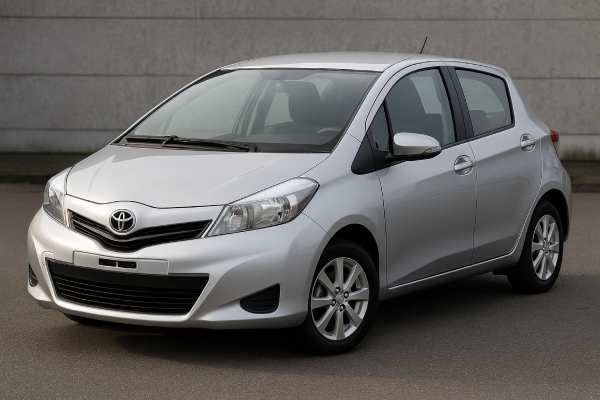
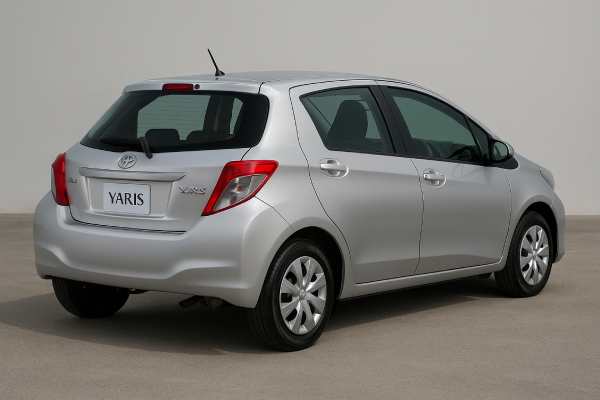
The third-generation Toyota Yaris (KSP130) with the 1.0-litre 1KR-FE engine is the simplest petrol version of the XP130 platform, sold in Europe from 2011. It targets city drivers who want very low fuel use and tax, but still need a full-sized supermini rather than a microcar. The all-aluminium three-cylinder engine is light and efficient, and Toyota couples it with a five-speed manual gearbox and compact, easy-to-park body.
Compared with the previous XP90 generation, the 2011 Yaris grew slightly in length and wheelbase, improving rear space and boot practicality. Yet it still feels very manageable in old-town centres and tight parking garages. Safety was a key design focus, with a strong body shell, multiple airbags and active safety systems allowing the new Yaris to achieve a five-star Euro NCAP rating under tougher protocols for its time.
This guide walks through the key specifications, ownership experience, maintenance expectations and how the 1.0-litre KSP130 compares with rival small petrol hatchbacks.
Top Highlights
- Very low fuel consumption and light running costs make the Yaris KSP130 1.0 ideal for urban and suburban commuting.
- Simple, proven 1KR-FE chain-driven engine with aluminium construction keeps weight down and reliability generally strong.
- Interior packaging is efficient, offering good space for four adults despite the compact external footprint.
- Watch for age-related issues like coil packs, water pump seepage and noisy auxiliary belts on higher-mileage cars.
- Plan engine oil and filter changes roughly every 15,000 km or 12 months, with shorter intervals for mostly short-trip use.
What’s inside
- Toyota Yaris KSP130 overview
- Yaris 1KR FE technical data
- Grades equipment and safety
- Reliability issues and fixes
- Maintenance plan and buying guide
- Driving experience and economy
- Yaris 1.0 compared to rivals
Toyota Yaris KSP130 overview
The KSP130 code refers to the third-generation Yaris (XP130 platform) equipped with the 1.0-litre 1KR-FE three-cylinder petrol engine and front-wheel drive. In Europe it arrived in 2011 as the entry petrol option, sitting below the 1.33-litre 1NR-FE and later hybrid variants. The 1.0 is aimed at buyers who value low purchase price, low insurance group and excellent fuel economy more than outright performance.
The 1KR-FE is part of Toyota’s KR engine family, originally co-developed with Daihatsu. It uses an aluminium block and head, dual overhead cams, four valves per cylinder and variable valve timing on the intake side (VVT-i). Displacement is 998 cc, and in this application it produces about 68 hp (51 kW) and around 95 Nm of torque, meeting Euro 5 emissions standards in the 2011–2014 period.
Compared with the outgoing XP90, the XP130 Yaris grew to roughly 3.88 m in length and 2.51 m in wheelbase, with a slightly wider track. This gave it more rear legroom and a more usable boot, while still keeping the turning circle tight enough for city work. The steering is electrically assisted, and the chassis uses MacPherson struts in front with a torsion beam at the rear – a simple, durable and space-efficient setup.
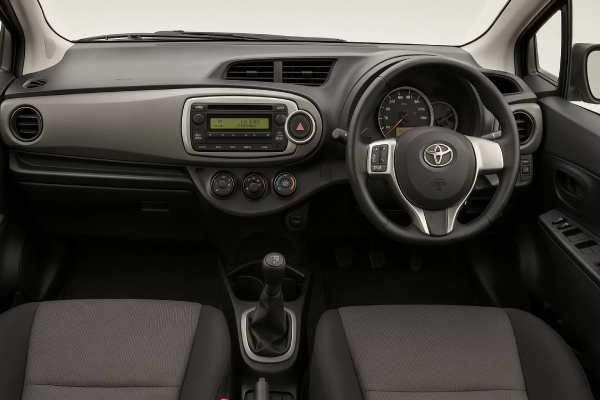
Inside, the KSP130 moved away from the centre-mounted instruments of earlier Yaris generations to a more conventional driver-centric layout, improving ergonomics for many owners. Even in lower grades you typically find split-folding rear seats, numerous storage cubbies and large door openings. Higher trims add features such as the Toyota Touch multimedia system and steering-wheel controls.
Safety and refinement were major selling points. Toyota designed this generation to meet the higher Euro NCAP thresholds being phased in from 2011 onward, with a strong body shell, standard stability control in most European markets and multiple airbags. This helped the new Yaris achieve a five-star rating under 2011 test conditions, making it a reassuring choice for families who still want a small, easy-to-run car.
In the used market, the KSP130 1.0 appeals strongly to first-time drivers, city-focused commuters and downsizers who want predictable running costs. Its limitations – modest power and a fairly basic feel in entry trims – are the flip side of that low-cost, low-complexity engineering.
Yaris 1KR FE technical data
This section summarises the main specifications for the 2011–2014 Toyota Yaris (KSP130) 1.0 VVT-i with 1KR-FE engine in typical European configuration. Always verify exact data against the documentation for your specific VIN and market.
Engine and performance
| Item | Specification |
|---|---|
| Engine code | 1KR-FE |
| Type | Inline 3-cylinder, aluminium block and head |
| Valve gear | DOHC, 12 valves, VVT-i on intake |
| Displacement | 998 cc (1.0 l) |
| Bore × stroke | 71.0 × 84.0 mm |
| Compression ratio | About 11.5:1 |
| Induction | Naturally aspirated |
| Fuel system | Multi-point fuel injection, petrol |
| Max power | 68 hp (51 kW) @ 6,000 rpm |
| Max torque | 95 Nm @ 4,300 rpm (approximate) |
| Emissions class | Euro 5 in most 2011–2014 EU markets |
Official combined fuel-consumption values for a 1.0 VVT-i third-generation Yaris with manual gearbox are typically around 4.8 l/100 km on the NEDC cycle, with CO₂ emissions close to 110 g/km depending on wheel/tyre and trim configuration.
Transmission and driveline
| Item | Specification |
|---|---|
| Gearbox | 5-speed manual (most markets) |
| Drive type | Front-wheel drive |
| Clutch | Single-plate, dry, cable or hydraulic actuation depending on market |
| Final drive | Fixed ratio (varies slightly by version) |
| Differential | Open, with electronic traction control via braking |
Automated manual or CVT options may have been offered in some markets, but the classic European KSP130 1.0 is the 5-speed manual.
Chassis, dimensions and weights
| Item | Value (typical 5-door) |
|---|---|
| Body style | 3- or 5-door hatchback |
| Length | ~3,885 mm |
| Width | ~1,695 mm |
| Height | ~1,510 mm |
| Wheelbase | ~2,510 mm |
| Drag coefficient (Cd) | Around 0.29–0.30 |
| Kerb weight | Roughly 1,020–1,060 kg depending on trim and body |
| Fuel tank | 42 l |
| Suspension | Front MacPherson strut; rear torsion beam |
| Brakes | Front ventilated discs; rear drums |
| Typical tyre size | 175/65 R15 or 185/60 R15 |
Values differ slightly between 3- and 5-door versions, wheel packages and regional homologations.
Performance and capability
| Metric | Value (typical manual) |
|---|---|
| 0–100 km/h (0–62 mph) | Around 15.3 s |
| Top speed | About 154–155 km/h (96 mph) |
| Official combined fuel use | ~4.8 l/100 km |
| Estimated real mixed fuel use | ~5.0–6.0 l/100 km |
| Braked towing capacity (where approved) | Approx. 800–900 kg |
| Unbraked towing capacity | Typically 450–550 kg |
Again, always verify local homologation data before towing.
Fluids, capacities and electrical system
Typical capacities for a KSP130 1.0 petrol in European form are:
| System | Typical data (check per VIN) |
|---|---|
| Engine oil | ~3.1–3.3 l with filter; 0W-20 or 5W-30 to Toyota spec |
| Engine coolant | Around 4–5 l Toyota Super Long Life coolant |
| Manual gearbox oil | Roughly 1.7–2.0 l API GL-4 |
| Brake fluid | DOT 3 or DOT 4 |
| Fuel tank | 42 l |
Electrical basics:
- 12 V battery typically in the 45–55 Ah range
- Alternator sized to support electric power steering, lighting and accessories
- Spark plugs: compact long-reach plugs specified to the 1KR-FE; torque and gap must follow the service manual
Because many fasteners and plugs are aluminium-based, correct torque values and clean threads are important when working on this engine.
Grades equipment and safety
Trim names for the third-generation Yaris vary across markets (for example, Live, Active, Style, Trend or similar), but the equipment logic is similar: the 1.0-litre KSP130 is usually available in lower and mid-range grades, with more powerful engines or hybrid reserved for upscale trims.
Typical trims and options
In a representative European market, you might find:
- Entry trim (e.g. Live/Terra)
- Manual air conditioning or basic ventilation
- Electric front windows, central locking, immobiliser
- Height-adjustable driver’s seat and steering column
- Basic audio system with CD/radio and AUX, later often with USB
- Mid trim (e.g. Active/Luna)
- Remote locking with keyless entry
- Split-folding rear bench, sometimes sliding
- Leather-trimmed steering wheel with audio controls
- Body-colour mirrors and door handles
- Touchscreen “Toyota Touch” multimedia with Bluetooth in later years
- Upper trim with 1.0 (limited markets)
- Alloy wheels (often 15″)
- Fog lamps, chrome details and more colourful interiors
- Upgraded audio or navigation packages
The 1.0 engine is less common in the most heavily optioned “luxury” grades, where buyers tended to pick the 1.33 or hybrid.
Safety systems and crash performance
Toyota engineered the XP130 Yaris to achieve top-tier scores under updated Euro NCAP protocols. The 2011 Yaris achieved a five-star overall rating, with strong adult and child occupant scores and competitive pedestrian protection for its class.
Typical safety equipment includes:
- Seven airbags as standard in many markets:
- Dual-stage front airbags
- Front side airbags
- Full-length curtain airbags
- Driver’s knee airbag
- Whiplash-injury-lessening front seats designed to reduce neck loads in rear impacts
- Three-point belts for all seats and ISOFIX child-seat anchors on the outer rear seats
- Adjustable head restraints at all positions
Active safety systems are usually part of Toyota’s Star Safety System or equivalent package:
- ABS with electronic brake-force distribution (EBD)
- Brake Assist
- Vehicle Stability Control (VSC)
- Traction Control (TRC)
These were intended to be standard fit in most European specifications of the new Yaris from launch.
Later in the life of the XP130, Toyota introduced more advanced driver-assistance systems (such as pre-collision braking and lane departure warning) under the Toyota Safety Sense umbrella, but early 2011–2014 1.0-litre cars usually have a simpler specification limited to the stability and braking systems above.
Practicality and identification
Key practical touches include:
- Wide-opening doors and a relatively low sill, helpful for children or older passengers
- A configurable luggage area; on sliding-bench cars you can trade rear legroom for extra boot space
- Plenty of small storage bins and cupholders for everyday use
To identify a KSP130 1.0, look for:
- “VVT-i” or “1.0” badging and three-cylinder note at idle
- VIN and engine code (1KR-FE) on the documentation, and KSP130 in the model designation
- Usually smaller wheel and tyre sizes than higher-powered versions
Overall, the equipment level in a 1.0-litre Yaris is honest and functional rather than luxurious, but safety kit is strong and the basics are well covered.
Reliability issues and fixes
The 1KR-FE Yaris is generally regarded as one of the more robust small petrol hatchbacks of its era, but nearly all higher-mileage examples will show some age-related wear. This section outlines typical patterns rather than guaranteed failures.
Engine and ancillaries
- Ignition coils and misfires (common, low–medium cost):
Individual coil-on-plug units can fail over time, especially after many heat cycles or if oil or moisture gets into the plug wells. Symptoms include rough running, misfire under load and a flashing malfunction indicator lamp. Diagnosis via OBD codes usually points to a specific cylinder; the remedy is replacement of the faulty coil and often the spark plug at the same time. - Spark plugs and poor cold starts (common, low cost):
Extended plug intervals mean many cars run well past the ideal change point. Hard starting, hesitation on cold mornings or poor fuel economy can be due to worn plugs. Replacement with the correct long-life plugs and careful torque application usually restores smooth running. - Water pump seepage (occasional, low–medium cost):
Age and mileage can lead to coolant weeping from the pump housing or shaft. Look for pink or white dried coolant traces, a sweet smell after driving and low coolant levels. Replacement of pump and associated gasket, plus fresh coolant, is the standard fix. - Auxiliary belt noise (common, low cost):
Squeaks or chirps at start-up often indicate a worn belt or tensioner. Replacing the belt at recommended intervals (or sooner if noisy) prevents loss of charging or coolant circulation. - Oil consumption and leaks (occasional, severity varies):
Compared with some other small engines, the 1KR-FE is not widely known for severe oil consumption when serviced regularly. However, neglected oil changes or heavy high-rev use can accelerate ring and valve-stem wear. Minor leaks from cam cover gaskets or seals are age-typical and usually affordable to correct.
The 1KR-FE uses a timing chain rather than a belt. Chain stretch issues are rare if oil quality and level are maintained, but any persistent rattling at cold start that does not quickly fade should be investigated. A stretched chain, worn guides or tensioner can eventually trigger timing-correlation fault codes and, in the worst case, engine damage if left unchecked.
Driveline, gearbox and clutch
- Clutch wear (common on urban cars, medium cost):
Constant stop-start driving and inexperienced drivers can wear out the clutch plate and pressure plate. Symptoms include high bite point, slipping under full throttle in higher gears and judder when moving off. Replacement is straightforward but involves removing the gearbox, so labour costs can be significant. - Gear selection issues (occasional, low–medium cost):
Notchy or obstructed shifts may be due to worn linkage bushes, cables out of adjustment or old gearbox oil rather than internal failure. Fresh oil and linkage inspection should come before assuming a major gearbox problem. - Wheel bearings and suspension bushes (occasional, low–medium cost):
A humming noise that changes with road speed and direction often points to a wheel bearing, while knocking noises over bumps usually trace to stabiliser links or suspension bushes. These are routine wear items on most small cars.
Body, interior and electronics
- Corrosion hotspots (rare–occasional, depends on climate):
The XP130 body is generally well protected, but cars in harsh climates or those with neglected repairs can show surface rust on: - Rear axle beam and mounting points
- Underbody seams and jacking points
- Door bottoms and tailgate edges where drains clog
- Electrical niggles (occasional, low cost):
Common age-related issues include tired 12 V batteries causing strange warning lights, failing window regulators or central locking actuators, and worn steering-wheel audio controls in heavily used cars.
Recalls and service actions
Third-generation Yaris models have been subject to various recalls (for example, concerning power windows, airbags or steering components) depending on market and year. Before purchase or when planning maintenance:
- Use the official Toyota recall checker for your region with the VIN.
- Ask a Toyota dealer to print a recall and campaign history.
Some drivability issues, especially idle quality and emissions calibration, have been addressed in the past by ECU software updates. Where applicable, an official reflash is often the recommended first step before replacing hardware.
Maintenance plan and buying guide
To keep a KSP130 Yaris reliable and efficient, follow a structured maintenance schedule. Always cross-check intervals and specifications with the owner’s manual for your market.
Practical maintenance schedule (typical European conditions)
- Engine oil and filter
- Every 15,000 km or 12 months, whichever comes first.
- Shorten to 10,000 km for mostly short trips or severe use.
- Use oil that meets Toyota’s specification (commonly 0W-20 or 5W-30).
- Air and fuel filters
- Engine air filter: inspect every 15,000 km, replace around 30,000 km (earlier in dusty regions).
- Cabin filter: replace every 12–24 months to maintain ventilation and demisting.
- Fuel filter: usually integrated with the in-tank module and replaced less often; follow the official schedule.
- Spark plugs
- Long-life plugs are often scheduled at around 90,000–100,000 km.
- For city-heavy use, consider replacing earlier to maintain smooth running and low emissions.
- Coolant
- Toyota Super Long Life Coolant typically has a long service life (e.g. first change at 5–6 years, then at shorter intervals), but follow the schedule for your VIN.
- Transmission oil
- Even where marketed as “lifetime”, replacing manual gearbox oil around 80,000–100,000 km helps shift quality and longevity.
- Brake system
- Brake fluid: replace every 2 years regardless of mileage.
- Pads and discs: inspect at each service and replace before reaching minimum thickness.
- Belts and hoses
- Inspect the auxiliary belt and coolant hoses annually for cracks, glazing and leaks. Replace around 90,000–120,000 km or earlier if any defects show.
- Steering, suspension and alignment
- Check for play in joints and bushes at each inspection.
- Align the wheels after suspension work or if uneven tyre wear appears.
- 12 V battery
- From about 5 years of age, test the battery annually and replace proactively once capacity declines, especially in cold climates.
Timing chain inspection is mostly condition-based: unusual rattles, logged timing errors or heavily contaminated oil are prompts to investigate further.
Buyer’s guide: what to check
When viewing a used Yaris KSP130 1.0:
- Service history and documentation
- Look for consistent oil changes and evidence of coolant and brake-fluid replacement.
- Confirm recall and campaign completion via official channels.
- Cold start behaviour
- Engine should start quickly without excessive cranking or smoke.
- Listen for brief, mild chain noise at initial start only; anything persistent warrants further checks.
- Test drive
- Confirm smooth power delivery with no flat spots or misfires.
- Check clutch for slipping in higher gears and for judder in first gear.
- Ensure straight tracking and no steering vibrations at typical cruising speeds.
- Bodywork and corrosion
- Inspect sills, jacking points, rear axle area and the bottom of doors and tailgate.
- Look for panel gaps or overspray indicating accident repairs.
- Interior and electrical items
- Test all windows, locks, mirrors, lights, wipers and the heater/AC.
- Try the multimedia system and steering-wheel buttons where fitted.
Long-term durability outlook
With regular servicing and gentle use, the KSP130 1.0 can realistically reach 200,000–250,000 km or more without major engine work. Clutch replacement, suspension refresh and occasional ancillary repairs should be expected as normal ageing items, rather than design flaws. The simplicity of the non-turbo petrol engine makes it an appealing long-term ownership proposition compared with more complex turbocharged or diesel alternatives.
Driving experience and economy
The Yaris KSP130 1.0 is not a fast car, but it is easy to drive and cheap to run. Understanding its character helps set realistic expectations.
Powertrain character
The 1KR-FE three-cylinder is eager and smooth at moderate revs, with a characteristic thrum that many drivers find likeable. It produces its peak power at around 6,000 rpm and peak torque near 4,300 rpm, so you need to use the revs and shift actively to make the most of the available 68 hp.
In town, the engine’s light flywheel and responsive throttle make it feel lively up to typical urban speeds. The five-speed manual gearbox has relatively short lower gears which help the car pull away cleanly and cope with inclines. On the open road, however, overtakes must be planned, and you will often drop one or two gears to access the engine’s stronger mid-range.
There is no turbocharger to worry about, and the naturally aspirated setup gives predictable response. The trade-off is that with a full load of passengers or on steep hills, the car can feel stretched; owners who regularly drive on motorways with four people and luggage may be better served by the 1.33 or hybrid versions.
Ride, handling and refinement
The Yaris runs on modest-size tyres and a comfort-oriented suspension tune. Around town, it rides speed bumps and broken surfaces reasonably well for a small car, although sharp potholes can still be felt. The electric power steering is light for parking and low-speed manoeuvres, and the tight turning circle makes U-turns easy even in narrow streets.
On twisty roads, the car feels secure and predictable rather than sporty. Body roll is noticeable if you push hard, but grip levels are adequate and the stability control steps in gently if you over-do it. The short wheelbase can make the car a little lively on very uneven roads, but it is generally easy to place and confidence-inspiring for newer drivers.
Noise levels are acceptable for the class. The three-cylinder engine is quite audible when extended towards the redline, and wind and tyre noise increase at motorway speeds, but overall refinement is better than many earlier small cars. Choosing tyres with a touring rather than aggressive tread pattern can further calm road noise.
Real-world fuel economy
Official combined fuel-consumption figures around 4.8 l/100 km are achievable, but only under gentle driving with a lot of steady-speed running. In typical mixed use, many owners see something closer to 5.0–5.5 l/100 km, and heavy city-only driving can push consumption towards 6.0–6.5 l/100 km.
Factors that harm economy include:
- Frequent cold starts and journeys under 5–10 km
- High motorway speeds (above about 120 km/h) where the engine revs continuously high
- Roof racks, boxes or bike carriers that add drag
- Under-inflated tyres or aggressive acceleration and braking
Even allowing for these penalties, the KSP130 1.0 remains one of the more economical non-hybrid petrol B-segment cars of its era. For owners who value low running costs but prefer a simple petrol engine over a diesel or hybrid, it strikes a useful balance.
Yaris 1.0 compared to rivals
When new, the 2011–2014 Yaris 1.0 VVT-i competed with a wide range of small petrol hatchbacks: Ford Fiesta 1.25, Volkswagen Polo 1.2, Renault Clio 1.2, Peugeot 208 1.0/1.2, Hyundai i20 and Kia Rio, among others. On the used market, those same cars remain the natural alternatives.
Strengths of the Yaris KSP130
- Reliability reputation:
Toyota’s small petrol engines tend to age well when serviced correctly, and the 1KR-FE is simpler than many turbocharged rivals. There is no turbo, direct injection or complex emissions hardware to add cost or risk. - Running costs:
Fuel consumption is low, parts are widely available, and many independent workshops are familiar with the model. Insurance groupings are usually favourable, especially for the 1.0. - Safety credentials:
A five-star Euro NCAP rating under the 2011 protocol, with seven airbags and stability control on most European trims, is a strong selling point compared with some budget rivals of the time. - Packaging and ease of use:
The high roofline, good visibility and simple controls make the Yaris friendly for new drivers and city use. Practical details such as a low load lip and flexible rear seating are helpful day-to-day.
Where rivals may be stronger
- Performance and refinement:
Some competitors with larger four-cylinder engines or small turbocharged units feel stronger at motorway speeds and quieter on long journeys. A Polo 1.2 TSI or Fiesta 1.25, for example, can offer smoother high-speed performance, although with potentially more complexity. - Interior feel and technology:
Certain rivals from this era offer slightly richer cabin materials or more advanced infotainment options. Early XP130 Yaris models have straightforward interiors that prioritise durability, but may lack polish compared with top-trim competitors. - Driving engagement:
Buyers who value sporty steering feel and handling may find the Fiesta or some French rivals more entertaining. The Yaris is tuned more towards stability and comfort.
Who should choose the 1.0-litre Yaris
The KSP130 1.0 makes most sense for:
- Urban and suburban drivers who spend much of their time below motorway speeds
- New drivers or those returning to motoring who want predictable, forgiving behaviour
- Owners prioritising long-term reliability and low running costs over acceleration
It is less ideal for:
- Regular long-distance motorway commuters with full loads
- Drivers who expect brisk overtaking performance or luxurious cabin finishes
For its intended role as an honest, economical, low-stress small car, the Toyota Yaris KSP130 1.0 remains an attractive and sensible option on the used market.
References
- TOYOTA YARIS TECHNICAL SPECIFICATIONS 2011 (Technical Data)
- Yaris DPL 2011: The new Yaris 2011 (Model Overview)
- Yaris DPL 2011: Designed to meet the highest active, passive and pedestrian impact safety standards 2011 (Safety Engineering)
- Official Toyota Yaris safety rating 2011 (Safety Rating)
- Fluids & capacities – Yaris (2011-2020) eu 2019 (Fluids and Capacities)
Disclaimer
This article is provided for general informational purposes only and is not a substitute for professional diagnosis, repair advice or official manufacturer documentation. Specifications, torque values, service intervals and repair procedures can vary by VIN, production date, market and equipment level. Always verify critical information using your vehicle’s owner’s manual, official service documentation or a qualified technician before carrying out maintenance or repairs.
If you found this guide helpful, please consider sharing it with other owners or enthusiasts via channels such as Facebook or X/Twitter. Your support helps justify the time and care required to produce detailed, independent technical content like this.