
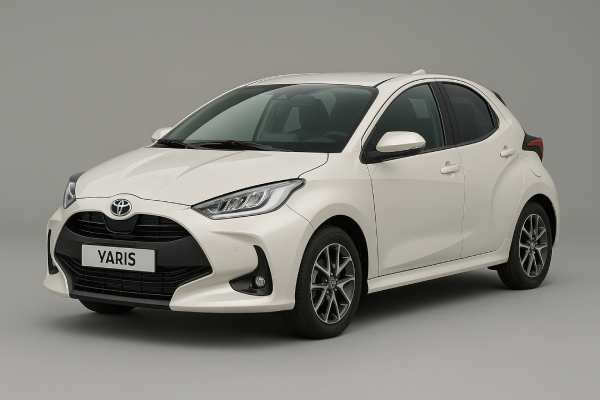
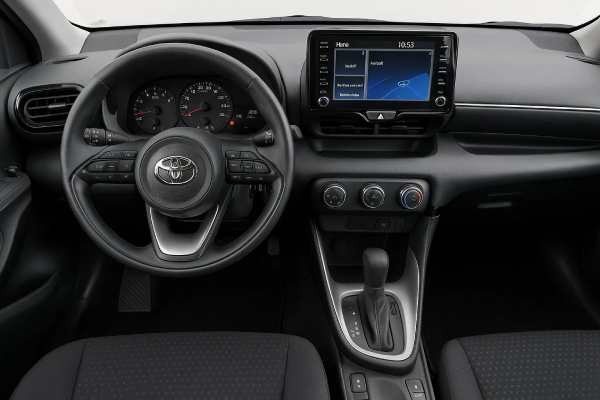
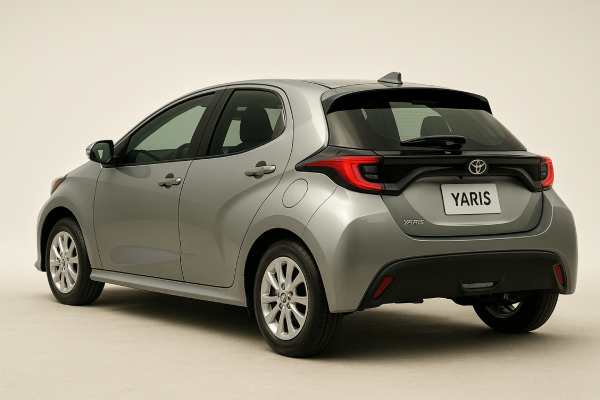
The fourth-generation Toyota Yaris (KSP211) with the 1.0 litre 1KR-FE engine sits at the very base of the range, but it is far from a stripped-out econobox. Built on Toyota’s GA-B platform, it combines a light body, compact three-cylinder engine and well-tuned chassis to deliver low running costs and confident daily performance. Power is modest at 72 hp, yet the car feels eager in city traffic and is stable on motorways when driven within its comfort zone.
For many buyers this version is attractive because it avoids hybrid complexity while keeping most of the core safety and infotainment features that made this generation of Yaris a benchmark supermini in Europe and Japan. If you are considering a simple, reliable petrol hatchback with modern crash protection, easy parking and predictable ownership costs, the KSP211 1.0 could be the sweet spot—provided you understand its performance limits and follow its maintenance schedule carefully.
At a Glance
- Light, simple 1.0 litre three-cylinder engine and manual gearbox keep running costs and real-world fuel use low.
- Compact footprint and tight turning circle make the Yaris easy to park and manoeuvre in dense city traffic.
- Strong active and passive safety, with a five-star rating on properly equipped trims in major crash tests.
- Watch for timing-chain noise, rising oil consumption on neglected engines, and any unresolved safety recalls.
- Typical service interval is every 12 months or around 15,000–16,000 km for petrol Yaris models.
Explore the sections
- Toyota Yaris KSP211 profile
- Yaris KSP211 specs and data
- Yaris KSP211 trims and safety
- Reliability, faults and recalls
- Maintenance schedule and buying tips
- On-road behaviour and economy
- How the Yaris compares to rivals
Toyota Yaris KSP211 profile
The KSP211 is the 1.0 litre, three-cylinder petrol version of the XP210-generation Toyota Yaris, sold mainly in Europe and selected other markets from 2020 to 2023. It uses the long-running 1KR-FE engine family, updated to meet modern emissions standards, and is paired with a 5-speed manual gearbox driving the front wheels. In most markets this is the entry engine above the base trim, but it still shares the same GA-B platform, body shell and crash structures as higher-output 1.5 petrol and hybrid variants.
Compared with previous Yaris generations, this car is wider, stiffer and better equipped. The 1.0 remains focused on efficiency rather than speed, yet benefits from the same platform engineering that underpins the much more powerful GR Yaris and Yaris Cross. This gives the small-engine model surprisingly mature ride and handling, even on modest 15-inch wheels and comfort-oriented tyres.
In everyday use, the 72 hp 1KR-FE is best suited to urban and suburban driving. It revs freely and feels lively up to city speeds, but acceleration above 100 km/h (62 mph) is modest, and overtakes require planning and a downshift or two. Owners who frequently use motorways, carry heavy loads or drive in hilly regions will notice the engine working hard, though this is common to most sub-1.0 litre petrols.
Where the KSP211 shines is in simplicity and durability. There is no high-voltage battery or turbocharger to worry about, and the naturally aspirated engine uses port fuel injection, a timing chain and an aluminium block designed for low weight and low friction. With regular oil changes and basic care, these engines are known to cover high mileages with few serious failures, which is a key reason many buyers choose the 1.0 over more complex alternatives.
Yaris KSP211 specs and data
Below are core specifications for the Toyota Yaris KSP211 1.0 1KR-FE (2020–2023), focusing on a typical European configuration with a 5-speed manual gearbox. Figures can vary slightly by market, trim and test standard, so always confirm against VIN-specific documentation.
Engine and performance (1KR-FE 1.0)
| Item | Data |
|---|---|
| Engine code | 1KR-FE straight-3 petrol |
| Layout and valvetrain | Inline-3, DOHC, 4 valves per cylinder, variable valve timing |
| Displacement | 0.998 L (998 cc) |
| Bore × stroke | 71.0 × 84.0 mm (2.80 × 3.31 in) |
| Compression ratio | Around 10.5 : 1 (Euro 6d calibration) |
| Induction | Naturally aspirated |
| Fuel system | Multi-point fuel injection (PFI) |
| Max power | 53 kW (72 PS / ~72 hp) @ 6,000 rpm |
| Max torque | 93 Nm (69 lb-ft) @ 4,400 rpm |
| Timing drive | Chain-driven camshafts |
| Emissions standard | Euro 6d (typical EU markets) |
| Rated fuel economy (combined) | Approx. 4.5–5.3 L/100 km (44–52 mpg US; 53–62 mpg UK), depending on test cycle and tyres |
| Aerodynamics | Approx. Cd 0.32 with standard body kit |
Real-world owners of 1KR-FE Yaris models commonly report around 5.5–6.0 L/100 km (39–43 mpg US; 47–52 mpg UK) in mixed driving, with city use on the higher side and steady 90–100 km/h cruising lower.
Transmission and driveline
| Item | Data |
|---|---|
| Transmission | 5-speed manual, cable-shift |
| Drive type | Front-wheel drive (FWD) |
| Final drive | Around 4.0–4.2 : 1 (varies slightly by market) |
| Differential | Open front differential, brake-based traction control |
Some markets also offer the 1.0 with a CVT, but the KSP211 code typically refers to the 5-speed manual European configuration; CVT-equipped variants often carry a different internal code.
Chassis and dimensions
| Item | Data |
|---|---|
| Platform | TNGA GA-B, front MacPherson struts, rear torsion beam |
| Steering | Electric power steering, rack-and-pinion |
| Front brakes | Ventilated discs (approx. 254 mm) |
| Rear brakes | Solid discs or drums (trim-dependent) |
| Wheels / tyres | Commonly 185/65 R15 or 185/60 R15 steel or alloy |
| Length | 3,940 mm (155.1 in) |
| Width | 1,695 mm (66.7 in) |
| Height | ~1,500 mm (59.1 in) |
| Wheelbase | 2,550 mm (100.4 in) |
| Ground clearance | ~145–150 mm (5.7–5.9 in) |
| Curb weight | ~970–1,030 kg (2,138–2,271 lb), depending on spec |
| Fuel tank | 40 L (10.6 US gal / 8.8 UK gal) |
| Turning circle | Around 10.2–10.4 m kerb-to-kerb |
Boot capacity is typically around 270–280 L (VDA) with rear seats up, and over 900 L with seats folded, depending on trim and market.
Performance and capability
| Metric | Data |
|---|---|
| 0–100 km/h (0–62 mph) | ~14.6 s (manual 1.0) |
| Top speed | About 160 km/h (99 mph) |
| Braking 100–0 km/h | Approx. 37–40 m on quality tyres |
| Towing capacity | Often not approved for towing in some markets; where allowed, braked around 700–900 kg (verify in manual) |
Fluids and service capacities (typical)
Values here are indicative; they vary slightly by year and specification.
| System | Specification (example) | Approx. capacity |
|---|---|---|
| Engine oil | 0W-20 fully synthetic, meeting Toyota’s current petrol spec | ~3.0–3.3 L including filter (about 3.2–3.5 US qt) |
| Engine coolant | Long-life ethylene glycol coolant, mixed for climate | ~4–5 L |
| Manual gearbox oil | API GL-4 75W or 75W-90 | ~1.7–2.0 L |
| Brake fluid | DOT 3 or DOT 4 | ~0.7–1.0 L system fill |
| A/C refrigerant | R-1234yf (EU spec) | Charge and compressor oil per under-bonnet label |
Because fluid specs and capacities are VIN- and market-dependent, always confirm through official Toyota documentation before ordering or filling.
Electrical
| Item | Data |
|---|---|
| Alternator | Around 80–100 A output on 12 V system (variant dependent) |
| 12 V battery | Typically 35–45 Ah, small-case lead-acid |
| Spark plugs | Long-life iridium; service interval often 90,000–120,000 km depending on market |
Yaris KSP211 trims and safety
Exact trim names vary by market, but the KSP211 1.0 typically sits in the lower half of the range, often labelled Active/Icon/Play or similar in Europe, and X/G grades in Japan. Equipment focuses on essentials: manual air conditioning, fabric seats, basic audio or touchscreen, and steel wheels on entry versions. Higher 1.0 trims can add alloy wheels, automatic air conditioning, upgraded infotainment with smartphone mirroring, and cosmetic packages.
Mechanically, all KSP211 cars share the same 1KR-FE engine and 5-speed manual gearbox. Differences are in tyres, wheel sizes and, occasionally, rear brake type (drum vs disc). Some markets bundle comfort packs (rear camera, auto wipers), cold-weather packs (heated seats, heated mirrors) or style packs (two-tone roof, LED lighting signatures). VIN and build codes on the door jamb label and service printout are the most reliable way to confirm equipment.
On the safety side, the XP210 Yaris achieved a strong result in European crash testing with a five-star rating when fitted with the full Toyota Safety Sense package. Adult, child and vulnerable road user protection scores are all competitive for the segment, and the safety-assist score is particularly high for a small car. This is important: base 1.0 trims in some regions may omit certain advanced driver assistance systems (ADAS) or fit simpler headlamp units. Always check that your specific car has the equipment used in the tested configuration.
Typical safety and ADAS features (market- and trim-dependent) include:
- Seven or more airbags (front, side, curtain and driver’s knee)
- ABS with EBD, stability control and traction control
- Autonomous emergency braking (AEB) with vehicle and pedestrian detection; cyclist detection on later cars
- Lane departure warning with lane-keeping assist or lane tracing assist
- Road sign assist and adjustable speed limiter
- Adaptive cruise control (on many mid and high trims)
- Rear-view camera and tyre pressure monitoring
After collision repair or windscreen replacement, systems like AEB, radar cruise and lane assist often require camera and radar calibration using manufacturer procedures; skipping this can reduce performance or trigger warning lights.
Headlight performance varies: mid and high trims with LED headlamps typically offer better illumination and beam pattern than basic halogen units, especially when combined with automatic high-beam functions. If you do a lot of night driving on unlit roads, it is worth seeking a trim with LEDs or verifying retrofit options that are legal in your region.
Reliability, faults and recalls
Historically, the 1KR-FE engine has a strong reputation for longevity, but as with any compact, high-revving three-cylinder, neglect can cause issues. Known patterns include:
- Timing chain noise – Ticking or rattling on cold start and at idle can indicate chain stretch or a tired tensioner, especially on engines that have seen extended oil-change intervals. Symptoms include metallic rattles, rough idle and sometimes cam/crank correlation fault codes. The remedy is inspection and, if out of spec, replacing chain, guides and tensioner.
- Oil consumption – A minority of engines develop higher oil use as mileage climbs, linked in some cases to piston ring wear or carbon build-up. Regular level checks and shorter oil-change intervals (for example 10,000 km) help. If consumption is severe, a compression test and endoscopic inspection will guide whether a rebuild or short engine is economical.
- Cooling-system issues – Overheating is rare but can occur if coolant changes are skipped or leaks ignored. Keep an eye on hoses, radiator and water pump, and bleed the system properly after service.
Chassis-wise, common age- and mileage-related items include front drop links, lower arm bushes and rear torsion-beam bushes, especially on cars used heavily on poor surfaces. Wheel bearings, steering racks and CV boots are usually durable but should be checked on high-mileage or heavily parked-on-kerb vehicles.
For the XP210 Yaris, an important recall concerns the brake assistance and stability systems. A campaign on early build years included some Yaris and related models built between 2020 and 2021 to address potential issues with electronic brake assist logic. Dealers reprogram or replace affected components as needed. There are also broader Toyota recalls in some regions related to fuel system components on certain Yaris derivatives; while these may not apply directly to every KSP211, they highlight the need to check each car by VIN.
Because campaigns vary by market and build, the safest approach is to check your VIN through Toyota’s official recall tools or your national recall database and ensure all campaigns are complete.
Other occasional issues reported on small Toyota petrol models with the 1KR family include:
- Noisy injectors or valvetrain leading to a noticeable ticking sound; often normal for this engine type but should be compared with another car and checked if it worsens.
- EGR or intake system contamination causing rough idle or hesitation; cleaning and updated parts can help on affected cars.
- 12 V battery failures on low-use urban cars, especially if short trips prevent proper recharging; proactive testing and replacement around the 5–7-year mark is sensible in cold climates.
If you are inspecting a used KSP211, ask for a complete service history, printout of recall and technical campaign completion and—if possible—dealer diagnostic reports showing no outstanding fault codes.
Maintenance schedule and buying tips
Toyota’s own guidance and dealer practice for Yaris petrol models is broadly annual servicing or every 10,000 miles (around 15,000–16,000 km) in many European markets. Some independent schedules extend to 15,000 km/12 months; in reality, shorter intervals are kind to a small, hard-working 1.0.
A practical baseline schedule for the Yaris KSP211 1.0 might look like:
- Every 10,000–15,000 km or 12 months: Engine oil and filter (0W-20, to Toyota spec), general inspection, tyre rotation, brake inspection, fluid top-ups.
- Every 30,000 km or 2 years: Cabin (pollen) filter, engine air filter, brake fluid replacement, full alignment check if you notice drift or uneven wear.
- Every 60,000 km or 4–5 years: Manual gearbox oil change, coolant change (check local Toyota guidance—some specify long-life intervals), auxiliary belt inspection or replacement.
- Spark plugs: Long-life iridium plugs often specified at 90,000–120,000 km; replacement is straightforward on the 1KR-FE.
- Timing chain: No fixed replacement interval, but listen for noise and check for stretch, guide and tensioner wear if symptoms or correlation codes appear.
- 12 V battery: Test annually from year 4; expect replacement around year 5–7 depending on climate and usage.
Tyre rotation every 10,000 km and alignment checks at least every 2 years help preserve the Yaris’s precise steering and keep fuel economy consistent. For cars in rust-prone regions, inspect rear subframe, sills and mounting points at each service.
From a buyer’s perspective, focus on:
- Evidence of regular oil changes at or before the recommended intervals. This is crucial for timing-chain and ring health.
- Brake and clutch feel – a high clutch bite point and judder can indicate wear; pulsing through the pedal or steering wheel when braking suggests warped discs.
- Suspension noises over speed bumps and rough roads; knocking often points to anti-roll-bar links or worn bushes.
- Electronics – check every window, lock, light, infotainment function and ADAS feature, including AEB and lane assist where fitted. Warning lights must illuminate at key-on and extinguish after start.
- Tyre brand and age – mismatched or budget tyres can mask handling and braking performance; factor a fresh, quality set into your budget if needed.
For most buyers, a mid-level trim with full Toyota Safety Sense, LED lights and the standard manual gearbox gives the best blend of value, safety and day-to-day usability. Avoid neglected ex-fleet cars with sketchy service records; a lower-mileage private car with consistent annual services is usually a better bet than a newer car with gaps.
On-road behaviour and economy
On the road, the Yaris KSP211 feels more grown-up than its power output suggests. The GA-B platform brings a stiff structure and well-controlled body motions, so the car turns in neatly and resists roll better than many older superminis. Steering is light at parking speeds and progressively weights up, though feedback is filtered; this suits city driving and long commutes more than enthusiastic back-road work.
Ride quality is generally comfortable on the 15-inch wheels commonly fitted to 1.0 models. Sharp potholes can still be felt, but the suspension copes well with broken urban surfaces, and motorway composure is good up to typical cruising speeds. Noise levels are acceptable for the class: the three-cylinder engine has a characteristic thrum when revved but settles once in fifth gear, while tyre and wind noise remain controlled. On coarse asphalt, cheaper tyres can contribute noticeably to cabin roar, so higher-quality tyres are a worthwhile upgrade.
Performance is adequate rather than brisk. Up to around 60–70 km/h the 1.0 feels nippy, thanks to short gearing and low weight. To overtake or climb steep hills you will need to use the gearbox and keep the engine between about 3,500 and 6,000 rpm, where it delivers its modest torque and power. This is normal for small non-turbo engines, but drivers accustomed to torquey diesels or turbos may need to adjust expectations.
In real use, fuel economy is one of the Yaris 1.0’s strengths. Many drivers see 5.0–5.5 L/100 km on mixed routes, dipping into the low 4s on gentle rural runs and rising into the 6–7 L/100 km range with heavy city traffic or sustained high-speed motorway work. Cold weather, short trips and roof racks can all push consumption higher, so leave some margin in your fuel-budget calculations.
Under load—such as with a full complement of passengers or luggage—the small engine will feel more strained, especially on inclines. While some markets approve modest towing weights, many owners treat the 1.0 as a non-towing car; if you intend to pull a trailer regularly, a 1.5 or hybrid Yaris (or another model) will be better suited.
Overall, the driving experience is honest and predictable: the Yaris 1.0 rewards smooth inputs, keeps operating costs low, and is at its best as an urban or peri-urban daily with occasional motorway trips rather than a long-distance load hauler.
How the Yaris compares to rivals
In the subcompact (B-segment) class, the Toyota Yaris KSP211 1.0 competes with cars such as the Volkswagen Polo 1.0 MPI/TSI, Ford Fiesta 1.1/1.0 EcoBoost (where still sold), Renault Clio 1.0, Hyundai i20 and Kia Rio/Picanto 1.0. Against these, its key advantages are simplicity, safety specification and strong residual values; its main compromises are performance and sometimes interior noise.
Compared with turbocharged 1.0 engines from mainstream rivals, the naturally aspirated 1KR-FE has less torque and slower acceleration, particularly on the motorway. However, it is also less complex—no turbo and, in this application, no high-pressure direct injection—which reduces the risk of expensive failures such as turbocharger wear, particulate filter issues or heavy carbon build-up on intake valves. For drivers who mainly cover short trips or keep revs modest, this simplicity is appealing.
Against budget rivals from low-cost brands, the Yaris often costs more to buy but offers stronger safety performance, a more advanced platform and, in many markets, better standard ADAS. The five-star crash rating and high safety-assist score are particularly persuasive if you are buying as a family car or for a new driver.
The choice between the 1.0 KSP211 and the 1.5 hybrid Yaris hinges on usage. The hybrid is smoother in stop-start traffic, much more efficient in urban driving and stronger in performance, but is also more complex and usually more expensive to buy and insure. If you do mainly city kilometres and plan to keep the car many years, the hybrid may offset its higher purchase price in fuel savings. If you prefer a simple, light petrol car with lower upfront cost and are happy to use the gearbox to make progress, the KSP211 1.0 remains a sensible, durable option.
For many buyers, the Yaris KSP211 becomes the “default” choice: it is not the fastest or the fanciest, but it overdelivers on robustness, safety and ease of ownership—qualities that matter more over ten years than a half-second advantage in a 0–100 km/h sprint.
References
- Toyota Yaris service intervals: all models covered – Toyota UK Magazine 2022 (Service Information)
- Owner Manuals 2024 (Owner’s Manual Portal)
- Official Toyota Yaris 2020 safety rating 2020 (Safety Rating)
- Safety Rebooted: New Toyota Yaris Sets the Benchmark for Small Family Car Safety 2020 (Safety Rating)
- Toyota Yaris (XP210) 2025 (Technical Overview)
Disclaimer
This article is for informational purposes only and is not a substitute for professional diagnosis, repair, or VIN-specific technical data. Specifications, torque values, fluid types, capacities, safety equipment and maintenance intervals can vary by model year, market, trim level and individual vehicle configuration. Always confirm all procedures and values against the official Toyota service documentation, owner’s manual and technical bulletins applicable to your vehicle, and consult a qualified technician before carrying out any work.
If you found this guide useful, you are welcome to share it on social platforms such as Facebook or X (Twitter) to help other Toyota Yaris owners and support our work.