
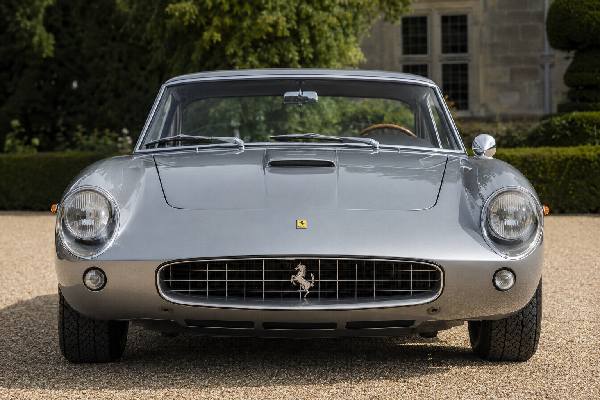
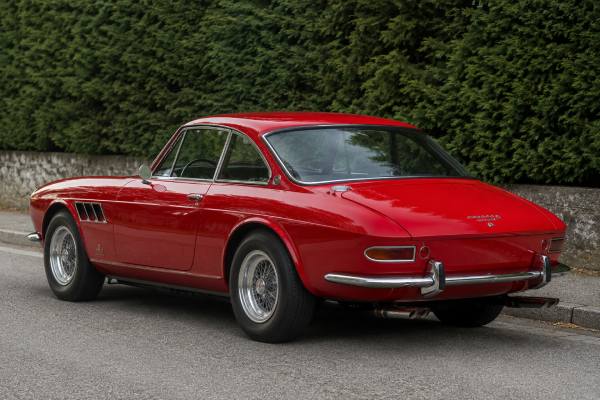
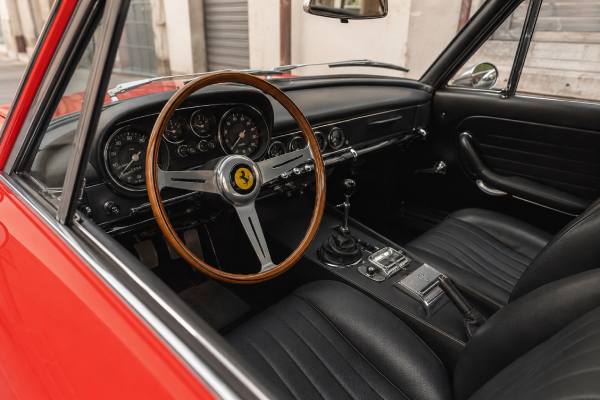
The Ferrari 330 GTC Speciale is one of the most intriguing coachbuilt Ferraris of the late 1960s: a front-engine, V12-powered grand touring coupe based on the Tipo 592 330 GTC chassis and powered by the 4.0-liter Tipo 209/66 Colombo V12. Built during 1966 and 1967 in extremely small numbers by Pininfarina, it sits between regular production Ferrari road cars and the fading age of individually commissioned coachbuilt specials.
The regular 330 GTC was already one of Ferrari’s most balanced road cars of the period, pairing the 4.0-liter V12 from the 330 GT 2+2 with a short-wheelbase chassis, independent rear suspension, and a rear transaxle. The Speciale took that foundation and added experimental Pininfarina styling, including covered or pop-up auxiliary lamps, distinctive rear treatment, and details that previewed later Ferrari grand tourers. Its importance is not only mechanical. It is also a window into how Ferrari and Pininfarina were moving from one-off elegance toward more repeatable, modern production design.
For buyers and collectors, the 330 GTC Speciale is not a normal classic Ferrari purchase. Authenticity, chassis identity, restoration accuracy, coachbuilt detail, and documentation matter as much as the mechanical condition. A standard 330 GTC can be assessed as a rare and desirable V12 Ferrari. A Speciale must be judged as a specific historical object.
Quick Take
The Ferrari 330 GTC Speciale combines one of Ferrari’s best 1960s road-car platforms with rare Pininfarina special-body design, giving it more historical interest than a standard 330 GTC and more usability than many earlier coachbuilt Ferraris. Its 4.0-liter Tipo 209/66 V12, five-speed transaxle, independent suspension, and elegant two-seat cabin make it a serious grand tourer, but the main caution is authenticity: value depends heavily on chassis history, original special features, restoration quality, and expert documentation rather than mileage or cosmetic condition alone.
Table of Contents
- History and Collector Importance
- Tipo 592 Chassis and V12 Specifications
- Production, Variants and Original Details
- Pininfarina Design and Special Engineering
- Road Feel, Performance and Character
- Maintenance, Restoration and Known Risks
- Values, Buying Advice and Rivals
History and Collector Importance
The 330 GTC Speciale matters because it links Ferrari’s regular-production grand tourers with the last phase of bespoke Pininfarina coachbuilding. It used the proven mechanical base of the 330 GTC but received special styling and detail work that made each known example more historically significant than a normal production coupe.
Ferrari introduced the standard 330 GTC at the 1966 Geneva Salon. It filled an important gap in the range: more intimate and sporting than the 330 GT 2+2, more refined and road-focused than a competition-minded berlinetta, and easier to live with than older coachbuilt Ferraris. The car’s basic formula was ideal for wealthy drivers who wanted speed, comfort, and long-distance ability without moving to a four-seat layout.
The Speciale story is narrower and more personal. Pininfarina used the 330 GTC platform for special-bodied and development cars, including examples connected with high-profile clients and design experimentation. The best-known 1967 Speciale cars are tied to Princess Lilian de Réthy of Belgium, Dr. Michael DeBakey, and other distinguished first owners. These cars were not simply regular GTCs with optional trim. They had distinctive bodywork, revised front and rear styling, and features that helped preview later Ferrari design themes.
This was also a transitional moment for Ferrari. Earlier 1950s and early 1960s road Ferraris often had more individual coachbuilt variation. By the late 1960s, Ferrari was building road cars in larger batches, and the economics of extremely low-volume bespoke production were becoming less practical. The 330 GTC Speciale therefore feels like one of the last elegant echoes of the old coachbuilt era, but built on a more modern and usable platform.
The regular 330 GTC’s reputation helps explain the Speciale’s appeal. Enthusiasts often view the 330 GTC as one of the most harmonious road Ferraris of its decade. It has the classic front-mounted Colombo V12, a five-speed rear transaxle for good weight distribution, independent rear suspension, disc brakes, and a compact two-seat cabin. The Speciale adds rarity and design importance without losing that usable mechanical package.
Collector interest comes from several layers:
- Ferrari V12 identity from the pre-Fiat era.
- Pininfarina special coachwork.
- Very small production and individual chassis histories.
- Links to important owners, motor show appearances, and design development.
- A driving experience that remains usable by 1960s Ferrari standards.
- Strong eligibility for concours, marque events, and serious Ferrari collections.
The car’s historical value also depends on how “Speciale” is defined. Some references use the term narrowly for the four 1967 special-bodied cars with close visual relationship. Others use it more broadly for a small group of 330 GTC-based Pininfarina special or development cars, including earlier experimental examples. A serious buyer should not rely only on a catalog description. The exact chassis number, body number, period photographs, ownership trail, and expert file are essential.
In simple terms, the 330 GTC Speciale is important because it is both beautiful and useful. It is not a fragile styling buck or an isolated show car with no road-car substance. It is a coachbuilt Ferrari that can be understood as part design study, part grand tourer, and part collector-grade artifact.
Tipo 592 Chassis and V12 Specifications
The 330 GTC Speciale used the standard 330 GTC’s core engineering: a Tipo 592 tubular chassis, a front-mounted 4.0-liter Tipo 209/66 V12, rear-wheel drive, and a five-speed manual transaxle. That combination gave it the mechanical balance that makes the regular 330 GTC so respected.
| Category | Specification |
|---|---|
| Production period | 1966–1967 for Speciale and development examples; standard 330 GTC production continued into 1968 |
| Body style | Two-seat coupe, special Pininfarina coachwork |
| Chassis | Tipo 592 tubular steel chassis |
| Engine | Tipo 209/66 60-degree Colombo V12 |
| Displacement | 3,967 cc |
| Bore x stroke | 77 mm x 71 mm |
| Compression ratio | 8.8:1 |
| Fuel system | Three twin-choke Weber carburetors |
| Maximum output | About 300 hp |
| Transmission | Five-speed manual rear transaxle |
| Drivetrain | Front engine, rear-wheel drive |
| Suspension | Independent front and rear suspension with wishbones, coil springs, telescopic dampers, and anti-roll bars |
| Brakes | Four-wheel disc brakes |
| Wheelbase | 2,400 mm |
| Fuel capacity | About 90 liters |
| Top speed | Approximately 150 mph when correctly tuned |
The engine is central to the car’s character. The Tipo 209/66 V12 belongs to the long-running Colombo family, but in 4.0-liter form it has the torque and smoothness needed for high-speed touring. It is an all-alloy, single-overhead-cam-per-bank V12 with wet-sump lubrication. The 3,967 cc displacement came from a 77 mm bore and 71 mm stroke, the same basic dimensions used in other 330-series Ferraris.
Carburetion is by three twin-choke Webers. Depending on the individual car and documentation, period references may list Weber 40 DCZ/6 or 40 DFI-type carburetors. For a buyer, the exact carburetor type should be checked against the car’s build history and restoration file rather than assumed from a general specification sheet.
The transaxle was one of the major advances of the 330 GTC platform. Instead of placing the gearbox directly behind the engine, Ferrari used a rear-mounted five-speed manual transaxle. This improved weight distribution and helped the car feel more settled than older front-engine Ferraris with more nose-heavy layouts. A torque tube enclosed the driveshaft, improving alignment and reducing vibration issues compared with less rigid arrangements.
The suspension was advanced for a Ferrari road car of the period. Earlier Ferraris often used a live rear axle, which could be strong and predictable but less refined on uneven roads. The 330 GTC’s independent rear suspension gave it better ride quality, better tire contact, and a more modern feel. Unequal-length wishbones, coil springs, telescopic dampers, and anti-roll bars all contributed to the car’s balanced grand touring personality.
The braking system used four-wheel discs. Period brakes require realistic expectations today, but on a healthy car they are entirely suitable for fast road use. Pedal effort, pad material, hydraulic condition, and brake balance make a large difference. A freshly restored system can feel confident and progressive. An old or poorly sorted system can feel wooden, uneven, or weak.
The chassis construction followed Ferrari practice of the time: a tubular steel structure carrying hand-finished bodywork. Some floor and bulkhead areas used fiberglass panels. The Speciale bodywork adds another layer of complexity because coachbuilt panels and detail pieces may differ from car to car.
The headline numbers are only part of the story. A well-sorted 330 GTC Speciale should feel relaxed at speed, strong through the mid-range, and more composed than many earlier V12 Ferraris. The specification was not about brutal acceleration. It was about covering distance quickly with refinement, stability, sound, and mechanical polish.
Production, Variants and Original Details
The 330 GTC Speciale was never a normal catalog model, so production figures require careful wording. The most commonly discussed 1967 Pininfarina Speciale group consists of four special-bodied cars, while some broader collector references include additional 330 GTC-based development or special-order cars under the Speciale label.
That distinction matters. A buyer should ask: is the car one of the closely related 1967 special-bodied Pininfarina cars, an earlier Pininfarina development car, or a standard 330 GTC later described as special because of unique features? Those categories have different historical weight.
The best-known Speciale chassis numbers include cars such as 9439, 9653, 10107, and 10241. Chassis 8727 is also widely discussed as an early Pininfarina development example with distinctive features, including pop-up lamps and other design changes that informed later production details. Some sources and sale descriptions use a broader “one of six” phrasing for Speciale examples built on the 330 GTC platform. Because of this variation, chassis-specific documentation is more reliable than a simple production-count claim.
Key identification points
A real 330 GTC Speciale should be identified by its chassis history, not only by appearance. Important checks include:
- Chassis number and engine number.
- Body number and Pininfarina records where available.
- Period photographs showing original body details.
- Factory build information and ownership history.
- Ferrari Classiche documentation if available.
- Restoration records showing what was repaired, recreated, or changed.
- Expert reports from recognized Ferrari historians or marque specialists.
- Evidence of motor show appearances or first-owner provenance where claimed.
The first two closely related Speciale examples are often noted for pop-up auxiliary lamps and more elaborate front-end detailing. Later cars used different bonnet venting and bumper details. Some cars had wire wheels, while at least one later example used cast alloy wheels. Interior details also varied, including upholstery, dashboard finish, air-conditioning, radio fitment, and trim materials.
Originality and factory options
The regular 330 GTC could be ordered with a range of colors, interior trims, radios, air-conditioning, and wheel choices. The Speciale cars went further because the body and detail features were part of the special commission or development work. That makes originality more complicated than on a standard car.
A standard 330 GTC in its factory color with matching engine and gearbox is already desirable. A Speciale must be judged more tightly. Missing or incorrectly recreated lamps, vents, glass, bumper sections, trim, switches, or upholstery can affect both historical accuracy and value. A car may still be important if a unique feature was lost and later restored, but the quality of evidence behind the restoration matters.
Matching numbers are especially important. For Ferraris of this level, “matching numbers” usually refers to the original-type relationship between chassis, engine, gearbox, and sometimes rear axle or body identity, supported by documentation. It is not enough for a seller to say the engine is “correct type.” A replacement Tipo 209/66 engine may still make the car enjoyable, but it changes the collector equation.
Paint and interior color also matter more than many buyers expect. Original special-order colors, royal or notable-owner specifications, and documented show-car finishes can add value. A tasteful later color may look beautiful but reduce historical purity if it differs from the car’s original identity.
Pininfarina Design and Special Engineering
The 330 GTC Speciale is distinctive because Pininfarina used the proven 330 GTC platform as a design laboratory. Its special bodywork blended Ferrari grand touring elegance with details that anticipated the 365-series road cars and other late-1960s Pininfarina themes.
The standard 330 GTC was already clean and restrained, with a long hood, compact cabin, and elegant tail. The Speciale pushed that language in a more dramatic direction. The front end could feature covered headlights or pop-up auxiliary lamp arrangements inspired by earlier Pininfarina show-car ideas and the 365 California. These details gave the car a smoother, more exclusive face than the production GTC.
The side profile retained the classic front-engine Ferrari proportions: long bonnet, low roof, short rear deck, and a cabin placed slightly rearward. The Speciale treatment often deleted or altered the standard GTC’s familiar side vents, moving engine-bay heat extraction to the bonnet on certain examples. That was not only a styling choice. Bonnet venting could improve heat release from the engine compartment, an important point on a carbureted V12 grand tourer.
The rear design is one of the car’s most important visual signatures. Some Speciale bodies used a more extended tail, broader glass area, and a treatment that foreshadowed later Pininfarina-bodied Ferraris. The large rear window and buttress-like forms gave the car a more modern, airy look than many earlier GTs. It also helped the cabin feel less closed-in.
Inside, the 330 GTC Speciale remained a grand tourer rather than a stripped sports car. The dashboard layout kept the important instruments clear, with large main dials and supporting gauges for oil pressure, oil temperature, water temperature, fuel, charging, and time. Air-conditioning and a radio were important comfort features, especially for owners who used these cars for long trips rather than static display.
Special interior features varied by car. Some details, such as revised vents, unique upholstery materials, altered switchgear, or different trim finishes, are small in isolation but historically important because they show Pininfarina testing ideas. On a Speciale, a small lever, vent outlet, lamp switch, or trim panel can be as important as a larger body panel because it may prove the car’s development role.
The engineering beneath the styling remained practical. The V12 sat ahead of the cabin, the rear transaxle helped balance the mass, and independent suspension made the car suitable for fast European roads. Cooling, ventilation, and cabin comfort were not afterthoughts. Pininfarina and Ferrari understood that a high-end GT needed to look special while still working in real weather and real traffic.
Sound is another special feature, even though it is not visible. The 4.0-liter V12 has a smoother, deeper character than smaller Colombo units. Through period exhaust systems, it can sound refined at cruising speed and sharper near the upper rev range. The intake noise from the triple Weber setup adds a mechanical texture that modern fuel-injected supercars do not reproduce.
The Speciale’s appeal is therefore not based on one gimmick. It comes from the complete relationship between body, chassis, engine, and context. The car looks like a one-off, drives like a sorted 330 GTC, and carries design ideas that reached beyond its tiny production run.
Road Feel, Performance and Character
A properly sorted 330 GTC Speciale should feel fast, composed, and highly mechanical rather than explosive by modern standards. Its greatest strength is the way the V12, transaxle, steering, suspension, and seating position work together for long-distance pace.
The engine is flexible but rewards revs. Below the mid-range, the 4.0-liter V12 pulls smoothly and cleanly when the carburetors are synchronized and ignition is set correctly. As revs rise, the engine becomes more urgent without losing refinement. It is not a peaky racing engine in road trim, but it is happiest when warmed properly and used with confidence.
Cold behavior is part of the classic Ferrari experience. The car needs mechanical sympathy during warm-up. Oil temperature matters, gearbox oil is thick when cold, and carburetors may need a few minutes before response becomes crisp. A rushed start and hard use from cold are bad signs in an owner and bad news for the engine.
The five-speed transaxle is a major part of the driving experience. When cold, shifts may be deliberate, especially into second gear. Once warm, a healthy gearbox should feel mechanical, accurate, and satisfying. It will not shift like a modern sports car, but it should not grind, baulk badly, or jump out of gear. Poor shift quality may indicate adjustment issues, worn synchros, clutch problems, or internal wear.
Steering is generally one of the 330 GTC’s best qualities. At parking speed it can feel heavy, especially on period-correct tires. Once moving, it becomes more natural and communicative. The short wheelbase and balanced chassis make the car feel smaller than its value might suggest. It is a GT, not a nervous race car.
Ride quality is better than many earlier Ferraris because of the independent rear suspension. On good tires and fresh dampers, the car should breathe with the road rather than crash over it. Tired suspension bushings, old shocks, incorrect ride height, or worn tires can make the car feel vague, harsh, or unstable.
Brakes require realistic expectations. The four-wheel discs are capable for fast road use, but pedal effort and feel differ from modern assisted systems. A good car stops straight and predictably. A poor car may pull to one side, pulse, feel wooden, or fade quickly under repeated hard use. Because these cars are valuable, some owners drive them gently, which can hide brake problems until a proper road test.
Cabin visibility is good for a 1960s GT, especially in cars with the Speciale’s airy glass treatment. The driving position is classic Italian GT: close to the wheel, with pedals that may feel offset by modern standards. Heat management can vary. A well-restored cooling and ventilation system makes the car much more pleasant; a neglected car can become hot and tiring in slow traffic.
Performance figures from the period vary, but a top speed around 150 mph and 0–60 mph in roughly the six-to-seven-second range are reasonable expectations for a healthy car. More important than the numbers is the way it gathers speed. The car feels fluent rather than aggressive. It is built for mountain roads, open autostrada running, and fast touring, not stoplight drama.
The difference between a restored, properly sorted example and a tired one is enormous. A good 330 GTC Speciale feels expensive in the best sense: tight, balanced, smooth, and alive. A bad one can feel like an old car with a valuable badge. That gap is why specialist inspection is essential.
Maintenance, Restoration and Known Risks
Owning a 330 GTC Speciale is less about routine reliability and more about condition control, expert maintenance, and preservation of historically correct details. The mechanical base is strong when maintained, but age, corrosion, poor restorations, and incorrect parts can create very expensive problems.
The V12 itself is durable by classic Ferrari standards, but only if treated correctly. Oil pressure, cooling health, carburetor setup, ignition condition, valve adjustment, timing-chain condition, and leak control all matter. A car that has sat for years may run, but that does not mean it is safe to use hard. Fuel systems, gaskets, seals, water pumps, hoses, and ignition components can deteriorate while the odometer barely moves.
Common mechanical inspection areas include:
- Oil pressure when hot at idle and under load.
- Coolant temperature stability in traffic and on open roads.
- Carburetor condition, throttle-shaft wear, synchronization, and fuel leaks.
- Fuel tank condition and fuel-line age.
- Timing-chain noise and valve-train condition.
- Exhaust smoke on start-up, acceleration, and overrun.
- Clutch take-up, release bearing noise, and pedal feel.
- Transaxle synchro wear, especially when shifting into lower gears.
- Differential noise, vibration, and leaks.
- Brake caliper condition, hose age, master cylinder health, and booster function.
Cooling is especially important. A 4.0-liter carbureted V12 produces serious heat. Radiator condition, fan operation, water pump health, thermostat function, and correct coolant routing all need attention. Overheating can lead to expensive engine damage, and repeated heat soak can make the car unpleasant to drive.
Electrical systems are another age-related concern. Wiring insulation, fuse panels, relays, switches, lighting motors, gauges, and charging systems can all suffer from age and previous repairs. On a Speciale with unique lamp mechanisms or unusual interior controls, the electrical system may include parts that are difficult to source or must be rebuilt by a specialist.
The body and chassis are where the largest restoration risks often hide. Tubular steel frames can suffer corrosion, accident damage, poor repairs, and alignment problems. Coachbuilt body panels may have been repaired multiple times over decades. A shiny paint finish can hide filler, incorrect panel contours, or missing original details.
Areas to inspect carefully include:
- Lower body panels and sills.
- Door bottoms, bonnet edges, boot edges, and wheel arches.
- Chassis tubes and suspension pickup points.
- Front structure around lamp mechanisms and bumper mounts.
- Rear body structure and tail-light areas.
- Floor panels, footwells, and firewall sections.
- Evidence of old accident repair or panel replacement.
- Fit and movement of special lamps, vents, glass, and trim.
Restoration quality can vary widely. Some older restorations were done when originality standards were less strict and documentation was harder to access. A car may have correct-looking paint and trim but incorrect stitching, wrong switches, incorrect lamps, wrong wheel type, or simplified mechanisms. On a normal classic, these might be small issues. On a 330 GTC Speciale, they can affect historical credibility.
Parts availability is mixed. Mechanical parts for 330-series Ferraris are supported by specialists, but they are not cheap. Speciale-specific body, trim, glass, lamp, and interior pieces may be impossible to buy off the shelf. Recreating them correctly can require period photographs, skilled metalwork, and deep Ferrari knowledge.
Originality versus usability is a careful tradeoff. Sensible hidden upgrades, such as improved cooling efficiency, modern tire compounds in correct sizes, discreet ignition improvements, or better heat shielding, may make the car more usable. Visible changes, incorrect trim, modern audio cut into original panels, non-original paint schemes, or modified bodywork can harm value.
A pre-purchase inspection should involve both a mechanical Ferrari specialist and someone familiar with coachbuilt body authenticity. The goal is not only to find faults. It is to separate normal age from value-changing problems.
Values, Buying Advice and Rivals
The 330 GTC Speciale sits above a standard 330 GTC in historical interest, but its value is highly chassis-specific. Provenance, originality, documentation, special-body authenticity, and restoration quality drive the market more than mileage or simple condition grading.
Standard 330 GTC values have generally occupied the high six-figure collector-car range in recent years, with stronger cars bringing more when they have desirable colors, matching numbers, documentation, and excellent restoration quality. Speciale examples can command a premium, but that premium is not automatic. A famous, well-documented, correctly restored Speciale with its unique details intact is a very different proposition from a car with ambiguous history or recreated features.
Public auction results show the spread. A highly important 1967 330 GTC Speciale connected with Dr. Michael DeBakey sold for several million dollars in 2018. Another early Pininfarina development-style Speciale, chassis 8727, has appeared at a much lower but still substantial level. That difference does not mean one car is “cheap” and another is “expensive” in a simple sense. It reflects different chassis stories, body types, provenance, market timing, and buyer perception.
What drives value
The most important value factors are:
- Confirmed chassis identity and Speciale status.
- Matching or original engine and major components.
- Pininfarina body number and coachwork documentation.
- Period photos showing original details.
- First-owner importance, royal links, motor show history, or notable collection history.
- Ferrari Classiche certification or equivalent expert documentation.
- Correct restoration of unique lamps, vents, bumpers, glass, and trim.
- Original color combination or historically accurate restoration colors.
- Mechanical freshness from a respected Ferrari specialist.
- Clean ownership chain with invoices, correspondence, and research.
Buyers should be cautious of vague language. Phrases such as “believed to be,” “in the style of,” “Speciale-type,” or “inspired by” need follow-up. On a car of this level, the seller should provide more than attractive photography. The file should explain exactly what the car was when new, what was changed, what was restored, and what evidence supports the current presentation.
Inspection priorities before purchase
A serious buyer should work through the car in this order:
- Confirm chassis, engine, gearbox, and body identity.
- Review factory, Pininfarina, Classiche, and historian documentation.
- Compare current body details with period photographs.
- Inspect chassis structure and accident history.
- Road-test the car from cold to full operating temperature.
- Check compression, leak-down, oil pressure, and cooling performance.
- Inspect transaxle, clutch, brakes, steering, and suspension.
- Review restoration invoices and identify who did the work.
- Confirm the presence of tools, books, records, and special parts.
- Compare the asking price with truly comparable chassis, not ordinary 330 GTCs alone.
The best examples to seek are well-documented cars with known ownership, accurate restoration, healthy mechanicals, and no unresolved questions about body identity. The cars to avoid are those with beautiful paint but unclear history, missing special parts, poor chassis repairs, weak mechanical records, or seller claims that cannot be independently supported.
Closest Ferrari alternatives include the standard 330 GTC, the open 330 GTS, the 275 GTB, the 365 GTC, and the 365 GT 2+2. The 330 GTC is usually the closest driving comparison. The 330 GTS offers open-air rarity at a higher price. The 275 GTB is more famous and sporting, with a stronger competition aura. The 365 GTC feels like a later evolution of the same grand touring idea. The 365 GT 2+2 offers more cabin space but less compact elegance.
Period non-Ferrari rivals include the Lamborghini 400 GT, Maserati Mexico, Aston Martin DB6, and Iso Grifo. Each has appeal, but none matches the combination of Ferrari V12 cachet, Pininfarina special-body provenance, and transaxle-era Ferrari chassis balance in quite the same way.
For long-term collectability, the 330 GTC Speciale has the right ingredients: rarity, beauty, V12 power, Pininfarina authorship, and a meaningful place in Ferrari design history. The main risk is not lack of desirability. It is paying a Speciale price for a car whose documentation, originality, or restoration quality cannot support the story.
References
- Ferrari 330 GTC (1966) 1966
- Guide: Ferrari 330 GTC Speciale – a Historical & Technical Appraisal 2020
- 1966 Ferrari 330 GTC Speciale by Pininfarina | Arizona 2022 | RM Sotheby’s 2022
- 1967 Ferrari 330 GTC Speciale | Gooding Christie’s 2018
- Ferrari Vintage 330 GTC Speciale By Pininfarina Available For Immediate Sale At Sotheby’s 2025
Disclaimer
This article is for informational purposes only and is not a substitute for professional diagnosis, repair, appraisal, or authentication. Specifications, torque values, service intervals, procedures, and correct components can vary by chassis number, market, equipment, restoration history, and individual factory build details. Always verify important information against official service documentation, Ferrari Classiche records, marque-specialist research, and a qualified inspection of the specific car.
If this guide helped you, please consider sharing it on Facebook, X/Twitter, or your favorite car community to support our work.