
The Ferrari 330 GTC, built from 1966 to 1968, is the short-wheelbase, two-seat grand touring coupé that joined Ferrari’s 4.0-liter V12 smoothness with the more sophisticated chassis layout of the 275 GTB family. Its Tipo 209/66 Colombo-derived V12 produced 300 hp, while its Tipo 592 chassis used a rear-mounted five-speed transaxle and fully independent suspension. That combination gave the 330 GTC a rare balance: it was faster and sharper than the larger 330 GT 2+2, yet more refined and easier to live with than the more aggressive 275 GTB.
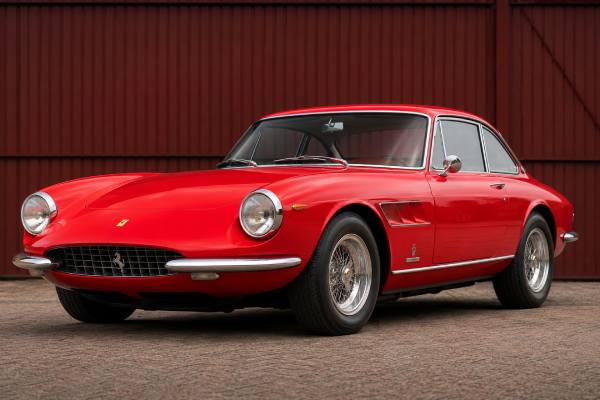
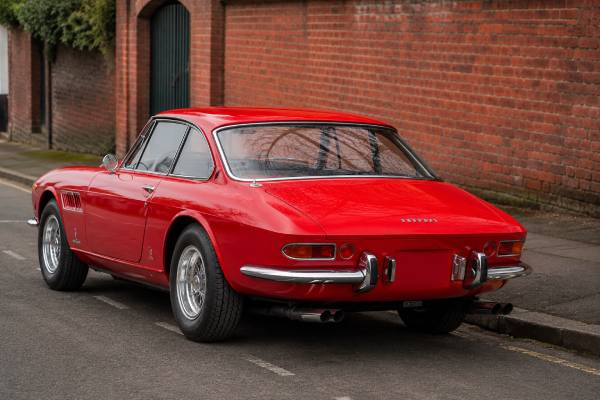
Pininfarina gave the car a clean, restrained shape that still looks modern by 1960s Ferrari standards. The nose borrowed the elegant formality of the 500 Superfast, while the rear carried hints of the 275 GTS. Today, collectors value the 330 GTC because it sits at a sweet point in Ferrari history: front-engine V12, manual gearbox, hand-built coachwork, usable road manners, and limited production without the extreme prices of rarer competition Ferraris.
Its appeal is not only visual or historical. A good 330 GTC is one of the most satisfying classic Ferraris to drive on real roads. A poor one, however, can absorb serious money through engine work, rust repair, missing trim, tired suspension, incorrect parts, or weak documentation. That makes the details matter.
Quick Take
The Ferrari 330 GTC is best understood as a refined 1960s V12 Ferrari with serious engineering beneath its elegant Pininfarina body: a 4.0-liter Tipo 209/66 engine, five-speed rear transaxle, independent rear suspension, and compact 2,400 mm wheelbase. Its strongest appeal is the mix of usability, balance, sound, and classic Ferrari presence, while the main caution is condition sensitivity. Matching numbers, Ferrari Classiche documentation, original bodywork, correct trim, rust-free structure, and evidence of specialist maintenance matter more than cosmetic shine.
Table of Contents
- History and Significance
- Engine, Chassis and Specifications
- Production, Variants and Options
- Design, Engineering and Special Features
- Driving Experience and Performance
- Maintenance, Reliability and Restoration
- Market Value, Buying Guide and Rivals
History and Significance
The 330 GTC matters because it joined Ferrari’s refined 4.0-liter road-car V12 with one of the company’s best-balanced 1960s chassis layouts. It was not a stripped competition car, but it carried enough of Ferrari’s serious engineering to make it far more than a luxury coupé.
Ferrari introduced the 330 GTC at the 1966 Geneva Motor Show. It arrived during a busy and important period for the brand. The older 250-series road cars had already established Ferrari as the maker of glamorous front-engine V12 grand tourers, while the 275 GTB had moved the sporting berlinetta line forward with a rear transaxle and independent rear suspension. The 330 GTC effectively blended these worlds.
In the model line, it sat between the larger 330 GT 2+2 and the more hard-edged 275 GTB. The 330 GT 2+2 was a four-seat grand tourer with more formal proportions. The 275 GTB was more focused and more expensive in many collector contexts. The 330 GTC offered two seats, useful luggage space, strong V12 performance, and a calmer cabin. It appealed to buyers who wanted a Ferrari they could use for fast road travel without giving up the mechanical sophistication of the best mid-1960s road cars.
Pininfarina designed and bodied the coupé, with bare chassis supplied from Maranello and finished bodies returning to Ferrari for final mechanical completion. This was still a hand-built era, so small variations in panel fit, trim, details, and restoration history are normal. That also means authenticity can be complex. A 330 GTC is not judged only by whether it looks correct from ten feet away. Body numbers, chassis numbers, engine numbers, gearbox numbers, original colors, factory equipment, and old records all affect its standing.
The car also marked a maturing point in Ferrari’s road-car identity. Earlier Ferraris could be demanding, noisy, hot, and sometimes abrupt. The 330 GTC retained the V12 drama but made it more civilized. The steering, gearbox, ride, visibility, and cabin layout all supported real touring use. That is why the model has long been admired by people who actually drive their classics, not only by collectors who display them.
Production ended in 1968 as Ferrari moved into the 365 era. The 365 GTC followed with a larger 4.4-liter V12 and similar broad mission, but the 330 GTC remains especially prized for its clean proportions and classic 4.0-liter character. It is also rarer than many casual observers assume, with fewer than 600 coupés generally accepted as built.
Today, the 330 GTC has strong concours relevance, high restoration value, and serious collector demand. It is not as famous as a 250 SWB, 275 GTB/4, or Daytona, but among experienced Ferrari owners it has a reputation as one of the most complete classic road Ferraris of its period.
Engine, Chassis and Specifications
The 330 GTC’s main technical identity is its 4.0-liter Tipo 209/66 V12 paired with a rear-mounted five-speed transaxle. That layout helped the car feel balanced, stable, and more modern than many earlier front-engine Ferraris.
| Item | Specification |
|---|---|
| Production years | 1966–1968 |
| Body style | Two-seat coupé by Pininfarina |
| Chassis type | Tipo 592 tubular steel chassis |
| Engine | Tipo 209/66 60-degree V12, front longitudinal |
| Displacement | 3,967.44 cc |
| Bore x stroke | 77 mm x 71 mm |
| Valve gear | Single overhead camshaft per bank, two valves per cylinder |
| Fuel system | Three twin-choke Weber carburetors |
| Maximum power | 300 hp at 7,000 rpm |
| Drive | Rear-wheel drive |
| Gearbox | Five-speed manual rear transaxle |
| Top speed | About 242 km/h |
The engine belongs to the wider Colombo V12 family, but by the 330 GTC period it had grown into a larger and stronger road-car unit. The 3,967 cc displacement gives generous torque compared with the smaller 3.0-liter and 3.3-liter Ferraris, so the car does not need constant high-rpm work to feel quick. It still likes revs, but it is more flexible than many earlier V12 Ferraris.
The carburetion is a key part of the character. Correct Weber setup affects starting, idle quality, throttle response, fuel smell, and drivability at low speed. A properly tuned 330 GTC feels smooth and clean once warm. A badly set-up car may spit back, hesitate, run rich, foul plugs, or feel flat at part throttle.
| Area | Specification |
|---|---|
| Front suspension | Independent unequal-length wishbones, coil springs, telescopic dampers, anti-roll bar |
| Rear suspension | Independent unequal-length wishbones, coil springs, telescopic dampers, anti-roll bar |
| Brakes | Four-wheel disc brakes |
| Steering | Worm-and-roller |
| Wheelbase | 2,400 mm |
| Length | 4,470 mm |
| Width | 1,665 mm |
| Height | 1,282 mm |
| Dry weight | About 1,300 kg |
| Fuel capacity | 90 liters |
| Tyres | 205 x 14 |
The rear transaxle is one of the car’s most important features. It moves gearbox mass rearward and helps the car feel more settled than a traditional front-engine, front-gearbox layout. It also links the 330 GTC directly to Ferrari’s more advanced mid-1960s road cars.
The suspension was sophisticated for a grand touring Ferrari of the period. Unlike the larger 330 GT 2+2, the GTC used independent rear suspension. That gives the car better composure over uneven roads, better traction during fast cornering, and a more polished ride. Period disc brakes are effective when properly rebuilt and adjusted, but they should not be judged like modern carbon-ceramic systems. Pedal feel, pad material, hose age, caliper condition, and fluid quality all matter.
Production, Variants and Options
The standard 330 GTC was a two-seat Pininfarina coupé, and its desirability today depends heavily on authenticity, documentation, and factory-correct details. The headline production figure is generally given as 598 coupés, making it rare but not impossible to find in the collector market.
The 330 GTC was joined by the 330 GTS, the open spider version introduced later in 1966. The GTS used closely related mechanicals but is much rarer and usually far more expensive. This article focuses on the GTC coupé, though buyers often compare the two because they share much of the same appeal.
There were no broad modern-style trim levels. Instead, value and specification depend on individual factory equipment, market delivery, colors, wheels, interior trim, and later history. Air conditioning, power windows, and Borrani wire wheels are commonly discussed options or desirable equipment, though buyers should confirm whether such items were original to the specific chassis or added later.
| Area | Why it matters |
|---|---|
| Chassis number | Confirms identity and supports factory-history research |
| Engine number | Matching original engine is a major value factor |
| Gearbox number | Original transaxle supports authenticity |
| Body number | Useful for confirming original coachwork |
| Factory colors | Original color combinations can affect collector appeal |
| Classiche certification | Helpful, but still should be checked against the car itself |
| Old records | Continuous history reduces uncertainty and supports value |
Four Pininfarina-built 330 GTC Speciale cars are important in the wider story, but they are separate collector objects with unique bodywork and should not be confused with normal production GTCs. There was also a one-off Zagato-bodied car created later from a 330 GTC chassis. These special cars influence the model’s mythology, but they do not define the regular GTC buying process.
Factory documentation is central. A serious buyer should look for handbooks, tool roll, jack, old registration records, restoration invoices, service records, ownership history, photographs before and during restoration, and any Ferrari Classiche paperwork. Missing tools or books are not unusual, but they can be expensive to replace and may affect concours presentation.
Originality is not always simple. Many cars have been restored, repainted, retrimmed, converted to different colors, fitted with modern ignition parts, upgraded cooling fans, or changed wheels. Some changes improve usability, but collector value usually favors reversible upgrades and careful preservation of original components.
Design, Engineering and Special Features
The 330 GTC’s design is special because it avoids excess. It is elegant, compact, and balanced, with engineering choices that support the same calm but capable personality.
The Pininfarina body combines several Ferrari themes without looking like a parts-bin design. The slim oval grille and recessed headlamps recall the formal 500 Superfast. The rear treatment has a relationship to the 275 GTS. The roofline is clean, the glasshouse is airy, and the side profile has just enough tension to avoid looking soft.
The body construction follows classic coachbuilt Ferrari practice. The main body is steel, while opening panels such as the hood, doors, and trunk lid are commonly aluminum. That mix saves weight but also creates restoration complexity. Aluminum panels can suffer from poor repairs, stress cracking, corrosion where metals meet, and bad fit after accident work. Steel areas can rust in hidden seams and lower sections.
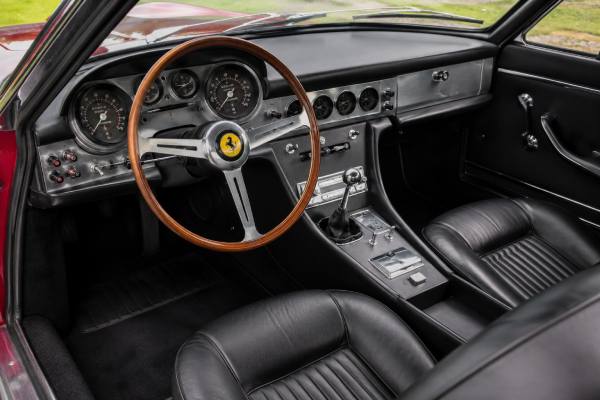
The cockpit is one of the reasons the GTC is loved by drivers. It is simple, upright enough for real touring, and less cramped than some more aggressive Ferraris. The large wood-rim steering wheel, clear instruments, leather trim, and long gear lever create a classic Ferrari atmosphere without making the car feel theatrical for its own sake.
Mechanically, the most important special features are not flashy. They are the rear transaxle, independent rear suspension, compact wheelbase, and torquey V12. Together, these give the GTC a sense of ease. The car can cover distance quickly without feeling busy. It also responds well when the road becomes more demanding.
Cooling and airflow are practical concerns rather than styling trivia. The front grille, engine bay, radiator, fans, ducting, and under-bonnet heat management all matter because a carbureted V12 in a hand-built 1960s body generates serious heat. Cars used in modern traffic need a cooling system in excellent condition. Many drivability complaints trace back to weak fans, partially blocked radiators, tired water pumps, incorrect ignition timing, or fuel percolation.
The exhaust note is another defining feature. The 4.0-liter V12 has a smoother, deeper voice than the smaller-capacity cars. It is not as frantic as a competition engine, but it builds into a rich, layered sound as the revs rise. Intake sound from the Weber carburetors adds to the experience, especially when the throttle is opened cleanly after warm-up.
The result is a car that feels engineered for fast continental travel rather than short bursts of drama. That is why the 330 GTC’s beauty is more than visual. Its proportions, cabin, engine, suspension, and controls all point toward the same goal: effortless speed with classic Ferrari involvement.
Driving Experience and Performance
A well-sorted 330 GTC feels quick, smooth, and unusually usable for a 1960s Ferrari. Its performance is not modern-supercar violent, but its balance, sound, and mechanical feel make it deeply rewarding.
Starting procedure matters. The car should be allowed to warm properly before hard use. Oil temperature, coolant temperature, carburetor behavior, and gearbox feel all improve once the mechanical parts are warm. A cold example may feel stiff through the transaxle and slightly uneven through the carburetors. That is normal to a point; persistent misfire, smoke, overheating, or heavy gear selection is not.
Acceleration is strong for a classic GT. The 300 hp V12 gives the car genuine long-legged pace, and period top-speed claims around 242 km/h show how serious the package was in its day. More important than numbers is the way the engine delivers power. It pulls smoothly from moderate revs, then becomes more urgent and musical as it climbs toward the upper range.
The gearbox is a major part of the experience. The five-speed manual transaxle rewards clean, deliberate shifts. It should not be rushed when cold. Once warm and correctly adjusted, it gives the driver a precise mechanical connection to the car. Worn synchros, poor linkage adjustment, tired clutch hydraulics, or incorrect oil can spoil the feel.
Steering is unassisted and uses a worm-and-roller system. At parking speeds it requires effort, especially with correct full-profile tires. On the move it lightens and gives a graceful, period-correct sense of direction. It is not razor-sharp like a modern rack-and-pinion sports car, but it suits the car’s grand touring role.
Ride quality is one of the GTC’s great strengths. The independent rear suspension helps the car breathe with the road instead of skipping over it. On older tires or tired dampers, it may feel vague, floaty, or unsettled. On correct tires with fresh suspension bushes and properly rebuilt dampers, it feels composed and confidence-inspiring.
Braking is strong enough for road use when the system is healthy. The driver should expect a firmer, more progressive period feel rather than modern instant bite. Old hoses, sticking calipers, aged pads, contaminated fluid, or poor adjustment can make the brakes feel weak or uneven.
The GTC is also more usable than many classic Ferraris. Visibility is good, the cabin is not absurdly tight, the luggage space is useful, and the engine has enough torque for relaxed driving. Heat, fuel smell, and noise depend heavily on condition and setup. A restored car with proper insulation, sealing, cooling, and carburetor tuning can be surprisingly civil. A neglected car can feel hot, fussy, and tiring.
Maintenance, Reliability and Restoration
The 330 GTC can be dependable in classic Ferrari terms, but only when maintained by people who understand carbureted V12 Ferraris. Neglect is expensive, and cosmetic restoration without mechanical depth is one of the biggest risks.
The engine itself is robust when healthy, but a 4.0-liter Ferrari V12 is not a casual ownership proposition. Valve adjustment, carburetor synchronization, ignition condition, oil leaks, cooling performance, timing, compression, and leak-down results all matter. A car that starts easily, holds temperature, pulls cleanly, and has even readings across all cylinders is much more reassuring than one with fresh paint and vague service history.
Common maintenance and restoration focus areas include:
- Cooling system condition, including radiator, fans, hoses, thermostat, water pump, and correct coolant flow.
- Carburetor wear, jetting, synchronization, throttle-shaft condition, and fuel-line safety.
- Ignition health, including distributors, coils, leads, plugs, timing advance, and any electronic conversion.
- Oil leaks from engine, gearbox, differential, cam covers, and seals.
- Clutch wear, hydraulic operation, release bearing noise, and pedal feel.
- Transaxle synchros, bearings, linkage adjustment, and limited-slip differential condition.
- Suspension bushes, ball joints, dampers, springs, wheel bearings, and alignment.
- Brake calipers, discs, master cylinder, servo, flexible hoses, and handbrake function.
- Electrical wiring, switches, gauges, alternator output, fuse boxes, and earth connections.
Rust inspection is essential. The 330 GTC’s value justifies proper metalwork, but poor rust repair can damage both safety and originality. Inspect lower body sections, sills, floors, wheel arches, door bottoms, front and rear valances, suspension pickup areas, battery area, and hidden seams. Paint bubbles are only the visible part of the problem. A specialist should examine the chassis tubes and body structure from below.
Accident history is another major concern. These cars were valuable for much of their lives, but not always valuable enough to receive perfect repairs decades ago. Look for uneven panel gaps, mismatched metalwork, distorted inner panels, non-original welds, incorrect fasteners, poor bonnet and door fit, and signs that body numbers do not align with the car’s claimed identity.
Interior restoration can be expensive because correct materials, stitching, carpets, instruments, switches, and trim pieces matter. A retrim in the wrong leather grain or color may look attractive to a casual buyer but reduce concours credibility. Original interiors with patina can be more desirable than over-restored cabins if they are well preserved.
| Priority | What to check | Why it matters |
|---|---|---|
| Identity | Chassis, engine, gearbox, and body numbers | Authenticity drives value |
| Structure | Rust, chassis tubes, old repairs, accident damage | Metalwork can exceed normal service costs |
| Engine | Compression, leak-down, oil pressure, smoke, leaks | V12 rebuilds are major investments |
| Cooling | Temperature stability in traffic and after hard use | Overheating can damage the engine |
| Transmission | Synchros, clutch, differential noise, shift quality | Transaxle work requires specialist labor |
| Documentation | Ownership history, invoices, restoration photos, certification | Reduces risk and supports future resale |
Restoration quality varies widely. A top-level restoration should include body, paint, engine, gearbox, suspension, brakes, electrics, interior, plating, glass, trim, and road testing. A car restored mainly for appearance may still need deep mechanical work. Buyers should be especially cautious with cars that have fresh paint but no photo record of bare-metal work.
Originality versus upgrades is a personal choice. Modern cooling fans, improved ignition reliability, discreet fuel-system safety updates, and radial tires suited to the car can make ownership easier. The best upgrades are reversible and documented. Cutting the body, changing the dashboard, fitting incorrect modern seats, or losing original components usually harms collector value.
Market Value, Buying Guide and Rivals
The 330 GTC sits in the serious mid-six-figure classic Ferrari market, with exceptional cars bringing more and needy projects costing far less only on paper. Condition, originality, documentation, and restoration quality create huge value gaps.
Recent public-auction and price-guide data place good standard GTC coupés below the rare 330 GTS and many 275 GTB variants, but above more common or less sporting 2+2 Ferraris of the period. That is exactly where the car’s identity sits: rare, elegant, genuinely usable, and mechanically desirable, but not one of the most extreme blue-chip Ferrari icons.
The best cars usually share several traits:
- Matching original engine and gearbox.
- Original or well-documented bodywork.
- Known ownership chain.
- Factory color information and high-quality repaint or preserved original finish.
- Correct interior materials and instruments.
- Ferrari Classiche certification or equivalent specialist documentation.
- Recent mechanical service by a recognized Ferrari specialist.
- Strong road behavior, not only static presentation.
- Complete books, tools, jack, and historical file where available.
Cars to approach carefully include long-stored examples with unknown mechanical condition, fresh restorations without invoices or photos, cars with missing identity details, examples converted to non-original colors without documentation, and cars with shiny paint over poor panel fit. A cheap 330 GTC is often cheap for a reason. Engine work, metal repair, trim correction, and parts sourcing can quickly erase any purchase-price advantage.
A proper buying process should be methodical. First, confirm identity and documentation. Second, inspect the structure and body. Third, test the engine, gearbox, clutch, brakes, suspension, and electrics. Fourth, review the car’s originality against factory records. Fifth, price the car based on what it is, not what it could become after a six-figure restoration.
| Model | How it compares |
|---|---|
| Ferrari 275 GTB | Sportier, more famous, usually more valuable, less relaxed |
| Ferrari 330 GT 2+2 | More practical and less expensive, but less agile and less collectible |
| Ferrari 365 GTC | Similar concept with larger engine and later character |
| Ferrari 365 GTB/4 Daytona | Faster, more dramatic, more muscular, less delicate in design |
| Maserati Ghibli 4.7 | Striking rival GT with V8 power and different market dynamics |
| Aston Martin DB6 | Elegant British alternative with more cabin space and different driving feel |
| Lamborghini 400 GT | Period Italian V12 rival with rarity and strong touring character |
The 330 GTC’s long-term collectability looks strong because it combines the right ingredients: front-engine Ferrari V12, manual gearbox, Pininfarina coachwork, limited production, good road manners, and a respected place in Ferrari history. It is also usable enough that owners can enjoy it on tours, rallies, concours events, and weekend drives.
Buyers should remember that period safety is limited. There are no modern airbags, crash structures, stability systems, or driver assists. Seatbelts, lighting, tires, brakes, and suspension condition are important for real-world use, but this remains a 1960s car.
The smartest purchase is rarely the cheapest car. It is usually the most transparent one: correct identity, honest condition, strong history, known restoration work, and a recent inspection by a specialist who has no stake in the sale. For a 330 GTC, that diligence is not optional. It is the difference between owning one of the most satisfying classic Ferrari grand tourers and inheriting a very expensive set of unresolved problems.
References
- Ferrari 330 GTC (1966) 1966
- Ferrari 330 GTS (1966) 1966
- 1967 Ferrari 330 GTC by Pininfarina 2022
- 1966 Ferrari 330 GTC 2026
- Ferrari 330 GTC: Buyer’s Guide [UPDATED 2026] 2026
Disclaimer
This article is for informational purposes only and is not a substitute for professional diagnosis, repair, appraisal, or pre-purchase inspection. Specifications, torque values, service intervals, parts, and procedures can vary by VIN, market, equipment, restoration history, and later modifications. Always verify details against official service documentation and consult a qualified Ferrari specialist before buying, repairing, or restoring a Ferrari 330 GTC.
If you found this guide useful, please consider sharing it on Facebook, X/Twitter, or your preferred enthusiast community to support our work.