
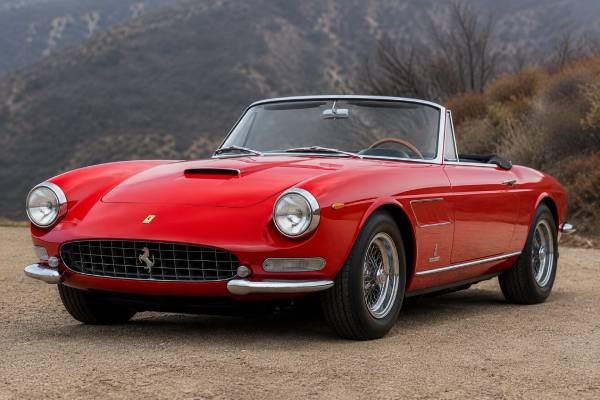
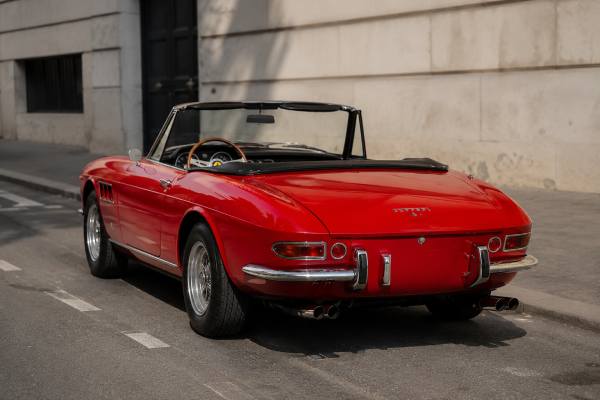
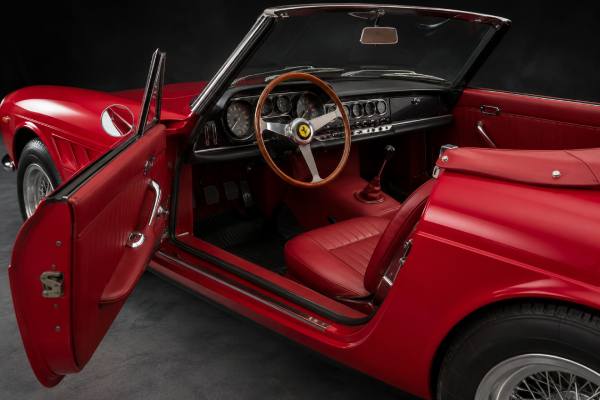
The Ferrari 330 GTS is the open two-seat version of the 330 GTC, built from late 1966 through 1968 with the Tipo 592 chassis and the Tipo 209/66 4.0-litre Colombo V12. It mattered because it combined Ferrari’s refined front-engine grand touring style with the mechanical layout of the best 1960s road Ferraris: independent suspension, a rear five-speed transaxle, four-wheel disc brakes, and a smooth 300 hp V12.
It was not a racing car softened for the road, and it was not a boulevard cruiser wearing a Ferrari badge. The 330 GTS sat in a special middle ground. It had the comfort, visibility, and elegance expected from a Pininfarina-bodied spider, but underneath it shared the short-wheelbase, balanced character that made the 330 GTC and later 275-series cars so admired. Its rarity is central to its appeal. Roughly 99 to 100 examples were built, depending on the source and counting method, which makes every genuine car a serious collector piece.
Today, the 330 GTS is searched by buyers, owners, and enthusiasts for three main reasons: its V12 driving experience, its Pininfarina design, and the high cost of getting the wrong example. A sound, documented, matching-numbers car can be one of the most rewarding open Ferraris of the 1960s. A poorly restored or incomplete car can become a very expensive project.
Quick Take
The Ferrari 330 GTS is appealing because it pairs open-air Pininfarina elegance with one of Ferrari’s most usable 1960s V12 drivetrains: a 4.0-litre Colombo V12, five-speed rear transaxle, independent suspension, and refined grand touring manners. Its main caution is that value depends heavily on authenticity, restoration quality, body integrity, and documentation. With such low production, a correct engine, gearbox, body, factory records, and Ferrari Classiche certification can matter as much as paint condition or mileage.
Table of Contents
- History and Collector Significance
- V12 Specs, Chassis and Performance Data
- Production Details, Variants and Options
- Pininfarina Design and Engineering Character
- Road Feel, Performance and Usability
- Maintenance, Restoration and Known Risks
- Values, Buying Advice and Rivals
History and Collector Significance
The 330 GTS matters because it is one of Ferrari’s rarest open front-engine V12 road cars of the 1960s. It replaced the 275 GTS and translated the 330 GTC’s excellent mechanical package into a more glamorous spider body.
Ferrari introduced the 330 GTC coupe at the Geneva Motor Show in 1966, then followed with the 330 GTS at the Paris Motor Show later that year. The timing is important. Ferrari was moving from the simpler live-axle grand tourers of the early 1960s toward more sophisticated road cars with independent rear suspension, better weight distribution, stronger brakes, and more refined cabins. The 330 GTS caught that transition at a sweet point.
The car used the same broad mechanical idea as the 330 GTC. The V12 sat at the front, but the five-speed gearbox was mounted at the rear as a transaxle. This helped balance the car and gave it a more settled feel than earlier front-engine Ferraris with a conventional gearbox mounted directly behind the engine. It also used a torque tube, which gave the driveline better alignment and reduced vibration.
Pininfarina handled the design and body construction. The 330 GTS was not a chopped coupe in the crude sense. It had its own spider form, with a low fabric roof, a clean tail, slim bumpers, and the kind of restrained detailing that made many late-1960s Ferraris look expensive without looking loud.
Its place in Ferrari history is also tied to scarcity. The 330 GTC coupe was already exclusive, but the GTS was far rarer. Around 100 were made before the model gave way to the 365 GTS, which used a larger 4.4-litre engine. That short production run makes the 330 GTS important for collectors who want an open Colombo V12 Ferrari but cannot, or will not, chase the extreme pricing of a 275 GTS/4 NART Spider.
The 330 GTS also has strong concours relevance. High-quality examples often appear with detailed ownership histories, restoration files, Ferrari Classiche “Red Book” certification, and records from well-known Ferrari historians. These documents are not just display items. They help confirm whether the chassis, engine, gearbox, body, colors, and equipment match the car’s original factory identity.
For enthusiasts, the appeal is more emotional. The 330 GTS is a 1960s Ferrari that can still be understood as a usable road car. It has a large, flexible V12, excellent visibility for the period, a comfortable cockpit, and a less aggressive personality than a 275 GTB. It is still valuable enough to demand care, but it was built to be driven.
V12 Specs, Chassis and Performance Data
The 330 GTS used a 3967.44 cc naturally aspirated V12 producing about 300 hp at 7,000 rpm. Its most important mechanical traits are the front-mounted Colombo V12, rear five-speed transaxle, 2,400 mm wheelbase, independent suspension, and four-wheel disc brakes.
| Item | Specification |
|---|---|
| Production years | 1966–1968 |
| Body style | Two-seat spider |
| Chassis type | Tipo 592 tubular steel chassis |
| Engine | Tipo 209/66 60-degree V12 |
| Displacement | 3967.44 cc |
| Bore x stroke | 77 mm x 71 mm |
| Compression ratio | 8.8:1 |
| Valve gear | Single overhead camshaft per bank, two valves per cylinder |
| Fuel system | Three twin-choke Weber carburetors |
| Maximum output | 300 hp at 7,000 rpm |
| Transmission | Five-speed manual rear transaxle |
| Drive | Rear-wheel drive |
The V12 belongs to Ferrari’s long-running Colombo engine family, but the 4.0-litre 330 unit is not just a bored-out early 250 engine. It used wider bore spacing and had been developed through Ferrari’s larger grand touring cars. In the 330 GTS, it was tuned for smooth, strong road performance rather than peaky competition use.
The 77 mm bore and 71 mm stroke give the engine a free-revving feel, while the larger displacement gives it more flexibility than the smaller 3.0-litre and 3.3-litre V12s. Period output was quoted at 300 hp, with torque commonly listed around 244 lb-ft at 5,000 rpm. More important in real use is the broad pull from the middle of the rev range. A healthy 330 GTS should not need constant high-rpm work to feel quick.
| Area | Specification |
|---|---|
| Front suspension | Independent unequal-length wishbones, coil springs, telescopic dampers, anti-roll bar |
| Rear suspension | Independent unequal-length wishbones, coil springs, telescopic dampers, anti-roll bar |
| Brakes | Four-wheel disc brakes |
| Steering | Worm-and-roller steering |
| Wheelbase | 2,400 mm |
| Length | 4,430 mm |
| Width | 1,675 mm |
| Height | 1,250 mm |
| Dry weight | About 1,200 kg |
| Fuel capacity | About 90 litres |
| Top speed | About 242 km/h, or roughly 150 mph |
The 2,400 mm wheelbase is a key number. It placed the 330 GTS close to the more sporting Ferrari two-seaters rather than the longer 330 GT 2+2. Combined with independent suspension at both ends, it gave the car better body control and a more modern feel than earlier open Ferraris.
The rear transaxle is another major part of the car’s identity. By moving the gearbox rearward, Ferrari improved balance. For a front-engine V12 spider, that helped the 330 GTS feel less nose-heavy than its layout might suggest.
Period performance figures vary depending on source, gearing, tires, and test conditions. A strong car is usually described as capable of 0–60 mph in about six seconds and a top speed around 150 mph. Those numbers are impressive for an open luxury sports car from the late 1960s, but they should not be read like modern instrumented test data. Condition matters greatly. Carburetor setup, ignition health, compression, fuel quality, tire choice, and gearbox condition all change how a 330 GTS feels.
Production Details, Variants and Options
The 330 GTS was built in tiny numbers, with most sources listing either 99 or 100 examples. The difference comes from record-keeping and counting conventions, but the practical point is the same: this is a very rare open Ferrari.
The chassis-number range is generally associated with Ferrari’s odd-numbered road-car sequence of the era. For buyers, individual chassis history is more important than broad production statistics. Each car should be researched as a separate object with its own body number, engine number, gearbox number, original colors, delivery market, and later restoration history.
The GTS was closely related to the 330 GTC coupe. Apart from the open body and related structural differences, the main mechanical package was shared. That means the two cars are often discussed together, but the market treats them very differently. A genuine GTS is far rarer and usually far more valuable.
Left-hand drive, right-hand drive and identification
Most 330 GTS examples were left-hand drive. Right-hand-drive cars are exceptionally rare. Any claimed right-hand-drive example needs especially careful verification because rarity can dramatically affect value.
Useful identifiers include:
- Tipo 592 chassis reference.
- Tipo 209/66 engine identity.
- Spider body by Pininfarina, not a later open conversion.
- Correct chassis, engine, gearbox, and body-number records.
- Factory build data showing original color, trim, market, and equipment.
- Consistent physical stampings and documentation.
A converted coupe is not equivalent to a factory 330 GTS. It may still be an interesting Ferrari, but it belongs in a different value category. Buyers should also be cautious with cars that have lost original components, have unclear identity history, or have had major accident repairs.
Factory options and special equipment
The 330 GTS could be specified with equipment that matters today because it affects both usability and collector interest. Commonly discussed items include Borrani wire wheels, air conditioning, a radio, and a removable hardtop. The hardtop is especially desirable because few cars have one, and original examples are difficult to replace.
Air conditioning is attractive for owners who want to drive the car in warm climates, although any period system should be inspected carefully. Old hoses, tired compressors, weak condensers, and poor electrical connections can make the system ineffective or expensive to revive.
Borrani wire wheels add period charm and can be a value positive when correct, but they need proper inspection. Loose spokes, damaged splines, corrosion, and incorrect rims can create both safety and authenticity issues. Some owners prefer the simplicity of cast alloy wheels, while collectors often care most about what the car had when new.
Documentation that matters
With a 330 GTS, paperwork is not decoration. It is a core part of the car’s value. The best cars have a clear chain of ownership, factory data, restoration invoices, photographs of major work, and confirmation of original components.
Important documents can include:
- Ferrari Classiche certification.
- Factory build sheets or heritage records.
- Historical reports from respected Ferrari historians.
- Long-term ownership records.
- Restoration invoices from known Ferrari specialists.
- Concours judging sheets and event history.
- Photos showing body, chassis, engine, and interior work.
A car with a beautiful repaint but weak records may be harder to value than a slightly older restoration with strong provenance. Collectors buy history as much as metal.
Pininfarina Design and Engineering Character
The 330 GTS is distinctive because it blends elegant Pininfarina styling with serious Ferrari engineering underneath. Its shape is calm, balanced, and formal, but the chassis and driveline are far more advanced than many people expect from a 1960s open grand tourer.
The front end is low and clean, with a slim oval grille and covered-looking headlamp recesses formed into the front wings. The triple side vents behind the front wheels are among the car’s signature details. They help visually break up the long front fenders and remind the viewer that a large V12 sits ahead of the cabin.
The side profile is one of the car’s great strengths. The beltline is simple, the overhangs are restrained, and the rear deck does not look heavy even with the folded soft top. The car has enough chrome to feel luxurious, but not so much that the design becomes ornate.
Body construction followed the coachbuilt practice of the period. Steel was used for much of the body, with aluminum for opening panels such as the hood, doors, and trunk lid. Hand-built construction means small variations between cars are normal. Panel gaps, shut lines, trim fit, and roof alignment should be judged by period coachbuilt standards, but poor repairs should not be excused as “handmade character.”
The cabin is traditional 1960s Ferrari. The driver faces large, clear instruments, a wood-rim steering wheel, and a wood-veneer dashboard. The seating is more grand touring than racing. The 330 GTS was meant for fast road travel, not lap times. Good visibility, a comfortable driving position, and a relatively airy cockpit are part of its appeal.
Engineering-wise, the most important feature is the transaxle and torque-tube layout. This system helped reduce driveline vibration and improved weight distribution compared with older layouts. It also made the car feel more cohesive. Instead of a big engine at the front and a separate rear axle doing its best to keep up, the 330 GTS feels like a more integrated machine.
Cooling and fuel delivery are major parts of the car’s character. A properly sorted 330 GTS should warm through steadily, idle cleanly once hot, and pull smoothly on its Weber carburetors. Poor tuning can make the same car feel heavy, rich, hesitant, or hot in traffic. Because the body is valuable and the engine bay is tightly packed, any cooling-system shortcuts should be treated seriously during inspection.
The sound is central to the experience. The 4.0-litre V12 does not need theatrical exhaust volume to feel special. At low speeds it has a layered mechanical smoothness. At higher rpm it becomes sharper and more urgent, with the carburetors and exhaust working together rather than competing for attention. A tired engine can still sound impressive, so noise alone should never be mistaken for health.
Road Feel, Performance and Usability
A well-sorted 330 GTS feels quick, balanced, and more refined than many earlier open Ferraris. It is best understood as a fast grand touring spider with real chassis quality, not as a raw competition-derived road car.
The engine is flexible enough for relaxed driving. It will pull from moderate revs without protest, yet it rewards clean, deliberate use of the throttle. The V12 becomes more vivid as revs rise, but it does not need to be punished to feel alive. Owners often value this dual personality. It can cruise without drama, then cover a mountain road with the confidence expected from a serious Ferrari.
The five-speed gearbox is part of the charm, but expectations must be period-correct. It should not be rushed when cold. Synchromesh condition matters, and tired gearboxes can reveal themselves through baulking, noise, or reluctance to shift cleanly. A healthy transaxle has a mechanical, precise feel once warm. It rewards patience and accuracy.
Steering effort is heavier at parking speed than in a modern car, but it should lighten naturally once moving. The reward is feel. The front end communicates through the wheel, and the short wheelbase helps the car feel responsive without being nervous. Tires make a big difference. Correct-style period tires can give the car a more authentic balance, while modern rubber may add grip but change steering weight and breakaway behavior.
Ride quality is generally one of the car’s strengths. The independent suspension gives the 330 GTS a more composed ride than many older live-axle Ferraris. It should feel controlled, not brittle. If the car crashes over bumps, wanders, or feels loose in corners, the problem may be worn bushings, tired dampers, poor alignment, incorrect ride height, or chassis damage.
Braking performance was strong for the period, with four-wheel discs, but the pedal feel and stopping distances are not modern. Brake condition matters more than the specification on paper. Old hoses, tired seals, contaminated fluid, warped discs, or poorly rebuilt calipers can make the brakes feel uneven or weak. A car that has sat for long periods may need a full hydraulic inspection before serious use.
Open-car realities also apply. The GTS will have more wind noise than the coupe, and the soft top needs careful adjustment. Cabin heat, fuel smell, and mechanical noise can all be part of the experience, but excessive fumes or heat should not be dismissed casually. They can point to exhaust leaks, missing insulation, poor sealing, or fuel-system issues.
Compared with modern supercars, the 330 GTS is slow in measurable terms. Compared with most road cars of its own era, it is deeply capable. Its real appeal is not the number on a stopwatch. It is the combination of V12 response, open-air sound, balanced handling, slim bodywork, and a sense that every control has mechanical meaning.
Maintenance, Restoration and Known Risks
The 330 GTS is durable when properly maintained, but ownership is specialist work. Its biggest risks are not ordinary reliability problems; they are age, old repairs, incorrect components, corrosion, poor restoration choices, and the cost of putting authenticity back.
The engine itself is strong by classic Ferrari standards, but a V12 rebuild is a major financial event. Compression, leak-down results, oil pressure, coolant behavior, timing-chain condition, carburetor wear, ignition health, and exhaust smoke should all be assessed before purchase. A car that “runs well” on a short warm test can still hide expensive problems.
The Weber carburetors need correct setup. Poor synchronization, worn shafts, blocked jets, incorrect fuel pressure, or stale fuel contamination can cause hesitation, rough idle, fouled plugs, and hot-start problems. Many drivability complaints come from fuel and ignition issues rather than from the basic engine design.
Cooling deserves special attention. Old radiators, blocked passages, tired water pumps, weak fans, collapsed hoses, and incorrect caps can cause overheating. A 330 GTS that runs hot in traffic may need more than a simple flush. Cooling problems should be investigated before they damage head gaskets or create deeper engine issues.
The transaxle is another major inspection area. Listen for bearing noise, check for clean shifts in all gears, and verify that the clutch engages smoothly. Synchro wear is not unusual on old Ferraris, especially cars that were driven hard or shifted impatiently when cold. Rebuilds require the right parts and a specialist who understands the model.
Corrosion and body quality can be more important than mechanical condition. The car’s value depends heavily on the Pininfarina body, chassis integrity, and correct panel fit. Rust can appear in lower body sections, sills, floors, wheel arches, door bottoms, trunk areas, and around old repair seams. Accident damage can be even more serious. A car that has had front-end or rear-end structural work should be measured and inspected by someone who knows Ferrari tube-frame construction.
High-priority inspection areas
- Engine number, chassis number, gearbox number, and body number consistency.
- Cold start, hot restart, oil pressure, coolant temperature, and exhaust smoke.
- Carburetor condition, fuel lines, fuel pumps, filters, and tank cleanliness.
- Gearbox synchros, clutch take-up, driveshaft alignment, and differential noise.
- Brake calipers, discs, hoses, master cylinder, servo, and handbrake function.
- Suspension bushings, dampers, wheel bearings, steering box, and alignment.
- Corrosion in floors, sills, lower panels, trunk, bulkheads, and chassis tubes.
- Soft-top frame, fabric fit, seals, latch hardware, and drainage.
- Electrical wiring, charging system, lighting, gauges, and switches.
- Correct trim, instruments, wheels, tools, manuals, and hardtop if claimed.
Restoration quality varies widely. Some older restorations were done to beautiful cosmetic standards but with less concern for original details. Others were mechanically refreshed but never properly dismantled. The best restoration files show what was done, who did it, which parts were used, and whether original components were preserved.
Originality versus upgrades is a delicate question. Discreet improvements for cooling, fuel reliability, or electrical safety may make the car better to use, but obvious modern changes can hurt collector appeal. Reversible upgrades are easier to accept than permanent body, trim, or drivetrain alterations.
Parts availability is not impossible, but it is not simple. Many mechanical parts can be sourced through Ferrari specialists, remanufactured, or restored. Body and trim parts are far more difficult. A missing hardtop, incorrect instruments, wrong seats, damaged brightwork, or non-original trim can be costly and slow to correct.
A pre-purchase inspection should be non-negotiable. For a 330 GTS, that means more than a normal classic-car inspection. The right inspection includes a lift review, compression and leak-down testing, numbers verification, paint-depth readings, documentation review, road test, and ideally consultation with a recognized Ferrari historian or Classiche specialist.
Values, Buying Advice and Rivals
The 330 GTS sits in the upper tier of 1960s open Ferrari road cars, below the most extreme collector icons but far above the more common 330 GTC coupe. Current public-market data places many genuine examples around the high-six-figure to multi-million-dollar range, with the best documented cars often around or above the $1.5 million to $2 million area.
Market guides and auction results should be used carefully. These cars trade infrequently, and each example is different. A no-sale at auction does not always mean the car is weak; it may simply mean the reserve was ambitious. A high sale does not automatically reset the market if the car had rare colors, exceptional history, original equipment, or fresh Classiche documentation.
Value is driven by several factors:
- Factory-built GTS identity, not a coupe conversion.
- Matching-numbers engine and gearbox.
- Original or correctly restored bodywork.
- Known ownership history and documented mileage.
- Factory color combination and current color accuracy.
- Ferrari Classiche certification and supporting records.
- Quality of restoration and reputation of the shop.
- Presence of books, tools, jack, spare wheel, and hardtop.
- Concours history, event eligibility, and public provenance.
The best car to buy is usually not the cheapest one. With a 330 GTS, a discounted example can become more expensive than a better car after bodywork, mechanical rebuilding, trim correction, and documentation gaps are addressed. A car with known needs may still be worth buying, but only if the price reflects the work and the buyer understands the timeline.
Buyer priorities
| Priority | What to verify | Why it matters |
|---|---|---|
| Identity | Chassis, engine, gearbox, and body records | Defines whether the car is a genuine, correct GTS |
| Body condition | Rust, accident damage, panel fit, old repairs | Coachbuilt body repairs can exceed mechanical costs |
| Mechanical health | Engine, gearbox, cooling, brakes, suspension | Major rebuilds are expensive and specialist-dependent |
| Originality | Colors, trim, wheels, instruments, equipment | Correct specification strongly affects collector value |
| Documentation | Factory data, Classiche, invoices, ownership chain | Reduces risk and supports future resale |
| Use case | Concours car, tour car, driver, or restoration project | The right example depends on how it will be used |
Cars to seek are those with clear identity, strong history, honest presentation, and recent specialist attention. A high-quality older restoration can be a better buy than a fresh cosmetic restoration with hidden shortcuts. Paint shine is less important than metal quality, panel accuracy, and mechanical depth.
Cars to avoid include examples with vague chassis history, unexplained engine changes, missing major components, poor soft-top fit, signs of structural accident repair, heavy corrosion, or undocumented restoration claims. A bargain price rarely offsets serious identity or body problems.
The closest Ferrari relatives are the 330 GTC, 275 GTS, 365 GTS, and 365 GTC. The 330 GTC gives much of the same mechanical character in coupe form at a lower price. The 275 GTS offers earlier open Ferrari charm but a different design and less sophisticated feel in some respects. The 365 GTS is closely related but uses the larger 4.4-litre engine and has its own market identity.
Period rivals include the Aston Martin DB5 and DB6 Volante, Maserati Mistral Spyder, Lamborghini 400 GT, and Mercedes-Benz 300 SL Roadster if the comparison is broadened by price and collector appeal. The Ferrari’s advantage is the combination of V12 engine, Pininfarina bodywork, rarity, and marque strength. Its disadvantage is cost. Maintenance, restoration, and acquisition all require a serious budget.
Long-term collectability should remain strong because the 330 GTS has the right ingredients: front-engine V12 layout, open body, Pininfarina design, limited production, usability, and a place in Ferrari’s technical development. The market may move up or down, but the best examples are unlikely to become ordinary collector cars. They are too rare, too beautiful, and too connected to Ferrari’s most admired road-car era.
References
- Ferrari 330 GTS (1966) 1966 (Manufacturer specifications)
- Ferrari 330 GTS Specifications 2025 (Specialist specifications)
- 1968 Ferrari 330 GTS by Pininfarina | Arizona 2024 | RM Sotheby’s 2024 (Auction listing)
- 1967 Ferrari 330 GTS by Pininfarina | The Monaco Auction 2026 | RM Sotheby’s 2026 (Auction listing)
- Ferrari 330 GTS Market – CLASSIC.COM 2026 (Market data)
Disclaimer
This article is for informational purposes only and is not a substitute for professional diagnosis, repair, appraisal, or pre-purchase inspection. Specifications, torque values, service intervals, parts, and procedures can vary by VIN, market, equipment, restoration history, and later modifications. Always verify details against the car’s official service documentation, factory records, and a qualified Ferrari specialist.
If this guide was useful, please consider sharing it on Facebook, X/Twitter, or your favorite enthusiast community to support our work.