
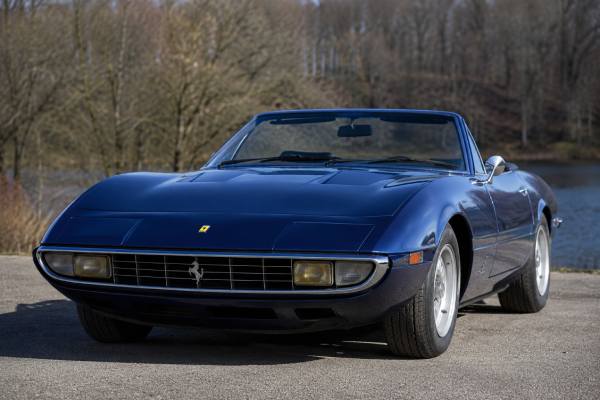
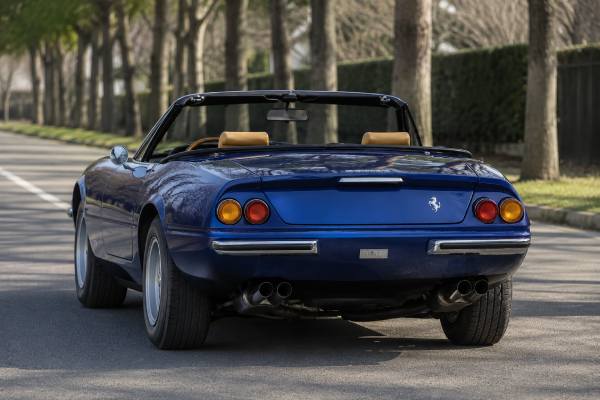
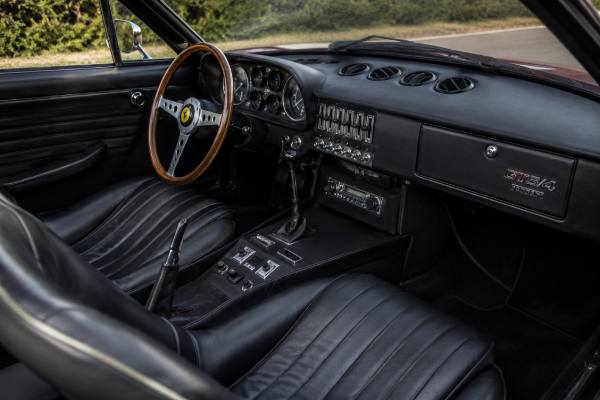
The Ferrari 365 GTS/4, built from 1971 to 1973 on the Tipo 605 chassis and powered by the Tipo 251 4.4-liter V12, is the factory open version of the car widely known as the Daytona. It matters because it combines Ferrari’s last classic front-engine V12 spider formula with the full mechanical strength of the 365 GTB/4: dry-sump lubrication, six Weber carburetors, a rear transaxle, independent suspension, and roughly 352 hp in period European rating. The appeal is easy to understand, but the ownership reality is more demanding. Genuine factory spiders are rare, many coupes were later converted, and the difference between an authentic, well-documented car and a modified or poorly restored example can be enormous in both value and driving quality.
Quick Take
The 365 GTS/4 Daytona Spider is valued most for being a genuine factory-built, open-top Ferrari V12 grand tourer with the same muscular Tipo 251 engine as the berlinetta. Its identity is part engineering, part rarity: a high-speed, front-engine Ferrari from the end of an era, wrapped in Pininfarina design and built by Scaglietti. The main caution is authenticity. Converted coupes, missing documentation, tired mechanicals, corrosion, and incorrect restorations can change the car’s value dramatically, so provenance and specialist inspection matter as much as paint, mileage, or color.
Table of Contents
- Model History and Importance
- Tipo 251 Engine and Specifications
- Production, Variants and Factory Details
- Design, Engineering and Special Features
- Road Feel, Performance and Character
- Maintenance, Restoration and Known Risks
- Values, Buying Guide and Rivals
Model History and Importance
The 365 GTS/4 is important because it is the rare factory spider version of Ferrari’s most famous front-engine V12 grand tourer of the early 1970s. It kept the Daytona’s long-hood, rear-transaxle layout at a moment when exotic-car fashion was moving sharply toward mid-engine drama.
The 365 GTB/4 berlinetta arrived first, shown in 1968 as the replacement for the 275 GTB/4. The open 365 GTS/4 followed as the spider derivative, with production cars generally associated with 1971 to 1973. Ferrari’s own factory identity for the model was 365 GTS/4 rather than “Daytona.” The Daytona nickname came from Ferrari’s 1-2-3 finish at the 1967 24 Hours of Daytona and quickly became the name most enthusiasts used.
The model sits at a fascinating point in Ferrari history. It was not a mid-engine showpiece like the Lamborghini Miura, nor was it a soft luxury convertible. It was a fast, serious grand tourer with an open roof, built around a large four-cam V12 and a chassis layout aimed at high-speed stability. In spirit, it carried forward the lineage of front-engine Ferrari road cars such as the 250 GT, 275 GTB, and 330 GTS.
Pininfarina handled the design, with Leonardo Fioravanti credited with the Daytona’s sharp, modern shape. Scaglietti built the bodies, as it did for many important Ferrari road cars of the period. The spider was not simply a casual roof removal. It needed structural reinforcement, a folding top, revised rear bodywork, and factory finishing that later conversions often struggle to reproduce exactly.
Its significance today comes from four main factors:
- It is one of the final classic front-engine V12 Ferrari spiders before the brand’s road-car focus moved toward mid-engine flagships.
- It has the Daytona’s full-performance mechanical package, not a detuned or comfort-focused engine.
- Factory production was very small, and genuine examples are heavily scrutinized.
- It represents the blend many collectors want most: open-air use, manual gearbox, carbureted V12 sound, and strong historical identity.
The Daytona Spider also has concours relevance. Correct factory colors, original interiors, proper engine and transaxle numbers, Ferrari Classiche certification, old ownership records, and restoration quality can all influence judging and market value. A usable driver-grade example may still be a spectacular car, but the collector market rewards authenticity more than surface glamour.
Tipo 251 Engine and Specifications
The 365 GTS/4 uses Ferrari’s Tipo 251 V12, a 4,390.35 cc all-alloy, naturally aspirated engine with six Weber carburetors and dry-sump lubrication. The chassis is the Tipo 605 tubular steel platform, shared in concept with the berlinetta and adapted for the spider body.
The engine is part of the Colombo V12 family, but by Daytona form it had grown into a powerful, high-revving 4.4-liter unit. The “365” name refers to the approximate displacement of each cylinder in cubic centimeters, while “GTS/4” identifies it as a grand touring spider with four camshafts.
| Item | Specification |
|---|---|
| Production years | 1971–1973 for factory production spiders |
| Chassis type | Tipo 605 tubular steel chassis |
| Engine | Tipo 251 60-degree V12 |
| Displacement | 4,390.35 cc |
| Bore x stroke | 81 mm x 71 mm |
| Induction | Six twin-choke Weber carburetors |
| Lubrication | Dry sump |
| Output | About 352 hp at 7,500 rpm in period European rating |
| Transmission | 5-speed manual rear transaxle |
| Drivetrain | Front-engine, rear-wheel drive |
| Wheelbase | 2,400 mm |
| Fuel capacity | 128 liters |
| Tyres | 215/70 VR 15 |
| Factory top speed | About 280 km/h |
The dry-sump system matters because it allowed a lower engine installation and better oil control during hard cornering and sustained high-speed use. The rear transaxle also matters. By placing the gearbox at the back with the final drive, Ferrari improved weight distribution compared with a conventional front-engine, front-gearbox layout.
The suspension was independent at all four corners, using unequal-length wishbones, coil springs, telescopic dampers, and anti-roll bars. Brakes were ventilated discs. Steering was unassisted, so the car feels heavy at parking speeds but more natural once moving. Original cars commonly used Cromodora alloy wheels, while Borrani wire wheels are also part of the Daytona Spider conversation, depending on period specification and later changes.
Performance figures vary because period testing methods, gearing, tire condition, and market specification all affect results. A healthy car is usually discussed in the region of 170 mph plus, with 0–60 mph often placed around the high-five to low-six-second range. The key point is not only the number. The 365 GTS/4 was one of the fastest open road cars of its time, and it still feels serious because of the V12’s rev range, long gearing, and strong highway performance.
Production, Variants and Factory Details
The factory Daytona Spider is rare, and published production figures usually center around 121 or 122 cars, depending on whether the prototype and counting method are included. That small number is why authentication is central to buying, selling, restoring, and valuing the model.
The spider body was built by Scaglietti to Pininfarina design. Most cars were left-hand drive, and a large share went to the United States, where demand for open Ferraris was strong. A much smaller number of European-market cars and right-hand-drive cars exist, and those details can affect desirability.
Because the Daytona coupe was built in much larger numbers, later spider conversions became common. Some were done to a high standard, and some are enjoyable cars in their own right, but they are not the same thing as a factory 365 GTS/4. The market makes that distinction clearly.
Factory spider versus conversion
A genuine factory 365 GTS/4 should be supported by strong documentation, not only visual claims. Buyers should expect the chassis number, engine number, transaxle number, body number, old registration records, factory correspondence, ownership history, restoration invoices, and Ferrari Classiche documents to align.
A conversion may still use real Ferrari Daytona mechanical parts, but it began life as a GTB/4 berlinetta. That matters for value, concours eligibility, and historical identity. Poorly converted cars may also have structural, sealing, door-fit, and top-frame issues.
Key authenticity points include:
- chassis number range and factory identity
- body-number evidence and Scaglietti details
- engine and transaxle matching status
- original market specification
- factory color and interior records
- proof of original spider bodywork
- documentation from respected Ferrari historians or Ferrari Classiche
- quality and date of any restoration work
Colors, interiors and equipment
Factory Daytona Spiders were often delivered in strong period colors. Red and yellow cars are highly visible in the public imagination, but silver, blue, black, and more unusual shades can be especially attractive to collectors when documented as original. Interior materials, leather color, carpets, instruments, and dashboard details should be judged against the car’s factory records rather than modern taste.
Air conditioning appeared on many cars, especially those ordered for the U.S. market. Radios, power windows, instrumentation in miles or kilometers, wheel choice, and trim details can all matter. A rare option or unusual original color can add interest, but condition and authenticity still carry more weight than novelty alone.
The model also had market-specific differences. U.S.-delivery cars may have emissions and safety-related equipment, side markers, different instruments, and other details. European cars often attract attention because of their smaller production count and cleaner specification, but a top-quality U.S. car with strong provenance can be more desirable than a neglected European example.
Design, Engineering and Special Features
The 365 GTS/4 is distinctive because it turns the Daytona’s sharp berlinetta form into an open grand tourer without losing the car’s long, aggressive proportions. The hood remains vast, the cabin sits far back, and the rear haunches give the car a planted stance.
The design was modern for Ferrari in the late 1960s and early 1970s. Earlier front-engine Ferraris often had softer curves and more delicate detailing. The Daytona brought a wedge-like nose, a strong beltline, and a more assertive shape. Early Daytonas are known for covered headlights on the coupe, while later production moved to pop-up headlights, partly because of U.S. requirements. The spider is most often associated with the later pop-up-headlight appearance.
The open roof changes the car’s personality. With the top down, the Daytona Spider feels less like a closed high-speed express and more like a theatrical V12 road car. Yet it remains formal and expensive-looking rather than casual. The cockpit is snug, low, and purposeful, with a gated manual shifter, large instruments, leather trim, and a driving position that suits long-distance use better than city convenience.
Engineering highlights include:
- a front-mounted all-alloy V12 with dry-sump lubrication
- six Weber carburetors, giving the engine strong induction character
- rear-mounted 5-speed transaxle for better balance
- independent suspension all round
- ventilated disc brakes
- tubular steel chassis construction
- large fuel capacity for high-speed touring
- hand-built bodywork with small car-to-car variations
The sound is a major part of the appeal. The V12 does not behave like a lazy large-displacement engine. It revs, hardens, and becomes more urgent as the throttle opens. Carburetor tune, exhaust condition, intake setup, and engine health make a large difference. A sorted car has a clean, layered sound; a poorly tuned one can feel rough, hesitant, or flat.
Cooling and airflow were major design concerns. The long nose, front grille opening, engine-bay heat, and underbody airflow all matter in real use. In hot weather, especially in slow traffic, the cooling system must be in excellent condition. A Daytona Spider that runs acceptably on a cool short test drive may still reveal problems in summer traffic or extended mountain-road use.
Body construction is also central to restoration. Door fit, hood alignment, rear deck shape, rocker condition, windshield frame integrity, and top operation all require expert judgment. Hand-built Ferraris are not judged like modern production cars, but uneven gaps, sagging doors, or poor top sealing can point to deeper structural or restoration problems.
Road Feel, Performance and Character
A healthy 365 GTS/4 feels fast, heavy, mechanical, and deeply analog. It is not a light sports car; it is a powerful V12 grand tourer that becomes more impressive as speed, temperature, and driver confidence rise.
The engine defines the experience. At low rpm, the V12 has enough torque to move smoothly, but it is happiest when properly warmed and allowed to rev. Throttle response depends heavily on carburetor setup. When the Webers are balanced and the ignition is correct, the car pulls cleanly and builds a hard, metallic character near the top of the rev range. When they are out of tune, the car can stumble, smell rich, foul plugs, or feel less special than its reputation suggests.
The gearbox is part of the ritual. The rear transaxle can feel stiff when cold, so gentle first miles are important. Once oil temperature rises, the shift should become more cooperative. A reluctant second gear, noisy transaxle, weak synchros, or poor linkage feel should not be dismissed as “normal old Ferrari behavior” without inspection.
The steering is heavy at low speed because there is no power assistance. On open roads it becomes one of the car’s strengths, with clear weighting and real feedback. The Daytona Spider is not as instantly agile as a smaller Ferrari, but it feels stable, confident, and serious. Long sweepers suit it well. Tight city streets and repeated parking maneuvers do not.
The ride is firm but not crude when the suspension is fresh and the tires are correct. Old tires, tired dampers, worn bushings, incorrect ride height, or poor alignment can make the car nervous or harsh. Many Daytonas are driven too little, and long storage can be as damaging as high mileage if rubber parts, fluids, and hydraulic systems are neglected.
Brakes are strong for the period when maintained properly, but expectations must be adjusted. This is not a modern car with huge carbon-ceramic brakes, stability control, ABS, and electronic brake distribution. Pedal feel, brake balance, pad choice, fluid condition, and caliper health all matter. A car that pulls under braking or needs excessive pressure should be investigated.
Usability is mixed in the classic Ferrari way. The car is thrilling on an open road, visually spectacular at any stop, and capable of serious touring. At the same time, it has cabin heat, limited weather sealing by modern standards, heavy controls in traffic, expensive maintenance needs, and the constant responsibility that comes with driving a very valuable open Ferrari.
The best examples feel cohesive. Engine, gearbox, clutch, steering, brakes, and suspension all work together. A tired example can still look magnificent in photos but feel loose, hot, noisy, hesitant, or fragile on the road.
Maintenance, Restoration and Known Risks
The Daytona Spider’s reliability depends less on the model’s basic engineering and more on age, storage history, restoration quality, and specialist maintenance. The Tipo 251 V12 is strong when properly built and serviced, but neglect is expensive.
This is not a car for generalist repair work. It needs Ferrari classic specialists who understand carbureted V12s, dry-sump systems, transaxles, hand-built bodies, and period electrical systems. Many problems are manageable when caught early and costly when ignored.
Mechanical areas to inspect
Engine condition should be assessed with compression and leak-down testing, oil pressure checks, cooling-system evaluation, and careful review of rebuild records. Smoke, fuel smell, overheating, uneven idle, weak hot starting, or excessive oil leaks deserve attention.
Important mechanical risks include:
- worn timing chains, tensioners, or related valve-train components
- carburetor wear, air leaks, incorrect jetting, or poor balancing
- ignition weakness from old distributors, coils, leads, or plugs
- cooling-system corrosion, blocked radiator cores, tired fans, or weak hoses
- dry-sump oil leaks and incorrect oil-line routing
- clutch wear or poor adjustment
- transaxle synchro wear, bearing noise, or leaks
- tired suspension bushings, ball joints, dampers, and wheel bearings
- brake caliper corrosion, old hoses, and contaminated fluid
Fuel systems need special care. Old tanks, varnish, deteriorated hoses, weak pumps, and poor filters can create running issues and fire risk. Any fuel smell should be taken seriously, especially in a carbureted V12 with hot engine-bay conditions.
Body and corrosion concerns
The body and chassis are just as important as the engine. Corrosion can affect rocker panels, lower body sections, floor areas, wheel arches, door bottoms, windshield surrounds, suspension mounting areas, and areas hidden by trim. Accident damage is another major concern. A poorly repaired Daytona Spider may show uneven panel gaps, strange door shut lines, ripples in the body, or poor hood and deck alignment.
Because factory spiders are so valuable, some cars have been restored more than once. A shiny restoration is not automatically a good one. Buyers should look for photographic restoration records, invoices from known specialists, evidence of bare-metal work when claimed, and confirmation that the car’s structural details were not lost or altered.
Originality versus upgrades
Some upgrades can improve usability: better cooling fans, discreet ignition improvements, modern fuel hoses, improved brake materials, or careful tire choices. The problem is not sensible maintenance. The problem is irreversible modification, incorrect trim, wrong finishes, non-original body details, missing factory components, or modern changes that reduce historical integrity.
For a car at this level, originality has a financial meaning. Matching engine and gearbox, correct body, correct colors, proper instruments, original manuals, tool roll, jack, spare wheel, and old records all influence value. Even if the car is bought to drive, those details matter when it is time to sell.
Values, Buying Guide and Rivals
The 365 GTS/4 Daytona Spider sits in a high-value collector tier, well above standard Daytona coupes and far above most conversions. Current market context often places strong factory spiders in the low-to-mid seven figures, with exceptional cars, rare specifications, concours history, or major provenance bringing more.
Market value is not only about rarity. It is about confidence. Buyers pay for the ability to prove what the car is, how it left the factory, who restored it, who owned it, and how complete it remains. A car with Ferrari Classiche certification, respected historian reports, original manuals, tool kit, matching-number mechanicals, and long-term documentation is easier to underwrite than a car with gaps and stories.
| Factor | Why It Matters |
|---|---|
| Factory spider authenticity | The central value issue; conversions trade in a different category. |
| Matching numbers | Engine and transaxle originality strongly affect collector confidence. |
| Ferrari Classiche documents | Helpful for authentication, though still best paired with broader history. |
| Original color combination | Rare or attractive factory colors can add desirability when documented. |
| Restoration quality | Poor work is expensive to correct and can damage authenticity. |
| Ownership history | Long-term, known, or notable ownership can support value. |
| Mechanical freshness | A beautiful but tired V12 Ferrari can require major spending after purchase. |
A serious pre-purchase inspection should be performed by a marque specialist before any deal is final. The inspection should include both mechanical and documentary review. The best buyers do not simply ask whether the car is “real.” They ask whether every important detail supports the car’s claimed identity.
A practical inspection checklist should include:
- chassis, engine, gearbox, and body-number verification
- Ferrari Classiche status and supporting documents
- factory color and interior confirmation
- old registration records and ownership timeline
- restoration invoices and photo records
- compression, leak-down, and oil-pressure results
- cooling-system performance in real conditions
- carburetor, ignition, and fuel-system condition
- transaxle noise, synchro feel, and clutch operation
- chassis corrosion and accident-damage inspection
- top frame, seals, latches, windows, and door fit
- original books, tools, jack, spare, and accessories
Examples to seek are genuine factory spiders with complete history, correct specification, strong mechanical condition, and known specialist care. Examples to avoid include cars with unclear identity, poor conversion history presented as factory work, missing number evidence, rushed cosmetic restoration, repeated color changes without documentation, overheating behavior, or major body repairs that cannot be explained.
Closest rivals and alternatives include the Ferrari 275 GTS, 330 GTS, 365 GTB/4 coupe, Lamborghini Miura, Maserati Ghibli Spyder, and later front-engine V12 Ferraris such as the 550 Barchetta. The 275 GTS and 330 GTS offer a more delicate 1960s feel. The Daytona coupe gives much of the same mechanical drama at a lower price. The Ghibli Spyder is a natural Italian rival, with strong design appeal and rarity, though it lacks the same Ferrari V12 mythology. The Miura is more exotic in layout but very different in use and collector identity.
The long-term collectability of the 365 GTS/4 looks secure because it combines rarity, beauty, usability, and a major place in Ferrari history. Still, the market is selective. Average cars with weak documentation are vulnerable when buyers become cautious. The strongest cars are the ones that make their case clearly before the engine is even started.
References
- Ferrari 365 GTS4 (1969) 1969 (Manufacturer Specifications)
- Ferrari 365 GTS4: Ferrari History 1969 (Manufacturer History)
- 1972 Ferrari 365 GTS/4 Daytona Spider by Scaglietti | Monaco 2024 | RM Sotheby’s 2024 (Auction Listing)
- 1973 Ferrari 365 GTS/4 Daytona | Hagerty Valuation Tools 2026 (Valuation Guide)
- Ferrari Daytona Market 2026 (Market Data)
Disclaimer
This article is for informational purposes only and is not a substitute for professional diagnosis, repair, appraisal, or pre-purchase inspection. Specifications, torque values, service intervals, restoration procedures, and equipment details can vary by VIN, market, production date, and individual car history. Always verify details against official Ferrari service documentation and consult a qualified classic Ferrari specialist before buying, repairing, restoring, or modifying a 365 GTS/4.
If this guide was helpful, please consider sharing it on Facebook, X/Twitter, or your preferred enthusiast community to support our work.