
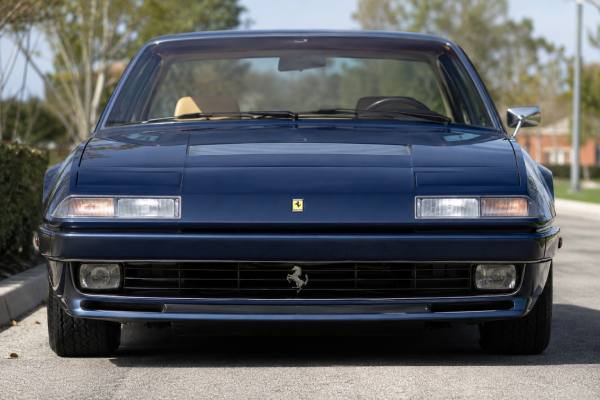
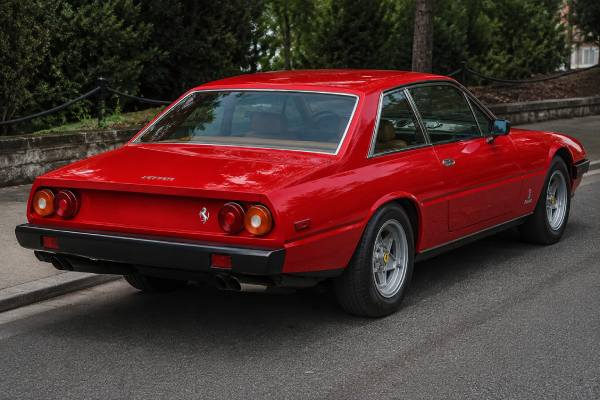
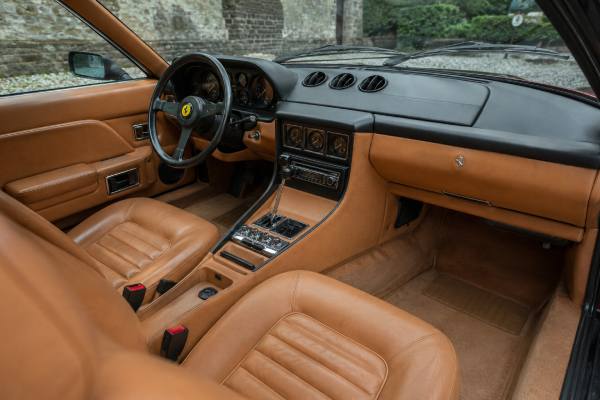
The Ferrari 400 Automatic is the carbureted 4.8-litre V12 grand tourer Ferrari built from 1976 to 1979 as the automatic-transmission version of the 400 series. Its chassis type, F 101 CL 180, and engine type, F 101 C 080, identify it as the early, Weber-carbureted automatic 2+2 before the later fuel-injected 400i arrived. It matters because it was the first production Ferrari offered with an automatic transmission, yet it still carried a front-mounted Colombo-derived V12, Pininfarina bodywork, four seats, and the long-distance character of a traditional Italian GT.
The 400 Automatic sits in a complicated but increasingly interesting corner of Ferrari history. It is not a mid-engine poster car, not a race homologation special, and not the obvious choice for buyers chasing manual-gate drama. Its appeal is different: understated design, real cabin space, carbureted V12 sound, and a market position that has historically made it one of the more attainable Enzo-era front-engine Ferraris. The same qualities that once made it overlooked now make it worth studying carefully, especially because poor maintenance, corrosion, and incomplete documentation can turn a tempting price into a very expensive ownership experience.
Quick Take
The Ferrari 400 Automatic is best understood as a refined, discreet V12 grand tourer rather than a hard-edged sports car: its strongest appeal is the mix of six-Weber Ferrari character, Pininfarina restraint, four-seat usability, and automatic cruising ease. Its historical identity is clear because it introduced automatic transmission to Ferrari production, but the main tradeoff is ownership complexity: body corrosion, tired suspension, carburetor setup, cooling condition, and documentation matter far more than mileage alone. The best buys are original or properly restored cars with strong specialist history, while cheap neglected examples can cost more to revive than they will be worth.
Table of Contents
- Model History and Why It Matters
- Engine, Chassis, and Key Specifications
- Production, Variants, and Factory Details
- Design, Engineering, and Special Features
- Driving Experience and Real-World Performance
- Maintenance, Reliability, and Restoration Risk
- Market Value and Buying Guide
Model History and Why It Matters
The Ferrari 400 Automatic is important because it brought automatic transmission into Ferrari’s production-car range without abandoning the brand’s classic front-engine V12 grand touring formula. It replaced the 365 GT4 2+2 as Ferrari’s large 2+2 coupe and kept the same broad concept: a luxurious, fast, long-legged car for owners who wanted V12 performance with real touring comfort.
Ferrari introduced the 400 series at the 1976 Paris Salon. It was not a clean-sheet break from the 365 GT4 2+2. Instead, it was a carefully updated version of the same basic idea, with more displacement, revised details, five-bolt wheels, a new rear lighting arrangement, and the option that made headlines: an automatic gearbox. The automatic version was called the 400 Automatic, often shortened to 400A.
The 400 was part of a longer Ferrari 2+2 family that ran from the 365 GT4 2+2 through the 400, 400i, and 412. This family remained in production in one form or another until 1989, which shows how durable the underlying concept was. Ferrari did not replace it with another front-engine 2+2 until the 456 GT arrived in the 1990s.
The 400 Automatic was aimed at wealthy GT buyers rather than weekend racers. Many period Ferrari customers wanted performance and status, but they also wanted air conditioning, leather, luggage space, easier urban driving, and a car that could cross countries quickly without feeling like a competition machine adapted for the road. In that setting, the automatic transmission made sense. It suited buyers in major cities, touring customers, and markets where luxury GT cars from Aston Martin, Rolls-Royce, Jaguar, and Mercedes-Benz were often ordered with automatics.
The car’s reputation has changed over time. For years, the 400 Automatic was dismissed by some Ferrari enthusiasts because it had four seats, angular styling, and an automatic transmission. It also suffered from the familiar problem of expensive cars becoming relatively cheap: some owners could afford to buy one but not maintain one properly. That created a split market, with a few very good cars and many tired ones.
Today, collectors look at the 400 Automatic with more nuance. It is still less valuable than a comparable manual 400 GT, but it is no longer just the “cheap V12 Ferrari.” It is a rare, carbureted, Enzo-era Ferrari with a clear historical first attached to it. The automatic gearbox is not a flaw in context; it is the reason the car exists as a distinct model.
Its significance rests on five main points:
- It was Ferrari’s first production automatic model.
- It used a 4.8-litre carbureted V12 rather than the later fuel-injected setup.
- It kept the Pininfarina-designed 2+2 body style that defined Ferrari’s large GT line through the 1970s and 1980s.
- It offered genuine long-distance usability for four occupants, at least by Ferrari standards.
- It remains one of the more accessible ways into an Enzo-era front-engine V12 Ferrari, though only if bought carefully.
That last point is crucial. The 400 Automatic attracts buyers because it can look like a bargain compared with Daytonas, 365 GT4 2+2s, Boxers, and later manual V12 Ferraris. But the running costs are not bargain-level. The engine, body, trim, suspension, and electrical systems all belong to a hand-built exotic car. A buyer should see the 400 Automatic as a collector Ferrari with a lower entry price, not as a cheap classic.
Engine, Chassis, and Key Specifications
The Ferrari 400 Automatic uses a front-mounted 4,823.16 cc naturally aspirated V12 with six Weber carburetors and a three-speed automatic transmission driving the rear wheels. Its specification is classic Ferrari GT: tubular steel chassis, independent suspension, four-wheel disc brakes, power-assisted steering, and a large fuel tank for long-distance use.
The engine is the heart of the car’s appeal. Ferrari enlarged the earlier 365 GT4 2+2’s V12 by increasing stroke, taking displacement from 4.4 litres to just over 4.8 litres. The automatic version’s factory engine type was F 101 C 080. It retained a 60-degree V12 layout, twin overhead camshafts per bank, two valves per cylinder, wet-sump lubrication, and six side-draft Weber 38 DCOE carburetors.
Power was quoted at 340 hp, or 250 kW, which made the carbureted 400 more powerful than the later fuel-injected 400i in its early form. Torque figures vary by source, but the character is clear: the engine makes its best work in the middle and upper rev range, with enough flexibility for GT use but still the sound and response of a classic multi-carb Ferrari V12.
| Category | Specification |
|---|---|
| Model | Ferrari 400 Automatic |
| Production period | 1976–1979 |
| Chassis type | F 101 CL 180 |
| Engine type | F 101 C 080 |
| Engine layout | Front longitudinal 60-degree V12 |
| Displacement | 4,823.16 cc |
| Bore x stroke | 81 mm x 78 mm |
| Compression ratio | 8.8:1 |
| Fuel system | Six Weber 38 DCOE side-draft carburetors |
| Maximum power | 340 hp / 250 kW |
| Transmission | 3-speed automatic with torque converter |
| Drivetrain | Rear-wheel drive with limited-slip differential |
The automatic transmission is widely associated with General Motors’ strong Turbo-Hydramatic 400 family, adapted for Ferrari use. That is an important ownership point. The basic unit has a reputation for durability, but a Ferrari installation is not the same as repairing a domestic sedan. Bellhousing, mounting, cooling, linkage, and installation details are specific enough that the work still needs a knowledgeable specialist.
The chassis follows Ferrari’s traditional grand-touring practice of the period. It uses a tubular steel frame and a steel body assembled with hand-built detail rather than modern production uniformity. Suspension is independent at both ends, with unequal-length wishbones, coil springs, telescopic dampers, anti-roll bars, and rear self-leveling equipment. Brakes are discs all around, and steering is power-assisted recirculating ball rather than rack-and-pinion.
| Item | Ferrari 400 Automatic data |
|---|---|
| Body style | 2-door 2+2 coupe |
| Frame | Tubular steel |
| Front suspension | Independent wishbones, coil springs, telescopic dampers, anti-roll bar |
| Rear suspension | Independent wishbones, self-leveling system, coil springs, telescopic dampers, anti-roll bar |
| Brakes | Four-wheel disc brakes |
| Steering | Power-assisted recirculating ball |
| Tyres | 215/70 VR 15 |
| Length | 4,810 mm |
| Width | 1,796 mm |
| Height | 1,310 mm |
| Wheelbase | 2,700 mm |
| Dry weight | About 1,700 kg |
| Fuel tank capacity | 120 litres |
| Top speed | About 240 km/h |
| Standing 400 m | About 14.9 seconds |
| Standing 1,000 m | About 25.5 seconds |
The numbers do not tell the whole story. A 400 Automatic is heavy by 1970s Ferrari standards, but it was also designed as a large, stable GT. The 120-litre fuel tank, long wheelbase, power steering, automatic gearbox, and roomy cabin all point toward high-speed travel rather than track-day precision. Its specification makes most sense when judged against cars like the Lamborghini Espada, Aston Martin V8, Jensen Interceptor, and high-end Mercedes coupes of the same era.
Production, Variants, and Factory Details
The Ferrari 400 Automatic was the higher-volume version of the carbureted 400, with about 355 automatic cars built out of roughly 502 total 400-series examples before the fuel-injected 400i replaced it. The manual 400 GT is rarer and generally more valuable, but the automatic is historically important because it introduced a new kind of Ferrari buyer to the factory range.
The carbureted 400 line consisted of two main versions:
| Variant | Transmission | Engine type | General collector position |
|---|---|---|---|
| 400 GT | 5-speed manual | F 101 C 000 | Rarer, more traditionally desirable, usually higher value |
| 400 Automatic | 3-speed automatic | F 101 C 080 | More numerous, historically significant as first automatic Ferrari |
The 400 Automatic followed the 365 GT4 2+2 and preceded the 400i Automatic. The easiest way to separate the early 400 from the 365 GT4 2+2 is to look for details such as the later five-bolt wheels, revised rear lights, front spoiler treatment, and updated interior. The easiest way to separate a carbureted 400 from a 400i is the engine’s fuel system: the early car uses six Weber side-draft carburetors, while the later 400i uses Bosch K-Jetronic mechanical fuel injection.
That distinction matters for value and ownership. Carburetors give the 400 Automatic much of its charm. They also add maintenance work. A properly tuned six-Weber V12 has a wonderful mechanical voice and crisp response, but a poorly set-up one can be hard to start, uneven at low speed, thirsty, and frustrating.
The body construction process also matters. The cars were built with a strong Pininfarina connection, with bodies and trim work associated with Pininfarina before mechanical completion by Ferrari. These were not mass-produced cars in a modern sense. Panel gaps, trim fit, and detail finishes can vary, and restoration work must respect how the car was originally assembled rather than forcing it into modern production-car expectations.
Factory equipment was generous for the period. Leather upholstery, electric windows, and air conditioning were part of the car’s luxury GT identity. Buyers could also encounter cars with a sunroof, passenger-side electric mirror, and rear-seat air-conditioning equipment. Because Ferrari customers often specified colors and trim carefully, original color combinations can have a meaningful effect on appeal.
For identification and authenticity, buyers should focus on:
- chassis number and engine number consistency
- correct F 101 C 080 automatic engine type
- evidence of original automatic specification rather than later conversion
- factory-correct carburetor setup
- original interior materials and trim pattern
- correct Cromodora-style five-spoke wheels or documented replacements
- period-correct lighting, badges, mirrors, and bumpers
- service records from Ferrari specialists
- ownership history, import papers, and restoration invoices
Matching-numbers status is not just a concours talking point. On a relatively low-production Ferrari, originality can separate a collectible car from a driver-quality example with limited upside. A non-original engine, missing documentation, or poorly modified drivetrain will reduce buyer confidence even if the car looks attractive.
There are also market-specific concerns. The 400 series was not officially sold in the United States when new, so many North American cars arrived as grey-market imports. Some were converted to comply with local regulations at the time. A buyer should inspect side-marker lights, emissions equipment, bumpers, paperwork, and any federalization history carefully. A clean import record is worth having, especially when resale or registration in another state or country is possible.
Design, Engineering, and Special Features
The 400 Automatic’s design is distinctive because it combines a formal three-box Pininfarina shape with Ferrari V12 engineering underneath. It does not shout like a Berlinetta Boxer or later Testarossa; it works through proportion, low glass, sharp creases, and the confidence of a luxury GT built for speed rather than display.
The basic design was created by Pininfarina under the design language associated with Leonardo Fioravanti’s era. It carried forward the 365 GT4 2+2’s angular, restrained shape. The long bonnet, slim pillars, flat deck, and crisp beltline gave the car a very different character from the curvier Ferraris of the 1960s. In the 1970s, that restraint was modern. Today, it feels almost architectural.
One of the most interesting things about the 400 Automatic is that it looks less exotic than it is. Parked quietly, it can seem like a severe Italian luxury coupe. Open the bonnet and the impression changes completely: the long V12, rows of carburetors, cam covers, linkages, fuel lines, and intake hardware make it clear that this is not a conventional luxury car.
Exterior identity
The 400 updated the 365 GT4 2+2 without destroying the original shape. Key visual changes included the move to five-bolt wheels, revised rear lighting, body-color front spoiler treatment, and detail updates around the trim and cabin. The car retained the long, low, straight-edged profile that made the series recognizable.
Important exterior identifiers include:
- long bonnet and short rear deck proportions
- four-seat coupe roofline with large glass area
- pop-up headlamps
- five-spoke alloy wheels
- twin round taillights per side on the 400
- satin black rear panel
- discreet badging
- low, formal front end without excessive decoration
The car’s shape also has practical advantages. Visibility is better than many exotic cars because the pillars are slim and the glass area is large. The cabin feels more open than mid-engine Ferraris of the same period. For a grand tourer, that matters.
Cabin and usability
The interior is one of the reasons the 400 Automatic still makes sense as a road car. It offers two front seats, usable rear seats for shorter trips or smaller passengers, leather trim, air conditioning, electric windows, and a proper luggage area. It is not a modern luxury coupe, but by 1970s exotic-car standards it is civilised.
The dashboard layout is functional and driver-focused. The main instruments sit ahead of the driver, while additional gauges are grouped where they can be monitored easily. The cabin has an old-world Ferrari feel: leather, analogue dials, mechanical controls, and a sense that everything was assembled in small numbers.
The automatic gearbox changes the cabin mood. A manual 400 GT feels more obviously sporting. The 400 Automatic feels more like a high-speed continental express. That does not make it less interesting; it makes it more specific. It was built for a buyer who wanted Ferrari performance with less effort in traffic and on long journeys.
Engineering character
The most important engineering choice was combining a large, carbureted Ferrari V12 with a robust three-speed automatic. In period, that was a bold move. Ferrari’s image was tied to manual gearboxes, racing, and high-revving engines. The 400 Automatic showed that Maranello understood a different kind of customer: one who wanted effortless progress, prestige, and mechanical drama without constant shifting.
The rear self-leveling suspension also fits the GT brief. The car was expected to carry passengers and luggage, so maintaining ride height mattered. When working correctly, the system helps the car sit properly and ride as intended. When neglected, it becomes one of the ownership headaches that can make a cheap car expensive.
Cooling, braking, and fuel capacity were all sized for high-speed road use. The 400 Automatic was not engineered as a casual boulevard coupe. It was built to cover distance at serious speed, with enough stability and braking capacity for European motorway use. That is why condition is so important: a healthy car still feels composed, while a tired one feels heavy, vague, hot, and expensive.
Driving Experience and Real-World Performance
A good Ferrari 400 Automatic feels like a fast, mature V12 grand tourer with a relaxed gearbox and a strong mechanical personality. It is not as sharp as a manual Ferrari sports car, but it has a wonderful sense of occasion when the engine, carburetors, suspension, and brakes are all in proper order.
The first impression is size. The 400 Automatic is long, wide, and relatively heavy. It does not shrink around the driver like a small Berlinetta. The seating position, bonnet length, and cabin width remind you that this is a luxury 2+2 designed for open roads. In town, the automatic gearbox and power steering help, but the car still feels like a large classic exotic with limited modern convenience.
Once moving, the engine defines the experience. A properly tuned 4.8-litre Weber V12 starts with a layered mechanical sound: starter, fuel, idle, cam drive, carburetor breathing, and exhaust note all combining into something unmistakably old Ferrari. At low speed it can be smooth, but it is not anonymous. There is always mechanical texture.
The automatic transmission changes the rhythm of the car. Instead of the driver working a gated shifter, the car builds speed in long, confident surges. The three-speed gearbox is not modern or fast-shifting, but it suits relaxed touring. The torque converter softens takeoff, the V12 gathers speed, and the car feels happiest when allowed to flow.
Performance was strong for a heavy 1970s GT. A top speed around 240 km/h placed it among serious high-speed cars of the era. Period-style acceleration figures vary, but the automatic is usually understood as a roughly seven-second 0–100 km/h car when healthy. That is not supercar-fast today, but it remains brisk, and the sensation is enhanced by the sound and the length of each gear.
Steering, ride, and handling
The steering is power-assisted recirculating ball, so it does not have the immediacy of a modern rack-and-pinion sports car. At parking speeds, assistance is welcome. At road speed, the best examples feel stable and measured rather than razor sharp. A worn steering box, tired bushings, old tyres, or incorrect alignment can make the car feel far worse than intended.
Ride quality is one of the car’s strengths when the suspension is right. The long wheelbase and GT setup help it cover poor surfaces with more calm than many exotic cars. It should not crash, wander, or sit low at the rear. If it does, inspection should focus on dampers, self-leveling components, springs, bushings, and tyres.
Cornering balance is traditional front-engine GT. The car has weight over the nose and rewards smooth inputs. It is not a car to throw abruptly into tight bends. Driven cleanly, it is satisfying: brake early, settle the chassis, let the front take a set, and use the V12’s pull on exit. It prefers flow over aggression.
Braking and tyres
The four-wheel disc brakes are adequate when fresh, but expectations must be period-correct. A modern performance car will stop harder, more repeatedly, and with less effort. On a 400 Automatic, old rubber hoses, tired fluid, sticking calipers, worn discs, or poor pads can transform normal classic braking into a serious safety concern.
Tyres matter more than some buyers expect. Correct-size, high-quality tyres help the steering, ride, braking, and straight-line stability. Old tyres with good tread are still a problem. A 1,700 kg V12 Ferrari travelling at motorway speeds needs fresh, appropriate rubber.
Daily use and touring reality
The 400 Automatic can be usable, but it is not a low-effort daily driver in the modern sense. It is thirsty, warm-running if neglected, and dependent on specialist maintenance. Air conditioning must be working properly to make summer touring pleasant. Carburetors need to be set up correctly. Electrical accessories should be tested before assuming they are simply “old Ferrari quirks.”
On the right road, though, the car makes sense. It is comfortable, stable, musical, and less flamboyant than many Ferraris. That discretion is part of the charm. A 400 Automatic is at its best on a long early-morning drive, a cross-country route, or a relaxed classic event where its four-seat layout and V12 character can be appreciated without pretending it is a lightweight sports racer.
Maintenance, Reliability, and Restoration Risk
The Ferrari 400 Automatic can be dependable when maintained by the right specialists, but neglected examples are high-risk cars. The big danger is not one famous defect; it is the combined cost of V12 engine work, carburetor setup, corrosion repair, suspension renewal, trim restoration, and electrical sorting.
The engine itself is strong in concept, but it is not simple to put right cheaply. A buyer should look for evidence of regular oil changes, coolant maintenance, valve adjustment, ignition service, carburetor tuning, fuel hose replacement, and proper warm-up habits. A car that has sat unused for years may need a full fuel-system cleaning, carburetor rebuilds, cooling refresh, brake work, tyres, hoses, belts, and electrical attention before it can be trusted.
Common engine-related inspection areas include:
- oil leaks from cam covers, timing covers, and seals
- coolant leaks or signs of overheating
- noisy timing chains or tensioner concerns
- uneven idle from carburetor imbalance
- worn throttle linkages
- old fuel hoses and weeping carburetor fittings
- weak ignition components
- poor cold-start and hot-start behavior
- smoke on start-up or acceleration
- low or uneven compression
Cooling condition is especially important. A V12 Ferrari that overheats should be treated seriously. Radiator condition, water pump health, thermostat function, fan operation, hoses, and coolant passages all matter. An overheated engine can lead to major expense, so any sign of recurring temperature trouble should trigger deeper inspection.
The automatic transmission is generally robust, but buyers should not ignore it. It should engage smoothly, shift cleanly, kick down correctly, and avoid slipping or harsh delayed engagement. Fluid condition, cooler lines, mounts, linkage adjustment, and leaks should be checked. Because the basic transmission family is strong, some buyers assume it is a minor concern. The Ferrari-specific installation can still make poor repairs costly.
Corrosion and body structure
Rust is one of the biggest threats to a 400 Automatic. The car is steel-bodied, hand-built, and now several decades old. Even beautiful paint can hide corrosion or older repairs. A magnet and a casual look are not enough. The car should be inspected on a lift by someone who knows these bodies.
Critical areas include:
- sills and jacking points
- lower doors
- wheel arches
- front wings and rear quarters
- floors and footwells
- boot floor
- battery area
- lower front valance
- windscreen and rear-window surrounds
- headlamp pod areas
- suspension mounting points
- seams hidden by trim or underseal
Corrosion repair on a 400 is expensive because correct panel work, paint matching, trim removal, and reassembly take time. Poor repairs are common on cars that spent years at the bottom of the Ferrari market. Uneven gaps, bubbling paint, overspray, mismatched trim, or thick underseal should make a buyer slow down.
Suspension, brakes, and steering
The rear self-leveling system is a known ownership concern. When it works, the car sits correctly and rides well. When it fails, the rear can sag, ride quality suffers, and the car loses its intended stance. Some cars have been converted to conventional dampers. That may improve usability, but it affects originality and should be documented.
Suspension and steering checks should include:
- rear ride height
- damper leaks
- tired bushings
- worn ball joints
- steering box play
- power-steering leaks
- uneven tyre wear
- wheel-bearing noise
- differential noise
- vibration under load or braking
Brake systems need the same careful approach. Calipers, discs, pads, hoses, master cylinder, servo assistance, and fluid condition should all be inspected. Any classic Ferrari that has been stored for long periods may need brake work even if it appears to stop normally during a short test drive.
Electrical, interior, and trim issues
Electrical faults are common on older Italian GTs, and the 400 Automatic has enough luxury equipment to make sorting them time-consuming. Electric windows, lighting, fans, gauges, relays, fuse panels, air conditioning, mirrors, and charging systems should all be tested.
Interior restoration can also be expensive. Leather, carpets, headlining, dashboard materials, switchgear, instruments, and seat mechanisms are all part of the car’s value. A tired interior may look charming at first, but correct restoration can be costly, especially if rare trim pieces are missing.
Parts availability is mixed. Mechanical service parts can often be sourced through Ferrari specialists, classic-parts suppliers, and experienced independent networks. Some trim, body, and model-specific components are harder. The automatic transmission’s basic origin helps with some internal service knowledge, but Ferrari-specific parts and installation details still require care.
Market Value and Buying Guide
The Ferrari 400 Automatic remains one of the more attainable Enzo-era V12 Ferraris, but the market now rewards good cars much more clearly than neglected ones. The lowest purchase price is rarely the best deal; condition, structure, originality, and maintenance history are the real value drivers.
Current market guides and auction databases show a wide spread. Public-sale benchmarks for 400 Automatic examples can sit in the lower-to-mid five-figure dollar range, while strong UK and European examples, especially well-kept carbureted cars with attractive colors and documentation, can command much more. The best cars are not always visible in public auction averages because many trade privately through specialists.
The manual 400 GT usually brings a premium because it is rarer and matches the traditional Ferrari collector preference for gated manual cars. The automatic, however, has its own identity. It is the first automatic Ferrari production model, and that historical point gives it a reason to exist beyond being the cheaper version.
Value is driven by several factors:
| Factor | Why it matters |
|---|---|
| Structural condition | Rust repair can exceed the apparent saving on a cheap car |
| Engine health | V12 rebuilds and major top-end work are expensive |
| Carburetor setup | Six Webers are central to the car’s character and drivability |
| Originality | Correct engine, trim, wheels, and specification support collector confidence |
| Documentation | Service records, import papers, ownership history, and restoration invoices reduce risk |
| Color combination | Period colors and attractive interiors can make a major difference |
| Suspension condition | Rear self-leveling repairs or conversions affect cost and originality |
| Interior completeness | Missing trim and damaged leather are costly to correct properly |
A strong buying process should be methodical. Do not buy a 400 Automatic only because it starts, sounds good, and looks impressive in photos. These cars can hide expensive problems.
Use this sequence:
- Confirm identity with chassis, engine, body, and paperwork checks.
- Review the service history before viewing the car in detail.
- Inspect the body and underside on a lift.
- Check engine compression, leak-down results if available, oil pressure, cooling behavior, and carburetor tune.
- Test every electrical accessory, gauge, fan, light, and window.
- Drive the car from cold through full operating temperature.
- Check automatic shift quality, kickdown, leaks, and driveline vibration.
- Inspect suspension height, damping, steering play, brakes, tyres, and wheel condition.
- Price the car based on what it needs, not on what similar excellent cars have sold for.
Cars to seek
The best 400 Automatic is a structurally clean, highly original car with regular specialist maintenance and a documented history. A sympathetic older restoration can be a good buy if the bodywork was done properly and the mechanical systems have not been ignored. Cars in interesting period colors can be especially appealing, provided the color is original or carefully documented.
A good driver-quality car should start cleanly, idle evenly, hold temperature, shift smoothly, stop straight, ride level, and feel stable at speed. It does not need to be concours-perfect, but it should feel like a coherent, maintained machine rather than a collection of deferred jobs.
Cars to avoid
Avoid cars with serious rust, vague history, overheating, missing trim, poor repaint quality, non-functioning air conditioning, sagging rear suspension, badly tuned carburetors, or evidence of long storage without recommissioning. A cheap 400 Automatic with several of these problems can quickly become a restoration project.
Be cautious with cars that have been modified without documentation. Upgraded cooling fans, sensible ignition improvements, or reversible suspension work may be acceptable for a driver, but poorly executed wiring, non-original interiors, incorrect carburetor changes, or crude body repairs reduce value.
Safety expectations should also be period-correct. The 400 Automatic does not offer modern crash protection, stability control, advanced driver assistance, or modern braking electronics. Its safety depends heavily on mechanical condition, tyres, brakes, lighting, and driver judgment.
Long-term collectability looks better than it once did. The car has rarity, Enzo-era production, V12 power, Pininfarina design, and a clear “first automatic Ferrari” story. It is unlikely to overtake equivalent manual cars in desirability, but the gap between good and poor examples should keep widening. For buyers who understand the car’s purpose, the 400 Automatic offers a distinctive and usable way into classic Ferrari V12 ownership.
References
- Ferrari 400 Automatic (1976) – Ferrari.com 1976 (Manufacturer Specifications)
- Ferrari 400 Automatic Specifications – SBR Engineering 2025 (Technical Specifications)
- Ferrari 400 – Automatic Market – CLASSIC.COM 2026 (Market Data)
- The Valuation Verdict: Ferrari 400 | Hagerty UK 2026 (Valuation Guide)
- Ferrari 400 Guide — Supercar Nostalgia 2021 (Model Guide)
Disclaimer
This article is for informational purposes only and is not a substitute for professional diagnosis, repair, inspection, valuation, or restoration advice. Specifications, torque values, service intervals, procedures, and correct parts can vary by VIN, market, production date, equipment, and previous repairs. Always verify details against official Ferrari service documentation and consult a qualified marque specialist before buying, servicing, or restoring a Ferrari 400 Automatic.
If this guide helped you, please consider sharing it on Facebook, X/Twitter, or your favorite car community to support our work.