
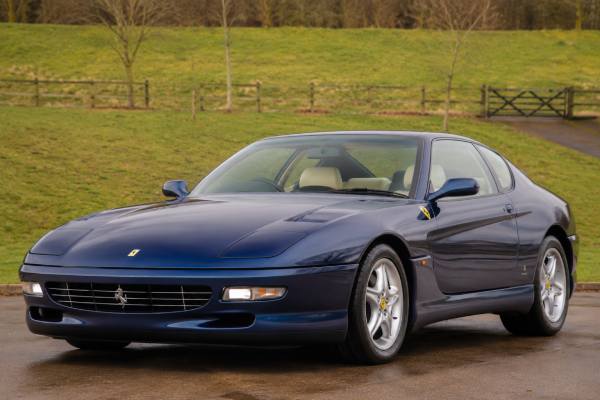
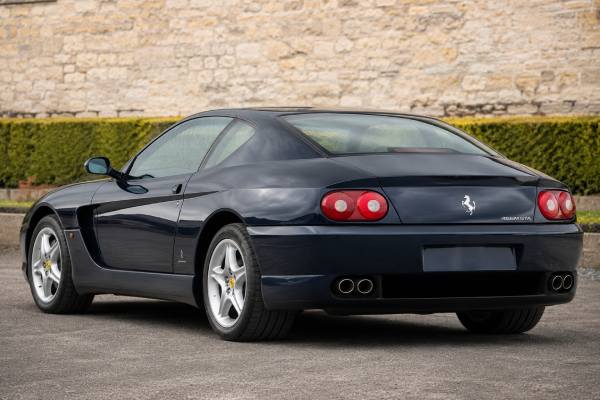
The Ferrari 456M GTA is the automatic-transmission version of Ferrari’s updated F116-series V12 grand tourer, built from 1998 to 2003 with the F116C 5.5-liter front-mounted V12 rated at 442 hp. It sits in an unusual place in modern Ferrari history: a four-seat, front-engine, rear-drive coupe with understated Pininfarina styling, pop-up headlights, a transaxle layout, and enough performance to feel special without behaving like a stripped-out supercar.
The “M” stands for Modificata, marking the revised 456 that replaced the original 456 GT and GTA. The GTA added a four-speed automatic transaxle, making it the more relaxed and usable version of the pair. Today, the 456M GTA appeals to buyers who want a classic Ferrari V12 experience with grand-touring manners, but it also demands careful inspection because deferred maintenance can easily exceed the apparent savings of buying a cheaper example.
Quick Take
The Ferrari 456M GTA’s strongest appeal is its blend of a large naturally aspirated V12, elegant 2+2 packaging, and everyday grand-touring usability. Its identity is not that of a track car, but of a high-speed Ferrari GT with an automatic rear transaxle, refined cabin, and long-legged performance. The main caution is ownership cost: timing-belt service, suspension parts, window mechanisms, leather shrinkage, electrical age, and automatic-transaxle condition matter more than mileage alone. The best cars are original, well-documented, regularly serviced, dry underneath, and inspected by a Ferrari specialist before purchase.
Table of Contents
- Model History and Why It Matters
- Engine, Chassis, and Key Specifications
- Production, Variants, and Factory Options
- Design, Engineering, and Special Features
- Driving Character and Real Performance
- Reliability, Maintenance, and Restoration Risks
- Market Value and Buying Guide
Model History and Why It Matters
The 456M GTA matters because it represents one of Ferrari’s last traditional V12 2+2 grand tourers before the larger, more modern 612 Scaglietti arrived. It kept the old-school formula of a long hood, rear cabin, naturally aspirated V12, and rear-wheel drive, but added enough refinement to make it usable as a serious long-distance car.
The original Ferrari 456 appeared in the early 1990s as the successor to the long-running 365 GT4 2+2, 400, and 412 family. Those earlier cars were angular, formal, and more restrained than Ferrari’s mid-engine sports cars. The 456 moved the idea forward with a smoother Pininfarina body, a new 65-degree V12, a rear transaxle, and a more modern cabin. It was still a Ferrari for crossing countries rather than attacking race circuits, but it was much faster and more sophisticated than the four-seat models it replaced.
The 456M arrived in 1998 as the updated version. Ferrari did not completely reinvent the car. Instead, it refined the areas that mattered: cooling, aerodynamics, interior layout, braking, suspension geometry, and detail quality. The hood lost the earlier intake vents, the front bumper was reshaped, the rear spoiler arrangement changed, and the cabin became more conventional and easier to live with.
The GTA version is important because it reflects the real grand-touring purpose of the car. The manual 456M GT is the collector favorite, but the automatic 456M GTA suits the model’s relaxed, high-speed character. It was designed for people who wanted a Ferrari V12 with comfort, luggage space, rear seats for occasional use, and less effort in city traffic.
In period, the 456M GTA was expensive, discreet, and not aimed at buyers chasing poster-car drama. It was a Ferrari for mature customers who valued pace and elegance over wings, scoops, and theatrical styling. That has shaped its modern reputation. For years, the 456 family was one of the least expensive ways into a front-engine Ferrari V12. That made some cars vulnerable to deferred maintenance, because purchase prices fell while service costs stayed exotic.
Today, the 456M GTA is better understood. It is collectible because it combines rarity, hand-finished materials, a naturally aspirated V12, and a body style Ferrari no longer builds in quite the same way. It is also appealing because it is usable: a properly sorted example can cover distance with comfort and authority. The appeal is strongest for buyers who appreciate restraint and engineering depth rather than only peak performance numbers.
Engine, Chassis, and Key Specifications
The heart of the 456M GTA is its 5.5-liter F116C V12, a dry-sump, four-valve-per-cylinder engine with Bosch Motronic management. The chassis follows a classic Ferrari GT layout: front engine, rear transaxle, rear-wheel drive, and a steel structure clothed in aluminum body panels.
| Category | Specification |
|---|---|
| Production years | 1998–2003 |
| Model family | Ferrari 456M, Type F116 |
| Variant | GTA automatic 2+2 coupe |
| Engine code | F116C |
| Engine layout | Front longitudinal 65-degree V12 |
| Displacement | 5,473.91 cc |
| Valvetrain | Double overhead camshafts, four valves per cylinder |
| Induction | Naturally aspirated |
| Fuel and ignition | Bosch Motronic M5.2 injection and ignition |
| Maximum power | 325 kW / 442 PS / about 436 bhp at 6,250 rpm |
| Maximum torque | 550 Nm at 4,500 rpm |
| Lubrication | Dry sump |
| Transmission | Four-speed automatic rear transaxle |
| Drivetrain | Rear-wheel drive |
The V12 is large, smooth, and flexible rather than peaky. Its character suits the car: strong mid-range torque, a cultured exhaust note, and a willingness to rev when the driver asks for more. The automatic gearbox changes the personality compared with the six-speed manual. It removes the open-gate shift experience, but it also makes the car easier in traffic and more relaxed on long trips.
The chassis specification is more sophisticated than the car’s understated shape suggests. The engine sits ahead of the cabin, while the gearbox and differential are mounted at the rear. This transaxle layout helps weight distribution and gives the 456M GTA better balance than a simple front-engine, front-gearbox design.
| Item | Detail |
|---|---|
| Body style | Two-door 2+2 coupe |
| Wheelbase | 2,600 mm |
| Length | 4,763 mm |
| Width | 1,920 mm |
| Height | 1,300 mm |
| GTA kerb weight | About 1,930 kg |
| Suspension | Independent double wishbones with electronically controlled damping |
| Brakes | Ventilated discs with ABS |
| Front wheels and tires | 8.5J x 17 wheels, 255/45 ZR17 tires |
| Rear wheels and tires | 10J x 17 wheels, 285/40 ZR17 tires |
| Steering | Power-assisted rack and pinion |
Official performance figures vary slightly by market and source, but the 456M GTA is generally quoted at about 5.5 seconds from 0–100 km/h and a top speed of more than 298 km/h. Those figures still make the car quick today, but they tell only part of the story. The more relevant point is how easily the car reaches high speed and how stable it feels once there.
Production, Variants, and Factory Options
The 456M GTA was one of two main Modificata versions: the 456M GT with a six-speed manual and the 456M GTA with the automatic transaxle. Total 456M production was limited, and the automatic GTA made up a significant share of the later cars.
The broader 456 family began with the original 456 GT, followed by the automatic 456 GTA. The 456M update then repeated the same split: GT for the manual and GTA for the automatic. The 456M GTA is therefore not a lightweight or track edition. The “A” refers to the automatic transmission, not to alleggerita or any reduced-weight specification.
Commonly cited production figures place total 456 production at just under 3,300 cars across all versions, with the 456M generation accounting for roughly 1,338 examples. Within that later group, the 456M GTA is often listed at about 650 cars. Exact counts can vary by source and market definition, so buyers should treat build numbers as useful context rather than a substitute for chassis-level documentation.
How to identify the right car
A genuine 456M GTA should match its identity across the VIN, factory plates, service book, import documents, and Ferrari records where available. The automatic-transmission identity should be clear from the paperwork and from the car itself. A proper inspection should confirm:
- VIN consistency across visible plates, documents, and registration records.
- Engine and gearbox identity matching the model and year.
- Correct automatic gear selector, instrument displays, and transmission behavior.
- 456M body details, including revised front treatment, cleaner hood, and updated rear design.
- Factory-correct interior layout for the Modificata cabin.
The 456M’s visual updates are subtle but important. Compared with the earlier 456, the M has a smoother hood without the earlier intake vents, revised lighting details, different bumpers, and a changed rear spoiler arrangement. The interior also received a major update, with a more practical dashboard and console layout.
Options and special-order details
Ferrari buyers could personalize paint, leather, carpets, stitching, luggage, audio equipment, and other trim details. Many cars were ordered in restrained colors such as silver, blue, black, grey, and dark green, often with tan, beige, black, or dark blue leather. Red examples exist, but the 456M’s shape often suits subtler colors.
The most talked-about special version linked to the late 456M is the Scaglietti or Bicolore Scaglietti specification, associated with Ferrari’s personalization program and Michael Schumacher’s commission. These cars can include two-tone paint, special interior details, plaques, uprated trim, and unique color combinations. They should be judged carefully because value depends heavily on documentation, original specification, and whether the car still retains its factory details.
For normal 456M GTA examples, desirable equipment is less about modern gadgets and more about originality. Factory tools, books, leather pouch, service stamps, spare keys, original stereo, correct wheels, and complete records all matter. A low-mile car without supporting maintenance history is not automatically better than a higher-mile car that has been used and serviced properly.
Design, Engineering, and Special Features
The 456M GTA is distinctive because it hides serious engineering under a calm, elegant body. It is a Ferrari that does not shout, and that restraint is a major part of its character.
Pininfarina’s design gives the car a long hood, low roofline, compact rear deck, and a clean side profile. It recalls earlier front-engine Ferrari GTs without becoming retro. The pop-up headlights are especially important today because the 456M was among the last Ferraris to use them. They give the car a period-correct 1990s identity while keeping the nose clean when closed.
The 456M update made the design smoother. The deleted hood vents reduced visual clutter, while the revised front intake improved cooling and gave the car a more planted look. At the rear, the spoiler arrangement changed from the earlier car’s active solution to a more integrated fixed underbody approach. The result is quieter and more mature than the original 456, which suits the car’s grand-touring mission.
Body construction and packaging
The 456 family used aluminum body panels over a steel structure. That saved weight compared with an all-steel body while keeping the strength needed for a large, fast 2+2. Repair quality matters enormously because aluminum panels, steel structure, corrosion protection, and paint finish require specialist knowledge. Poor accident repairs can be hidden under glossy paint, especially on cars that have passed through several owners.
The packaging is clever. The car has usable luggage space, comfortable front seats, and small rear seats. Adults will not want to sit in the back for long trips, but the rear area works for children, short journeys, soft bags, or extra cabin storage. This makes the 456M GTA more practical than many Ferraris without turning it into a normal luxury coupe.
Cabin and controls
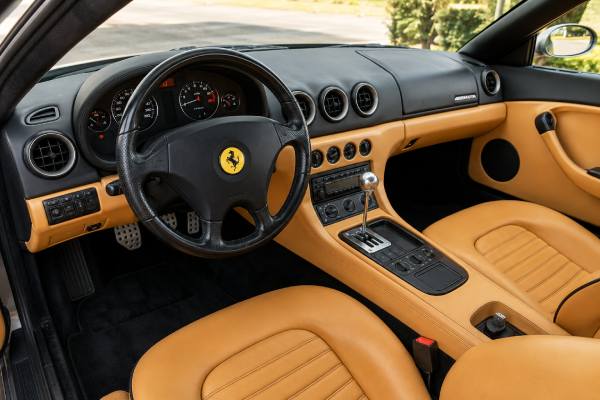
The 456M interior is more refined than the earlier 456 cabin. The dashboard layout is cleaner, the center console is easier to use, and the automatic selector suits the car’s relaxed role. Connolly leather, deep carpeting, power-adjustable seats, automatic climate control, and a cockpit-adjustable suspension system give the car a luxury-GT feel.
The cabin also shows age in predictable ways. Leather can shrink around the dashboard and airbag area. Sticky switches can become unpleasant to touch. Seat bolsters wear, headliners sag, and climate-control displays or buttons can fail. These issues are not just cosmetic. On a collector Ferrari, interior originality and repair quality strongly affect value.
The sound is central to the experience. The 65-degree V12 is smooth at low revs and more urgent as it climbs. It does not have the sharp edge of a mid-engine Ferrari V8, but it delivers a deep, expensive tone that suits high-speed cruising. Exhaust modifications should be judged carefully. A tasteful system can improve sound, but missing factory parts, poor installation, or excessive noise can hurt originality and long-distance comfort.
Driving Character and Real Performance
The 456M GTA feels like a fast, heavy, refined Ferrari GT rather than a sharp-edged sports car. Its best moments come on open roads, fast sweepers, and long journeys where the V12 can work smoothly and the chassis can settle into its rhythm.
Acceleration is strong, especially once the car is moving. The automatic gearbox softens the initial hit compared with a manual GT, but the V12’s torque gives the car real pace. Kickdown response is not modern dual-clutch quick, so the driver needs to plan overtakes more deliberately than in a newer Ferrari. Driven in that style, the GTA feels confident and muscular.
The steering is one of the car’s better qualities. It has more feel than many modern luxury GTs, though the car’s size and weight are always present. The front end responds accurately, but the 456M GTA prefers smooth inputs. Throwing it into tight corners like a lighter sports car misses the point. It rewards clean lines, patience, and progressive throttle use.
Ride quality is firm but not punishing when the suspension is healthy. Worn dampers, failed actuators, old tires, or tired bushings can make the car feel loose, crashy, or nervous. A sorted car should feel composed, not floaty. Because many examples are now more than two decades old, driving feel is often a condition report. A poor-driving 456M GTA may simply need overdue suspension work.
Braking performance is strong for road use, but brake condition matters. The car is heavy, and repeated hard stops can reveal tired discs, old fluid, sticking calipers, or low-quality pads. A good pedal should feel firm and progressive. Pulsation, pulling, vibration, or warning lights need investigation.
Visibility is better than in many low supercars. The seating position is comfortable, the hood is long but readable, and the cabin feels airy by Ferrari standards. The car can be used in town, but it is wide, the turning circle is not small, and the automatic transmission does not make it cheap to run in stop-start traffic. It is most at home on highways and flowing roads.
The 456M GTA’s performance is still serious, but its personality is now more important than its numbers. Modern performance cars are quicker, and even some hot hatchbacks can match its acceleration on paper. They cannot easily copy the way a front-engine Ferrari V12 builds speed, the sense of occasion from the long hood, or the calm authority of a hand-finished Italian GT.
Reliability, Maintenance, and Restoration Risks
The 456M GTA can be dependable when maintained correctly, but it is never a low-cost classic. The danger is not one single fatal flaw; it is the combined cost of age, Ferrari parts pricing, specialist labor, and examples that were bought cheaply but serviced lightly.
The F116C V12 is generally respected, but it still needs disciplined care. Timing belts, tensioners, cam seals, valve-cover gaskets, coolant hoses, engine mounts, ignition components, and fuel-system parts should be treated as age-sensitive. Because the 456 is a front-engine Ferrari, major belt work is less invasive than on many mid-engine models, but it is still specialist work and should not be deferred.
The owner’s manual maintenance schedule includes regular annual attention even when mileage is low, and the main service schedule is mileage-based. In real ownership, time matters as much as distance. A car that has covered only a few hundred miles in several years can still need belts, fluids, tires, battery care, brake service, and rubber components.
Common areas to inspect
- Timing belts and tensioners: Confirm date, mileage, parts used, and who performed the work.
- Cooling system: Check radiators, fans, hoses, expansion tank, coolant condition, and signs of overheating.
- Oil leaks: Look around cam covers, front seals, dry-sump plumbing, and lower engine areas.
- Automatic transaxle: Shifts should be smooth and consistent, with no slipping, harsh engagement, delayed reverse, or fluid leaks.
- Suspension: Inspect dampers, actuators, bushings, ball joints, rear ride control, and warning lights.
- Windows and seals: Poor sealing, slow movement, wind noise, and water leaks are common ownership complaints.
- Electrics: Test every switch, light, seat motor, mirror, HVAC function, display, alarm, and instrument warning lamp.
- Interior leather: Look for dash shrinkage, lifting, sticky controls, worn bolsters, and poor retrimming.
- Body structure: Inspect for corrosion, accident repair, panel mismatch, bubbling, and poor paintwork.
The automatic gearbox deserves special attention because it defines the GTA. A good unit suits the car well. A neglected one can be expensive and harder to repair than a normal luxury-car automatic because it is part of a Ferrari transaxle package. Fluid history, shift quality, leaks, and specialist familiarity matter.
Restoration can be costly. A cheap 456M GTA with tired paint, shrinking leather, worn suspension, weak air conditioning, and incomplete service history may cost more to put right than buying a better car in the first place. Parts availability is generally possible through Ferrari specialists and used-parts networks, but prices can be high and some trim items are difficult to source.
Originality should be balanced against sensible upkeep. Upgraded hoses, improved window repairs, modern tires in correct sizes, and careful suspension rebuilding can make the car better to use. Poor audio installations, non-factory wheels, loud exhausts, aftermarket bodywork, and patchy interior retrims usually reduce appeal unless the original parts are included.
Market Value and Buying Guide
The 456M GTA remains one of the more attainable front-engine V12 Ferraris, but the best examples are no longer simply “cheap Ferraris.” Condition, history, color, originality, and recent service work can create a large price gap between two cars that look similar in photos.
As of the current collector market, driver-quality automatic 456M examples often trade well below equivalent manual 456M GTs. The manual gearbox carries a clear premium because it is rarer, more interactive, and more desirable to many collectors. The GTA is still attractive, but its value case is different: it offers V12 Ferrari character, comfort, and usability for less money than the manual car.
Recent valuation guides and public auction results suggest that usable 456M GTA examples can sit roughly in the mid-five-figure to lower-six-figure dollar range depending on market, mileage, condition, and documentation. Exceptional low-mile cars, rare colors, or special-order specifications can exceed ordinary guide values. Tired cars can appear much cheaper, but they are rarely bargains after overdue service and cosmetic correction are included.
What drives value
| Value factor | Why it matters |
|---|---|
| Service history | Regular Ferrari-specialist care reduces mechanical risk and supports mileage claims. |
| Recent major service | Belts, fluids, cooling work, suspension repairs, and tires can represent major avoided costs. |
| Originality | Factory wheels, trim, colors, tools, books, and stereo help collector confidence. |
| Color combination | Elegant factory colors often suit the model, while rare colors can attract specific buyers. |
| Interior condition | Leather shrinkage and sticky controls are expensive to correct properly. |
| Transmission health | The automatic transaxle must shift cleanly and show proper maintenance history. |
| Accident history | Aluminum body repairs and structural damage can seriously affect value. |
| Documentation | Books, tools, invoices, ownership records, and factory data strengthen provenance. |
Buyer inspection checklist
A serious buyer should not rely on photos, mileage, or seller claims. A pre-purchase inspection by a Ferrari specialist is essential. The inspection should include a road test, lift inspection, diagnostic scan where applicable, compression or leak-down testing if concerns exist, and detailed review of service invoices.
Prioritize cars with:
- Clear ownership history and consistent mileage records.
- Documented timing-belt and major service work.
- No warning lights after warm-up.
- Cold and hot starts that are clean and stable.
- Smooth automatic engagement from park to drive and reverse.
- Working climate control, seats, windows, lights, mirrors, and instruments.
- Dry underside with no major engine, gearbox, steering, or suspension leaks.
- Matching paint readings and no evidence of poor accident repair.
- Correct wheels, tire sizes, books, tools, and keys.
Avoid cars with missing service records, obvious overheating signs, slipping transmission behavior, badly retrimmed interiors, water-damaged carpets, heavy corrosion, unexplained warning lights, or seller resistance to inspection. A car that “just needs a service” may need far more than that.
The long-term collectability of the 456M GTA looks healthy but measured. It has the right ingredients: Pininfarina design, a naturally aspirated V12, limited production, analog-era controls, and a now-rare Ferrari 2+2 layout. Its ceiling is likely lower than the manual 456M GT, but the GTA’s usability gives it a loyal audience. The best buying strategy is simple: buy condition, history, and originality first, then mileage and color. A sorted 456M GTA is a graceful V12 Ferrari grand tourer. A neglected one is an expensive lesson in buying the cheapest exotic on the market.
References
- Ferrari 456M GTA (1998) – Ferrari.com 1998 (Manufacturer Specifications)
- FERRARI 456M OWNER’S MANUAL Pdf Download | ManualsLib 2000 (Owner’s Manual)
- Vehicle Detail Search – 2001 FERRARI 456M | NHTSA 2026 (Recall Database)
- 2003 Ferrari 456M GT Base | Hagerty Valuation Tools 2026 (Valuation)
- Used 2003 Ferrari 456M GT Automatic Ratings, Values, Reviews & Awards 2026 (Valuation)
Disclaimer
This article is for informational purposes only and is not a substitute for professional diagnosis, repair, appraisal, or inspection. Specifications, torque values, service intervals, repair procedures, and equipment can vary by VIN, market, model year, and individual vehicle history. Always verify details against official Ferrari service documentation and consult a qualified Ferrari specialist before buying, repairing, or restoring a 456M GTA.
If this guide was useful, please share it on Facebook, X/Twitter, or your preferred car community to support our work.