

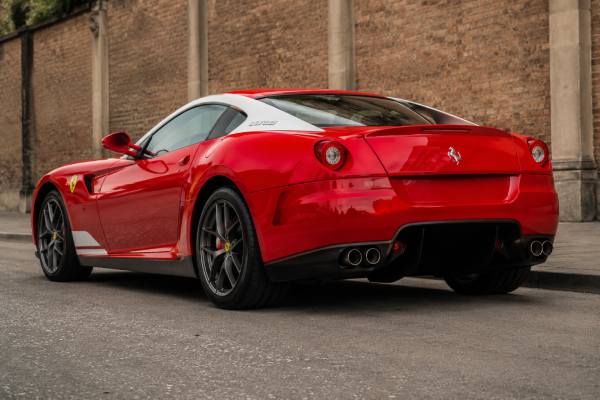

The Ferrari 599 GTB 60F1 is the late-production, Formula 1-themed version of the F141-generation 599 GTB Fiorano, built around the 6.0-liter F140 C naturally aspirated V12 and Ferrari’s F1 automated manual gearbox. Introduced near the end of the 599’s life, during 2011–2012, it celebrated 60 years between Ferrari’s first Formula 1 victory at Silverstone in 1951 and Fernando Alonso’s win at the same circuit in 2011.
The 60F1 matters because it is not just another paint-and-trim edition. It is based on the sharper HGTE chassis setup, uses the full 612 hp front-mid-mounted V12, and adds a very specific historical link to Ferrari’s Formula 1 identity. For collectors, that mix of late-build timing, HGTE hardware, Alonso association, and low production makes condition, documentation, and factory-correct specification especially important.
Quick Take
The Ferrari 599 GTB 60F1 is one of the most collectible versions of the standard 599 GTB family because it combines the Enzo-derived F140 C V12, the improved HGTE handling setup, and rare factory 60F1 liveries tied to Ferrari’s Formula 1 history. Its strongest appeal is the blend of front-engine V12 grand touring character with a sharper, more focused chassis and meaningful factory provenance. The main caution is that rarity does not remove normal 599 ownership risks: clutch wear, carbon-ceramic brake condition, sticky interior parts, suspension electronics, tire age, and incomplete service history can all turn a promising car into a costly one.
Table of Contents
- History and Significance
- Engine, Chassis and Specifications
- Production, Variants and Options
- Design, Engineering and Features
- Driving Experience and Performance
- Reliability, Maintenance and Restoration
- Market Value and Buying Guide
History and Significance
The 599 GTB 60F1 is best understood as a final-period, historically themed 599 GTB Fiorano with HGTE underpinnings. It sits near the end of Ferrari’s 2006–2012 front-engine V12 berlinetta line, just before the F12berlinetta replaced the 599.
The standard 599 GTB Fiorano arrived as the successor to the 575M Maranello. It changed Ferrari’s modern V12 grand touring formula in several important ways. The 575M was powerful and elegant, but the 599 was a much larger technical step: more power, an aluminum structure, advanced magnetorheological dampers, F1-Trac traction control, and a V12 closely related in concept to Ferrari’s flagship supercar engine family.
The “599” name refers to the 5,999 cc displacement. “GTB” stands for Gran Turismo Berlinetta, and “Fiorano” connects the car to Ferrari’s private test circuit. That naming is unusually literal. The car was designed to be a two-seat grand tourer with serious track-developed performance, not a soft luxury coupe.
The 60F1 edition was created to mark a very specific Ferrari story. In 1951, José Froilán González gave Ferrari its first Formula 1 World Championship Grand Prix victory at Silverstone in a 375 F1. In 2011, Fernando Alonso won the British Grand Prix for Ferrari at Silverstone again. The 60F1 linked those two moments through special liveries, cabin details, and the HGTE chassis package.
That context gives the car a stronger identity than many late-cycle special editions. It is not a homologation model like the 599 GTO, and it is not an open limited-series car like the SA Aperta. Instead, it is a rare factory celebration of Ferrari’s Formula 1 history applied to the core 599 GTB platform.
For collectors, the 60F1 appeals for five main reasons:
- It was produced at the end of the 599 GTB’s run.
- It uses the more desirable HGTE dynamic setup.
- It is tied to Alonso-era Ferrari Formula 1 history.
- It has distinctive factory visual configurations.
- It remains more usable than the harder-edged 599 GTO.
Its reputation today sits between the regular 599 GTB Fiorano and the more valuable 599 GTO or SA Aperta. A normal F1-shift 599 can still be a relatively attainable modern V12 Ferrari by collector-car standards. A proper 60F1 is different. It should be treated as a specification-sensitive collector car, where originality and documentation matter more than they would on an ordinary driver-quality 599.
Engine, Chassis and Specifications
The 599 GTB 60F1 uses Ferrari’s F140 C 6.0-liter naturally aspirated V12, rated at 612 hp in U.S. terms and 620 CV in Ferrari’s metric output. It is a front-mid-engine, rear-drive berlinetta with a six-speed F1 automated manual transmission and HGTE chassis tuning.
| Item | Specification |
|---|---|
| Model code | F141 |
| Engine code | F140 C |
| Engine type | 65-degree naturally aspirated V12 |
| Displacement | 5,999 cc / 6.0 liters |
| Power | 612 hp / 620 CV at 7,600 rpm |
| Torque | 448 lb-ft / 608 Nm at 5,600 rpm |
| Redline | 8,400 rpm |
| Transmission | Six-speed F1 automated manual |
| Drive layout | Front-mid engine, rear-wheel drive |
| Body style | Two-seat berlinetta coupe |
The engine is the centerpiece. It is not turbocharged, supercharged, or hybrid assisted. Its character comes from displacement, revs, intake response, and a broad but rising V12 power curve. Peak torque arrives high enough to encourage revs, but the engine is large enough that the car does not feel weak at normal road speeds.
The gearbox is Ferrari’s single-clutch F1 automated manual. It is not a dual-clutch transmission, and it does not behave like a modern automatic. In gentle driving it can feel mechanical and slightly deliberate. In aggressive driving, especially in the sportier manettino settings, it gives quick, forceful shifts that suit the car’s age and personality.
| Category | Specification |
|---|---|
| Structure | Aluminum chassis and body structure |
| Suspension | Independent suspension with magnetorheological damping |
| HGTE tuning | Lower ride height, stiffer springs, revised anti-roll bar, sportier damper and gearbox calibration |
| Steering | Hydraulic power-assisted steering |
| Brakes | Carbon-ceramic brakes on late high-spec cars and HGTE-based examples |
| Wheelbase | 108.3 in / 2,750 mm |
| Length | 183.7 in / about 4,666 mm |
| Width | 77.2 in / about 1,961 mm |
| Height | 52.6 in / about 1,336 mm |
| Claimed 0–100 km/h | About 3.7 seconds |
| Claimed top speed | Over 205 mph / over 330 km/h |
The HGTE basis is central to the 60F1’s appeal. HGTE stands for Handling Gran Turismo Evoluzione, and it made the 599 feel more alert without turning it into a stripped track car. The package brought a lower center of gravity, firmer suspension tuning, revised damper control, a sharper gearbox strategy in performance modes, stickier tire specification, and a more expressive exhaust character.
Because the 599 is a big front-engine V12 car, its engineering is about balance as much as raw output. The engine sits behind the front axle line, the fuel tank is positioned to help weight distribution, and the transaxle-style rear gearbox layout contributes to a more balanced feel than the long bonnet suggests.
Production, Variants and Options
The 60F1 is a rare late 599 GTB special edition, but production numbers are not as universally documented as those for the 599 GTO or SA Aperta. Buyers should verify every claimed 60F1 with Ferrari documentation, factory option records, and chassis-specific provenance rather than relying only on seller descriptions.
The broader 599 family included several important variants. The standard 599 GTB Fiorano was the core model. HGTE was first offered as a handling package and became a major desirability marker. The 599 GTO was the lighter, more extreme road car influenced by the 599XX track program. The SA Aperta was the open-top limited model. The 60F1 sits in a different niche: rare, themed, HGTE-based, and historically connected to Ferrari’s Formula 1 story.
60F1 liveries and identity
The 60F1 was offered with liveries inspired by Ferrari’s Formula 1 history. The key themes were connected to González’s 1951 375 F1 and Alonso’s 2011 150° Italia. Depending on market and configuration, cars may show different interpretations of the red paint, white detailing, tricolore treatment, painted shields, roof or pillar treatment, and interior trim.
Important identifiers can include:
- 60F1 or Alonso-related factory equipment configuration.
- HGTE-based chassis specification.
- Special dashboard plaque or commemorative interior details.
- 20-inch diamond-finished forged wheels.
- Carbon-fiber racing seats or market-specific racing seat suppliers.
- Alcantara-heavy cabin trim.
- F1-inspired color and livery details.
- Factory paperwork confirming the specification.
The phrase “Alonso Edition” is often used in the market, but buyers should be careful. Some cars are described loosely, and some standard 599s have been modified with visual cues. A true 60F1 should have records that connect the car to the factory package, not just a similar paint scheme.
Options that affect desirability
On a 599 GTB 60F1, the factory configuration matters more than the length of the option list. The most desirable cars usually have a clear, original, verifiable specification that matches the 60F1 theme.
Options and details that often matter include:
- Carbon-fiber racing seats in the correct size.
- Carbon interior trim.
- Factory shields, especially if painted as part of the 60F1 treatment.
- Carbon-ceramic brake condition and originality.
- Correct forged wheels.
- Complete books, tools, battery charger, keys, manuals, and factory accessories.
- Ferrari Classiche documentation where available.
- Original paint and undamaged livery details.
Because the 60F1 is a collector version, heavy personalization can be a double-edged sword. A rare color or special-order cabin may help if it is factory documented and tasteful. Later cosmetic changes, aftermarket exhausts, retrimmed interiors, or non-original wheels usually reduce confidence unless the original parts are included.
Design, Engineering and Features
The 599 GTB 60F1 keeps the basic Pininfarina-designed 599 shape but adds Formula 1-themed visual identity. Its design works because the long-bonnet V12 proportions are grand and elegant, while the flying buttresses and aero details give it a more technical look than earlier Ferrari GT cars.
The standard 599 was styled by Pininfarina under Jason Castriota’s direction. Its most recognizable feature is the flying-buttress rear pillar treatment. These buttresses are not just decoration. They help guide airflow around the rear of the car and contribute to the 599’s distinctive side profile.
The body is smoother and more sculptural than the 575M before it. The nose is low and wide, the headlamps stretch back along the front wings, and the cabin sits rearward to emphasize the front-mid-engine layout. It looks like a grand tourer first, but the proportions make the engine position and performance intent clear.
HGTE engineering character
The 60F1’s HGTE foundation gives it a different attitude from a standard early 599. The ride height is lower, the springs are firmer, the rear anti-roll bar is more assertive, and the software calibration is more aggressive in the sportier manettino settings.
That does not make it a 599 GTO. The GTO is lighter, more powerful, more track-influenced, and more intense. The 60F1 remains a road-focused V12 GT. Its advantage is that it keeps the 599’s long-distance ability while trimming some of the softness and body movement that can make early standard cars feel large on demanding roads.
Cabin and sensory details
The cabin mixes late-2000s Ferrari luxury with racing references. The steering wheel carries the manettino switch, start button, and shift lights on some specifications. The large column-mounted paddles are fixed in place, which is a Ferrari trait many drivers prefer because the paddles are always where expected during steering inputs.
The 60F1’s interior details are especially important. Alcantara, racing seats, contrasting trim, special plaques, harness-style accents, and color-coded elements help separate it from a normal 599. Condition is critical because Ferrari interiors of this period can suffer from sticky switchgear, worn seat bolsters, shrinking leather, and marked Alcantara if the car has been used without care.
Sound is a major part of the car’s identity. The F140 C V12 is smoother and more cultured than a mid-engine Ferrari V8, but it becomes sharp and hard-edged as revs rise. The HGTE exhaust tuning gives the car more presence without making it feel like a race car at steady motorway speeds.
Driving Experience and Performance
A good 599 GTB 60F1 feels like a large, muscular V12 grand tourer that has been tightened for more serious driving. It is fast by modern standards, but its real appeal is the combination of throttle response, V12 sound, steering feel, and long-legged road speed.
The engine dominates the experience. At low rpm it is smooth and flexible. In the middle of the rev range it becomes urgent. Near the top, it delivers the kind of naturally aspirated crescendo that later turbocharged performance cars rarely match. The car rewards drivers who use the revs, but it does not require constant downshifts to make progress.
The F1 gearbox needs the right expectations. In automatic mode it can feel clumsy, especially in traffic or parking-lot driving. Driven manually with the paddles, it makes more sense. Lift slightly during gentle shifts and it becomes smoother. Keep the throttle open in aggressive driving and the shifts become part of the drama.
The steering is one of the car’s underrated strengths. It is hydraulic, direct, and more communicative than many later electrically assisted systems. The 599 is a wide car, so it never feels small on narrow roads, but the steering helps place the front end with confidence.
The HGTE setup improves body control. Compared with an early non-HGTE 599, the 60F1 should feel more tied down, more immediate in direction changes, and more confident when driven hard. The tradeoff is a firmer ride, especially on poor surfaces or old tires.
Braking depends heavily on condition. Carbon-ceramic brakes can deliver excellent stopping power and resist fade, but they need careful inspection. Disc wear, chip damage, pad condition, and previous track use matter. A seller saying “carbon ceramics last forever” should be treated as a warning sign, not reassurance.
In normal use, the 599 is more usable than its numbers suggest. Visibility is reasonable for a front-engine exotic, luggage space is useful for a two-seat Ferrari, and the cabin has enough refinement for long trips. The car is still low, wide, expensive to run, and attention-grabbing, so it is not casual transport. But it was designed as a GT, and that side of its character remains clear.
Reliability, Maintenance and Restoration
The 599 GTB 60F1 can be a durable exotic when serviced correctly, but deferred maintenance is expensive. The biggest ownership risks are not usually the basic V12 architecture; they are clutch wear, F1 hydraulic system health, carbon-ceramic brake condition, suspension components, electronics, interior aging, and cars that have sat unused.
The F140 C engine is chain-driven, so it does not have the belt-service anxiety associated with older Ferraris. That is helpful, but it does not make the car low-maintenance. Fluids, ignition components, cooling-system parts, gaskets, mounts, sensors, and age-related rubber components still matter.
Key mechanical inspection points
A proper pre-purchase inspection should check:
- Clutch wear reading and F1 gearbox operation.
- Gear engagement quality when cold and hot.
- F1 hydraulic pump behavior and pressure-holding ability.
- Engine leaks around cam covers, front covers, and ancillary areas.
- Cooling-system health, including radiators, hoses, and fans.
- Engine mounts and gearbox mounts.
- Suspension bushings, ball joints, dampers, and lift system if fitted.
- Carbon-ceramic brake disc condition and pad life.
- Tire age, tire type, and correct sizing.
- Battery condition and evidence of tender use.
The F1 gearbox is often misunderstood. The gearbox itself can be robust, but the clutch is a wear item and the hydraulic control system must be healthy. Poor setup can make the car jerky, accelerate clutch wear, and hide more serious problems.
Tires are more important than many buyers think. The 599 has enough torque and speed to make old or incorrect tires a major problem. Low-mileage collector cars often still wear aged rubber. That may look good in photos, but it is not a safe or satisfying way to judge the car.
Common age-related issues
Ferraris from this era can suffer from sticky interior switches and trim coatings. Repair is common, but quality varies. A properly refinished interior looks crisp and factory-like. A poor repair can leave mismatched textures, damaged markings, or glossy surfaces.
Other age-related issues can include:
- Leather shrinkage around the dashboard and airbag cover.
- Worn Alcantara on seats and steering wheel.
- Weak batteries causing electronic faults.
- Warning lights from sensors or low voltage.
- Damper leaks or suspension warning messages.
- Exhaust valve rattles or actuator issues.
- Stone chips on the long nose and painted livery areas.
Restoration is usually not the right word for a 60F1 unless the car has been neglected or damaged. Preservation is the better goal. A collector-quality 60F1 should retain its factory livery, trim, wheels, books, accessories, and records. Repainting a livery panel or retrimming a seat may be necessary, but it should be done to a standard that protects originality rather than merely freshening the car for sale.
Market Value and Buying Guide
The 599 GTB 60F1 trades at a premium over ordinary F1-shift 599 GTB Fioranos because of rarity, HGTE hardware, late-build status, and Formula 1-linked specification. Its value depends heavily on proof: a fully documented factory 60F1 is a different proposition from a normal 599 with cosmetic changes.
The wider 599 market is broad. Driver-quality F1 cars can sit far below manual-transmission 599s, GTOs, SA Apertas, and special editions. The 60F1 is much closer to the collector end of the GTB market, especially when mileage is low, factory specification is intact, and the car has a clear ownership file.
Value drivers include:
- Verified factory 60F1 specification.
- Original paint and undamaged livery.
- Low but believable mileage.
- Complete Ferrari dealer or specialist service history.
- Recent clutch, brake, tire, and fluid documentation.
- Correct wheels, seats, plaques, and trim.
- Desirable market configuration, such as right-hand drive in markets where very few were supplied.
- Ferrari Classiche certification or strong factory records.
- Clean accident history.
- Complete accessories and original documents.
Buyers should be cautious with cars that look rare but lack paperwork. A special livery is not enough. The build sheet, option codes, supplying dealer documentation, service invoices, and physical identifiers should all tell the same story.
Buyer inspection checklist
Before committing to a 599 GTB 60F1, focus on these checks:
| Area | What to Verify |
|---|---|
| Identity | VIN, factory 60F1 equipment, build sheet, plaque, livery, and market delivery details |
| Service history | Annual maintenance, fluids, clutch readings, brake inspections, tire dates, and specialist notes |
| Body and paint | Original panels, livery condition, paint depth, accident repairs, bumper refinishing, and stone-chip quality |
| Drivetrain | Cold start, hot restart, gearbox behavior, clutch wear, hydraulic system, leaks, and engine mounts |
| Interior | Sticky controls, seat wear, dashboard leather, Alcantara, plaques, carbon trim, and correct accessories |
| Brakes and tires | Carbon-ceramic disc life, pad condition, tire age, tire model, alignment, and wheel damage |
| Electronics | Warning lights, manettino functions, damper control, battery health, charger use, and diagnostic scan results |
The best examples are not always the lowest-mileage cars. A car with delivery mileage may need recommissioning if it has sat for years. A carefully used car with regular servicing, fresh tires, healthy brakes, and clean diagnostics may be better to own. For a collector, originality may still outweigh usability, but the cost of recommissioning should be priced honestly.
Cars to seek include factory-documented 60F1 examples with complete records, correct trim, no accident history, fresh major maintenance, and no unexplained modifications. Cars to avoid include undocumented “Alonso-style” builds, cars with missing books, worn carbon brakes, poor sticky-button repairs, old tires, weak batteries, patchy paint history, or sellers unwilling to allow a Ferrari specialist inspection.
Long-term collectability looks strong because the 60F1 has several things collectors like: naturally aspirated V12 power, a clear Ferrari historical theme, limited supply, late production, and a visible connection to Formula 1. The caution is that it is still part of the 599 GTB family, where values vary widely. Buying the right car matters more than chasing the cheapest one.
References
- 599 GTB Fiorano (2006) – Ferrari.com 2006 (Manufacturer Specifications)
- Ferrari 599 GTB FIORANO Owner’s Manual 2015 (Owner’s Manual)
- Check for Recalls: Vehicle, Car Seat, Tire, Equipment 2026 (Recall Database)
- 2011 Ferrari 599 GTB Fiorano | Hagerty Valuation Tool® 2026 (Price Guide)
- Ferrari 599 GTB Fiorano – F1 Market 2026 (Market Data)
Disclaimer
This article is for informational purposes only and is not a substitute for professional diagnosis, inspection, repair, valuation, or legal advice. Specifications, torque values, service intervals, procedures, equipment, recall status, and market details can vary by VIN, market, model year, factory options, and later service history. Always verify details against official Ferrari service documentation, factory records, and a qualified Ferrari specialist before buying, servicing, or restoring a Ferrari 599 GTB 60F1.
If this guide was useful, please consider sharing it on Facebook, X/Twitter, or your preferred car community to support our work.