
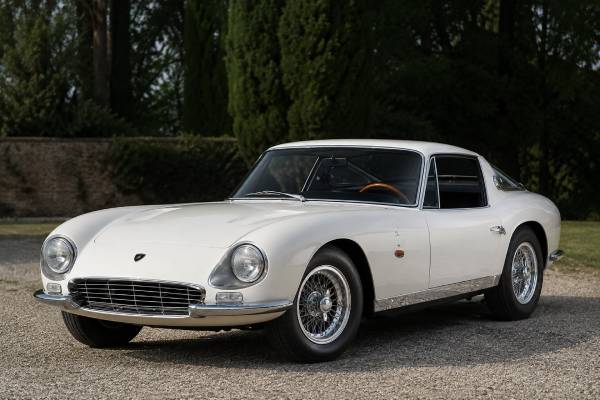
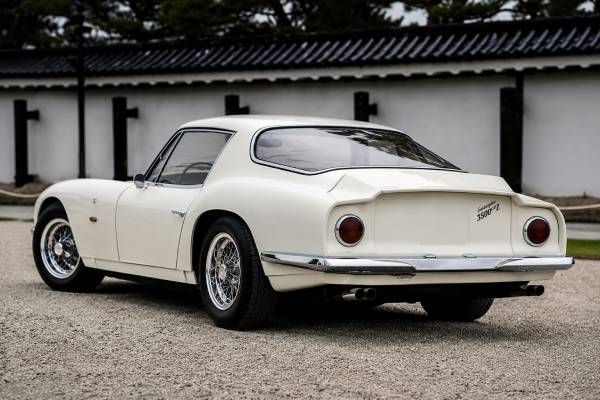
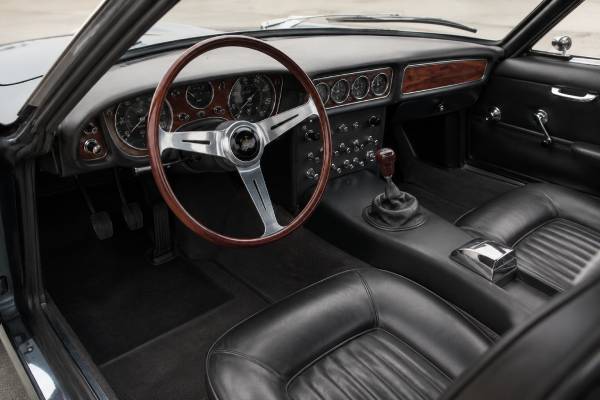
The Lamborghini 3500 GTZ is one of the rarest early Sant’Agata grand tourers: a Zagato-bodied special built on the Lamborghini 350 GT platform and powered by the Tipo L350 3.5-liter V12. It sits at a fascinating point in Lamborghini history, after the first production 350 GT had proved the company could build a serious Ferrari rival, but just before the Miura changed the brand forever. The GTZ was shorter, sharper, and more coachbuilt than the Touring-bodied 350 GT, with aluminum bodywork styled by Ercole Spada and a layout aimed at fast road use rather than racing. For collectors, its value lies in rarity, provenance, and originality. For enthusiasts, its appeal is simpler: it is an early Lamborghini V12 wearing one of Zagato’s most unusual 1960s bodies.
Table of Contents
- Why the 3500 GTZ Still Matters
- Tipo L350 V12, Chassis, and Specifications
- Production, Chassis Numbers, and Authenticity
- Zagato Design and Special Engineering Details
- How the 3500 GTZ Drives
- Maintenance, Restoration, and Known Risks
- Market Value and Buyer Checks
Why the 3500 GTZ Still Matters
The Lamborghini 3500 GTZ matters because it shows what Lamborghini’s first grand tourer could become when handed to Zagato instead of Touring. It is not a normal production model in the modern sense; it is a coachbuilt special from the short period when Lamborghini was still defining its identity.
The standard 350 GT had already done the hardest job. It proved that Ferruccio Lamborghini’s young company could build a refined, fast, front-engined V12 grand tourer with real engineering depth. The 350 GT used a 60-degree V12, independent suspension, a five-speed gearbox, and disc brakes at a time when many rivals still mixed old-world chassis habits with high price tags. It was Lamborghini’s first true production car, and it gave the company credibility.
The 3500 GTZ took that foundation and changed the visual message. Where the Touring 350 GT was elegant, slightly formal, and unmistakably a luxury GT, the Zagato version was lower in attitude, shorter in wheelbase, and more aggressive in its details. It kept the front-engine, rear-drive layout and the smooth V12 character, but wrapped them in a body with covered headlamps, a fastback roofline, a Kamm-style tail, and Zagato’s hand-built individuality.
The car also arrived at a turning point. In 1965, Lamborghini was still associated with the 350 GT and 400 GT idea: fast, expensive, front-engined cars for wealthy drivers who wanted something different from a Ferrari. At the same time, the company’s engineers were moving toward the radical mid-engined Miura. That shift helps explain why the GTZ stayed rare. It was an exciting idea, but Lamborghini’s future was moving in another direction.
The known GTZ story is also tied to important people. Ercole Spada gave the car its shape. Zagato built the bodywork. Marchese Gerino Gerini, Lamborghini’s Milan agent and an important early supporter of the marque, is central to the commission and early history of the best-known car. Paolo Stanzani is often connected with the second example in period accounts. These names make the GTZ more than a styling exercise; they place it inside the small, personal world of early Lamborghini.
For today’s collectors, that background is crucial. A 3500 GTZ is valuable not only because it is rare, but because it links several desirable themes:
- the first Lamborghini production platform
- the original Bizzarrini-derived V12 family
- Zagato coachwork
- Ercole Spada design
- early Lamborghini dealer and factory history
- hand-built 1960s Italian construction
- major concours relevance
The car’s reputation today is built on scarcity and mystery. Only two chassis are generally discussed, and the second car’s identity, specification, and survival history are less clear than the first. That uncertainty does not weaken the GTZ’s appeal, but it changes how serious buyers must approach it. With a normal 350 GT, condition and originality matter most. With a 3500 GTZ, documentation is everything.
Tipo L350 V12, Chassis, and Specifications
The 3500 GTZ used the same basic mechanical recipe that made the 350 GT important: a front-mounted 3.5-liter Lamborghini V12, a ZF five-speed manual gearbox, rear-wheel drive, independent suspension, and disc brakes. The big mechanical difference was the shortened chassis and the Zagato-built aluminum body.
The Tipo L350 engine was a road-going version of the early Lamborghini V12 family. Giotto Bizzarrini’s original design was highly ambitious, and Lamborghini engineers, led by Paolo Stanzani, made it more usable for production road cars. In GTZ form, the engine is best understood as a high-performance grand-touring V12 rather than a peaky racing unit. It was smooth, flexible for its era, and impressive at high rpm.
| Category | Specification |
|---|---|
| Model | Lamborghini 3500 GTZ |
| Production era | 1965, with completion and delivery activity extending into 1966 |
| Body style | Two-seat Zagato berlinetta / fastback coupe |
| Chassis basis | Shortened Lamborghini 350 GT tubular steel chassis |
| Engine | Tipo L350 60-degree V12 |
| Displacement | 3,464 cc |
| Induction | Six Weber sidedraft carburetors |
| Output | 280 hp at about 6,500 rpm |
| Transmission | ZF five-speed manual |
| Drivetrain | Front engine, rear-wheel drive |
| Differential | Salisbury limited-slip rear axle |
| Body material | Aluminum panels |
The engine’s numbers need careful reading because early Lamborghini figures are often reported in different ways. The 3.5-liter unit is commonly listed at 280 hp, while some period and later accounts of GTZ-related cars mention higher output or 4.0-liter development engines. For this 3.5-liter Tipo L350 guide, 280 hp is the safest working figure.
The chassis was supplied in the same broad family as the 350 GT, but shortened by about 100 mm. That reduced wheelbase is one of the most important GTZ details because it changes both the proportions and the expected road feel. A shorter wheelbase usually gives quicker rotation and a more compact look, but it can also make a powerful front-engined car feel livelier at speed.
| System | GTZ details |
|---|---|
| Frame | Tubular steel frame derived from the 350 GT |
| Wheelbase | About 2,450 mm, roughly 100 mm shorter than the standard 350 GT |
| Front suspension | Independent double wishbones, coil springs, telescopic dampers, anti-roll bar |
| Rear suspension | Independent double wishbones, coil springs, telescopic dampers, anti-roll bar |
| Brakes | Four-wheel Girling disc brakes |
| Wheels | 15-inch Borrani wire wheels |
| Period tire type | Pirelli Cinturato-style high-speed tires |
| Steering | Manual steering |
Performance was strong for a mid-1960s grand tourer. A healthy 3500 GTZ should be thought of as a 150-mph-plus car in period terms, with acceleration in the high-six-second range to 60 mph or 100 km/h depending on gearing, tire, test method, and engine state. The exact numbers matter less than the overall character: smooth V12 speed, long-legged gearing, and lighter-feeling coachbuilt bodywork compared with the larger Touring coupe.
Production, Chassis Numbers, and Authenticity
The 3500 GTZ is best treated as a two-car coachbuilt project, not a regular production series. The first car is well documented; the second is discussed in multiple accounts, but its chassis number, engine specification, and later history are not reported consistently.
The best-known GTZ is chassis 0310. This is the car most often associated with the 1965 London Motor Show, Zagato’s British display, Gerino Gerini, later Australian ownership, a right-hand-drive conversion, and eventual restoration back to its original left-hand-drive character and pale exterior finish. It is the car most people picture when they say “Lamborghini 3500 GTZ.”
The second car is where buyers must be careful. Some sources cite chassis 0320, while others refer to 0322. Some accounts describe it as silver with a black interior. Some connect it with Paolo Stanzani. Some suggest it was later sold abroad, damaged, destroyed, repaired, or disappeared. These stories are part of the car’s fascination, but they are not a substitute for hard evidence.
For a collector, the practical lesson is simple: never rely on the model name alone. A real GTZ needs paperwork that connects the chassis, body, engine, and ownership chain.
What should match on a serious GTZ file
A strong provenance file should include as many of these items as possible:
- factory Lamborghini documentation for the underlying 350 GT chassis
- Zagato records or archive confirmation for the body commission
- period photos showing the body, color, trim, and show appearance
- chassis-number evidence on the car and in paperwork
- engine-number evidence and rebuild history
- ownership records from early custodians
- restoration invoices and photographic records
- expert reports from known Lamborghini and Zagato specialists
- concours documentation, if the car has been judged or displayed
Matching numbers are important, but with a coachbuilt prototype, the meaning is broader than on an ordinary production car. A buyer wants to know whether the chassis is the correct original chassis, whether the engine matches the historical file, whether the body is original Zagato work, and whether major later changes have been reversed correctly.
Color and trim also matter. The best-known car has been through visible changes, including repainting and right-hand-drive conversion during its life. That does not automatically damage its standing if the work is documented and the car has been restored to a historically defensible form. With a one-off or two-off coachbuilt car, a transparent restoration history is often more valuable than a simple claim of untouched originality.
How the GTZ differs from a standard 350 GT
The GTZ is not just a 350 GT with a different nose. The important differences include:
- Zagato-designed and built aluminum bodywork
- shorter wheelbase
- altered exterior proportions
- fixed covered headlamps
- fastback roof and Kamm-style rear treatment
- different doors, glass, trim, and interior details
- special dashboard and cabin finishing
- manual window operation on known descriptions, unlike the electric-window Touring coupe
- lower, more compact visual stance
These differences are exactly why a GTZ inspection must involve both Lamborghini and coachbuilding knowledge. A mechanic who understands a 350 GT can inspect the drivetrain, suspension, brakes, and cooling system. But the body, glass, trim, interior details, and construction methods need a specialist familiar with Zagato and 1960s aluminum coachwork.
Zagato Design and Special Engineering Details
The 3500 GTZ’s character comes from the tension between Lamborghini refinement and Zagato sharpness. It uses grand-touring hardware, but the body makes it look more experimental, compact, and purposeful than the standard 350 GT.
Ercole Spada’s design did not simply copy the Touring car. It changed the whole visual balance. The front has covered fixed lamps, a wide central intake, and small bumper elements rather than the more upright face of the regular 350 GT. The hood carries subtle power bulges to clear the V12 and carburetor layout. The sides are clean but unusual, with stepped sills that make the lower body look slimmer.
The roofline is one of the GTZ’s most important features. The cabin has a fastback form and broad glass area, giving the car an airy look rather than the heavy, enclosed feel some coachbuilt coupes have. At the rear, the Kamm-style tail gives the car a more technical and aerodynamic flavor. The rear treatment is more complex than the nose, with creases, vents, round lamps, and a shape that feels closer to Zagato’s lightweight sports-car language than to a pure luxury coupe.
Aluminum construction kept the special body in line with period Italian coachbuilding practice. It also creates one of the car’s modern ownership challenges. Aluminum bodies can hide old accident repairs, corrosion where dissimilar metals meet, filler, stress cracks, and uneven handmade panel gaps. On a GTZ, small differences from side to side may be normal hand-built character. Poor repairs, however, are a different matter.
Exterior details that define the GTZ
The key visual identifiers are:
- covered headlamps with chrome-like surrounds
- low nose with a central intake
- twin hood clearance bulges
- short wheelbase proportions
- fastback cabin
- stepped side sills
- wraparound glass effect
- Kamm tail with complex rear surfacing
- Zagato badging
- Borrani wire wheels
The car is sometimes compared with other 1960s fastback GTs, but the GTZ has its own oddness. It is not as clean as a Ferrari 275 GTB, not as delicate as an Alfa Romeo TZ, and not as formal as a 350 GT. Its appeal is the mix: Lamborghini mechanical seriousness with Zagato’s willingness to try unusual surfaces and details.
The cabin follows the same logic. It keeps the grand-touring purpose but uses its own trim, veneers, seats, gauges, and rear luggage area. The result is more special than stripped-out. This is not a bare competition car. It is still a high-end Italian GT, built for speed, style, and long-distance use.
Engineering-wise, the GTZ’s most special feature is not one exotic part. It is the total package: a shortened 350 GT chassis, a smooth quad-cam V12, independent suspension, disc brakes, a five-speed gearbox, and a light handmade body. In 1965, that was a very advanced road-car foundation.
How the 3500 GTZ Drives
A healthy 3500 GTZ should feel like a fast, mechanical, high-quality 1960s V12 GT rather than a modern supercar. Its pleasure comes from engine smoothness, carburetor response, steering feel, and the sense that every control is connected directly to heavy, expensive machinery.
The V12 is the center of the experience. Six sidedraft Weber carburetors give it a crisp intake character, especially when the engine is warm and properly synchronized. At low revs, it should pull cleanly if tuned well, but it will not behave like a modern fuel-injected engine. Cold starts, idle quality, and throttle response depend heavily on carb condition, ignition health, fuel quality, and correct setup.
Once warm, the engine should become smoother and more eager. The 3.5-liter V12 rewards revs, but it is not only about peak power. The best part is the way it builds speed with a fine mechanical sound and a long, polished surge. Compared with later large-displacement Lamborghinis, it feels lighter and more delicate. Compared with many period British and Italian GTs, it feels sophisticated.
The ZF five-speed gearbox is another major part of the car’s appeal. It should feel mechanical and deliberate, not vague or crunchy. A cold gearbox may need patience, especially between lower gears, but excessive baulking, jumping out of gear, or loud bearing noise points to expensive work. Clutch take-up should be smooth, though the pedal effort will be more vintage exotic than modern commuter car.
The steering is manual, so effort at parking speed is part of the experience. On the move, it should become more communicative. The shorter wheelbase should make the GTZ feel a little more immediate than a standard 350 GT, although tire choice, alignment, damper condition, and restoration setup make a large difference.
Ride quality should be firm but not harsh. These cars were built as grand tourers, and the independent suspension gives them a more advanced feel than many live-axle contemporaries. A tired example may crash, wander, tramline, or feel unsettled. A properly restored one should feel controlled and fluent, with enough compliance for fast road use.
Braking expectations need to stay period-correct. Four-wheel discs were excellent equipment in the mid-1960s, but the car does not have modern ABS, modern tire grip, or modern brake cooling. The pedal should be firm and confidence-inspiring, not spongy. Pulling, vibration, grabbing, or a sinking pedal are signs that the brake system needs attention.
What separates a sorted car from a tired one
A sorted 3500 GTZ should:
- start cleanly when warm
- idle evenly after proper warm-up
- pull without coughing through the carburetors
- shift cleanly once fluids are warm
- track straight at speed
- brake evenly
- run at stable coolant temperature
- show no fuel smell inside the cabin
- feel tight over bumps
- avoid smoke under load or on overrun
A tired car may still look beautiful, but the driving experience will quickly reveal deferred maintenance. Carburetor imbalance, old ignition parts, worn suspension bushings, tired dampers, weak cooling, old tires, and dragging brakes can make an expensive car feel ordinary. On a GTZ, mechanical sorting is not optional. It is central to the car’s value.
Maintenance, Restoration, and Known Risks
Owning a Lamborghini 3500 GTZ is closer to caring for a coachbuilt historic artifact than maintaining a normal classic car. The drivetrain is related to the 350 GT, but the body, trim, glass, and provenance issues make restoration far more demanding.
The V12 itself is strong when built and maintained correctly. The risks usually come from age, poor storage, old fuel residue, incorrect tuning, overheating, and previous rebuild mistakes. A proper inspection should include compression and leak-down testing, oil-pressure checks, cooling-system review, carburetor condition, ignition condition, and evidence of past engine work.
Carburetor setup is especially important. Six sidedraft Webers can make the car feel wonderful when clean, synchronized, and jetted correctly. When neglected, they can cause hard starting, flat spots, fuel leaks, fouled plugs, rough idle, and poor throttle response. Fuel lines, pumps, filters, tanks, and seals must be treated as safety-critical parts.
Cooling is another major area. Early V12 Lamborghinis generate real heat, and many cars have spent decades in climates, traffic patterns, and storage conditions their original builders never imagined. A buyer should check radiator condition, fan operation, hoses, water pump health, thermostat behavior, and signs of past overheating. Coolant stains, oil contamination, or temperature creep during a road test deserve serious attention.
The gearbox and differential are robust but expensive to rebuild. Noise, weak synchros, oil leaks, and poor shift quality should not be dismissed as “normal old Lamborghini behavior.” Some mechanical character is expected. Metal in the oil, heavy whine, or severe engagement problems are not.
Body and structure concerns
The body is where GTZ restoration becomes truly specialist. Important checks include:
- aluminum panel condition
- evidence of crash damage
- old filler under paint
- electrolytic corrosion where aluminum meets steel
- door fit and hinge condition
- hood and rear opening alignment
- stress cracks around vents, lights, and panel edges
- originality of glass and trim
- accuracy of badges, lamps, bumpers, and brightwork
- quality of previous paintwork
The tubular steel structure also needs careful inspection. Rust, poor repairs, accident distortion, and incorrect bracing can affect both safety and value. Because the GTZ uses special bodywork over a modified 350 GT-type chassis, a normal visual inspection is not enough. Measurements matter.
Interior restoration can be surprisingly difficult. Seats, veneers, gauges, switches, special trim panels, and luggage-area details may be unique or nearly unique. Recreating them poorly can reduce the car’s historical value. Recreating them well takes research, period photos, skilled craftsmen, and patience.
Parts availability is mixed. Mechanical parts related to the early 350 GT family may be possible to source through specialists, fabrication, or restoration networks. GTZ-specific body and trim parts are a different story. For many items, there is no shelf supply. The part must be restored, remade, or researched from scratch.
Ownership priorities
A responsible maintenance plan should focus on:
- regular fluid changes, even with low mileage
- fuel-system inspection and hose renewal
- carburetor synchronization
- ignition health
- cooling-system reliability
- brake hydraulic condition
- tire age, not just tread depth
- suspension bushings and damper condition
- careful battery and electrical upkeep
- dry, climate-stable storage
- detailed records for every service and repair
The biggest mistake is treating low use as low risk. A rare Lamborghini that sits for long periods can develop fuel varnish, stuck brake components, dried seals, weak hoses, electrical corrosion, and clutch or gearbox issues. The best examples are preserved carefully but exercised enough to stay mechanically alive.
Market Value and Buyer Checks
The 3500 GTZ does not have a normal public price guide because real transactions are extremely rare. Its value depends less on mileage and more on identity, documentation, restoration quality, historical correctness, and the confidence a buyer has in the car’s story.
A standard Lamborghini 350 GT already occupies a high-value collector space because it is Lamborghini’s first production model and was built in small numbers. The GTZ sits above that world in rarity and coachbuilt significance. It is not just a 350 GT variant; it is a Zagato-bodied special tied to early Lamborghini history. That makes it a private-treaty, specialist-auction, concours-level car rather than a normal classified-listing purchase.
Because public sale data is thin, the safest market view is relative. A top 350 GT is valuable because of originality, colors, matching numbers, restoration quality, and usability. A GTZ adds several stronger multipliers: Zagato coachwork, tiny production, motor-show history, known early ownership, and major event eligibility. Against that, any uncertainty about chassis identity, engine type, body originality, or restoration accuracy can have a large negative effect.
What drives value
The strongest GTZ value factors are:
- clear chassis identity
- confirmed Zagato coachwork
- documented early history
- original or correctly restored body configuration
- correct left-hand-drive or historically explained conversion history
- known engine number and specification
- high-quality restoration by recognized specialists
- original color and trim evidence
- period photographs
- concours record
- complete ownership chain
- expert inspection reports
The biggest value risks are:
- disputed chassis identity
- unclear engine history
- missing Zagato documentation
- poor aluminum repairs
- undocumented accident damage
- incorrect trim or glass
- over-restoration that erases hand-built details
- mechanical neglect hidden by cosmetic restoration
- stories that cannot be supported by records
A serious buyer should not begin with the question, “How much is it worth?” The better first question is, “What exactly is being offered?” With a car this rare, small identity details can change the whole transaction.
| Area | What to verify |
|---|---|
| Identity | Chassis number, engine number, body history, and archive support |
| Provenance | Ownership chain, period photos, show history, restoration records |
| Body | Aluminum panel condition, accident history, fit, trim correctness |
| Chassis | Rust, distortion, repair quality, suspension pickup points |
| Engine | Compression, leak-down, oil pressure, cooling health, rebuild invoices |
| Fuel system | Weber condition, fuel leaks, tank condition, pumps, hoses |
| Gearbox and axle | Shift quality, noise, leaks, clutch operation, differential behavior |
| Interior | Seat pattern, veneers, gauges, switchgear, luggage-area trim |
| Road test | Temperature stability, braking, steering, drivability, vibration |
The best cars to seek are those with boringly complete documentation and no need for dramatic explanations. A restored car can be excellent if the work followed period evidence and preserved the right details. An unrestored car can be valuable if it is complete and structurally sound. A shiny car with weak paperwork is the dangerous one.
For long-term collectability, the 3500 GTZ has nearly everything serious collectors like: early Lamborghini status, V12 power, Zagato design, tiny production, hand-built construction, and a story full of important names. Its market will always be narrow because very few people will ever be able to buy one. But among collectors who understand early Lamborghinis and Italian coachbuilding, its importance is secure.
References
- Lamborghini History – 350 GT | Lamborghini.com 2026 (Manufacturer History)
- Lamborghini 3500 GTZ Guide — Supercar Nostalgia 2025 (Historical and Technical Guide)
- Lamborghini 3500GTZ: when Sant’Agata met Milan | Classic & Sports Car 2025 (Historical Feature)
- The Lamborghini 3500 GTZ Is the Coolest Lambo You Never Heard Of 2025 (Driving Feature)
- COACHBUILD.COM – Zagato Lamborghini 3500 GTZ 2016 (Coachbuilder Encyclopedia)
Disclaimer
This article is for informational purposes only and is not a substitute for professional diagnosis, valuation, restoration planning, or repair advice. Specifications, torque values, service intervals, factory procedures, and correct parts can vary by chassis number, market, equipment, restoration history, and documentation. Always verify details against official service literature, archive records, and a qualified Lamborghini or Zagato specialist before buying, repairing, or restoring a vehicle.
If you found this guide useful, please share it on Facebook, X/Twitter, or your favorite car community to support our work.