
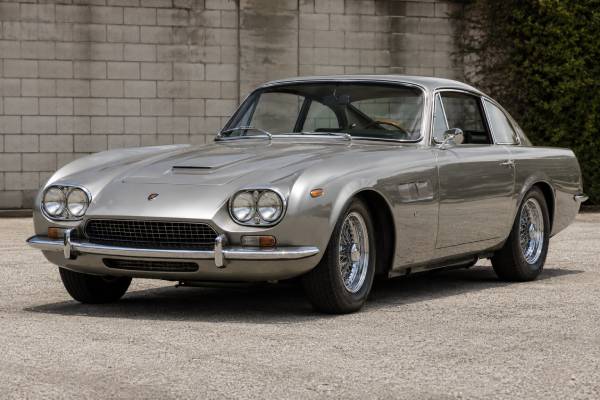
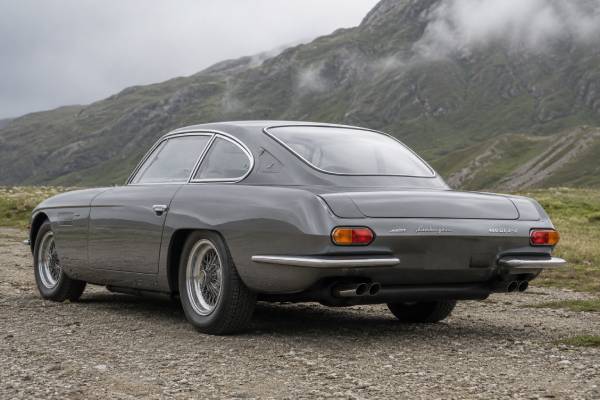
The Lamborghini 400 GT 2+2 is the early front-engine V12 grand tourer that turned Lamborghini from an ambitious newcomer into a serious Ferrari and Maserati rival. Built from 1966 to 1968, it followed the 350 GT and kept the brand’s core idea simple: a fast, refined, beautifully made GT with a powerful V12 in front, a manual gearbox in the middle, and enough comfort for long-distance use. Its 3,929 cc Lamborghini V12 produced 320 hp, while the revised roofline, steel bodywork, in-house gearbox, and 2+2 cabin made it more usable than the earlier 350 GT. Today, the 400 GT 2+2 matters because it carries Lamborghini’s original grand touring identity before the Miura changed the brand’s image forever. For buyers and collectors, it is rare, mechanically sophisticated, expensive to restore correctly, and heavily dependent on originality, documentation, and specialist care.
Table of Contents
- Why the 400 GT 2+2 Matters
- V12 Specs, Chassis, and Period Performance
- Production Numbers, Versions, and Authenticity
- Touring Design and Lamborghini Engineering
- How the 400 GT 2+2 Drives
- Maintenance, Restoration, and Common Risks
- Market Values and Buyer Checklist
Why the 400 GT 2+2 Matters
The 400 GT 2+2 matters because it is the clearest production expression of Ferruccio Lamborghini’s first idea: a civilised, fast, beautifully engineered GT for serious road use. It arrived before Lamborghini became defined by wedge-shaped supercars, scissor doors, and mid-engine drama.
Lamborghini was still a young company when the 400 GT appeared at the 1966 Geneva Motor Show. The 350 GT had proved that the new Sant’Agata Bolognese manufacturer could build a polished V12 road car, but the 400 GT 2+2 made the concept broader and more usable. It added rear seats, more cabin space, a larger engine, a stronger grand touring identity, and a new Lamborghini-built transmission.
The car sat directly between the 350 GT and the later Islero. It also overlapped with the arrival of the Miura, which means it belongs to a fascinating moment in Lamborghini history. On one side was the elegant, traditional front-engine GT. On the other was the radical mid-engine supercar. The 400 GT 2+2 did not try to be a Miura. It aimed at a different buyer: someone who wanted V12 performance, fine materials, luggage space, comfort, and engineering credibility without giving up everyday road manners.
Carrozzeria Touring of Milan styled the body. Touring had already worked on the 350 GT, and the 400 GT kept much of that car’s graceful shape. The changes were more serious than they first appear. Lamborghini raised the rear roofline, altered the rear glass, changed the boot shape, revised the cabin, and made room for two small rear seats. The result still looked elegant, but it became a more practical grand tourer.
The 400 GT 2+2 also helped establish Lamborghini’s mechanical identity. Its 3.9-liter V12 was an enlarged development of the original Bizzarrini-designed engine architecture, refined for road use by Lamborghini engineers. The car also used a Lamborghini-designed five-speed manual gearbox, an important change from the earlier transmission arrangements. Independent suspension all round, four-wheel disc brakes, and a strong tubular chassis gave it advanced road manners for its time.
Collectors value the 400 GT 2+2 because it is rare, historically important, and more discreet than later poster-car Lamborghinis. It is not the easiest early Lamborghini to restore, but a properly sorted car has strong appeal at concours events, touring rallies, and brand-focused collections. It represents Lamborghini before excess became part of the public image: refined, technical, expensive, and aimed at drivers who understood long-distance speed.
V12 Specs, Chassis, and Period Performance
The 400 GT 2+2 uses a 3,929 cc naturally aspirated 60-degree V12 rated at 320 hp, paired with a five-speed all-synchromesh manual gearbox and rear-wheel drive. Its specification was advanced for a mid-1960s GT, especially because it combined V12 power, independent suspension, and disc brakes at all four corners.
| Category | Specification |
|---|---|
| Production years | 1966–1968 |
| Body style | Two-door 2+2 coupe |
| Layout | Front engine, rear-wheel drive |
| Engine | 3,929 cc naturally aspirated 60-degree V12 |
| Bore and stroke | 82 mm x 62 mm |
| Valve gear | Double overhead camshafts per bank, two valves per cylinder |
| Fuel system | Six twin-choke Weber 40 DCOE carburetors |
| Output | 320 hp at 6,500 rpm |
| Torque | About 276 lb-ft at 4,500 rpm |
| Transmission | Five-speed all-synchromesh manual |
| Chassis | Tubular steel structure |
| Front suspension | Independent unequal-length wishbones, coil springs, anti-roll bar |
| Rear suspension | Independent unequal-length wishbones, coil springs, anti-roll bar |
| Brakes | Servo-assisted Girling discs front and rear |
| Wheelbase | 2,550 mm |
| Fuel capacity | 87 liters |
| Period top speed | About 250 km/h, depending on gearing, tune, and test conditions |
| Period 0–100 km/h | Roughly 7 seconds, depending on source and condition |
The engine is the heart of the car. It is smooth, rev-happy, and more flexible than the earlier 3.5-liter unit because the added displacement improved torque. The six Weber carburetors give the V12 sharp response when correctly set up, but they also make tuning quality essential. A 400 GT 2+2 that starts cleanly, idles evenly, pulls without hesitation, and does not smell heavily of fuel is usually showing evidence of recent specialist attention.
The five-speed manual gearbox is a major part of the car’s appeal. Lamborghini’s own transmission used synchromesh on all forward gears, which improved usability compared with many older high-performance GTs. In a healthy car, the shift should feel mechanical and deliberate rather than vague or obstructive. Any grinding, jumping out of gear, or heavy bearing noise matters because gearbox parts and labor are costly.
The chassis and suspension were also serious for the period. Many rival grand tourers still used simpler rear-axle layouts, while the Lamborghini used independent suspension at both ends. That gives the car a composed, planted feel when fresh. Worn bushings, tired dampers, poor alignment, and old tires can make a 400 GT feel far less precise than its design suggests.
Performance figures vary because period road tests, gearing, tire choice, tune, and restoration condition all affect the numbers. A well-sorted car is properly fast by 1960s GT standards. More important, it delivers speed in a refined way. The 400 GT 2+2 was not built as a stripped competition car. It was built to cross countries quickly, with a V12 that could cruise, overtake, and sing without feeling strained.
Production Numbers, Versions, and Authenticity
The safest way to understand production is to separate the wider 400 GT family from the 400 GT 2+2 itself. Lamborghini often describes roughly 250 total 400 GT-series cars, while many marque and auction references identify about 224 examples of the 400 GT 2+2, after a smaller run of earlier 400 GT “Interim” cars.
The 400 GT story has two main forms. The earlier 400 GT, often called the Interim, was closer to the 350 GT body style but used the enlarged 3.9-liter V12. The 400 GT 2+2 was the fully revised model, with altered bodywork and rear seating. This distinction matters because production numbers, body details, and values are not identical.
Main identification points
A real 400 GT 2+2 should be checked as a complete identity package, not just as a chassis plate. Important areas include:
- Chassis number, engine number, gearbox number, and body-related markings where available.
- Factory build information, certificate of origin, or Polo Storico documentation.
- Original color and interior trim records.
- Correct left-hand-drive or right-hand-drive history.
- Evidence of early coachbuilder work, restoration, or body replacement.
- Matching-numbers engine claims supported by documentation.
- Period-correct wheels, instruments, switchgear, lights, and trim.
Many examples have been restored, repainted, retrimmed, mechanically rebuilt, or upgraded for usability. That is not automatically bad. A sympathetic restoration by a respected Lamborghini specialist can be more valuable than a neglected “original” car that needs a full mechanical and body rebuild. The problem is undocumented work, incorrect details, or cosmetic restoration that hides structural issues.
Touring, Marazzi, and hand-built variation
The 400 GT 2+2 is a coachbuilt Italian GT, so small differences between cars are normal. Panel gaps, trim details, interior finishes, and hardware can vary. Carrozzeria Touring’s financial problems also make the late-production story more complex, with Marazzi associated with body production after Touring’s collapse.
For a buyer, the key is not to expect modern uniformity. The key is to separate authentic hand-built variation from poor repair. Uneven handmade details are one thing. Thick filler, distorted shut lines, weak sill repairs, incorrect brightwork, or poorly fitted glass are another.
Factory colors and interiors
Original color matters because early Lamborghinis were often finished in elegant, understated shades rather than the loud colors people now associate with later models. Silver, grey, blue, red, green, and metallic tones can all suit the 400 GT 2+2, especially with tan, tobacco, black, or other period leather interiors.
A color change does not destroy a car’s value, but it changes the discussion. A car returned to its original exterior and interior combination will usually be easier to defend at concours level. A non-original but attractive color can still sell well if the restoration is excellent and the change is fully documented. The weakest position is an incorrect color paired with a mediocre restoration and no paperwork.
Right-hand-drive rarity
Most 400 GT 2+2s were left-hand drive. Right-hand-drive cars and period conversions are much rarer, but buyers need to understand exactly what they are looking at. A properly documented period conversion for the UK market is different from a later undocumented change. Steering, pedal box, dashboard, wiring, and brake-related work all need close inspection.
For collectors, the best examples have a clear chain of identity: factory documents, early registrations, ownership history, restoration invoices, specialist reports, and photographs showing the car before, during, and after major work.
Touring Design and Lamborghini Engineering
The 400 GT 2+2 looks elegant because Touring changed the 350 GT shape carefully instead of making the added rear seats obvious. The car is larger in cabin feel than its predecessor, yet it keeps a low, clean, restrained 1960s Italian GT character.
The raised rear roofline is one of the most important design changes. Lamborghini needed more headroom for rear passengers, but a clumsy roof would have ruined the shape. Touring managed the change by revising the rear glass, boot lid, side window treatment, and roof profile. The difference is easy to miss at first glance, which is part of the design’s success.
The front end is also distinctive. The 400 GT 2+2 adopted quad round headlamps instead of the 350 GT’s earlier oval-style lighting treatment. This gave the car a more modern face and better lighting performance. The long hood, slim pillars, curved glass, and compact tail all support the grand touring purpose: elegance first, aggression second.
Steel bodywork and its consequences
The 400 GT 2+2 moved away from the aluminum body approach associated with the 350 GT and used steel bodywork. Steel made sense for production and structure, but it creates major restoration concerns today. Corrosion repair is one of the largest cost drivers on these cars, especially where outer panels, inner structures, chassis tubes, and handmade trim meet.
A freshly painted 400 GT 2+2 can look spectacular while still hiding major problems. Buyers should inspect underneath, inside the sills, around the floor structure, behind trim, around wheel openings, and in water-trap areas. Correct steel repair on a rare coachbuilt Lamborghini is not the same as ordinary bodywork. It requires metal-shaping skill, accurate reference points, and patience.
The cabin layout
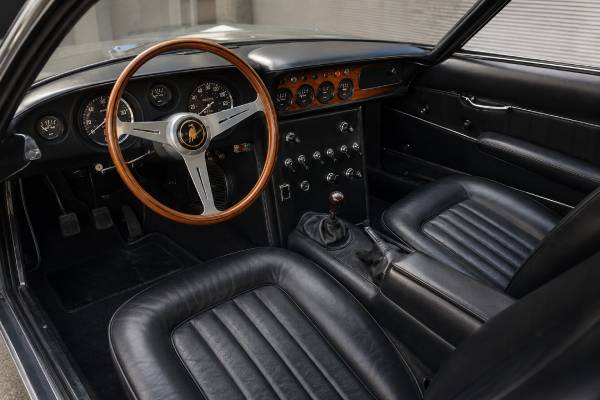
The 2+2 cabin is useful, but it is not a modern four-seater. The rear seats are best for children, small adults over short distances, or extra luggage space. The transmission tunnel divides the rear area, and the cabin still feels like a driver-focused GT rather than a luxury sedan.
The dashboard and instruments have the charm expected from an early Italian exotic. Large gauges, leather trim, delicate switches, and slim pillars give the car a special feel. Original interior parts can be difficult to replace, so incorrect retrims, modern materials, poor stitching, and wrong carpets can reduce the car’s appeal. Patina can be attractive when honest. Neglect is different.
Mechanical packaging
The front-mounted V12 gives the car its long-hood stance and smooth touring character. Because the engine is large and the carburetors, cooling system, ignition, and exhaust all need space, heat management is important. The engine bay should look ordered, not improvised. Non-original wiring, loose fuel lines, weak hose routing, and missing heat shielding deserve attention.
The car’s engineering is unusual because it blends old-world coachbuilding with advanced mechanical thinking. The body feels delicate and handmade, while the chassis, suspension, brakes, and V12 were serious performance hardware. That combination is why the 400 GT 2+2 still feels special. It is not just pretty; it was genuinely ambitious.
How the 400 GT 2+2 Drives
A good 400 GT 2+2 feels smooth, muscular, and surprisingly capable for a 1960s front-engine GT. A tired one feels heavy, hot, vague, and expensive, so the driving experience depends heavily on mechanical condition.
The V12 is the main event. It should start with a crisp mechanical sound, settle into a steady idle once warm, and pull cleanly through the rev range. The six Webers need proper synchronization. When they are right, throttle response is immediate and the engine feels refined rather than temperamental. When they are wrong, the car can stumble, spit back, idle unevenly, or feel flat at low speed.
Power delivery is flexible. The 3.9-liter engine has more torque than the 350 GT’s smaller V12, so the 400 GT 2+2 does not need constant high-rpm driving. It can cruise calmly, then build speed quickly when the road opens. The engine note is more cultured than brutal: layered intake noise, a smooth mechanical top end, and a classic V12 exhaust sound that hardens as the revs rise.
The gearbox should feel precise once warm. First gear is for moving away, while the upper ratios suit fast touring. Heavy shift action when cold is not unusual in a classic GT, but serious baulking or noise is a warning sign. A buyer should drive the car long enough to test every gear, including downshifts.
Steering effort is part of the classic experience. At parking speeds, the car is heavy compared with a modern GT. Once moving, it should become more natural, with good feedback and a stable front end. Incorrect tires can transform the feel in the wrong direction. Wider modern rubber may add grip, but it can also increase steering weight, tramlining, and stress on suspension components.
The ride should be firm but not harsh. Independent suspension gives the car sophistication, especially on flowing roads. If it crashes over bumps, wanders, leans excessively, or feels nervous, suspect old dampers, worn bushings, poor alignment, tired tires, or chassis issues.
The brakes are strong for the period, but they are not modern carbon-ceramics or ABS-assisted brakes. The servo-assisted Girling discs should stop the car confidently, with a firm pedal and no pulling. A soft pedal, vibration, sticking calipers, or brake smell after gentle use points to needed work.
In traffic, the 400 GT 2+2 needs patience. Heat, clutch weight, carburetor behavior, and visibility all matter. The car was built for open-road touring, not stop-start commuting. On a quiet highway or fast back road, it makes much more sense. It is quick enough to feel special, refined enough to cover distance, and rare enough to turn every drive into an occasion.
Maintenance, Restoration, and Common Risks
The 400 GT 2+2 is not unreliable by design, but it is highly sensitive to age, storage, poor restoration, and non-specialist work. The biggest ownership risks are corrosion, incomplete documentation, expensive V12 work, and incorrect repairs hidden under attractive paint.
This is a hand-built V12 Lamborghini from the 1960s. It should be treated as a specialist machine, not as a normal classic coupe. Even simple work can become expensive when parts are rare, access is tight, or previous repairs need undoing.
Engine and fuel system
The V12 is strong when rebuilt and maintained correctly, but it is expensive to put right. Key areas to inspect include:
- Oil pressure when cold and fully hot.
- Coolant temperature during idle, traffic, and fast driving.
- Carburetor balance, fuel leaks, worn throttle shafts, and incorrect jets.
- Timing chain, valve gear, cam timing, and valve adjustment history.
- Ignition condition, including distributor setup, leads, coils, and plugs.
- Exhaust smoke on start-up, overrun, and acceleration.
- Evidence of old fuel residue from long storage.
A car that has sat for years may need far more than a tune-up. Fuel tanks, lines, pumps, carburetors, coolant hoses, radiator, water pump, ignition parts, and gaskets may all need attention before the car is safe and dependable.
Gearbox, clutch, and driveline
The Lamborghini-built five-speed gearbox is a major value point, so it must be assessed carefully. Synchro wear, bearing noise, oil leaks, and difficult shifts can point to costly work. The clutch should engage cleanly without judder or slipping. Driveshaft, differential, and mount issues can create vibration or clunks that are easy to overlook during a short test drive.
Documentation matters here. A recent specialist gearbox rebuild with invoices is valuable. A seller’s verbal claim that “they all shift like that” is not enough.
Chassis and body corrosion
Corrosion is one of the most serious risks. Inspect these areas closely:
- Sills, inner sills, and jacking areas.
- Floor pans and footwells.
- Wheel arches and lower fenders.
- Door bottoms and lower quarter panels.
- Boot floor and spare-wheel area.
- Battery area and surrounding metal.
- Headlamp surrounds and front structure.
- Chassis tubes, suspension pickup points, and outriggers.
- Areas hidden behind interior trim and carpets.
A magnet test is not enough. A proper pre-purchase inspection should include lift access, borescope checks where useful, paint-depth readings, and review of restoration photographs. Poor corrosion repair can affect value, safety, panel fit, and future restoration cost.
Suspension, brakes, wheels, and tires
The suspension needs careful rebuilding to feel as intended. Rubber bushings, ball joints, wheel bearings, dampers, springs, and alignment all affect the car’s road manners. Brakes need the same attention. Calipers, discs, hoses, master cylinder, servo, and brake lines should be checked, especially on cars that have been stored.
Many cars use Borrani wire wheels or period-style replacements. Wire wheels need inspection for spoke tension, cracks, corrosion, rim condition, and correct tubes where applicable. Old tires can look fine and still be unsafe. A collector car on aged rubber is not road-ready.
Interior, trim, and electrical issues
Original interior and trim pieces can be difficult to source. Incorrect instruments, missing switches, poor leatherwork, wrong carpets, and improvised wiring are all common restoration weak points. Electrical issues often come from age, heat, moisture, and old modifications rather than a single design flaw.
A neat fuse panel and tidy wiring loom tell a better story than a fresh leather cabin with messy electrics underneath. The same applies to brightwork and glass. Rechroming, repairing frames, replacing seals, and correcting window fit can become surprisingly expensive.
Market Values and Buyer Checklist
The 400 GT 2+2 sits in a serious collector market, but values vary widely because condition, originality, documentation, and restoration quality matter more than headline rarity alone. As of 2026, public results and market trackers commonly place many usable or older-restored cars in the low-to-mid six-figure range, while exceptional, highly documented examples can command much more.
The car is rarer than many better-known classic Ferraris and far rarer than most later Lamborghinis, but rarity alone does not guarantee a premium. Buyers are selective because restoration costs can outrun the value difference between an average car and an excellent one.
What drives value
The strongest cars usually have:
- Matching-numbers engine and gearbox, supported by documents.
- Original or factory-correct color combination.
- Clear ownership history.
- Lamborghini Polo Storico, factory, or respected specialist documentation.
- High-quality restoration with photographs and invoices.
- Correct carburetors, wheels, instruments, trim, lights, and interior materials.
- Excellent metalwork with no hidden corrosion.
- Strong mechanical condition proven by road use, not just display.
- Desirable provenance, concours history, or long-term careful ownership.
The weakest cars are often the ones that look good at first glance but have poor structure, missing history, incorrect components, or a stalled restoration. A cheap 400 GT 2+2 can become the most expensive one if it needs body, engine, gearbox, interior, and trim work at the same time.
| Area | What to verify | Why it matters |
|---|---|---|
| Identity | Chassis, engine, gearbox, factory records | Authenticity drives collector value |
| Body | Steel corrosion, filler, panel fit, past repairs | Body restoration can be extremely expensive |
| Engine | Oil pressure, compression, leaks, carburetor setup | V12 rebuilds require rare expertise |
| Gearbox | Synchros, bearings, shift quality, leaks | The Lamborghini five-speed is valuable and costly to repair |
| Cooling | Radiator, fans, hoses, water pump, temperature stability | Heat problems can damage the engine |
| Interior | Correct leather, gauges, switches, trim, carpets | Rare trim parts affect originality and restoration cost |
| Documentation | Invoices, photos, old registrations, specialist reports | Paperwork reduces uncertainty and supports value |
A serious buyer should not rely on auction descriptions, seller claims, or photographs alone. The correct process is to hire a marque specialist, inspect the car on a lift, verify numbers, review documents, and drive the car from cold to full operating temperature.
Cars to seek are complete, structurally sound, mechanically sorted, and well documented. Cars to approach with caution include incomplete projects, recently painted cars with little metalwork evidence, cars missing original mechanical components, and examples advertised with vague phrases such as “believed matching” or “older restoration” without proof.
Long-term collectability looks strong because the 400 GT 2+2 has everything early Lamborghini collectors care about: V12 power, low production, Touring design, direct connection to Ferruccio’s original GT vision, and a clear place in the brand’s timeline. It will probably never have the mass recognition of a Miura or Countach, but that is part of its appeal. It is a connoisseur’s Lamborghini: elegant, rare, usable, and historically important.
References
- Lamborghini History – 400 GT | Lamborghini.com 2026
- Automobili Lamborghini’s history on the ice in St. Moritz 2024
- 1966 Lamborghini 400 GT 2+2 by Touring | Paris 2015 | RM Sotheby’s 2015
- 1966 Lamborghini 400 GT 2+2 by Touring | The Tegernsee Auction | RM Sotheby’s 2024
- Lamborghini 400 GT For Sale & Price Guide 2026
Disclaimer
This article is for informational purposes only and is not a substitute for professional diagnosis, inspection, repair, restoration, or valuation. Specifications, torque values, service intervals, parts, factory finishes, and procedures can vary by VIN, market, production changes, equipment, and past restoration work. Always verify details against official service documentation, factory records, and a qualified Lamborghini specialist before buying, repairing, or restoring a Lamborghini 400 GT 2+2.
If this guide helped you, please share it on Facebook, X/Twitter, or your favorite enthusiast community to support our work.