

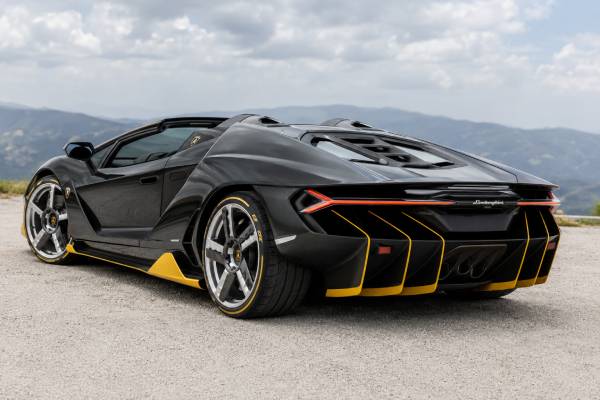
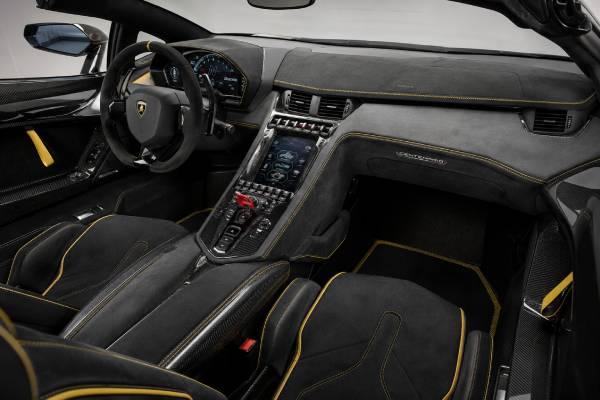
The Lamborghini Centenario Roadster LP 770-4 is the open-top version of Lamborghini’s 100th-anniversary tribute to company founder Ferruccio Lamborghini. Built around the Aventador-era carbon-fiber architecture and powered by the L539 6.5-liter naturally aspirated V12, it delivered 770 CV, all-wheel drive, rear-wheel steering, active aerodynamics, and the full sensory drama of an exposed V12 cockpit. Lamborghini built only 20 roadsters, matching the 20 coupés, which makes the Centenario Roadster one of the rarest modern V12 Lamborghinis.
Collectors still care because it sits at a key point in Lamborghini history: after the Reventón and Veneno, before the Sián and Revuelto, and near the end of the non-hybrid flagship V12 era. For buyers and owners, the appeal is clear, but so are the risks: originality, documentation, carbon-fiber condition, service history, tire age, and limited-edition certification matter as much as mileage.
Table of Contents
- Centenario Roadster in Lamborghini History
- L539 V12 Specifications and Chassis Data
- Production Numbers, Options, and Authenticity
- Carbon Design, Aero, and Special Features
- Open-Air V12 Driving Experience
- Maintenance, Reliability, and Specialist Care
- Market Values and Buyer Checks
Centenario Roadster in Lamborghini History
The Centenario Roadster is best understood as a few-off technology showcase, not a normal Aventador derivative with a special body kit. Lamborghini used it to honor Ferruccio Lamborghini’s centenary while previewing hardware and ideas that would shape later V12 cars.
The Centenario coupé appeared in 2016, the year Ferruccio Lamborghini would have turned 100. The Roadster followed as the open version, aimed at the same small group of invited collectors. Lamborghini had already built several extreme low-volume cars by then, including the Reventón, Sesto Elemento, Aventador J, and Veneno. The Centenario continued that strategy but took a cleaner, more technical direction than the Veneno’s wild race-prototype styling.
Its role in the model line is important. Under the skin, it shares its broad layout with the Aventador family: mid-mounted V12, carbon-fiber monocoque, all-wheel drive, ISR paddle-shift transmission, and pushrod suspension. But the Centenario introduced a more advanced dynamic package for Lamborghini’s flagship V12 cars. Rear-wheel steering was a key feature, giving the car sharper low-speed response and more high-speed stability. Active aerodynamic hardware, a large integrated rear diffuser, and an extending rear wing also made the car more than a styling exercise.
The Roadster has a different collector character from the coupé. The coupé is slightly quicker from 0–100 km/h on Lamborghini’s official numbers, but the Roadster adds the open-air V12 experience that many collectors want from a limited Lamborghini. With no large production run to dilute it, each roadster’s specification, color, documentation, and ownership history can strongly affect desirability.
The car’s long-term importance comes from three things:
- It is one of Lamborghini’s rarest modern V12 few-off models, with only 20 roadsters built.
- It belongs to the naturally aspirated, non-hybrid flagship era before Lamborghini’s V12 line moved toward electrification.
- It introduced or highlighted technology that became central to later Aventador evolutions, especially rear-wheel steering and more integrated aerodynamic control.
For enthusiasts, the Centenario Roadster is a dramatic piece of Lamborghini theater. For collectors, it is a narrow-market asset where the right car can be extremely desirable, but the wrong car can be difficult to place if it has poor documentation, repaint questions, accident history, missing accessories, or uncertain service records.
L539 V12 Specifications and Chassis Data
The key technical story is simple: the Centenario Roadster uses Lamborghini’s L539 6.5-liter naturally aspirated V12 in one of its most highly tuned pre-hybrid road-car forms. It combines 770 CV output, all-wheel drive, a lightweight carbon structure, and open-top packaging.
| Category | Specification |
|---|---|
| Model | Lamborghini Centenario Roadster LP 770-4 |
| Production period | 2016–2017 |
| Body style | Two-seat open-top roadster |
| Engine | L539 6.5-liter naturally aspirated V12 |
| Displacement | 6,498 cc |
| Maximum power | 770 CV / 566 kW at 8,500 rpm |
| Maximum torque | 690 Nm at 5,500 rpm |
| Transmission | 7-speed ISR automated manual |
| Drivetrain | Electronically controlled all-wheel drive with Haldex generation IV and rear mechanical self-locking differential |
| Chassis and body | Carbon-fiber monocoque with carbon-fiber body panels and trim |
| Suspension | Pushrod layout with magnetorheological damping |
| Steering systems | Lamborghini Dynamic Steering and rear-wheel steering |
| Wheels | 20-inch front and 21-inch rear forged center-lock wheels |
| Tires | Pirelli P Zero tires developed for the rear-wheel-steering setup |
| Dry weight | 1,570 kg |
| Power-to-weight ratio | 2.04 kg per CV |
| 0–100 km/h | 2.9 seconds |
| Top speed | More than 350 km/h / 217 mph |
| 100–0 km/h braking | 31 meters |
The “LP 770-4” name follows Lamborghini’s traditional format from this era. “LP” refers to the longitudinal rear-mid engine placement, “770” points to the metric horsepower output, and “4” refers to four driven wheels. In English-language listings, the car is often called a 770 hp Lamborghini, but Lamborghini’s technical figure is 770 CV, which is roughly 759 mechanical horsepower.
The 6.5-liter V12 is naturally aspirated, so there are no turbochargers or hybrid motors smoothing out its character. It makes its power with revs, throttle response, intake noise, and exhaust flow. The ISR transmission is a single-clutch automated manual, not a modern dual-clutch gearbox. That distinction matters because the shifts are more physical and dramatic, especially in Sport or Corsa mode.
The chassis is also central to the car’s value. A carbon monocoque is light and stiff, but repair after damage is highly specialized. The body is made from carbon fiber as well, and many visible surfaces, lower aero parts, wheel details, and interior trims can be expensive to restore correctly. A pre-purchase inspection should treat the carbon structure and body as major value items, not cosmetic details.
Production Numbers, Options, and Authenticity
The Centenario Roadster’s value depends heavily on authenticity because the entire production run was only 20 units. A buyer should treat factory records, original equipment, and Lamborghini-issued certification as core parts of the car.
Lamborghini built 40 Centenario models in total: 20 coupés and 20 roadsters. The Roadster was delivered through 2017, and all examples were sold to collectors and Lamborghini clients rather than offered through normal showroom inventory. That means most cars have unusual ownership stories, ultra-low mileage, private-collection storage, or market-specific paperwork.
The original starting price was quoted at around €2 million plus tax for the Roadster, before personalization. In practice, many cars left the factory with expensive Ad Personam specifications. Ad Personam is Lamborghini’s factory personalization program, covering paint, exposed carbon fiber, interior colors, stitching, materials, and trim details. On a car this rare, the specification is not just a matter of taste; it becomes part of the car’s identity.
What separates one Centenario Roadster from another
The biggest differences are usually specification, condition, documents, and market eligibility. Important items include:
- Factory color and finish: Argento Centenario was associated with the Roadster launch, but many cars were individually specified. Exposed carbon, unique paint, and rare interior combinations can influence demand.
- Interior materials: Alcantara, leather, contrast stitching, piping, special inserts, and carbon trim should match factory records.
- Market configuration: EU, Middle East, Japan, and U.S.-market cars may differ in paperwork, lighting, emissions labeling, registration history, and import requirements.
- Certification: Lamborghini Polo Storico or limited-edition certification is valuable because it supports identity, build specification, and provenance.
- Accessories: Tool kit, battery charger, car cover, manuals, keys, service gloves, special books, and presentation items matter more here than they would on a mass-produced supercar.
- Mileage and use: Extremely low mileage helps presentation, but long static storage can create its own service needs.
Buyer identification points
A serious inspection should confirm the VIN, factory build specification, engine identity, paint and trim codes, and limited-edition documents before negotiating price. The goal is not just to prove the car is genuine. It is to prove that the car is the same car described by its factory and ownership records.
A good file should include:
- Original sales paperwork or delivery records where available.
- Factory specification sheet or Ad Personam documentation.
- Lamborghini service history from authorized dealers or recognized specialists.
- Recall and campaign completion records.
- Export/import paperwork if the car changed markets.
- Photos from delivery, previous sales, and major service events.
- Any limited-edition certificate or Polo Storico documentation.
Missing paperwork does not automatically make a car bad, but it should affect price and caution. With only 20 roadsters, a poorly documented example can remain recognizable in the collector community for the wrong reasons.
Carbon Design, Aero, and Special Features
The Centenario Roadster’s design is functional, not just aggressive. Its vents, splitters, diffuser, rear wing, headrest channels, wheels, and cooling paths all support airflow, stability, brake cooling, or open-cabin comfort.
Centro Stile Lamborghini shaped the Roadster around a low, wedge-like form with short overhangs and strong carbon-fiber surfacing. Compared with the Veneno, it is less visually chaotic. The Centenario still looks extreme, but the surfaces are cleaner and the aero parts are more integrated into the body.
At the front, splitters manage airflow and help generate downforce. Air passes through ducts around the headlight area, side skirts, and wheel arches toward the rear radiators. At the rear, the bumper area is almost dissolved into a large diffuser and open cut-outs. This design exposes mechanical and aerodynamic elements rather than hiding them behind a conventional rear fascia.
The active rear wing is one of the car’s signature features. It sits integrated into the body at low speeds, then extends and changes angle according to speed, driving mode, and dynamic demand. The purpose is to keep the car stable at high speed without permanently disrupting the body shape.
The Roadster’s open cabin required its own airflow work. Lamborghini shaped the windscreen and the area behind the headrests to reduce turbulence. A channel behind the headrest sends airflow rearward, helping the rear aero and reducing air recirculation around the occupants. That detail matters because a roofless high-speed V12 car can easily become tiring if cabin airflow is poorly controlled.
Inside, the Centenario Roadster uses a more connected infotainment system than earlier Lamborghini few-offs. The 10.1-inch touchscreen, Apple CarPlay, internet functions, and telemetry recording made it a bridge between the old analog supercar world and the data-heavy modern hypercar world. Optional interior cameras could record driving experiences, making the car feel more like a track-day tool than a static collector object.
The most memorable special features are:
- Carbon-fiber monocoque and carbon-fiber body.
- Scissor doors with open-top roadster drama.
- Naturally aspirated V12 with a central exhaust character.
- Rear-wheel steering for agility and stability.
- Active extending rear wing.
- Large rear diffuser and exposed rear aero structure.
- 20/21-inch center-lock wheels with brake-cooling design.
- 10.1-inch touchscreen with telemetry functions.
- Extensive Ad Personam personalization.
The result is a car that feels like a technical manifesto. It is not subtle, but its drama comes from real engineering choices rather than decoration alone.
Open-Air V12 Driving Experience
The Centenario Roadster feels defined by three things: instant V12 response, a dramatic ISR shift event, and the extra intensity of hearing a 6.5-liter Lamborghini engine without a fixed roof above you. It is fast, but its character matters more than the numbers.
Acceleration is brutal by any normal standard. Lamborghini quoted 0–100 km/h in 2.9 seconds and a top speed beyond 350 km/h. Those figures place it firmly among the fastest open V12 road cars of its period. But the Roadster’s appeal is not only launch speed. The naturally aspirated V12 builds power in a clean, rising rush, and it rewards revs in a way turbocharged engines do not quite copy.
The ISR gearbox gives the car a different feel from a modern dual-clutch supercar. At low speeds, it can feel more mechanical and less smooth. In aggressive modes, the shift becomes part of the event: a hard interruption, a punch through the driveline, then another surge from the V12. Some drivers love this because it feels theatrical. Others may find it less refined than newer dual-clutch cars from Ferrari, McLaren, or Lamborghini’s later hybrid era.
The rear-wheel steering is more than a spec-sheet feature. At low speeds, it helps a very wide, low car rotate with less effort. At higher speeds, the rear wheels steer in phase with the fronts to make the car feel calmer and more planted. That system helps the Centenario feel sharper than earlier Aventador-based cars, especially in tight corners and quick direction changes.
The carbon-ceramic brakes are powerful, and the official 100–0 km/h braking distance of 31 meters shows the hardware’s potential. On the road, brake feel depends heavily on temperature, pad condition, rotor health, and tire condition. Old tires can make even a technically healthy car feel nervous. On a collector car that may have traveled only a few hundred kilometers, tire age matters more than tread depth.
The Roadster is not a relaxed grand tourer. Visibility is low and wide, front clearance needs care, cabin noise is high, and the car draws attention everywhere. City driving requires patience with the clutch, gearbox, nose lift, tire temperature, and road surface. On a good road, though, it delivers the kind of open-air V12 experience that defines Lamborghini’s modern mythology.
Owners should also be realistic about use. The Roadster is best treated as a special-event and fair-weather car unless the specific example includes verified weather equipment and the owner is comfortable with the limits of an open cabin. Water exposure, storage conditions, battery management, and detailing technique all matter more than they would on a regular convertible.
Maintenance, Reliability, and Specialist Care
The Centenario Roadster is not unreliable in the ordinary used-car sense; it is expensive, specialized, and highly sensitive to neglect. The biggest risks come from inactivity, poor storage, carbon damage, outdated tires, incomplete servicing, and incorrect assumptions that Aventador experience alone is enough.
Because the car shares major architecture with the Aventador family, trained Lamborghini technicians understand the core V12, ISR, AWD, suspension, braking, and electronics systems. But the Centenario’s rarity, bodywork, trim, aero hardware, and documentation needs make it a much more delicate ownership proposition.
Mechanical and electronic areas to inspect
A pre-purchase inspection should cover more than a scan for fault codes. Key areas include:
- Engine health: Check for oil leaks, coolant seepage, dry-sump service history, smooth cold start, correct idle, and any misfire history.
- ISR gearbox and clutch: Confirm clutch wear data, shift calibration, hydraulic operation, and service records. Low mileage does not guarantee low clutch stress if the car has been maneuvered repeatedly in tight spaces.
- AWD and differential systems: Inspect for leaks, abnormal noises, calibration faults, and service history.
- Rear-wheel steering: Verify correct operation, alignment data, warning lights, and calibration status.
- Magnetorheological dampers: Look for leaks, faults, uneven ride height, and error codes.
- Front axle lift: Check hydraulic operation and inspect for leaks or slow movement.
- Carbon-ceramic brakes: Measure condition correctly. Visual appearance and pad thickness are not enough; carbon-ceramic discs need specialist evaluation.
- Cooling system: Inspect radiators, fans, hoses, and signs of heat stress, especially on cars stored in hot climates.
- Battery and control modules: Confirm battery maintenance, charging behavior, and absence of low-voltage faults.
- Infotainment and telemetry: Test the touchscreen, Apple CarPlay, telemetry features, cameras if fitted, and all display functions.
Carbon-fiber and body risks
Carbon damage is one of the most serious ownership risks. The front splitter, lower side elements, underbody, diffuser, wheel-arch edges, and exposed carbon surfaces should be inspected under strong lighting and from below. Scrapes may look minor, but cracks, delamination, poor clear-coat repairs, or structural impact history can be expensive and value-damaging.
Paint and clear-coat work on a limited Lamborghini is not simple. A normal repaint may hurt collector value if it is not documented, color-matched, and performed to an appropriate standard. Exposed carbon is even more sensitive because weave alignment, tint, clear depth, and finish quality are difficult to replicate.
Service records and recall checks
Service intervals and procedures must be verified against the car’s official documentation, VIN, market, and equipment. On a car that may cover very little mileage, time-based service is still important. Fluids age, seals dry, tires harden, batteries fail, and hydraulic components can suffer from disuse.
There was a U.S. recall campaign involving incorrect certification-label weight information on certain 2017 Centenario Coupé and Roadster vehicles. This was a label compliance issue rather than a major mechanical defect, but buyers should still verify completion by VIN. On a car this rare, incomplete recall documentation suggests the broader file may also be weak.
A proper ownership plan should include:
- Annual or time-based servicing with Lamborghini-authorized or elite specialist care.
- Battery conditioner use when stored.
- Climate-controlled storage with correct tire and fluid management.
- Regular movement and warm-up under proper conditions, not short cold starts only.
- Tire replacement based on age and compound condition, not just tread depth.
- Dealer-level diagnostic checks before and after long storage.
- Documentation of every service, inspection, campaign, and repair.
The cost of doing this correctly is high, but the cost of doing it poorly is higher. For the Centenario Roadster, maintenance protects both drivability and provenance.
Market Values and Buyer Checks
The Centenario Roadster market is thin, private, and highly specification-driven. Public auction results are useful, but they do not fully define value because only a small number of cars trade openly.
The original Roadster price was around €2 million plus tax before options. Since then, asking prices and auction estimates have varied widely. Recent public-market examples show the split clearly: one low-mileage 2017 roadster sold at RM Sotheby’s Dubai for just over $2 million, while another 2018 roadster was estimated much higher in Paris and did not sell. That gap does not mean one figure is “the” market. It shows how sensitive this model is to color, country, import position, registration, taxes, VAT, mileage, documentation, seller expectations, and timing.
Private asking prices can sit far above public sale results. Some sellers price these cars as museum-grade assets, especially when mileage is near delivery level and the specification is unique. Buyers should separate asking price from transacted price. In a 20-unit market, one sale can be influenced by a single motivated seller, one difficult import situation, or one bidder pool that did not include the right collectors.
What drives value
The strongest cars usually have:
- Very complete factory and service documentation.
- Lamborghini limited-edition certification or Polo Storico paperwork.
- Original paint, original carbon, and no accident history.
- Desirable Ad Personam specification.
- Low but believable mileage.
- Correct accessories, books, charger, tools, covers, and keys.
- Clear market registration status.
- Service history that proves the car has been maintained, not merely stored.
- No open campaigns, warning lights, or unresolved diagnostic issues.
The weaker cars often have:
- Missing documents or vague provenance.
- Unexplained repaint or carbon repair.
- Long storage without time-based service.
- Old tires presented as “like new.”
- Import, VAT, or title complications.
- Missing accessories.
- Non-factory modifications.
- Inconsistent mileage records.
- Deferred maintenance hidden behind low odometer readings.
| Priority | What to verify | Why it matters |
|---|---|---|
| Identity | VIN, factory build data, certificates, market specification | Confirms the car is correctly represented |
| Originality | Paint, carbon panels, interior trim, wheels, accessories | Original condition is a major value driver |
| Mechanical health | Engine, ISR clutch, AWD, lift, dampers, rear steering | Repairs require specialist labor and parts |
| Carbon condition | Splitter, diffuser, underbody, monocoque, exposed carbon | Damage can be costly and value-sensitive |
| Storage quality | Battery care, tire age, fluid age, climate control | Low mileage can hide age-related problems |
| Legal status | Title, import documents, VAT, registration, recall completion | Market eligibility affects liquidity |
The best buying strategy is to prioritize the car’s file before falling in love with its mileage. A 200-kilometer car with weak documents, old tires, a questionable repaint, and import complications may be less desirable than a slightly higher-mileage car with complete history and clean factory provenance.
For long-term collectability, the Centenario Roadster has strong fundamentals: tiny production, V12 power, open-air appeal, major anniversary context, and a place in Lamborghini’s few-off lineage. The main caution is liquidity. These cars do not trade like normal supercars. Selling one can take time, and the buyer pool is small. That makes quality, originality, and documentation even more important at purchase.
References
- Lamborghini Centenario Roadster | Lamborghini.com 2016
- Lamborghini Centenario: the perfect Few-off 2019
- Lamborghini Centenario Roadster (2017) – pictures, information & specs 2017
- Part 573 Safety Recall Report 18V-244 2018 (Recall Database)
- 2017 Lamborghini Centenario LP770-4 Roadster | Dubai | RM Sotheby’s 2024 (Auction Result)
Disclaimer
This article is for informational purposes only and is not a substitute for professional diagnosis, repair, valuation, inspection, or legal advice. Specifications, torque values, service intervals, campaign status, registration rules, and procedures can vary by VIN, market, equipment, and later factory updates. Always verify details against the official Lamborghini service documentation for the specific vehicle and use a qualified Lamborghini dealer or specialist before purchase or repair.
If this guide helped you, please share it on Facebook, X/Twitter, or your favorite car community to support our work.