
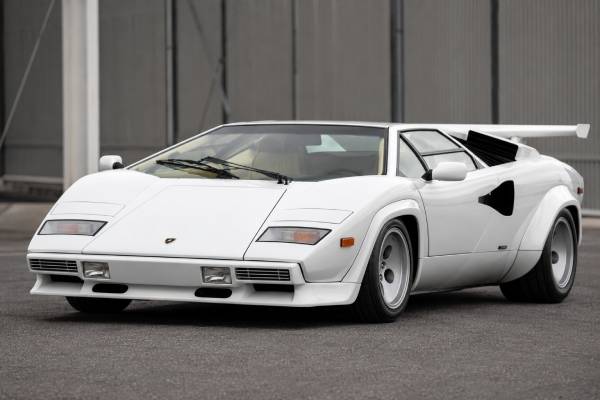
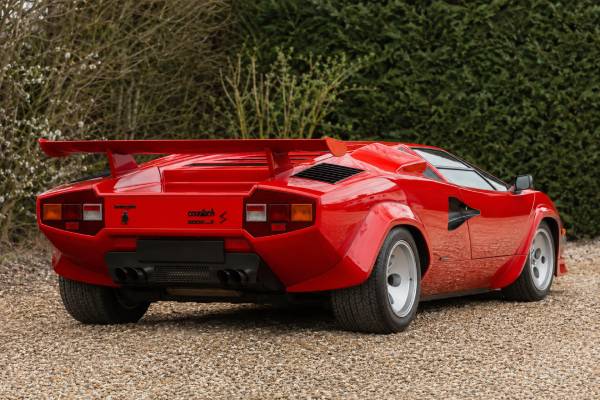
The Lamborghini Countach 5000 S, also known as the LP500 S or LP5000 S depending on market and source, is the 4.8-liter evolution of Lamborghini’s original wedge-shaped supercar. Built in the early Mimran era, it kept the dramatic Marcello Gandini body style, scissor doors, rear-mounted V12 layout, and wide-arch stance of the LP400 S, but added a larger L507 V12 with more torque and better real-world flexibility. For collectors, it sits in a valuable middle ground: rarer and more analog than the later Quattrovalvole and 25th Anniversary cars, but more usable and muscular than the earlier 4.0-liter S. Buyers care about originality, documentation, carburetor tuning, body integrity, and whether the wing, wheels, interior, engine, gearbox, and chassis details match the car’s original build.
Table of Contents
- Why the 5000 S Matters
- L507 V12 Specs and Chassis Data
- Production Details and Originality Clues
- Wedge Design and Countach Engineering
- Road Feel, Performance, and Usability
- Maintenance, Restoration, and Known Risks
- Market Values and Buying Checks
Why the 5000 S Matters
The Countach 5000 S matters because it gave Lamborghini’s poster-car shape the stronger engine it always seemed to deserve. It did not radically change the look of the LP400 S, but the enlarged 4.8-liter V12 made the car feel fuller, stronger, and less peaky on the road.
The original Countach story began with the LP112 project, shown publicly as the LP500 prototype at the 1971 Geneva Motor Show. The production LP400 arrived in the mid-1970s with a 3.9-liter V12, a tubular space frame, Bertone-built bodywork, and Marcello Gandini’s sharply folded wedge design. It replaced the Miura not by copying it, but by changing the idea of what a Lamborghini flagship could be: lower, more angular, more difficult, and more futuristic.
The LP400 S that followed added the visual ingredients most people now picture when they hear “Countach”: wheel-arch extensions, huge Campagnolo-style wheels, wider tires, a deeper front spoiler, and the optional rear wing. The 5000 S built on that look but focused on the engine. Lamborghini increased displacement from 3,929 cc to 4,754 cc, revised ignition and transmission details, and improved trim and comfort. The result was not a new generation in the modern sense. It was a carefully developed Countach that kept the essential theater while making the V12 more flexible.
The 5000 S arrived during an important period for Lamborghini. The company had passed through financial strain, and the Mimran family’s involvement helped stabilize development. The 5000 S was part of that recovery. It was still hand-built, still extreme, and still demanding, but it reflected a push toward better finish, stronger drivability, and broader export appeal.
Its place in the Countach line is especially interesting:
- The LP400 is the pure early “Periscopio” design and has the strongest minimalist appeal.
- The LP400 S created the wide, aggressive Countach image.
- The 5000 S added the 4.8-liter L507 engine and more torque without the later QV engine-cover hump.
- The LP5000 Quattrovalvole brought 5.2 liters, four-valve heads, and more power, but also a different rear-deck profile.
- The 25th Anniversary version added heavier visual revisions and greater production volume.
For collectors, the 5000 S is desirable because it combines the early silhouette with the larger two-valve V12. It is also rare enough to matter. Production figures vary slightly by source, with 321 commonly cited and Lamborghini’s own retrospective material giving 323 units for the 5000 S. Either way, it was a low-volume car, and survival condition matters far more than mileage alone.
The model’s reputation today is built on balance. It is not the cleanest Countach, not the most powerful Countach, and not the easiest Countach to drive. Its appeal lies in the mix: dramatic Gandini design, carbureted V12 character, wide-arch presence, low production, and a driving experience that still feels mechanical rather than managed.
L507 V12 Specs and Chassis Data
The key technical point is simple: the Countach 5000 S uses a naturally aspirated 4,754 cc 60-degree V12 with six Weber carburetors and a five-speed manual gearbox. Its 375 hp rating was similar to early Countach claims, but the larger displacement gave it stronger mid-range torque.
| Category | Specification |
|---|---|
| Model | Lamborghini Countach 5000 S / LP500 S / LP5000 S |
| Internal project family | LP112 Countach line |
| Production years | 1982–1985 model period |
| Engine code | L507 |
| Engine layout | Longitudinal mid-mounted 60-degree V12 |
| Displacement | 4,754 cc |
| Bore x stroke | 85.5 mm x 69 mm |
| Valvetrain | Dual overhead camshafts per bank, 2 valves per cylinder |
| Fuel system | Six Weber 45 DCOE twin-choke carburetors on most European-spec cars |
| Output | 375 hp at 7,000 rpm |
| Torque | About 410 Nm / 302 lb-ft at 4,500 rpm |
| Transmission | Five-speed manual |
| Drivetrain | Rear-wheel drive |
The engine is still part of Lamborghini’s long-running Bizzarrini-derived V12 family, but the 5000 S version gained displacement by increasing bore and stroke compared with the earlier 3.9-liter cars. The important change was not just peak horsepower. The 4.8-liter engine produced more torque at lower engine speed, making the car less dependent on constant high-rpm driving.
The gearbox sits ahead of the engine in classic Countach fashion, with the driveshaft running back through the sump area to the rear differential. This arrangement helped packaging and weight distribution but makes major service work more involved than on simpler front-engine cars.
| Area | Specification |
|---|---|
| Chassis | Tubular steel space frame |
| Body panels | Primarily aluminum panels with composite pieces in selected areas depending on version and repair history |
| Front suspension | Independent double wishbones, coil springs, dampers, anti-roll bar |
| Rear suspension | Independent links/wishbones, coil springs, dampers, anti-roll bar |
| Steering | Unassisted rack-and-pinion |
| Brakes | Vented discs front and rear |
| Wheelbase | 2,450 mm |
| Length | 4,140 mm |
| Width | About 2,000 mm |
| Height | About 1,070 mm |
| Fuel capacity | About 120 liters |
| Curb weight | Commonly listed around 1,480–1,490 kg, depending on source and equipment |
Performance figures vary because period testing, market equipment, rear-wing fitment, tire condition, and test methods differed. A healthy 5000 S is usually described as a roughly five-second 0–100 km/h car, with top speed around 290 km/h in favorable specification. Wing-equipped cars may lose some top speed because the rear wing adds drag, even though it completes the familiar bedroom-poster look.
The technical character is old-school exotic rather than modern supercar. There is no traction control, no power steering, no automated transmission, no active suspension, and no electronic safety net. The car’s speed comes from displacement, gearing, carburetion, tire width, and driver commitment.
Production Details and Originality Clues
The 5000 S is rare, but rarity alone does not make every car equally valuable. The best examples are the cars with clear identity, known ownership history, original colors and trim, matching major components, and documentation from Lamborghini Polo Storico or respected marque specialists.
The naming can confuse buyers. Lamborghini and period markets used several forms: Countach 5000 S, LP500 S, and LP5000 S. The “5000” label was a rounded marketing name rather than the exact displacement, which was 4,754 cc. It should also not be confused with the later LP5000 Quattrovalvole, which used a 5.2-liter four-valve V12 and a different engine-cover layout.
The 5000 S retained the wide-body visual language of the LP400 S. Most cars have the familiar flared arches, deep front spoiler, low roofline, NACA side ducts, side-mounted radiator intakes, and wide rear tires. Many were fitted with the large rear wing, but the wing was not always a straightforward originality point. Some cars were ordered, delivered, or later modified with wings; others were built without them. A buyer should judge a specific car by factory records, early photographs, dealer paperwork, and physical mounting evidence rather than assumption.
Production count and year differences
The commonly repeated production number for the 5000 S is 321 units, while Lamborghini’s own later historical summary lists 323 units. This small difference is not unusual for hand-built classic exotics, where factory records, market designations, prototypes, late registrations, and model-year boundaries can produce slight variation. For buying purposes, the exact individual car matters more than the headline count.
Year-by-year changes were not as clean as a modern production program. Lamborghini built these cars in small numbers, and specification depended on market, emissions requirements, customer order, and factory supply. Some cars were European carbureted examples, while certain later or federalized cars may show emissions-related changes. U.S.-market conversion work must be studied carefully because federalization in the 1980s could alter bumpers, lighting, emissions equipment, side markers, instruments, and sometimes drivability.
Documents that matter
The strongest cars usually have several layers of proof:
- Original build information or Lamborghini Polo Storico certification.
- Matching engine, gearbox, and rear axle numbers where documented.
- Continuous ownership records, import papers, and registration history.
- Original books, tools, jack, spare wheel, manuals, and dealer material.
- Period photographs showing original color, wing fitment, interior trim, and market equipment.
- Invoices from recognized Lamborghini specialists for major service, restoration, carburetor work, clutch work, suspension overhaul, and cooling-system renewal.
Paint color and interior trim can strongly affect desirability. Traditional Countach colors such as red, white, black, yellow, and silver all have buyers, but unusual factory colors can be especially valuable when documented. A non-original repaint is not automatically a problem if the work is excellent, but a return to original color usually carries more collector strength than a fashionable color change.
Quick identification points
A correct 5000 S should be inspected as a whole, not judged by one badge. Useful clues include the 4.8-liter two-valve V12, six side-draft Weber carburetors on typical carbureted cars, wide-body LP400 S-style exterior, five-speed manual gearbox, low engine cover without the later QV hump, and chassis/engine documentation consistent with the 1982–1985 period.
Be wary of cars described loosely as “5000” without clarity. A 5000 S, a 5000 QV, a 25th Anniversary, and a modified LP400 S can all look related to a casual viewer, but they differ in value, engine type, drivability, and collector audience.
Wedge Design and Countach Engineering
The Countach 5000 S looks extreme because nearly every design choice serves the low, wide, rear-mid-engine package. The drama is not decoration alone; the body shape, doors, vents, cabin position, and cooling layout all come from the challenge of wrapping a large V12 and wide tires in a very low supercar.
Marcello Gandini’s design for Bertone made the Countach one of the defining wedge cars of the 1970s and 1980s. The 5000 S kept the basic shape: short nose, steep windscreen, flat planes, scissor doors, triangular side graphics, and an engine bay pressed tight behind the cabin. The car is only about 1.07 meters tall, so the cabin feels like a narrow slot between the front wheel arches, door sills, and the V12 behind you.
The scissor doors are the most famous feature, but they also solve a real packaging problem. The Countach is wide, the sills are high, and normal doors would be awkward in tight spaces. The upward-opening doors became a Lamborghini signature because they turned a practical need into a ritual.
Cooling is central to the design. Air enters through side intakes and ducts, then feeds radiators mounted around the rear side areas. The NACA ducts along the sides are not just visual marks; they are part of the car’s airflow story. A Countach that runs hot may have blocked radiators, weak fans, poor bleeding, incorrect ducting, tired hoses, or tuning problems. The system needs to be complete and correctly assembled.
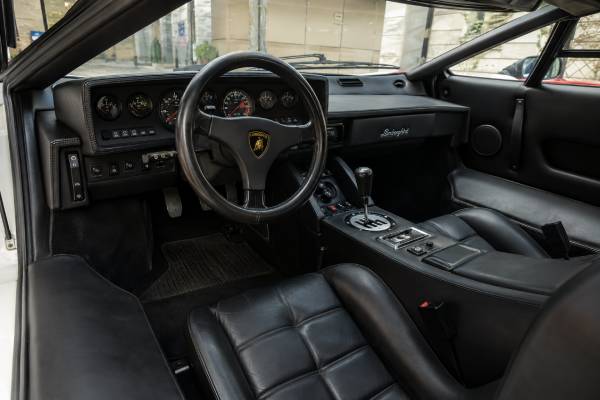
The cockpit is pure early exotic compromise. The pedals are offset, the steering wheel is close, the windshield is steeply raked, and rear visibility is poor. The dashboard is simple compared with modern Lamborghinis, but the view forward over the flat nose is unforgettable. The driver sits low and far forward relative to the engine, with the V12 noise and heat coming from behind the cabin.
The optional rear wing deserves special mention. Visually, it is inseparable from the 1980s Countach myth. Dynamically, it is more complicated. It adds rear-end presence and may give a sense of stability at speed, but it also adds drag and can reduce maximum speed. For collectors, the question is not simply wing or no wing. The question is whether the wing is correct for that car’s history and whether installation was done cleanly without later body damage.
The 5000 S also has a specific appeal because it avoids the later Quattrovalvole engine-cover hump. The QV’s downdraft carburetor layout required a raised rear deck that worsened rear visibility and changed the side profile. The 5000 S keeps the lower rear-deck look while still offering the larger 4.8-liter engine, which is one reason some collectors consider it one of the best-looking wide-body Countach versions.
Road Feel, Performance, and Usability
A good Countach 5000 S feels heavy at low speed, alive at medium speed, and deeply mechanical when driven hard. It rewards patience and skill more than aggression, and it feels best once the oil, gearbox, tires, brakes, and carburetors are warm.
The first surprise is effort. The clutch is heavy, the steering is unassisted, and the gearbox prefers deliberate movement. At parking speed, the front tires and steering geometry demand real arm strength. Once rolling, the steering lightens and becomes more useful, but it never feels filtered. The driver is always aware of tire width, road camber, and the car’s rear mass.
The L507 V12 is the center of the experience. Compared with the 3.9-liter S, the 4.8-liter engine has more mid-range pull and feels less strained in normal road use. It still likes revs, but it does not need to be kept on the boil all the time. When the carburetors are synchronized and the ignition is healthy, throttle response is crisp, the intake sound is layered and metallic, and the exhaust note hardens as revs rise.
A tired car feels completely different. Poor carburetor balance, old ignition parts, weak fuel delivery, incorrect valve adjustment, vacuum leaks, or cooling trouble can make the same model feel lumpy, hot, hesitant, or flat. A proper pre-purchase drive should include cold start, warm idle, low-speed traffic, open-road acceleration, gearbox behavior when warm, braking from speed, and a check for heat soak after shutdown.
Gearbox and braking feel
The five-speed manual is part of the Countach’s personality. It is not a quick modern shift, and forcing it is expensive. Second gear can be slow when cold, and the linkage should feel mechanical rather than vague or obstructed. Crunching, jumping out of gear, heavy bearing noise, or metal in the oil are serious warnings.
The brakes are vented discs without modern electronic assistance. They can stop the car well when properly rebuilt, bedded, and matched with good tires, but they do not feel like carbon-ceramic brakes in a modern supercar. Long pedal travel, pulling, vibration, fluid leaks, seized calipers, or aged flexible lines need attention before serious driving.
Ride, handling, and visibility
The Countach 5000 S rides firmly but not crudely when the suspension is fresh. Old bushings, tired dampers, incorrect ride height, and aged tires can make it nervous. The car has high grip for its period, especially at the rear, but the limit is not something to explore casually on public roads. Weight transfer, old tire technology, and mid-engine balance demand respect.
Visibility is part of the legend and part of the challenge. Forward vision is dramatic but low. Side vision is acceptable if mirrors are well adjusted. Rear vision is poor, especially with a wing. The famous door-open reversing technique is not a party trick; many drivers use it because it works.
In city use, the car is hot, wide, and attention-grabbing. On a fast open road, it makes far more sense. The engine pulls cleanly, the chassis settles, and the dramatic shape becomes more than theater. It feels like a machine from a time when supercars were physical tasks, not digital products.
Maintenance, Restoration, and Known Risks
The Countach 5000 S is not unreliable in the ordinary used-car sense; it is demanding because it is rare, hand-built, old, hot-running, carbureted, and expensive to correct when neglected. Most ownership problems come from deferred maintenance, poor federalization work, low-quality restoration, incorrect parts, or lack of specialist setup.
The engine itself is robust when maintained, warmed properly, and not overheated. The risks are in the systems around it: fuel, ignition, cooling, lubrication, carburetion, and old wiring. A car that has sat for years can need a full recommissioning even if it looks beautiful.
Common inspection areas include:
- Cooling system: radiators, fans, hoses, thermostat, water pump, bleed procedure, and signs of overheating.
- Fuel system: tanks, pumps, filters, lines, carburetor condition, stale-fuel residue, leaks, and fire risk.
- Carburetors: throttle-shaft wear, synchronization, jetting, float levels, linkage condition, and hot-start behavior.
- Ignition: distributor condition, plug leads, coils, timing accuracy, and electronic ignition components.
- Lubrication: oil leaks, oil pressure, sump condition, and evidence of metal contamination.
- Gearbox and clutch: shift quality, synchros, clutch slip, release bearing noise, and hydraulic leaks.
- Suspension: bushings, ball joints, dampers, wheel bearings, alignment, and cracked mounts.
- Brakes: calipers, discs, master cylinder, servo, flexible lines, and handbrake function.
- Electrical system: fuse panels, relays, fan wiring, lighting, instruments, window motors, and old alarm installations.
Corrosion and accident damage are major concerns. The Countach uses a tubular steel frame and hand-finished body panels. Rust can hide in frame tubes, suspension pickup areas, lower structures, and places affected by poor repairs. Aluminum bodywork can show corrosion, stress cracking, filler-heavy repairs, and distortion. A shiny repaint means little unless panel fit, chassis measurements, weld quality, and underbody condition support it.
Restoration quality varies widely. Some older restorations focused on cosmetics while leaving tired mechanical systems underneath. Others used incorrect trim, wrong carpets, modern audio cuts, non-original switches, incorrect finishes, or modified emissions equipment. These details matter because the Countach market rewards authenticity.
Major cost drivers
The expensive jobs are the ones that require engine removal, gearbox work, body correction, or specialist fabrication. A clutch job, gearbox rebuild, engine reseal, cylinder-head work, cooling-system overhaul, or suspension rebuild can become a major project. Parts availability is better than it once was through specialists and reproduction channels, but availability does not mean cheap or quick.
Tires also deserve attention. The Countach 5000 S uses unusual 15-inch performance tire sizes, especially the very wide rear tires. Correct tire availability can change, and old tires are dangerous even if tread depth looks fine. A car on aged tires should not be judged for handling until new, correct tires are fitted and the alignment is set properly.
Originality versus upgrades is a careful decision. Sensible reliability improvements such as better cooling fans, improved relays, updated hoses, or discreet fire protection may be acceptable if reversible and documented. Heavy modifications, modernized interiors, non-original body changes, and undocumented engine swaps usually narrow the buyer pool.
A proper service file should show regular fluid changes, valve adjustments where needed, carburetor tuning, brake maintenance, cooling-system work, and recent recommissioning if the car spent time in storage. “Just serviced” is not enough. Buyers should ask what was done, by whom, with which parts, and whether the invoice matches the claim.
Market Values and Buying Checks
The Countach 5000 S now sits in a serious collector market, with good public sales often landing in the mid-six-figure dollar range and exceptional cars reaching higher. Values move with originality, color, documentation, condition, mileage, market specification, and whether respected specialists can verify the car.
Current market data shows a wide spread because examples differ sharply. Driver-quality or needs-sorting cars can trade far below the best documented cars. A well-preserved, numbers-matching, Polo Storico-certified, original-color 5000 S with recent specialist work can command a major premium. A car with accident history, unclear federalization, missing books and tools, color changes, poor repaint, or mechanical neglect may be expensive even at a lower purchase price.
| Value factor | Why it matters |
|---|---|
| Factory identity | Correct chassis, engine, gearbox, and documented build details support long-term collectability. |
| Original colors and trim | Documented factory color combinations are usually stronger than later fashion changes. |
| Condition | Mechanical health, body fit, frame integrity, and interior quality matter more than polish. |
| Documentation | Polo Storico certification, invoices, books, tools, and ownership records reduce uncertainty. |
| Market specification | European carbureted cars, federalized U.S. cars, and later altered cars can appeal to different buyers. |
| Wing history | A wing can help visual appeal, but originality depends on the individual car’s records. |
| Recent specialist work | Fresh mechanical sorting by a known expert can save large post-purchase costs. |
A buyer should treat any Countach 5000 S as a specialist acquisition, not a normal classic-car purchase. The pre-purchase inspection should be done by someone who knows Countach construction, not just exotic cars in general.
A strong inspection process should include:
- Confirm the chassis number, engine number, gearbox number, and body details against documentation.
- Review factory records, Polo Storico material, import documents, and period photos.
- Inspect the tubular frame for corrosion, accident repair, distortion, and non-factory welding.
- Measure panel fit and look for filler, cracking, bubbling, and poor aluminum repair.
- Check whether the wing, bumpers, lighting, mirrors, and side markers match the car’s history.
- Start the engine cold and watch oil pressure, smoke, idle quality, fuel leaks, and warm-up behavior.
- Drive the car long enough to test hot restart, cooling fans, gearbox synchros, braking, clutch, steering, and suspension.
- Inspect the underside after the drive for oil, coolant, brake fluid, gearbox oil, and fuel leaks.
- Price the car after estimating deferred maintenance, not before.
The best examples to seek are complete, known-history cars with documented original specification, healthy mechanical systems, careful storage, recent specialist service, and no hidden body or chassis story. The examples to avoid are cars with missing identity details, fresh cosmetic work over old problems, vague ownership history, poor federalization, non-reversible modifications, overheating symptoms, or sellers who resist specialist inspection.
Long-term collectability looks strong because the 5000 S has the right ingredients: low volume, V12 power, manual gearbox, Gandini design, analog driving feel, and a clear place in Lamborghini history. It is not as pure as the LP400 and not as powerful as the QV, but it may be one of the most compelling wide-body Countach variants for collectors who want the classic shape with stronger torque and fewer later visual compromises.
References
- Milestones | Lamborghini.com 2026
- 50 Years Ago the First Countach in Sant’Agata Bolognese 2024
- Lamborghini Countach LP500 Turns 50: the story of a legend 2021
- Lamborghini Countach LP500 S / LP5000 S Market – CLASSIC.COM 2026 (Market Data)
- 1983 Lamborghini Countach 5000 S by Bertone | Monterey 2025 | RM Sotheby’s 2025 (Auction Result)
Disclaimer
This article is for informational purposes only and is not a substitute for professional diagnosis, repair, appraisal, or restoration advice. Specifications, torque values, service intervals, procedures, and correct components can vary by VIN, market, equipment, production date, and prior restoration history. Always verify details against official service documentation and have any Lamborghini Countach inspected by a qualified marque specialist before purchase or repair.
If this guide helped you, please share it on Facebook, X/Twitter, or your favorite car community to support our work.